

OBD-II Code U2224: Battery Energy Control Module Communication Fault
What U2224 means, why it triggers, and how to fix it
- On modern GM EVs (Lyriq, Hummer), code U2224 requires a dealer-installed BECM software update outlined in TSB PIT6044J.
- For 2016-2018 Chevy Volts, U2224 paired with U26xx codes indicates a total BECM hardware failure covered under GM Special Coverage N232432680 for 15 years or 150,000 miles.
- Always test the 12-volt battery (must be >12.4V) and verify high-voltage cell deviation is under 0.05V before replacing the BECM to avoid misdiagnosis.
- Do not drive the vehicle; a U2224 code causes sudden propulsion loss or a complete no-start condition, requiring an immediate tow to a hybrid/EV certified shop.
What Does U2224 Mean?
Code U2224 means the vehicle's main computer lost communication with the Battery Energy Control Module (BECM). The BECM manages the high-voltage battery's charging, discharging, temperature, and overall health. When this connection fails, the vehicle cannot verify battery status, triggering a warning, a no-start condition, reduced power, or a sudden shutdown.
Technical definition: U2224 is a manufacturer-specific network communication code. On General Motors vehicles, it indicates a communication fault on the network related to the K16 Battery Energy Control Module (BECM), often due to a software anomaly. Other manufacturers (Ford, Jaguar Land Rover) log similar communication losses under the generic U0111 code.
Can I Drive With U2224?
No — Do Not Drive. Do not drive the vehicle. This code indicates a critical communication loss with the high-voltage battery's control module. The vehicle will likely enter a low-power 'limp mode', shut down unexpectedly while driving, or fail to restart. The risk of being stranded in an unsafe location is high. Tow the vehicle to a repair facility.
Common Causes
- Battery Energy Control Module (BECM) Software Anomaly (Very Common) — On modern GM EVs (Lyriq, Hummer, Blazer), a software glitch within the BECM causes it to drop off the network. GM issued Technical Service Bulletin PIT6044J to address this with a dealer-installed software update.
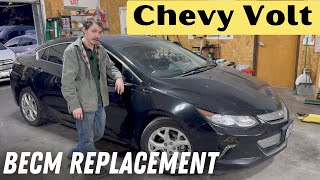
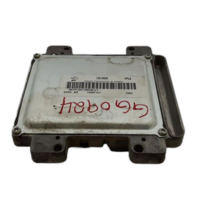
- Faulty Battery Energy Control Module (BECM) (Common) — The BECM hardware fails internally due to bad solder joints or component degradation. This is a notorious failure on the 2016-2019 Chevrolet Volt, requiring complete module replacement. 🎬 Watch: A step-by-step guide to replacing the Chevy Volt BECM.
- Weak or Failing 12-Volt Battery (Common) — The standard 12-volt battery powers all electronic modules during startup. Low voltage causes unpredictable communication errors across the CAN bus, forcing modules like the BECM offline.
- Underlying High-Voltage Battery Cell Failure (Less Common) — A failing or imbalanced cell group inside the high-voltage battery forces the BECM to go offline as a protective measure. Replacing the BECM without checking cell balance results in an immediate repeat failure.
- Damaged Wiring, Loose Connectors, or Poor Grounds (Less Common) — Corroded pins, chafed wires, or loose ground connections interrupt the physical CAN bus link to the BECM. On Ford plug-in hybrids, chafing near the high-voltage battery frequently triggers communication loss.
- Failure in Another Control Module (Rare) — All vehicle computers share the CAN bus network. A short circuit in a completely different module creates network 'noise' that blocks communication with the BECM.
Symptoms
- Vehicle Won't Start or Enter 'Ready' Mode — The vehicle prevents the high-voltage contactors from closing, completely disabling the ignition sequence.
- "Shift to Park" Message When Attempting to Drive — On the Chevy Volt, a failed BECM forces the dashboard to display a 'Shift to Park' message when shifted into gear, immobilizing the car. 🎬 See how to fix the 'Shift to Park' message in minutes.
- Sudden Loss of Propulsion While Driving — The BECM fails while the vehicle is in motion, causing an immediate and total loss of power to the wheels.
- Inaccurate Range or State of Charge Display — The dashboard shows a full battery charge meter but an electric range of '0' miles, forcing the gasoline engine to run continuously on PHEV models.
- "Service High Voltage System" Message — A direct warning on the driver information center indicating a critical fault in the hybrid/EV battery system.
- High-Voltage Battery Not Charging — The vehicle refuses to accept a charge when plugged in, or regenerative braking is completely disabled.
- Reduced Power ('Limp Mode') — The vehicle intentionally limits speed and acceleration to protect the high-voltage system from damage.
- Check Engine Light is On — The Malfunction Indicator Lamp illuminates immediately when the communication fault is detected.
Diagnostic Flowchart
Tap your situation to follow the diagnostic path that matches what you're seeing on this code.
Common Fixes & Costs
- Reprogram the Battery Energy Control Module (BECM) — Parts: $0, Labor: $150-$400, ~1.5 hr book time (Professional)
- Replace the Battery Energy Control Module (BECM) — Parts: $600-$950, Labor: $1300-$2200, ~8.0 hr book time (Professional)
- Replace the 12-Volt Battery — Parts: $150-$250, Labor: $50-$100, ~0.5 hr book time (DIY)
- Repair Damaged Wiring or Connectors — Parts: $10-$50, Labor: $200-$800, ~2.5 hr book time (Intermediate)
- Replace the High-Voltage Battery Assembly — Parts: $5000-$15000, Labor: $1000-$2500, ~8.0 hr book time (Professional)
Used vs. New Parts: Buying Guide
When a used part is worth it: Buying a used BECM is never recommended. These modules are VIN-locked to the original vehicle and cannot be reprogrammed for a new one. The only exception is purchasing a complete, warranted high-voltage battery assembly from a donor vehicle.
Donor-vehicle mileage cap: roughly under 50000 miles for the part to have meaningful remaining life.
Donor quality checklist:
- Verify the donor vehicle was not scrapped due to battery or electrical failure.
- Match part numbers exactly.
- Obtain a warranty (90 days or more) for the entire assembly.
Decision logic:
- If The fix is a software update → Only a dealer can perform the required programming.
- If The original BECM can be repaired (e.g., by Circuit Board Medics) → This is a viable, cost-effective option as it avoids VIN-locking issues.
- If A new BECM is required → Always buy a new OEM part. Aftermarket and used modules are not functional for this component.
Warranty tradeoff: Used parts carry short 30-day warranties and do not cover labor. OEM new parts carry a 1-2 year warranty, and dealer installation guarantees labor coverage.
Worst-case if a used part fails: $2000 if a used module fails after installation, requiring repeat labor and the purchase of a new OEM part.
What Happens If You Wait — Timeline
- Immediate: Check Engine Light illuminates. Vehicle fails to start, displays a 'Shift to Park' message, or enters 'Reduced Propulsion Power' mode. Vehicle shuts down while driving. (MPG impact: 100% (if forced to run on gas) or N/A (if no-start)% · Added cost: $150-$500 (for towing).)
- Days to Weeks: The BECM stops balancing the high-voltage battery cells. Voltage differences between cells grow. The vehicle is unreliable and leaves you stranded. (MPG impact: Variable, but vehicle is unsafe to operate.% · Added cost: $0, but risk of battery damage increases daily.)
- Weeks to Months: A significant cell imbalance develops. Cells are over-discharged during use and over-charged during charging, causing permanent chemical damage and capacity loss. (MPG impact: Vehicle is undrivable.% · Added cost: $1500-$5000 (Requires replacing several battery modules alongside the BECM).)
- Several Months: The high-voltage battery pack is permanently destroyed due to severe cell imbalance. The entire battery assembly requires replacement. (MPG impact: Vehicle is a paperweight.% · Added cost: $8000-$20000 (Catastrophic high-voltage battery replacement).)
Cost of Not Fixing It
- Immediate: Vehicle fails to start, leaving you stranded. Sudden loss of propulsion occurs while driving, creating a major safety hazard. (Added cost: $150-$500 (for towing and emergency transportation).)
- Days to Weeks: The BECM stops balancing the high-voltage battery cells. Small voltage differences between cells grow, causing chemical stress. (Added cost: $0, but risk of permanent battery damage increases daily.)
- Weeks to Months: Severe and permanent damage to the high-voltage battery pack due to prolonged cell imbalance. A simple BECM repair becomes a full battery replacement. (Added cost: $5000-$15000 (for a new high-voltage battery assembly).)
Diagnosis Steps
- Check the 12-Volt Battery
Test the standard 12-volt battery. Voltage must be above 12.4V, and terminals must be clean and tight. Low voltage is the primary cause of false communication codes. Do not proceed until 12V health is verified.
Tools: Multimeter or digital battery tester (Beginner) - Scan for All Trouble Codes
Use a professional OBD-II scanner to read manufacturer-specific 'U' codes from all modules. Confirm U2224 is present. On Chevy Volts, look for U26xx codes (definitive BECM failure). On Fords, look for U0111.
Tools: Professional-grade OBD-II Scanner (Beginner) - Check for Technical Service Bulletins (TSBs) & Special Coverage
Search the VIN for active TSBs or warranty extensions. For GM Ultium EVs, TSB PIT6044J dictates a software update. For 2016-2018 Chevy Volts, Special Coverage N232432680 provides a free BECM replacement.
Tools: Internet access, ALLDATA or OEM service portal (Beginner) - Check High-Voltage Battery Cell Balance
Access the live data for the high-voltage battery. Compare individual battery cell voltages. A static difference greater than 0.05V, or a dynamic difference greater than 0.1V, confirms an internal battery failure, not a BECM failure.
Tools: Professional scan tool with hybrid/EV live data capabilities (Advanced) - Inspect BECM Wiring and Connectors
Visually inspect the low-voltage wiring harness connecting to the BECM. Look for chafing, corrosion, or loose pins. This requires accessing the high-voltage battery area and must be done with the HV system properly disabled.
Tools: Flashlight, inspection mirror, Class 0 high-voltage safety gloves (Advanced) - Test the CAN Bus Network Resistance
With the 12V battery disconnected, measure resistance between Pin 6 (CAN High) and Pin 14 (CAN Low) at the OBD-II port. A healthy network reads 60 ohms. A reading of 120 ohms indicates a broken wire or missing terminating resistor.
Tools: Multimeter, vehicle-specific wiring diagrams (Advanced) - Perform Voltage Drop Test on BECM Ground Circuit
Connect the multimeter positive lead to the negative battery terminal and the negative lead to the BECM ground pin. With the vehicle attempting to start, the reading must be under 0.1 volts. Higher readings indicate a bad ground.
Tools: Multimeter, back-probe pins, wiring diagrams (Advanced)
When This Code Triggers (Freeze-Frame Conditions)
- Module Power Mode: Run or Start (The fault is detected during the initial vehicle startup sequence or while driving.)
- 12V System Voltage: 10.5V - 15.5V (Voltage below 11.5V during startup confirms the 12V battery caused the communication drop.)
- Vehicle Speed: 0 MPH or 25-65 MPH (Manifests as a no-start condition (0 MPH) or a sudden propulsion failure at driving speeds.)
- Time Since Startup: < 10 seconds (Communication loss is usually detected immediately during the initial module self-check.)
Related Codes
- U2603 - U2624 — Specific to GM (especially Chevy Volt). Seeing multiple codes from this range alongside U2224 confirms a total BECM hardware failure requiring module replacement.
- U2220 - U2237 — Listed together in GM TSB PIT6044J for Ultium EVs. They all point to the same BECM software anomaly requiring a dealer flash.
- U0111 — The generic SAE code for 'Lost Communication With Battery Energy Control Module A'. Ford, Toyota, and JLR vehicles log this instead of the manufacturer-specific U2224.
- P0A1F — Indicates a 'Battery Energy Control Module' internal malfunction. Often appears alongside communication codes to confirm the BECM hardware is the root cause.
Climate & Environmental Factors
- High Humidity: Moisture condenses on cool surfaces inside the battery pack, leading to corrosion on the BECM circuit board and triggering communication failures.
- Extreme Cold: Freezing temperatures severely weaken the 12-volt battery, causing voltage drops during startup that force the BECM to fail its initial power-on self-check.
How to Talk to a Mechanic About This Code
Say this: "I have a [Year, Make, Model] with a U2224 code and a 'Service High Voltage System' message. Please test the 12-volt battery and check for any TSBs or special coverage programs related to the BECM before proceeding to high-voltage system diagnostics."
This directs the shop to check the cheapest potential causes first (12V battery, software) and verifies warranty coverage before quoting a $2,000+ repair.
Avoid saying:
- 'Just fix whatever's wrong'
- 'My check engine light is on, can you look at it?'
- 'Whatever you recommend'
Questions to ask before authorizing the repair:
- Did you check the high-voltage battery cell balance data to rule out an internal battery fault? What was the maximum voltage deviation between cells?
- Is my vehicle's VIN eligible for any special coverage, warranty extension, or recall for this issue? (e.g., GM Special Coverage N232432680)
- If the fix is a software update, what is the specific labor charge for the reprogramming?
- What is the warranty on the new part and the labor for this specific repair?
Where to Take It: Dealer vs Independent vs Chain
- Dealer:
First choice. Dealers are the only facilities authorized to perform required software updates and process free repairs under special coverage programs.
Best for: Vehicles under warranty, especially GM models with known software issues (TSB PIT6044J) or special coverage (Chevy Volt)., Complex software reprogramming requiring OEM tools., Verifying eligibility for recalls and warranty extensions.
Downsides: Highest labor rates, typically $175-$250+ per hour., Defaults to replacing entire assemblies rather than performing component-level repairs. (Typical cost: +20% vs. baseline) - Independent Shop:
Viable alternative for out-of-warranty repairs ONLY IF the shop is a confirmed hybrid/EV specialist capable of reading HV battery cell data.
Best for: Out-of-warranty vehicles where the diagnosis is a confirmed hardware failure., Cost-sensitive repairs when a dealer is not an option.
Downsides: MUST be a shop specializing in hybrid/EV repair with certified technicians., General mechanics lack the training and tools to safely diagnose this code., Cannot perform warranty work or proprietary software updates. (Typical cost: +0% vs. baseline) - Chain Shop:
AVOID. Do not take your vehicle to a chain shop for a U2224 code. They cannot safely address the root causes.
Best for: Selling you a 12-volt battery if that is the confirmed problem.
Downsides: Completely unequipped and untrained for high-voltage diagnostics., High risk of misdiagnosis and recommending unnecessary repairs. (Typical cost: -10% vs. baseline)
When to Walk Away From the Repair
If the estimated repair cost for a high-voltage system fault exceeds 50% of the car's current private-party market value, sell the vehicle as-is or trade it in.
- Car worth $10000, fix is $2500: Fix it. The repair is for a known hardware failure (BECM) and is well below the 50% threshold.
- Car worth $8000, fix is $12000: Walk away. The diagnosis revealed a failed high-voltage battery pack. Sell the vehicle to a specialized recycler.
- Car worth $45000, fix is $300: Fix it. The issue is a software glitch requiring a dealer reprogram.
What Scan Tool You Need for This Code
Minimum: A scanner that reads manufacturer-specific U-codes from all modules and accesses live data for individual high-voltage battery cell voltages.
A basic $20 code reader cannot access the Battery Control Module or perform the critical step of checking for cell imbalance. Using a basic reader leads to expensive misdiagnosis.
Budget: BlueDriver Pro (~$119) — Reads and clears manufacturer-specific codes (like U2224) on GM and Ford. Displays some enhanced live data, but confirming its ability to show individual HV cell voltages on your specific vehicle is required.
Mid-range: Foxwell NT510 Elite / NT710 (~$250) — Offers deep, manufacturer-specific diagnostics. Accesses the BECM, reads proprietary U26xx codes, and displays the live data stream of all individual battery cell voltages.
Professional: Autel MaxiCOM MK808 / Autel MaxiSys MS909EV (~$500-4800) — Provides full professional-level diagnostics. Reads all codes, graphs HV battery cell health (SOH) and state of charge (SOC), and performs bidirectional controls. EV-specific models perform offline battery pack analysis.
Rent vs buy: Rentals from auto parts stores are basic readers and are NOT sufficient. You must buy a scanner with confirmed hybrid/EV battery analysis capabilities or pay for a professional diagnosis.
How to Clear the Code After You Fix It
- Reconnect the 12V battery if disconnected for repair.
- Use a professional-grade OBD-II scan tool to clear all codes from all modules.
- Perform a complete drive cycle to allow all readiness monitors to run.
Drive cycle (~20 minutes): Start from cold (coolant temp < 122°F). Idle for 3 minutes with A/C and rear defrost on. Accelerate to 55 MPH and hold steady for 3-5 minutes. Coast down to 20 MPH without braking. Accelerate to 60 MPH and hold steady for 5 minutes. Coast to a stop.
Readiness monitors affected: Hybrid/EV Battery System, Catalyst (if engine runs), EVAP System (if engine runs)
Before emissions retest: drive at least 50 miles to fully set monitors.
Watch out for:
- Disconnecting the 12V battery clears codes but resets all readiness monitors to 'Not Ready', guaranteeing an emissions test failure.
- The code returns immediately if the underlying hardware or software fault is not corrected.
- Basic code readers cannot clear codes from the hybrid powertrain control modules.
Will This Fail Emissions / State Inspection?
Yes — this code typically fails an OBD-II emissions inspection.
- California: An illuminated Check Engine Light results in an automatic smog check failure. After repair, a full drive cycle must be completed to set readiness monitors before a re-test.
- New York: An illuminated Malfunction Indicator Lamp (MIL) is an automatic failure. A waiver requires spending at least $450 on qualified repairs, but the vehicle must still pass the safety inspection.
- Texas: In emissions-testing counties, an illuminated Check Engine Light blocks registration renewal until the issue is repaired and the vehicle passes re-inspection.
Most Commonly Affected Vehicles
- Cadillac LYRIQ (2023-2024) — Affected by a BECM software anomaly identified in GM TSB PIT6044J.
- GMC HUMMER EV / SUV (2022-2024) — Shares the GM Ultium platform and is affected by the BECM software anomaly in TSB PIT6044J.
- Chevrolet Blazer EV (2024) — Affected by the BECM software anomaly in TSB PIT6044J.
- Chevrolet Volt (2016-2019) — Notorious for BECM hardware failure presenting with U26xx codes and a 'Shift to Park' message. Covered by Special Coverage N232432680 for 2016-2018 models (15 years/150,000 miles).
- Ford Fusion PHEV (Energi) (2019-2020) — Subject to safety recall 23S33 due to a BECM issue causing excess voltage, power loss, and fire risk.
- Ford C-MAX PHEV (Energi) (2013-2016) — Logs communication codes due to chafed wiring near the high-voltage battery (TSB 17-0015).
Manufacturer-Specific Notes
- General Motors (GM): On Ultium EVs, U2224 is a software glitch fixed by TSB PIT6044J. On the Chevy Volt, it indicates hardware failure covered by Special Coverage N232432680.
- Ford: BECM communication loss is frequently traced to physical causes, including chafed wiring harnesses (TSB 17-0015) or internal high-voltage battery faults requiring pack replacement.
- Toyota / Lexus: Rarely uses U2224. Similar issues trigger the generic U0111 code, usually accompanied by P3000 or P0A1F, and almost always point to individual battery cell block failures rather than the module itself.
Real Owner Stories
2017 Chevy Volt at 93k miles with U26xx codes
While driving, the car showed a 'Reduced Propulsion' message. An OnStar diagnostic reported a series of U26xx codes, indicating BECM failure.
What they tried:
- The owner suspected the BECM based on forum research.
- Towed the vehicle to a Chevrolet dealership for diagnosis.
Outcome: The dealership confirmed the BECM failure and replaced the module under the CARB PZEV warranty extension. The repair was completed in a single day.
Lesson: For 2016-2018 Volts, a cluster of U26xx codes confirms BECM hardware failure. Always check if your vehicle is covered by GM's Special Coverage N232432680 before authorizing repairs.
2019 Chevy Volt at 57k miles with 'Shift to Park' message
Vehicle was parked and charging when the check engine light came on. When trying to put the car in gear, it displayed a 'Shift to Park' message and would not move.
What they tried:
- Replaced the 5-year-old 12-volt battery, which did not fix the problem.
- Used a Bluetooth OBD-II scanner to reveal multiple U26xx codes.
- Cleared the codes to temporarily force the car into 'Reduced Propulsion' mode, allowing a slow drive to the dealership.
Outcome: The dealership diagnosed a definitive BECM failure. The part was ordered, and the repair was covered under the standard Voltec warranty.
Lesson: A weak 12V battery is a good first check, but a no-start/'Shift to Park' symptom on a Volt requires scanning for U26xx codes. Clearing codes provides temporary mobility but is not a fix.
2024 Cadillac Lyriq with various software glitches
Owner experienced multiple software-related issues, including unsuccessful Over-The-Air (OTA) update installations.
What they tried:
- Attempted to install the OTA update multiple times with repeated failures.
- Scheduled the update for later, locked the car, and left it alone to enter 'deep sleep' mode, allowing the update to install successfully.
Outcome: The vehicle's software was successfully updated at home. However, critical communication codes like U2224 require a robust dealer-installed software update per TSB PIT6044J.
Lesson: For modern GM EVs, many issues are software-based. While simple OTA updates work at home, U2224 requires a dealer visit to flash multiple modules simultaneously.
2019 Ford Fusion Energi with power loss and fire risk
Vehicle was part of Ford's safety recall 23S33, where a defect in the high-voltage battery damaged the BECM, leading to sudden power loss or trunk fires.
What they tried:
- Ford's interim fix disabled plug-in charging entirely to reduce the risk.
- Owners were instructed not to charge their vehicles until a final remedy was available.
Outcome: The final fix required a complete replacement of the high-voltage battery assembly, restoring charging functionality.
Lesson: On Ford models, a BECM-related code is often tied to a major safety recall requiring replacement of the entire high-voltage battery, not just the control module.
How to Prevent This Code From Triggering
- Maintain 12-Volt Battery Health (Check annually after 3 years) — A failing 12V battery provides unstable voltage during startup, causing communication glitches that trigger U2224. Proactive replacement prevents false module failures.
- Ensure Vehicle Software is Updated (Annually or when notified) — On modern EVs, U2224 is caused by software bugs. Installing dealer software campaigns ensures the BECM has the latest operating logic.
- Avoid Extreme States of Charge (PHEV/EV) (Daily habit) — Routinely charging to 100% or discharging below 20% puts chemical stress on the high-voltage battery cells, increasing the likelihood of cell failures that force the BECM offline.
- Limit Frequent DC Fast Charging (Use for road trips, not daily) — Frequent DC fast charging generates significant heat, accelerating wear on cells and the BECM's thermal management components.
- Keep Battery Cooling Vents/Filters Clean (Check annually) — Clogged air cooling inlets cause the battery to overheat, forcing the BECM to work harder and leading to premature failure.
Frequently Asked Questions
Can I fix code U2224 myself?
Testing and replacing the 12-volt battery is the only safe DIY step. The most common fixes require dealer-level software reprogramming or replacing the BECM, which involves dropping the high-voltage battery pack. Attempting to access BECM wiring without high-voltage safety certification is extremely dangerous.
How much does it cost to fix U2224?
A dealer software update costs $150 to $400 in labor. Replacing an out-of-warranty BECM ranges from $1,900 to $3,150 for parts and labor. If the BECM fault is a symptom of a failing high-voltage battery, replacement costs exceed $10,000.
Why does my Chevy Volt show 0 electric miles but a full battery bar?
This is a classic symptom of a BECM hardware failure. The module lost its ability to accurately report the battery's state of charge to the main computer. The vehicle defaults to a '0' range reading and forces the gas engine to run.
Is the BECM covered under warranty?
If the vehicle is under its bumper-to-bumper or Voltec/hybrid powertrain warranty, the repair is covered. For 2016-2018 Chevrolet Volts, GM issued Special Coverage N232432680, extending the BECM warranty to 15 years or 150,000 miles. Always provide your VIN to a dealer to verify eligibility.
What is a common misdiagnosis for code U2224?
A common pitfall is replacing the BECM when the code is actually a symptom of an underlying high-voltage battery failure. A failing or imbalanced battery cell causes the BECM to go offline protectively. Technicians must verify high-voltage cell health before condemning the BECM.
Is it safe to drive with code U2224?
No, driving is highly dangerous. The vehicle will likely shut down without warning while in motion or fail to restart after parking. Tow the vehicle to a qualified hybrid/EV repair facility immediately.
What is a BECM?
The Battery Energy Control Module (BECM) is the primary computer managing the high-voltage battery in an electric or hybrid vehicle. It monitors temperature, voltage, and current to keep the battery operating safely.
Will clearing the code fix the problem?
No, clearing the code only turns off the warning lights temporarily. The code returns immediately during the next drive cycle because the underlying communication fault remains unresolved.
Can a bad 12V battery really cause this much trouble?
Yes, the 12V battery powers all the vehicle's control modules during startup. Low or unstable voltage causes modules to fail their initial self-checks and drop off the communication network. Always test the 12V battery first when diagnosing U-codes.
Key Takeaways
- On modern GM EVs (Lyriq, Hummer), code U2224 requires a dealer-installed BECM software update outlined in TSB PIT6044J.
- For 2016-2018 Chevy Volts, U2224 paired with U26xx codes indicates a total BECM hardware failure covered under GM Special Coverage N232432680 for 15 years or 150,000 miles.
- Always test the 12-volt battery (must be >12.4V) and verify high-voltage cell deviation is under 0.05V before replacing the BECM to avoid misdiagnosis.
- Do not drive the vehicle; a U2224 code causes sudden propulsion loss or a complete no-start condition, requiring an immediate tow to a hybrid/EV certified shop.
Helpful Videos
Shop the Parts Behind U2224
Below are the parts most often responsible for code U2224, ranked by how frequently each one is the actual culprit (per the diagnosis above). Tap any to see what we have for your vehicle.


The information in this article is provided for general reference and educational purposes only. Vehicle specifications, procedures, and part compatibility can vary by production date, trim level, and region. Always consult your vehicle's factory service manual and verify part numbers before purchasing or performing repairs. Safety-critical components such as airbags, seat belts, and braking systems should be installed by a qualified professional.
- 🧭 Diagnostic Flowchart
- 🎬 Helpful Videos
- 🛍️ Shop This Part
- What Does U2224 Mean?
- Can I Drive With U2224?
- Common Causes
- Symptoms
- Common Fixes & Costs
- Used vs. New Parts: Buying Guide
- What Happens If You Wait — Timeline
- Cost of Not Fixing It
- Diagnosis Steps
- When This Code Triggers (Freeze-Frame Conditions)
- Related Codes
- Climate & Environmental Factors
- How to Talk to a Mechanic About This Code
- Where to Take It: Dealer vs Independent vs Chain
- When to Walk Away From the Repair
- What Scan Tool You Need for This Code
- How to Clear the Code After You Fix It
- Will This Fail Emissions / State Inspection?
- Most Commonly Affected Vehicles
- Manufacturer-Specific Notes
- Real Owner Stories
- 2017 Chevy Volt at 93k miles with U26xx codes
- 2019 Chevy Volt at 57k miles with 'Shift to Park' message
- 2024 Cadillac Lyriq with various software glitches
- 2019 Ford Fusion Energi with power loss and fire risk
- How to Prevent This Code From Triggering
- Frequently Asked Questions
- Can I fix code U2224 myself?
- How much does it cost to fix U2224?
- Why does my Chevy Volt show 0 electric miles but a full battery bar?
- Is the BECM covered under warranty?
- What is a common misdiagnosis for code U2224?
- Is it safe to drive with code U2224?
- What is a BECM?
- Will clearing the code fix the problem?
- Can a bad 12V battery really cause this much trouble?
- Key Takeaways
- 🎟️ Get 5% Off