

OBD-II Code U2225: Vehicle Communication Network Failure
What U2225 means, why it triggers, and how to fix it
- Stop driving immediately; U2225 triggers a 30-50 mph limp mode and disables critical safety systems like ABS and power steering.
- Test your battery voltage first, ensuring it reads at least 12.4V off and 13.5V running, as low voltage is the #1 cause of network dropouts.
- Measure resistance between OBD-II pins 6 and 14 with the battery disconnected; a healthy CAN bus reads exactly 60 ohms.
- Never replace a $500+ control module based solely on this code without first verifying its power, ground, and network wiring integrity.
What Does U2225 Mean?
U2225 means the computers (modules) in your vehicle are failing to communicate. Your car uses an internal data network called the Controller Area Network (CAN bus). This code signals a critical breakdown in that communication line. When modules cannot share information, the systems they control—like the engine, transmission, and brakes—shut down or act erratically.
Technical definition: According to SAE J2012 and ISO 15031-6 standards, U2225 is a network communication fault. It indicates a malfunction within the vehicle's Controller Area Network (CAN) bus, where a specific module or the network itself fails to send or receive data. The exact definition varies by manufacturer but universally points to a data link failure where the network is unstable or offline.
Can I Drive With U2225?
No — Do Not Drive. Driving is not recommended. The vehicle unpredictably enters a reduced-power 'limp mode,' limiting speed to 30-50 mph and locking the transmission in a single gear, making highway driving extremely hazardous. A complete communication failure also causes the engine to stall, resulting in the loss of power steering and brakes at speed. Continued driving causes unpredictable behavior from safety systems like ABS and airbags, and potentially leads to more expensive damage to other control modules.
Common Causes
- Low or Unstable Battery Voltage (Very Common) — Computer modules require stable voltage (above 12.0V) to operate. A weak battery, failing alternator, or bad cables cause voltage drops, triggering random communication errors and a cascade of U-codes.
- Damaged, Corroded, or Loose Wiring/Connectors (Very Common) — CAN bus wires are bundled in harnesses exposed to vibration, moisture, and heat. This exposure causes wires to break, short-circuit, or corrode at connector pins, interrupting communication. Rodent damage is also a frequent culprit.
- Poor Ground Connections (Common) — Modules and wiring harnesses rely on solid ground connections to the vehicle's chassis. A loose or corroded ground strap creates a floating voltage potential, leading to intermittent communication errors across the entire network.
- Faulty Control Module (Common) — Any single computer on the network (like the BCM or PCM) fails internally. A bad module stops communicating entirely or broadcasts corrupted data, preventing other modules from talking.
- Software Anomaly or Glitch (Less Common) — The problem is sometimes a bug in a module's software rather than a physical part. Manufacturers release Technical Service Bulletins (TSBs) with software updates to fix these glitches, requiring a dealership or properly equipped shop to install.
- Aftermarket Device Interference (Less Common) — Improperly installed aftermarket accessories like remote starters or alarms interfere with the CAN bus. These devices introduce electrical noise or draw excessive power, causing other modules to drop offline.
- Missing or Failed Terminating Resistor (Rare) — The CAN bus network uses a 120-ohm resistor at each end to prevent signal reflections. If a module containing a resistor is unplugged or fails, the network resistance changes from 60 ohms to 120 ohms, halting communication.
- Internal Short in a Connected Component (Rare) — A non-module component, such as a sensor sharing a power or ground circuit with a network module, shorts out internally. This disrupts the module's operation and triggers a U2225 code even though the module itself is healthy.
Symptoms
- Check Engine Light and Multiple Other Warning Lights — The check engine light illuminates alongside lights for the ABS, airbag, traction control, or security system. This happens because the modules for these systems no longer communicate their status.
- Vehicle Enters 'Limp Mode' — The vehicle suddenly loses power and has poor acceleration. The transmission gets stuck in one gear (often second or third) to protect the powertrain, limiting engine RPM to 2,000-3,000.
- Erratic or Non-Functioning Electronics — The radio turns off, power windows stop working, the instrument cluster gauges sweep wildly or go dark, and interior lights flicker.
- Engine Will Not Start or Stalls — If the Powertrain Control Module (PCM) cannot communicate with the ignition or security module, the engine cranks but does not start, or starts and immediately stalls.
- Parasitic Battery Drain (also visible on scanner) — A faulty module failing to 'go to sleep' continuously draws power. This happens when the network fault prevents the module from receiving the shutdown command, draining the battery overnight.
Diagnostic Flowchart
Tap your situation to follow the diagnostic path that matches what you're seeing on this code.
Common Fixes & Costs
- Replacing the Battery — Parts: $150-$400, Labor: $50-$100, ~0.5 hr book time (DIY)
- Repairing Damaged CAN Bus Wiring — Parts: $10-$50, Labor: $250-$1500+, ~2 hr book time (Professional)
- Replacing a Faulty Drivetrain/Transfer Case Control Module (DTCM/TCCM) — Parts: $150-$500, Labor: $150-$300, ~1 hr book time (Professional)
- Replacing a Faulty Body Control Module (BCM) — Parts: $400-$700, Labor: $150-$300, ~1.5 hr book time (Professional)
- Replacing a Faulty Powertrain Control Module (PCM/ECM) — Parts: $800-$1500, Labor: $150-$300, ~1.5 hr book time (Professional)
Used vs. New Parts: Buying Guide
When a used part is worth it: For high-cost modules (PCM, BCM) on older vehicles (>10 years, >120k miles) where the cost of a new OEM part is a significant fraction of the vehicle's value. A used part is a cost-effective way to get the vehicle back on the road.
Donor-vehicle mileage cap: roughly under 100000 miles for the part to have meaningful remaining life.
Donor quality checklist:
- Match the OEM part number EXACTLY. Hardware and software revisions mean modules from the same model year are not always interchangeable.
- Source from a reputable auto recycler offering a warranty (30-90 days is standard).
- Avoid parts from flood-damaged or severely wrecked vehicles.
Decision logic:
- If The part requires programming to the vehicle's VIN (most PCMs, BCMs, TCMs) → Factor in $150-$300 for dealer/specialist programming. A used part is useless if it is 'locked' to the donor VIN.
- If The vehicle is less than 8 years old or has low mileage → Favor new OEM or high-quality remanufactured parts. The longer warranty and expected lifespan justify the cost.
- If The budget is extremely tight and the alternative is scrapping the vehicle → A used part is a viable option, but accept the risk of a shorter lifespan and potential for premature failure.
Warranty tradeoff: Used parts typically have a 30-90 day part-only warranty. Remanufactured parts come with a 1-year to lifetime warranty. New OEM parts carry a 1-2 year warranty, which includes labor if installed by a dealer.
Worst-case if a used part fails: $400-$800 if a used module fails after the warranty period, requiring repeat labor costs for diagnosis, removal, and installation.
What Happens If You Wait — Timeline
- Immediate: Multiple warning lights illuminate. Vehicle enters 'limp mode' with reduced power or stalls without warning. Loss of power steering and brakes occurs if the engine quits. (MPG impact: 0-25% (if in limp mode)% · Added cost: $100-$300 (potential towing cost))
- 1-4 weeks: If the fault is caused by a module that isn't shutting down, it creates a parasitic battery drain. The battery dies overnight, requiring frequent jump-starts which stresses the alternator and the battery itself. (MPG impact: 0%% · Added cost: $200-$450 (cost of a new battery and labor from repeated deep cycling))
- 1-3 months: Intermittent faults become more frequent. An unstable network with constant data errors and voltage fluctuations corrupts the software in other, previously healthy control modules. (MPG impact: 0-5%% · Added cost: $500-$1000 (potential cost to re-flash or replace a secondarily damaged module like the TCM or BCM))
- 3+ months: Continued operation with a major network fault leads to cascading hardware failures. Voltage spikes from a shorted wire or a malfunctioning module physically damage the sensitive transceivers in other modules, turning a single-point failure into a multi-thousand-dollar repair. (MPG impact: Varies% · Added cost: $1500-$3000+)
Cost of Not Fixing It
- Immediate: Unpredictable stalling, entering 'limp mode,' or loss of power steering/brakes creates a severe safety hazard. Stranding is highly likely. (Added cost: $100-$300 (towing))
- 0-1 month: A faulty module failing to shut down causes a parasitic drain, repeatedly killing the battery and requiring jump starts. This permanently damages the battery. (Added cost: $200-$450 (new battery and labor))
- 1-6 months: Continued operation with unstable network communication corrupts the software or damages the hardware of other connected modules. (Added cost: $500-$2500+ (additional control modules))
Diagnosis Steps
- Check Battery and Charging System Health
Ensure the battery is fully charged (at least 12.4V with the engine off) and the alternator charges correctly (13.5V-14.5V running). Clean corrosion from the terminals and tighten connections. A weak battery is a primary cause of network faults.
Tools: Multimeter, Battery Terminal Cleaner (Beginner) - Perform a Full Vehicle Code Scan
Use an advanced OBD-II scanner to pull codes from ALL modules (ABS, BCM, TCM, etc.). A U2225 code is almost always accompanied by other 'U' codes (e.g., U0100, U0140) that pinpoint which module is offline or which system is failing.
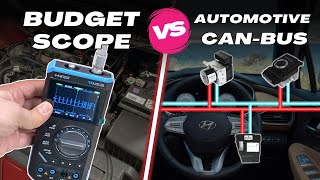
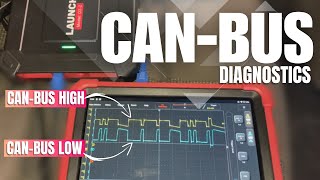
Tools: Advanced Bi-Directional OBD-II Scanner 🎬 Watch: Advanced CAN bus diagnostics using an oscilloscope. (Beginner) - Perform a Thorough Visual Inspection
Look for damage to wiring harnesses, especially where they pass through the firewall, under the carpet, or near the exhaust. Check for rodent damage, corrosion on connectors, or chafed wires. Inspect all major chassis and engine ground straps for tightness.
Tools: Flashlight, Inspection Mirror (Intermediate) - Measure CAN Bus Resistance
With the battery disconnected, measure resistance between Pin 6 (CAN High) and Pin 14 (CAN Low) on the OBD-II port. A healthy network reads 60 ohms (± 5 ohms). A reading of 120 ohms means a terminating resistor is missing. A reading near 0 ohms indicates a short circuit.
Tools: Multimeter (Intermediate) - Check CAN Bus Voltages
With the battery reconnected and ignition on (engine off), measure voltage on the CAN bus lines at the OBD-II port. CAN High (Pin 6) should be 2.5-3.5 volts, and CAN Low (Pin 14) should be 1.5-2.5 volts. Voltages outside this range suggest a short to power or ground.
Tools: Multimeter (Intermediate) - Isolate Modules
If resistance or voltage readings are incorrect, unplug modules one by one from the network. Re-check the resistance after each. When the reading returns to normal (e.g., from 0 ohms to 60 ohms), the last module unplugged is causing the short.
Tools: Multimeter, Vehicle-Specific Wiring Diagram, Trim Removal Tools (Professional) - ADVANCED: Check for Shorts to Ground/Power
With the battery disconnected, measure resistance between CAN High (Pin 6) and chassis ground (Pin 4), and then CAN Low (Pin 14) and chassis ground. Both readings should be in the mega-ohm (MΩ) range. Low resistance indicates a short to ground.
Tools: Multimeter (Advanced) - PRO TIP: Network Mapping & Module Ping Test
Using a high-end scanner, access the network topology screen. Attempt to actively communicate with ('ping') each module individually. Modules that do not respond are the ones you must physically investigate first for power, ground, and network connections.
Tools: Advanced Bi-Directional OBD-II Scanner (Advanced) - PRO TIP: Perform an Oscilloscope Waveform Analysis
Use a dual-channel oscilloscope to view the CAN High and CAN Low signals directly. A healthy CAN bus shows clean, mirror-image square waves. Waveform distortion, noise, or incorrect voltage levels reveal shorts, opens, or interference that a multimeter misses.
Tools: Dual-Channel Automotive Oscilloscope, Back-Probe Pins (Professional)
When This Code Triggers (Freeze-Frame Conditions)
- Engine Coolant Temp: 170-220°F (Fully warmed up. Faults are less common on a cold engine, but occur.)
- RPM: 1200-2500 (Cruise or steady throttle. Network traffic is high and stable, making dropouts more likely to be detected.)
- Engine Load: 20-50% (Light to moderate acceleration or maintaining speed on a level road.)
- Vehicle Speed: 30-65 mph (City or highway driving. The code sets during normal operation rather than at idle.)
Related Codes
- U0073 — This code, 'Control Module Communication Bus A Off,' is functionally identical to U2225. Different manufacturers use one code over the other. The diagnostic process for both points to a general CAN bus network failure.
- U0100 — Means 'Lost Communication With ECM/PCM'. It appears with U2225 when the main engine computer drops off the network. If the scanner cannot communicate with the ECM at all, U0100 is the primary fault; if the ECM is online but others are not, U2225 points to a broader issue.
- U0140 — Means 'Lost Communication With Body Control Module'. If the BCM is the source of the network problem, you see this code alongside U2225. The diagnostic path starts with the BCM's power, grounds, and connectors.
- U0101 — Means 'Lost Communication with TCM'. Common with U2225 if you experience shifting problems or limp mode. If transmission issues are the only symptoms, the problem is specific to the TCM circuit.
Climate & Environmental Factors
- High Humidity / Road Salt: Moisture combined with road salt accelerates corrosion on wiring harness connectors, ground points, and within modules. This corrosion increases resistance and causes communication failure. Water intrusion from clogged sunroof drains is a common cause of damage to modules under seats.
- Extreme Temperatures (Hot & Cold): Extreme heat increases the electrical resistance of wires, degrading the signal. Extreme cold makes wire insulation and plastic connectors brittle and susceptible to cracking from vibration. Internal module oscillators also fail to operate correctly outside their designed temperature range.
How to Talk to a Mechanic About This Code
Say this: "I have a U2225 network communication code and multiple warning lights. I've already confirmed the battery is healthy. I'd like to schedule one hour of diagnostic time specifically for tracing the CAN bus fault, starting with resistance and voltage checks at the OBD-II port."
This signals you are an informed customer, directing the technician to start with a logical diagnostic procedure for a network fault, rather than just guessing or replacing parts. It focuses their effort on the wiring and network itself, which is the most likely cause.
Avoid saying:
- My check engine light is on, can you just fix it?
- The car is acting weird, I think it's the computer.
- Just do whatever you think is necessary.
Questions to ask before authorizing the repair:
- What were the CAN bus resistance and voltage readings at the OBD-II port?
- If you are recommending a module replacement, did you verify power, ground, and network wiring integrity to the old module first?
- Can you show me the damaged wire or the failed component?
- If a module needs to be replaced, does it require programming and is that included in the estimate?
Where to Take It: Dealer vs Independent vs Chain
- Dealer:
A strong, safe choice, especially if the problem is a known TSB or requires software updates.
Best for: Vehicles under warranty, Vehicles with known manufacturer-specific issues or TSBs, Complex module programming and software updates
Downsides: Highest labor rates, May default to replacing a whole module/harness when a wiring repair is possible (Typical cost: +50% vs. baseline) - Independent Shop:
Excellent fit, IF you find a shop with a proven electrical diagnostician. A good indie specialist is often better and more cost-effective at finding wiring faults than a dealer.
Best for: Out-of-warranty vehicles where cost is a factor, Shops that specialize in electrical diagnostics (look for ASE certification and positive reviews on complex electrical work), Finding and repairing a specific broken wire rather than replacing a whole harness
Downsides: Quality and equipment vary greatly; a general mechanic lacks the specific tools (oscilloscope) or experience for network diagnosis. (Typical cost: +0% vs. baseline) - Chain Shop:
AVOID. This type of fault is far outside the scope of work for a typical chain shop. They lack the specialized tools and training, making a correct diagnosis highly unlikely.
Best for: Simple, unrelated maintenance like oil changes, tires, and batteries.
Downsides: Technicians are generally not equipped or trained for complex network diagnostics, High pressure to sell parts leads to misdiagnosis (e.g., selling a new battery when the issue is a parasitic drain from a bad module) (Typical cost: -10% vs. baseline)
When to Walk Away From the Repair
If the estimated repair cost exceeds 40-50% of the car's private-party value, you should pause and consider alternatives.
- Car worth $4000, fix is $2200: Walk away. The repair cost is over 50% of the car's value. It's not a sound financial decision.
- Car worth $15000, fix is $1200: Fix it. The repair cost is well under the threshold and restores a valuable asset to full function.
- Car worth $6000, fix is $800: Fix it. This is a relatively low-cost repair compared to the vehicle's value.
What Scan Tool You Need for This Code
Minimum: A scanner that performs a full-system scan and reads codes from all modules (Engine, ABS, Airbag, BCM, etc.). A basic code reader that only pulls engine codes is insufficient.
A $20 reader only tells you the Check Engine Light is on, but U2225 is a network code. You need to see which other modules are also logging communication faults (e.g., U0100, U0140) to get clues about where the failure is. The free scan at an auto parts store is often a basic engine code scan and is not sufficient for this issue.
Budget: BlueDriver Pro (~$100) — Reads codes from all major modules (Engine, ABS, Airbag, etc.) on many modern vehicles, which is the minimum requirement to see the scope of the network failure. It also provides live data and freeze-frame information.
Mid-range: Autel MaxiCOM MK808S / Foxwell NT809 (~$350-450) — Offers bidirectional controls, allowing you to 'ping' individual modules to see which ones are offline. Provides network topology on some vehicles and has advanced service functions critical for post-repair resets. This is the sweet spot for a serious DIYer.
Professional: Autel MaxiSys MS906 Pro / Launch X431 Series (~$1200-2500) — Provides full OEM-level diagnostics, including detailed network topology maps, module programming/coding, and access to advanced diagnostic routines essential for professional-level troubleshooting of complex network faults.
Rent vs buy: The free 'loaner' tools from auto parts stores are typically basic readers and are NOT sufficient for diagnosing U2225. If this is a one-time, complex issue, your money is better spent on a professional diagnostic fee than on a high-end tool. Buy a midrange scanner only if you plan to perform diagnostics and repairs regularly.
How to Clear the Code After You Fix It
- Reconnect the battery if it was disconnected for the repair.
- Use an OBD-II scan tool to perform a 'Clear All DTCs' function.
- Perform a complete OBD-II drive cycle to allow readiness monitors to run.
Drive cycle (~30 minutes): A generic drive cycle includes a cold start (engine off for 8+ hours), a 2-3 minute idle, 15 minutes of mixed city/highway driving, and several stop-and-go periods.
Readiness monitors affected: Comprehensive Component Monitor, Misfire Monitor, Fuel System Monitor
Before emissions retest: drive at least 50 miles to fully set monitors.
Watch out for:
- Disconnecting the battery clears the codes but resets all readiness monitors to 'Not Ready', causing an automatic emissions test failure.
- The code returns almost immediately if the underlying physical or software fault is not properly repaired.
Will This Fail Emissions / State Inspection?
Yes — this code typically fails an OBD-II emissions inspection.
- California: An active U-code is an automatic failure. After repair, a complete drive cycle must be performed to set all required readiness monitors before the vehicle passes a smog check.
- New York: The NYS inspection includes an OBD-II scan. Any diagnostic trouble code illuminating the Check Engine Light, including U2225, results in an automatic failure.
- Texas: In the 17 counties requiring emissions testing, an active Check Engine Light is an automatic failure. After repair, the vehicle must have its readiness monitors set to 'Ready' to pass.
Most Commonly Affected Vehicles
- Jeep Grand Cherokee (2011-2022) — Notorious for failures of the Drivetrain Control Module (DTCM) located under the driver's seat. A faulty module causes binding on turns and takes down the network. TSBs 08-120-21 and 18-19-07-AK involve software updates for the DTCM.
- Ford F-150 (2017-2023) — 2017-2020 models have improperly routed transmission wiring harnesses that chafe and short CAN bus wires. For 2021-2023 models, Safety Recall 23S35 addresses a rear axle wiring harness that chafes against the axle housing, shorting wires and generating network codes.
- General Motors Cadillac Lyriq, GMC Hummer EV, Chevrolet Blazer/Silverado/Equinox EV (2022-2024) — Service bulletin PIT6044J identifies a software anomaly in the Battery Energy Control Module (BECM) causing U2225. The fix is a software update performed by a GM dealer.
- Ford Mustang Mach-E (2021-2023) — Owners report failures of the Gateway Module (GWM), which acts as the central router for the vehicle's networks. A failed GWM causes widespread communication loss and a no-start condition.
- Dodge / Ram Ram 1500/2500, Durango (2011-2018) — These vehicles suffer from failures of the Totally Integrated Power Module (TIPM) or the Transfer Case Control Module (TCCM), causing network-wide communication faults.
- Nissan Rogue, Altima, Sentra (2007-2019) — Models using early CVTs are susceptible to electrical faults. Issues within the transmission, its control module (TCM), or related wiring disrupt network communication and log U-codes.
- Hyundai / Kia Tucson, Sportage, Sorento (2010-2022) — Shared platforms mean shared electrical vulnerabilities. Intermittent network communication failures are often related to corrosion in main wiring harness connectors or internal module faults.
- Toyota Camry, RAV4, Avalon (2005-2011) — Internal transmission faults or solenoid performance issues trigger communication codes. Toyota issued TSBs to update the PCM calibration, as the original software falsely triggered network codes in response to minor transmission events.
Manufacturer-Specific Notes
- Stellantis (Jeep, Dodge, Chrysler, Ram): On vehicles like the Grand Cherokee and Durango, the Drivetrain Control Module (DTCM/TCCM) under the driver's seat is a common failure point that takes down the entire network, causing a 'Service 4WD' light and binding on turns.
- Ford: Ford trucks, particularly 2017-2020 F-150s, are susceptible to CAN bus wiring damage from chafing harnesses. For 2021-2023 F-150s, safety recall 23S35 addresses a rear axle wiring harness that chafes and shorts out, disrupting network communication.
- General Motors: On many 2022-2024 electric vehicles, a range of U-codes including U2225 is caused by a software bug in the Battery Energy Control Module (BECM) and is fixed with a dealer-installed software update per TSB PIT6044J.
- Toyota: On certain 2005-2011 models, Toyota issued TSBs to update the PCM calibration. The original software was overly sensitive and logged network communication codes as a false positive when minor, transient faults occurred within the transmission.
Real Owner Stories
2018 Ford F-150 with ~50K miles
Intermittent 'drive modes not available' and 'Traction Control Disabled' warnings, plus slow turn signal behavior. Codes U0199 and U0200 were present.
Outcome: Replacing the old AGM battery and resetting the Battery Management System (BMS) resolved all communication issues and warning messages.
Lesson: A weak battery causes widespread, seemingly unrelated communication codes and erratic electronic behavior long before it fails to start the engine. Always test the battery under load as a first step.
2010 Ford F-150 with no-crank/no-start
Anti-theft light flashing rapidly, engine would not crank. Initial code was U0100.
Outcome: The diagnosis pointed to a broken CAN Low wire somewhere in the harness between the OBD-II port and the PCM.
Lesson: Do not replace expensive modules based only on a 'Lost Communication' code. A 120-ohm resistance reading is a clear indicator of a network wiring problem and leads to wiring diagnosis, not parts replacement.
2015 Jeep Grand Cherokee with multiple U-codes
Vehicle presented with a 'Service 4WD' light, ABS and traction control lights on, and the transmission was binding on sharp turns.
Outcome: The DTCM failed internally, taking down the entire CAN network. Replacing the DTCM and performing a 'proxy alignment' procedure restored all communications.
Lesson: On certain vehicles, the failure of a specific, known-problematic module causes network-wide chaos. Researching TSBs and common failure patterns for your specific model saves hours of diagnostic time.
How to Prevent This Code From Triggering
- Periodically Clean Battery Terminals and Chassis Grounds (Every 1-2 years or with oil change) — Prevents corrosion buildup that causes voltage drops. Modules require stable voltage to communicate properly, and poor power/ground connections are a primary cause of network faults.
- Apply Dielectric Grease to Critical Connectors (When a connector is disconnected for any service) — Dielectric grease is a non-conductive sealant that blocks moisture and oxygen from reaching the metal pins, preventing the corrosion that leads to open circuits and high resistance in the CAN harness.
- Inspect and Secure Wiring Harnesses (Annually) — Visually check for harnesses rubbing against sharp metal edges, resting on hot exhaust components, or showing signs of rodent damage. Securing loose harnesses with zip ties prevents the chafing that leads to shorted or broken CAN wires.
- Ensure Professional Installation of Aftermarket Electronics (Whenever adding accessories) — Improperly installed remote starters, alarms, or audio systems are a common source of network interference. A professional installer knows how to integrate devices without tapping directly into critical CAN bus lines or introducing electrical noise.
Frequently Asked Questions
Can I fix a U2225 code myself?
Basic steps like checking the battery and visually inspecting wiring are DIY-friendly. Accurately diagnosing the network with a multimeter or oscilloscope to isolate a faulty module requires professional technical skill. Replacing modules is not a DIY job due to strict VIN programming requirements.
Why did so many warning lights turn on at once?
When modules lose communication, they no longer share critical data. The ABS module cannot get speed data from the engine module, and the airbag module cannot confirm its status. Each module then reports a fault for the missing data, lighting up the dashboard.
Will clearing the code make it go away?
You can clear the code with a scanner, and it stays off briefly if the fault is intermittent. However, U2225 is almost always caused by a hard physical or software fault. The code returns quickly, usually on the next drive cycle.
What is the most common misdiagnosis for U-codes like U2225?
The most common mistake is immediately replacing the first module that logs a 'lost communication' code. For example, if the ABS module logs a U0100, the fault is often a broken wire, not the PCM itself. Always diagnose the network as a whole before replacing expensive parts.
What is an oscilloscope and why is it needed for CAN bus diagnosis?
An oscilloscope is a diagnostic tool that visualizes electricity, showing a signal's voltage over time as a waveform. For CAN bus, it allows a technician to see the actual data signals rather than just average voltage. This reveals subtle problems like electrical noise, signal reflections, or slight voltage drops that indicate a wiring problem.
What is the difference between U2225 and U0073?
There is no functional difference between U2225 and U0073. Both are generic fault codes indicating a loss of communication on the CAN bus network. They point to the same type of network failure and follow the exact same diagnostic procedure.
How much does it cost to diagnose a U2225 code?
Most shops charge a diagnostic fee between $120 and $200, covering the first hour of work. If the problem is complex and requires extensive testing to find a broken wire in a hard-to-reach location, diagnostic time increases significantly. This adds several hundred dollars to the final bill.
Key Takeaways
- Stop driving immediately; U2225 triggers a 30-50 mph limp mode and disables critical safety systems like ABS and power steering.
- Test your battery voltage first, ensuring it reads at least 12.4V off and 13.5V running, as low voltage is the #1 cause of network dropouts.
- Measure resistance between OBD-II pins 6 and 14 with the battery disconnected; a healthy CAN bus reads exactly 60 ohms.
- Never replace a $500+ control module based solely on this code without first verifying its power, ground, and network wiring integrity.
Helpful Videos
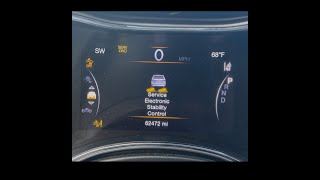
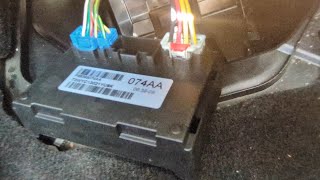
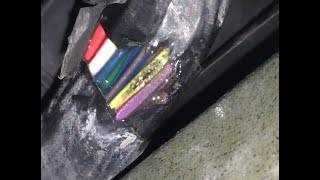
![How To Test CAN BUS With A Multimeter [CAN Bus Resistance Check] Mechanic Mindset](https://img.youtube.com/vi/JPE42HSJxAk/mqdefault.jpg)

Shop the Parts Behind U2225
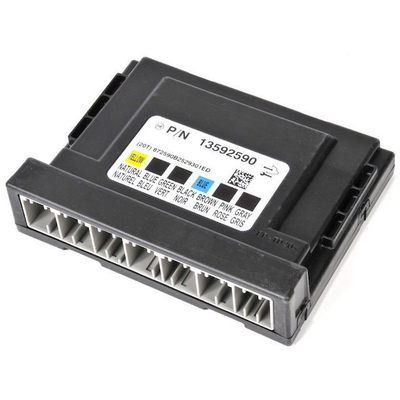
Below are the parts most often responsible for code U2225, ranked by how frequently each one is the actual culprit (per the diagnosis above). Tap any to see what we have for your vehicle.



The information in this article is provided for general reference and educational purposes only. Vehicle specifications, procedures, and part compatibility can vary by production date, trim level, and region. Always consult your vehicle's factory service manual and verify part numbers before purchasing or performing repairs. Safety-critical components such as airbags, seat belts, and braking systems should be installed by a qualified professional.
- 🧭 Diagnostic Flowchart
- 🎬 Helpful Videos
- 🛍️ Shop This Part
- What Does U2225 Mean?
- Can I Drive With U2225?
- Common Causes
- Symptoms
- Common Fixes & Costs
- Used vs. New Parts: Buying Guide
- What Happens If You Wait — Timeline
- Cost of Not Fixing It
- Diagnosis Steps
- When This Code Triggers (Freeze-Frame Conditions)
- Related Codes
- Climate & Environmental Factors
- How to Talk to a Mechanic About This Code
- Where to Take It: Dealer vs Independent vs Chain
- When to Walk Away From the Repair
- What Scan Tool You Need for This Code
- How to Clear the Code After You Fix It
- Will This Fail Emissions / State Inspection?
- Most Commonly Affected Vehicles
- Manufacturer-Specific Notes
- Real Owner Stories
- 2018 Ford F-150 with ~50K miles
- 2010 Ford F-150 with no-crank/no-start
- 2015 Jeep Grand Cherokee with multiple U-codes
- How to Prevent This Code From Triggering
- Frequently Asked Questions
- Can I fix a U2225 code myself?
- Why did so many warning lights turn on at once?
- Will clearing the code make it go away?
- What is the most common misdiagnosis for U-codes like U2225?
- What is an oscilloscope and why is it needed for CAN bus diagnosis?
- What is the difference between U2225 and U0073?
- How much does it cost to diagnose a U2225 code?
- Key Takeaways
- 🎟️ Get 5% Off