

OBD-II Code U2226: Invalid Data From a Control Module
What U2226 means, why it triggers, and how to fix it
- OBD-II code U2226 indicates a severe CAN bus network failure where one control module receives corrupted or nonsensical data from another.
- Failing control modules cause over 60% of U2226 codes, with the Ford Instrument Cluster, GM Body Control Module (BCM), and Chrysler TIPM being the most frequent culprits.
- Expect unpredictable symptoms like a completely dead speedometer, simultaneous ABS and Check Engine lights, or sudden engine stalling at highway speeds.
- Never replace the module that simply stored the U2226 code; use a multimeter to test pins 6 and 14 at the OBD-II port for the standard 60-ohm network resistance to isolate the actual short.
- Stop driving immediately to prevent a $1,000+ catalytic converter failure from erratic fuel mixtures, and budget $150-$300 for mandatory dealer-level programming if a module requires replacement.
What Does U2226 Mean?
U2226 indicates one of your vehicle's control modules received corrupted or nonsensical data from another module. Think of it as a garbled message on the car's internal communication network, the CAN bus. The module setting the code is merely the 'witness' to the problem, not the root cause.
Technical definition: While lacking a universal SAE/ISO definition, manufacturers like Ford use U2226 to indicate 'Invalid Data From Node ID' or a similar network communication error. It signifies a specific control module received a corrupt or unexpected data packet over the Controller Area Network (CAN) bus. This points directly to a fault in the transmitting module, damaged network wiring, or severe electrical interference.
Can I Drive With U2226?
No — Do Not Drive. Driving is not recommended. The underlying network fault is unpredictable and causes the engine to stall at any time, the speedometer to fail, or the transmission to shift erratically, creating a significant safety risk. Continued driving causes expensive secondary damage; for example, if the PCM receives bad data and alters the fuel mixture, it overheats and destroys the catalytic converter (an $800-$2500 repair).
Common Causes
- Failing or Faulty Control Module (Very Common) — One of the vehicle's computers (like the Instrument Cluster, Body Control Module, or Powertrain Control Module) is failing internally. It broadcasts bad data or crashes the entire network, making this the most frequent cause of U2226.
- Damaged or Corroded Wiring/Connectors (Common) — The two wires making up the CAN bus network are twisted together to block interference. If these wires are cut, shorted, or corroded from water intrusion or high humidity, communication signals scramble instantly.
- Poor Ground Connection (Common) — Every electrical component requires a solid ground connection to the chassis. A loose, rusty, or broken ground strap causes a control module to malfunction and transmit corrupted data.
- Low Battery Voltage or Failing Alternator (Common) — Control modules require stable voltage (typically 12.4V+) to operate. A weak battery or a failing alternator producing fluctuating voltage forces modules to act erratically and generate invalid data packets.
- Terminal Fretting or Poor Pin Tension (Less Common) — Vibrations cause connector pins to rub against their sockets, creating microscopic oxidation (fretting) that increases resistance. Female pins also lose tension over time, creating a poor connection that corrupts data.
- Control Module Software Glitches (Less Common) — The module's hardware is intact, but its internal software (firmware) contains a bug causing it to misinterpret valid data. A manufacturer software reflash resolves this.
- Aftermarket Accessories (Rare) — Improperly installed remote starters, alarms, or stereos interfere with the CAN bus network. Tapping into the wrong wires corrupts data signals between factory modules.
Symptoms
- Instrument Cluster Malfunction — The speedometer, tachometer, and gauges drop to zero, freeze, or flicker. The odometer display goes blank or shows dashes.
- Multiple, Unrelated Warning Lights — The dashboard illuminates with ABS, Check Engine, Airbag, and Traction Control warnings simultaneously because the modules for these systems stopped communicating.
- Engine Stalling or No-Start Condition — The engine stalls while driving or refuses to start. This happens when the engine computer loses communication with the ignition switch, fuel pump module, or security system.
- Erratic Electrical Functions — Power windows fail, the radio cycles on and off, door locks actuate randomly, or wipers activate independently. These indicate a failing Body Control Module.
- Parasitic Battery Drain (also visible on scanner) — A faulty module fails to enter 'sleep' mode when the car turns off, causing a continuous power draw that kills the battery overnight.
Diagnostic Flowchart
Tap your situation to follow the diagnostic path that matches what you're seeing on this code.
Common Fixes & Costs
- Replace a Faulty Instrument Cluster
— Parts: $250-$900, Labor: $150-$250 (includes programming), ~1.5 hr book time
(Professional)
Ford F-150 (2004-2008): OEM 8L3Z-10849-C (Alt: Dorman 599-853 (Remanufactured)) - Replace a Faulty Body Control Module (BCM)
— Parts: $250-$500, Labor: $150-$300 (includes programming), ~1.8 hr book time
(Professional)
Chevrolet Silverado (2007-2013): OEM 25835965 (Alt: Dorman 502-000 (Remanufactured)) - Replace or Repair a Faulty TIPM (Dodge/Chrysler/Jeep)
— Parts: $350-$1200, Labor: $100-$250, ~0.8 hr book time
(Professional)
Dodge Ram 1500 (2011): OEM 04692319AG (Alt: Dorman 599-905 (Remanufactured)) - Repair Damaged CAN Bus Wiring — Parts: $10-$50, Labor: $250-$1000+, ~4 hr book time (Professional)
- Electrical System Diagnosis — Parts: $0, Labor: $100-$300, ~1.5 hr book time (Professional)
Used vs. New Parts: Buying Guide
When a used part is worth it: For 'plug-and-play' modules that do not require VIN programming, or if you have access to professional tools to reprogram a used module.
Donor-vehicle mileage cap: roughly under 100000 miles for the part to have meaningful remaining life.
Donor quality checklist:
- Match the part number exactly; seemingly identical modules have different internal hardware.
- Inspect connectors for any signs of corrosion or moisture.
- Verify the donor vehicle was not scrapped due to an electrical or flood-related issue.
Decision logic:
- If The part requires VIN programming to function (e.g., Instrument Clusters, BCMs, PCMs) → Buy new or a professionally remanufactured, pre-programmed unit. A standard junkyard part causes a no-start condition.
- If The part is a TIPM or IPDM with a known high failure rate → A new or remanufactured unit with updated components is strongly preferred over a used one with the same inherent defect.
- If The vehicle is older (>15 years) and the new part is discontinued → A used part is a reasonable choice, but accept the risk of a limited lifespan.
Warranty tradeoff: Used parts from a salvage yard typically have a 30-90 day warranty covering the part only. Remanufactured and new parts carry a 1-year to lifetime warranty.
Worst-case if a used part fails: $300-$800 if a used, non-programmable part fails. $800-$1500+ if a used programmable module fails after paying for non-refundable programming.
What Happens If You Wait — Timeline
- 0-1 month: Intermittent symptoms appear. Gauges flicker once, warning lights flash briefly, or the vehicle has a single unexplained stall. The U2226 code stores but may not trigger a check engine light. (MPG impact: 0-1%% · Added cost: $0)
- 1-3 months: Symptoms become frequent. The instrument cluster fails for entire drives. Engine stalling becomes predictable. A parasitic drain weakens the battery overnight, and the check engine light illuminates. (MPG impact: 1-5%% · Added cost: $50-$150 for a new battery due to parasitic drain.)
- 3-6 months: Secondary damage begins. If the faulty module broadcasts incorrect data to the PCM, the engine runs consistently rich, overheating the catalytic converter. A faulty TIPM damages the fuel pump by running it continuously. (MPG impact: 5-15%% · Added cost: $500-$1200 (Fuel pump replacement or early catalytic converter damage))
- 6+ months: Catastrophic failure occurs. The catalytic converter melts down from raw fuel exposure, causing a major loss of power. The vehicle becomes completely undrivable due to constant stalling. (MPG impact: 15-25%+% · Added cost: $1500-$4000+)
Cost of Not Fixing It
- Immediate: Unpredictable engine stalling, no-start conditions, or loss of critical instrumentation, creating a significant safety risk. (Added cost: $200-$500 for towing and emergency diagnostic fees.)
- 1-3 months: A faulty module broadcasting incorrect data forces the engine to run rich or lean, permanently damaging the catalytic converter. (Added cost: $1000-$4000 to replace a damaged catalytic converter.)
- 3+ months: Chronic network instability causes premature wear on expensive components, such as a faulty TIPM burning out the fuel pump. (Added cost: $500-$3000+ for secondary component replacement.)
Diagnosis Steps
- Check the Battery and Fuses
Verify the battery is fully charged (above 12.4 volts) and terminals are clean. Inspect all fuses related to the PCM, BCM, TCM, and instrument cluster. Low voltage is a primary trigger for network codes.
Tools: Multimeter, Fuse Puller (Beginner) - Perform a Full System Scan
Use an advanced OBD-II scanner to read codes from ALL modules. Note which modules report 'Lost Communication' (U-codes) or invalid data (U2226). The module with the most communication codes pointing to it is the likely source.
Tools: Advanced OBD-II Scanner (Intermediate) - Perform a Visual Inspection
Check for corroded ground straps connected to the engine and chassis. Inspect wiring harnesses for cuts, chafing, or rodent damage near the firewall, under the fuse box, and in door jambs.
Tools: Flashlight (Beginner) - Test the CAN Bus at the OBD-II Port
With the key off and battery disconnected, measure resistance between Pin 6 (CAN High) and Pin 14 (CAN Low) at the diagnostic port. A healthy network reads 60 ohms. 120 ohms indicates a broken wire; 0 ohms indicates a short circuit.
Tools: Multimeter (Intermediate) - Isolate the Faulty Module (Divide and Conquer)
If network resistance is incorrect (e.g., 0 ohms), disconnect modules one by one until resistance returns to 60 ohms. The last module disconnected contains the internal short. This isolates the hardware failure rapidly.
Tools: Basic Hand Tools, OBD-II Scanner, Wiring Diagram (Advanced) - Inspect Module Connectors and Grounds
Unplug the suspect module and inspect its connector for corrosion, moisture, or bent pins. Follow its wiring harness to locate its main chassis ground point and ensure it is clean and tight.
Tools: Basic Hand Tools, Wire Brush (Intermediate) - ADVANCED: Check CAN Bus Voltages
With the key on, engine off, measure DC voltage at the OBD-II port. Pin 6 (CAN High) reads approx. 2.5V-3.5V. Pin 14 (CAN Low) reads approx. 1.5V-2.5V. Readings of 0V suggest a short to ground; 12V suggests a short to power.
Tools: Multimeter (with back-probe pins) (Advanced) - PRO TIP: Perform a Voltage Drop Test
With the suspect module plugged in and the key on, place one multimeter lead on the negative battery post and the other on the module's ground pin. A reading above 0.2 volts indicates a poor ground connection failing under load.
Tools: Multimeter (with back-probe pins) (Professional) - PRO TIP: Analyze the CAN Bus Waveform
Connect a dual-channel oscilloscope to CAN High (Pin 6) and CAN Low (Pin 14). A healthy waveform shows a perfect mirror image. Distorted square waves instantly pinpoint shorts or interference that a multimeter misses.
Tools: Dual-Channel Oscilloscope (Professional)
When This Code Triggers (Freeze-Frame Conditions)
- System Voltage: 11.5-12.5V or 13.5-14.5V (Triggers during a low voltage event (cranking with a weak battery) or if system voltage is unstable due to a failing alternator.)
- Vehicle Speed: 35-55 mph (Occurs during steady-state highway driving when modules constantly broadcast status messages and vibrations expose intermittent wiring faults.)
- Time Since Start: Variable (Occurs immediately at startup if a module fails its self-test, or after 10-20 minutes as components heat up and electrical resistance changes.)
- Electrical Load: High (Appears when high-draw accessories activate (A/C compressor, cooling fans), causing a momentary voltage drop that disrupts a sensitive module.)
Related Codes
- U0155 — Lost Communication With Instrument Panel Cluster. U0155 means the cluster is completely offline. U2226 means the cluster is online but sending garbled data.
- U0100 — Lost Communication With ECM/PCM. U0100 sets when the Engine Control Module is completely offline. U2226 sets when the ECM is online but broadcasting corrupted data.
- U0140 — Lost Communication With Body Control Module. U0140 means the BCM is dead, causing a total loss of body functions. U2226 indicates the BCM is sending invalid data, causing erratic body functions.
- U0073 — Control Module Communication Bus 'A' Off. U0073 indicates the entire CAN bus network shut down. U2226 is a specific symptom of the network instability that leads to a U0073.
Climate & Environmental Factors
- High Humidity and Water Intrusion: Accelerates corrosion on connector pins and circuit boards, causing short circuits. This is a primary killer of Body Control Modules located in passenger footwells near leaking windshields or clogged sunroof drains.
- Extreme Cold: Increases electrical resistance in wiring and makes plastic connectors brittle, increasing the risk of physical breaks. Cold also reduces battery efficiency, triggering low-voltage module glitches.
- Temperature Cycles (Hot-to-Cold): Causes materials to expand and contract, loosening solder joints on circuit boards or pin connections over time, leading to intermittent faults that only appear under specific temperatures.
How to Talk to a Mechanic About This Code
Say this: "I have a U2226 code and network communication faults, with symptoms like [mention specific symptoms]. I need a diagnostic appointment with a technician strong in CAN bus diagnostics. I authorize one hour of diagnostic time to identify the source of the fault, not just read the codes."
This signals you understand this is a complex electrical issue. It directs the shop to assign a skilled diagnostician and prevents them from simply replacing the module that stored the code.
Avoid saying:
- 'My check engine light is on, can you look at it?'
- 'Just fix whatever's wrong.'
- 'I think I need a new module, can you give me a price?'
Questions to ask before authorizing the repair:
- Which specific module or wiring section did you identify as the source of the invalid data?
- What tests did you perform to confirm this diagnosis (e.g., checked bus resistance, performed a voltage drop test)?
- Does the replacement part require programming, and is that cost included in the quote?
- What is the warranty on the part and the labor?
Where to Take It: Dealer vs Independent vs Chain
- Dealer:
Recommended. The dealer has access to proprietary diagnostic tools and programming software required for a definitive diagnosis and repair.
Best for: Vehicles under warranty, Complex, manufacturer-specific module programming, Known issues covered by technical service bulletins (TSBs)
Downsides: Highest labor rates and part costs., Inclined to replace entire module assemblies rather than perform wiring repairs. (Typical cost: +50% vs. baseline) - Independent Shop:
Use with caution. An excellent independent shop specializing in diagnostics is a great choice, but a general-purpose shop will struggle. Vet the shop carefully.
Best for: Out-of-warranty vehicles where cost is a major factor., Shops with a known reputation for electrical and diagnostic work.
Downsides: Skill level varies dramatically; a general mechanic lacks the specific tools (oscilloscope) or experience for network issues. (Typical cost: +0% vs. baseline) - Chain Shop:
AVOID. These shops lack the expertise or tools to correctly diagnose a network communication fault.
Best for: Simple, high-volume jobs like tires, brakes, and oil changes.
Downsides: Technicians are not equipped or trained for complex electrical diagnostics., Business model encourages fast, simple repairs. (Typical cost: -10% vs. baseline)
When to Walk Away From the Repair
If the estimated repair cost exceeds 40-50% of the car's private-party value, seriously consider selling the car as-is or trading it in.
- Car worth $4000, fix is $1800: Borderline. The repair is 45% of the car's value. Get a second opinion before authorizing.
- Car worth $12000, fix is $1800: Fix it. The repair cost is only 15% of the vehicle's value.
- Car worth $3000, fix is $2000: Walk away. The repair cost is 67% of the car's value. It is not economical to proceed.
What Scan Tool You Need for This Code
Minimum: A scanner that performs a 'full system scan' to read codes from ALL vehicle modules (Engine, ABS, Airbag, BCM). A basic reader that only checks the engine is insufficient.
A cheap, engine-only code reader will not see the U2226 code if it's stored in the Body Control Module or Instrument Cluster.
Budget: XTool A30M or TopDon TopScan (~$70) — These Bluetooth scanners connect to a smartphone app and perform a full system scan, allowing you to see which modules report U-codes.
Mid-range: Autel MaxiCOM MK808S or Foxwell NT716 (~$380) — Provides full system diagnostics plus bidirectional controls, allowing you to command specific modules to activate for direct testing.
Professional: Autel MaxiSys Series (e.g., MS906) (~$1200+) — Offers OEM-level diagnostics, including network topology maps that visually show offline modules, plus advanced programming functions.
Rent vs buy: Some AutoZone locations loan scanners for a refundable deposit. Verify the rental tool is a full-system scanner, not just a basic code reader, or it will be useless for a U2226 code.
How to Clear the Code After You Fix It
- Fix the underlying hardware or wiring fault
- Use an OBD-II scan tool to clear all codes from all modules
- Perform a battery 'hard reset' (disconnect battery, touch terminals together for 30 seconds) if recommended for the specific repair
- Perform a complete drive cycle to allow readiness monitors to run
Drive cycle (~20 minutes): Cold start (sit overnight). Idle for 2-3 minutes with electrical loads on. Accelerate to 55 mph and hold steady speed for 5-10 minutes. Perform 5-10 minutes of stop-and-go city driving. Idle for 2-3 minutes before shutdown.
Readiness monitors affected: Since U2226 is a network fault, it prevents almost any monitor from running. Clearing it resets all non-continuous monitors like Catalyst, EVAP, O2 Sensor, and EGR.
Before emissions retest: drive at least 100 miles to fully set monitors.
Watch out for:
- Clearing the code without fixing the root cause results in the code returning immediately.
- Disconnecting the battery clears the code but erases all readiness monitors, guaranteeing an emissions test failure.
- Some modules require a specific programming procedure after replacement that is separate from clearing codes.
Will This Fail Emissions / State Inspection?
Yes — this code typically fails an OBD-II emissions inspection.
- California: An active U-code causes an automatic failure of the smog check. A full drive cycle must be completed to set all readiness monitors before a re-test.
- New York: An illuminated Check Engine Light or the presence of diagnostic trouble codes like U2226 results in an automatic failure.
- Texas: In the 17 counties requiring emissions testing, an active U-code illuminating the Check Engine Light causes an automatic failure. You must drive 50-100 miles to reset monitors before re-inspection.
Most Commonly Affected Vehicles
- Ford F-150 (2004-2014) — Extremely common in 2004-2008 models where the instrument cluster fails, taking down the network. Later models (2011-2013) had recalls for transmission speed sensor faults causing erratic data.
- Dodge / Ram 1500, 2500, Durango (2006-2012) — Failure of the Totally Integrated Power Module (TIPM) is notorious. 2006-2009 models see light/wiper issues; 2011-2012 models suffer fuel pump and starting failures.
- Jeep Grand Cherokee (2007-2014) — Shares the failure-prone TIPM with Dodge trucks. Symptoms include engine stalling, no-start conditions, and erratic fuel pump behavior.
- Chevrolet / GMC Silverado, Sierra, Tahoe (2007-2013) — The Body Control Module (BCM) fails frequently due to water intrusion from clogged sunroof drains, causing security system activation and erratic locks.
- Chrysler Town & Country, Pacifica (2008-2016) — These minivans suffer from TIPM-related failures, leading to the engine stalling while driving and power doors malfunctioning.
- Nissan / Infiniti Titan, Altima, G35 (2004-2015) — Network faults trace to failures in the Intelligent Power Distribution Module (IPDM). The internal ECM relay fails, cutting power to the engine computer and causing stalling.
- Hyundai / Kia Various models with Idle Stop & Go (2016-2023) — A recall (NHTSA 23V526) addresses an electric oil pump that overheats, introducing severe voltage fluctuations and electrical noise onto the CAN bus.
- Ford Edge, Escape, Fusion (2015-2019) — Coolant leaking into cylinders on 2.0L EcoBoost engines (TSB 19-2208) causes misfires. The PCM broadcasts this implausible data, causing other modules to log U2226.
Manufacturer-Specific Notes
- Ford: The instrument cluster acts as a network 'gateway.' When it fails, it causes a cascade of U-codes and disables the radio and power windows. Replacement clusters require programming.
- Chrysler / Dodge / Jeep: The Totally Integrated Power Module (TIPM) is a notorious failure point. A bad TIPM causes the fuel pump to stay on or fail entirely. The official fix often involves installing an external relay harness.
- General Motors: The Body Control Module (BCM) is highly susceptible to water damage from clogged A/C evaporator drains or leaking windshield seals, leading to bizarre electrical behavior and network codes.
- Nissan: The Intelligent Power Distribution Module (IPDM) is a common source of network faults. Failure of its internal, non-serviceable ECM power relay causes a crank-no-start condition.
Real Owner Stories
2012 Dodge Ram 1500, 4.7L
Truck experienced hard starting. Owner replaced the fuel pump fuse, run/start relay, and the fuel pump itself with no success.
What they tried:
- Replaced fuel pump fuse
- Replaced run/start relay
- Replaced fuel pump
Outcome: Diagnosed a faulty TIPM. The fuel pump was not engaging when the key turned, a classic sign of TIPM failure in this vehicle range.
Lesson: On Dodge/Ram/Jeep products, intermittent starting issues are frequently caused by a failing TIPM. Check this common failure pattern before replacing expensive components like the fuel pump.
2006 Chevy HHR 2LT
Vehicle experienced a sudden 'melt down' with hard steering, low throttle response, and multiple codes.
What they tried:
- Dealer quoted $600 minimum to replace the Body Control Module (BCM).
Outcome: The owner found a new BCM online for $200 but realized it required dealer programming to function, adding $150 to the final cost.
Lesson: When replacing a module like a BCM, always factor in the non-negotiable cost of programming ($150-$300). Simply swapping the part results in a no-start condition.
2014 Dodge Journey
Intermittent electrical issues: radio and gauges lost power, vehicle stalled, and keyless start caused the car to go completely dead.
What they tried:
- Replaced alternator and two batteries based on a mechanic's advice.
Outcome: The owner suspected a failing TIPM based on research. The dealership failed to diagnose it initially because the issue was intermittent and not present during testing.
Lesson: Intermittent network faults are extremely difficult to diagnose. If you have classic symptoms of a high-failure part like a TIPM, present this evidence to your mechanic.
2020 Chevrolet Blazer
Car ran poorly with multiple electrical issues after known water intrusion. A new BCM was on backorder.
What they tried:
- Sourced a used BCM from a scrap yard.
Outcome: The used BCM was successfully programmed to the vehicle by a specialized independent shop, restoring full functionality.
Lesson: Water damage is a common killer of BCMs. A used, professionally programmed module is a viable alternative to a backordered dealer part if you use a shop with advanced programming capabilities.
How to Prevent This Code From Triggering
- Periodically clean chassis and engine ground points. (Every 30,000 miles or 2 years) — Corrosion on ground connections creates unwanted resistance, causing modules to malfunction or creating ground potential differences that disrupt CAN bus signals.
- Apply dielectric grease to major electrical connectors. (When a connector is disconnected for any service.) — Dielectric grease seals connectors from moisture and oxygen, preventing the fretting and corrosion on pins that corrupt data signals.
- Keep your battery and charging system healthy. (Test battery annually after 3 years of age.) — Control modules require stable voltage. A weak battery causes voltage drops and spikes that make modules behave erratically and send corrupt data.
- Address water leaks immediately. (As needed.) — Water intrusion destroys Body Control Modules (BCMs). Promptly fixing leaking windshield seals or sunroof drains prevents catastrophic damage to sensitive electronics.
- Use adhesive-lined heat shrink tubing on wiring repairs. (During any wiring repair.) — Standard electrical tape fails exterior wiring. Adhesive-lined heat shrink creates a waterproof seal that prevents moisture from wicking into the connection and crashing the network.
Frequently Asked Questions
Can a bad battery cause code U2226?
Yes. Control modules are highly sensitive to voltage. A weak battery provides inconsistent power, causing modules to malfunction and send corrupt data over the network.
What is the most common misdiagnosis for a U2226?
The most common mistake is replacing the control module that logged the U2226 code. That module is merely reporting bad data received from elsewhere on the network. Proper diagnosis requires isolating the specific module or wire crashing the CAN bus, rather than shooting the messenger.
Can a software update fix a U2226 code?
Yes. Sometimes a module's software contains a bug causing it to send faulty data. Manufacturers release Technical Service Bulletins (TSBs) that involve reprogramming a control module to fix communication issues.
Is it safe to drive with a U2226 code?
No. The fault causes the engine to stall unexpectedly, the speedometer to stop working, or the vehicle to not restart, leaving you stranded.
Why is the diagnostic fee for a U2226 code so high?
Diagnosing network codes is complex and typically costs between $100 and $300 for the initial assessment. Technicians require advanced bidirectional scan tools, multimeters, and oscilloscopes to analyze live data signals. Systematically isolating a faulty component or shorted wire often takes several hours of labor.
What does CAN bus failure mean?
CAN bus failure means the communication network allowing your car's computers to talk to each other stopped working. This is caused by a broken wire, a short circuit, or a faulty computer module.
Can I reset a control module to fix this?
A simple battery reset can sometimes clear temporary glitches caused by a low voltage event. However, a reset will not fix a hardware failure or a physical wiring problem. If symptoms return immediately, you need a professional electrical diagnosis.
Key Takeaways
- OBD-II code U2226 indicates a severe CAN bus network failure where one control module receives corrupted or nonsensical data from another.
- Failing control modules cause over 60% of U2226 codes, with the Ford Instrument Cluster, GM Body Control Module (BCM), and Chrysler TIPM being the most frequent culprits.
- Expect unpredictable symptoms like a completely dead speedometer, simultaneous ABS and Check Engine lights, or sudden engine stalling at highway speeds.
- Never replace the module that simply stored the U2226 code; use a multimeter to test pins 6 and 14 at the OBD-II port for the standard 60-ohm network resistance to isolate the actual short.
- Stop driving immediately to prevent a $1,000+ catalytic converter failure from erratic fuel mixtures, and budget $150-$300 for mandatory dealer-level programming if a module requires replacement.
Helpful Videos
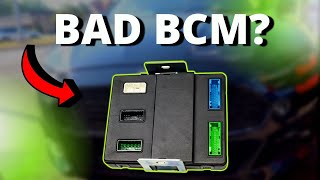
Shop the Parts Behind U2226
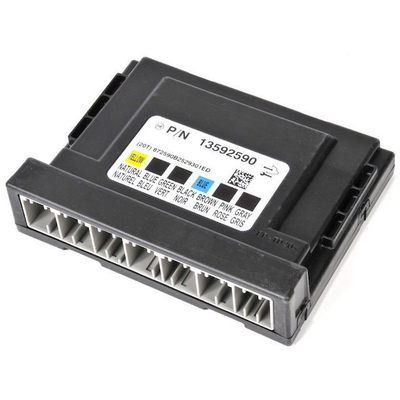
Below are the parts most often responsible for code U2226, ranked by how frequently each one is the actual culprit (per the diagnosis above). Tap any to see what we have for your vehicle.



The information in this article is provided for general reference and educational purposes only. Vehicle specifications, procedures, and part compatibility can vary by production date, trim level, and region. Always consult your vehicle's factory service manual and verify part numbers before purchasing or performing repairs. Safety-critical components such as airbags, seat belts, and braking systems should be installed by a qualified professional.
- 🧭 Diagnostic Flowchart
- 🎬 Helpful Videos
- 🛍️ Shop This Part
- What Does U2226 Mean?
- Can I Drive With U2226?
- Common Causes
- Symptoms
- Common Fixes & Costs
- Used vs. New Parts: Buying Guide
- What Happens If You Wait — Timeline
- Cost of Not Fixing It
- Diagnosis Steps
- When This Code Triggers (Freeze-Frame Conditions)
- Related Codes
- Climate & Environmental Factors
- How to Talk to a Mechanic About This Code
- Where to Take It: Dealer vs Independent vs Chain
- When to Walk Away From the Repair
- What Scan Tool You Need for This Code
- How to Clear the Code After You Fix It
- Will This Fail Emissions / State Inspection?
- Most Commonly Affected Vehicles
- Manufacturer-Specific Notes
- Real Owner Stories
- 2012 Dodge Ram 1500, 4.7L
- 2006 Chevy HHR 2LT
- 2014 Dodge Journey
- 2020 Chevrolet Blazer
- How to Prevent This Code From Triggering
- Frequently Asked Questions
- Can a bad battery cause code U2226?
- What is the most common misdiagnosis for a U2226?
- Can a software update fix a U2226 code?
- Is it safe to drive with a U2226 code?
- Why is the diagnostic fee for a U2226 code so high?
- What does CAN bus failure mean?
- Can I reset a control module to fix this?
- Key Takeaways
- 🎟️ Get 5% Off