

OBD-II Code U2227: Invalid or Unrecognized Code
What an invalid U2227 code means, why it appears, and how to diagnose the real problem
- U2227 is an invalid, unrecognized OBD-II code that points to a scan tool error rather than a specific vehicle fault.
- Cheap or outdated scan tools frequently misread the Barometric Pressure sensor code P2227, displaying it incorrectly as U2227.
- Stop diagnosing U2227 immediately and rescan the vehicle using a professional-grade tool to reveal the true underlying code.
- Base your repair decisions on physical symptoms like rough idling or a 10-20% drop in fuel economy, which typically indicate a failing BARO sensor.
What Does U2227 Mean?
Code U2227 is not a standard Diagnostic Trouble Code (DTC) recognized by the Society of Automotive Engineers (SAE). It indicates an issue with the scanner itself, a typographical error, or an undocumented manufacturer-specific protocol. It is most frequently a cheap scanner's misinterpretation of code P2227, which relates to the Barometric Pressure (BARO) sensor.
Technical definition: No official SAE/ISO definition exists for this code. It is not a recognized generic or manufacturer-specific Diagnostic Trouble Code (DTC). Any definition provided by a scan tool is speculative.
Can I Drive With U2227?
Yes, But With Caution. The code U2227 itself is invalid and provides no information. Base your decision to drive on actual symptoms. If the Check Engine Light is on and the car hesitates or gets poor fuel economy, you can drive short distances, but prolonged driving damages the catalytic converter (an $800-$2500 repair). Get the vehicle properly diagnosed with a professional scanner.
🎬 Watch: How to read and actually fix car fault codesCommon Causes
- Scan Tool Incompatibility or Error (Very Common) — Consumer-grade or outdated scan tools lack the software to correctly interpret all manufacturer-specific data streams. This causes them to display an incorrect code like U2227 instead of the true fault.
- Typo for a Similar Code (Common) — The user or technician made a typographical error when writing down or entering the code. It is almost always a mistake for P2227 (Barometric Pressure Sensor 'A' Circuit Range/Performance).
- ECM Software/Calibration Issue (Common) — Outdated Powertrain Control Module (PCM) or Engine Control Module (ECM) software misinterprets valid sensor signals, leading to false codes. Manufacturers release software updates to fix these specific bugs.
- Aftermarket Device Interference (Less Common) — Aftermarket devices plugged into the OBD-II port (insurance trackers, remote starters) disrupt Controller Area Network (CAN) bus communication, causing a scan tool to report erroneous codes.
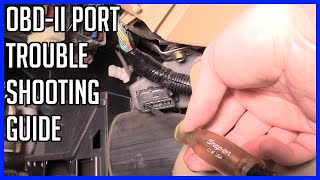
- Poor Connection at OBD-II Port (Less Common) — Dirt, corrosion, or bent pins on the vehicle's diagnostic port interrupt data transfer and cause the scanner to report an invalid code. 🎬 See how to troubleshoot a non-working OBD-II port
- Low Vehicle Voltage During Scan (Rare) — A weak battery causes low voltage across the vehicle's modules, interfering with the scan tool's ability to communicate correctly with the vehicle's computers.
Symptoms
- Check Engine Light is On — The Check Engine Light illuminates because of a real, underlying problem (usually P2227), not U2227.
- Vehicle Performance Issues — The car stalls, idles roughly, accelerates poorly, or hesitates, especially on inclines or at high altitudes.
- Reduced Fuel Economy — If the actual fault is P2227, the engine's air-fuel mixture runs rich or lean, dropping fuel efficiency by 10-20%.
- Vehicle Enters 'Limp Mode' — The actual underlying fault triggers a fail-safe 'limp mode,' severely restricting engine power and speed to prevent damage.
- Code U2227 Appears on Scan Tool (scan-tool only — no driver-felt sign) — The primary symptom is the display of 'U2227' or 'Unknown Code' on a basic diagnostic scanner.
Diagnostic Flowchart
Tap your situation to follow the diagnostic path that matches what you're seeing on this code.
Common Fixes & Costs
- Professional Diagnostic Scan to Find True Code — Parts: $0, Labor: $100-$200, ~1 hr book time (Professional)
- BARO Sensor Replacement (Resolving P2227)
— Parts: $50-$150, Labor: $75-$150, ~0.8 hr book time
(Intermediate)
: OEM GM 12711681 (Alt: Bosch 0261230283)
: OEM Hyundai/Kia 39300-84400 (Alt: Delphi PS10152) - Updating ECM/PCM Software — Parts: $0, Labor: $150-$250, ~1.2 hr book time (Professional)
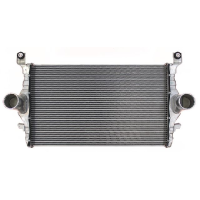
- Charge Air Cooler Replacement (GM 1.5L/2.0L Specific)
— Parts: $150-$450, Labor: $300-$850, ~3.5 hr book time
(Professional)
: OEM GM 84531383 (Alt: Spectra Premium 4401-1517) - ECM/PCM Replacement (Honda/Acura Specific)
— Parts: $700-$1100, Labor: $150-$300, ~1.5 hr book time
(Professional)
: OEM VIN-specific (e.g., 37820-5BA-A62) (Alt: Remanufactured units available) - Replacing a Blown OBD-II/Accessory Fuse — Parts: $1-$5, Labor: $0, ~0.1 hr book time (DIY)
Used vs. New Parts: Buying Guide
When a used part is worth it: For a common BARO/MAP sensor, buy new. A used part only makes sense for high-cost components like an ECM, and only from a specialized recycler that guarantees an exact part number match.
Donor-vehicle mileage cap: roughly under 50000 miles for the part to have meaningful remaining life.
Donor quality checklist:
- For ECMs, the part number must be an exact match to the original.
- Verify the donor vehicle was not scrapped due to an electrical or engine fire.
- Ensure the seller offers at least a 90-day warranty.
Decision logic:
- If The part is a BARO/MAP sensor → Always buy new. The cost is low and reliability is critical.
- If The part is an ECM and a new one is > $1000 → A used ECM from a low-mileage vehicle is viable, but professional programming is mandatory.
- If The part is a Charge Air Cooler → A used part is acceptable if it shows no signs of internal oil contamination or external damage.
Warranty tradeoff: Used parts carry a 30-90 day parts-only warranty. New aftermarket parts offer 1-year warranties. New OEM parts offer a 1-2 year warranty that includes labor if installed by a dealer.
Worst-case if a used part fails: $300-$600 if a used ECM fails, requiring repeat labor for removal, programming, and installation.
What Happens If You Wait — Timeline
- 0-1 month: Check Engine Light illuminates. The underlying P2227 fault is logged. No other symptoms are noticeable. (MPG impact: 0-5%% · Added cost: $0-$25 in wasted fuel)
- 1-3 months: Subtle performance issues appear. The driver notices slight engine hesitation, a rougher idle, and sluggish acceleration. (MPG impact: 5-15%% · Added cost: $50-$150 in wasted fuel)
- 3-8 months: The incorrect air-fuel mixture damages the catalytic converter. The sustained rich or lean condition causes the substrate to overheat. (MPG impact: 10-20%% · Added cost: $800-$2,500 (catalytic converter replacement required))
- 8+ months: Catastrophic failure is imminent. The catalytic converter clogs completely, causing severe power loss and internal engine damage. (MPG impact: 15-25%+% · Added cost: $1,500-$4,000+)
Cost of Not Fixing It
- 0-1 month: Reduced fuel economy by 10-20% and poor engine performance, including hesitation and rough idle. (Added cost: $20-$60 per month in extra fuel costs.)
- 1-6 months: An incorrect air-fuel ratio causes the catalytic converter to overheat, degrade, and fail prematurely. (Added cost: $1200-$2800 for catalytic converter replacement.)
- 6+ months: Prolonged driving with a rich or lean condition causes internal engine damage, including fouled spark plugs and carbon buildup on valves. (Added cost: $3000+ for extensive engine repairs.)
Diagnosis Steps
- Verify the Code with a Professional Scan Tool
Stop diagnosing U2227. Scan the vehicle with a high-quality, professional-grade scan tool (often available for free at auto parts stores). This reveals the true underlying code, which is usually P2227.
Tools: Professional OBD-II Scan Tool (Beginner) - Diagnose Based on Symptoms
Ignore the invalid U2227 code. If the engine idles roughly and hesitates, the true code is P2227. Proceed with diagnosing a faulty Barometric Pressure (BARO) sensor.
Tools: Professional OBD-II Scan Tool (Intermediate) - Check for Technical Service Bulletins (TSBs)
Search for TSBs related to P2227 for your specific vehicle. Manufacturers like GM have well-documented issues where P2227 is caused by a faulty charge air cooler, not the sensor itself.
Tools: Smartphone or Computer (Beginner) - Inspect the Air Intake System and BARO Sensor
Visually inspect the air filter to ensure it isn't clogged. Locate the BARO sensor (standalone, integrated into the MAF, or inside the ECM). Check its connector for corrosion and ensure it is securely plugged in.
Tools: Flashlight, Screwdriver (Beginner) - [PRO TIP] Test BARO Sensor Voltage and Compare to Live Data
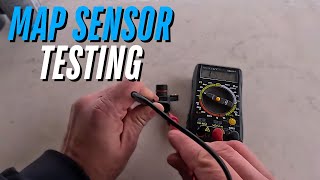
View the live data for the BARO sensor PID. At key-on, engine-off, the pressure reading (in kPa) must match your local atmospheric pressure (approx. 101.3 kPa at sea level). Back-probe the sensor's signal wire; voltage typically reads between 0.5V and 4.5V. A reading of 0V or a steady 5V indicates a circuit fault or failed sensor.
Tools: Professional Scan Tool, Multimeter, Back-probe Kit (Professional) - [ADVANCED] Test BARO Sensor Circuit Integrity
With the sensor unplugged and ignition off, verify the circuit. Test the power wire for a 5V reference signal. Test the ground wire for continuity to chassis ground (< 1 Ω). Test the signal wire for continuity to the ECM (< 5 Ω). An open circuit (OL) indicates a wiring problem.
Tools: Multimeter, Vehicle Wiring Diagram (Advanced) - [PRO TIP] Perform CAN Bus Network Health Check
If multiple 'U' codes are present, disconnect the battery and measure resistance between Pin 6 (CAN High) and Pin 14 (CAN Low) on the OBD-II port. A healthy CAN bus reads ~60 Ω. A reading of 120 Ω means a terminating resistor is missing or the circuit is open.
Tools: Multimeter (Professional) - Inspect the OBD-II Port and Fuses
Inspect the diagnostic port for bent pins or debris. If the scanner won't power on, locate and replace the blown OBD-II/accessory fuse.
Tools: Flashlight, Fuse Puller (Beginner)
When This Code Triggers (Freeze-Frame Conditions)
- Engine Coolant Temp: 180-200°F (Fully warmed up, often after 10+ minutes of driving.)
- RPM: 500-1000 RPM (Code sets at idle or when returning to idle, especially after a climb.)
- Engine Load: 20-40% (During steady-state cruise or when transitioning from high load to low load.)
- Altitude Change: Change of >1000 feet (The underlying P2227 code triggers after driving to a significantly higher or lower elevation.)
Related Codes
- P2227 — This is the true code. It means 'Barometric Pressure Sensor 'A' Circuit Range/Performance'. U2227 is a scanner misinterpretation of P2227.
- U0073 — A valid code for 'Control Module Communication Bus 'A' Off'. This indicates a real network problem diagnosed by testing the CAN bus resistance.
- U0100 — A valid code for 'Lost Communication With ECM/PCM 'A''. This points to a specific network failure requiring CAN bus integrity checks.
- P0606 — A valid code for 'PCM Processor Fault'. An internal failure of the Engine Control Module causes it to generate incorrect trouble codes.
Climate & Environmental Factors
- High Altitude: The underlying code P2227 triggers during or after driving to a higher altitude. A faulty BARO sensor fails to adjust to atmospheric pressure changes, causing hesitation.
- Cold and Humid Weather: On specific GM turbocharged engines, driving in cold (below 20°F) and humid conditions causes moisture to freeze inside the Charge Air Cooler (CAC), restricting airflow and triggering P2227.
How to Talk to a Mechanic About This Code
Say this: "I have a Check Engine Light on, and my basic scanner is showing an invalid code, U2227. I'd like to schedule a diagnostic appointment to identify the true trouble code. I suspect it is P2227 related to the barometric pressure sensor, so please check the sensor's live data and circuit."
This signals that you understand U2227 is not a real fault. It directs the technician toward the likely cause (P2227) and requests specific diagnostic steps rather than blindly replacing parts.
Avoid saying:
- 'My scanner says the code is U2227, please fix it.'
- 'My check engine light is on, can you just look at it?'
- 'Just do whatever you think is best.'
Questions to ask before authorizing the repair:
- What was the actual, valid trouble code your scanner found?
- Can you provide a printout of the live data for the barometric pressure sensor?
- Before replacing the sensor, did you confirm it has proper power, ground, and signal voltage?
- What is the warranty on the recommended parts and labor?
Where to Take It: Dealer vs Independent vs Chain
- Dealer:
Best for: Vehicles still under powertrain or emissions warranty., Known manufacturer-specific issues requiring a software update (ECM reflash) or covered by a TSB.
Downsides: Higher labor and diagnostic rates., May recommend replacing an entire expensive assembly when a wiring repair suffices. (Typical cost: +50% vs. baseline) - Independent Shop:
Best fit. A reputable independent shop with modern diagnostic equipment easily identifies the true code behind U2227 and performs sensor tests for a reasonable price.
Best for: Out-of-warranty vehicles where cost is a primary concern., Diagnosing and repairing common sensor and wiring issues.
Downsides: Quality varies; vet the shop's reviews and ASE certifications., May lack the latest manufacturer-specific tools for complex software updates. (Typical cost: +0% vs. baseline) - Chain Shop:
Avoid for diagnostics. A chain shop uses basic scanners that display invalid codes, leading to guessing and unnecessary parts replacement.
Best for: Simple, routine maintenance like oil changes.
Downsides: Technician skill and diagnostic equipment are inconsistent., High pressure to upsell unnecessary parts without a thorough diagnosis. (Typical cost: -10% vs. baseline)
When to Walk Away From the Repair
If the estimated repair cost exceeds 50% of the car's current private-party market value, sell or trade in the vehicle instead of repairing it.
- Car worth $4000, fix is $2200: Walk away. The repair cost is over 50% of the car's value. Put this money toward a replacement vehicle.
- Car worth $15000, fix is $1300: Fix it. The repair cost is well under the threshold and is a reasonable investment.
- Car worth $3000, fix is $1400: Walk away. This applies especially if the fix is a major component like a Honda ECM.
What Scan Tool You Need for This Code
Minimum: A scanner that reads manufacturer-specific codes and displays live sensor data. A basic $20 code reader causes the U2227 error.
A cheap code reader only tells you the invalid U2227 code exists. To diagnose the underlying P2227 fault, you must see live data from the Barometric Pressure sensor.
Budget: BlueDriver Pro (~$100) — Connects to your smartphone, reads manufacturer-specific codes to find the real DTC, and provides live data graphing for the BARO sensor.
Mid-range: Foxwell NT510 Elite / Innova 5610 (~$180-350) — Offers full system diagnostics, live data, and bidirectional controls to test sensor circuits.
Professional: Autel MaxiCOM MK808 / XTOOL D7 (~$450-600) — Provides full bidirectional control and advanced service functions essential for ruling out complex wiring or module issues.
How to Clear the Code After You Fix It
- Fix the underlying cause (e.g., replace BARO sensor).
- Use an OBD-II scan tool to clear all DTCs.
- Perform a complete drive cycle to run readiness monitors.
Drive cycle (~30 minutes): Cold start (sit for 8+ hours). Idle for 3 minutes with A/C on. Drive 15 minutes of mixed city/highway driving. Hold a steady 55 mph for 5 minutes. Coast down to 20 mph without braking. Let the vehicle cool down completely.
Readiness monitors affected: Catalyst Monitor, Evaporative System (EVAP) Monitor, Oxygen (O2) Sensor Monitor
Before emissions retest: drive at least 50 miles to fully set monitors.
Watch out for:
- Clearing the code without fixing the root cause guarantees the Check Engine Light returns.
- Disconnecting the battery resets all readiness monitors to 'Not Ready', causing an automatic emissions test failure.
- Failing to complete a full drive cycle leaves monitors 'Not Ready'.
Will This Fail Emissions / State Inspection?
Yes — this code typically fails an OBD-II emissions inspection.
- California: An illuminated Check Engine Light is an automatic failure. After repair, a full drive cycle must be completed to set readiness monitors before a re-test.
- New York: An illuminated Check Engine Light results in an automatic failure. For vehicles 2001 and newer, only one readiness monitor is allowed to be 'Not Ready'.
- Texas: In emissions counties, an illuminated Check Engine Light is an automatic failure. After clearing codes, you may only have one monitor 'Not Ready' to pass.
Most Commonly Affected Vehicles
- GMC / Chevrolet ()
- Hyundai / Kia ()
- Honda / Acura ()
- Ford ()
- Subaru ()
- Jeep ()
- Dodge ()
- Mazda ()
Manufacturer-Specific Notes
- : No recalls exist for code U2227 because it is not a valid DTC. TSBs are issued for real faults like P2227.
- : GM TSB #18-NA-020 states that on 2018+ turbocharged models, moisture freezes in the charge air cooler, triggering P2227 and P0299. The fix is a redesigned CAC, not a sensor.
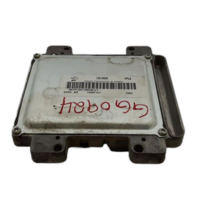
- : On many 2000s-2010s models, the barometric pressure sensor is integrated within the ECM. A confirmed BARO failure requires costly ECM replacement and programming.
- : Manufacturer-specific diagnostic tools (Ford IDS, GM GDS2) never display invalid codes like U2227. They work perfectly with native communication protocols.
Real Owner Stories
2019 Chevy Equinox with 63K miles
Check Engine Light and 'Reduced Engine Power' warning appeared. A cheap scanner showed U2227, P0299, and a MAF sensor code.
What they tried:
- A shop quoted $3000 for a new turbo.
- Owner sought a second opinion from a specialist.
- Research pointed to GM TSB #18-NA-020 regarding moisture in the charge air cooler (CAC).
Outcome: The cause was a moisture-restricted charge air cooler. The correct repair was replacing the CAC with an updated part, saving the owner from a $3000 turbo replacement.
Lesson: For GM vehicles showing P2227/P0299, always investigate the Charge Air Cooler (CAC) per TSB #18-NA-020 before replacing the turbo or sensors.
2013 Hyundai Sonata
Engine light came on, a scanner revealed codes P2227, P2228, and P2229.
What they tried:
- The owner identified the codes as relating to the Barometric Pressure sensor, which is part of the MAP sensor.
Outcome: The owner replaced the MAP sensor on the intake manifold. This simple, low-cost repair resolved all codes.
Lesson: On many Hyundai/Kia models, P2227 is a straightforward MAP/BARO sensor failure that is inexpensive to replace yourself.
2005 Honda Accord with P2227
Check Engine Light was on with code P2227. The BARO sensor is inside the ECM.
What they tried:
- The owner checked the wiring harness for damage and tested sensor circuits for proper voltage and ground.
Outcome: Tests confirmed the sensor circuit was faulty internally. The ECM was replaced and programmed, fixing the code.
Lesson: On Honda/Acura vehicles, a P2227 code often means the entire ECM needs replacement. Always confirm with circuit tests first.
2015 Vauxhall Mokka with emissions failure
Owner replaced the MAF sensor, causing new codes P2227 and P2228 to appear alongside a rough idle.
What they tried:
- Owner suspected the non-OEM MAF sensor was faulty.
- Reinstalled the original MAF sensor.
Outcome: The issue was caused by an incompatible aftermarket part. Reinstalling the original part cleared the codes.
Lesson: If a new code appears immediately after a DIY repair, the new part is the culprit. Use OEM parts for critical sensors.
How to Prevent This Code From Triggering
- Regularly Inspect and Clean the Air Filter (Every 15,000 miles) — A clogged air filter restricts airflow, causing incorrect pressure readings and triggering P2227.
- Clean Accessible BARO/MAP Sensors (Every 30,000 miles) — Sensors become contaminated with oil vapor. Gentle cleaning restores accurate readings.
- Inspect Sensor Wiring and Connectors (During routine maintenance) — Applying dielectric grease to connectors prevents moisture intrusion and corrosion.
- Avoid Short Trips in Humid/Cold Weather (Turbo Engines) (Daily habit) — Short trips prevent the engine from evaporating moisture in the Charge Air Cooler, leading to ice blockages and P2227 on GM models.
- Use Top-Tier Fuel (Every fill-up) — Detergents keep the intake system clean, reducing carbon buildup that affects sensors.
Frequently Asked Questions
Why can't I find a definition for code U2227?
You cannot find an official definition because U2227 is not a standard, recognized OBD-II code. It is an invalid reading that points to a problem with the scan tool, not the car.
My scan tool shows U2227. What is the very first thing I should do?
The first and most important step is to scan the vehicle with a different, professional-grade scan tool. This reveals the true, valid trouble code.
My mechanic wants to replace the BARO sensor based on U2227. Should I proceed?
No. U2227 is an invalid code and does not justify replacing any part. Insist on a proper diagnosis using a professional scanner to confirm the real DTC (likely P2227) and test the sensor's live data before authorizing a replacement.
What is the difference between a BARO sensor and a MAP sensor?
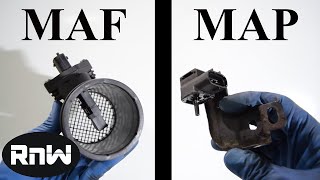
A Barometric Pressure (BARO) sensor measures outside atmospheric pressure, while a Manifold Absolute Pressure (MAP) sensor measures pressure inside the engine's intake manifold. Modern cars often combine these into a single sensor. Alternatively, the ECM uses the MAP sensor reading at ignition-on to determine barometric pressure.
Can a dirty air filter cause the underlying P2227 code?
Yes. A severely clogged air filter restricts airflow into the engine, causing pressure readings that fall outside the expected range and triggering a P2227 code.
Where is the barometric pressure sensor located?
The location varies by vehicle. It is a standalone sensor in the engine bay, integrated into the Mass Airflow (MAF) sensor housing, or built directly into the Engine Control Module (ECM).
Why do cheap scan tools show invalid codes?
Inexpensive scan tools use generic protocols that cannot properly interpret manufacturer-specific data or handle communication glitches. This causes them to misread the data stream and display an incorrect code number.
What is 'limp mode'?
Limp mode is a vehicle self-preservation feature. When the ECM detects a serious fault, it intentionally limits engine speed and power, allowing you to drive to a safe location without destroying the engine.
Key Takeaways
- U2227 is an invalid, unrecognized OBD-II code that points to a scan tool error rather than a specific vehicle fault.
- Cheap or outdated scan tools frequently misread the Barometric Pressure sensor code P2227, displaying it incorrectly as U2227.
- Stop diagnosing U2227 immediately and rescan the vehicle using a professional-grade tool to reveal the true underlying code.
- Base your repair decisions on physical symptoms like rough idling or a 10-20% drop in fuel economy, which typically indicate a failing BARO sensor.
Helpful Videos
Shop the Parts Behind U2227
Below are the parts most often responsible for code U2227, ranked by how frequently each one is the actual culprit (per the diagnosis above). Tap any to see what we have for your vehicle.


The information in this article is provided for general reference and educational purposes only. Vehicle specifications, procedures, and part compatibility can vary by production date, trim level, and region. Always consult your vehicle's factory service manual and verify part numbers before purchasing or performing repairs. Safety-critical components such as airbags, seat belts, and braking systems should be installed by a qualified professional.
- 🧭 Diagnostic Flowchart
- 🎬 Helpful Videos
- 🛍️ Shop This Part
- What Does U2227 Mean?
- Can I Drive With U2227?
- Common Causes
- Symptoms
- Common Fixes & Costs
- Used vs. New Parts: Buying Guide
- What Happens If You Wait — Timeline
- Cost of Not Fixing It
- Diagnosis Steps
- When This Code Triggers (Freeze-Frame Conditions)
- Related Codes
- Climate & Environmental Factors
- How to Talk to a Mechanic About This Code
- Where to Take It: Dealer vs Independent vs Chain
- When to Walk Away From the Repair
- What Scan Tool You Need for This Code
- How to Clear the Code After You Fix It
- Will This Fail Emissions / State Inspection?
- Most Commonly Affected Vehicles
- Manufacturer-Specific Notes
- Real Owner Stories
- 2019 Chevy Equinox with 63K miles
- 2013 Hyundai Sonata
- 2005 Honda Accord with P2227
- 2015 Vauxhall Mokka with emissions failure
- How to Prevent This Code From Triggering
- Frequently Asked Questions
- Why can't I find a definition for code U2227?
- My scan tool shows U2227. What is the very first thing I should do?
- My mechanic wants to replace the BARO sensor based on U2227. Should I proceed?
- What is the difference between a BARO sensor and a MAP sensor?
- Can a dirty air filter cause the underlying P2227 code?
- Where is the barometric pressure sensor located?
- Why do cheap scan tools show invalid codes?
- What is 'limp mode'?
- Key Takeaways
- 🎟️ Get 5% Off