

OBD-II Code U2228: High Voltage Battery System Communication Fault
What U2228 means, why it triggers, and how to fix it in your Electric Vehicle (EV)
- U2228 is a network communication code indicating invalid data from the high-voltage battery system, most frequently triggered by a failing 12-volt battery.
- Always perform a professional load test on the 12-volt battery before authorizing expensive module replacements, as voltage drops cause the majority of spurious communication faults.
- For 2023+ GM Ultium EVs (Lyriq, Blazer), resolve this code by having a dealer install the BECM software update specified in TSB PIT6044A.
- For 2016-2018 Chevrolet Volts, U2228 alongside U26xx codes indicates a hardware failure covered by GM's 15-year/150,000-mile Special Coverage N232432680.
- Do not ignore this code; it escalates from intermittent warnings to a complete no-start condition or sudden loss of propulsion within 1 to 3 months.
What Does U2228 Mean?
Code U2228 indicates the Vehicle Integration Control Module (VICM) lost communication with or received invalid data from the high-voltage Battery Energy Control Module (BECM). It does not mean the high-voltage battery pack has failed; rather, the computers managing the battery are failing to communicate properly. While most common on General Motors (GM) electric vehicles, the underlying network failures occur across all EV brands.
Technical definition: U2228 is a manufacturer-specific 'U' (Network) code. The SAE/ISO definition is 'Invalid Data Received From a Control Module'. In GM vehicles, the OnStar system defines it as: 'The Lithium-Ion Battery is not performing as expected.' This confirms the data transmitted from the BECM to the main vehicle computer is illogical, corrupted, or missing.
Can I Drive With U2228?
Yes, But With Caution. You can drive temporarily, but we strongly advise against it. The primary risk is being stranded without warning. This fault escalates rapidly to a no-start condition or a sudden loss of propulsion while driving, creating a severe safety hazard in traffic. Unlike a gasoline engine that sputters before dying, an EV shuts down abruptly. Drive only to a safe location or a repair shop.
Common Causes
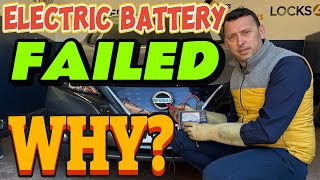
- Failing or Unstable 12-Volt Battery (Very Common) — The conventional 12-volt battery powers all onboard computers. A weak 12V battery causes unpredictable voltage drops during startup, corrupting communication between modules and triggering network codes like U2228 even when the high-voltage system is perfectly healthy. Always test this first. 🎬 Watch: 3 easy ways to test your EV's 12V battery.
- Software Anomaly in the Battery Energy Control Module (BECM) (Very Common) — A known software glitch in the BECM causes this code on 2023+ GM EVs (Lyriq, Blazer, Hummer). GM issued technical service bulletin PIT6044A acknowledging this defect, requiring a dealer-installed software update to resolve.
- Faulty Battery Energy Control Module (BECM) Hardware (Common) — The BECM hardware itself fails due to internal soldering defects. This is a widespread, documented issue on 2016-2019 Chevrolet Volts, prompting GM to issue a 15-year/150,000-mile warranty extension (Special Coverage N232432680). 🎬 See this step-by-step Chevy Volt BECM replacement walkthrough.
- Faulty Integrated Charging Control Unit (ICCU) or DC-to-DC Converter (Common) — On EVs like the Hyundai Ioniq 5 and Kia EV6, the ICCU fails to convert high-voltage power to charge the 12V battery. The 12V battery dies, triggering a cascade of communication faults identical to a U2228 code. 🎬 Watch: Why Hyundai and Kia ICCUs fail and what to do.
- Interference from Third-Party OBD-II Devices (Less Common) — Leaving an insurance tracker or a low-quality Bluetooth scanner plugged into the OBD-II port interferes with the Controller Area Network (CAN bus), generating spurious communication faults.
- Wiring or Connector Issues (Rare) — Corrosion, moisture intrusion, or a loose connection in the wiring harness between the VICM and the BECM interrupts communication. This includes damaged CAN bus wiring or module ground wires.
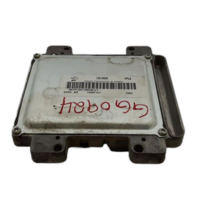
- Faulty Vehicle Integration Control Module (VICM) (Rare) — The VICM is the central computer controlling energy storage. A failure within this main module causes it to misinterpret healthy data from the battery system, setting a false U2228 code.
Symptoms
- Service High Voltage System Warning Message — A critical warning message appears on the driver information center or instrument panel.
- Vehicle Will Not Start or Enter 'Ready' Mode — The communication fault prevents the high-voltage contactors from closing, making the vehicle impossible to drive.
- Inability to Charge or Interrupted Charging — The vehicle refuses to initiate a charging session or stops charging unexpectedly because it cannot verify battery status.
- Reduced Propulsion Power ('Limp Mode') — The vehicle enters a protective reduced power mode, resulting in noticeably slower acceleration and a limited top speed.
- Check Engine Light / Malfunction Indicator Lamp (MIL) On — The check engine light illuminates to alert the driver of a stored powertrain fault.
- Unpredictable State of Charge Reading — The displayed battery percentage or range estimate fluctuates erratically due to invalid data from the battery management system.
Diagnostic Flowchart
Tap your situation to follow the diagnostic path that matches what you're seeing on this code.
Common Fixes & Costs
- Replace 12-Volt Battery
— Parts: $150-$300, Labor: $50-$100, ~0.5 hr book time
(DIY)
Cadillac Lyriq (2023+): OEM Group Size 47 (H5) AGM (Alt: Bosch S6554B, DieHard Platinum H5-AGM)
Chevrolet Volt (2016-2019): OEM Group Size 47 (H5) AGM (Alt: DieHard Platinum H5-AGM) - Reprogram Battery Energy Control Module (BECM) — Parts: $0, Labor: $150-$300 (Covered by warranty on new vehicles), ~1.5 hr book time (Professional)
- Replace Battery Energy Control Module (BECM)
— Parts: $400-$800, Labor: $900-$1200 (Covered under GM 15yr/150k warranty for Volts), ~7.5 hr book time
(Professional)
Chevrolet Volt (2016-2018): OEM Dealer-sourced part, approx. $450 + core (Alt: Not available) - Replace Integrated Charging Control Unit (ICCU)
— Parts: $1,000-$1,800, Labor: $300-$600 (Covered by Hyundai/Kia recall), ~3.5 hr book time
(Professional)
Hyundai Ioniq 5 / Kia EV6: OEM 36400-1XFA0A (Alt: Not available) - Diagnostic Inspection and System Reset — Parts: $0, Labor: $150-$250, ~1.5 hr book time (Professional)
DIY vs Professional
- Replace 12-Volt Battery 🟢 Beginner
Tools: 10mm wrench, socket set. - Reprogram Battery Energy Control Module (BECM) 🟢 Beginner
Tools: GM MDI 2, SPS Subscription. - Replace Battery Energy Control Module (BECM) 🟢 Beginner
Tools: Vehicle lift, Class 0 high-voltage gloves, battery lift table, programming tools. - Replace Integrated Charging Control Unit (ICCU) 🟢 Beginner
Tools: High-voltage safety equipment, interior trim tools, calibration software.
Used vs. New Parts: Buying Guide
When a used part is worth it: Never buy a used Battery Energy Control Module (BECM) unless new parts are on indefinite backorder. These modules are VIN-locked and require dealer-level programming. Used modules frequently fail programming, wasting labor costs.
Donor-vehicle mileage cap: roughly under 50000 miles for the part to have meaningful remaining life.
Donor quality checklist:
- Verify the exact part number matches perfectly.
- Ensure the donor vehicle was not scrapped due to flood or high-voltage failure.
- Obtain the donor VIN for reprogramming authorization.
Decision logic:
- If The vehicle is under the 8yr/100k EV warranty or GM's 15yr/150k special coverage → Use a new OEM part installed by a dealer for free.
- If A new OEM part is available and the vehicle is out of warranty → Buy the new OEM part to guarantee compatibility and secure a warranty.
- If New parts are on backorder for months and the vehicle is bricked → Use a salvaged part only if an EV-specialist shop guarantees they can program it.
Warranty tradeoff: Salvage yard parts offer 30-day warranties that do not cover the $800+ labor to drop the battery pack. New OEM parts include a 12-24 month warranty covering parts and labor.
Worst-case if a used part fails: $1500 (Cost of the used part plus non-refundable labor for dropping the HV battery and failed programming attempts).
What Happens If You Wait — Timeline
- 0-4 weeks: Intermittent 'Service High Voltage System' messages appear and disappear. Code U2228 is stored in history. (Added cost: $0)
- 1-3 months: Warnings become frequent. Occasional no-start conditions or interrupted charging sessions occur. (Added cost: $150-$300 (Towing and diagnostic fees).)
- 2-6 months: Vehicle enters 'Reduced Propulsion Power' mode or refuses to enter 'Ready' mode. The car is unreliable. (Added cost: $300 (Cost of a new 12V battery destroyed by repeated deep discharges).)
- 6+ months: Complete failure of the BECM or ICCU. The vehicle is permanently bricked until the module is replaced. (Added cost: $1500-$4000 (Full cost of out-of-warranty module replacement).)
Cost of Not Fixing It
- Immediate: Intermittent no-start conditions and inability to charge. High risk of being stranded. (Added cost: $150-$300 (Towing and diagnostic fees).)
- Weeks to Months: Sudden loss of propulsion while driving. Continued communication errors stress other control modules, causing cascading failures. (Added cost: $500-$2000 (Damage to other modules or accident costs from sudden power loss).)
- Long-Term: Permanent failure of the BECM or ICCU, rendering the vehicle immobile and destroying the 12V battery through repeated deep discharges. (Added cost: $1500-$4000 (Full cost of out-of-warranty module replacement and a new 12V battery).)
Diagnosis Steps
- Perform a Professional Load Test on the 12V Battery
Before touching any high-voltage components, comprehensively test the 12-volt battery. Use an electronic battery tester to perform a load test. A battery showing 12.4 volts can still fail under load. A weak 12V battery is the primary cause of network codes.
Tools: Digital Multimeter, Electronic Battery Tester (Beginner) - Read All Trouble Codes from All Modules
Use an advanced OBD-II scanner to read manufacturer-specific codes from all modules. Confirm U2228 is present and document any other codes (like P1E00 or U26xx), as they dictate the diagnostic path.
Tools: Advanced OBD-II Scanner (Beginner) - Check for Technical Service Bulletins (TSBs) and Recalls
Search your VIN for TSBs or special coverage programs. For 2023+ GM EVs, TSB PIT6044A dictates a software update. For Chevy Volts, program N232432680 dictates a free hardware replacement.
Tools: Internet Access, VIN (Beginner) - Perform a GM-Specific Module Reset Cycle
Disconnect the negative terminal of the 12V battery and wait 15 minutes. Reconnect it, place the vehicle in 'Ready' mode for 10 seconds, then turn it off. Remove the key fob at least 10 feet away and wait another 15 minutes. Repeat this cycle twice to clear temporary software anomalies.
Tools: 10mm Wrench (Intermediate) - Reprogram the Battery Energy Control Module (BECM)
If TSB PIT6044A applies, a dealer must reprogram the BECM with the latest calibration using GM's MDI 2 tool. This permanently resolves the software glitch causing the code on newer Ultium vehicles.
Tools: GM MDI 2, SPS Subscription (Professional) - Check CAN Bus Resistance at the OBD-II Port
With the 12V battery disconnected, measure resistance between Pin 6 (CAN High) and Pin 14 (CAN Low) on the OBD-II port. A healthy network reads 60 Ohms. A reading of 120 Ohms indicates a broken wire or offline module. 0 Ohms indicates a short circuit.
Tools: Digital Multimeter (Advanced) - Inspect Module Wiring and Connectors
Physically inspect the wiring harness and connectors for the BECM and VICM. Look for corrosion, moisture intrusion, or loose pins disrupting the network. This requires high-voltage safety protocols.
Tools: High-Voltage Safety Equipment, Service Manual (Advanced) - Analyze CAN Bus Waveform with an Oscilloscope
Connect an oscilloscope to Pins 6 and 14. A healthy CAN bus shows clean, symmetrical square waves (2.5V to 3.5V for High, 2.5V to 1.5V for Low). Distorted patterns indicate a faulty module or external interference.
Tools: Automotive Oscilloscope (Professional) - Check Module Internal Resistance
Disconnect the suspected faulty module. Measure resistance between its CAN High and CAN Low pins (should be 28k-50k Ohms). Measure from each CAN pin to ground (should be open/mega-ohms). Low resistance confirms internal module damage.
Tools: Digital Multimeter (Advanced) - Contact Technical Assistance Center (TAC)
If the code returns after software updates and wiring verification, open a case with the manufacturer's Technical Assistance Center for engineering-level diagnostic support.
Tools: Dealership Service Information Access (Professional)
When This Code Triggers (Freeze-Frame Conditions)
- 12V Battery Voltage: 11.8V - 12.3V (Occurs during vehicle startup sequence before the DC-to-DC converter engages. A momentary voltage drop triggers the communication failure.)
- Vehicle State: Transitioning (Off to Ready) (The fault logs as control modules initialize and establish network handshakes, or immediately after a charging session completes.)
- High-Voltage Contactor Status: Commanded Closed (Sets when the main computer commands the high-voltage contactors to close but receives no valid confirmation from the BECM.)
- Time Since Startup: < 10 seconds (Logs almost immediately after the vehicle is powered on, confirming a handshake failure between modules.)
Related Codes
- P1E00 — A generic GM 'messenger' code requesting MIL illumination. It confirms a fault exists in a powertrain module but provides no diagnostic value. Always diagnose the U2228 instead.
- U0111 — Means 'Lost Communication With BECM'. U0111 indicates the module is completely offline, while U2228 indicates it is online but sending corrupted data.
- U2603-U2624 — GM codes indicating internal BECM hardware failure. Seeing these alongside U2228 on a Chevy Volt guarantees the BECM must be replaced.
- 2228C8 — A BMW code meaning 'Aged auxiliary battery'. It identifies the exact same root cause (weak 12V battery) that triggers U2228 in GM vehicles.
- P1A90 — A Hyundai code for DC/DC converter failure. Indicates the ICCU is failing, which drains the 12V battery and mimics U2228 symptoms.
Climate & Environmental Factors
- Cold Weather: Cold temperatures severely reduce 12-volt battery performance. A weak battery drops voltage during cold starts, triggering U2228 communication faults.
- High Humidity: Accelerates corrosion on wiring connectors and module pins, increasing circuit resistance and corrupting CAN bus signals.
How to Talk to a Mechanic About This Code
Say this: "I have a 'Service High Voltage System' warning and code U2228. Please start by performing a professional load test on the 12V battery. If the 12V battery is healthy, check for software updates for the Battery Energy Control Module, like GM's TSB PIT6044A, before proceeding with hardware diagnostics."
Directs the technician to check the two cheapest fixes (12V battery and software) before assuming a costly hardware failure. Establishes a logical diagnostic path.
Avoid saying:
- 'My check engine light is on, can you look at it?'
- 'The car says Service High Voltage System, I think the main battery is dead.'
- 'Just fix whatever is wrong.'
Questions to ask before authorizing the repair:
- What was the result of the 12V battery load test? Can I see the printout?
- Did you check for open recalls, special coverage programs, or TSBs for this code?
- Is this repair covered under the powertrain or emissions warranty?
- If replacing a module, is the part in stock and what is the estimated downtime?
- What is the warranty on parts and labor for this repair?
Where to Take It: Dealer vs Independent vs Chain
- Dealer:
Best first choice. Most causes of U2228 are covered by warranty, recalls, or TSBs that only a dealer can perform.
Best for: Vehicles under EV/powertrain warranty., Repairs covered by recalls or special coverage (Chevy Volt BECM, Hyundai ICCU)., Software updates requiring manufacturer tools (GM BECM reprogram).
Downsides: Highest labor rates., May recommend expensive module replacement without thorough 12V diagnostics. (Typical cost: +50% vs. baseline) - Independent Shop:
Good for confirming a 12V battery issue, but they will likely send you to the dealer for software or module replacement.
Best for: Out-of-warranty vehicles needing a 12V battery replacement., Second opinions on expensive dealer quotes., Shops specializing specifically in EV repair.
Downsides: Lacks subscription-based tools to reprogram modules., General mechanics lack high-voltage training. (Typical cost: +0% vs. baseline) - Chain Shop:
Avoid for diagnosis. Use only for a simple 12V battery replacement.
Best for: Purchasing and installing a 12V battery if you confirmed it is the root cause.
Downsides: Technicians lack training for high-voltage diagnostics., High risk of misdiagnosis. (Typical cost: -10% vs. baseline)
When to Walk Away From the Repair
If the out-of-warranty repair cost for a major component (BECM or ICCU) exceeds 50% of the car's current private-party value, sell the vehicle as-is.
- Car worth $12000, fix is $7000: Walk away. The repair is 58% of the vehicle's value.
- Car worth $25000, fix is $3500: Fix it. The repair is 14% of the vehicle's value.
- Car worth $8000, fix is $4500: Walk away. The repair is 56% of the car's value.
What Scan Tool You Need for This Code
Minimum: A scanner that reads manufacturer-specific (enhanced) trouble codes from ALL vehicle modules, specifically the Battery Energy Control Module (BECM).
A generic $20 code reader only reads engine codes and will fail to see the U2228 code stored in the battery module, leaving you blind to the actual fault.
Budget: Veepeak OBDCheck BLE + Car Scanner App (~$40) — Connects to specific EV modules to read detailed battery data and manufacturer-specific fault codes.
Mid-range: BlueDriver Pro (~$120) — Reads enhanced codes for EV modules and provides live data to monitor 12V system voltage in real-time.
Professional: Autel MaxiCOM MK808 (~$450) — Offers full bidirectional control and module programming capabilities required if a BECM needs replacement.
Rent vs buy: Buy a budget pick for one-time checks. Auto parts stores offer free scanning, but verify their scanner reads EV battery modules.
How to Clear the Code After You Fix It
- Ensure the 12V battery is fully charged and load-tested.
- Use an advanced OBD-II scan tool to clear DTCs from all modules.
- Perform the GM-specific 15-minute module reset cycle.
- Complete a full drive cycle to allow high-voltage self-tests to run.
Drive cycle (~30 minutes): Start with a cold-soaked vehicle (off for 8+ hours). Start and idle for 3 minutes. Accelerate to 55 mph and hold steady for 5 minutes. Coast down to 20 mph without braking. Accelerate to 60 mph and hold for 5 minutes. Turn off and let cool completely.
Readiness monitors affected: High-Voltage System Self-Tests, Battery Management System Monitors
Before emissions retest: drive at least 50 miles to fully set monitors.
Watch out for:
- Disconnecting the 12V battery does not clear the fault history from all modules and resets readiness status, causing emissions test failures.
- The code returns immediately if the 12V battery is weak or the BECM software is outdated.
- Skipping the exact 15-minute wait times during the GM reset cycle prevents modules from fully powering down.
Will This Fail Emissions / State Inspection?
Yes — this code typically fails an OBD-II emissions inspection.
- California: An illuminated Check Engine Light is an automatic failure. All readiness monitors must be set to 'Ready' after repairs.
- New York: An illuminated Malfunction Indicator Lamp automatically fails the NYS OBD-II inspection.
- Texas: In emissions-testing counties, an active U2228 code causes an automatic failure of the OBD-II test.
Most Commonly Affected Vehicles
- Cadillac Lyriq (2023-2025) — Covered by GM TSB PIT6044A. Caused by a BECM software anomaly requiring a dealer update.
- Chevrolet Blazer EV, Equinox EV, Silverado EV (2024-2025) — Built on the Ultium platform and covered under TSB PIT6044A for software reprogramming.
- GMC Hummer EV (2022-2025) — Susceptible to the Ultium platform software-related communication fault (TSB PIT6044A).
- Chevrolet Volt (2016-2019) — Caused by a hardware failure of the BECM. Covered by GM Special Coverage N232432680 (15 years/150,000 miles).
- Chevrolet Bolt EV / Bolt EUV (2017-2023) — Frequently triggered by a weak 12V battery causing charging interruptions.
- BMW 330e, X5 40e/45e (2016-2022) — Sets analogous code 2228C8 ('Aged auxiliary battery'), highlighting the 12V battery's role in hybrid drivetrain faults.
- Ford Mustang Mach-E (2021-2023) — Exhibits identical symptoms due to a PCM software bug draining the 12V battery (TSB 21-2091).
- Hyundai / Kia Ioniq 5, EV6 (2022-2024) — Symptoms caused by ICCU failure preventing 12V charging. Addressed by NHTSA recall 24V-164-000.
Manufacturer-Specific Notes
- General Motors: GM has two distinct causes based on age. 2023+ Ultium EVs require a software update (TSB PIT6044A). 2016-2019 Volts require a hardware replacement covered by a 15-year warranty extension (N232432680).
- Ford: Mach-E models exhibit identical no-start symptoms caused by a PCM software flaw that drains the 12V battery while parked (TSB 21-2091).
- Hyundai / Kia: E-GMP platform vehicles suffer catastrophic ICCU failures that stop 12V charging. This is covered by a major safety recall (NHTSA 24V-164-000).
- BMW: BMW uses a highly specific code (2228C8) that explicitly tells the technician the 12V auxiliary battery is aged, bypassing generic communication codes.
Real Owner Stories
2017 Chevrolet Volt at 120K miles with BECM hardware failure.
Car displayed 'Low Propulsion' and 'Shift to Park', then refused to shift into gear. The next day, it showed 'Unable to Charge'.
Outcome: Dealer diagnosed a failed BECM. The owner faced a two-week wait for parts. This is a classic hardware failure symptom for this model.
Lesson: For a 2016-2018 Volt, 'Shift to Park' and inability to charge are textbook signs of BECM failure. Utilize GM's Special Coverage N232432680 for a free repair.
2023 Hyundai Ioniq 5 with recurring 12V battery death due to ICCU issue.
Owner found their Ioniq 5 with a dead 12V battery. The battery was replaced, but the problem returned weeks later.
Outcome: The ICCU replacement resolved the drain, but the owner experienced significant downtime due to parts backorders and initial misdiagnosis.
Lesson: On an Ioniq 5 or EV6, a dead 12V battery is a symptom of a failing ICCU. Insist the dealer investigate NHTSA recall 24V-164-000.
2022 Chevrolet Bolt EUV with sudden 12V battery failure.
At 50,000 miles, the vehicle threw a cascade of error messages (ESC, ABS, power steering) before dying completely.
Outcome: Replacing the 4-year-old 12V AGM battery solved the problem. The new battery measured 13.8V with the car on, confirming the DC-to-DC converter was healthy.
Lesson: A failing 12V battery causes catastrophic multi-system warnings. Always load-test the 12V battery before assuming a major high-voltage failure.
2023 Cadillac Lyriq with intermittent software issues.
Owner experienced random auto-braking, a failing 12V battery, and U2228 communication faults.
Outcome: The updates resolved the U2228 code, confirming it was a software anomaly, though the owner traded the vehicle due to overall reliability concerns.
Lesson: On new GM Ultium vehicles, U2228 is almost always a software bug. Ensure the dealer applies TSB PIT6044A before authorizing hardware repairs.
How to Prevent This Code From Triggering
- Proactively replace the 12V AGM battery every 4 years. (Once per 4 years) — EVs provide few symptoms of a weak 12V battery before catastrophic multi-system failures occur. Proactive replacement prevents stranding.
- Use an AGM-safe 12V trickle charger if parked for over 3 weeks. (For long-term parking) — The EV's system that maintains the 12V battery times out after 30 days, leading to a dead battery. A trickle charger prevents this.
- Keep the main high-voltage battery above 30% charge. (Daily habit) — Many EVs stop recharging the 12V battery if the main pack drops below 30%, straining the 12V system.
- Ensure all vehicle software and recalls are updated. (Annually) — Manufacturers issue OTA and dealer updates to fix communication bugs like U2228.
- Remove third-party OBD-II devices when not in use. (After each use) — Insurance dongles interfere with the CAN bus network, creating data collisions and false codes.
Frequently Asked Questions
Why does my EV need a 12V battery?
An EV uses a 12V battery to power standard electronics and the computers required to 'boot up' the high-voltage system. The main battery cannot be connected at all times for safety.
Can a bad 12V battery cause a high-voltage code?
Yes. Unstable 12V power causes communication glitches between control modules, triggering network codes like U2228 even if the main EV battery is healthy.
What is GM Special Coverage N232432680?
It is a GM program extending the BECM warranty for 2016-2018 Chevrolet Volts to 15 years or 150,000 miles. It addresses widespread hardware failures in these specific vehicles.
What are common misdiagnosis mistakes for U2228?
Assuming the problem is fixed if the warning light turns off temporarily. Another mistake is replacing the expensive BECM before load-testing the 12V battery and checking for software updates.
Why might the U2228 code disappear on its own?
The code triggers from temporary conditions, like a momentary 12V voltage drop during startup. Once the vehicle runs and voltage stabilizes, the system may clear the code. However, a recurring code requires diagnosis.
Is it safe to clear the U2228 code myself?
You can clear it, but if it returns, you have a persistent fault. Because this code can cause the vehicle to shut down while driving, professional diagnosis is required.
Will this repair be covered under my EV battery warranty?
Software updates and BECM replacements are covered under the 8-year/100,000-mile EV warranty or specific extended coverages. However, if the cause is a failing 12V battery, that is a wear item and is not covered.
How long does it take to replace a BECM?
In a Chevrolet Volt, the BECM is inside the main battery pack, requiring 6-10 hours of labor to drop and disassemble. On newer EVs, it is more accessible, but parts backorders can cause weeks of delay.
What is a Battery Energy Control Module (BECM)?
The BECM is the computer that monitors the high-voltage battery's charge, temperature, and cell health, communicating this data to the rest of the vehicle.
What is an OTA update?
Over-The-Air (OTA) updates are software patches sent wirelessly to your vehicle. GM plans future OTA updates to permanently fix the software anomaly causing U2228 on Ultium vehicles.
Key Takeaways
- U2228 is a network communication code indicating invalid data from the high-voltage battery system, most frequently triggered by a failing 12-volt battery.
- Always perform a professional load test on the 12-volt battery before authorizing expensive module replacements, as voltage drops cause the majority of spurious communication faults.
- For 2023+ GM Ultium EVs (Lyriq, Blazer), resolve this code by having a dealer install the BECM software update specified in TSB PIT6044A.
- For 2016-2018 Chevrolet Volts, U2228 alongside U26xx codes indicates a hardware failure covered by GM's 15-year/150,000-mile Special Coverage N232432680.
- Do not ignore this code; it escalates from intermittent warnings to a complete no-start condition or sudden loss of propulsion within 1 to 3 months.
Helpful Videos

Shop the Parts Behind U2228
Below are the parts most often responsible for code U2228, ranked by how frequently each one is the actual culprit (per the diagnosis above). Tap any to see what we have for your vehicle.



The information in this article is provided for general reference and educational purposes only. Vehicle specifications, procedures, and part compatibility can vary by production date, trim level, and region. Always consult your vehicle's factory service manual and verify part numbers before purchasing or performing repairs. Safety-critical components such as airbags, seat belts, and braking systems should be installed by a qualified professional.
- 🧭 Diagnostic Flowchart
- 🎬 Helpful Videos
- 🛍️ Shop This Part
- What Does U2228 Mean?
- Can I Drive With U2228?
- Common Causes
- Symptoms
- Common Fixes & Costs
- DIY vs Professional
- Used vs. New Parts: Buying Guide
- What Happens If You Wait — Timeline
- Cost of Not Fixing It
- Diagnosis Steps
- When This Code Triggers (Freeze-Frame Conditions)
- Related Codes
- Climate & Environmental Factors
- How to Talk to a Mechanic About This Code
- Where to Take It: Dealer vs Independent vs Chain
- When to Walk Away From the Repair
- What Scan Tool You Need for This Code
- How to Clear the Code After You Fix It
- Will This Fail Emissions / State Inspection?
- Most Commonly Affected Vehicles
- Manufacturer-Specific Notes
- Real Owner Stories
- 2017 Chevrolet Volt at 120K miles with BECM hardware failure.
- 2023 Hyundai Ioniq 5 with recurring 12V battery death due to ICCU issue.
- 2022 Chevrolet Bolt EUV with sudden 12V battery failure.
- 2023 Cadillac Lyriq with intermittent software issues.
- How to Prevent This Code From Triggering
- Frequently Asked Questions
- Why does my EV need a 12V battery?
- Can a bad 12V battery cause a high-voltage code?
- What is GM Special Coverage N232432680?
- What are common misdiagnosis mistakes for U2228?
- Why might the U2228 code disappear on its own?
- Is it safe to clear the U2228 code myself?
- Will this repair be covered under my EV battery warranty?
- How long does it take to replace a BECM?
- What is a Battery Energy Control Module (BECM)?
- What is an OTA update?
- Key Takeaways
- 🎟️ Get 5% Off