

OBD-II Code U2229: Hybrid Battery Pack Input Voltage
What U2229 means, why it triggers, and how to fix it
- Code U2229 indicates a critical high-voltage battery fault in Ford or GM hybrids, requiring an immediate stop to prevent a sudden shutdown.
- A failing high-voltage battery pack is the most common cause, costing between $2,500 and $5,000 to replace with a remanufactured or new unit.
- Always test the standard 12-volt battery first, as a weak 12V system triggers false U2229 communication errors across the hybrid modules.
- On 2022-2024 GM electric vehicles, this code is frequently a software glitch resolved by a dealer-installed or Over-The-Air (OTA) update.
- Never attempt DIY repairs on the high-voltage system; the 300V+ DC current is lethal and requires specialized insulated tools and training.
What Does U2229 Mean?
Code U2229 means the Powertrain Control Module (PCM) detects abnormal voltage from the high-voltage hybrid battery. Primarily used by Ford, Lincoln, Mercury, and recently General Motors EVs, it signals a critical high-voltage system failure.
Technical definition: OBD-II code U2229 is a manufacturer-specific code defined as 'Hybrid Battery Pack Input Voltage'. It triggers when the Powertrain Control Module (PCM) or Battery Energy Control Module (BECM) detects an incorrect, unstable, or unexpected voltage reading from the high-voltage battery assembly.
Can I Drive With U2229?
No — Do Not Drive. Do not drive. This code indicates a critical high-voltage battery fault that causes unexpected shutdowns or no-start conditions, leaving you stranded and risking further powertrain damage.
Common Causes
- High-Voltage Battery Pack Failure (Very Common) — The high-voltage battery pack has degraded or suffered an internal failure, such as dead cells. This is the most frequent cause on older, high-mileage hybrids.
- Battery Energy Control Module (BECM) Failure (Common) — The module managing the high-voltage battery's health and charge state has failed. Ford has issued multiple service bulletins and recalls for this specific issue.
- High-Voltage Wiring or Connection Failure (Common) — Main battery connections, service disconnect plugs, or high-voltage cables have developed corrosion, looseness, or chafing, causing severe voltage drops.
- Hybrid Battery Cooling System Failure (Common) — Failed cooling fans or liquid pumps cause the battery to overheat. The BECM cuts power to protect the cells, triggering voltage-related codes.
- BECM/PCM Software Anomaly (Less Common) — On newer GM EVs (2022+), a software glitch within the control modules triggers this code without a physical hardware failure, requiring a dealership update.
- DC/DC Converter Failure (Less Common) — The component converting high voltage to 12-volt power fails, disrupting the entire electrical system.
- Low Voltage Interlock Circuit Fault (Uncommon) — A fault in the low-voltage safety loop, which confirms all high-voltage connectors are secure, forces an immediate system shutdown.
- Faulty Battery Temperature Sensor (Uncommon) — A faulty temperature sensor provides incorrect data to the BECM, causing it to misinterpret battery health and trigger voltage faults as a protective measure.
Symptoms
- Vehicle Will Not Start — The high-voltage system fails to boot, leaving the car completely unresponsive.
- 'Stop Safely Now' Message — A critical dashboard warning instructs the driver to pull over immediately before an imminent, forced vehicle shutdown.
- Reduced Power or 'Limp Mode' — The vehicle severely limits speed and acceleration to protect powertrain components.
- Loss of Hybrid Functionality — The car runs exclusively on the gasoline engine, resulting in sluggish performance and plummeted fuel economy.
- Inability to Charge (PHEV/EV models) — Plug-in hybrids and EVs refuse to accept a charge when plugged in due to the high-voltage fault.
- Check Engine or Wrench Light On — The primary dashboard indicator illuminates to alert the driver of the stored U2229 code.
- Erratic Gauge Behavior — The battery state of charge gauge fluctuates wildly or shows empty despite having a charge.
Diagnostic Flowchart
Tap your situation to follow the diagnostic path that matches what you're seeing on this code.
Common Fixes & Costs
- Replace High-Voltage Hybrid Battery Pack — Parts: $2,500-$5,000, Labor: $400-$800, ~3.5 hr book time (Professional)
- Replace Battery Energy Control Module (BECM) — Parts: $800-$1,500, Labor: $200-$400, ~3 hr book time (Professional)
- Update Control Module Software — Parts: $0, Labor: $150-$300, ~1.5 hr book time (Professional)
- Clean or Repair High-Voltage Wiring/Connectors — Parts: $50-$200, Labor: $300-$800, ~4 hr book time (Professional)
- Replace DC/DC Converter — Parts: $700-$1,800, Labor: $200-$500, ~2.5 hr book time (Professional)
Used vs. New Parts: Buying Guide
When a used part is worth it: A used or remanufactured High-Voltage Battery makes sense when the vehicle is over 10 years old, has high mileage, and a new OEM battery exceeds the car's value.
Donor-vehicle mileage cap: roughly under 80000 miles for the part to have meaningful remaining life.
Donor quality checklist:
- Choose a reputable remanufacturer offering a 1-3 year warranty.
- Confirm the remanufacturer tests, balances, and reconditions all modules, rather than just replacing bad cells.
- Avoid salvage yard batteries from flood-damaged cars.
- Ensure the part number for a used BECM is an exact match to avoid software incompatibility.
Decision logic:
- If Vehicle is under warranty (typically 8 years/100,000 miles) → Get a new OEM part installed at the dealer.
- If Vehicle is newer and you plan to keep it for 5+ years → Buy a new OEM or high-quality aftermarket battery for maximum longevity.
- If Vehicle is older and budget is tight → A remanufactured battery with a solid warranty is the most logical financial choice.
Warranty tradeoff: Salvage parts offer 30-90 day warranties. Remanufactured batteries offer 1-3 year warranties. New OEM parts installed by a dealer carry a 1-2 year parts and labor warranty.
Worst-case if a used part fails: $500-$1000 in duplicate labor costs if a used part fails shortly after installation.
What Happens If You Wait — Timeline
- 0-1 month: Check Engine Light appears. Vehicle exhibits intermittent hesitation or slight drop in EV range. (MPG impact: 5-10%% · Added cost: $0)
- 1-3 months: Intermittent no-start conditions occur. 'Stop Safely Now' message forces shutdowns. Hybrid system disables. (MPG impact: 20-40%% · Added cost: $150-$300 (Potential tow))
- 3-6 months: Vehicle becomes highly unreliable. Constant strain overworks and damages the DC/DC converter. (MPG impact: 40-60% (if drivable)% · Added cost: $500-$1,000 (Multiple tows, risk of DC/DC converter damage))
- 6+ months: Complete failure. Vehicle will not start or move until the primary fault is repaired. (MPG impact: 100% (inoperable)% · Added cost: $3,000-$5,000+ (Cost of primary repair plus accumulated fees))
Cost of Not Fixing It
- Immediate: Vehicle fails to start or forces an immediate, unsafe shutdown in traffic via a 'Stop Safely Now' warning. (Added cost: $150-$300 for a tow truck.)
- 0-1 Month: Intermittent no-start conditions worsen. Fuel economy plummets as the gasoline engine compensates for a disabled hybrid system. (Added cost: Increased fuel costs and loss of reliable transportation.)
- 1+ Months: The vehicle becomes completely inoperable. Operating with a severely malfunctioning high-voltage system damages the expensive DC/DC converter or power inverter. (Added cost: Risk of secondary component failure exceeding $1,500.)
Diagnosis Steps
- Read Diagnostic Trouble Codes (DTCs)
Use an OBD-II scanner to confirm U2229 is present and check for related codes like P0AFA, P0BBD, or P0A1F, which pinpoint specific battery faults. Document all codes before clearing.
Tools: OBD-II Scanner (Beginner) - Check the 12-Volt Battery
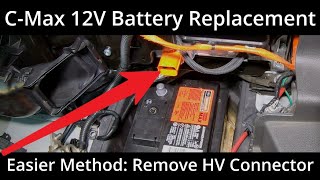
A weak 12-volt battery causes communication errors and triggers false codes in the BECM. Ensure the 12V battery is fully charged (12.6V+ resting) and passes a load test before proceeding 🎬 See this guide on 12V battery replacement and HV disconnection.
Tools: Multimeter, Battery Tester (Beginner) - Search for Technical Service Bulletins (TSBs)
Check for manufacturer TSBs for your specific vehicle year. TSBs provide exact repair procedures, such as software updates for GM EVs or wiring harness inspections for Ford C-MAX models.
Tools: Internet Access (Beginner) - WARNING: High-Voltage System Safety
Hybrid battery systems carry lethal voltage (300V+ DC). Do NOT touch, disconnect, or service any orange cables without proper training. The following steps are for certified professionals only.
Tools: N/A (Advanced) - Analyze Battery Block Data (Professional Only)
Using an advanced diagnostic scanner, view live data from the BECM to check the voltage of individual battery cell blocks. This identifies specific failed cells or significant voltage imbalances.
Tools: Advanced Diagnostic Scan Tool (Professional) - Inspect High-Voltage Connections (Professional Only)
After properly de-powering the high-voltage system, inspect the main battery connections, service plug, and BECM connectors for corrosion, looseness, or chafed wiring.
Tools: High-Voltage Safety Gloves, Insulated Tools (Professional) - Check BECM Communication and Power/Ground Circuits (Professional Only)
If the BECM is not communicating (code U0111), perform a pinpoint test. Check for battery voltage at power input pins and verify low resistance (less than 5 ohms) on ground circuits.
Tools: Multimeter, Vehicle-Specific Wiring Diagram (Professional) - Quantitative Test: Analyze Cell Voltage Variation (Advanced)
Access live data PIDs for individual battery cell block voltages. The difference between the maximum and minimum cell block voltages should not exceed 1.5 volts. A persistent difference confirms a failed battery pack.
Tools: Advanced Diagnostic Scan Tool (Advanced) - Test Battery Temperature Sensors (Professional Only)
Monitor temperature readings from all battery sensors via a scan tool. They should match ambient temperature on a cold vehicle. Test sensor resistance with a multimeter to confirm accuracy.
Tools: Advanced Diagnostic Scan Tool, Multimeter (Professional) - Quantitative Test: Check CAN Bus Resistance (Advanced)
With the 12V battery disconnected, measure resistance between Pin 6 and Pin 14 on the OBD-II port. A healthy High-Speed CAN bus reads approximately 60 Ohms. 120 Ohms indicates a missing termination resistor or failed module.
Tools: Multimeter (Advanced)
When This Code Triggers (Freeze-Frame Conditions)
- Vehicle Status: Key On or Driving (Sets during the initial power-on self-test sequence or while driving when the BECM detects an unstable voltage supply.)
- Battery State of Charge (SOC): Any (Occurs at any state of charge. A failing battery triggers the code under high load or shows erratic voltage when fully charged.)
- Engine/Motor Load: Variable (Appears under high-demand situations like hard acceleration or heavy regenerative braking, which stress the battery's voltage stability.)
- Component-Specific PIDs: Out of Range (Advanced scan tools show 'Hybrid Battery Voltage' below the minimum threshold or 'Battery Module Voltage Deviation' exceeding 1.5V.)
Related Codes
- P0AFA — Hybrid Battery System Voltage Low. Confirms overall battery voltage is below the minimum threshold, strongly suggesting a failed battery pack.
- P0BBD — Hybrid Battery Pack Voltage Variation Exceeded. Indicates an imbalance between individual cells, confirmed by viewing live cell block voltage data.
- P0A1F — Battery Energy Control Module Internal Failure. Indicates a self-diagnosed hardware or processing error within the BECM itself.
- U0111 — Lost Communication With Battery Energy Control Module A. Suggests a network problem, failed BECM, or a power/ground supply issue to the module.
Climate & Environmental Factors
- High Heat: Sustained high ambient temperatures accelerate chemical degradation of battery cells, reducing capacity and lifespan. This increases cell imbalance and strains the cooling system.
- High Humidity / Salt Belt Regions: Moisture and road salt promote corrosion on high-voltage connectors and ground points. This increases electrical resistance, causing voltage drops and communication errors.
- Extreme Cold: Extreme cold reduces battery performance and available power. A weak battery pushed past its minimum voltage threshold during a cold start triggers fault codes.
How to Talk to a Mechanic About This Code
Say this: "I have a [Your Vehicle Year, Make, Model] with the 'Stop Safely Now' message and a U2229 code. I'd like to schedule a diagnostic for the high-voltage system. Please check for any related TSBs, especially for the BECM or wiring, and I'd like to see the battery block voltage variation data before authorizing a full battery replacement."
Directs the technician to perform critical diagnostic steps (checking TSBs, analyzing cell data) rather than defaulting to the most expensive repair.
Avoid saying:
- 'My hybrid car won't start, can you fix it?'
- 'The check engine light is on, just do whatever it takes.'
- 'I think I need a new battery.' (Leads to confirmation bias)
Questions to ask before authorizing the repair:
- Did you find any active Technical Service Bulletins (TSBs) for my vehicle's VIN?
- What is the voltage difference between the highest and lowest battery cell blocks? Is it over the manufacturer's threshold?
- If recommending a battery replacement, is it new OEM or remanufactured? What is the warranty?
- If the BECM needs replacement, does the new part require programming, and is that included in the quote?
Where to Take It: Dealer vs Independent vs Chain
- Dealer:
Recommended if the vehicle is under warranty or requires a manufacturer-specific software flash.
Best for: Vehicles under the 8-year/100,000-mile hybrid component warranty., Brand new models (GM EVs) requiring dealer-only software updates., Complex programming of new modules like the BECM.
Downsides: Highest labor rates and part costs., May default to full battery replacement over nuanced repair. (Typical cost: +50% vs. baseline) - Independent Shop:
Best fit IF the shop is a certified hybrid specialist equipped to diagnose cell health and program modules.
Best for: Out-of-warranty vehicles where cost is a major factor., Shops explicitly certified in hybrid/EV repair (ASE L3).
Downsides: Quality varies dramatically. General mechanics lack high-voltage training., May lack expensive programming tools. (Typical cost: +0% vs. baseline) - Chain Shop:
AVOID. Do not take your vehicle to a standard chain shop for a U2229 code.
Best for: Tire changes and oil changes on the gasoline engine.
Downsides: Lack training, certification, and tools for high-voltage diagnostics., High risk of misdiagnosis and unsafe repair attempts. (Typical cost: -10% vs. baseline)
When to Walk Away From the Repair
If the estimated repair cost exceeds 50% of the car's current private-party market value, consider selling the vehicle as-is.
- Car worth $3500, fix is $3000: Walk away. The repair cost is nearly the entire value of the car.
- Car worth $9000, fix is $3500: Fix it. The repair cost is significant but well under the 50% threshold.
- Car worth $4000, fix is $2500: Borderline. If the rest of the car is in excellent condition, a remanufactured battery with a good warranty is worthwhile.
What Scan Tool You Need for This Code
Minimum: A scanner that reads manufacturer-specific PIDs for the hybrid system, specifically individual battery block voltages.
A basic $20 code reader cannot see underlying data like individual cell block voltages, making diagnosis impossible.
Budget: FORScan with compatible ELM327 adapter (~$50) — For Ford vehicles, FORScan accesses all modules and reads specific PIDs for battery block voltages, temperature sensors, and BECM status.
Mid-range: Autel MaxiCOM MK808S / Foxwell NT809 (~$340) — Tablet-style scanners offering all-system diagnostics. They graph battery block voltages and access freeze-frame data.
Professional: Autel MaxiSYS Series (e.g., MS906BT) (~$1200+) — Provides full OE-level diagnostics, bidirectional control, module programming capabilities, and detailed wiring diagrams.
Rent vs buy: Auto parts stores do NOT rent scanners with advanced hybrid diagnostic capabilities. Buying a FORScan-compatible adapter is the most cost-effective first step for Ford owners.
How to Clear the Code After You Fix It
- Reconnect the 12V battery after completing the physical repair.
- Use an OBD-II scan tool to clear all diagnostic trouble codes from every module.
- Perform the manufacturer-specific drive cycle to run onboard self-tests and set readiness monitors.
Drive cycle (~30 minutes): 1. Cold start (vehicle sat for 8+ hours). 2. Idle for 3 minutes. 3. 15 minutes of mixed city driving with smooth stops. 4. 10 minutes of steady highway driving (55-65 mph). 5. Allow the vehicle to cool down.
Readiness monitors affected: Hybrid/EV System, Battery System, Catalyst Monitor, Evaporative System
Before emissions retest: drive at least 50 miles to fully set monitors.
Watch out for:
- Clearing the code without repairing the hardware causes the code to return immediately.
- Failing to complete a full drive cycle leaves readiness monitors 'Not Ready', causing an automatic emissions test failure.
- Forgetting to clear codes from all related modules (PCM, BECM), not just the primary fault module.
Will This Fail Emissions / State Inspection?
Yes — this code typically fails an OBD-II emissions inspection.
- California: Automatic failure. The presence of a 'U' code and an illuminated Check Engine Light results in an immediate fail. All readiness monitors must be 'Ready'.
- New York: An illuminated Check Engine Light is an automatic failure. Clearing the code right before the test results in a failure due to unset readiness monitors.
- Texas: In emissions-testing counties, a vehicle with this active code fails the OBD-II scan required for registration renewal.
Most Commonly Affected Vehicles
- Ford Escape Hybrid (2005-2012) — Highly common due to aging first-generation high-voltage battery packs. Remanufactured replacements cost around $3,000.
- Ford Fusion Hybrid (2010-2012) — Shares the high-voltage battery system with the Escape, making it prone to identical age-related failures.
- Mercury Mariner Hybrid (2006-2011) — A mechanical twin to the Ford Escape Hybrid, suffering from the exact same battery and BECM issues.
- Lincoln MKZ Hybrid (2011-2012) — Based on the Ford Fusion Hybrid platform and susceptible to the same battery-related faults.
- Ford C-MAX Hybrid/Energi (2013-2017) — Known issues with BECMs and wiring chafing, identified in Ford TSB 17-0015.
- Ford Escape Hybrid (2020-2022) — Newer models showing early battery failures. Original BECMs must be swapped to new batteries to avoid dealer programming.
- GMC HUMMER EV (2022-2024) — Code appears due to a software anomaly in the BECM (GM bulletin PIT6044H), fixed via software update.
- Cadillac Lyriq (2023-2024) — Subject to the same Ultium platform software glitches requiring dealer or OTA updates.
- Chevrolet Blazer EV / Silverado EV (2024-2025) — May log U2229 due to software issues addressed by manufacturer updates.
Manufacturer-Specific Notes
- Ford: Uses this 'U' (Network) code to specify a power-related input issue to a control module, pointing to a fault with the HV battery or the BECM.
- General Motors: Uses code U2229 in Ultium platform EVs (Hummer, Lyriq, Blazer) for software anomalies fixed via OTA updates or manual resets (PIT6044H).
- Ford (PHEV): Safety Recall 23S33 addressed BECM failures on 2019-2020 Fusion Energi models causing power loss or fire, instructing owners not to charge vehicles.
- Ford (C-MAX): TSB 17-0015 details inspecting and repairing a chafed wire in the low voltage interlock circuit, causing 'Stop Safely Now' messages.
Real Owner Stories
2014 Ford Fusion Energi with yellow wrench light
The dealership quoted $1,050 to replace the BECM. The owner considered buying a used BECM from a salvage yard for $90.
Outcome: The salvage yard refused to sell just the BECM, wanting $1,400 for the entire battery assembly. The owner avoided a costly misdiagnosis.
Lesson: A failing high-voltage battery sends signals that mimic a BECM failure. Always get a comprehensive diagnosis of the entire high-voltage system.
2013 Ford C-MAX Hybrid with DIY cell replacement
Instead of paying $4,000 for a new battery, the owner replaced the 72 prismatic cells themselves for $650.
Outcome: After correcting the connections, the car ran, but the BECM's battery capacity estimate was not reset, causing conservative operation.
Lesson: DIY high-voltage repair is extremely complex. Furthermore, control modules require software resets to recognize new parts, a step requiring dealer tools.
2013-2016 Ford C-MAX Energi with 'Stop Safely Now' message
Vehicle experienced intermittent stalling with the 'Stop Safely Now' warning and codes U3012, P0B37, and U2229.
Outcome: Found a chafed wire where the harness passes the traction battery cover plate. Repaired the wire and protected it with anti-abrasion tape.
Lesson: Before replacing expensive modules, check for TSBs. A known wiring issue offers a much cheaper and more direct repair path.
2022-2024 GMC Hummer EV with 'Propulsion Power is Reduced' message
The MIL illuminated, power reduced, and the battery would not charge above 30%.
Outcome: GM identified this as a software anomaly. Dealers provided a rental vehicle until the permanent programming solution was available.
Lesson: On the newest GM EVs, codes like U2229 often indicate software glitches rather than hardware failures, requiring manufacturer updates.
How to Prevent This Code From Triggering
- Clean the hybrid battery cooling fan and filter (Every 15,000-30,000 miles, or annually) — Prevents dust buildup that clogs the fan, leading to overheating and accelerated cell degradation.
- Avoid prolonged exposure to extreme heat (Daily habit) — Parking in the shade reduces thermal load on the battery, extending its life and preventing irreversible chemical degradation.
- Drive the vehicle regularly (At least once a week for 20-30 minutes) — Prevents the high-voltage battery from self-discharging, which causes cell imbalances and shortens lifespan.
- Maintain the 12-volt battery (Test annually after 3 years of age) — Prevents communication errors and reduces strain on the DC/DC converter.
- Practice smooth acceleration and braking (Daily driving habit) — Minimizes high charge/discharge stress on battery cells and maximizes regenerative braking.
Frequently Asked Questions
Is it safe to drive my car with code U2229?
No. The code indicates a critical high-voltage battery problem that causes sudden shutdowns in traffic. Tow the vehicle to a qualified shop immediately.
Why is fixing code U2229 so expensive?
The repair typically involves replacing the high-voltage battery pack or its main control module. These are massive, complex components requiring specialized, high-voltage safety training to install. A new OEM battery easily exceeds $4,000, though remanufactured options offer savings.
Can I just clear the U2229 code and keep driving?
No. Clearing the code does not fix the underlying hardware or software fault. The code returns immediately, and the vehicle remains unsafe to operate.
What are common misdiagnosis mistakes for code U2229?
Mechanics often replace the expensive BECM without confirming the health of the main hybrid battery, which sends erratic signals when failing. Another major pitfall is overlooking a weak 12-volt battery, which triggers false communication codes across the network.
Are remanufactured hybrid batteries or used BECMs a good idea?
Remanufactured batteries from reputable suppliers with warranties are excellent, cost-effective alternatives to new OEM units. However, avoid used BECMs from salvage yards, as they often lack software compatibility and require dealer programming to function.
Can a bad 12-volt battery cause a U2229 code?
Yes. A failing 12-volt battery causes widespread electrical voltage drops, triggering false communication fault codes across multiple modules. Always test and replace a weak 12V battery before diagnosing the expensive high-voltage system.
Can I replace the hybrid battery myself?
Absolutely not. Hybrid batteries operate at lethal voltages (300V+ DC) that cause severe injury or death if handled improperly. Leave this repair to certified professionals equipped with insulated tools and high-voltage training.
Key Takeaways
- Code U2229 indicates a critical high-voltage battery fault in Ford or GM hybrids, requiring an immediate stop to prevent a sudden shutdown.
- A failing high-voltage battery pack is the most common cause, costing between $2,500 and $5,000 to replace with a remanufactured or new unit.
- Always test the standard 12-volt battery first, as a weak 12V system triggers false U2229 communication errors across the hybrid modules.
- On 2022-2024 GM electric vehicles, this code is frequently a software glitch resolved by a dealer-installed or Over-The-Air (OTA) update.
- Never attempt DIY repairs on the high-voltage system; the 300V+ DC current is lethal and requires specialized insulated tools and training.
Helpful Videos
Shop the Parts Behind U2229
Below are the parts most often responsible for code U2229, ranked by how frequently each one is the actual culprit (per the diagnosis above). Tap any to see what we have for your vehicle.



The information in this article is provided for general reference and educational purposes only. Vehicle specifications, procedures, and part compatibility can vary by production date, trim level, and region. Always consult your vehicle's factory service manual and verify part numbers before purchasing or performing repairs. Safety-critical components such as airbags, seat belts, and braking systems should be installed by a qualified professional.
- 🧭 Diagnostic Flowchart
- 🎬 Helpful Videos
- 🛍️ Shop This Part
- What Does U2229 Mean?
- Can I Drive With U2229?
- Common Causes
- Symptoms
- Common Fixes & Costs
- Used vs. New Parts: Buying Guide
- What Happens If You Wait — Timeline
- Cost of Not Fixing It
- Diagnosis Steps
- When This Code Triggers (Freeze-Frame Conditions)
- Related Codes
- Climate & Environmental Factors
- How to Talk to a Mechanic About This Code
- Where to Take It: Dealer vs Independent vs Chain
- When to Walk Away From the Repair
- What Scan Tool You Need for This Code
- How to Clear the Code After You Fix It
- Will This Fail Emissions / State Inspection?
- Most Commonly Affected Vehicles
- Manufacturer-Specific Notes
- Real Owner Stories
- 2014 Ford Fusion Energi with yellow wrench light
- 2013 Ford C-MAX Hybrid with DIY cell replacement
- 2013-2016 Ford C-MAX Energi with 'Stop Safely Now' message
- 2022-2024 GMC Hummer EV with 'Propulsion Power is Reduced' message
- How to Prevent This Code From Triggering
- Frequently Asked Questions
- Is it safe to drive my car with code U2229?
- Why is fixing code U2229 so expensive?
- Can I just clear the U2229 code and keep driving?
- What are common misdiagnosis mistakes for code U2229?
- Are remanufactured hybrid batteries or used BECMs a good idea?
- Can a bad 12-volt battery cause a U2229 code?
- Can I replace the hybrid battery myself?
- Key Takeaways
- 🎟️ Get 5% Off