

U2413 on 2019-2020 Chevrolet Silverado 1500: Communication Bus Failure Causes and Fixes
Code U2413 on a 2019-2020 Silverado indicates a severe network communication failure. The most likely cause is a wiring issue, such as high resistance or a poor connection in the CAN bus harness, often between the brake (EBCM) and power steering (PSCM) modules. This is typically a low-cost parts fix if you can find the fault, but diagnosis can be complex.
- U2413 is a critical network failure code, not a simple part failure. Do not drive the vehicle.
- The problem is most likely in the wiring harness, specifically between the brake and power steering control modules, or a bad ground.
- Do not start replacing modules. Diagnosis is key and must be done systematically, starting with checking the CAN bus resistance (~60 ohms).
- This is a difficult DIY repair. Professional diagnosis with the right tools is strongly recommended to avoid causing more damage.
- Check for any open recalls or TSBs related to network or brake control module issues for your specific VIN.
What's Unique About the 2019-2020 Chevrolet SILVERADO 1500

On this generation of Silverado (and its GMC Sierra platform mate), the complex network architecture is sensitive to electrical issues. GM has issued specific service bulletins, like 21-NA-220, that point directly to high resistance in the wiring harness between the Electronic Brake Control Module (EBCM) and the Power Steering Control Module (PSCM) as a root cause for this type of network collapse. This bulletin suggests a vulnerability in the harness routing or terminal quality at the module connectors. Another TSB, 21-NA-149, which supersedes PIT5713A, addresses broader engine harness chafing issues against brackets or the chassis that can also lead to these communication faults.
Diagnostic Flowchart

Tap your situation to follow the diagnostic path that matches what you're seeing on this vehicle.
Symptoms You May Notice

- Multiple warning lights on the instrument panel (Check Engine, ABS, Stability Control, Service 4WD, etc.).
- Warning messages displayed on the Driver Information Center (DIC) like 'Service Power Steering' or 'Service ESC'.
- Instrument cluster gauges dropping to zero or behaving erratically.
- Loss of cruise control functionality.
- Loss of or intermittent power steering assist.
- Engine may stall, fail to start, or enter Reduced Engine Power mode.
- Loss of ABS and stability control functions.
- Replacing the Battery: While a low voltage can cause many electrical issues, it's rarely the root cause of a specific U2413 code unless the battery is failing catastrophically. The network issue will usually persist after a new battery is installed if the underlying wiring fault is not fixed.
- Replacing a single module without diagnosis: Owners may see a warning for the brake system and replace the EBCM, only to find the problem remains because the fault was in the wiring leading to it, not the module itself.
Most Likely Causes

- High Resistance in CAN Bus Wiring Harness 🔴 High Probability GM Technical Service Bulletin 21-NA-220 explicitly calls out this condition. It identifies high resistance on the High-Speed CAN bus circuits (2500 and 2501) between the EBCM and PSCM as a primary cause. The fault is often poor terminal tension or corrosion within the module connectors themselves, or at the large X115 inline connector.
How to confirm: Following TSB 21-NA-220, disconnect the battery. Disconnect the X115 engine harness connector and measure resistance between the CAN bus wires (Tan and Tan/Black) on both sides. The total bus resistance measured at the OBD-II port (pins 6 and 14) should be ~60 ohms. A reading of ~120 ohms indicates an open circuit or one of the terminating resistors is offline. The TSB directs technicians to disconnect the EBCM and PSCM connectors, inspect terminals for damage or poor tension, and replace with new terminated leads if necessary.
Typical fix: Inspect and test the terminals at the EBCM and PSCM connectors. If a terminal has poor tension, it must be replaced with a new terminated lead. Clean the connector and apply dielectric grease before reassembly. If the harness is chafed, repair the damaged wires following proper procedures.
Est. part cost: $15-$80 for wiring repair supplies or new connector pigtails/terminated leads. - Poor Ground Connection 🟡 Medium Probability GM has issued engineering information requests (PIE0548) regarding loose grounds at G110 and G114 on 2019-2020 Silverados, indicating known issues. Another bulletin, PIT5689A, points to loose or broken engine grounds (G132, G134) causing no-start conditions and communication DTCs. These grounds are crucial for stable module operation.
How to confirm: Locate the main body and engine ground points using a service manual. Key locations include G110 (Body Harness) and G114 (Engine Harness) in the engine bay, and the main battery-to-frame ground. Visually inspect for looseness or corrosion. Perform a voltage drop test from the module's ground pin to the negative battery terminal; anything more than 100mV under load indicates a problem.
Typical fix: Disassemble, clean all contact surfaces to bare metal, and re-secure the ground connections. In some cases, a damaged ground strap must be replaced.
Est. part cost: $0-$30 for cleaning supplies or a new ground strap. - Faulty Control Module ⚪ Low Probability While less common than wiring, a module's internal CAN transceiver can fail. The EBCM is a common point of failure due to its location, which exposes it to moisture and vibration. Water intrusion into the module is a known failure mode.
How to confirm: This is a process of elimination. If wiring, grounds, and bus resistance are all confirmed to be good, the next step is to disconnect modules one by one from the CAN bus to see if the 'Bus Off' condition resolves. The module whose disconnection restores the 60-ohm resistance and allows communication with other modules is the likely culprit. This requires a scan tool capable of monitoring the network status in real-time.
Typical fix: Replace the faulty module (e.g., EBCM, PSCM, BCM) and program the new module to the vehicle using OEM software. A used module may work but will store the incorrect VIN and may cause other issues.
Est. part cost: $300-$1200 depending on the specific module. A new EBCM can be around $250-$400 plus programming.
Diagnosis Steps
- Connect a professional-grade scan tool capable of network diagnostics.
- Retrieve all DTCs from all modules. Note the extensive list of U-codes that will likely accompany U2413.
- Check battery voltage and charging system health to rule out a systemic power supply issue.
- Using the scan tool, attempt to communicate with major modules on the high-speed CAN bus (ECM, TCM, BCM, EBCM, PSCM). Note which ones are not responding.
- Disconnect the negative battery terminal.
- Consult a wiring diagram to identify the high-speed CAN bus circuits. On GM vehicles, these are typically Tan (CAN Low, Circuit 2501) and Tan with a Black stripe (CAN High, Circuit 2500).
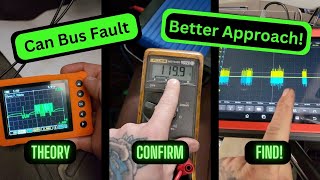
- Measure the resistance between Pin 6 (CAN High) and Pin 14 (CAN Low) at the OBD-II port. A healthy network should read approximately 60 ohms. A reading of 120 ohms suggests a break in the circuit or a missing termination resistor. 🎬 Watch: Diagnosing a chassis CAN bus issue on this platform A reading near 0 ohms indicates a short between the two wires.
- If resistance is incorrect, follow TSB 21-NA-220. Isolate sections of the harness by disconnecting the X115 engine harness connector. Measure resistance on each side to determine if the fault is toward the front (PSCM) or rear (EBCM) of the vehicle.
- Visually inspect the harness in the suspect area for any signs of physical damage, chafing against brackets, or corrosion, paying close attention to the areas near the EBCM and PSCM.
- Inspect connector pins at the EBCM and PSCM for corrosion or poor tension (spread terminals). Clean and apply dielectric grease. Replace terminals if damaged.
- If wiring and connectors are good, the fault may be an internal failure of a module. This requires disconnecting modules one by one to see which one restores the 60-ohm resistance to the rest of the network.
Parts You'll Likely Need
- Wiring Harness Connector Pigtail / Terminated Lead — If terminal tension is lost or a connector is damaged, replacing the terminal or the connector pigtail is the proper repair per GM service bulletins.
Trusted brands: ACDelco, Dorman
OEM price range: $40-$80
Aftermarket price range: $15-$40 - Electronic Brake Control Module (EBCM)
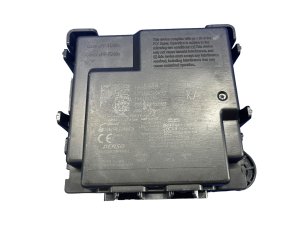
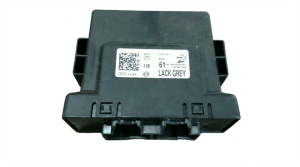
(OEM #84256781 (supersedes 23355954, 84074957, 84074960, 84256789))— If the module itself has failed internally and is causing the bus to shut down, it must be replaced. This part requires programming after installation.
Trusted brands: ACDelco (GM Genuine)
OEM price range: $250-$400
Aftermarket price range: $150-$300 (Used/Remanufactured)
Related Codes That Often Appear With This One
- U0073 — Control Module Communication Bus 'A' Off. This is a general code for the same fault condition as U2413.
- U0100 — Lost Communication With ECM/PCM. The Engine Control Module is on the high-speed bus; a bus-off event will cut it off.
- U0101 — Lost Communication with TCM. The Transmission Control Module is on the high-speed bus and will lose communication.
- U0121 — Lost Communication With Anti-Lock Brake System (ABS) Control Module. The EBCM is a key module on this network, and faults are often located near it.
- U0131 — Lost Communication With Power Steering Control Module. The PSCM is another critical module on the bus, and wiring between it and the EBCM is a known trouble spot.
Technical Service Bulletins (TSBs) & Recalls
- 21-NA-220: Directly addresses U2413 and other communication DTCs, pointing to high resistance in circuits 2500/2501 between the EBCM and PSCM. Provides a detailed diagnostic procedure.
- 21-NA-149: Supersedes PIT5713A. A comprehensive bulletin covering various engine harness chafing points that can cause a wide range of DTCs, including communication codes, by shorting wires.
- PIT5689A: Addresses no-start/no-crank conditions caused by broken or loose engine ground straps (G132/G134), which can also set communication DTCs.
- PIE0548: An engineering information request for technicians to document and photograph loose ground connections found at G110 and G114, confirming this is a known area of concern for GM.
Platform-Specific Known Issues
- Real-World Repair Story: EBCM Connector Terminals: An owner of a 2019 Silverado reported a cascade of war
Mechanic-Grade Diagnostic Values
- CAN Bus High (CAN-H) Voltage — expected: 2.5V (recessive/idle) to 3.75V (dominant/active). Failure: Voltage significantly outside this range, or stuck at one value, indicates a bus fault (short to power/ground or open).
- CAN Bus Low (CAN-L) Voltage — expected: 2.5V (recessive/idle) to 1.25V (dominant/active). Failure: Voltage significantly outside this range, or stuck at one value, indicates a bus fault (short to power/ground or open).
- Total CAN Bus Resistance (at DLC Pins 6 & 14) — expected: ~60 Ohms. Failure: A reading of ~120 Ohms indicates an open circuit or one of the two terminating resistors is offline. A reading near 0 Ohms indicates a short between the CAN-H and CAN-L wires.
Scan Tool Commands That Help
- GM GDS2 (Global Diagnostic System 2): Network Communication Status — This is a primary diagnostic step. It allows the technician to view all CAN buses on the vehicle (1-8) and see a list of which modules are communicating and which are not, immediately highlighting the scope of the network failure.
- GM GDS2 with Data Bus Diagnostic Tool: Detected State / Measured Voltage — This tool, which installs with GDS2, can actively query modules to see which are responding and can also provide a voltage trace of the bus activity. This helps differentiate between an OK bus, an open circuit, or a short circuit by analyzing the voltage signature.
- GM GDS2: Module-Specific Bidirectional Controls — After restoring network communication, use bidirectional controls (e.g., commanding power steering functions, activating ABS solenoids) to verify that the individual modules are fully functional and not just communicating.
Wiring & Ground Locations

- G110 — Underhood, on the body, related to the body wiring harness.. GM issued Engineering Information request PIE0548 specifically to investigate loose connections at this ground on 2019-2020 Silverados, indicating it's a known trouble spot that can cause various electrical issues, including communication faults.
- G114 — Underhood, related to the engine wiring harness.. Also part of PIE0548, this engine harness ground is critical for the proper operation of modules like the ECM. A loose connection can cause widespread communication DTCs.
- X115 — Main engine harness electrical connector.. TSB 21-NA-220 identifies this connector as the key separation point for diagnosing the CAN bus. Technicians disconnect it to isolate the front half of the harness (towards the PSCM) from the rear half (towards the EBCM) to pinpoint the location of high resistance.
- K17 (EBCM Connector) — On the Electronic Brake Control Module, accessed by repositioning the radiator surge tank.. This is one of the two primary connectors where high resistance, poor terminal tension, or corrosion is found to cause the U2413 code, per TSB 21-NA-220.
- K43 (PSCM Connector) — On the Power Steering Control Module.. This is the other primary connector identified in TSB 21-NA-220 as a likely source of high resistance on the CAN bus circuits, leading to network failure.
Real Owner Repair Stories
- Reddit user @koukico (2019-2020 Chevrolet/GMC Truck) — BCM/ECU failure after a jump start.
✅ What actually fixed it The dealer had to replace the failed modules (BCM, ECU). The user suspects improper factory grounding as a potential root cause for module sensitivity and failure on these trucks. - Reddit user @BriefCritical4908 (Chevy Truck with 'Service ESC' message) — Service ESC warning light, other electrical issues.
❌ Tried (didn't work) Initial troubleshooting did not resolve the issue immediately.
✅ What actually fixed it Replacing the vehicle's battery fixed the problem, but the user noted that it took a few days of driving for the warning messages to clear completely.
"I Checked Everything" — The Actual Cause
- In the context of network diagnostics, the equivalent of a 'smoke test clean' scenario is when the bus resistance measures a perfect 60 ohms at the DLC, yet communication faults persist. This often points to an intermittent open or short that isn't present when the vehicle is off. It can also be caused by a single module's transceiver failing and flooding the bus with corrupt data, which requires disconnecting modules one-by-one while monitoring the network with a scan tool to isolate the offender.
When the Usual Fixes Don't Work
- While TSB 21-NA-220 points squarely at the EBCM-to-PSCM wiring, forum discussions highlight that other systemic issues should not be ignored. In one case, a user resolved persistent 'Service ESC' warnings only after replacing a weak battery. In another, a user with multiple brake and stability warnings after performing a brake job found the codes cleared and brakes began functioning normally only after a short drive and several ignition cycles, suggesting the system needed to reset and recalibrate. This indicates that before beginning complex wiring diagnosis, ensuring the battery is healthy and performing a system reset (via a drive cycle or battery disconnect) is a worthwhile first step.
OEM Part Supersession History
23355954, 84074957, 84074960, 84256789→84256781— Standard part evolution, integrating design updates and new materials.
Heads up: The replacement EBCM (84256781) requires programming and special setup procedures using GM's Service Information (GDS2) to ensure proper operation in the vehicle.
Model Year Variations Within This Range
- 2020: While the core electrical architecture related to U2413 appears consistent between 2019 and 2020, the 2020 model year saw expanded availability of the 6.2L V8 and 10-speed automatic transmission to more trims (like RST and Trail Boss). These powertrain differences do not fundamentally change the U2413 diagnosis but mean a wider variety of vehicle configurations may experience the issue.
Helpful Videos




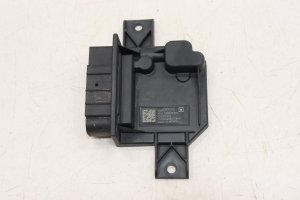
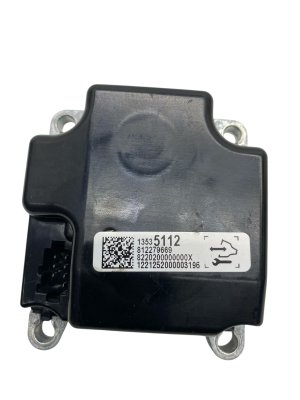
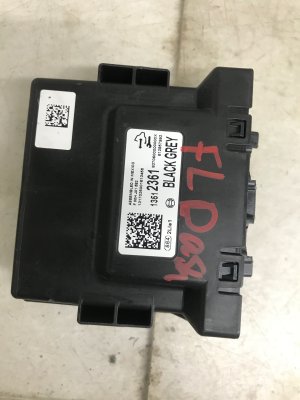
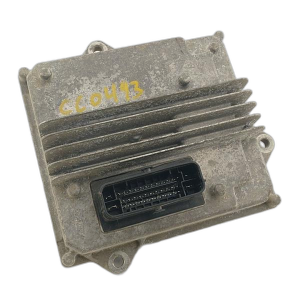
We Have This Part in Stock

The information in this article is provided for general reference and educational purposes only. Vehicle specifications, procedures, and part compatibility can vary by production date, trim level, and region. Always consult your vehicle's factory service manual and verify part numbers before purchasing or performing repairs. Safety-critical components such as airbags, seat belts, and braking systems should be installed by a qualified professional.
- Chevrolet SILVERADO 1500:
- 🧭 Diagnostic Flowchart
- 🎬 Helpful Videos
- 🛍️ Shop This Part
- What's Unique About the 2019-2020 Chevrolet SILVERADO 1500
- Symptoms You May Notice
- Most Likely Causes
- Diagnosis Steps
- Parts You'll Likely Need
- Related Codes That Often Appear With This One
- Technical Service Bulletins (TSBs) & Recalls
- Platform-Specific Known Issues
- Mechanic-Grade Diagnostic Values
- Scan Tool Commands That Help
- Wiring & Ground Locations
- Real Owner Repair Stories
- "I Checked Everything" — The Actual Cause
- When the Usual Fixes Don't Work
- OEM Part Supersession History
- Model Year Variations Within This Range
- 🎟️ Get 5% Off