

OBD-II Code U2511: Module Communication Data Mismatch
What U2511 means, why it triggers, and how to fix it
- Test the battery and charging system before replacing any parts, as voltage drops below 12.4V cause 30% of all U2511 communication errors.
- Code U2511 flags a digital data mismatch between computer modules, meaning the fix requires electrical diagnosis rather than replacing mechanical engine parts.
- A flashing anti-theft light paired with a U2511 code guarantees a no-start condition, usually requiring an instrument cluster repair or key reprogramming.
- Save $500 to $1,000 by using a mail-in instrument cluster rebuild service or BCM cloning service instead of buying brand-new dealer modules.
- Stop DIY diagnosis and tow the vehicle to a shop if a multimeter shows 0 ohms or 120 ohms across OBD-II pins 6 and 14, indicating a hard network failure.
What Does U2511 Mean?
Code U2511 means two or more of your car's computers are not communicating correctly. One computer, often the instrument cluster, receives data from another, like the engine control module, that doesn't match what it expects. This is like a conversation where answers don't match questions, confusing the vehicle's network.
Technical definition: The official SAE/OBD-II definition is "CAN - Data Mis-Match [Receive Data Does Not Match Expected]". This indicates a control module on the Controller Area Network (CAN) bus received a data message from another module that did not match expected parameters, pointing to a communication or data integrity issue. Most commonly, data sent by the PCM does not match data expected by the Instrument Cluster (IC).
Can I Drive With U2511?
Yes, But With Caution. You can drive short distances, but do so with extreme caution. A key symptom is instrument cluster failure, meaning you lose your speedometer, temperature gauge, and warning lights. Driving without a speedometer risks speeding tickets. Driving without a temperature gauge risks severe engine overheating and head gasket failure (a $2,000+ repair). The code also causes sudden no-start conditions, leaving you stranded.
Common Causes
- Low Battery Voltage or Weak Battery (Very Common) — Computer modules require stable voltage to communicate. A weak battery, failing alternator, or corroded terminals scrambles communication and triggers this code before starting issues become noticeable.
- Faulty Instrument Cluster (IC) (Common) — The instrument cluster is a central communication hub. Internal failures, specifically cracked solder joints on the main connector, cause it to misinterpret data or send bad signals, triggering anti-theft lockouts.
- Damaged, Corroded, or Loose CAN Bus Wiring (Common) — The CAN bus connects all modules. Frayed wires, pinched harnesses, or corroded connectors corrupt data signals. This occurs frequently where harnesses rub against the chassis or engine components.
- Faulty Body Control Module (BCM) or Body Integrated Unit (BIU) (Less Common) — The BCM acts as a central hub for the CAN network. Internal failures disrupt communication across the entire vehicle, causing U2511 alongside erratic electrical accessory behavior.
- Faulty Powertrain Control Module (PCM) (Less Common) — The PCM controls the engine and transmission. Internal faults cause it to send incorrect or mismatched data to the instrument cluster and other network modules.
- Aftermarket Accessories or Remote Starters (Less Common) — Improperly installed remote starters, alarms, or stereos interfere with the CAN bus network. They introduce electrical noise or draw excessive power, disrupting factory module communication.
- Water Intrusion or Corrosion (Rare) — Cabin water leaks damage modules like the BCM or fuse box located under the dashboard. Moisture causes pin corrosion, leading to high resistance and network faults.
- Incorrect Module Programming (Rare) — Replacing the PCM, Instrument Cluster, or BCM without proper programming and pairing causes security data mismatches, immediately triggering a U2511 code.
Symptoms
- Check Engine Light On — The primary and sometimes only initial symptom.
- Anti-Theft Light Flashing or Solid — The security system activates because modules cannot verify the correct key, preventing the engine from starting.
- Engine Will Not Start or Stalls — Active security systems or PCM communication failures prevent the car from cranking, or cause it to start and immediately shut off.
- Instrument Cluster Gauges Inoperative — The speedometer, tachometer, and temperature gauges stop working, flicker, or get stuck. The entire cluster goes dark.
- Erratic Electrical Behavior — Power windows, door locks, or interior lights work intermittently, signaling a failing Body Control Module.
- Warning Messages on Dash — Displays messages like "Drivetrain Malfunction" or "Safety Systems Disabled."
- Parasitic Battery Drain (also visible on scanner) — A faulty module fails to go to 'sleep' when the car is off, causing a continuous power draw that drains the battery overnight.
Diagnostic Flowchart
Tap your situation to follow the diagnostic path that matches what you're seeing on this code.
Common Fixes & Costs
- Replacing the Battery — Parts: $150-$350, Labor: $50-$100, ~0.5 hr book time (DIY)
- Instrument Cluster Repair/Rebuild Service — Parts: $200-$400, Labor: $100-$200, ~1.5 hr book time (DIY)
- Repairing CAN Bus Wiring/Connectors — Parts: $10-$50, Labor: $200-$800+, ~2.5 hr book time (Professional)
- Replacing the Body Control Module (BCM/BIU)
— Parts: $150-$550, Labor: $250-$800+, ~2.5 hr book time
(Professional)
: OEM ['88281AJ53A', '88281AJ53B'] (Alt: Cardone (Remanufactured))
: OEM ['25971916', '22846365', '25844480'] (Alt: ACDelco, Dorman OE Solutions) - Replacing the Instrument Cluster (IC)
— Parts: $400-$1000+, Labor: $200-$500, ~2 hr book time
(Professional)
: OEM ['BM6Z-10849-AA', 'BL8Z-10849-CA'] (Alt: Dorman, Cardone) - Replacing the Powertrain Control Module (PCM) — Parts: $800-$1,200, Labor: $100-$250, ~1.5 hr book time (Professional)
DIY vs Professional
- Replacing the Battery 🟢 Beginner
Tools: Basic hand tools (wrench set). - Instrument Cluster Repair/Rebuild Service 🟢 Beginner
Tools: Trim removal tools, screwdrivers (often Torx). - DIY Instrument Cluster Repair (Soldering) 🟢 Beginner
Tools: Soldering iron, desoldering wick/pump, solder, screwdrivers, pry tools. - Replacing the BCM/BIU 🟢 Beginner
Tools: Basic hand tools, advanced scan tool for programming/relearn procedures. - Repairing CAN Bus Wiring 🟢 Beginner
Tools: Multimeter, wiring diagrams, wire strippers, soldering iron, heat shrink tubing.
Used vs. New Parts: Buying Guide
When a used part is worth it: A used electronic module (Instrument Cluster, BCM, BIU) only makes sense if sent to a cloning service with your original module. Buying a used module to install directly results in a no-start condition because it lacks your vehicle's VIN and anti-theft programming.
Donor-vehicle mileage cap: roughly under 100000 miles for the part to have meaningful remaining life.
Donor quality checklist:
- Match the part number exactly. A single letter difference indicates an incompatible version.
- Inspect connectors for corrosion (white/green powder) or bent pins.
- Verify the donor vehicle had no water damage or electrical fire.
- For Subaru, ensure the donor BIU matches the climate control type (manual vs. automatic).
Decision logic:
- If The fix is a common, known failure (e.g., Ford cluster solder joints). → Use a mail-in repair/rebuild service for your original part. This requires no new programming.
- If Your original module is faulty but readable, and a new part is too expensive. → Buy a compatible used module and pay for a cloning service to transfer data from your old part to the used part.
- If Your original module is physically destroyed or unreadable (e.g., fire/flood damage). → Buy a new module from a dealer and have it programmed to the vehicle from scratch.
Warranty tradeoff: Junkyard parts offer a 30-day warranty without labor coverage. Remanufactured modules include a 1-year or lifetime warranty. New OEM parts have a 1-year warranty, valid only if installed by a certified dealer.
Worst-case if a used part fails: $500-$1000 if a used/cloned part strategy fails, covering the part, cloning service, repeat diagnostics, and towing to the dealer.
What Happens If You Wait — Timeline
- 0-1 month: Code appears intermittently, often after a cold start or a short drive. The Check Engine Light turns on and off. No other symptoms are noticeable. (MPG impact: 0%% · Added cost: $0)
- 1-3 months: The code becomes permanent. The anti-theft light flashes occasionally, or the car takes an extra second to start. A parasitic battery drain weakens the battery over several days. (MPG impact: 0%% · Added cost: $150-$350 if the battery is repeatedly drained and requires premature replacement.)
- 3-6 months: Symptoms become severe. The instrument cluster goes dark intermittently, or key gauges stop working. The car randomly refuses to start, leaving the driver stranded. (MPG impact: 0%% · Added cost: $100-$300 for a tow, plus the cost of the primary repair (e.g., $500-$1500 for a BCM/BIU replacement).)
- 6+ months: Catastrophic secondary failure occurs. Driving without a temperature gauge leads to an unnoticed overheating event, causing a blown head gasket. (MPG impact: N/A (vehicle may be undrivable)% · Added cost: $2,000-$5,000+ for head gasket replacement on top of the original electrical fault repair.)
Cost of Not Fixing It
- Immediate: Sudden no-start condition, leaving you stranded. The anti-theft system fails to recognize the key, immobilizing the vehicle. (Added cost: $100-$300 for a tow.)
- 0-1 Month: Driving without a functional instrument cluster hides critical warnings. You lose the speedometer, temperature gauge, and warning lights. (Added cost: $150+ for a speeding ticket.)
- 1-6+ Months: Catastrophic engine damage. If the instrument cluster fails, you won't see the temperature gauge rising during an overheating event, blowing a head gasket. (Added cost: $2,000-$8,000+ for head gasket replacement or a new engine.)
Diagnosis Steps
- Test the Battery and Charging System
Low voltage is the most common cause. Use a multimeter to check battery health and alternator output. The battery must read above 12.4 volts at rest and 13.7-14.7 volts with the engine running.
Tools: Digital Multimeter, Battery Tester (Beginner) - Check for All Trouble Codes
Use an OBD-II scanner capable of reading codes from ALL modules. U2511 is often accompanied by codes like U0100 or U0140 that pinpoint the exact failing module.
Tools: Advanced OBD-II Scanner (Beginner) - Visually Inspect Wiring and Connectors
Inspect the wiring harness between the PCM, BCM, and Instrument Cluster. Look for damage, corrosion, or loose connections where the harness rubs against the chassis or seats. Check main ground connections.
Tools: Flashlight (Intermediate) - Check CAN Bus Resistance
With the battery disconnected, measure resistance between CAN High (Pin 6) and CAN Low (Pin 14) on the OBD-II port. A healthy network reads 60 ohms. 120 ohms indicates an open circuit; 0 ohms indicates a short circuit.
Tools: Digital Multimeter (Intermediate) - Perform a Harness 'Wiggle' Test
With the ignition on and a scan tool displaying live network status, gently wiggle and flex sections of the wiring harness. If the fault appears or disappears, you found the wiring issue location.
Tools: Advanced Scan Tool (Intermediate) - Check for Parasitic Draw
A faulty module prevents the network from sleeping. Normal drain is under 50mA after 45 minutes. Higher readings indicate an 'awake' module. Pull fuses one by one to isolate the faulty circuit.
Tools: Digital Multimeter with Amp Clamp (Advanced) - Check CAN Bus Voltages
With the system powered on, measure DC voltage. CAN High (Pin 6) averages 2.7V; CAN Low (Pin 14) averages 2.2V. Significant deviations point to a wiring fault or a faulty module transceiver.
Tools: Digital Multimeter (Advanced) - Isolate the Faulty Module
Disconnect modules from the CAN network one at a time and re-check resistance. When the faulty module is disconnected, resistance returns to normal (60 ohms) or communication restores.
Tools: Digital Multimeter, Vehicle-Specific Wiring Diagrams (Advanced) - Test Individual Modules
Check for proper power and ground at the suspected module's connector using a multimeter. Verifying internal function requires specialized bidirectional diagnostic tools.
Tools: Digital Multimeter, Advanced Scan Tool, Wiring Diagrams (Advanced) - CAN Bus Waveform Analysis
Connect a two-channel oscilloscope to Pins 6 and 14. A healthy CAN bus shows two clean, mirror-image square waves. Distortions indicate electrical interference, shorts, or a failed module dragging the network down.
Tools: Automotive Oscilloscope (Professional)
When This Code Triggers (Freeze-Frame Conditions)
- Engine Coolant Temp: 185-205°F (Engine at normal operating temperature.)
- RPM: 700-800 (At idle, shortly after startup or during a stop.)
- Vehicle Speed: 0 mph or 45-65 mph (Code sets either at startup (0 mph) or during steady-state cruising.)
- Battery Voltage: 13.5-14.5V (Normal voltage with engine running; the fault occurs despite seemingly normal power.)
Related Codes
- U0100 — 'Lost Communication With ECM/PCM'. U2511 means mismatched data was received; U0100 means no data was received at all. Having both indicates a complete network failure (bad wire, faulty module).
- U0140 — 'Lost Communication With Body Control Module'. Appears alongside U2511 when the BCM or Subaru BIU is the source of the network problem.
- U2510 — 'Invalid Data for Vehicle Security' (Ford-specific). Confirms the data mismatch is related to PATS anti-theft security codes between the instrument cluster and the PCM.
- P1602 — 'Immobilizer/ECM Communication Error'. Points to a total loss of communication between the anti-theft module and the PCM, resulting in a no-start.
Climate & Environmental Factors
- High Humidity: Prolonged humidity above 60% causes condensation inside modules and connectors, accelerating corrosion on circuit boards. This increases resistance and causes communication failure.
- Cold Weather: Cold temperatures drop a battery's available voltage significantly, triggering communication codes upon startup. Plastics and wiring insulation also become brittle and crack.
- Road Salt (Winter Climates): Salt splashes onto underbody wiring harnesses and acts as a powerful electrolyte. This dramatically accelerates corrosion of copper wiring and connector pins, causing high resistance.
How to Talk to a Mechanic About This Code
Say this: "I have a U2511 communication code, and the symptoms are [describe symptoms, e.g., 'a flashing anti-theft light and a no-start condition']. I'd like to book a diagnostic appointment. Please start by testing the battery, charging system, and checking for obvious wiring damage before condemning any modules."
This signals you understand common causes. It directs the technician to follow a logical, cost-effective diagnostic path (checking simple fixes first) rather than immediately suggesting an expensive module replacement.
Avoid saying:
- 'My check engine light is on, can you look at it?'
- 'The car is doing weird electrical stuff.'
- 'Just fix whatever is wrong.'
Questions to ask before authorizing the repair:
- Did you test the battery and alternator under load, and what were the results?
- Did you inspect the CAN bus wiring and ground connections between the affected modules?
- If you are recommending a module replacement, does the estimate include the cost of programming or cloning?
- What is the warranty on both the parts and the labor for this repair?
Where to Take It: Dealer vs Independent vs Chain
- Dealer:
Recommended if a new module and programming are confirmed necessary, or for complex brand-specific quirks.
Best for: Vehicles under warranty., Complex, brand-specific electronic issues (e.g., Subaru BIU failure, Ford PATS)., Repairs requiring new module installation and programming from scratch.
Downsides: Highest labor rates., More likely to replace an entire module assembly rather than attempt a wiring or component-level repair. (Typical cost: +50% vs. baseline) - Independent Shop:
Best fit, provided you choose a reputable shop specializing in diagnostics and electrical repair. They are more willing to perform wiring repairs or work with module cloning services.
Best for: Out-of-warranty vehicles., Diagnosing and repairing wiring harness issues., Vehicles with well-known U2511 causes (like Ford cluster failures).
Downsides: Quality and diagnostic capabilities vary greatly. Must find a shop with strong electrical/diagnostic skills (ASE L1 certification). (Typical cost: +0% vs. baseline) - Chain Shop:
AVOID for diagnosing a U2511 code. Only use them if you have already confirmed the battery is the sole problem and just need a replacement.
Best for: Simple battery replacement (if confirmed as the cause).
Downsides: Technicians are generally not equipped or trained for complex network diagnostics., High risk of misdiagnosis and being sold unnecessary parts. (Typical cost: -10% vs. baseline)
When to Walk Away From the Repair
If the estimated repair cost exceeds 50% of the car's private-party value, seriously consider selling or trading it in instead of repairing it.
- Car worth $4000, fix is $2500: Walk away. The repair cost is over 60% of the car's value. It is not a sound financial decision.
- Car worth $12000, fix is $1800: Fix it. The repair cost is only 15% of the vehicle's value and is well below the threshold.
- Car worth $3000, fix is $800: Borderline. The cost is ~27% of the value. Consider the car's overall health. If it needs other repairs soon, walk away. If not, the repair is reasonable.
What Scan Tool You Need for This Code
Minimum: A scanner that reads codes from ALL vehicle modules (BCM, Instrument Cluster, ABS, etc.), not just the engine computer (PCM).
A basic $20 code reader only checks for engine and emissions codes. Code U2511 is a network code stored in the Body Control Module or Instrument Cluster. A basic reader will not see it.
Budget: BlueDriver Pro (~$99) — Connects to a smartphone app and reads codes from all major systems (Engine, BCM, ABS, Airbag) on most modern cars, showing the full picture of network codes.
Mid-range: XTOOL D7 or Innova 5610 (~$300-400) — Full-system, bidirectional scan tools. They read codes from all modules and command components to test their function (e.g., cycle gauges), pinpointing if a fault is in the wiring or the module.
Professional: Autel MaxiCOM MK808 / Launch X431 CRP919XBT (~$500-1200) — Offers full bidirectional control, all-module diagnostics, and advanced functions like module programming and key coding needed for replacing and configuring new modules.
Rent vs buy: For a one-time diagnosis, try a free loaner tool at a parts store, but be aware they may not read all modules. For a complex issue like U2511, investing in a midrange tool is highly recommended.
How to Clear the Code After You Fix It
- Fix the underlying cause (e.g., replace battery, repair wiring).
- Use a compatible OBD-II scan tool to erase the Diagnostic Trouble Codes from all modules.
- Disconnecting the battery for 30 minutes clears codes but resets all vehicle memory and readiness monitors.
Drive cycle (~30 minutes): Start the car cold and let it idle for 2-3 minutes. Drive in mixed city/highway traffic for 20-30 minutes, including periods of steady cruising (e.g., 55 mph for 5 minutes) and some stop-and-go. Allow the vehicle to cool down completely and repeat if necessary.
Readiness monitors affected: All readiness monitors reset to 'Not Ready' status after clearing codes.
Before emissions retest: drive at least 100 miles to fully set monitors.
Watch out for:
- Clearing the code without fixing the root problem causes the code to return immediately.
- Taking the vehicle for an emissions test right after clearing codes results in an automatic failure.
Will This Fail Emissions / State Inspection?
Yes — this code typically fails an OBD-II emissions inspection.
- California: An active U-code causes an automatic smog check failure. After repair, complete a drive cycle to set all readiness monitors before re-testing.
- New York: The NYS inspection includes an OBD-II scan. Code U2511 results in an immediate inspection failure.
- Texas: In the 17 counties requiring emissions testing, a vehicle with code U2511 fails the OBD portion of the inspection.
Most Commonly Affected Vehicles
- Ford Escape (2008-2012) — Highly prone to U2511 caused by internal instrument cluster failure (bad solder joints) or a weak battery affecting the PATS anti-theft system.
- Ford Explorer (2008-2010) — Frequently logs this code due to communication issues between the instrument cluster and the PCM.
- Ford Flex (2009-2012) — Shares electronic architecture with other Fords, making it susceptible to PATS and CAN bus communication faults originating from the instrument cluster.
- Chevrolet / GMC Silverado, Sierra (2007-2014) — Problems trace to chafed wiring harnesses in the driver's side door sill or under the truck along the frame rail, as well as poor ground connections.
- Mazda 3 (2019-2020) — TSB SA-006-20 exists for code U2511:68, pointing to an error signal from the electrical supply unit (ESU) affecting driver support systems.
- Subaru Outback, Legacy (2010-2014) — Widespread electrical issues and parasitic drains are caused by a failing Body Integrated Unit (BIU). Replacements must be programmed or cloned.
- BMW Various Models (2010-2016) — Displays a 'Drivetrain Malfunction' message. Communication faults arise from a failing Junction Box Electronics (JBE) module or low battery voltage.
- Jaguar / Land Rover Various Models (2005-2015) — Complex CAN bus networks mean a single module or wiring fault causes a cascade of U-codes, including U2511.
Manufacturer-Specific Notes
- Ford: This code is almost always set in the Instrument Cluster (IC) and tied to the Passive Anti-Theft System (PATS). The problem is frequently bad solder joints on the IC's main electrical connector, repairable by a specialist.
- Mazda: Mazda uses a two-digit failure type code, like U2511:68. TSB SA-006-20 relates this to an 'Error signal received from electrical supply unit,' narrowing diagnosis to a power supply issue.
- Subaru: This code is a classic symptom of a failing Body Integrated Unit (BIU). The BIU is tied to the immobilizer, so a replacement must be programmed. 'Cloning' data to a used donor unit avoids expensive dealer programming.
- Chevrolet / GMC: Network communication codes are frequently caused by wiring damage in the driver's side door sill plate or along the exposed frame rail under the truck.
Real Owner Stories
2010 Ford F-150 with 150K miles
Truck would not start, theft light flashing rapidly, then flashing code 16. Gauges were dead.
What they tried:
- Checked all fuses.
- Tried reprogramming keys.
- Read online forums pointing to the instrument cluster as a common failure point.
Outcome: Owner found a used instrument cluster, ignition cylinder, and matching key from a donor vehicle. Swapping the cluster and using the new key resolved the no-start and flashing theft light.
Lesson: On Fords, the instrument cluster is a critical part of the PATS anti-theft system. A flashing theft light combined with U2511 strongly points to a cluster or communication issue, not a bad key.
2011 Subaru Outback with ~120K miles
Intermittent electrical chaos: power windows and windshield wipers stopped working. Car was taken to the dealer.
What they tried:
- Dealer diagnosed a failed Body Integrated Unit (BIU) and replaced it at a high cost.
Outcome: The fix worked for only two weeks before symptoms returned, indicating the new BIU failed. The root cause was a short in the wiring destroying the module.
Lesson: If a replaced module fails again quickly, an underlying wiring issue (short to ground or power) is damaging the new part. Replacing the module without finding the root cause leads to repeated failures.
2007 Chevy Trailblazer with 130K miles
While driving, the instrument cluster went haywire: gauges dropped to zero, warning lights came on, and A/C died. The car randomly failed to start.
What they tried:
- Checked fuses and battery.
- Disconnected the battery to reset the computer.
- An OBD-II scanner could not communicate with the PCM.
Outcome: Symptoms pointed to a major communication breakdown on the data bus. The inability for a scanner to connect confirmed a faulty primary module or major wiring harness failure in the driver's side sill plate.
Lesson: When multiple unrelated systems fail at once and a scan tool cannot communicate, the problem is the network itself. Start by checking main module connectors and known problem areas for wiring damage.
How to Prevent This Code From Triggering
- Perform regular battery and terminal cleaning. (Every 6-12 months or with every oil change.) — Corrosion on battery terminals increases electrical resistance, causing voltage drops that disrupt module communication and trigger U-codes.
- Apply dielectric grease to major electrical connectors. (When a connector is disconnected for any service.) — Dielectric grease protects connector pins from moisture, dirt, and corrosion, preventing high-resistance connections that corrupt CAN bus data.
- Ensure regular, longer drives. (At least one 30-minute drive per week.) — Short trips don't allow the alternator to fully recharge the battery. An undercharged battery has a lower resting voltage, increasing communication faults upon startup.
- Protect underbody wiring in winter climates. (Annually before winter.) — Applying a corrosion-inhibiting spray to exposed harnesses repels road salt and moisture, major causes of CAN bus wiring failures in the 'rust belt'.
- Have aftermarket electronics professionally installed. (During installation.) — Improperly tapping into CAN bus wires for remote starters or stereos causes network interference. Professionals ensure devices communicate without disrupting factory modules.
Frequently Asked Questions
Can a bad battery really cause a communication code like U2511?
Yes, absolutely. Control modules require a steady voltage to communicate properly. A weak battery provides unstable power, which corrupts data signals and causes modules to report errors.
What is the most common misdiagnosis for U2511?
The most common mistake is replacing an expensive module like the Instrument Cluster without testing the battery and wiring first. A simple fix like cleaning a ground strap is often overlooked. Always verify voltage and grounds before condemning a $500 computer.
Is it cheaper to repair my instrument cluster or replace it?
It is almost always cheaper to have your original cluster repaired. Specialized services fix common internal faults for $200-$400, and the repaired module is plug-and-play. A new cluster costs over $1000 plus dealer programming fees.
Why is my anti-theft light flashing with code U2511?
Your car's anti-theft system requires the key, instrument cluster, and engine computer to confirm a secret code. Code U2511 means communication is scrambled, preventing code confirmation. The flashing light indicates the immobilizer is active and will block the engine from starting.
What does it mean to 'clone' a BCM or BIU?
Cloning extracts vehicle-specific data (VIN, keys, security) from your original module and transfers it to a functional used donor module. This makes the used module plug-and-play. It allows you to avoid expensive and complex programming at a dealership.
How much does it cost to fix code U2511?
A new battery costs under $300, while wiring repairs range from $200 to $800+ mostly in labor. An instrument cluster repair is the most cost-effective module fix at $300-$600 total. BCM/BIU replacements cost $500 to $1500+ depending on programming needs.
Can I drive my car without the instrument cluster installed?
Do not drive without the instrument cluster installed. You will have no speedometer, fuel gauge, or warning lights, creating a severe safety hazard. On modern cars, the cluster is a vital network hub, and the vehicle will not start without it.
What is the CAN bus?
The Controller Area Network (CAN) bus is the nervous system of your car. It uses two wires (CAN High and CAN Low) to connect all vehicle computers. This allows the engine, transmission, and instrument cluster to share data instantly.
Key Takeaways
- Test the battery and charging system before replacing any parts, as voltage drops below 12.4V cause 30% of all U2511 communication errors.
- Code U2511 flags a digital data mismatch between computer modules, meaning the fix requires electrical diagnosis rather than replacing mechanical engine parts.
- A flashing anti-theft light paired with a U2511 code guarantees a no-start condition, usually requiring an instrument cluster repair or key reprogramming.
- Save $500 to $1,000 by using a mail-in instrument cluster rebuild service or BCM cloning service instead of buying brand-new dealer modules.
- Stop DIY diagnosis and tow the vehicle to a shop if a multimeter shows 0 ohms or 120 ohms across OBD-II pins 6 and 14, indicating a hard network failure.
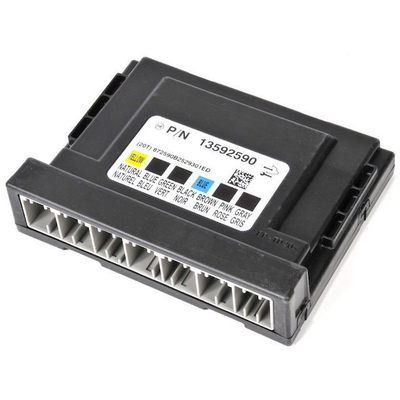
Shop the Parts Behind U2511
Below are the parts most often responsible for code U2511, ranked by how frequently each one is the actual culprit (per the diagnosis above). Tap any to see what we have for your vehicle.



The information in this article is provided for general reference and educational purposes only. Vehicle specifications, procedures, and part compatibility can vary by production date, trim level, and region. Always consult your vehicle's factory service manual and verify part numbers before purchasing or performing repairs. Safety-critical components such as airbags, seat belts, and braking systems should be installed by a qualified professional.
- 🧭 Diagnostic Flowchart
- 🛍️ Shop This Part
- What Does U2511 Mean?
- Can I Drive With U2511?
- Common Causes
- Symptoms
- Common Fixes & Costs
- DIY vs Professional
- Used vs. New Parts: Buying Guide
- What Happens If You Wait — Timeline
- Cost of Not Fixing It
- Diagnosis Steps
- When This Code Triggers (Freeze-Frame Conditions)
- Related Codes
- Climate & Environmental Factors
- How to Talk to a Mechanic About This Code
- Where to Take It: Dealer vs Independent vs Chain
- When to Walk Away From the Repair
- What Scan Tool You Need for This Code
- How to Clear the Code After You Fix It
- Will This Fail Emissions / State Inspection?
- Most Commonly Affected Vehicles
- Manufacturer-Specific Notes
- Real Owner Stories
- 2010 Ford F-150 with 150K miles
- 2011 Subaru Outback with ~120K miles
- 2007 Chevy Trailblazer with 130K miles
- How to Prevent This Code From Triggering
- Frequently Asked Questions
- Can a bad battery really cause a communication code like U2511?
- What is the most common misdiagnosis for U2511?
- Is it cheaper to repair my instrument cluster or replace it?
- Why is my anti-theft light flashing with code U2511?
- What does it mean to 'clone' a BCM or BIU?
- How much does it cost to fix code U2511?
- Can I drive my car without the instrument cluster installed?
- What is the CAN bus?
- Key Takeaways
- 🎟️ Get 5% Off