

OBD-II Code U2604: Network Communication Failure
What U2604 means, why it triggers, and how to fix it
- Code U2604 is a manufacturer-specific network failure that most frequently indicates a dead Battery Energy Control Module (BECM) on 2016-2019 Chevrolet Volts.
- Do not drive with this code; it causes a sudden, complete loss of propulsion power at highway speeds and prevents the vehicle from starting or charging.
- Replacing a Chevy Volt BECM costs between $2,100 and $3,000 out-of-pocket, but GM Special Coverage Program N232432680 extends the warranty to 15 years or 150,000 miles for affected VINs.
- A basic code reader only shows a generic P1E00 code; you must use an advanced OBD-II scanner to read the specific U2603-U2624 cluster that confirms a BECM failure.
What Does U2604 Mean?
U2604 is a network communication trouble code indicating a critical electronic control module is not 'talking' to other computers. The specific meaning of '2604' is manufacturer-defined. The most common instance is a major fault in the hybrid battery system of Chevrolet models, signifying lost communication between the main Battery Energy Control Module (BECM) and its subordinate battery interface modules.
Technical definition: There is no universal SAE/ISO definition for U2604. In its most frequent real-world application (General Motors), U2604 is defined as 'Battery Energy Control Module Lost Communication with Hybrid/EV Battery Interface Control Module 2'. In other applications, such as Ford or GM trucks, it means 'Lost Communication with Transfer Case Control Module (TCCM)'.
Can I Drive With U2604?
No — Do Not Drive. This code indicates a critical communication failure that causes a no-start condition, sudden loss of power, or inability to charge, stranding you without warning. Driving is strictly prohibited as the vehicle shuts down in traffic, creating a severe safety hazard.
Common Causes
- Failed Battery Energy Control Module (BECM) (Very Common) — This is the primary cause in 2016-2019 Chevrolet Volts. Internal components, specifically solder joints on the circuit board, fail within the module, severing communication with the battery interface modules.
- Damaged or Corroded CAN Bus Wiring (Common) — The wires and connectors forming the car's communication network (CAN bus) break, fray, or suffer from terminal fretting (micro-vibration oxidation). This increases resistance and blocks the signal between modules.
- Weak or Failing 12V Battery (Less Common) — Low system voltage from a dying 12-volt battery causes unpredictable behavior in control modules, triggering false U-codes. While it triggers U2604, it is frequently a misdiagnosis for the actual BECM failure in Volts.
- Blown Fuses or Faulty Relays (Less Common) — A module cannot communicate without power. A blown fuse or a bad relay in the module's power supply circuit cuts it off from the network entirely.
- Failed Terminating Resistor (Less Common) — CAN bus networks require 120-ohm resistors at each end. If a module containing a resistor fails internally, the total network resistance shifts from 60 ohms to 120 ohms, crashing network communication.
- Faulty Shifter Assembly (Rare) — On the Chevy Volt, a faulty shifter assembly broadcasts erroneous messages and voltage irregularities on the network, triggering communication fault codes alongside a 'Shift to Park' message.
- Software Glitch or Corrupted Module Data (Rare) — A software defect within a control module forces it offline. This requires a software update or re-flash from the dealer to resolve.
Symptoms
- Vehicle Will Not Start or Shuts Off While Driving — The communication failure prevents the vehicle from starting or causes a sudden, complete loss of propulsion power at highway speeds.
- 'Reduced Propulsion Power' Message — The vehicle loses significant power and relies solely on the gasoline engine, if it runs at all.
- Inability to Charge (EV/Hybrid) — An 'Unable to Charge' message appears on the driver information center when plugging in the vehicle.
- Vehicle Will Not Shift Out of Park — The loss of communication with the BECM or TCCM locks the transmission in Park as a safety measure, displaying a 'Shift to Park' message.
- Multiple Warning Lights Illuminated — The Check Engine Light illuminates alongside a cascade of other warnings (ABS, Traction Control) as the central module failure triggers secondary errors across the network.
- Multiple U26xx Communication Codes Stored (scan-tool only — no driver-felt sign) — A scan tool reveals a cluster of codes from U2603 to U2624, proving a widespread communication loss with multiple battery interface modules.
Diagnostic Flowchart
Tap your situation to follow the diagnostic path that matches what you're seeing on this code.
Common Fixes & Costs
- Replace the Battery Energy Control Module (BECM) — Parts: $300-$500, Labor: $1800-$2500, ~12.0 hr book time (Professional)
- Replace Transfer Case Control Module (TCCM) — Parts: $200-$500, Labor: $150-$300, ~1.2 hr book time (Intermediate)
- Repair Damaged Wiring or Connectors — Parts: $10-$100, Labor: $150-$600, ~2.5 hr book time (Intermediate)
- Replace the 12V Battery — Parts: $150-$300, Labor: $25-$75, ~0.5 hr book time (DIY)
- Reprogram or Update Module Software — Parts: $0, Labor: $100-$250, ~1.0 hr book time (Professional)
Used vs. New Parts: Buying Guide
When a used part is worth it: For a Ford TCCM, a used part with an exactly matching part number is a viable, cost-effective option. For a Chevy Volt BECM, buying used is strictly prohibited, as original parts possess a known internal defect and will fail again.
Donor-vehicle mileage cap: roughly under 60000 miles for the part to have meaningful remaining life.
Donor quality checklist:
- Match the OEM part number exactly. Do not rely on visual similarity.
- For a TCCM, verify the donor vehicle had the identical 4WD system.
- Purchase from a reputable salvage yard offering a 30-day warranty.
- Avoid buying a used Chevy Volt BECM. GM uses a new supplier for replacement parts, making new parts reliable.
Decision logic:
- If The failed part is a Chevy Volt BECM → Buy new OEM. The original part has a 100% failure rate and a used one is a massive gamble given the $1800+ labor cost to install it.
- If The failed part is a Ford TCCM and a matching used part is available for <50% of new cost → Buy used. Many do not require programming and the labor for replacement is low.
- If The module requires VIN programming → Buy new and have it programmed by a dealer. Programming a used module is complex and frequently impossible.
Warranty tradeoff: Used parts carry a 30-90 day warranty. New OEM parts installed by a dealer carry a 12-24 month warranty.
Worst-case if a used part fails: $1800-$2800 if a used BECM fails after installation, forcing you to pay the 10+ hour labor cost a second time.
What Happens If You Wait — Timeline
- Weeks to Months Before Failure: Isolated, minor electrical oddities occur, like a single 'Shift to Park' message that clears immediately, or a slow infotainment screen. (MPG impact: 0%% · Added cost: $0)
- 0-2 Weeks Before Failure: An intermittent Check Engine Light appears. The car shows 'Reduced Propulsion Power' but returns to normal after a restart. The fault is present but not permanent. (MPG impact: 0-5%% · Added cost: $0 - $50 in wasted fuel or charging inconvenience.)
- The Day of Failure: The vehicle fails to start, displaying 'Shift to Park', or loses all propulsion power while driving. The Check Engine Light stays on. The vehicle is effectively disabled. (MPG impact: 100% (undrivable)% · Added cost: $100 - $300 for a mandatory tow to a repair facility.)
- Ignoring the Hard Fault: The vehicle is a 'brick'. It will not start, charge, or drive. Continued attempts to start or jump the vehicle are fruitless. (MPG impact: 100% (undrivable)% · Added cost: The full cost of diagnosis ($150-$250) and repair ($400-$3000), which is now unavoidable.)
Cost of Not Fixing It
- Immediate: Vehicle fails to start, leaving you stranded without warning. (Added cost: $100-$300 for a tow to a repair shop.)
- While Driving: Sudden and complete loss of propulsion power at highway speeds, creating an extreme safety hazard and high risk of collision. (Added cost: Potentially catastrophic. Includes cost of towing, subsequent repair, and potential costs from an accident.)
- Long-Term: The vehicle is a 'brick' until the control module is replaced. There is no 'driving through' this problem. (Added cost: The full cost of the required repair, typically $2,100-$3,000 for a Chevy Volt BECM or $350-$800 for a truck TCCM.)
Diagnosis Steps
- Read All Trouble Codes from All Modules
Use an advanced OBD-II scanner to read manufacturer-specific codes from all modules (BCM, HPCM, etc.). A basic reader only shows P1E00. A cluster of codes from U2603 to U2624 confirms a BECM failure on a GM vehicle.
Tools: Advanced OBD-II Scanner (Beginner) - Check the 12V Battery
Verify the 12V battery is fully charged. A healthy battery reads 12.4V to 12.8V with the car off and 13.5V to 14.8V while running. Rule this out immediately to avoid chasing false communication codes.
Tools: Multimeter, Battery Tester (Beginner) - Inspect Fuses
Check the cabin and under-hood fuse boxes for blown fuses related to the Powertrain Control Module (PCM), Body Control Module (BCM), Battery Control Module, or Transfer Case Control Module (TCCM).
Tools: Fuse Puller, Owner's Manual (Beginner) - Visually Inspect Wiring and Connectors
Locate the suspect control module (BECM or TCCM) and inspect its connectors and wiring harness for physical damage, corrosion, water intrusion, or loose pins.
Tools: Flashlight, Basic Hand Tools (Intermediate) - [PRO TIP] Scan for Live Data PIDs
Navigate to the Hybrid Powertrain Control Module 2 on your scan tool. Monitor live data for the 12 battery interface modules. Lost communication flags or erratic data from multiple interface modules simultaneously confirms the central BECM is dead.
Tools: Advanced Bi-Directional Scan Tool (Advanced) - [PRO TIP] Test CAN Bus Resistance
Disconnect the 12V battery. At the OBD-II port, measure resistance between Pin 6 (CAN High) and Pin 14 (CAN Low). A healthy network reads 60 Ohms. A reading of 120 Ohms proves a broken circuit or a failed terminating resistor. A reading near 0 Ohms proves a short between the CAN lines.
Tools: Multimeter, OBD-II Pinout Diagram (Advanced) - [PRO TIP] Test CAN Bus Voltage
With the ignition on, measure DC voltage at the OBD-II port. Pin 6 (CAN High) to ground reads 2.5V-3.5V. Pin 14 (CAN Low) to ground reads 1.5V-2.5V. Voltages stuck high or low prove a wiring short to power or ground.
Tools: Multimeter, OBD-II Pinout Diagram (Advanced) - Perform a Network Test and Isolate
Use a bi-directional scan tool to 'ping' every module on the network. Disconnect unresponsive modules one by one to see if communication is restored to the rest of the network, isolating the internally shorted module.
Tools: Advanced Bi-Directional Scan Tool, Wiring Diagram (Professional)
When This Code Triggers (Freeze-Frame Conditions)
- System State: Key-On or During Startup (The fault occurs when modules attempt to initialize and communicate with each other.)
- Vehicle State: Driving (The code triggers while driving, causing a sudden loss of propulsion power as communication severs mid-operation.)
- Charging Status (EV/Hybrid): During or Initiating Charge (The fault manifests when a charge cycle is attempted, resulting in an 'Unable to Charge' message.)
- Ambient Temperature: < 0°F (-18°C) (BECM failures spike during extreme cold snaps, which stress failing internal components.)
Related Codes
- U2603, U2605, U2606...U2624 — On Chevrolet Volts, U2604 never appears alone. It is part of a massive cluster (U2603-U2624). Seeing the entire cluster confirms the central BECM has failed, as it is the single point of communication for all interface modules.
- P1E00 — A generic 'messenger' code meaning 'Hybrid Powertrain Control Module 2 Requested MIL Illumination.' A basic scanner only shows P1E00; an advanced scanner is required to read the specific U-codes hiding behind it.
- U0100 — Generic code for 'Lost Communication With ECM/PCM.' U2604 points to a failure on a specific sub-network (battery or transfer case), whereas U0100 points to a failure on the main network backbone.
- U0073 — Generic code meaning 'Control Module Communication Bus A Off.' Indicates the entire primary CAN bus is down, rather than a specific module communication loss like U2604.
Climate & Environmental Factors
- Extreme Cold: BECM failures in the Chevrolet Volt frequently occur immediately following a cold snap below 0°F (-18°C). Extreme cold acts as a final stressor on failing internal solder joints, snapping the connection.
- Heat and Vibration: Cycles of heating and cooling combined with normal road vibration degrade the BECM's internal solder joints over years of operation, eventually causing complete failure.
How to Talk to a Mechanic About This Code
Say this: "For a Chevy Volt: 'I have a check engine light and a cluster of codes including U2604. I suspect a BECM failure based on TSB 18-NA-261. I'd like to schedule a diagnostic to confirm and check my VIN for coverage under the special warranty program N232432680.' For a 4WD Truck: 'My 'Service 4x4' light is on and I have a U2604 code. I'd like a diagnostic to confirm if the Transfer Case Control Module has failed or if there is a wiring issue.'"
This signals you have done your research, points the technician directly to the known warranty extension, and frames the conversation around a specific issue rather than a vague complaint.
Avoid saying:
- 'My check engine light is on, can you just fix it?'
- 'The car is acting weird and won't start.'
- 'I read online it's the BECM, just replace it.' (Let them perform the diagnosis to confirm)
Questions to ask before authorizing the repair:
- For a Volt: 'Have you confirmed my VIN is covered by the special coverage program or a PZEV warranty?'
- For an out-of-warranty Volt: 'What is the total out-the-door cost for the BECM replacement, including the part, labor, and any necessary programming?'
- For a Truck: 'Did you test the wiring and fuses to the TCCM before condemning the module?'
- What is the warranty on the new module and the labor for this repair?
Where to Take It: Dealer vs Independent vs Chain
- Dealer:
Mandatory for a Chevrolet Volt BECM failure due to high-voltage safety, special tools, and warranty processing. A reasonable choice for a truck TCCM.
Best for: Chevy Volt/ELR BECM Repair: The repair involves high-voltage systems and is covered by a GM-specific warranty program that only dealers process., Vehicles requiring module programming after replacement.
Downsides: Higher labor rates and parts costs if the repair is not under warranty., Long wait times for parts like the BECM. (Typical cost: +50% vs. baseline) - Independent Shop:
Recommended for the truck (TCCM) version of this code. Stop DIY and take the vehicle to a certified hybrid/EV specialist or dealership immediately if you confirm a BECM failure.
Best for: Ford/GM Truck TCCM Repair: This is a straightforward, low-voltage module replacement that competent independent shops handle easily., Out-of-warranty vehicles where cost is a primary concern.
Downsides: Lacks experience with the high-voltage systems of a Chevy Volt., Cannot process special warranty claims for the BECM. (Typical cost: +0% vs. baseline) - Chain Shop:
AVOID. This is a complex electronic diagnosis and repair. Chain shops are not equipped for this type of work.
Best for: Simple tasks like replacing the 12V battery or checking fuses.
Downsides: Technicians lack specialized training for BECM or TCCM replacements., Lack advanced diagnostic tools to properly diagnose network communication faults. (Typical cost: -10% vs. baseline)
When to Walk Away From the Repair
If the estimated out-of-warranty repair cost exceeds 50% of the car's private-party value, sell the car as-is or trade it in.
- Car worth $8000, fix is $2500: Fix it. The repair cost is roughly 31% of the vehicle's value, which is well below the walk-away threshold.
- Car worth $4000, fix is $2500: Walk away. The repair cost is over 60% of the car's value. It is not economical to proceed with the repair.
- Car worth $15000, fix is $700: Fix it. For a truck with a TCCM failure, the repair cost is a small fraction of the vehicle's value.
What Scan Tool You Need for This Code
Minimum: A scanner that reads manufacturer-specific codes (U-codes) from ALL vehicle modules, including the Body Control Module (BCM) and Hybrid Powertrain Control Module (HPCM).
A cheap scanner only shows the generic P1E00 'messenger' code from the engine computer. It cannot access the hybrid modules to read the specific U2604 and related U-codes essential for diagnosing this issue.
Budget: Veepeak OBDCheck BLE / OBDLink MX+ (~$40) — When paired with a smartphone app (like Car Scanner Pro), these Bluetooth dongles access the GM-specific network (SW-CAN) to read the full cluster of U26xx codes. This is the minimum tool required to confirm a BECM failure.
Mid-range: BlueDriver Pro / Foxwell NT604 Elite (~$120) — These tools read codes from all systems (Engine, ABS, Airbag, Transmission, BCM). They confirm the U2604 code and the related cluster of faults, providing a clear diagnosis before you talk to a shop.
Professional: Autel MaxiCOM MK808S / Launch X431 CRP919XBT (~$450-650) — These bi-directional scan tools perform network tests, view live data from individual battery modules, and command modules to test functionality. After a module replacement, they perform the necessary programming and relearn procedures.
How to Clear the Code After You Fix It
- Reconnect the 12V battery if it was disconnected for the repair.
- Use an OBD-II scan tool to clear all Diagnostic Trouble Codes (DTCs) from all modules.
- Perform a complete GM drive cycle to allow the vehicle's readiness monitors to run and complete their self-tests.
Drive cycle (~20 minutes): From a cold start (engine coolant temp below 122°F), idle for 2-3 minutes with A/C and rear defroster on. Accelerate to 55 mph and hold steady for 3-5 minutes. Coast down to 20 mph without using the brake. Accelerate again to 55-60 mph and hold steady for 5 minutes. Coast down again.
Readiness monitors affected: Catalyst Monitor, Evaporative System Monitor, Oxygen Sensor Monitor, Oxygen Sensor Heater Monitor
Before emissions retest: drive at least 100 miles to fully set monitors.
Watch out for:
- Clearing the code without performing the repair results in the code returning immediately.
- Disconnecting the battery resets all readiness monitors to 'Not Ready', guaranteeing an emissions test failure until a full drive cycle is completed.
- The Catalyst and EVAP monitors are difficult to set and require repeating the drive cycle multiple times.
Will This Fail Emissions / State Inspection?
Yes — this code typically fails an OBD-II emissions inspection.
- California: An illuminated Check Engine Light is an automatic failure. After repair, a full drive cycle must be completed to set readiness monitors before a re-test.
- New York: Vehicles subject to the NYVIP3 OBD-II inspection automatically fail if the Malfunction Indicator Lamp is on.
- Texas: In the 17 counties requiring emissions testing, an illuminated Check Engine Light is an automatic failure. Drive 50-100 miles after clearing codes to reset readiness monitors.
Most Commonly Affected Vehicles
- Chevrolet Volt (2016-2019) — Highly prone to BECM failure, triggering U2604 alongside a cluster of U26xx codes. The 2017 model year is the most frequently cited.
- Ford / General Motors F-150, Silverado, other 4WD Trucks (2010-Present) — U2604 defines a 'Lost Communication with Transfer Case Control Module (TCCM)', causing a total loss of 4WD functionality.
- Cadillac ELR (2014-2016) — Shares the Volt's powertrain architecture and experiences identical high-voltage battery control module failures.
- Chevrolet Bolt EV (2017-Present) — Experiences similar communication failures within its high-voltage battery control system.
- BMW 3-Series, 5-Series, X5 (2006-2013) — Experiences failure of the Car Access System (CAS) module, preventing the car from starting.
- Chrysler/Dodge/Ram Various (2010-Present) — Suffers from loss of communication with modules on the CAN bus, such as the HVAC control module.
- Ford Edge (2011-2014) — Experiences a no-start condition due to the PCM losing communication with the vehicle's network.
- Nissan Rogue, Altima (2013-2015) — Known for a no-start condition caused by a faulty Park/Neutral Position switch, setting code B2604 (often confused with U2604).
Manufacturer-Specific Notes
- General Motors (Chevrolet): U2604 is a direct pointer to a failed Battery Energy Control Module (BECM). GM issued Special Coverage Program N232432680, extending the BECM warranty to 15 years or 150,000 miles for specific 2016-2018 vehicles.
- General Motors (CARB States): Vehicles originally sold in a CARB state possess a PZEV warranty covering the BECM for 15 years/150,000 miles. Dealers sometimes deny the N232432680 special coverage, stating the PZEV warranty already covers it, confusing owners.
- Nissan: Nissan uses B2604 (a Body Control code) to indicate a fault in the Park/Neutral Position switch circuit. This highlights the critical difference between 'U' (Network) and 'B' (Body) code prefixes.
- Ford: On Ford 4WD trucks, U2604 defines a communication loss with the Transfer Case Control Module (TCCM), requiring a completely different diagnostic path than the GM hybrid issue.
Real Owner Stories
2017 Chevy Volt at 57k miles - Classic BECM Failure Covered by Warranty
Car was parked and charging. The next day, the check engine light was on, the car displayed 'Shift to Park', and there was no power to the accelerator.
What they tried:
- Replaced the 5-year-old 12V battery. This did not fix the issue.
- Purchased a BlueDriver OBD-II scanner revealing P1E00, U2619, U2620, U2621, U2622, U2623, and U2624.
- Cleared the codes, temporarily allowing the car to start with a 'Reduced Propulsion Power' message to drive to the dealership.
Outcome: The dealer diagnosed a definitive BECM failure. The repair was covered under GM's special coverage program N232432680. The repair took one week.
Lesson: A cluster of U26xx codes is the definitive indicator of BECM failure. Replacing the 12V battery is an incorrect first step. Clearing codes provides temporary mobility, but the hardware failure remains.
2016 Chevy Volt at 152k miles - Out-of-Warranty BECM Failure
While driving at 70mph, the car flashed 'Action Shift to Park' and lost all propulsion, forcing a coast to the shoulder. The car would not restart.
What they tried:
- Towed the vehicle to a dealership. An OBD-II reader showed the full U2603-U2624 range and P1E00.
Outcome: The vehicle was outside all warranty coverages. The dealer quoted $2,100 for the BECM replacement, plus potential thousands for related failures.
Lesson: This code causes a catastrophic loss of power at highway speeds. For high-mileage vehicles outside warranty, the repair cost is substantial.
2014 Ford F-150 - TCCM Failure causing 'Check 4x4' Message
The 'Check 4x4' warning light appeared, and the truck was unable to shift from 2WD to 4WD.
What they tried:
- Checked the IWE vacuum solenoid.
- Used a multimeter to find voltage to the control solenoid was 14V regardless of switch position, proving the TCCM was not sending the signal.
Outcome: Replaced the Transfer Case Control Module (TCCM), a plug-and-play module located behind the passenger side kick panel.
Lesson: U2604 on trucks points to the TCCM, not the BECM. Diagnosis involves checking electrical signals, and the fix is a cheap DIY replacement.
2017 Chevy Volt at 93k miles - CARB PZEV Warranty Coverage
The car displayed 'Reduced Propulsion'. An OnStar diagnostic confirmed a panoply of U260X codes indicating BECM failure.
What they tried:
- Took the car to the dealership immediately.
Outcome: The vehicle was originally sold in a CARB state. The dealership confirmed the repair was covered under the 15-year/150,000-mile PZEV emissions warranty. The repair was completed in one day.
Lesson: Check your vehicle's warranty status. Cars originally sold in a CARB-compliant state possess a PZEV warranty covering the BECM, even if ineligible for the N232432680 special coverage.
How to Prevent This Code From Triggering
- Maintain 12V Battery Health (Test annually after 3 years) — A weak 12V battery provides unstable voltage to control modules, causing communication glitches and triggering false U-codes.
- Keep Module Connectors Clean and Dry (Inspect during other maintenance) — Moisture causes pin corrosion on exposed modules (like a truck TCCM), leading to high resistance and communication loss. Apply dielectric grease to vulnerable connectors.
- Check for Software Updates at Dealer Visits (During routine service) — Manufacturers release software updates improving module communication logic and fixing bugs that lead to network errors.
- Ensure Proper Grounding (Inspect if other electrical issues arise) — A loose chassis ground strap creates a floating ground for control modules, causing unpredictable communication errors across the CAN bus.
- Avoid Installing Untested 3rd Party Electronics (During vehicle ownership) — Poorly designed aftermarket devices tapping into the CAN bus broadcast erroneous messages, causing bus collisions and triggering fault codes.
Frequently Asked Questions
Why did I get a dozen codes all at once with U2604?
This happens when a primary control module fails. The main module (BECM) talks to many smaller sub-modules. When it dies, the car's computer logs a separate communication loss code for every single sub-module it can no longer hear from.
Is the repair for U2604 covered under warranty?
For the Chevy Volt BECM failure, it is likely covered. GM's special coverage program (N232432680) extends the warranty to 15 years/150,000 miles for many 2016-2018 Volts. Check with a GM dealer using your VIN to confirm eligibility.
My VIN isn't covered by the special warranty, but my car has the exact problem. Why?
GM's special coverage is VIN-specific, leaving some affected vehicles out of the program. Additionally, cars sold in CARB states with a PZEV warranty are sometimes considered already covered, leading to dealer disputes. If you believe your vehicle qualifies, persistently escalate the issue with GM customer support.
My mechanic replaced the 12V battery, but the code came back. What's next?
This is a common misdiagnosis. If you have a Chevy Volt with a cluster of U2603-U2624 codes, the root cause is definitively the Battery Energy Control Module (BECM). Take the vehicle to a dealership or hybrid-electric specialist immediately.
Can clearing the codes temporarily fix the problem?
Clearing the fault codes with a scanner temporarily restores vehicle function, allowing it to be driven a short distance to a repair shop. However, this is not a fix. The codes return quickly because the underlying hardware failure remains.
Can the BECM be repaired instead of replaced?
Dealerships do not repair the module; they replace the entire unit. Third-party electronics repair services offer mail-in repairs for $200-$400, but this requires removing the high-voltage module yourself. Given the extreme danger and 10+ hours of labor required for access, most owners opt for a new OEM part.
My mechanic has never seen this code. What should I do?
Because this code is highly specific to the Chevy Volt, general repair shops are unfamiliar with it. Take the vehicle to a dealership or a certified hybrid/EV specialist experienced with TSB 18-NA-261.
How much does it cost to fix code U2604?
An out-of-warranty BECM replacement on a Chevy Volt costs between $2,100 and $3,000 at a dealership. For a Ford truck with a TCCM failure, the cost ranges from $350 to $800 due to a highly accessible module.
Key Takeaways
- Code U2604 is a manufacturer-specific network failure that most frequently indicates a dead Battery Energy Control Module (BECM) on 2016-2019 Chevrolet Volts.
- Do not drive with this code; it causes a sudden, complete loss of propulsion power at highway speeds and prevents the vehicle from starting or charging.
- Replacing a Chevy Volt BECM costs between $2,100 and $3,000 out-of-pocket, but GM Special Coverage Program N232432680 extends the warranty to 15 years or 150,000 miles for affected VINs.
- A basic code reader only shows a generic P1E00 code; you must use an advanced OBD-II scanner to read the specific U2603-U2624 cluster that confirms a BECM failure.
Shop the Parts Behind U2604
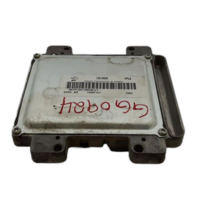
Below are the parts most often responsible for code U2604, ranked by how frequently each one is the actual culprit (per the diagnosis above). Tap any to see what we have for your vehicle.



The information in this article is provided for general reference and educational purposes only. Vehicle specifications, procedures, and part compatibility can vary by production date, trim level, and region. Always consult your vehicle's factory service manual and verify part numbers before purchasing or performing repairs. Safety-critical components such as airbags, seat belts, and braking systems should be installed by a qualified professional.
- 🧭 Diagnostic Flowchart
- 🛍️ Shop This Part
- What Does U2604 Mean?
- Can I Drive With U2604?
- Common Causes
- Symptoms
- Common Fixes & Costs
- Used vs. New Parts: Buying Guide
- What Happens If You Wait — Timeline
- Cost of Not Fixing It
- Diagnosis Steps
- When This Code Triggers (Freeze-Frame Conditions)
- Related Codes
- Climate & Environmental Factors
- How to Talk to a Mechanic About This Code
- Where to Take It: Dealer vs Independent vs Chain
- When to Walk Away From the Repair
- What Scan Tool You Need for This Code
- How to Clear the Code After You Fix It
- Will This Fail Emissions / State Inspection?
- Most Commonly Affected Vehicles
- Manufacturer-Specific Notes
- Real Owner Stories
- 2017 Chevy Volt at 57k miles - Classic BECM Failure Covered by Warranty
- 2016 Chevy Volt at 152k miles - Out-of-Warranty BECM Failure
- 2014 Ford F-150 - TCCM Failure causing 'Check 4x4' Message
- 2017 Chevy Volt at 93k miles - CARB PZEV Warranty Coverage
- How to Prevent This Code From Triggering
- Frequently Asked Questions
- Why did I get a dozen codes all at once with U2604?
- Is the repair for U2604 covered under warranty?
- My VIN isn't covered by the special warranty, but my car has the exact problem. Why?
- My mechanic replaced the 12V battery, but the code came back. What's next?
- Can clearing the codes temporarily fix the problem?
- Can the BECM be repaired instead of replaced?
- My mechanic has never seen this code. What should I do?
- How much does it cost to fix code U2604?
- Key Takeaways
- 🎟️ Get 5% Off