

OBD-II Code U2605: Hybrid/EV Battery Communication Lost
What U2605 means, why it triggers, and how to fix it
- Code U2605 on a 2016-2019 GM hybrid indicates a critical failure of the Battery Energy Control Module (BECM) when accompanied by a cluster of other U26xx codes.
- Stop driving immediately; a failing BECM causes sudden, complete loss of propulsion power at any speed, creating a severe safety hazard.
- Check your VIN against GM Special Coverage N232432680 before paying for repairs, as it extends the BECM warranty to 15 years or 150,000 miles for 2016-2018 Chevy Volts.
- Budget $1,800 to $3,000 for an out-of-warranty BECM replacement, and hire an EV-certified professional to handle the lethal high-voltage battery pack and required GM software programming.
What Does U2605 Mean?
U2605 is a manufacturer-specific network code. On General Motors hybrid vehicles like the Chevrolet Volt, this code means the main computer lost communication with a specific section of the high-voltage battery system. It points directly to a failure of the Battery Energy Control Module (BECM), which manages the health, charge, and temperature of the battery pack. In rare cases on non-hybrid Chevrolet models, this code refers to a short circuit in the driver's side power mirror motor.
Technical definition: Per General Motors Technical Service Bulletin 18-NA-261, U2605 means: Battery Energy Control Module Lost Communication with Hybrid/EV Battery Interface Control Module 3. The BECM acts as the master controller. When it fails, it stops communicating with the slave modules (Battery Interface Control Modules) that monitor individual battery sections, triggering a cascade of U26xx codes.
Can I Drive With U2605?
No — Do Not Drive. Do not drive. This code indicates a critical fault in the high-voltage battery system that causes the vehicle to suddenly lose all propulsion power and stall at any speed, creating a severe safety hazard. The fault often starts intermittently but quickly progresses to a hard failure that strands the vehicle in dangerous locations like intersections or highways.
Common Causes
- Internal Failure of the Battery Energy Control Module (BECM) (Very Common) — This is the primary cause on 2016-2019 Chevy Volts. Internal electronic components or soldering connections within the BECM fail due to thermal stress and manufacturing defects. The failure often starts intermittently, temporarily clearing after a charge cycle or 12V battery reset, before becoming a permanent fault.
- Weak or Failing 12-Volt Battery (Less Common) — A low-voltage 12V AGM battery causes widespread, unpredictable communication errors between computer modules. While it triggers a U2605 code, it is usually a contributing factor rather than the root cause. If a large cluster of U26xx codes is present, the 12V battery is rarely the sole culprit.
- Damaged CAN Bus Wiring or Connectors (Rare) — Water intrusion, corrosion, or physical damage to the CAN bus wiring harness between the BECM and the battery interface modules interrupts communication. This requires visual inspection but is far less common than internal module failure.
- Poor BCM Ground Connection (G218) (Rare) — On some GM vehicles, a poor ground connection for the Body Control Module (BCM), specifically ground point G218 under the driver's side dash, causes a flood of communication codes. A poor ground for any critical module creates network-wide issues.
- Faulty Driver Door Module or Mirror Wiring (Alternate Definition) (Very Rare) — On specific non-hybrid Chevrolet vehicles, U2605 indicates a short to voltage in the driver's side mirror vertical adjustment motor circuit or a fault within the Driver Door Module. This is a completely different and minor issue.
Symptoms
- Check Engine Light and Hybrid System Warning Light — The Malfunction Indicator Lamp (MIL) illuminates on the dashboard, accompanied by hybrid system warnings.
- Vehicle Stalls or Loses Propulsion Power — The car suddenly loses power while driving, enters 'Reduced Propulsion Power' mode, or shuts down completely.
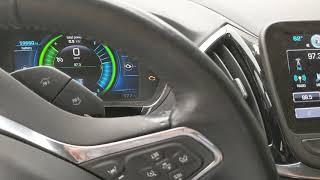
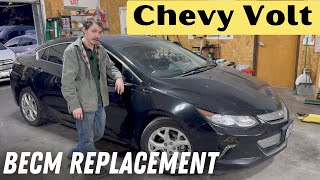
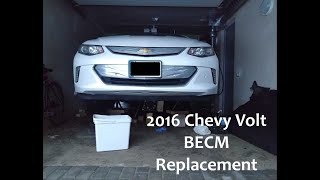
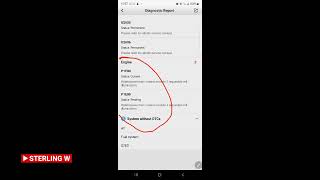
- Vehicle Will Not Start or 'Shift to Park' Message — The car fails to enter the 'Ready' state and displays a 'Shift to Park' message even when already in Park. 🎬 Watch: Real-world symptoms of a failing BECM and the repair process.
- Inability to Charge the High-Voltage Battery — The vehicle displays an 'Unable to Charge' message and refuses to accept a charge from an EVSE station.
- Incorrect Battery Gauge and Range Reading — The battery meter shows a full charge, but the electric range displays as zero, forcing the gas engine to run unexpectedly.
- Air Conditioning System Inoperative — Systems relying on BECM data, including the A/C compressor, cease to function and only blow warm air.
- Multiple U26xx Communication Codes Stored (scan-tool only — no driver-felt sign) — A scan tool reveals a cluster of codes from U2603 to U2624, indicating system-wide communication loss.
Diagnostic Flowchart
Tap your situation to follow the diagnostic path that matches what you're seeing on this code.
Common Fixes & Costs
- Replace Battery Energy Control Module (BECM) — Parts: $300-$500, Labor: $1500-$2500, ~8.5 hr book time (Professional)
- Replace 12-Volt AGM Battery — Parts: $150-$250, Labor: $50-$100, ~0.5 hr book time (DIY)
- Repair Damaged CAN Bus Wiring — Parts: $10-$50, Labor: $200-$800, ~2.5 hr book time (Professional)
- Clean and Secure Battery and Ground Connections — Parts: $0-$10, Labor: $100-$200, ~0.8 hr book time (Intermediate)
- Replace Driver Door Module or Mirror Motor — Parts: $50-$300, Labor: $100-$250, ~1.2 hr book time (Intermediate)
Used vs. New Parts: Buying Guide
When a used part is worth it: Purchasing a used BECM is highly discouraged. The failure is caused by internal solder joint degradation, and there is no reliable way to verify the remaining life of a used module.
Donor-vehicle mileage cap: roughly under 10000 miles for the part to have meaningful remaining life.
Donor quality checklist:
- Verify the exact part number, as superseded numbers exist and the wrong module will not program.
- Avoid modules from vehicles in hot climates, which accelerates electronic failure.
Decision logic:
- If Vehicle is a 2016-2018 Chevy Volt → Do not buy any part. Check for coverage under GM's 15-year/150,000-mile Special Coverage N232432680 for a free dealer repair.
- If The part requires programming to the vehicle's VIN (like the BECM) → Always buy new OEM. Dealers routinely refuse to install or program used customer-supplied modules due to high failure rates.
- If Budget is the absolute primary concern and the vehicle is out of warranty → A used part is a high-risk gamble. The savings are erased if the used module fails and requires a second $1,500 labor charge.
Warranty tradeoff: Used parts carry a 30-90 day warranty, which is insufficient for an intermittent electronic fault. A new OEM part installed by a dealer includes a 2-year parts and labor warranty.
Worst-case if a used part fails: $1500-$2500 if a used BECM fails after installation, as you must pay the labor to drop the battery pack a second time.
What Happens If You Wait — Timeline
- First Occurrence: Check Engine Light appears with no other symptoms. A scan reveals U2605 and a cluster of U26xx codes. The light turns off by itself after a charge cycle. (Added cost: $0)
- Days to Weeks: The Check Engine Light becomes persistent. The A/C stops working, the EV range shows zero on a full battery, or a momentary 'Reduced Propulsion Power' message appears. (Added cost: $0)
- Weeks to a Month: The car refuses to charge or suddenly loses power while driving. A 12V battery reset temporarily restores function. (Added cost: $100-$300 (Towing cost))
- Within ~2 months of first sign: The intermittent failure becomes a permanent fault. The vehicle will not start, will not shift out of Park, and will not charge. (Added cost: $1800-$3000 (BECM replacement cost if out of warranty))
Cost of Not Fixing It
- Immediate (First Occurrence): Intermittent stalling or no-start conditions. The vehicle becomes unreliable and poses a significant safety risk in traffic. (Added cost: $100-$300 (Towing))
- Weeks to Months: The intermittent problem progresses to a permanent hard failure. The vehicle will not start or charge, rendering it completely disabled. (Added cost: $1800-$3000 (BECM replacement cost if out of warranty))
- Long-Term: The vehicle remains permanently inoperable. Continued attempts to start or charge a vehicle with a failed BECM are futile. (Added cost: N/A (Vehicle is unusable))
Diagnosis Steps
- Read All Trouble Codes from All Modules
Use an OEM-capable OBD-II scanner to read codes from all vehicle modules. A failing BECM triggers a large cluster of codes, including multiple U26xx codes (U2603 through U2624) and P1E00. The presence of this entire family of codes is the definitive indicator of a BECM failure.
Tools: OBD-II Scanner (OEM-capable) (Beginner) - Check for GM Special Coverage N232432680
For 2016-2018 Chevrolet Volt owners, immediately check if your VIN is covered by GM Special Coverage N232432680. This program extends the BECM warranty to 15 years or 150,000 miles. A GM dealer must verify your VIN for eligibility.
Tools: Vehicle Identification Number (VIN) (Beginner) - Test the 12-Volt Battery System
Ensure the standard 12V battery is healthy, as low voltage causes communication faults. Test voltage with a multimeter; a fully charged AGM battery reads above 12.6 volts with the car off. Have it professionally load-tested to ensure voltage stays above 9.6V for 15 seconds under load.
Tools: Multimeter, Battery Load Tester (Beginner) - Perform a 12V System Reset
Disconnect the negative terminal of the 12V battery for 15 minutes to perform a hard reset. This temporarily restores communication and allows the vehicle to be moved to a safe location. If the U26xx codes return on the next drive cycle, the BECM has permanently failed.
Tools: 10mm Wrench (Beginner) - Test CAN Bus Terminating Resistance
With the vehicle off and the 12V battery disconnected, measure resistance between Pin 6 (CAN High) and Pin 14 (CAN Low) at the OBD-II port. A healthy high-speed CAN bus reads exactly 60 ohms. A reading of 120 ohms indicates a terminating module (like the BECM) has failed or disconnected.
Tools: Multimeter (Advanced) - Monitor Live Data PIDs
Use an advanced scan tool to monitor hybrid battery system PIDs. Check individual battery cell voltages and module communication statuses. A failing BECM shows erratic data or a complete loss of data from the battery interface modules.
Tools: Advanced OBD-II Scanner (Advanced) - Inspect Main Module and Ground Connections
Visually inspect the main ground points for the BCM and primary modules. Ensure ground point G218 (under the driver's dash on GM trucks/SUVs) is clean and tight. Clean any corrosion from primary power and ground connections at the fuse block.
Tools: Socket Set, Wire Brush (Intermediate) - Inspect Wiring Harness (Professional)
Access the high-voltage battery pack connectors to visually inspect the wiring harnesses connected to the BECM. Look for physical damage, chafing, moisture, or corrosion on the connector pins. This requires high-voltage safety protocols.
Tools: High-Voltage Safety Gear, Vehicle Lift (Professional) - Confirm BECM Failure
If a cluster of U26xx codes is present, the 12V system is healthy, and CAN bus wiring tests show 60 ohms of resistance, the diagnosis is a failed BECM per GM TSB 18-NA-261. Replacement and dealer reprogramming is the only remedy.
Tools: Professional Diagnostic Scan Tool (Professional)
When This Code Triggers (Freeze-Frame Conditions)
- Vehicle State: Startup or Driving (Communication loss occurs unpredictably, either immediately upon startup or suddenly while driving at highway speeds.)
- Battery State of Charge (SOC): Any (Failure happens regardless of battery charge level.)
- Ambient Temperature: Elevated (>85°F) (Failures occur more frequently in hotter climates or during summer months due to thermal stress on the module.)
- Time Since Start: Variable (0 seconds to hours) (The fault manifests as an immediate no-start condition or as a sudden stall after an hour of normal driving.)
Related Codes
- U2603, U2604, U2606-U2624 — These codes pinpoint BECM failure. Each code signifies a lost communication link to a specific battery interface module. Seeing a large cluster of these codes simultaneously means the central module (the BECM) has failed.
- P1E00 — This generic hybrid code means 'The hybrid system has requested the Check Engine Light be turned on'. It is a companion code to a more specific fault like the U26xx series.
- P0AA6 — Indicates a Hybrid Battery Voltage System Isolation Fault, meaning a dangerous loss of electrical isolation between the high-voltage system and the chassis. This is fundamentally different from U2605, which is a communication failure.
- P0AFA — Indicates 'Hybrid/EV Battery System Voltage is Low'. While a failing BECM leads to a no-charge condition and eventually this code, P0AFA points to the state of charge, not the communication network.
Climate & Environmental Factors
- High Ambient Temperature: Higher rates of BECM failure occur in hotter climates. Heat is a primary stressor for electronic modules, and the BECM's location within the battery pack limits its cooling.
- Cold Weather: Extreme cold weakens a marginal 12V battery, causing it to fail a startup and trigger a cascade of communication codes. Thermal shock during a cold snap also causes faulty solder joints to break.
How to Talk to a Mechanic About This Code
Say this: "My 2017 Chevy Volt has a check engine light and is showing a cluster of U26xx codes, including U2605. I suspect a BECM failure based on TSB 18-NA-261. Can you check my VIN for eligibility under the special coverage program N232432680 before I bring it in?"
This signals you are an informed owner. It directs the dealer to the most likely cause and immediately brings up the warranty extension, preventing them from starting with a costly, open-ended diagnostic process.
Avoid saying:
- 'My car won't start, can you fix it?'
- 'My check engine light is on, I don't know why.'
- 'Just do whatever it takes to get it running again.'
Questions to ask before authorizing the repair:
- Is the BECM replacement covered under the special coverage program or my Voltec warranty?
- If not, can you provide a detailed quote that separates parts and labor for only the BECM replacement?
- Your quote includes replacing the inverter and transmission. Can you explain why those are necessary when TSB 18-NA-261 points specifically to the BECM for this code cluster?
- What is the warranty on the new BECM part and the labor for this repair?
Where to Take It: Dealer vs Independent vs Chain
- Dealer:
Best and often only fit. The repair requires dropping the high-voltage battery and programming the new module with GM-specific software, which most independent shops lack. For 2016-2018 Volts, this is the only way to claim a free repair under the special coverage program.
Best for: Vehicles under warranty or covered by GM's Special Coverage N232432680., Complex, high-voltage repairs requiring proprietary software for programming the new module.
Downsides: Higher labor rates., Potential for upselling unnecessary repairs; question quotes that go beyond the BECM. (Typical cost: +40% vs. baseline) - Independent Shop:
Acceptable with heavy vetting. Only use an independent shop if they prove they are EV-certified and have experience with this specific BECM repair on Chevy Volts. Incorrect installation or programming leaves the car inoperable.
Best for: Out-of-warranty vehicles where cost is a major factor., Routine maintenance on the non-hybrid parts of the vehicle.
Downsides: Most general shops refuse this job. You must find a shop specifically certified for high-voltage EV repair that owns proper GM diagnostic and programming software. (Typical cost: +0% vs. baseline) - Chain Shop:
AVOID. These shops are not equipped to handle high-voltage battery work. They will turn you away or misdiagnose the problem.
Best for: Tires, 12V battery replacement, oil changes.
Downsides: Lack the training, tools, and safety equipment for any high-voltage system repair., High-pressure sales environment. (Typical cost: -10% vs. baseline)
When to Walk Away From the Repair
If the out-of-warranty repair cost of ~$2,500 exceeds 40-50% of your car's current private-party value, carefully consider your options.
- Car worth $11000, fix is $2500: Fix it. The repair cost is well under the 40% threshold for a vehicle of this value.
- Car worth $6000, fix is $2500: Borderline. The repair is ~42% of the car's value. If the rest of the car is in excellent condition, fixing it is worthwhile. If it has other issues, selling it is the better financial choice.
- Car worth $4000, fix is $2500: Walk away. The repair cost is over 60% of the car's value. It is not economical to proceed.
What Scan Tool You Need for This Code
Minimum: A scanner that reads manufacturer-specific 'U' codes (network codes) for GM vehicles. A basic code reader that only pulls generic 'P' codes is not sufficient.
A $20 generic OBD-II reader shows 'No Codes' or only the generic P1E00 code. It cannot see the specific U26xx cluster from the hybrid powertrain control module, leaving you guessing at the problem.
Budget: BlueDriver Pro / OBDLink MX+ (~$100) — These Bluetooth scanners connect to a smartphone app and read enhanced manufacturer codes (ABS, Airbag, Transmission, and Network 'U' codes) for GM vehicles, which is required to see the U2605 code cluster.
Mid-range: Foxwell NT510 Elite for GM (~$180) — A powerful handheld tool offering full system diagnostics for GM vehicles. It provides bidirectional controls to test specific components, helping rule out other issues.
Professional: Autel MaxiCOM MK808 / VXDIAG VCX Nano for GM (~$500-1200) — Professional-level tools. The VCX Nano, when paired with a GM software subscription (ACDelco TDS), allows a non-dealer technician to reprogram the new BECM module after installation.
Rent vs buy: Buying a scanner like the BlueDriver or OBDLink MX+ is a smart investment for any hybrid/EV owner. Auto parts store loaner tools are often too basic to read the required manufacturer-specific codes.
How to Clear the Code After You Fix It
- Reconnect 12V battery
- Use a professional OBD-II scan tool to clear all codes from all modules
- Perform a complete GM drive cycle to run all readiness monitors
Drive cycle (~20 minutes): Start with a cold engine (below 122°F). Idle for 2.5 minutes with A/C and rear defroster on. Accelerate at half-throttle to 55 mph and hold for 3 minutes. Decelerate to 20 mph without braking. Accelerate to 60 mph and hold for 5 minutes. Decelerate again. For a hybrid like the Volt, use 'Hold' or 'Mountain' mode to force the gas engine to run and complete engine-related monitors.
Readiness monitors affected: Comprehensive Component Monitor, Misfire Monitor, Catalyst Monitor, EVAP System Monitor, Oxygen Sensor Monitor
Before emissions retest: drive at least 50 miles to fully set monitors.
Watch out for:
- Clearing the code with a basic scanner does not fix the underlying issue; the code returns immediately.
- Disconnecting the 12V battery clears codes but resets all readiness monitors to 'Not Ready', guaranteeing an emissions test failure.
- The BECM failure is a hard fault; the code cannot be permanently cleared without replacing the module.
Will This Fail Emissions / State Inspection?
Yes — this code typically fails an OBD-II emissions inspection.
- California: An illuminated Check Engine Light is an automatic failure. After repair, all required readiness monitors must be 'Complete'.
- New York: A vehicle fails the NYVIP3 inspection if the Check Engine Light is on. Only one readiness monitor is allowed to be 'Not Ready' to pass.
- Texas: An illuminated Check Engine Light is an automatic failure. After a repair, you must drive the vehicle 50-100 miles to reset the readiness monitors before a re-test.
Most Commonly Affected Vehicles
- Chevrolet Volt (2016-2019) — Highly prone to BECM failure triggering U2605. The issue prompted TSB 18-NA-261 and Special Coverage N232432680 for 2016-2018 models.
- Cadillac ELR (2016-2016) — Shares its powertrain and Voltec battery technology with the second-generation Chevrolet Volt, making it susceptible to the same BECM failures.
- Chevrolet Malibu Hybrid (2016-2019) — Uses a modified version of the Chevy Volt's hybrid drive unit and power electronics, experiencing similar control module communication issues.
- Ford Fusion Hybrid / C-Max Hybrid (2013-2020) — Suffers from failures of its Battery Energy Control Module (BECM), presenting with identical symptoms: no-start, loss of power, and communication codes.
- Nissan Leaf (2011-2017) — Experiences failures of the Lithium-Ion Battery Controller (LBC), setting various 'U' codes for communication loss and resulting in no-start conditions.
- Hyundai Ioniq Hybrid / PHEV (2017-2020) — Documented issues with the Battery Management System (BMS) cause a no-start condition and trigger diagnostic trouble codes mimicking a U2605 fault.
- Kia Niro Hybrid / PHEV (2017-2021) — Shares its platform with the Ioniq and is susceptible to BMS-related failures leading to a loss of power and communication-related trouble codes.
- Chevrolet Suburban / Tahoe (2015-2017) — On these specific models, a related code (B2605) points to a poor BCM ground at location G218 under the dash, causing widespread electrical issues.
Manufacturer-Specific Notes
- General Motors (Chevrolet): GM issued TSB 18-NA-261 specifically for the BECM failure that causes U2605 on 2016-2019 Volts, confirming the cause as an internal module issue.
- General Motors (Chevrolet): GM created Special Coverage Program N232432680 in March 2024, extending the BECM warranty to 15 years or 150,000 miles for many 2016-2018 Volts.
- General Motors (Chevrolet): On some non-hybrid models, Chevrolet uses U2605 for a completely unrelated issue: 'Driver Mirror Vertical Motor Control Circuit High'.
- General Motors (Cadillac): The 2016 Cadillac ELR uses the same Voltec powertrain as the Gen 2 Volt and is susceptible to BECM failure, but is not officially included in the special coverage program.
Real Owner Stories
2017 Chevy Volt at 73k miles - Classic Intermittent to Hard Failure
Check Engine Light illuminated with a full cluster of U2619-U2624 codes. The car drove fine initially. The next day, the car stalled with a 'Reduced Propulsion Power' message and required a tow.
What they tried:
- Continued driving while the fault was intermittent.
- Attempted to restart the car after it stalled, but it provided no propulsion power.
- Towed the car to a dealership.
Outcome: The dealership confirmed a failed BECM. The repair was covered under the Voltec warranty.
Lesson: A cluster of U26xx codes guarantees a BECM failure. Stop driving immediately, as a complete and sudden loss of power is imminent.
2017 Chevy Volt at 152k miles - Dealership Upsell Attempt
While driving at 70mph, the car flashed 'Shift to Park' and lost all propulsion. Scanned a full set of U26xx codes. The car would not restart.
What they tried:
- Towed the car to a dealer.
- Received a quote for $2,100 for the BECM, plus over $15,000 in speculative transmission and inverter repairs.
Outcome: The owner rejected the massive quote. The root cause was solely the BECM. Final repair cost at a different shop was $2,300.
Lesson: Be wary of dealerships quoting entire hybrid drivetrain replacements for a U2605 fault. TSB 18-NA-261 proves the issue is isolated to the BECM.
2017 Chevy Volt - Misleading 12V Battery Fix
Experienced 'Unable to Charge' and 'Shift to Park' messages. A 12V battery reset made the car drivable again.
What they tried:
- Performed a 12V system reset, temporarily clearing symptoms.
- Replaced the original 12V AGM battery, which hid the problem for two weeks.
- Symptoms eventually returned.
Outcome: A dealer confirmed the actual fault was the BECM. The initial 12V battery replacement was a misdiagnosis based on temporary symptom relief.
Lesson: With a U26xx code cluster, any relief from a 12V reset or replacement is temporary. The underlying BECM failure will resurface.
How to Prevent This Code From Triggering
- Maintain a healthy 12V AGM battery. (Check annually after 3 years) — A failing 12V battery causes unpredictable communication errors and places additional stress on the vehicle's electronic system. Ensuring strong 12V power prevents secondary diagnostic confusion.
- Keep battery cooling vents clear. (Inspect every 6 months) — The BECM relies on the vehicle's battery thermal management system. Ensuring cabin and trunk cooling vents are unblocked helps the system manage heat effectively, reducing thermal stress on the module.
- Avoid extreme heat when possible. (Daily habit) — Heat is the primary stressor for the BECM's internal solder joints. Parking in the shade or a garage during hot weather reduces the thermal load on the battery pack and its control modules.
Frequently Asked Questions
Is it safe to drive with code U2605?
No, it is not safe. A failing BECM causes a sudden and complete loss of propulsion power while driving. This creates a severe safety hazard in traffic.
Will replacing the 12V battery fix a U2605 code?
Replacing the 12V battery rarely provides a permanent fix, though it is a necessary first diagnostic step. A weak 12V battery triggers communication codes, but U2605 alongside a cluster of U26xx codes almost certainly indicates a failed BECM. Any relief from a new 12V battery is usually temporary.
How much does it cost to fix code U2605?
An out-of-warranty BECM replacement at a dealership costs between $1,800 and $3,000. Labor accounts for the majority of this cost because technicians must remove the entire high-voltage battery pack. However, GM Special Coverage N232432680 makes this repair free for many 2016-2018 Chevy Volts.
My Check Engine Light for U2605 went away. Am I in the clear?
No, a disappearing Check Engine Light indicates an intermittent fault progressing toward a hard failure. The light often turns off after a full charge cycle but will return as a permanent, disabling fault. Treat a disappearing light as a final warning to schedule service before the vehicle strands you.
What is GM Special Coverage N232432680 and is my car covered?
GM Special Coverage N232432680 is a warranty extension that covers BECM replacement for 15 years or 150,000 miles on affected 2016-2018 Chevrolet Volts. Not all VINs are included in this program. You must ask a GM dealer to check your specific VIN in their system to confirm eligibility.
Can I get reimbursed if I already paid for a BECM replacement?
Yes, the special coverage bulletin includes provisions for customer reimbursement if you paid out-of-pocket before March 2024. You must provide your original repair records and receipts to a GM dealership to submit a claim. Contact GM corporate directly if the dealership refuses to process the reimbursement.
Can I replace the BECM myself?
No, replacing the BECM is strictly a professional repair. The module sits inside the sealed high-voltage battery pack, requiring specialized training and Class 0 safety gear to prevent lethal electrical shock. Furthermore, the new module requires proprietary GM software programming to start the vehicle.
Key Takeaways
- Code U2605 on a 2016-2019 GM hybrid indicates a critical failure of the Battery Energy Control Module (BECM) when accompanied by a cluster of other U26xx codes.
- Stop driving immediately; a failing BECM causes sudden, complete loss of propulsion power at any speed, creating a severe safety hazard.
- Check your VIN against GM Special Coverage N232432680 before paying for repairs, as it extends the BECM warranty to 15 years or 150,000 miles for 2016-2018 Chevy Volts.
- Budget $1,800 to $3,000 for an out-of-warranty BECM replacement, and hire an EV-certified professional to handle the lethal high-voltage battery pack and required GM software programming.
Helpful Videos
Shop the Parts Behind U2605
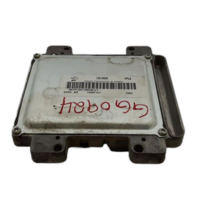
Below are the parts most often responsible for code U2605, ranked by how frequently each one is the actual culprit (per the diagnosis above). Tap any to see what we have for your vehicle.



The information in this article is provided for general reference and educational purposes only. Vehicle specifications, procedures, and part compatibility can vary by production date, trim level, and region. Always consult your vehicle's factory service manual and verify part numbers before purchasing or performing repairs. Safety-critical components such as airbags, seat belts, and braking systems should be installed by a qualified professional.
- 🧭 Diagnostic Flowchart
- 🎬 Helpful Videos
- 🛍️ Shop This Part
- What Does U2605 Mean?
- Can I Drive With U2605?
- Common Causes
- Symptoms
- Common Fixes & Costs
- Used vs. New Parts: Buying Guide
- What Happens If You Wait — Timeline
- Cost of Not Fixing It
- Diagnosis Steps
- When This Code Triggers (Freeze-Frame Conditions)
- Related Codes
- Climate & Environmental Factors
- How to Talk to a Mechanic About This Code
- Where to Take It: Dealer vs Independent vs Chain
- When to Walk Away From the Repair
- What Scan Tool You Need for This Code
- How to Clear the Code After You Fix It
- Will This Fail Emissions / State Inspection?
- Most Commonly Affected Vehicles
- Manufacturer-Specific Notes
- Real Owner Stories
- 2017 Chevy Volt at 73k miles - Classic Intermittent to Hard Failure
- 2017 Chevy Volt at 152k miles - Dealership Upsell Attempt
- 2017 Chevy Volt - Misleading 12V Battery Fix
- How to Prevent This Code From Triggering
- Frequently Asked Questions
- Is it safe to drive with code U2605?
- Will replacing the 12V battery fix a U2605 code?
- How much does it cost to fix code U2605?
- My Check Engine Light for U2605 went away. Am I in the clear?
- What is GM Special Coverage N232432680 and is my car covered?
- Can I get reimbursed if I already paid for a BECM replacement?
- Can I replace the BECM myself?
- Key Takeaways
- 🎟️ Get 5% Off