

OBD-II Code U2606: Lost Communication With Battery Interface Module
What U2606 means, why it triggers, and how to fix it, with a special focus on the common Chevrolet Volt issue.
- Scanning a 2016-2019 Chevrolet Volt and finding a cluster of U2603-U2624 codes guarantees a failed Battery Energy Control Module (BECM) in 99% of cases.
- Do not drive the vehicle; a U2606 fault causes sudden, complete loss of propulsion at highway speeds, requiring an immediate $150-$300 tow.
- Test your 12-volt AGM battery first; a voltage drop below 9.6V under load triggers false U2606 communication codes across the network.
- Call a GM dealer with your VIN to verify eligibility for Special Coverage N232432680, which extends the $2,500 BECM repair warranty to 15 years or 150,000 miles.
What Does U2606 Mean?
U2606 is a manufacturer-specific code indicating a network communication breakdown. On the Chevrolet Volt, the main computer lost connection to the Battery Energy Control Module (BECM). This prevents battery health monitoring, prompting the computer to shut down charging and propulsion as a safety measure.
Technical definition: There is no universal SAE/ISO definition for U2606. For General Motors hybrid vehicles, the definition per GM Technical Service Bulletin 18-NA-261 is: 'Battery Energy Control Module Lost Communication with Hybrid/EV Battery Interface Control Module 4'.
Can I Drive With U2606?
No — Do Not Drive. This fault causes the vehicle to stall without warning at any speed, creating a severe safety risk. The vehicle will enter a reduced power mode or fail to restart entirely, leaving you stranded in hazardous locations.
Common Causes
- Failed Battery Energy Control Module (BECM) (Very Common) — On 2016-2019 Chevrolet Volts, this causes the vast majority of U2606 codes. The BECM suffers from defective internal soldering, prompting GM to issue special service bulletins and warranty extensions. 🎬 See this step-by-step walkthrough of the BECM replacement process.
- Weak or Failing 12-Volt Battery (Common) — The 12-volt battery powers all control modules. Low or fluctuating voltage during startup or charging cycles disrupts module communication, triggering a flood of false U-codes.
- Wiring or Connector Damage (Less Common) — A damaged wire, corroded connector pin, or loose ground connection in the harness leading to the BECM interrupts the communication signal. This introduces electrical noise and causes network-wide faults.
- Software or Programming Issues (Less Common) — Corrupted or outdated module software causes communication loss even when hardware is intact. Reprogramming the BECM's firmware resolves these specific glitches.
- Faulty Main Computer (HPCM2) (Rare) — The Hybrid Powertrain Control Module 2 (HPCM2) fails to send the 'wake-up' signal to the BECM. A related code, P1EC1, confirms this specific failure.
Symptoms
- Sudden Loss of Power While Driving — The vehicle enters 'limp mode' or shuts down completely at highway speeds, causing a sudden stall.
- Vehicle Will Not Start — The vehicle refuses to enter a 'ready' state or start the gasoline engine. The dashboard illuminates, but the car remains unresponsive.
- Charging System Errors — The dashboard displays 'Unable to Charge', the charging indicator light stays yellow, and the vehicle rejects charge from an EVSE.
- Warning Messages on Dash — Messages like 'Reduced Propulsion Power' or 'Shift to Park' appear on the driver information center.
- Inaccurate Battery Gauge — The battery gauge shows zero range, even when the high-voltage battery is fully charged.
- Check Engine Light On — The Malfunction Indicator Lamp (MIL) illuminates permanently or intermittently.
Diagnostic Flowchart
Tap your situation to follow the diagnostic path that matches what you're seeing on this code.
Common Fixes & Costs
- Replace Battery Energy Control Module (BECM) — Parts: $350 - $550, Labor: $1500 - $2200, ~9.5 hr book time (Professional)
- Replace 12-Volt AGM Battery — Parts: $180 - $250, Labor: $50 - $100, ~0.6 hr book time (DIY)
- Reprogram Control Modules — Parts: $0, Labor: $150 - $300, ~1.5 hr book time (Professional)
- Repair Damaged Wiring or Connectors — Parts: $10 - $100, Labor: $200 - $800, ~3.0 hr book time (Professional)
- Clear Secured High Voltage DTCs (Temporary Workaround) — Parts: $0, Labor: $100 - $200, ~1.0 hr book time (Professional)
Used vs. New Parts: Buying Guide
When a used part is worth it: Buying a used BECM never makes sense. The original part has a near-100% failure rate due to manufacturing defects, meaning a used part will fail shortly after installation.
Donor-vehicle mileage cap: roughly under 10000 miles for the part to have meaningful remaining life.
Donor quality checklist:
- Verify the used module is the latest superseded part number (24296900).
- Avoid modules from 2016-2019 model years.
- Used modules require professional VIN reprogramming.
Decision logic:
- If Vehicle is eligible for GM special coverage N232432680. → Let the dealer install a new OEM part under warranty at no cost.
- If The required part is a BECM for a 2016-2019 Volt. → Buy a new OEM part. The labor is too expensive to risk a used part failing.
- If Budget is the absolute primary concern. → A used part is a massive gamble; savings are wiped out by repeating the 9-hour labor job.
Warranty tradeoff: Salvage yards offer 30-day part-only warranties. Dealer-installed new OEM parts include a 2-year/24,000-mile parts and labor warranty.
Worst-case if a used part fails: $2000+ for a second round of labor when the used BECM fails.
What Happens If You Wait — Timeline
- 0-4 weeks: Intermittent Check Engine Light and temporary 'Unable to Charge' messages that resolve after a power cycle. (Added cost: $0)
- 1-3 months: Check Engine Light stays on. 'Shift to Park' messages require multiple restarts to clear. Car enters 'Reduced Propulsion Power' mode. (Added cost: $0)
- 2-6 months: Sudden stalls occur at any speed. The vehicle loses all propulsion and requires a tow. (Added cost: $150-$300 for towing.)
- Permanent: The vehicle is completely 'bricked'. It will not power on, shift, or charge. (Added cost: $1,850-$2,750 for mandatory BECM replacement.)
Cost of Not Fixing It
- Immediate: Intermittent 'Check Engine' light and charging refusals that reset after parking. (Added cost: Negligible, but high inconvenience.)
- Weeks to Months: Increasing risk of sudden shutdown at highway speeds, creating a major safety hazard. (Added cost: $150 - $300 for a tow when the vehicle stalls.)
- Long-Term: The vehicle becomes completely 'bricked'. It will not start, shift, or charge. (Added cost: $1,850 - $2,750 for mandatory BECM replacement.)
Diagnosis Steps
- Read All Trouble Codes from All Modules
Use an advanced OBD-II scanner to read manufacturer-specific codes. A cluster of codes from U2603-U2624 guarantees a BECM issue on a GM vehicle. Basic scanners only show P1E00, which is insufficient.
Tools: Advanced OBD-II Scanner (Beginner) - Perform a Thorough 12-Volt System Check
Test the 12V battery's state of charge and health. A healthy AGM battery reads above 12.6V resting. Load test the battery; it must maintain voltage above 9.6V under load to rule out voltage-induced communication errors.
Tools: Multimeter, Electronic Battery Tester (Beginner) - Inspect Fuses and Relays
Check all fuses and relays related to the battery control modules and powertrain control module. A single blown fuse takes a module offline.
Tools: Fuse Puller, Multimeter (Beginner) - Research Service Bulletins (TSBs) and Warranty
Check if your Chevy Volt's VIN is covered by GM special coverage N232432680, extending the BECM warranty to 15 years or 150,000 miles. Call a dealer to verify VIN-based exclusions.
Tools: Phone, Internet Access (Beginner) - Check CAN Bus Resistance at OBD-II Port
Disconnect the 12V battery. Set a multimeter to Ohms (Ω). Measure resistance between OBD-II Pin 6 (CAN High) and Pin 14 (CAN Low). A healthy network reads 60 Ω. A reading of 120 Ω means a terminating resistor is offline. 0 Ω indicates a short.
Tools: Multimeter (Intermediate) - Check CAN Bus Voltage at OBD-II Port
Reconnect the 12V battery and turn ignition ON. Set multimeter to DC Volts. Measure Pin 6 to ground (expect 2.6-2.7V) and Pin 14 to ground (expect 2.3-2.4V). Identical voltages or 0V indicate a network short.
Tools: Multimeter (Intermediate) - Visually Inspect Wiring Harnesses
Look for rodent damage, corrosion, or loose connections on accessible wiring harnesses connected to the main computers.
Tools: Flashlight (Intermediate) - Isolate Module with Resistance Test
If CAN bus resistance is 120Ω, disconnect the 12V battery and unplug suspect modules (HPCM-2, BCM) one by one. If resistance returns to 60Ω after unplugging a module, that module or its connector is the fault source.
Tools: Multimeter, Vehicle-specific service manual (Advanced) - Scope the CAN Bus Waveform
Connect an oscilloscope to Pin 6 and Pin 14. With the vehicle on, verify a mirror-image square wave pattern. A flat line or excessive noise confirms a bus failure.
Tools: 2-Channel Oscilloscope, OBD-II Breakout Box (Advanced) - Professional Diagnosis with GM GDS2
Use GM's GDS2 software to communicate directly with the BECM. If communication fails here but succeeds with other modules, the fault is isolated to the BECM. This is mandatory before dropping the high-voltage battery.
Tools: High-Voltage Safety Equipment, GM GDS2 Software, Advanced Scan Tool (Advanced)
When This Code Triggers (Freeze-Frame Conditions)
- Vehicle State: During Startup (The communication check fails when modules initialize after being parked, especially after overnight charging.)
- Vehicle State: Steady-State Driving (The fault occurs while driving at constant highway speeds, causing immediate propulsion loss.)
- Ambient Temperature: During Cold Snap (A marginal module fails completely when ambient temperatures drop, triggering the code on cold mornings.)
- 12V Battery Voltage: 11.8V - 12.2V (Weak 12V batteries dip during module startup, causing network-wide communication faults.)
Related Codes
- U2603, U2604, U2605, U2617-U2624 — These indicate lost communication with other Battery Interface Control Modules. A large cluster appearing alongside U2606 is the definitive signature of a central BECM failure.
- P1E00 — A generic code meaning the Hybrid Powertrain Control Module requested the Check Engine Light. Basic scanners only show P1E00, hiding the specific U26xx codes.
- P0ABB / P0ABC — Relates to hybrid battery pack voltage. Often triggered by incorrect diagnostic procedures, such as removing the high-voltage disconnect while the 12V battery is connected.
- P1EC1 — Indicates the HPCM2 failed to send the 12V 'wake-up' signal to the BECM, pointing to an HPCM2 or wiring fault rather than the BECM.
Climate & Environmental Factors
- Temperature Extremes and Fluctuations: Cold snaps exacerbate initial BECM failure symptoms, turning marginal modules into complete no-start conditions. Temperature cycling degrades faulty internal solder joints, causing intermittent communication loss.
How to Talk to a Mechanic About This Code
Say this: "I have a 2017 Chevrolet Volt with a check engine light. My scanner shows a cluster of U-codes, including U2606, pointing to the BECM failure. I'd like to schedule an appointment to have this repaired under special coverage program N232432680. My VIN is [your VIN]. Can you confirm eligibility and that you are an EV-certified dealer?"
This script proves you know the exact cause and warranty extension, preventing service advisors from charging unnecessary diagnostic fees.
Avoid saying:
- 'My check engine light is on, can you look at it?'
- 'The car won't start and says Shift to Park.'
- 'I think it's a battery problem.'
Questions to ask before authorizing the repair:
- Will this repair be covered under GM Special Coverage N232432680 at no cost to me?
- Do you have the BECM in stock, or what is the estimated backorder time?
- Will you provide a loaner vehicle while the part is on backorder?
- If my VIN is excluded, what is the exact out-of-pocket cost for the BECM replacement?
Where to Take It: Dealer vs Independent vs Chain
- Dealer:
Strongly Recommended. BECM replacement requires dropping the high-voltage battery and using GM-specific software. Dealers are the only option for warranty coverage.
Best for: Vehicles covered by the Voltec warranty or GM Special Coverage N232432680., Accessing proprietary GM GDS2 software for module programming., High-voltage battery repairs requiring certified technicians.
Downsides: Highest labor rates for out-of-pocket repairs., Long wait times for EV-certified technicians. (Typical cost: +50% vs. baseline) - Independent Shop:
Not Recommended, unless the shop is a proven EV specialist. Standard independent shops cannot safely perform this repair.
Best for: Out-of-warranty vehicles where the owner found a trusted, EV-specialized shop.
Downsides: Most lack high-voltage training, battery lift tables, and GM GDS2 software., Cannot perform warranty work. (Typical cost: +0% vs. baseline) - Chain Shop:
AVOID. Chain shops cannot diagnose or repair a U2606 code.
Best for: Testing or replacing the 12-volt battery.
Downsides: Completely unequipped for high-voltage diagnostics., Guaranteed to misdiagnose the problem. (Typical cost: -10% vs. baseline)
When to Walk Away From the Repair
If the out-of-pocket repair cost ($2,500) exceeds 30-40% of the car's current private-party value, sell the vehicle as-is.
- Car worth $12000, fix is $2500: Fix it. The repair is 21% of the vehicle's value.
- Car worth $8500, fix is $2500: Borderline. The repair is 29% of the value. Fix only if the car is in excellent condition.
- Car worth $6500, fix is $2500: Walk away. The repair is 38% of the value. It is not economical to repair.
What Scan Tool You Need for This Code
Minimum: A scanner that reads manufacturer-specific 'U' codes from ALL vehicle modules on GM vehicles.
Basic $20 code readers only show the generic P1E00 code, hiding the underlying U2606 fault.
Budget: BlueDriver Pro (~$100) — Reads manufacturer-specific codes from all GM modules, revealing the full cluster of U26xx codes.
Mid-range: Foxwell NT510 Elite for GM (~$180) — Reads all GM codes and offers bi-directional controls to command specific modules during diagnostics.
Professional: Autel MaxiCOM MK808S (~$400-800) — Provides OE-level diagnostics and extensive bi-directional controls, though it still cannot program a new BECM.
Rent vs buy: Buy. Free rental scanners from auto parts stores are too basic to read the necessary 'U' codes for this fault.
How to Clear the Code After You Fix It
- Fix the underlying hardware problem (e.g., replace the BECM).
- Ensure the 12V battery is fully charged and connected.
- Use GM GDS2 software to perform the 'Clear Secured High Voltage DTCs' function.
- Perform the GM Universal Drive Cycle to verify the fix and clear permanent codes.
Drive cycle (~30 minutes): From a cold start, idle for 3 minutes with A/C on. Accelerate to 55 mph and hold for 5 minutes. Coast to 20 mph without braking. Accelerate to 60 mph and hold for 5 minutes. Coast to a stop. Repeat after a full cool-down.
Readiness monitors affected: Hybrid/EV Battery System, Catalyst Monitor, O2 Sensor Monitor, Evaporative System (EVAP)
Before emissions retest: drive at least 100 miles to fully set monitors.
Watch out for:
- Standard OBD-II scanners cannot clear 'Secured' or 'Permanent' high-voltage codes.
- Disconnecting the 12V battery resets emissions monitors but fails to clear the U2606 code.
- The code returns immediately if the BECM is not replaced.
Will This Fail Emissions / State Inspection?
Yes — this code typically fails an OBD-II emissions inspection.
- California: An illuminated Check Engine Light is an automatic failure. The vehicle must complete a full drive cycle to set readiness monitors before re-testing.
- New York: An active U2606 code causes automatic failure. Having more than one readiness monitor 'Not Ready' also triggers a failure.
- Texas: An illuminated Check Engine Light is an automatic failure in emissions-testing counties. Only one readiness monitor is allowed to be 'Not Ready'.
Most Commonly Affected Vehicles
- Chevrolet Volt (2016-2019) — This model range has a widespread BECM failure issue, prompting NHTSA investigation PE23022 and GM TSB 18-NA-261.
- Cadillac ELR (2014-2016) — Built on the Voltec platform, the ELR is susceptible to identical control module communication failures.
- Opel Ampera (2011-2015) — The European rebadged Volt suffers from the same battery control module faults.
- Holden Volt (2012-2015) — The Australian version shares the identical powertrain and is prone to the same BECM faults.
- Chevrolet Bolt EV / EUV (2020-2022) — Exhibits identical symptoms due to a false U3636 code, addressed by TSB N232421261 via HPCM2 reprogramming.
- Ford Fusion Energi (2013-2020) — Suffers from similar communication codes (U0111) presenting with identical no-start and charging faults.
- Ford C-Max Energi (2013-2018) — Shares the Fusion Energi powertrain and requires similar diagnostic approaches for module communication issues.
- Cadillac CT6 Plug-In (2016-2018) — Uses a Gen 2 Voltec-derived powertrain and suffers from identical BECM failure symptoms.
Manufacturer-Specific Notes
- General Motors: GM issued Special Coverage N232432680, extending the BECM warranty to 15 years or 150,000 miles for 2016-2018 Volts. However, 2019 models and vehicles originally sold in CARB states are often excluded, requiring owners to escalate claims with GM Customer Service.
- Ford: Ford hybrids use code U0111 for BECM communication loss. The diagnostic process mirrors the Volt, but Ford lacks a widespread special warranty program for this specific component.
Real Owner Stories
2017 Volt at 132,000 km - Classic BECM Failure
Check Engine Light illuminated. A code scan revealed a full cluster of U26xx codes plus P1E00.
What they tried:
- The owner identified the codes as a BECM failure and took the car directly to a dealer.
Outcome: The repair was fully covered under GM special coverage N232432680. The dealer provided a loaner vehicle during the repair.
Lesson: A cluster of U26xx codes is the textbook sign of BECM failure. Always check warranty coverage before authorizing repairs.
2019 Volt at 57k miles - Misdiagnosis Attempt & Temporary Fix
Car failed to start, displaying 'Shift to Park' and Check Engine Light.
What they tried:
- The owner replaced the 5-year-old 12V AGM battery, which did not solve the problem.
- The owner used a BlueDriver scanner to clear non-permanent codes, temporarily restoring 'Reduced Propulsion' mode to drive to the dealer.
Outcome: The dealer confirmed BECM failure. The repair was covered under the standard Voltec warranty. Clearing codes provided a risky way to avoid a tow.
Lesson: On a Gen 2 Volt with U-codes, the BECM is the primary culprit. Clearing codes is a last resort to move the vehicle, but driving remains erratic.
2016 Volt at 120k miles - Dealer Misdiagnosis
Car showed 0 EV range despite a full charge and would not shift into drive.
What they tried:
- The dealer blamed 'cell imbalance', cleared the codes, and refused to replace the BECM.
Outcome: Two months later, the exact symptoms and U26xx codes returned. The owner took the car to an EV-certified dealer for correct diagnosis and repair.
Lesson: If symptoms point squarely to TSB 18-NA-261 but a dealer refuses the repair, seek a second opinion from an EV-certified specialist.
2018 Volt at 170k miles - Intermittent Becomes Permanent
Intermittent Check Engine Light and charging refusals became persistent over time.
What they tried:
- The owner scanned the codes and correctly identified the BECM failure.
Outcome: At 170,000 miles, the car exceeded the 150,000-mile special coverage limit, forcing a $2,500 out-of-pocket repair.
Lesson: Intermittent faults become permanent. Get the vehicle diagnosed before mileage limits expire to secure warranty coverage.
How to Prevent This Code From Triggering
- Proactively replace the 12V AGM battery every 3-5 years. (Every 3-5 years) — Failing 12V batteries provide unstable voltage, causing random communication codes. Proactive replacement prevents electronic gremlins.
- Use a 12V battery tender if parked for extended periods. (When parked for more than 2 weeks) — Prevents parasitic draw from draining the 12V battery, ensuring stable voltage on startup.
- Follow scheduled maintenance for battery coolant loops. (Every 5 years) — Maintains stable high-voltage battery temperatures, reducing thermal stress on the BECM.
- Acknowledge the primary failure cause. (N/A) — U2606 is caused by a manufacturing defect inside the BECM. No driving habit prevents this specific hardware failure.
Frequently Asked Questions
What is a BECM and why does it fail?
The Battery Energy Control Module (BECM) monitors the temperature, voltage, and charge of individual high-voltage battery cells. In 2016-2019 Chevy Volts, it fails due to defective internal soldering connections from the original supplier. This breaks network communication, triggering the U2606 code.
Is the U2606 BECM repair covered by warranty?
GM Special Coverage N232432680 extends the BECM warranty to 15 years or 150,000 miles for many 2016-2018 Volts. You must contact a Chevrolet dealer with your VIN to confirm eligibility. Vehicles originally sold in CARB states or 2019 models are often excluded and require escalation.
What's the difference between code P1E00 and U2606?
P1E00 is a generic code indicating a hybrid system module requested the Check Engine Light to turn on. U2606 is the specific underlying fault code pinpointing the communication loss. You need an advanced scanner to read U2606; basic scanners only show P1E00.
Can a bad 12V battery really cause this?
Yes, a weak 12V battery provides unstable voltage during startup, causing widespread communication errors across the vehicle's network. Always load-test the 12V battery first. However, if you see a cluster of U26xx codes on a Gen 2 Volt, the BECM is almost certainly the true culprit.
Why did the check engine light turn off and then come back?
Early BECM failures are intermittent, often triggered by temperature changes or charge cycles. Restarting the car temporarily restores communication, turning the light off. As internal solder joints degrade further, the fault becomes permanent and disables the vehicle.
The dealer says the BECM part is on backorder. What can I do?
High failure rates have caused severe supply chain shortages for the BECM (part 24296900), leading to weeks-long backorders. You cannot speed up the part delivery. Press the dealer and GM Customer Service to provide a loaner vehicle while you wait.
Can I replace the BECM myself to save money?
No, opening the sealed high-voltage battery pack without specialized training risks fatal electric shock. The job requires a vehicle lift, battery tables, and proprietary GM GDS2 software to program the new module. Stop DIY and tow the vehicle to an EV-certified professional.
Key Takeaways
- Scanning a 2016-2019 Chevrolet Volt and finding a cluster of U2603-U2624 codes guarantees a failed Battery Energy Control Module (BECM) in 99% of cases.
- Do not drive the vehicle; a U2606 fault causes sudden, complete loss of propulsion at highway speeds, requiring an immediate $150-$300 tow.
- Test your 12-volt AGM battery first; a voltage drop below 9.6V under load triggers false U2606 communication codes across the network.
- Call a GM dealer with your VIN to verify eligibility for Special Coverage N232432680, which extends the $2,500 BECM repair warranty to 15 years or 150,000 miles.
Helpful Videos
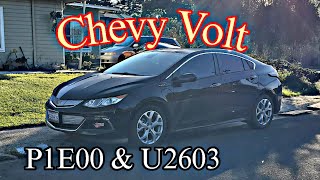

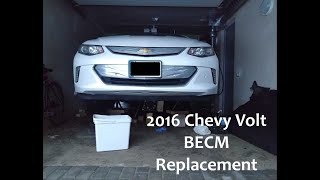
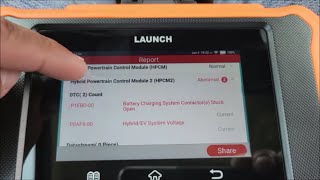
Shop the Parts Behind U2606
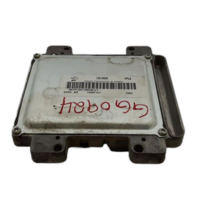
Below are the parts most often responsible for code U2606, ranked by how frequently each one is the actual culprit (per the diagnosis above). Tap any to see what we have for your vehicle.


The information in this article is provided for general reference and educational purposes only. Vehicle specifications, procedures, and part compatibility can vary by production date, trim level, and region. Always consult your vehicle's factory service manual and verify part numbers before purchasing or performing repairs. Safety-critical components such as airbags, seat belts, and braking systems should be installed by a qualified professional.
- 🧭 Diagnostic Flowchart
- 🎬 Helpful Videos
- 🛍️ Shop This Part
- What Does U2606 Mean?
- Can I Drive With U2606?
- Common Causes
- Symptoms
- Common Fixes & Costs
- Used vs. New Parts: Buying Guide
- What Happens If You Wait — Timeline
- Cost of Not Fixing It
- Diagnosis Steps
- When This Code Triggers (Freeze-Frame Conditions)
- Related Codes
- Climate & Environmental Factors
- How to Talk to a Mechanic About This Code
- Where to Take It: Dealer vs Independent vs Chain
- When to Walk Away From the Repair
- What Scan Tool You Need for This Code
- How to Clear the Code After You Fix It
- Will This Fail Emissions / State Inspection?
- Most Commonly Affected Vehicles
- Manufacturer-Specific Notes
- Real Owner Stories
- 2017 Volt at 132,000 km - Classic BECM Failure
- 2019 Volt at 57k miles - Misdiagnosis Attempt & Temporary Fix
- 2016 Volt at 120k miles - Dealer Misdiagnosis
- 2018 Volt at 170k miles - Intermittent Becomes Permanent
- How to Prevent This Code From Triggering
- Frequently Asked Questions
- What is a BECM and why does it fail?
- Is the U2606 BECM repair covered by warranty?
- What's the difference between code P1E00 and U2606?
- Can a bad 12V battery really cause this?
- Why did the check engine light turn off and then come back?
- The dealer says the BECM part is on backorder. What can I do?
- Can I replace the BECM myself to save money?
- Key Takeaways
- 🎟️ Get 5% Off