

OBD-II Code U2607: Accessory Module Communication Failure
What U2607 means, why it triggers, and how to fix it
- Code U2607 indicates a communication failure with an accessory module, most frequently the SYNC APIM in 2016-2021 Ford vehicles.
- If the airbag warning light is illuminated, the Supplemental Restraint System is disabled, meaning airbags will not deploy in a crash.
- Always test the 12-volt battery before replacing expensive modules, as voltage drops below 12.4V frequently trigger false communication codes.
- Ford owners can save over $1,000 by purchasing a pre-programmed aftermarket APIM for $600-$900 and installing it themselves in under an hour.
What Does U2607 Mean?
U2607 is a manufacturer-specific code indicating a vehicle computer lost communication with an accessory control module. In Ford vehicles, this almost always points to a failed Accessory Protocol Interface Module (APIM) controlling the infotainment system. In Subaru, Nissan, and GM models, it typically flags a fault in the airbag or occupant detection systems.
Technical definition: As a manufacturer-specific network communication code (U2xxx), U2607 lacks a universal SAE definition. On Ford's MS-CAN bus network, it signifies a total loss of communication with the APIM. On Subaru or Nissan networks, the airbag control module sets this code when it loses contact with the Occupant Detection System (ODS) or seat position sensors.
Can I Drive With U2607?
Yes, But With Caution. The vehicle will drive because this code does not affect the engine, transmission, or brakes. However, if the airbag warning light is on, the Supplemental Restraint System (SRS) is disabled. Airbags and seatbelt pretensioners will NOT deploy in a crash, requiring an immediate trip to a repair shop.
Common Causes
- Failing Accessory Protocol Interface Module (APIM) (Very Common) — The internal electronics of the APIM fail, causing it to drop off the vehicle's communication network. This is the primary cause in 2016-2021 Ford, Lincoln, and Mercury vehicles equipped with SYNC 3 systems.
- Faulty Occupant Detection System (ODS) Sensor (Very Common) — A defective passenger seat weight sensor stops communicating with the airbag module. This triggers the code and disables the passenger airbag, leading to major recalls in Subaru and Nissan models.
- Low Battery Voltage or Failing Battery (Common) — Vehicle computer modules require a stable 12-volt supply. A weak battery causes voltage drops during engine cranking, preventing modules from powering on or communicating correctly during startup.
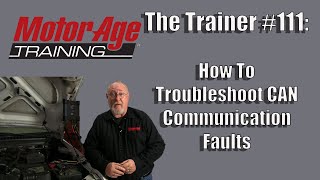
- Damaged or Corroded Wiring Harness (Common) — Wiring under the front seats is prone to chafing against seat frames (common in GM trucks) or corroding at the connectors due to moisture. This severs the CAN bus data lines. 🎬 Watch: Professional tips for troubleshooting complex CAN bus communication faults.
- Cracked Solder Joints on a Circuit Board (Common) — Thermal cycling causes stress and fatigue in solder joints. On older Subarus, cracked joints on the overhead console circuit board disrupt the airbag indicator circuit, triggering communication faults.
- Failed Software Update (Less Common) — A failed Over-The-Air (OTA) software update 'bricks' the APIM, causing a total communication failure. This is a known issue on 2021+ Ford F-150 and Mustang Mach-E models.
- Blown Infotainment Fuse (Less Common) — A blown fuse cuts power to the APIM or radio module, immediately causing a communication fault on the network.
Symptoms
- Black or Frozen Infotainment Screen — The center display screen is completely black, stuck on a manufacturer logo, or trapped in a reboot loop. This is the definitive symptom of APIM failure in Ford vehicles.
- Airbag Warning Light is On — Communication faults related to the Occupant Detection System or under-seat wiring illuminate the red airbag warning light on the instrument cluster.
- Unresponsive Radio, Audio, and SYNC Controls — The system produces no audio, steering wheel controls fail, Bluetooth disconnects, and USB ports stop charging devices.
Diagnostic Flowchart
Tap your situation to follow the diagnostic path that matches what you're seeing on this code.
Common Fixes & Costs
- Replace the APIM (SYNC) Module — Parts: $300-$900, Labor: $150-$300, ~1.5 hr book time (Intermediate)
- Replace the 12-Volt Battery — Parts: $150-$300, Labor: $50-$100, ~0.5 hr book time (DIY)
- Replace Occupant Detection System (ODS) Sensor — Parts: $300-$600, Labor: $200-$400, ~2.5 hr book time (Professional)
- Repair Wiring or Clean Connectors — Parts: $5-$50, Labor: $150-$400, ~2.0 hr book time (Professional)
- Resolder Overhead Console Circuit Board — Parts: $0-$10, Labor: $100-$200, ~1.0 hr book time (Intermediate)
Used vs. New Parts: Buying Guide
When a used part is worth it: Buying a pre-programmed, refurbished APIM module makes excellent financial sense, saving over $1,000 compared to a new OEM part from a dealer.
Donor-vehicle mileage cap: roughly under 100000 miles for the part to have meaningful remaining life.
Donor quality checklist:
- Ensure the seller guarantees the part is tested and functional.
- For APIMs, you MUST buy a unit pre-programmed for your specific VIN. An unprogrammed module will not work.
- Match the part number closely, but favor newer, superseded part numbers for better reliability.
Decision logic:
- If The vehicle is a Ford/Lincoln and budget is a concern → Buy a used, pre-programmed APIM module online.
- If The part is a safety component like an ODS sensor → Buy a new OEM part. The reliability of a new safety sensor is worth the premium.
- If You do not have access to programming tools like FORScan → You must buy a pre-programmed module or pay a shop to program a blank one.
Warranty tradeoff: Used parts typically include a 30-90 day warranty. Refurbished parts often carry a 1-year warranty. New OEM parts usually have a 1-2 year warranty.
Worst-case if a used part fails: $200-$500 if a used part fails after the warranty period, requiring a second replacement.
What Happens If You Wait — Timeline
- 0-1 month: Fault is intermittent. The Ford screen freezes occasionally, or the airbag light cycles on and off. The code is stored but may not be active. (MPG impact: 0%% · Added cost: $0)
- 1-3 months: Failure becomes frequent. The Ford screen is black permanently. The airbag light stays on, disabling the SRS system. A parasitic drain begins. (MPG impact: 0%% · Added cost: $0-$50 in wasted fuel from repeated jump-starts.)
- 3-6 months: The faulty module causes a consistent parasitic battery drain. The vehicle battery dies if left sitting for 1-2 days, requiring frequent jump-starts. (MPG impact: 0%% · Added cost: $150-$300 for a new battery destroyed by repeated deep cycling.)
- 6+ months: Continued driving with a disabled airbag system represents a critical safety risk. The dead battery becomes a daily problem, leaving the driver stranded. (MPG impact: 0%% · Added cost: Incalculable cost of injury in an accident.)
Cost of Not Fixing It
- Immediate: If the airbag light is on, the entire SRS is disabled. Airbags will not deploy in a crash, drastically increasing the risk of severe injury or death. (Added cost: N/A)
- 0-3 months: Loss of infotainment features (radio, navigation, Bluetooth). A failing APIM causes a parasitic battery drain, leading to a dead battery after sitting overnight. (Added cost: $150-$300 for a new battery destroyed by repeated deep cycling.)
- 3+ months: Continued driving with a disabled safety system remains a critical, life-threatening risk. (Added cost: Incalculable cost of injury in an accident.)
Diagnosis Steps
- Test the 12-Volt Battery
Verify battery health before replacing any parts. Use a multimeter to test voltage with the vehicle off. A healthy battery reads above 12.4 volts. A weak battery is the leading cause of phantom communication codes.
Tools: Multimeter (Beginner) - Perform a System Soft Reset
Force the infotainment system to reboot. In Ford vehicles, hold the power button and the 'seek forward' button simultaneously for 10 seconds. If the screen remains black, the APIM has likely failed.
Tools: None (Beginner) - Inspect Relevant Fuses
Locate the fuse for the radio, infotainment, or SYNC system in the owner's manual (often F67 or F79 in Fords). Pull the fuse and verify the internal wire is intact.
Tools: Fuse puller or needle-nose pliers (Beginner) - Scan All Vehicle Modules
Use an advanced OBD-II scanner to read manufacturer-specific codes from the Body Control Module (BCM) and Airbag module. Look for accompanying codes like U0253 (Lost Communication With APIM) or B-codes to pinpoint the exact offline component.
Tools: Advanced OBD-II Scanner (Intermediate) - Visually Inspect Connectors and Harnesses
Check the large electrical connectors under the front seats for looseness or green corrosion. On GM trucks, inspect the harness under the driver's seat for chafing against the metal frame.
Tools: Flashlight (Intermediate) - [PRO TIP] Measure CAN Bus Network Resistance
Disconnect the negative battery terminal. Measure resistance between Pin 6 (CAN High) and Pin 14 (CAN Low) at the OBD-II port. A healthy network reads 60 Ω. A reading of 120 Ω means a module containing a terminating resistor is offline.
Tools: Multimeter (Advanced) - [PRO TIP] Check CAN Bus Voltage
Reconnect the battery and turn the ignition on. Back-probe the CAN bus lines. CAN High (Pin 6) should read 2.5-3.5V and CAN Low (Pin 14) should read 1.5-2.5V. The voltages must mirror each other and add up to 5V.
Tools: Multimeter, back-probe pins (Advanced)
When This Code Triggers (Freeze-Frame Conditions)
- System State: Key On, Engine Off or Engine Running (The code sets immediately at startup when modules perform their initial network check-in.)
- Battery Voltage: 9.0V - 11.5V (Voltage drops below 12V during engine cranking frequently trigger false communication codes.)
- Time Since Start: 0 - 10 seconds (The fault is detected within the first few seconds of the drive cycle when a module fails to respond on the CAN bus.)
Related Codes
- U0253 — 'Lost Communication With Accessory Protocol Interface Module.' If present with U2607, the APIM is confirmed as the offline module.
- U0184 — 'Lost Communication With Radio.' Points specifically to the Audio Control Module (ACM). If present, the fault lies within the radio head unit or its wiring.
- B1083 — Ford-specific 'Seat Track Position Sensor Circuit Fault.' Indicates a damaged wiring harness under the driver's seat affecting both the CAN bus and seat sensors.
- B1870 / B1875 — Subaru-specific 'Occupant Detection Sensor Malfunction.' Confirms the fault is within the passenger seat's weight sensing system.
Climate & Environmental Factors
- Temperature Extremes and Cycling: Repeated temperature changes cause circuit boards and solder joints to expand and contract. This thermomechanical fatigue cracks solder joints, a known failure point on Subaru overhead consoles.
- High Humidity and Moisture: Moisture accelerates corrosion on wiring connectors under seats. On Subaru models with the WRA-24 recall, cracked ODS sensors allow moisture to enter and short the circuit.
How to Talk to a Mechanic About This Code
Say this: "Be specific. For a Ford, say: 'My infotainment screen is black and I have a U2607 code. I suspect the APIM module failed. Can you provide a quote to replace it?' For a Subaru/GM with an airbag light, say: 'My airbag light is on with a U-code. Please check for open recalls and inspect the wiring harness under the seat for damage.'"
This directs the technician to the most probable cause, saving diagnostic time. It frames the conversation around a specific, known issue rather than a vague problem, preventing a costly, open-ended search.
Avoid saying:
- 'My screen is acting weird, can you fix it?' (Too vague, invites a lengthy diagnostic process).
- 'Just fix whatever is wrong.' (Gives the shop a blank check to replace parts).
- 'I think my CAN bus is shorted.' (Don't use technical jargon unless certain. Describe the symptom instead).
Questions to ask before authorizing the repair:
- Can you explain the problem in simple terms and show me the faulty part?
- Is this repair urgent for safety, or can it be delayed?
- What are my repair options, such as using a refurbished or customer-supplied part?
- Does your estimate include all parts, labor, and necessary programming?
- What is the warranty on the replacement part and your labor?
Where to Take It: Dealer vs Independent vs Chain
- Dealer:
Best for: Vehicles under warranty., Confirmed safety recall issues (like the Subaru ODS sensor)., Complex software issues on very new cars (e.g., failed OTA updates).
Downsides: Significantly higher labor rates and part costs., Defaults to replacing expensive assemblies rather than repairing a cheaper component. (Typical cost: +50% vs. baseline) - Independent Shop:
Best fit for most U2607 scenarios. A reputable independent shop specializing in electrical diagnostics is ideal for out-of-warranty APIM, ODS, or wiring repairs.
Best for: Out-of-warranty vehicles where cost is a factor., Common failures like Ford APIM replacements or GM under-seat wiring breaks., Owners who want flexible repair options, like installing a customer-supplied part.
Downsides: Quality varies; choose a shop with strong reviews for electrical diagnostics., May lack the latest manufacturer-specific tools for brand-new models. (Typical cost: +0% vs. baseline) - Chain Shop:
AVOID for this code. Diagnosing a U2607 communication failure requires specialized knowledge beyond the scope of a quick-lube or tire shop.
Best for: Simple, routine maintenance like oil changes, tires, and brakes.
Downsides: Technicians lack training for complex network and module diagnostics., High pressure to sell parts leads to misdiagnosis. (Typical cost: -10% vs. baseline)
When to Walk Away From the Repair
If the estimated repair cost exceeds 40-50% of the car's private-party value, seriously consider selling or trading in the vehicle instead of repairing it.
- Car worth $8000, fix is $2200: Fix it. The repair cost is ~28% of the vehicle's value. Get a quote from an independent shop or price a DIY pre-programmed module to reduce the cost to ~$1200.
- Car worth $4000, fix is $2200: Walk away. The repair cost is 55% of the car's value. Investing this much into an older car is a poor financial decision.
- Car worth $3000, fix is $400: Fix it. A $400 repair on a $3,000 vehicle is only 13% of its value. This is a typical cost for a wiring harness repair and is a smart investment.
What Scan Tool You Need for This Code
Minimum: A scanner that reads manufacturer-specific Body (B-codes), Chassis (C-codes), and Network (U-codes) from all modules, including the SRS and BCM.
A basic $20 code reader only scans the Powertrain Control Module (PCM) for emissions codes. It will not see the U2607 code stored in the body or airbag modules.
Budget: FORScan software with VLinker FS or OBDLink EX USB adapter (for Ford) (~$50-80) — The most powerful DIY option for Ford owners. Provides dealer-level access to all modules, reads U2607 and U0253, and allows programming a new APIM module.
Mid-range: Foxwell NT510 Elite / NT710 (~$180) — Performs a full-system scan to read and clear codes from the engine, ABS, airbag (SRS), and other modules, perfect for identifying the source of a U2607 code.
Professional: Autel MaxiCOM MK808 / Launch CRP919XBT (~$450-600) — Professional-grade, bi-directional scan tools. Perform advanced functions like OCS resets and proxy alignments, and provide live data graphing to diagnose complex network issues.
Rent vs buy: Buy. Free rental scanners at auto parts stores are basic models that cannot read manufacturer-specific U-codes or access the necessary modules.
How to Clear the Code After You Fix It
- Reconnect the battery if disconnected during repair.
- Use an advanced OBD-II scan tool to clear U-codes and B-codes from all modules.
- Perform a soft reset of the infotainment system to initialize the new module.
- Drive the vehicle to allow system monitors to run.
Drive cycle (~30 minutes): Perform a cold start, idle for 3 minutes, drive at a steady highway speed (55-60 mph) for 15 minutes, and finish with 10 minutes of stop-and-go city driving.
Readiness monitors affected: Clearing the U2607 code resets ALL emissions readiness monitors to 'Not Ready' status.
Before emissions retest: drive at least 50 miles to fully set monitors.
Watch out for:
- Clearing the code without fixing the root cause guarantees the code will return immediately.
- Failing to perform a required relearn procedure (like an OCS zero-point reset or APIM programming) prevents the code from clearing.
Will This Fail Emissions / State Inspection?
No — by itself this code doesn't fail OBD inspection (but it can keep readiness monitors from setting, which causes a separate fail).
- California: U2607 does not fail the emissions smog check. However, clearing the code resets readiness monitors, which must be complete to pass.
- New York: An illuminated airbag light is noted during the safety inspection but is currently an advisory, not grounds for failure.
- Texas: Texas safety inspections do not include the airbag system. An illuminated airbag light will not cause a failure.
Most Commonly Affected Vehicles
- Ford F-150 (2016-2021) — Extremely common failure of the SYNC 3 APIM module. 2021 models are also known for APIMs being 'bricked' by failed OTA updates.
- Ford Escape / Fusion / Explorer (2016-2020) — Prone to the same high rate of SYNC 3 APIM module failure, causing black screens and communication codes.
- Lincoln Navigator / MKX / MKC (2018-2020) — Lincoln vehicles with SYNC 3 systems experience the same high rate of APIM failures as their Ford counterparts.
- Subaru Outback / Legacy (2020-2022) — Subject to safety recall WRA-24 for defective ODS sensors in the passenger seat that short circuit and disable the passenger airbag.
- Subaru Forester / Outback / Legacy (2007-2018) — Sets communication codes due to faulty ODS sensors or cracked solder joints on the overhead airbag indicator light panel.
- Chevrolet / GMC Silverado / Sierra / Tahoe / Yukon (2007-2014) — A broken wire for the driver's seat position sensor (Part #25951880) under the seat is a frequent cause of airbag lights.
- Nissan Rogue / Altima / Sentra / Titan (2013-2024) — Prone to airbag communication faults due to Occupant Classification System (OCS) issues. Multiple recalls exist for reprogramming or replacing OCS components.
- Ford Mustang Mach-E (2021-2023) — A software issue in the APIM causes a 'Drive Mode Not Available' message and stores a U0253 code, addressed by TSB 24-2012.
Manufacturer-Specific Notes
- Ford / Lincoln: U2607 is almost exclusively linked to the failure of the APIM running the SYNC system. These modules have an exceptionally high failure rate. Most newer SYNC 3 systems are not covered by extended warranty programs.
- Subaru: Airbag lights and communication codes are frequently caused by a faulty Occupant Detection System (ODS) sensor. Safety recall WRA-24 replaces defective ODS sensors on 2020-2022 Legacy and Outback models for free.
- General Motors (GM): On 2007-2014 trucks and SUVs, a broken wire for the driver's seat position sensor under the seat is the primary cause for airbag lights and associated communication codes.
- Nissan: Airbag lights are often related to the Occupant Classification System (OCS). Multiple large-scale recalls require reprogramming or replacing the OCS control unit, followed by a specific 'OCS Zero Point Reset' with a dealer scan tool.
- Chrysler / Dodge / Jeep: Replacing a battery or radio triggers communication codes and a flashing odometer. This requires a 'proxy alignment' procedure using a capable scan tool to sync the modules.
Real Owner Stories
2018 Ford F-150 with SYNC 3 at 75,000 miles
The infotainment screen went black permanently. Radio and Bluetooth stopped working. A scan revealed codes U2607 and U0253.
What they tried:
- Performed a soft reset (Power + Seek Forward) - no change.
- Disconnected the battery for 30 minutes - screen remained black.
- Checked fuse F67 - fuse was intact.
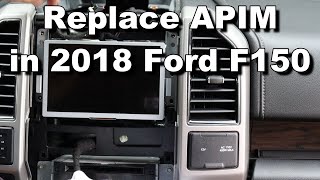
Outcome: The owner purchased a pre-programmed aftermarket APIM module online for $700. Following a tutorial, they replaced the module themselves in under an hour. The system powered on immediately and all functions were restored.
Lesson: If soft resets and fuse checks fail to fix a black Ford screen, the APIM has failed. A pre-programmed aftermarket module is a highly effective DIY solution compared to a $1,500+ dealership repair.
2015 Chrysler 200 with flashing odometer
After upgrading to a used 8.4-inch Uconnect screen, the radio worked, but the odometer flashed constantly and the battery drained after a few days.
What they tried:
- Replaced the battery, but the drain continued.
- Disconnected the battery for 15 minutes to reset the system, but the odometer continued to flash.
Outcome: The issue was a mismatch between the vehicle's computer and the new radio module. The owner paid a dealership $165 to perform a 'Proxy Alignment' procedure, which synced the modules and stopped the battery drain.
Lesson: Replacing a major module on Chrysler/Dodge/Jeep vehicles requires a Proxy Alignment. A flashing odometer confirms this procedure is needed to prevent communication errors and parasitic battery drain.
2021 Subaru Outback with Airbag Light On
The airbag warning light illuminated, and the passenger airbag 'OFF' indicator stayed lit even with an adult in the seat. A scan showed a U-series communication code.
What they tried:
- Checked for loose connectors under the passenger seat - none found.
- Researched the issue online and found information about a major recall.
Outcome: The owner confirmed their VIN was covered under safety recall WRA-24. The dealer replaced the defective Occupant Detection System (ODS) sensors free of charge.
Lesson: If you have a U-code and an airbag light on a 2020-2022 Subaru, check for the WRA-24 recall immediately. The dealer performs this repair at no cost.
How to Prevent This Code From Triggering
- Maintain Battery Health (Every 6 months) — Low voltage causes communication codes. Clean battery terminals and ensure the battery is fully charged. Use a battery maintainer for infrequently driven vehicles.
- Protect Electrical Connectors (During any related repair) — Moisture causes corrosion, interrupting data signals. Apply dielectric grease to exposed connectors under seats to block moisture.
- Manage Software Updates Carefully (When notified of an update) — A failed OTA update bricks modules. Ensure a strong Wi-Fi signal and a healthy battery before starting. Do not turn off the vehicle during the update.
- Avoid Parasitic Drains (Daily habit) — Incorrectly wired aftermarket accessories drain the battery, causing low-voltage issues. Unplug devices from power outlets when leaving the vehicle.
- Drive the Vehicle Regularly (At least once a week) — Short trips prevent the alternator from fully recharging the battery. Driving for 20 minutes weekly maintains battery charge and electronic system health.
Frequently Asked Questions
Can I just replace the APIM module myself?
Yes, this is a straightforward DIY repair taking about an hour. You must buy a pre-programmed module online matched to your specific vehicle VIN for a plug-and-play installation. This avoids expensive dealership programming fees.
The dealer quoted me over $2,000 to fix this. Why is it so expensive?
Dealerships charge premium prices for OEM parts (often over $1,200) plus several hours of labor for diagnosis and programming. You can save over $1,000 by purchasing a pre-programmed third-party module for $600-$900. Installing it yourself or using an independent shop drastically reduces the final bill.
My screen is black but the code hasn't appeared yet. Is it the same issue?
A black screen is the primary symptom of a failing APIM that eventually sets code U2607. Communication often drops intermittently before failing completely. The check engine light or stored code will appear once the failure becomes permanent.
Will a software update fix my SYNC system and clear the U2607 code?
A software update only fixes the issue if a known software glitch caused the code, such as on some Mustang Mach-E models. If the APIM module has failed internally, a software update will fail to install. Hardware replacement is required for internal failures.
My radio started acting up right after the dealer did another repair. Did they break it?
Disconnecting the vehicle's battery during routine repairs causes sensitive modules like the APIM to lose programming or fail upon reconnection. This is a known risk with aging modern vehicle electronics. It is rarely due to direct mechanic negligence.
What's the most common misdiagnosis for a U2607 code?
The most common misdiagnosis is replacing an expensive module without testing the 12-volt battery first. A weak battery, poor ground, or corroded under-seat connector causes the exact same communication failure code. Always verify voltage and wiring integrity before buying parts.
Is it safe to drive with the U2607 code and my airbag light on?
No. An illuminated airbag light means the entire Supplemental Restraint System is disabled as a fail-safe. Airbags and seatbelt pretensioners will not deploy in an accident, drastically increasing the risk of severe injury.
Why did my APIM fail right after my warranty expired?
APIM modules in 2016-2020 Ford models suffer from an exceptionally high hardware failure rate. The timing is a coincidence related to the part's known 3-to-5-year lifespan. Ford has not issued a blanket extended warranty for most SYNC 3 systems.
Key Takeaways
- Code U2607 indicates a communication failure with an accessory module, most frequently the SYNC APIM in 2016-2021 Ford vehicles.
- If the airbag warning light is illuminated, the Supplemental Restraint System is disabled, meaning airbags will not deploy in a crash.
- Always test the 12-volt battery before replacing expensive modules, as voltage drops below 12.4V frequently trigger false communication codes.
- Ford owners can save over $1,000 by purchasing a pre-programmed aftermarket APIM for $600-$900 and installing it themselves in under an hour.
Helpful Videos
Shop the Parts Behind U2607
Below are the parts most often responsible for code U2607, ranked by how frequently each one is the actual culprit (per the diagnosis above). Tap any to see what we have for your vehicle.


The information in this article is provided for general reference and educational purposes only. Vehicle specifications, procedures, and part compatibility can vary by production date, trim level, and region. Always consult your vehicle's factory service manual and verify part numbers before purchasing or performing repairs. Safety-critical components such as airbags, seat belts, and braking systems should be installed by a qualified professional.
- 🧭 Diagnostic Flowchart
- 🎬 Helpful Videos
- 🛍️ Shop This Part
- What Does U2607 Mean?
- Can I Drive With U2607?
- Common Causes
- Symptoms
- Common Fixes & Costs
- Used vs. New Parts: Buying Guide
- What Happens If You Wait — Timeline
- Cost of Not Fixing It
- Diagnosis Steps
- When This Code Triggers (Freeze-Frame Conditions)
- Related Codes
- Climate & Environmental Factors
- How to Talk to a Mechanic About This Code
- Where to Take It: Dealer vs Independent vs Chain
- When to Walk Away From the Repair
- What Scan Tool You Need for This Code
- How to Clear the Code After You Fix It
- Will This Fail Emissions / State Inspection?
- Most Commonly Affected Vehicles
- Manufacturer-Specific Notes
- Real Owner Stories
- 2018 Ford F-150 with SYNC 3 at 75,000 miles
- 2015 Chrysler 200 with flashing odometer
- 2021 Subaru Outback with Airbag Light On
- How to Prevent This Code From Triggering
- Frequently Asked Questions
- Can I just replace the APIM module myself?
- The dealer quoted me over $2,000 to fix this. Why is it so expensive?
- My screen is black but the code hasn't appeared yet. Is it the same issue?
- Will a software update fix my SYNC system and clear the U2607 code?
- My radio started acting up right after the dealer did another repair. Did they break it?
- What's the most common misdiagnosis for a U2607 code?
- Is it safe to drive with the U2607 code and my airbag light on?
- Why did my APIM fail right after my warranty expired?
- Key Takeaways
- 🎟️ Get 5% Off