

OBD-II Code U2608: Network Communication Failure
What U2608 means, why it triggers, and how to fix it
- U2608 is a manufacturer-specific CAN bus failure code indicating a dropped communication link between two or more control modules.
- Test the battery first; voltage drops below 12.4V during startup cause a significant percentage of random network communication codes.
- Never replace the module that triggered the code without testing; it is usually just reporting that a different module went offline.
- A healthy CAN bus network measures exactly 60 ohms of resistance across pins 6 and 14 at the OBD-II port with the battery disconnected.
- Expect to pay $150 to $350 for a professional diagnosis, as tracing CAN bus faults requires an oscilloscope and factory wiring diagrams.
What Does U2608 Mean?
U2608 is a manufacturer-specific network communication code indicating one of your car's computers (modules) stopped talking to the network. Think of it like a dropped call between two important parts of your car's brain. Because this code is manufacturer-specific, the exact offline module varies; on a Mazda, it points to the instrument cluster, while on a Chevrolet Volt, it points to the hybrid battery charger control module.
Technical definition: U2608 indicates a communication failure on the Controller Area Network (CAN) bus. As a U2XXX manufacturer-controlled code, there is no universal SAE/ISO definition. The exact meaning depends on the make, model, and the module storing the code. Technicians must consult factory service information to identify which specific circuit or module the code targets.
Can I Drive With U2608?
No — Do Not Drive. Driving is possible but dangerous. A network communication failure takes critical safety systems like ABS, traction control, and airbags offline. You will experience unpredictable electrical problems, a loss of gauges, or sudden stalling in traffic. Tow the vehicle to a shop to prevent accidents or further module damage.
Common Causes
- Low Battery Voltage or Bad Ground (Very Common) — Vehicle computers require a steady 12+ volts to communicate. A weak battery, failing alternator, or a rusty ground wire causes communication to drop out unexpectedly during voltage sags, setting multiple U-codes. 🎬 See how a pro diagnoses a ghost intermittent PCM fault
- Damaged Wiring or Corroded Connectors (Very Common) — The CAN bus wires connecting the modules often chafe, pinch, or corrode. This frequently happens where wires pass through the firewall, under seats, or inside connectors exposed to moisture (like the passenger footwell), breaking the communication link.
- Faulty Control Module (Common) — One of the computers in the network (like the BCM, PCM, or IPC) fails internally. This causes it to stop communicating or flood the network with corrupted data, forcing other modules to shut down.
- Aftermarket Device Interference (Less Common) — Poorly installed aftermarket accessories like remote starters, alarms, or plug-in OBD-II insurance trackers interfere with the CAN bus network. These devices introduce electrical noise or draw excessive power, disrupting factory module communication.
- Software Glitches or Failed Programming (Less Common) — A module's software corrupts, or a dealer programming event fails. This causes the module to stop communicating correctly on the network. A reflash with updated software resolves the issue.
- Failed Terminating Resistor (Rare) — The CAN bus network utilizes two 120-ohm resistors at each end to stabilize data signals. If one resistor fails or its wiring breaks, the entire network becomes unstable and crashes.
Symptoms
- Multiple Warning Lights on Dash — The check engine light illuminates alongside ABS, traction control, airbag, and other system warning lights simultaneously.
- Instrument Cluster Malfunction — Gauges like the speedometer or tachometer drop to zero, flicker, or the entire cluster goes completely blank.
- No-Start or Stalling Condition — The engine cranks but refuses to start, or starts and immediately stalls because the engine computer cannot communicate with the immobilizer or fuel modules.
- Loss of Electrical Features — Power windows, door locks, interior lights, radio, or climate controls stop working or behave erratically.
Diagnostic Flowchart
Tap your situation to follow the diagnostic path that matches what you're seeing on this code.
Common Fixes & Costs
- Replace Battery or Repair Ground Connection — Parts: $150-$250, Labor: $0-$50, ~0.5 hr book time (Beginner)
- Repair Damaged Wiring or Connectors — Parts: $10-$100, Labor: $200-$800, ~2.5 hr book time (Professional)
- Replace the Body Control Module (BCM)
— Parts: $300-$600, Labor: $200-$400 (includes programming), ~2.0 hr book time
(Professional)
Ford F-150 (2018-2020): OEM JU5Z-15604-BZ (Alt: {"brand": "Dorman (Remanufactured)", "part_number": "Varies by VIN"}) - Replace the Instrument Panel Cluster (IPC)
— Parts: $300-$800, Labor: $150-$300, ~1.5 hr book time
(Professional)
Chevrolet Silverado (2007-2013): OEM 22838400 (Alt: {"brand": "ACDelco", "part_number": "22838400", "price_comparison": "Often sold as remanufactured unit"}) - Replace the Powertrain Control Module (PCM)
— Parts: $800-$2000, Labor: $150-$400 (includes programming), ~1.2 hr book time
(Professional)
Dodge/Ram 1500 (2015, 5.7L): OEM 68232422AA (Alt: {"brand": "Flagship One (Remanufactured)", "part_number": "68232422AA", "price_comparison": "Pre-programmed to VIN"}) - Software Reflash/Update — Parts: $0, Labor: $150-$300, ~1.0 hr book time (Professional)
Used vs. New Parts: Buying Guide
When a used part is worth it: For modules like the Instrument Cluster (IPC) or Body Control Module (BCM), a used part from a reputable recycler is cost-effective on older vehicles where new parts are scarce. Avoid used Powertrain Control Modules (PCM) unless purchased from a specialized remanufacturer who pre-programs it.
Donor-vehicle mileage cap: roughly under 100000 miles for the part to have meaningful remaining life.
Donor quality checklist:
- Match the OEM part number exactly; a slight variation means incompatibility.
- Ensure the donor vehicle did not suffer water or fire damage.
- For Instrument Clusters, mileage is stored in the cluster and will not match your vehicle's actual mileage, causing legal titling issues.
Decision logic:
- If The part requires complex VIN and security programming (e.g., PCM, BCM) → Favor a new or professionally remanufactured part that comes with programming support.
- If The part is for an older vehicle (>10 years) and new parts are unavailable → A used part is a viable option, but accept the risk of a shorter lifespan and limited warranty.
- If The failure is a common, repairable issue (e.g., bad solder joints on an IPC) → Send your original module to a repair service. It is cheaper and avoids programming issues.
Warranty tradeoff: Used parts from salvage yards offer a 30-90 day warranty. Remanufactured modules come with a 1-year to lifetime warranty. New OEM parts carry a 1-2 year warranty when installed by a dealer.
Worst-case if a used part fails: $500-1000 if a used module is dead on arrival, requiring repeat labor costs and another replacement part.
What Happens If You Wait — Timeline
- 0-2 weeks: Code appears, Check Engine Light is on. Symptoms are intermittent, like a flickering dash or random warning lights. Critical safety systems (ABS, Airbags) disable when the fault is active. (MPG impact: 0%% · Added cost: $0)
- 2 weeks - 3 months: The intermittent fault becomes frequent. A faulty module or shorted wire causes a parasitic battery drain, leading to a no-start condition. A new battery is required. (MPG impact: 0-2%% · Added cost: $200 - $350 (New battery and diagnosis time))
- 3-6 months: A consistently failing module or short circuit puts electrical stress on other modules. A BCM flooding the network with bad data causes the PCM to behave erratically. The vehicle stalls unpredictably. (MPG impact: 2-5%% · Added cost: $500 - $1500 (Original repair + potential damage to a second module))
- 6+ months: Cascading failure occurs. The initial wiring short causes permanent internal damage to expensive control modules (PCM, BCM, or TIPM). The vehicle is completely inoperable and requires multiple module replacements. (MPG impact: 5-10%% · Added cost: $1500 - $4000+)
Cost of Not Fixing It
- Immediate: Unpredictable loss of essential functions like wipers, lights, or dashboard gauges. Critical safety systems (ABS, Airbags) disable, increasing accident risk. (Added cost: N/A)
- 1-3 months: Continued driving with an unstable network causes parasitic battery drain, leading to a no-start condition and requiring a new battery. Intermittent electrical surges damage other connected modules. (Added cost: $200 - $2500)
- 3+ months: Complete failure of a critical module like the BCM or PCM leaves the vehicle stranded. An intermittent wiring issue cascades into requiring multiple expensive electronic module replacements. (Added cost: $800 - $3000+)
Diagnosis Steps
- Check the Battery and Charging System
Ensure the battery is fully charged (above 12.4 volts at rest) and terminals are clean. With the engine running, voltage must be between 13.5 and 14.5 volts. A weak power supply is the top cause of network codes.
Tools: Multimeter (Beginner) - Perform a Full Vehicle Scan
Use an OBD-II scanner capable of reading manufacturer-specific codes and viewing network topology. Look for other 'U' codes to pinpoint which modules are offline. Codes like U0140 (BCM) or U0155 (Instrument Cluster) isolate the fault.
Tools: Advanced OBD-II Scanner (Beginner) - Visually Inspect Wiring and Connectors
Locate the Body Control Module (BCM), Powertrain Control Module (PCM), and Instrument Panel Cluster (IPC). Disconnect their main connectors and inspect for bent pins, green corrosion, water intrusion, or chafed wires.
Tools: Flashlight, basic hand tools (Intermediate) - Check CAN Bus Resistance
With the battery disconnected, measure the resistance between Pin 6 (CAN High) and Pin 14 (CAN Low) on the OBD-II port. A healthy network reads exactly 60 ohms. A reading of 120 ohms means one terminating resistor is offline. A reading near 0 ohms indicates a short between the CAN wires.
Tools: Multimeter (Advanced) - Check CAN Bus Voltage (Key On, Engine Off)
With the battery connected and ignition on, measure DC voltage at the OBD-II port. CAN High (Pin 6) to ground (Pin 4) averages 2.6-3.5V. CAN Low (Pin 14) to ground averages 1.5-2.4V. If both lines are stuck at 2.5V, the bus is inactive. Voltages outside these ranges indicate a short to power or ground.
Tools: Multimeter (Advanced) - Isolate the Faulty Module or Circuit
Disconnect one module at a time from the CAN network and re-check resistance at the OBD-II port. When the 60-ohm reading returns to normal, the last module disconnected (or its wiring) is the source of the short or interference.
Tools: Multimeter, wiring diagrams (Advanced) - Perform a Pinpoint Test
Consult the vehicle's factory service manual for the specific U2608 diagnostic flowchart. This guides you through checking specific pins for voltage, ground, and resistance to isolate the fault precisely.
Tools: Multimeter, service manual, wiring diagrams (Professional) - Analyze Network with an Oscilloscope
Connect an oscilloscope to CAN High and CAN Low to view the actual data packets. A good signal shows a 'mirror image' square wave pattern. A corrupted signal (missing waves, incorrect voltage, noise) proves a physical network fault exists.
Tools: Oscilloscope, breakout box (Professional)
When This Code Triggers (Freeze-Frame Conditions)
- Vehicle Speed: 0 mph (at Key-On) (Fault often occurs immediately at startup when modules perform their initial network check-in.)
- Battery Voltage: 9.5-11.5V (During engine cranking, a weak battery causes voltage to drop significantly, forcing modules to lose communication and set a code.)
- Time Since Start: 0-2 seconds (The code logs right after the ignition turns on, before the engine starts.)
- Module Status: No Communication (Freeze frame shows a specific module (e.g., BCM, IPC) failed to respond during the network self-test.)
Related Codes
- U0073 — Generic code for 'Control Module Communication Bus A Off.' It often appears with U2608. U0073 means the entire network is down, while U2608 points to a specific module's role in that failure.
- U0140 — Means 'Lost Communication With Body Control Module (BCM).' If U2608 is present and your vehicle's definition involves the BCM, U0140 confirms the BCM is offline. Diagnose power, ground, and network connections at the BCM first.
- U0155 — Means 'Lost Communication With Instrument Panel Cluster (IPC).' If U2608 is present, the IPC is the source of the network failure. Verify power and ground at the IPC and test its CAN bus connections.
- U0121 — Means 'Lost Communication With Anti-Lock Brake System (ABS) Control Module.' If it is the only U-code, the problem lies with the ABS module's power, ground, or a faulty wheel speed sensor introducing noise to the network.
Climate & Environmental Factors
- High Humidity / Water Intrusion: Water enters the cabin through clogged drains (A/C, sunroof) or failed weather seals, pooling in passenger footwells where critical modules like the BCM reside. This causes immediate pin corrosion and module failure.
- Road Salt (Rust Belt Regions): Corrosive slush sprays onto the vehicle's undercarriage, accelerating corrosion on exposed wiring harnesses, connectors, and ground points. This creates open circuits or high resistance that disrupts network communication.
- Extreme Heat: High ambient temperatures elevate the internal temperature of control modules beyond operating limits. Thermal stress cracks solder joints on the circuit board over time, causing intermittent module failure.
- Vibration and Thermal Cycling: Constant vibration and temperature changes cause 'fretting corrosion' on connector pins and micro-fractures in circuit board solder joints, eventually severing the electrical connection.
How to Talk to a Mechanic About This Code
Say this: "I have a Check Engine Light on with a U2608 network communication code, and I'm seeing other symptoms like a flickering dash and multiple warning lights. I'd like to schedule a diagnostic appointment to trace the network failure. Please start with the basics like checking the battery, grounds, and for any obvious wiring damage before moving to more in-depth module diagnostics."
This shows you understand that U2608 is a network problem, not a simple part failure. It guides the shop to follow a logical diagnostic process and prevents them from immediately suggesting an expensive module replacement without proper testing. It establishes you as an informed customer.
Avoid saying:
- 'My check engine light is on, can you just fix it?'
- 'I think I need a new computer, can you give me a price?'
- 'Just do whatever you think is necessary.'
Questions to ask before authorizing the repair:
- What were the results of the CAN bus resistance and voltage tests?
- Which specific module or part of the wiring harness did you isolate as the cause of the failure?
- Can you show me the damaged wire or the test results that condemn the specific module?
- If a module needs to be replaced, does the replacement require programming and is that included in the estimate?
- What is the warranty on both the parts and the labor for this repair?
Where to Take It: Dealer vs Independent vs Chain
- Dealer:
Recommended. The dealer has guaranteed access to the correct wiring diagrams, factory scan tools, and software needed for programming new modules, which is often required for this repair.
Best for: Vehicles still under warranty., Complex, manufacturer-specific electrical issues or known TSBs., When module replacement and brand-specific programming are required.
Downsides: Typically the highest labor rates., Defaults to module replacement over intricate wiring repair. (Typical cost: +50% vs. baseline) - Independent Shop:
Good fit, with a major caveat. Choose an independent shop that explicitly advertises advanced electrical and network diagnostics. Ask them if they have the capability to program the specific modules for your vehicle's make before committing.
Best for: Out-of-warranty vehicles where cost is a major factor., Shops that specialize in diagnostics and electrical systems (look for ASE certifications).
Downsides: Shop quality and equipment vary widely., Lacks the expensive, manufacturer-specific tools to program a new module, requiring a second trip to the dealer. (Typical cost: +0% vs. baseline) - Chain Shop:
AVOID. This is not a job for a general repair chain. The diagnostic process is too complex and requires specialized expertise and equipment that these shops lack.
Best for: Simple jobs like battery replacement or oil changes.
Downsides: Technicians are not equipped or trained for complex network diagnostics., High risk of misdiagnosis, leading to unnecessary replacement of parts. (Typical cost: -10% vs. baseline)
When to Walk Away From the Repair
If the estimated repair cost for the U2608 fault exceeds 50% of your car's private-party value (check Kelley Blue Book), seriously consider selling or trading in the vehicle.
- Car worth $5000, fix is $2800: Walk away. The repair cost is over 50% of the car's value. You risk spending more money on other age-related repairs soon after this one.
- Car worth $15000, fix is $2000: Fix it. The repair cost is well below the 50% threshold and restores critical safety and operational functions to a valuable vehicle.
- Car worth $3000, fix is $1200: Borderline. At 40% of the vehicle's value, this is a judgment call. If the car is otherwise reliable and has low mileage, the repair is worthwhile. Get a second opinion before proceeding.
What Scan Tool You Need for This Code
Minimum: A scanner that reads manufacturer-specific 'U' codes from all vehicle modules (ABS, BCM, IPC, etc.), not just generic 'P' codes. It must view the network topology (which modules are online/offline).
A basic $20 code reader shows 'No Codes' or only generic powertrain codes. It cannot access the body, chassis, or network modules where U-codes are stored, leaving you completely blind to the actual fault.
Budget: BlueDriver Pro or similar Bluetooth scanner (~$100) — Performs a full system scan to see which modules report errors or are offline. It reads and clears manufacturer-specific U-codes and provides freeze-frame data. This is the minimum needed to identify the failing network segment.
Mid-range: Foxwell NT680/NT716 or Autel MaxiCheck MX808S (~$250) — Includes all features of the budget pick plus bidirectional controls. This allows you to actively command modules and components (like 'turn on headlights' or 'cycle ABS pump') to test responsiveness, critical for isolating a faulty module from a wiring problem.
Professional: Autel MaxiCOM MK906BT or Launch X431 series (~$500-1200) — Offers full bidirectional control, network topology mapping, and module programming/ECU coding. These tools provide dealer-level diagnostic capabilities needed to program a new BCM or PCM after replacement.
Rent vs buy: For a one-time diagnosis, a budget or midrange scanner is a worthwhile purchase, costing less than a single diagnostic fee at a shop. Pro-level tools are only worth buying if you plan to do advanced repairs on multiple modern vehicles.
How to Clear the Code After You Fix It
- Ensure all repairs are complete and connectors are secure.
- Reconnect the battery if disconnected for the repair.
- Use a quality OBD-II scan tool to erase all Diagnostic Trouble Codes (DTCs).
- Perform a complete drive cycle to allow the vehicle's readiness monitors to run.
Drive cycle (~20 minutes): A generic drive cycle includes a cold start (engine temp below 122°F), a few minutes of idling, mixed city driving (20-40 mph), and steady highway speed (55 mph for 5+ minutes). This meets the conditions required for onboard diagnostic monitors to self-test.
Readiness monitors affected: Comprehensive Component Monitor, Misfire Monitor
Before emissions retest: drive at least 50 miles to fully set monitors.
Watch out for:
- Disconnecting the battery clears the code but resets all readiness monitors to 'incomplete', causing an automatic emissions test failure.
- The code returns immediately if the root cause of the network failure (broken wire, faulty module) remains unfixed.
Will This Fail Emissions / State Inspection?
Yes — this code typically fails an OBD-II emissions inspection.
- California: An illuminated Check Engine Light from any 'U' code is an automatic failure. After repair, a full drive cycle must be completed to set all required readiness monitors before a re-test.
- New York: The NYS DMV inspection includes an OBD-II scan. Any diagnostic trouble code turning on the check engine light, including U2608, results in an inspection failure.
- Texas: In the 17 counties requiring emissions testing, an illuminated check engine light is an automatic failure. After repairs, the vehicle must be driven to reset readiness monitors before passing inspection.
Most Commonly Affected Vehicles
- Ford F-150 (2017-2020) — A known issue involves the transmission wiring harness routing improperly, leading to chafing and communication codes. Water ingress in the passenger footwell also causes BCM failure.
- Chevrolet Corvette (2007-2014) — The C6 generation sets U-codes due to corrosion in the Body Control Module (BCM) connectors located in the passenger footwell, caused by water leaks from clogged A/C evaporator drains.
- Dodge/Ram 1500/2500 (2010-2018) — Frequently experience communication issues related to the instrument cluster (U0155). The airbag module under the center console is also a critical network component prone to failure.
- Chevrolet Silverado (2007-2013) — Instrument Panel Cluster (IPC) failures are common, leading to communication loss and a blank dash. This stems from failed stepper motors or bad solder joints on the cluster's circuit board.
- Toyota Prius (2004-2009) — The combination meter (instrument cluster) fails due to a bad capacitor on the circuit board, causing a blank display and communication faults.
- Subaru Outback, Legacy (2007-2009) — Cracked solder joints on the overhead console's passenger airbag indicator light board create an open circuit. The airbag module interprets this as a system fault, setting a code and disabling the passenger airbag.
- Hyundai/Kia Various (2011-2019) — Experience network codes due to faulty wheel speed sensors. A failing sensor creates electrical noise on the CAN bus, disrupting communication between the ABS module and other controllers.
- Ford Ranger (2021-2021) — TSB 21-2412 addresses an internal hardware fault in the All Terrain Control Module (ATCM) on 4WD models built between April and July 2021, causing various CAN communication DTCs.
Manufacturer-Specific Notes
- Ford: On F-150 trucks (2021-2023), a rear axle wiring harness rubs against the axle housing, causing wire damage. This triggers communication codes and unexpected parking brake activation, covered under NHTSA Recall 23S35.
- General Motors (Chevrolet/GMC): The Body Control Module (BCM) is highly susceptible to water damage from clogged drains, causing connector corrosion. TSB PIT4730B notes intermittent shorts on the high-speed CAN bus cause the BCM to appear offline, even if the module is healthy.
- Mazda: Mazda uses codes like U2608:14 to indicate a power supply problem directly at the instrument cluster, rather than a general network error. TSB 08-002-23 addresses low battery voltage triggering airbag module faults on CX-3 and CX-5 models.
- Dodge/Ram: The Totally Integrated Power Module (TIPM) acts as both a fuse box and a control module. Internal TIPM faults cause bizarre electrical issues and network communication codes, frequently misdiagnosed as a faulty BCM or PCM.
Real Owner Stories
2007 Chevrolet Corvette with multiple 'U' codes
Owner experienced intermittent no-start conditions and multiple electrical problems after the Body Control Module (BCM) got wet.
What they tried:
- Cleaning the BCM and its connectors temporarily resolved most issues, but the no-start problem persisted intermittently.
Outcome: Disconnecting the negative battery terminal temporarily resolved the no-start, proving a persistent fault in the water-damaged BCM. The final fix required replacing and reprogramming the BCM.
Lesson: On C6 Corvettes, water intrusion in the passenger footwell is a notorious cause of BCM failure. Even after cleaning, a water-damaged module retains latent internal faults requiring replacement.
Dodge Ram with intermittent instrument cluster (IPC) failure and U0155
The instrument cluster randomly went blank, gauges dropped to zero, and the truck sometimes failed to start. Code U0155 (Lost Communication with IPC) was present.
What they tried:
- Checked fuses and battery, which were good.
- Performed a visual inspection of wiring but found no obvious damage.
Outcome: The problem traced to a faulty Instrument Panel Cluster (IPC). Replacing the IPC and programming it to the vehicle resolved all symptoms and cleared the codes. Repair cost ranged from $700 to $1100.
Lesson: A U0155 code accompanied by a blank or flickering dash strongly points to the IPC as the culprit. Do not assume the problem is always wiring; the module itself is a common failure point.
Ford F-150 with parasitic battery drain and communication codes
The truck's battery died overnight. After charging, it ran but showed network communication codes.
What they tried:
- Replaced the battery, but the new one also drained.
- Tested the alternator, which functioned correctly.
Outcome: A parasitic draw test revealed significant current draw on the radio/instrument cluster fuse. A faulty park sensor prevented the BCM from going into 'sleep' mode, keeping modules awake and draining the battery. Repairing the sensor circuit fixed the drain.
Lesson: Network codes appearing with a dead battery are a symptom of a parasitic draw. A faulty module or sensor failing to let the network sleep is a common cause. A parasitic draw test is essential.
How to Prevent This Code From Triggering
- Clean Vehicle Drains Annually (Once per year, especially before rainy seasons) — Clogged sunroof, cowl, and A/C evaporator drains are a primary cause of water intrusion into the cabin, destroying sensitive electronics like the BCM located in passenger footwells.
- Maintain Battery Health (Every 6 months) — Clean battery terminals with a baking soda solution to prevent corrosion. A stable voltage is critical for module communication; low voltage during startup is a top cause of network codes.
- Apply Dielectric Grease to Key Connectors (When performing other repairs or inspections) — Applying a thin layer of dielectric grease to the seals of critical connectors (underbody harnesses, BCM) seals out moisture and prevents pin corrosion.
- Perform Regular Visual Inspections (During every oil change) — Visually inspect wiring harnesses for chafing, rubbing, or rodent damage, especially near the engine, suspension, or firewall. Catching physical wire damage early prevents shorts.
- Ensure Professional Installation of Aftermarket Electronics (During installation) — Improperly installed alarms or remote starters are a frequent source of network interference. Professionals do not tap directly into CAN bus wires, preventing data corruption and parasitic drains.
Frequently Asked Questions
Can a bad battery cause a U2608 code?
Yes. All vehicle computers require a stable voltage to communicate. A weak battery causes voltage to drop significantly during engine cranking, forcing modules offline and triggering random communication codes.
Is it safe to drive with a U2608 code?
No. While the car runs, you lose important functions without warning, including headlights and power steering. Safety systems like airbags and ABS disable entirely, and the vehicle stalls unpredictably.
What is a common misdiagnosis for U-codes like U2608?
The most common mistake is replacing the module that reported the code. The reporting module usually works perfectly and is simply stating it cannot hear another module. For example, replacing an ABS module reporting a U-code fails if the BCM is actually the offline unit.
Can aftermarket accessories cause a U2608 code?
Yes. Aftermarket remote starters, alarms, stereo systems, or OBD-II plug-in devices cause issues. Improperly wired into the CAN bus, they corrupt data or draw power in a way that disrupts communication between factory modules.
How much does it cost to diagnose a U2608 code?
A professional diagnostic for a network issue typically costs between $150 and $350 for labor. This exceeds a simple code read because it requires specialized tools, wiring diagrams, and time-consuming testing to trace wires and isolate the fault.
What's the difference between a 'U' code and a 'P' code?
'P' codes (Powertrain) relate to the engine, transmission, and emissions systems. 'U' codes (Network) relate to the communication between the vehicle's various computer modules. While a 'P' code points to a specific component, a 'U' code indicates a communication problem requiring network diagnosis.
What is a terminating resistor?
A terminating resistor is a small 120-ohm resistor located at each end of the CAN bus data circuit. The two resistors in parallel create the 60-ohm resistance technicians measure to verify the network's electrical integrity. They prevent data signals from reflecting back along the wires and corrupting messages.
Key Takeaways
- U2608 is a manufacturer-specific CAN bus failure code indicating a dropped communication link between two or more control modules.
- Test the battery first; voltage drops below 12.4V during startup cause a significant percentage of random network communication codes.
- Never replace the module that triggered the code without testing; it is usually just reporting that a different module went offline.
- A healthy CAN bus network measures exactly 60 ohms of resistance across pins 6 and 14 at the OBD-II port with the battery disconnected.
- Expect to pay $150 to $350 for a professional diagnosis, as tracing CAN bus faults requires an oscilloscope and factory wiring diagrams.
Helpful Videos
Shop the Parts Behind U2608
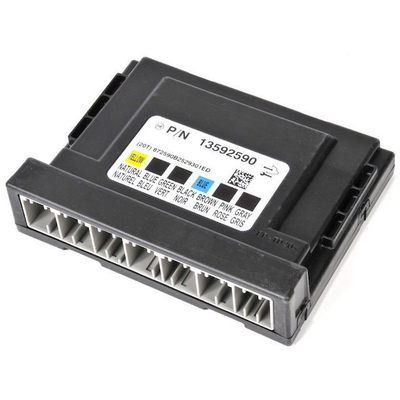
Below are the parts most often responsible for code U2608, ranked by how frequently each one is the actual culprit (per the diagnosis above). Tap any to see what we have for your vehicle.



The information in this article is provided for general reference and educational purposes only. Vehicle specifications, procedures, and part compatibility can vary by production date, trim level, and region. Always consult your vehicle's factory service manual and verify part numbers before purchasing or performing repairs. Safety-critical components such as airbags, seat belts, and braking systems should be installed by a qualified professional.
- 🧭 Diagnostic Flowchart
- 🎬 Helpful Videos
- 🛍️ Shop This Part
- What Does U2608 Mean?
- Can I Drive With U2608?
- Common Causes
- Symptoms
- Common Fixes & Costs
- Used vs. New Parts: Buying Guide
- What Happens If You Wait — Timeline
- Cost of Not Fixing It
- Diagnosis Steps
- When This Code Triggers (Freeze-Frame Conditions)
- Related Codes
- Climate & Environmental Factors
- How to Talk to a Mechanic About This Code
- Where to Take It: Dealer vs Independent vs Chain
- When to Walk Away From the Repair
- What Scan Tool You Need for This Code
- How to Clear the Code After You Fix It
- Will This Fail Emissions / State Inspection?
- Most Commonly Affected Vehicles
- Manufacturer-Specific Notes
- Real Owner Stories
- 2007 Chevrolet Corvette with multiple 'U' codes
- Dodge Ram with intermittent instrument cluster (IPC) failure and U0155
- Ford F-150 with parasitic battery drain and communication codes
- How to Prevent This Code From Triggering
- Frequently Asked Questions
- Can a bad battery cause a U2608 code?
- Is it safe to drive with a U2608 code?
- What is a common misdiagnosis for U-codes like U2608?
- Can aftermarket accessories cause a U2608 code?
- How much does it cost to diagnose a U2608 code?
- What's the difference between a 'U' code and a 'P' code?
- What is a terminating resistor?
- Key Takeaways
- 🎟️ Get 5% Off