

OBD-II Code U2619: Lost Communication With a Specific Module
What U2619 means, why it triggers, and how to fix it
- U2619 indicates a lost communication fault on the CAN bus network, meaning a primary computer cannot reach a specific sub-module.
- On 2016-2019 Chevrolet Volts, U2619 paired with codes U2603-U2624 guarantees a failed Battery Energy Control Module (BECM), often covered by a 15-year/150,000-mile warranty.
- Do not drive with an active U2619 code; the vehicle can unpredictably stall or disable critical safety systems like ABS at highway speeds.
- Expect repair costs ranging from $175 for a new 12V battery to over $2,000 for a major control module replacement and programming.
What Does U2619 Mean?
U2619 is a network communication code indicating one of the vehicle's computers (modules) stopped talking to another. Vehicles use a Controller Area Network (CAN) bus to share data between modules. This code triggers when a primary controller, like the Body Control Module (BCM) or hybrid Battery Energy Control Module (BECM), loses connection to a specific sub-module.
Technical definition: The SAE/ISO definition for U-codes indicates a User Network fault. U2619 translates to 'Lost Communication' with a specific control module on the CAN bus. Manufacturer definitions vary: General Motors defines it as 'No communication between BECM and module 7 interface', while Mazda defines it as a 'power supply circuit malfunction for a door module'.
Can I Drive With U2619?
Yes, But With Caution. You can physically drive, but doing so is highly dangerous. The vehicle can enter a reduced power mode or stall unpredictably at highway speeds, creating a significant safety hazard. Important safety systems like ABS and traction control disable automatically. Drive directly to a repair shop or tow the vehicle.
Common Causes
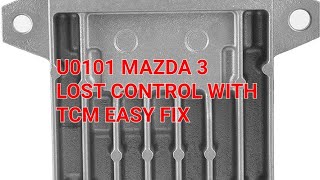
- Failing Control Module (Very Common) — Internal failure of a specific control module is the primary cause. On the Chevrolet Volt, this code guarantees a failing Battery Energy Control Module (BECM). On other vehicles, it points to a faulty ABS module, Instrument Panel Cluster, Body Control Module (BCM), or Transmission Control Module (TCM). 🎬 See how to fix Mazda 3 communication issues with the TCM.
- Damaged or Corroded Wiring Harness (Common) — CAN bus wires chafe against sharp edges, corrode from water intrusion, or suffer rodent damage. An open or shorted wire in the network physically severs the communication link between modules.
- Poor Electrical Connections and Grounds (Common) — A loose pin, corroded connector, or weak chassis ground interrupts the communication signal. Modules require a solid ground connection (under 0.1 ohms) to transmit data reliably.
- Low Battery Voltage (Less Common) — A weak 12-volt battery causes widespread electronic glitches. Modules fail to power up and communicate correctly during the engine startup sequence, triggering false U-codes.
- Software Glitch or Corrupted Module Memory (Less Common) — Temporary software glitches cause communication timeouts. These cases require a 'hard reset' (disconnecting the battery for 15 minutes) or a dealer-level firmware re-flash to restore functionality.
- Blown Module Fuse (Rare) — A single blown fuse supplying power to a gateway or sub-module takes that computer offline, instantly setting a U2619 code.
- Aftermarket Device Interference (Rare) — Poorly installed remote starters, alarms, or OBD-II insurance trackers interfere with CAN bus traffic and block module communication.
Symptoms
- Check Engine Light and Warning Lamps — The Check Engine Light illuminates immediately. You will also see warnings for ABS, traction control, or a generic 'Service Soon' message.
- No-Start or Intermittent Stalling — The vehicle refuses to start, stalls unexpectedly while driving, or locks the transmission in Park with a 'Shift to Park' dashboard message.
- Reduced Engine/Propulsion Power — The vehicle enters a protective 'limp mode' with a 'Propulsion Power is Reduced' message, severely limiting acceleration.
- Inaccurate EV Range and Charging Issues — On plug-in hybrids, the electric range displays incorrectly (e.g., 0 miles after a full charge) and the battery refuses to accept a charge.
- Loss of Specific Functions — Features controlled by the offline module stop working, resulting in erratic instrument gauges, dead power windows, or disabled climate control.
- Stored Communication Fault Codes (scan-tool only — no driver-felt sign) — Scanners reveal U2619 alongside a block of related communication codes (e.g., U2603-U2624), pinpointing the exact network failure.
Common Fixes & Costs
- Replace a Failed Control Module (e.g., BECM, ABS, TCM)
— Parts: $300-$1,500, Labor: $300-$1,000, ~2.5 hr book time
(Professional)
Chevrolet Volt (2016-2018): OEM Contact dealer with VIN; part numbers update frequently. (Alt: Not available due to programming requirements.)
Ford F-150 (2018-2021): OEM FR3T-14F642-AD (superseded, check with dealer) (Alt: Dorman, Cardone)
Mazda 3 (2010-2013): OEM LFJE-18-9E1x or L539-18-9E1x (Alt: Remanufactured units from Module Repair Pro) - Repair Damaged Wiring Harness — Parts: $10-$50, Labor: $250-$1,500, ~4.0 hr book time (Intermediate)
- Replace the 12V Battery — Parts: $150-$350, Labor: $25-$75, ~0.5 hr book time (DIY)
- Reprogram or Update Module Software — Parts: $0, Labor: $150-$300, ~1.5 hr book time (Professional)
- Repair or Rebuild a Control Module — Parts: $0, Labor: $250-$700, ~1.5 hr book time (Professional)
Used vs. New Parts: Buying Guide
When a used part is worth it: For older, high-mileage vehicles where a new OEM module is prohibitively expensive. A used module from a reputable salvage yard is cost-effective if programming is handled correctly.
Donor-vehicle mileage cap: roughly under 100000 miles for the part to have meaningful remaining life.
Donor quality checklist:
- Verify the donor vehicle was not scrapped due to flood or fire.
- Match the part number exactly; a single-digit difference means incompatibility.
- Inspect connector pins for green corrosion before purchase.
- Buy from a seller offering a 30-90 day warranty.
Decision logic:
- If Part is on national backorder and a reputable remanufactured unit is available → Choose the remanufactured part to avoid months of vehicle downtime.
- If Vehicle is under 10 years old and the part requires complex immobilizer security programming → Buy a new OEM part. Many independent shops cannot 'virginize' and reprogram used security modules.
- If Budget is the primary concern on an out-of-warranty vehicle → A used part is acceptable, but factor in professional programming costs.
Warranty tradeoff: Used parts carry a 30-90 day warranty. Remanufactured modules offer 1-year or lifetime warranties. New OEM parts carry a 1-2 year warranty.
Worst-case if a used part fails: $500-$1500 if a used module arrives dead, requiring repeat labor and programming fees.
Cost of Not Fixing It
- Immediate: The vehicle unpredictably stalls, enters a no-start condition, or drops into reduced power mode, leaving you stranded. (Added cost: Towing costs ($100-$300).)
- Weeks to Months: On hybrids, a failing BECM loses its ability to balance high-voltage battery cells, causing accelerated degradation. (Added cost: Diagnostic time for secondary codes ($150-$450).)
- 6+ Months: Ignoring a faulty BECM causes irreversible damage to the main high-voltage battery pack due to severe cell imbalance. (Added cost: $8,000-$20,000 for a replacement high-voltage battery.)
Diagnosis Steps
- Scan for All Codes in All Modules
Use a professional-grade OBD-II scanner to read codes across every module. U2619 rarely appears alone; accompanying codes like U0140 (Lost Comm with BCM) or U2620 dictate the diagnostic direction. Document all codes before clearing.
Tools: Professional OBD-II Scanner (Beginner) - Check the 12V Battery and Charging System
Test the main 12-volt battery. Voltage must exceed 12.4 volts with the engine off. Low voltage during cranking causes random communication drops. Replace the battery if it fails a load test.
Tools: Multimeter, Battery Load Tester (Beginner) - Perform a Visual Inspection
Inspect the wiring harnesses connected to the suspect modules. Look for chewed wires, chafing against metal brackets, or green corrosion inside connectors. Check under floor carpets for water intrusion.
Tools: Flashlight (Intermediate) - Check Power and Ground at the Module
Identify the power and ground wires for the non-communicating module using a factory wiring diagram. Back-probe the connector to confirm the module receives full battery voltage and has less than 0.1 ohms of resistance to the chassis ground.
Tools: Multimeter, Vehicle Wiring Diagram (Advanced) - Inspect Network Terminating Resistors
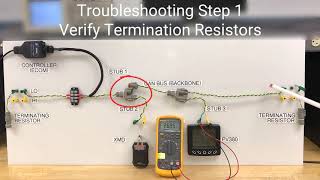
Disconnect the battery. Measure resistance between CAN High (Pin 6) and CAN Low (Pin 14) at the OBD-II port. A healthy network reads 60 ohms. A 120-ohm reading indicates an open circuit or missing resistor. A 0-ohm reading indicates a direct short.
Tools: Multimeter (Advanced) - Check CAN Bus Voltages
Turn the key on (engine off). Measure DC voltage at the OBD-II port. CAN High (Pin 6) to ground should read 2.5V to 3.5V. CAN Low (Pin 14) to ground should read 1.5V to 2.5V. Deviations indicate a shorted bus or failed module transceiver.
Tools: Multimeter (Advanced) - Isolate the Faulty Module or Wiring
If network resistance is 0 ohms (shorted), disconnect modules one by one from the CAN bus. When the resistance jumps back to 60 ohms, the last module disconnected contains the internal short.
Tools: Advanced Scan Tool, Multimeter (Professional) - Pro Tip: Scope the CAN Bus Waveform
Connect an oscilloscope to CAN High and CAN Low. A healthy signal shows a clean square wave with CAN High switching between 2.5V and 3.5V, and CAN Low mirroring it between 2.5V and 1.5V. Distorted patterns pinpoint electrical interference.
Tools: Oscilloscope, Wiring Diagram (Professional)
When This Code Triggers (Freeze-Frame Conditions)
- Vehicle State: Key-On or Running (The fault is detected during the initial power-up sequence when all modules perform a network check-in.)
- 12V Battery Voltage: 11.5V - 14.5V (The code triggers if voltage drops during startup, but often sets with normal voltage, confirming a hard module or wiring fault.)
- Time Since Startup: 0 - 30 seconds (Communication timeouts are fast; the code logs immediately after the vehicle starts.)
- Module Status: No Communication (Data shows which primary module (like the BCM) failed to receive a signal from the sub-module.)
Related Codes
- U2603-U2624 — These codes indicate a single failure sequence. On a GM Volt, seeing this entire block of codes guarantees a failure of the primary Battery Energy Control Module (BECM), not the individual interface modules.
- P1E00 — A generic hybrid powertrain code that illuminates the Check Engine Light. P1E00 is the 'Symptom' code, while the accompanying U-codes provide the 'Cause'.
- U0100 — Means 'Lost Communication With ECM/PCM.' If U0100 is present with U2619, prioritize U0100. A fault with the main engine computer prevents all other modules from communicating.
- U0140 — Means 'Lost Communication With Body Control Module (BCM).' The BCM acts as the central network gateway. If U0140 is present, the BCM itself is the primary suspect causing the U2619 secondary fault.
Climate & Environmental Factors
- High Humidity and Road Salt: Saltwater acts as an electrolyte, rapidly accelerating corrosion in wiring harnesses, connector pins, and low-mounted module casings in 'Salt Belt' regions.
- Extreme Cold: Freezing temperatures cause wire insulation to crack, creating entry points for moisture. Cold also exposes weak 12V batteries, triggering low-voltage communication faults.
- Extreme Heat: Sustained high temperatures degrade internal electronic components within control modules, leading to premature processor failure.
How to Clear the Code After You Fix It
- Ensure the underlying fault (bad module, broken wire) is physically repaired.
- Reconnect the 12V battery.
- Use a compatible OBD-II scan tool to clear all DTCs from all modules.
- Perform a complete drive cycle to run readiness monitors and confirm the fix.
Drive cycle (~30 minutes): A generic drive cycle requires a cold start (engine off for 8 hours), a 3-minute idle, mixed stop-and-go city driving, and 5 minutes of steady highway driving at 55 mph.
Readiness monitors affected: Comprehensive Component Monitor, Misfire Monitor, Fuel System Monitor
Before emissions retest: drive at least 100 miles to fully set monitors.
Watch out for:
- Clearing the code without fixing the root cause results in immediate code return.
- Disconnecting the battery does not clear fault codes on modern vehicles.
- Failing to complete a full drive cycle results in a failed emissions test due to 'Not Ready' monitors.
Will This Fail Emissions / State Inspection?
Yes — this code typically fails an OBD-II emissions inspection.
- California: An illuminated Check Engine Light is an automatic failure. The vehicle must complete readiness monitors before re-testing.
- New York: Active codes cause automatic failure. For 2001 and newer vehicles, only one readiness monitor can be 'Not Ready' to pass.
- Texas: In emissions-testing counties, a vehicle with the Check Engine Light on automatically fails the inspection.
Most Commonly Affected Vehicles
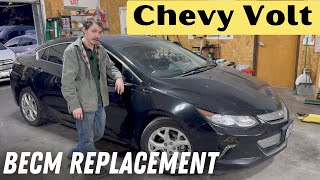
- Chevrolet Volt (2016-2019) — Extremely common indicator of Battery Energy Control Module (BECM) failure. Appears alongside codes U2603-U2624. GM extended the BECM warranty to 15 years/150,000 miles under Special Coverage N232432680. 🎬 Watch this step-by-step BECM replacement on a Chevy Volt.
- Ford F-150 (2018-2021) — Communication codes relate to chafed wiring harnesses, faulty Gateway Modules (GWM), or 10-speed transmission software issues requiring adaptive learning resets.
- Mazda 3 (2009-2013) — U2619 points to a power supply fault in a door module or an internal processor failure in the Transmission Control Module (TCM).
- Nissan X-Trail Hybrid (2017-2020) — A no-start condition is caused by a CAN failure where the Hybrid Powertrain Control Module (HPCM) drops offline.
- Volkswagen/Audi Various (e.g., Golf, Jetta, A4) (2010-2016) — Triggered by a faulty CAN Gateway module behind the glove box or water intrusion under the front carpets corroding network splice points.
- Hyundai/Kia Various (e.g., Sonata, Optima) (2011-2017) — Faults arise from failures in the instrument cluster (acting as a gateway) or wiring harness issues, causing no-start conditions.
- Chevrolet Silverado (2014-2018) — Prone to instrument cluster failures and ABS module communication faults. A blank cluster is a primary symptom.
- Dodge Ram 1500 (2013-2018) — Experiences failures of the ABS module or Totally Integrated Power Module (TIPM), causing widespread network crashes.
Manufacturer-Specific Notes
- General Motors (Chevrolet): On the Chevy Volt, a string of codes from U2603 to U2624 is a confirmed Battery Energy Control Module (BECM) failure. GM covers this under a 15-year/150,000-mile extended warranty (Special Coverage N232432680).
- Mazda: Mazda uses sub-codes. U2619:14 specifically points to an open or shorted power supply circuit for the driver's door module, not a powertrain issue.
- Ford: On 10-speed automatic models, communication codes trigger due to transmission adaptive learning software glitches. A dealer-level reset and specific drive cycle are required to restore communication.
- Volkswagen/Audi: Water leaking into the cabin collects under the driver's side carpet, corroding critical CAN bus wire splices and causing multiple communication faults.
Frequently Asked Questions
Can I fix code U2619 myself?
Simple fixes like replacing the 12V battery are DIY-friendly. Diagnosing network wiring and replacing control modules requires specialized tools like an oscilloscope and bidirectional scanner. This is strictly a job for a professional technician.
Is a U2619 repair expensive?
It ranges from $122 for a basic diagnostic check to over $2,000 for a major control module replacement. Wiring repairs cost $250-$1,500 mostly in labor. Always check for extended warranties, like the 15-year Chevy Volt BECM coverage, which makes the repair free.
Will clearing the code make it go away?
Clearing the code turns the light off temporarily, but it returns instantly when the modules fail to communicate on the next startup. Clearing codes also erases vital freeze-frame data needed for diagnosis.
The check engine light for my U2619 code went away. Am I in the clear?
Not necessarily. Electronic faults are often intermittent at first, turning off after a full charge cycle only to return later. This intermittent behavior is the first stage of a component failure, so do not ignore the code.
What are common misdiagnosis pitfalls for U2619?
A common mistake on Chevy Volts is ignoring the U2603-U2624 code pattern and blaming a battery cell imbalance instead of the BECM. Another pitfall is replacing an expensive module without testing its power, ground, and network wiring first. A simple broken wire perfectly mimics a complete module failure.
My mechanic says the part is on backorder. Why?
High-failure parts like the Chevy Volt BECM suffer from severe supply chain shortages. These modules are frequently on national backorder for weeks or months, requiring patience from the owner.
What is a CAN bus?
The Controller Area Network (CAN) bus is the nervous system of your car. It is a two-wire network allowing all electronic modules to share data instantly. This eliminates the need for thousands of individual wires.
My car is a Chevy Volt and I have this code. What should I do?
Contact a Chevrolet dealer immediately. This code, especially alongside U2603-U2624, guarantees a failed BECM. For 2016-2019 models, this repair is covered under GM's 15-year/150,000-mile special coverage.
Why did my car show 'Shift to Park' and then set a U2619 code?
The 'Shift to Park' message occurs when the system loses communication with the module tracking the transmission state. The vehicle triggers a default safety warning to prevent rollaways, accompanying the U2619 code.
Key Takeaways
- U2619 indicates a lost communication fault on the CAN bus network, meaning a primary computer cannot reach a specific sub-module.
- On 2016-2019 Chevrolet Volts, U2619 paired with codes U2603-U2624 guarantees a failed Battery Energy Control Module (BECM), often covered by a 15-year/150,000-mile warranty.
- Do not drive with an active U2619 code; the vehicle can unpredictably stall or disable critical safety systems like ABS at highway speeds.
- Expect repair costs ranging from $175 for a new 12V battery to over $2,000 for a major control module replacement and programming.
Helpful Videos
Shop the Parts Behind U2619
Below are the parts most often responsible for code U2619, ranked by how frequently each one is the actual culprit (per the diagnosis above). Tap any to see what we have for your vehicle.


The information in this article is provided for general reference and educational purposes only. Vehicle specifications, procedures, and part compatibility can vary by production date, trim level, and region. Always consult your vehicle's factory service manual and verify part numbers before purchasing or performing repairs. Safety-critical components such as airbags, seat belts, and braking systems should be installed by a qualified professional.
- 🎬 Helpful Videos
- 🛍️ Shop This Part
- What Does U2619 Mean?
- Can I Drive With U2619?
- Common Causes
- Symptoms
- Common Fixes & Costs
- Used vs. New Parts: Buying Guide
- Cost of Not Fixing It
- Diagnosis Steps
- When This Code Triggers (Freeze-Frame Conditions)
- Related Codes
- Climate & Environmental Factors
- How to Clear the Code After You Fix It
- Will This Fail Emissions / State Inspection?
- Most Commonly Affected Vehicles
- Manufacturer-Specific Notes
- Frequently Asked Questions
- Can I fix code U2619 myself?
- Is a U2619 repair expensive?
- Will clearing the code make it go away?
- The check engine light for my U2619 code went away. Am I in the clear?
- What are common misdiagnosis pitfalls for U2619?
- My mechanic says the part is on backorder. Why?
- What is a CAN bus?
- My car is a Chevy Volt and I have this code. What should I do?
- Why did my car show 'Shift to Park' and then set a U2619 code?
- Key Takeaways
- 🎟️ Get 5% Off