

OBD-II Code U2620: Battery Module Communication Failure
What U2620 means, why it triggers, and how to fix it, with a special focus on the Chevy Volt
- Code U2620 alongside other U26xx codes guarantees a failed Battery Energy Control Module (BECM) in 2016-2019 Chevy Volts.
- Stop driving immediately; the vehicle will suddenly lose all propulsion power or fail to restart, creating a severe collision risk.
- GM Special Coverage N232432680 pays 100% of the BECM replacement cost for 15 years or 150,000 miles on eligible 2016-2018 Volts.
- Out-of-pocket BECM replacement costs $1,500 to $2,500 and requires 8 hours of labor to drop the high-voltage battery pack.
- Ignore the generic P1E00 code; use a premium OBD-II scanner like BlueDriver to read the specific U26xx network codes hidden in the hybrid control modules.
What Does U2620 Mean?
Code U2620 indicates the Battery Energy Control Module (BECM)—the main computer managing the high-voltage battery—has lost communication with its internal monitoring modules. The 'U' prefix designates this as a network communication failure within the heart of the electric drive system.
Technical definition: The official General Motors (GM) definition for U2620 is "Battery Energy Control Module Lost Communication with Hybrid/EV Battery Interface Control Module 8". This indicates a communication link failure between the central battery controller and the specific module responsible for overseeing the eighth section of battery cells. When multiple codes from the U2603-U2624 range appear simultaneously, it confirms a central BECM failure rather than an issue with an individual cell module.
Can I Drive With U2620?
No — Do Not Drive. Do not drive the vehicle. It will suddenly lose all propulsion power in traffic, creating a severe collision risk, or fail to restart and leave you stranded in an unsafe location.
Common Causes
- Internal Failure of the Battery Energy Control Module (BECM) (Very Common) — The most common cause for this code on 2016-2019 Chevrolet Volts is an internal fault within the BECM caused by defective factory solder joints. Thermal cycling and vibration break these connections over time, leading to total communication loss.
- Failing 12-Volt Battery (Rare) — A weak 12-volt battery causes widespread electronic instability and triggers random communication codes. While rarely the actual root cause of a U26xx cluster, it is the most common misdiagnosis.
- Poor Connection or Damaged Wiring (Rare) — Loose connectors, corrosion, or damaged wiring harnesses between the battery interface modules and the BECM interrupt communication signals. This usually results from physical impact, moisture intrusion, or improper prior repairs.
- Software Glitch (Rare) — A software error occasionally disrupts communication. A full system reset by disconnecting the 12-volt battery temporarily resolves it, but returning U2620 codes guarantee a hardware fault.
- Blown 'No Walk Home' Fuse (Very Rare) — A blown F03 fuse in the engine compartment mimics BECM failure symptoms like 'Reduced Propulsion Power'. While it doesn't directly cause U2620, it creates overlapping diagnostic confusion.
- Air in Battery Coolant Loop (Very Rare) — Air trapped in the battery cooling system after a recent coolant service causes localized overheating and sensor faults. This triggers communication codes if the system wasn't properly vacuum-filled.
Symptoms
- Reduced Propulsion Power Message — The driver information center displays a warning that propulsion power is limited, resulting in a severe lack of acceleration or total power loss.
- Vehicle Will Not Start or Shift — The car refuses to start, or starts but locks the transmission, preventing you from shifting out of Park.
- 'Shift to Park' Message — The dashboard displays a confusing "Shift to Park" message while driving or when placed in gear, indicating the powertrain disabled itself.
- Zero Electric Range Displayed — The battery gauge shows a full charge, but the electric range displays '0' or '1' miles, forcing the car to run exclusively on gasoline.
- Unable to Charge — The vehicle refuses to accept a charge when plugged in, displaying a charging fault message on the dash or EVSE station.
- Check Engine Light (with P1E00) (also visible on scanner) — The Check Engine Light illuminates immediately, almost always accompanied by the generic P1E00 hybrid system fault code.
Diagnostic Flowchart
Tap your situation to follow the diagnostic path that matches what you're seeing on this code.
Common Fixes & Costs
- Replace and Reprogram BECM (Special Coverage) — Parts: $0, Labor: $0, ~8.0 hr book time (Professional)
- Replace and Reprogram BECM (Out of Pocket) — Parts: $350-$500, Labor: $1200-$2000, ~8.0 hr book time (Professional)
- Third-Party BECM Repair Service — Parts: $250-$400, Labor: $1200-$2000, ~8.0 hr book time (Professional)
- Replace 12-Volt Battery — Parts: $150-$250, Labor: $20-$50, ~0.5 hr book time (DIY)
Used vs. New Parts: Buying Guide
When a used part is worth it: A used BECM is never recommended. The failure stems from a manufacturing defect, meaning a used module from the same era will inevitably fail the same way.
Donor-vehicle mileage cap: roughly under 10000 miles for the part to have meaningful remaining life.
Donor quality checklist:
- Verify the donor vehicle was not scrapped due to BECM failure.
- Match the part number exactly.
- Ensure your dealer is willing to program a used part with GM's SPS2 software, as many refuse.
Decision logic:
- If Vehicle is eligible for GM Special Coverage N232432680 → Use a new OEM part installed by a dealer for $0.
- If New OEM part is on backorder and the vehicle is inoperable → Use a mail-in repair service for your original module to fix the known solder joint flaws without requiring reprogramming.
- If Budget is the absolute primary concern → A used part is a high-risk gamble. The repeat labor cost to replace it again negates any initial savings.
Warranty tradeoff: New OEM Part (Dealer): 2-year/unlimited-mile warranty. Used Part: 30-90 day warranty on the part only. Remanufactured/Repaired: 1-year or lifetime warranty on the repair service.
Worst-case if a used part fails: $1500-$2500 if a used part fails, representing the repeat labor to drop the battery pack.
What Happens If You Wait — Timeline
- 0-2 Weeks (First Event): An intermittent Check Engine Light appears with a 'Reduced Propulsion Power' message. The car is forced to run on the gas engine. Symptoms disappear after a key cycle. (MPG impact: N/A (Forced gasoline use negates EV efficiency)% · Added cost: $0)
- 1-4 Weeks (Increasing Frequency): Failures become common. The car refuses to charge, fails to start, or displays 'Shift to Park' warnings. The vehicle becomes unreliable. (MPG impact: N/A (Vehicle is becoming unusable)% · Added cost: $150-$300 (Potential towing and diagnostic fees))
- 2-6 Weeks (Imminent Failure): The vehicle consistently fails. It is completely inoperable ('bricked') or only moves temporarily after clearing codes. Driving is extremely hazardous. (MPG impact: N/A (Inoperable)% · Added cost: $250-$500 (Towing plus comprehensive diagnostics))
- Catastrophic Failure Event: The vehicle suffers a sudden, complete loss of propulsion while driving at speed, creating a severe safety hazard. The car will not restart. (MPG impact: N/A (Inoperable)% · Added cost: $1500-$2500 (Full cost of an out-of-warranty repair))
Cost of Not Fixing It
- Immediate (First Occurrence): Intermittent 'Reduced Propulsion Power' warnings and forced gasoline engine use. The vehicle is unreliable but temporarily drivable. (Added cost: $0)
- Days to Weeks: The vehicle refuses to start, fails to shift out of Park, or stops charging entirely. The risk of being stranded increases drastically. (Added cost: $150-$300 (Towing and initial diagnostics))
- Catastrophic Failure: Sudden, complete loss of propulsion power while driving at speed, creating a severe collision risk. The vehicle becomes completely inoperable. (Added cost: $1500-$2500 (Full out-of-warranty repair plus towing))
Diagnosis Steps
- Read the Trouble Codes
Use a premium OBD-II scanner to read manufacturer-specific codes from all modules. Confirm U2620 is present. A string of codes from U2603 to U2624, alongside P1E00, guarantees a central BECM failure.
Tools: Premium OBD-II Scanner (e.g., BlueDriver, OBDLink MX+) (Beginner) - Verify GM Special Coverage N232432680
Before spending money, provide your VIN to a GM dealer. GM extends the warranty for the BECM to 15 years or 150,000 miles for most 2016-2018 Chevy Volts under Special Coverage N232432680.
Tools: Vehicle Identification Number (VIN), Phone (Beginner) - Check the 12-Volt Battery
Test the 12-volt battery. A healthy resting battery reads 12.4V to 12.6V. While rarely the root cause of U26xx codes, a failing 12V battery is the most common misdiagnosis and must be ruled out.
Tools: Multimeter or Battery Tester (Beginner) - Attempt a System Reset
Disconnect the negative terminal of the 12-volt battery for 15 minutes. Reconnect and clear codes with a scanner. This temporarily restores vehicle function to drive to a repair facility, but the hardware fault will return.
Tools: 10mm Wrench, OBD-II Scanner (Beginner) - Check CAN Bus Network Resistance (Advanced)
With the 12V battery disconnected, measure resistance between OBD-II Pin 6 (CAN High) and Pin 14 (CAN Low). A healthy network reads 60 Ohms. A reading of 120 Ohms proves the BECM or another primary module is disconnected or failed.
Tools: Digital Multimeter, OBD-II Pinout Diagram (Advanced) - Check CAN Bus Voltage (Advanced)
With ignition on, back-probe the OBD-II port. Measure DC voltage between Pin 6 and ground (averages ~2.6V), then Pin 14 and ground (averages ~2.4V). Voltages outside this range indicate a faulty module pulling the network down.
Tools: Digital Multimeter, Back-Probe Kit (Advanced) - Replace the Battery Energy Control Module (BECM)
This definitive repair requires dropping the 400-pound high-voltage battery pack to replace the BECM. The new module must then be programmed using GM's SPS2 software. Leave this to certified EV technicians.
Tools: Vehicle Lift, Transmission Jack, High-Voltage Safety Gear, GM SPS2 Software, VCI Device (Professional)
When This Code Triggers (Freeze-Frame Conditions)
- System State: Key-On or Startup (The fault is detected during the initial power-on sequence when modules report their status. Failure here prevents the car from starting.)
- System State: During Charging (The BECM manages the charging process. A fault manifests when plugged in, leading to immediate charge termination.)
- Vehicle Speed: Any (Failure occurs at any speed, resulting in a 'Reduced Propulsion Power' message and sudden loss of electric drive.)
- Battery State of Charge (SOC): Any (The fault is independent of battery level. It occurs on a full or depleted battery, instantly dropping displayed range to zero.)
Related Codes
- U2603-U2624 — These codes point to lost communication with specific Battery Interface Control Modules. Seeing a large group of these codes simultaneously guarantees the central BECM has failed.
- P1E00 — A generic code instructing the Engine Control Module to turn on the Check Engine Light. It confirms a hybrid system fault but requires a deeper scan to reveal the underlying U26xx codes.
- P0AFA — Translates to 'Hybrid/EV Battery System Voltage - System Disabled'. Appears when BECM failure is severe enough to shut down the high-voltage system as a safety precaution.
- U2401 — Signifies 'Lost Communication with Engine Control Module'. Appears when internal BECM failure causes broader instability on the vehicle's CAN bus network.
Climate & Environmental Factors
- Thermal Cycling (Hot/Cold Temperature Swings): Repeated expansion and contraction from temperature changes stress the weak solder joints on the BECM's circuit board, leading to micro-fractures and eventual communication loss.
- Humidity: High humidity accelerates corrosion on compromised connections or entry points into the module, though the battery pack is designed to be sealed.
How to Talk to a Mechanic About This Code
Say this: "I have a Chevy Volt with a Check Engine Light and a 'Reduced Propulsion Power' message. My scanner shows a string of codes from U2603 to U2624, pointing to a failed BECM. Please check my VIN for eligibility under GM Special Coverage N232432680 before I schedule a diagnostic appointment."
This language signals you are an informed owner, points the technician directly to the known failure pattern, and makes verifying warranty status the first step, saving time and preventing diagnostic guesswork.
Avoid saying:
- 'My check engine light is on, can you look at it?'
- 'My car won't start, I think it's the battery.'
- 'Just fix whatever is wrong.'
Questions to ask before authorizing the repair:
- Can you confirm my VIN is covered under Special Coverage N232432680 for the BECM replacement?
- If it is not covered, what is the total estimated cost for parts, labor, and programming to replace the BECM out-of-pocket?
- Is the replacement part currently in stock, or what is the estimated wait time if it's on backorder?
- If the repair is covered, will a loaner vehicle be provided if the part is back-ordered for an extended period?
Where to Take It: Dealer vs Independent vs Chain
- Dealer:
Primary and strongly recommended choice. The ability to process the 15-year/150,000-mile special coverage makes the dealer the only option for a no-cost repair.
Best for: Processing the free repair under GM Special Coverage N232432680., Access to required GM-specific programming software (SPS2)., Technicians trained in high-voltage battery service and safety.
Downsides: Highest labor rate if the repair is not covered by warranty., May experience long delays due to back-ordered parts. (Typical cost: +50% vs. baseline) - Independent Shop:
A viable alternative for out-of-warranty work, but only if the shop is a proven EV specialist.
Best for: Out-of-warranty repairs where cost is a major factor., Owners who are considering a third-party module repair service.
Downsides: MUST be a shop specializing in hybrid/EV repair with certified technicians., Cannot process the GM special coverage warranty., May not have access to the latest GM programming software. (Typical cost: +0% vs. baseline) - Chain Shop:
AVOID. These shops are not equipped to handle a BECM replacement. Taking your vehicle here wastes time and money.
Best for: Tires, oil changes, and 12-volt battery replacement.
Downsides: Lack the training, certification, and specialized tools for high-voltage system repairs., Cannot program the new BECM module., High risk of misdiagnosis or causing further damage. (Typical cost: -10% vs. baseline)
When to Walk Away From the Repair
If the estimated out-of-pocket repair cost exceeds 40-50% of the car's private-party value, evaluate your options. For this code, the decision is heavily influenced by the special coverage program.
- Car worth $10000, fix is $0: Fix it. The repair is free under GM's special coverage.
- Car worth $10000, fix is $2000: Fix it. The out-of-pocket cost is ~20% of the vehicle's value, well below the walk-away threshold.
- Car worth $5000, fix is $2500: Borderline. The repair cost is 50% of the car's value. Consider the car's overall condition before proceeding.
What Scan Tool You Need for This Code
Minimum: A scanner that reads manufacturer-specific 'U' (network) codes from all vehicle modules, not just generic 'P' (powertrain) codes.
A cheap, generic code reader only shows code P1E00. It will NOT show the critical U26xx codes stored in the Battery Energy Control Module, leading to incorrect repairs.
Budget: BlueDriver Pro or OBDLink MX+ (~$90) — Connects to a smartphone app and reads enhanced GM codes, including the necessary U-codes from the BECM. This confirms the specific failure before going to a shop.
Mid-range: CGSULIT SC530 for GM or LAUNCH X431 Elite 2.0 Pro for GM (~$200) — Handheld, brand-specific tools offering full system diagnostics and bi-directional controls for GM vehicles. Allows for deeper troubleshooting.
Professional: Autel MaxiSYS MS906 Series (~$600-1200) — Provides full OE-level diagnostics. When paired with a J2534 pass-thru device and GM's Techline Connect (SPS2) subscription, it programs the new BECM module.
How to Clear the Code After You Fix It
- Perform physical replacement of the BECM.
- Program the new module to the vehicle using GM's SPS2 software.
- Use a professional scan tool to clear all DTCs from all modules.
- Perform a GM-specific drive cycle to allow vehicle readiness monitors to run.
Drive cycle (~20 minutes): A GM drive cycle requires a cold start (engine below 122°F), idling for 3 minutes with A/C on, accelerating to 55 mph and holding for 5 minutes, coasting down to 20 mph without braking, and mixed city/highway driving.
Readiness monitors affected: EVAP System, Catalyst, Oxygen Sensor (O2), Comprehensive Component
Before emissions retest: drive at least 100 miles to fully set monitors.
Watch out for:
- Clearing the code without replacing the BECM results in immediate code return.
- Disconnecting the 12V battery resets all readiness monitors to 'Not Ready', guaranteeing an emissions test failure.
- Failing to perform a complete drive cycle leaves monitors 'Not Ready'.
Will This Fail Emissions / State Inspection?
Yes — this code typically fails an OBD-II emissions inspection.
- California: An illuminated Check Engine Light is an automatic failure. After repair, the vehicle must be driven through multiple drive cycles to set all readiness monitors to 'Ready'.
- New York: An active MIL causes automatic failure. For 2001+ vehicles, only one readiness monitor is allowed to be 'Not Ready'.
- Texas: An active Check Engine Light is an automatic failure. After clearing codes, the vehicle must complete a drive cycle, as Texas allows only one monitor to be 'Not Ready'.
Most Commonly Affected Vehicles
- Chevrolet Volt (2016-2019) — The second-generation Volt is the poster child for this failure. GM's special coverage explicitly includes 2016-2018 models, though 2019s are also affected.
- Chevrolet Malibu Hybrid (2016-2019) — Uses a powertrain derived from the Gen 2 Volt's Voltec system, making it susceptible to similar BECM failures.
- Buick Velite 5 (2017-2019) — The Chinese-market version of the Gen 2 Volt, utilizing the exact same core components.
- Cadillac ELR (2014-2016) — Based on the Gen 1 Volt platform, which does not suffer from this specific widespread BECM failure pattern.
Manufacturer-Specific Notes
- General Motors (Chevrolet): GM launched Special Coverage Program N232432680, extending the BECM warranty to 15 years or 150,000 miles from the original in-service date for eligible 2016-2018 Volts.
- General Motors (Chevrolet): Special coverage N232432680 is VIN-specific. Many owners report being denied coverage because their VIN was excluded, requiring escalation to GM Corporate.
- General Motors (Chevrolet): Severe parts backorders for the replacement BECM leave vehicles inoperable for weeks or months. Owners frequently have to fight for loaner vehicles during this downtime.
- General Motors (Chevrolet): Vehicles originally sold in CARB states possess a longer PZEV warranty covering the BECM. Coverage disputes arise if the vehicle is currently registered in a non-CARB state.
Real Owner Stories
2017 Chevy Volt at 73k miles - Sudden failure and stranded
Check Engine Light appeared, followed by a sudden "Propulsion Power is Reduced" message and complete loss of acceleration, leaving the car stranded.
What they tried:
- Read codes, revealing P1E00 and a full range of U2619-U2624 network codes.
- Towed the car to the dealership for diagnosis.
Outcome: The cluster of U26xx codes confirmed BECM failure. The repair was covered under the Voltec warranty.
Lesson: A full sweep of U26xx codes is a definitive sign of BECM failure. Do not continue driving, as complete power loss happens without warning.
2016 Chevy Volt at 85k miles - VIN not covered by special coverage
The vehicle experienced classic BECM failure symptoms. The dealer stated their specific VIN was not included in GM's Special Coverage Program (N232432680).
What they tried:
- Discovered the car was originally sold in a CARB state but registered in a non-CARB state.
- Attempted to claim the PZEV warranty, but it was not honored in the new state.
Outcome: The owner was caught in a coverage gap and paid for the expensive repair out of pocket.
Lesson: Do not assume automatic coverage. Check your VIN for Special Coverage N232432680. If you live in a non-CARB state but own a CARB-origin car, prepare to escalate with GM Corporate.
2019 Chevy Volt - Stranded, but temporarily fixed with a code clear
The car was completely dead. The owner suspected a dead 12V battery and replaced it, but the car remained inoperable.
What they tried:
- Purchased a BlueDriver OBD-II scanner.
- Revealed multiple U26xx codes and used the scanner to clear them.
Outcome: Clearing codes temporarily restored function, allowing a drive to the dealership in 'Reduced Propulsion Power' mode. The dealer confirmed BECM failure.
Lesson: Clearing codes with a capable scanner temporarily restores enough function to avoid a tow, but the car performs poorly and remains unsafe in traffic.
2017 Chevy Volt at 120k miles - Out of warranty, dealer quoted massive bill
Car displayed 'Shift to Park' at 70mph and lost all propulsion. A full string of U26xx codes was present.
What they tried:
- Towed to a dealership just outside the 100k mile Voltec warranty.
Outcome: The dealer diagnosed BECM failure but quoted over $21,000 in additional repairs, including the stator motor and transmission.
Lesson: Be wary of diagnoses condemning the entire powertrain. U26xx codes specifically point to the BECM. A $2,000 bill is expected; a $20,000 quote is a major red flag.
How to Prevent This Code From Triggering
- No direct prevention is possible for the part itself. (N/A) — The U2620 code is caused by a manufacturing defect (cracked solder joints) inside the sealed BECM. No maintenance action prevents this internal hardware failure.
- Proactively check your VIN for warranty extensions. (Once) — Knowing if your car is covered by GM's Special Coverage (N232432680) before failure occurs saves significant time and stress.
- Maintain a healthy 12-volt AGM battery. (Every 3-5 years) — A healthy 12V system (testing above 12.4V) ensures that when the U2620 code appears, the diagnosis is not complicated by voltage-related misdiagnoses.
- Ensure battery coolant loop is properly serviced. (Per owner's manual (5 years / 150,000 miles)) — Adhering to the proper vacuum-and-fill procedure during coolant changes prevents air pockets that trigger rare sensor faults.
Frequently Asked Questions
Is it safe to drive my car with code U2620?
No, it is highly unsafe. The vehicle will suddenly lose all propulsion power while driving or fail to restart entirely. Tow the vehicle to a repair facility immediately.
Will replacing my 12V battery fix the U2620 code?
It is extremely unlikely. While a bad 12V battery causes electrical gremlins, code U2620 alongside other U26xx codes guarantees a failed BECM module inside the high-voltage battery. Technicians often check the 12V battery first, but it rarely solves this specific issue.
How much does it cost to fix U2620?
For eligible 2016-2018 Chevy Volts, the repair costs $0 under GM's Special Coverage program (N232432680). If you are paying out of pocket, expect a bill between $1,500 and $2,500 for parts and labor. The primary hidden cost is the long wait time for back-ordered parts.
Is the U2620 repair covered by a warranty or recall?
There is no safety recall, but GM issued Special Coverage N232432680, acting as a warranty extension for the BECM. It covers the part for 15 years or 150,000 miles for affected 2016-2018 Volts. Verify your VIN with a GM dealer to confirm eligibility.
What if my dealer says my VIN isn't covered by the special coverage?
Some vehicles experiencing exact BECM failures are excluded from the special coverage list. If denied, call GM Corporate's customer service immediately to open an escalation case. Document the dealer's diagnosis and codes, as many owners successfully secure coverage after escalating.
Can I replace the BECM myself?
This is a highly dangerous repair requiring you to drop the 400-pound high-voltage battery pack. After installation, the new module requires GM SPS2 software for programming. Leave this to certified EV technicians to avoid lethal electric shock or bricking the vehicle.
What are common misdiagnoses for the U2620 code?
The most common misdiagnosis is blaming the 12V battery. Another pitfall is using a basic scanner that only reads the generic P1E00 code, missing the critical U26xx codes. The most expensive mistake is a dealer incorrectly condemning the entire $15,000 high-voltage battery pack instead of just the BECM.
My dealer says the BECM is on backorder. What can I do?
Long backorders are a known issue. Contact GM Corporate to escalate the case and request a loaner vehicle for the downtime. Alternatively, use a third-party electronics repair service to fix your original BECM board, bypassing the wait for a new part.
Key Takeaways
- Code U2620 alongside other U26xx codes guarantees a failed Battery Energy Control Module (BECM) in 2016-2019 Chevy Volts.
- Stop driving immediately; the vehicle will suddenly lose all propulsion power or fail to restart, creating a severe collision risk.
- GM Special Coverage N232432680 pays 100% of the BECM replacement cost for 15 years or 150,000 miles on eligible 2016-2018 Volts.
- Out-of-pocket BECM replacement costs $1,500 to $2,500 and requires 8 hours of labor to drop the high-voltage battery pack.
- Ignore the generic P1E00 code; use a premium OBD-II scanner like BlueDriver to read the specific U26xx network codes hidden in the hybrid control modules.
Shop the Parts Behind U2620
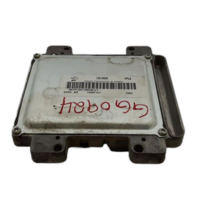
Below are the parts most often responsible for code U2620, ranked by how frequently each one is the actual culprit (per the diagnosis above). Tap any to see what we have for your vehicle.


The information in this article is provided for general reference and educational purposes only. Vehicle specifications, procedures, and part compatibility can vary by production date, trim level, and region. Always consult your vehicle's factory service manual and verify part numbers before purchasing or performing repairs. Safety-critical components such as airbags, seat belts, and braking systems should be installed by a qualified professional.
- 🧭 Diagnostic Flowchart
- 🛍️ Shop This Part
- What Does U2620 Mean?
- Can I Drive With U2620?
- Common Causes
- Symptoms
- Common Fixes & Costs
- Used vs. New Parts: Buying Guide
- What Happens If You Wait — Timeline
- Cost of Not Fixing It
- Diagnosis Steps
- When This Code Triggers (Freeze-Frame Conditions)
- Related Codes
- Climate & Environmental Factors
- How to Talk to a Mechanic About This Code
- Where to Take It: Dealer vs Independent vs Chain
- When to Walk Away From the Repair
- What Scan Tool You Need for This Code
- How to Clear the Code After You Fix It
- Will This Fail Emissions / State Inspection?
- Most Commonly Affected Vehicles
- Manufacturer-Specific Notes
- Real Owner Stories
- 2017 Chevy Volt at 73k miles - Sudden failure and stranded
- 2016 Chevy Volt at 85k miles - VIN not covered by special coverage
- 2019 Chevy Volt - Stranded, but temporarily fixed with a code clear
- 2017 Chevy Volt at 120k miles - Out of warranty, dealer quoted massive bill
- How to Prevent This Code From Triggering
- Frequently Asked Questions
- Is it safe to drive my car with code U2620?
- Will replacing my 12V battery fix the U2620 code?
- How much does it cost to fix U2620?
- Is the U2620 repair covered by a warranty or recall?
- What if my dealer says my VIN isn't covered by the special coverage?
- Can I replace the BECM myself?
- What are common misdiagnoses for the U2620 code?
- My dealer says the BECM is on backorder. What can I do?
- Key Takeaways
- 🎟️ Get 5% Off