

OBD-II Code U2624: Lost Communication With Satellite Radio Module
What U2624 means, why it triggers, and how to fix it
- On most vehicles, U2624 indicates a failed satellite radio module (SDARS), disabling infotainment features but remaining safe to drive.
- On 2016-2019 Chevrolet Volts, U2624 signals a critical Battery Energy Control Module (BECM) failure that causes sudden stalling and no-start conditions.
- Always test the 12V battery first, as voltage drops below 12.0V during startup frequently trigger false U2624 communication codes.
- Chevy Volt owners must verify coverage under GM Special Warranty N232432680, which pays for the $1,500+ BECM replacement up to 15 years or 150,000 miles.
What Does U2624 Mean?
U2624 is a network code indicating a specific control module has stopped communicating on the CAN bus. On most vehicles, the unresponsive module controls the satellite radio (SDARS). On specific electric vehicles like the Chevy Volt, it indicates a severe communication breakdown within the high-voltage battery system.
Technical definition: U2624 is a manufacturer-specific CAN bus communication code. On Stellantis and most GM vehicles, it means 'Lost Communication With Satellite Radio Module'. On the 2016-2019 Chevrolet Volt, GM TSB 18-NA-261 defines it as 'Battery Energy Control Module Lost Communication with Hybrid/EV Battery Interface Control Module 12'.
Can I Drive With U2624?
Yes, But With Caution. Yes, for most vehicles. The issue is confined to the infotainment system and does not affect drivability. However, on 2016-2019 Chevrolet Volts, U2624 signals a critical Battery Energy Control Module (BECM) failure. This causes sudden loss of propulsion, stalling, or a no-start condition. Do not drive a Volt with this code.
🎬 Watch: A real-world walkthrough of replacing a Chevy Volt BECM.Common Causes
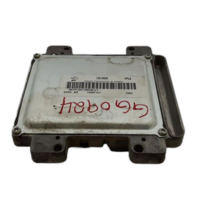
- Failed Battery Energy Control Module (BECM) (Very Common) — For 2016-2019 Chevrolet Volts, this is the primary cause. The BECM is a critical high-voltage battery system component, and its internal failure is a well-documented issue that triggers a cluster of U26xx codes.
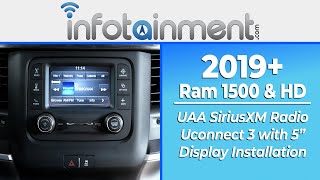
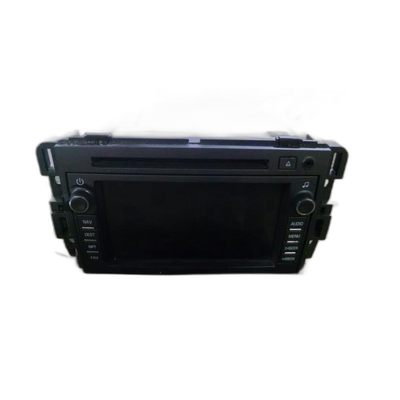
- Failed Satellite Radio Module (SDARS) (Very Common) — The internal electronics of the satellite radio module (SDARS or Telematics module) fail frequently on Chrysler, Dodge, Jeep, and Ram vehicles.
- Low Battery Voltage or Weak 12V Battery (Common) — A weak 12V battery causes random communication codes as modules lose power or fail to boot correctly during startup. Always check this first.
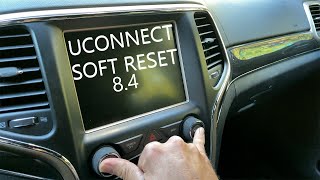
- Infotainment Head Unit Software Glitch (Common) — Software bugs in the main radio head unit cause communication drops with the satellite module. A hard reset or dealer software update resolves this. 🎬 See how to perform a Uconnect soft reset yourself.
- Faulty Satellite Antenna or Coaxial Cable (Common) — Damage to the roof antenna or coaxial cable creates an internal short circuit, stopping the signal and knocking the associated module offline.
- Wiring or Connector Damage (Less Common) — Wires fray, pinch, or break. Connectors loosen or corrode from moisture, severing the network connection.
- Blown Fuse (Less Common) — A blown fuse cuts power to the module, preventing communication.
- Failed Accessory Protocol Interface Module (APIM) (Rare) — On Ford vehicles, a failed Accessory Protocol Interface Module (APIM) causes similar symptoms and communication loss, occasionally triggering U2624.
- CAN Bus Network Fault (Rare) — A short between CAN High and CAN Low wires, or a faulty termination resistor, halts module communication. Often caused by improper aftermarket accessory installation.
Symptoms
- Car Won't Start or Stalls (Chevy Volt) — For Chevy Volt owners, a failing BECM causes the car to stall while driving or fail to start, accompanied by a 'Propulsion Power is Reduced' or 'Shift to Park' message.
- Check Engine Light On — An illuminated Malfunction Indicator Lamp (MIL) or check engine light appears on the dashboard.
- Satellite Radio Not Working — The satellite radio option grays out, shows an 'acquiring signal' message permanently, or produces no sound. Stellantis vehicles display 'Uconnect Box Requires Service'.
- Infotainment System Freezes or Reboots — The center screen locks up, reboots randomly, or goes completely black.
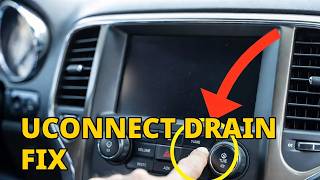
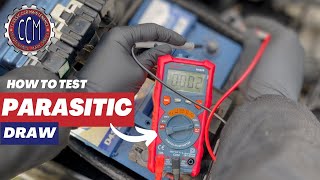
- Parasitic Battery Drain — A faulty module fails to 'sleep' after the car turns off, draining the 12V battery and causing a no-start condition after sitting for a day or two.
- GPS Signal Lost — Because the satellite antenna is shared, you lose GPS signal or see an incorrect vehicle location on the navigation map.
Diagnostic Flowchart
Tap your situation to follow the diagnostic path that matches what you're seeing on this code.
Common Fixes & Costs
- Replace Battery Energy Control Module (BECM) — Parts: $350-$550, Labor: $1000-$2000, ~8.5 hr book time (Professional)
- Replace Satellite Radio (SDARS) Module — Parts: $150-$400, Labor: $150-$300, ~1.2 hr book time (Intermediate)
- Update Infotainment Software — Parts: $0, Labor: $0-$150, ~0.8 hr book time (DIY)
- Replace 12V Battery — Parts: $150-$300, Labor: $50-$100, ~0.5 hr book time (DIY)
- Replace Satellite Antenna — Parts: $50-$200, Labor: $100-$200, ~1 hr book time (DIY)
- Repair Damaged Wiring or Connectors — Parts: $5-$50, Labor: $150-$500, ~2.5 hr book time (Professional)
Used vs. New Parts: Buying Guide
When a used part is worth it: For SDARS modules on older vehicles where savings exceed 50%.
Donor-vehicle mileage cap: roughly under 100000 miles for the part to have meaningful remaining life.
Donor quality checklist:
- Match the part number exactly.
- Ensure the donor vehicle was not scrapped due to flood or fire damage.
- Ask about the warranty; 30-90 days is standard.
Decision logic:
- If The part is a Chevy Volt BECM → Buy new OEM only.
- If The part is an SDARS module and a used one is less than 50% of the new price → Buy used.
- If The vehicle is under 8 years old → Buy new OEM.
Warranty tradeoff: Used parts typically have a 30-90 day warranty covering the part only. New parts carry a 1-year or longer warranty.
Worst-case if a used part fails: $250-$500 if a used SDARS module fails after installation.
What Happens If You Wait — Timeline
- 0-2 weeks: Volt shows intermittent 'Shift to Park'. Others lose satellite radio. (MPG impact: 0%% · Added cost: $0)
- 2 weeks - 3 months: Volt fails to start intermittently. Others develop parasitic battery drain. (MPG impact: 0%% · Added cost: $0-$250)
- 3-6 months: Volt stalls while driving. Others destroy 12V battery from constant drain. (MPG impact: 0%% · Added cost: $400-$700)
- 6+ months: Volt is completely inoperable. Others suffer alternator failure. (MPG impact: N/A% · Added cost: $1000+)
Cost of Not Fixing It
- Immediate (Chevy Volt): Sudden loss of propulsion or no-start condition. Major safety hazard. (Added cost: Cost of an accident or towing fees.)
- 0-3 months (Non-Volt): Loss of satellite radio/GPS. Faulty module creates parasitic draw, killing the 12V battery. (Added cost: $150-$300 (New 12V battery).)
- 3+ months (Non-Volt): Chronic parasitic drain destroys the new 12V battery and overworks the alternator. (Added cost: $500-$1000 (Repeated battery and alternator replacement).)
Diagnosis Steps
- Perform a Full Vehicle Code Scan
Use a bi-directional OBD-II scanner to read all modules. On a Chevy Volt, a cluster of U2619-U2624 codes confirms BECM failure. On others, an isolated U2624 points to the radio module.
Tools: Bi-directional OBD-II Scanner (Beginner) - Check 12V Battery Health
Test resting voltage (minimum 12.5V) and perform a load test (must stay above 10V). Low voltage triggers false U-codes.
Tools: Digital Multimeter, Battery Load Tester (Beginner) - Perform an Infotainment System Hard Reset
With the car running, press and hold the radio power and tune buttons for 10-15 seconds to reboot the system and clear software glitches.
Tools: None (Beginner) - Check Fuses
Locate the fuse for the SDARS, telematics, or radio. Inspect for a broken filament and replace if blown.
Tools: Fuse puller or needle-nose pliers (Beginner) - Inspect Module Connectors
Locate the suspect module (SDARS behind glovebox/trunk, or BECM). Check connectors for looseness or corrosion. Reseat firmly.
Tools: Trim removal tools, flashlight (Intermediate) - Test Power and Ground
Using a wiring diagram, probe the module's power and ground pins. Verify 12V+ with the key on and less than 0.5 ohms to ground.
Tools: Digital Multimeter, vehicle-specific wiring diagram (Advanced) - Advanced: Live Data Analysis (Chevy Volt)
Monitor HPCM2 live data for 'Hybrid/EV Battery Pack Voltage' and cell deviations. Erratic readings confirm battery interface module dropouts.
Tools: Advanced Bi-directional Scanner (Advanced) - Pro Tip: Check CAN Bus Resistance
Disconnect the 12V battery. Measure resistance between OBD-II Pin 6 and Pin 14. Expect 60 Ω. 120 Ω means an open circuit; 0 Ω means a short.
Tools: Digital Multimeter (Advanced) - Pro Tip: Check CAN Bus Voltage
Reconnect battery, key on. Measure DC voltage from Pin 6 to ground (expect ~2.6V) and Pin 14 to ground (expect ~2.4V).
Tools: Digital Multimeter (Advanced)
When This Code Triggers (Freeze-Frame Conditions)
- Module Voltage: 12.0-14.5V (Code sets during initial 'Key On' sequence if voltage drops.)
- Vehicle State: Key On (Master control unit attempts communication and receives no response.)
- Fault Type: Loss of Communication (Triggers when expected data packets never arrive on the CAN bus.)
- Time Since Start: < 10 seconds (Network integrity checks run immediately at startup.)
Related Codes
- U0184 — Generic SAE code for 'Lost Communication With Radio'. If present with U2624, the satellite radio module is the definitive cause.
- U2603-U2623 — On the Chevy Volt, these appear as a group with U2624, confirming progressive failure of the BECM.
- P1E00 — Powertrain 'messenger code' on the Volt requesting the check engine light due to critical BECM communication loss.
- B1287 — Body Control Module code for 'Sirius Satellite Radio Tuner Fault'. Indicates internal hardware failure within the tuner.
Climate & Environmental Factors
- High Humidity: Accelerates corrosion on electrical connectors and antenna bases, causing intermittent shorts.
- Extreme Heat: Pushes internal module temperatures past design limits, stressing solder joints and causing premature failure.
- Water Intrusion: Leaks from sunroof drains or roof antennas drip directly onto modules, causing immediate short circuits.
How to Talk to a Mechanic About This Code
Directs dealer to warranty coverage for Volt. Prevents expensive head unit misdiagnosis on others.
Avoid saying:
- 'Just fix the check engine light.'
- 'My radio is broken, I think I need a new one.'
- 'Do whatever you think is best.'
Questions to ask before authorizing the repair:
- Is this covered by GM warranty?
- What was the parasitic draw reading in milliamps?
- Have you checked for any available software updates for the infotainment system?
- What is the warranty on this specific repair?
Where to Take It: Dealer vs Independent vs Chain
- Dealer:
REQUIRED for Chevy Volt BECM repair. Optional for others.
Best for: Chevrolet Volt BECM replacement, Any vehicle still under its original bumper-to-bumper warranty
Downsides: Highest labor rates., May default to more expensive repairs on out-of-warranty vehicles. - Independent Shop:
BEST choice for non-Volt vehicles. AVOID for Chevy Volt.
Best for: Out-of-warranty non-Volt vehicles with infotainment issues., Diagnosing parasitic battery drains.
Downsides: Quality varies., Not equipped for high-voltage battery work on a Chevy Volt. - Chain Shop:
AVOID for diagnosing U2624.
Best for: Replacing the 12V battery.
Downsides: Technicians lack training for complex network diagnostics., High pressure to upsell.
When to Walk Away From the Repair
If out-of-warranty repair exceeds 40-50% of vehicle value.
- Car worth $8000, fix is $3500: Walk away. The repair is ~44% of the vehicle's value.
- Car worth $18000, fix is $600: Fix it. The repair is less than 4% of the vehicle's value.
What Scan Tool You Need for This Code
Minimum: Reads manufacturer-specific 'U' codes from ALL modules.
A basic code reader will not see the U2624 code or the cluster of related codes on a Chevy Volt.
Mid-range: Foxwell NT510 Elite (~$179) — Provides bidirectional control to test SDARS module.
Professional: Autel MaxiCOM MK808BT (~$549) — Accesses FCA security gateway for advanced network tests.
Rent vs buy: Buying a capable scanner like the BlueDriver is often cheaper than a single shop diagnostic fee.
How to Clear the Code After You Fix It
- Ensure the repair is complete.
- Reconnect the 12V battery if disconnected.
- Use an OBD-II scan tool to clear codes.
- Perform a complete drive cycle.
Drive cycle (~30 minutes): Cold start, idle 3 mins, 15 mins mixed city driving, 10 mins steady highway driving (55-60 mph).
Readiness monitors affected: Comprehensive Component Monitor, Misfire Monitor, Fuel System Monitor
Before emissions retest: drive at least 100 miles to fully set monitors.
Watch out for:
- Disconnecting the battery resets readiness monitors to 'Not Ready', guaranteeing emissions failure.
- Code returns instantly if root cause remains.
Will This Fail Emissions / State Inspection?
Yes — this code typically fails an OBD-II emissions inspection.
- California: Illuminated Check Engine Light causes automatic failure. All monitors must be complete.
- New York: Automatic failure if Check Engine Light is on or if codes were just cleared.
- Texas: Automatic failure in emissions-testing counties if Check Engine Light is on.
Most Commonly Affected Vehicles
- Chevrolet Volt (2016-2019) — U2624 indicates a failing BECM. GM special coverage N232432680 extends warranty to 15 years/150,000 miles.
- Dodge Ram 1500 (2013-2021) — Prone to SDARS module failure behind the glove box. 2019-2021 models often need software TSB 08-095-22.
- Jeep Grand Cherokee (2014-2022) — Frequent SDARS failures. 2022+ models with Uconnect 5 require software TSB 08-018-22 REV. A.
- GMC Sierra / Chevrolet Silverado (2019-2022) — Issues stem from the Audio Control Module (ACM), roof antenna, or software glitches.
- Chrysler 300 / Dodge Charger (2015-2020) — Uconnect logs this code when the satellite radio module fails, displaying 'Uconnect Box Requires Service'.
- Ford F-150 (2018-2023) — APIM (SYNC module) failure causes identical symptoms and communication DTCs. Replacement exceeds $1,400.
- Cadillac ELR (2014-2016) — Shares Volt architecture; suffers identical BECM failures with U26xx code clusters.
- Ford Fusion Energi (2019-2020) — High-voltage battery module failures cause stalling, covered by Ford safety recall 23S33.
Manufacturer-Specific Notes
- General Motors (Chevrolet Volt): Does NOT point to a radio problem. Indicates internal BECM failure covered by warranty N232432680.
- Stellantis (Chrysler, Dodge, Jeep, Ram): Caused by the separate SDARS module, not the main Uconnect head unit. Replacing this smaller module or updating software fixes it.
- Ford: Rarely uses U2624, but APIM failure produces identical symptoms (blank screen, GPS loss).
- General Motors (Non-Volt Models): Points to the satellite radio/infotainment system, usually a faulty antenna or radio module.
Real Owner Stories
2017 Chevy Volt at 57k miles - The Classic BECM Failure
Sudden 'Shift to Park' error with U26xx cluster.
Outcome: Dealer confirmed BECM failure, covered under warranty.
Lesson: Full U26xx cluster means BECM failure. Do not drive.
2016 Ram 1500 - The Misdiagnosis Runaround
Satellite radio stopped working and 12V battery died frequently.
Outcome: Fixed with $75 used module.
Lesson: Diagnose parasitic draws before replacing expensive head units.
2018 Jeep Grand Cherokee - The Software Glitch Fix
Intermittent radio loss and U2624 code.
Outcome: Dealer applied TSB 08-095-22 software update for $150, fixing the issue permanently.
Lesson: Check for software updates before replacing hardware.
How to Prevent This Code From Triggering
- Maintain 12V Battery Health (Annually) — Unstable voltage causes random communication codes.
- Prevent Water Intrusion (Annually) — Clean sunroof drains to stop water dripping onto modules.
- Apply Dielectric Grease to Connectors (During any related repair) — Blocks moisture on connector seals.
- Keep Infotainment Software Updated (Check for updates annually) — Fixes communication bugs and improves stability.
- Protect Wiring from Rodents (As needed) — Use rodent-repellent tape on exposed harnesses.
Frequently Asked Questions
Can I fix code U2624 myself?
Checking fuses, performing hard resets, or replacing a 12V battery are easy DIY fixes. Replacing an SDARS module is intermediate. Diagnosing CAN bus wiring or replacing a Chevy Volt BECM requires a professional.
Will clearing the code make it go away?
No. The code returns immediately if the main computer cannot communicate with the faulty module. You must fix the underlying hardware or software issue.
Why did my satellite radio and GPS stop working at the same time?
Vehicles use a single roof antenna assembly for both SiriusXM and GPS navigation. A failure in this antenna or its wiring disables both systems.
What's the most common misdiagnosis for U2624?
On non-Volt vehicles, mechanics mistakenly replace the expensive infotainment head unit instead of the cheaper SDARS module. On Volts, it is misdiagnosed as a 12V battery issue when the BECM is failing.
My battery died and now I have a U2624 code. Are they related?
Yes. Low voltage causes temporary communication glitches between modules. Fully charge the battery, perform an infotainment hard reset, and clear the codes.
Is U2624 covered under warranty?
It is covered under bumper-to-bumper warranties, but rarely powertrain warranties. The major exception is the Chevy Volt, which has a 15-year/150,000-mile special warranty (N232432680) for the BECM.
How much does a shop charge just to diagnose a U2624 code?
Shops charge a standard diagnostic fee between $120 and $180, covering the first hour of labor to pinpoint the failure.
What does 'Lost Communication With Satellite Radio Module' mean?
The vehicle's main computer sent a network message to the satellite radio module but received no response. This means the module is offline due to power loss, internal failure, or broken wiring.
Can a bad antenna cause a U2624 code?
Yes. An internal short in the satellite antenna disrupts the communication circuit, causing the module to stop responding and logging the code.
Key Takeaways
- On most vehicles, U2624 indicates a failed satellite radio module (SDARS), disabling infotainment features but remaining safe to drive.
- On 2016-2019 Chevrolet Volts, U2624 signals a critical Battery Energy Control Module (BECM) failure that causes sudden stalling and no-start conditions.
- Always test the 12V battery first, as voltage drops below 12.0V during startup frequently trigger false U2624 communication codes.
- Chevy Volt owners must verify coverage under GM Special Warranty N232432680, which pays for the $1,500+ BECM replacement up to 15 years or 150,000 miles.
Helpful Videos

Shop the Parts Behind U2624
Below are the parts most often responsible for code U2624, ranked by how frequently each one is the actual culprit (per the diagnosis above). Tap any to see what we have for your vehicle.


The information in this article is provided for general reference and educational purposes only. Vehicle specifications, procedures, and part compatibility can vary by production date, trim level, and region. Always consult your vehicle's factory service manual and verify part numbers before purchasing or performing repairs. Safety-critical components such as airbags, seat belts, and braking systems should be installed by a qualified professional.
- 🧭 Diagnostic Flowchart
- 🎬 Helpful Videos
- 🛍️ Shop This Part
- What Does U2624 Mean?
- Can I Drive With U2624?
- Common Causes
- Symptoms
- Common Fixes & Costs
- Used vs. New Parts: Buying Guide
- What Happens If You Wait — Timeline
- Cost of Not Fixing It
- Diagnosis Steps
- When This Code Triggers (Freeze-Frame Conditions)
- Related Codes
- Climate & Environmental Factors
- How to Talk to a Mechanic About This Code
- Where to Take It: Dealer vs Independent vs Chain
- When to Walk Away From the Repair
- What Scan Tool You Need for This Code
- How to Clear the Code After You Fix It
- Will This Fail Emissions / State Inspection?
- Most Commonly Affected Vehicles
- Manufacturer-Specific Notes
- Real Owner Stories
- 2017 Chevy Volt at 57k miles - The Classic BECM Failure
- 2016 Ram 1500 - The Misdiagnosis Runaround
- 2018 Jeep Grand Cherokee - The Software Glitch Fix
- How to Prevent This Code From Triggering
- Frequently Asked Questions
- Can I fix code U2624 myself?
- Will clearing the code make it go away?
- Why did my satellite radio and GPS stop working at the same time?
- What's the most common misdiagnosis for U2624?
- My battery died and now I have a U2624 code. Are they related?
- Is U2624 covered under warranty?
- How much does a shop charge just to diagnose a U2624 code?
- What does 'Lost Communication With Satellite Radio Module' mean?
- Can a bad antenna cause a U2624 code?
- Key Takeaways
- 🎟️ Get 5% Off