

U3000 on 2020-2021 Acura NSX: SRS Internal Failure Causes and Fixes
Code U3000-49 on a 2020-2021 Acura NSX indicates an internal failure within the SRS (airbag) control unit. While this can mean the module itself has failed, Acura's own service bulletin advises checking for other causes first, such as a faulty seat weight sensor or low battery voltage, as the SRS unit should be the last component to be replaced.
- U3000-49 on a 2020-2021 NSX means the airbag (SRS) system has detected a fault and may be disabled.
- Do not immediately replace the SRS control unit. Acura's own service bulletin states this should be the last resort.
- The most likely causes are a faulty seat weight sensor (part of the seat frame) or a weak 12-volt battery. This is a known issue across many 2020-era Acura models.
- This is not a DIY repair. Due to the safety-critical nature of the airbag system, diagnosis and repair should be performed by a qualified technician with Acura-specific tools.
- Driving the vehicle is not recommended until the SRS system has been professionally repaired and verified.
What's Unique About the 2020-2021 Acura NSX
The Acura NSX is a complex, high-performance hybrid vehicle with sophisticated electronics. While U3000-49 points to the SRS module, Acura Technical Service Bulletin (TSB) #B21100A specifically warns technicians that there are several possible causes and the SRS unit itself should be the last part replaced. This suggests that external inputs or related components, like the seat weight sensors (SWS), are common failure points that can incorrectly lead the SRS module to report an internal fault. In fact, for some Acura models, this exact issue has led to safety recalls due to improperly manufactured seat weight sensors that can crack or short circuit.
Diagnostic Flowchart
Tap your situation to follow the diagnostic path that matches what you're seeing on this vehicle.
Symptoms You May Notice
- SRS or airbag warning light illuminated on the dashboard
- Passenger airbag 'OFF' indicator may remain lit regardless of seat occupancy
- Replacing the SRS control unit immediately without performing further diagnostics. The official TSB explicitly warns against this, as a faulty seat weight sensor is a common underlying cause.
- Ignoring low battery voltage as a potential cause before starting SRS system diagnostics. 🎬 Watch: Why you should check the battery first
Most Likely Causes
- Faulty Seat Weight Sensor / Seat Frame 🔴 High Probability Acura TSB B21100A specifically calls this out as a primary troubleshooting step before replacing the SRS module. A fault in the seat weight sensor (SWS) can be misinterpreted by the SRS unit as an internal failure. For other Acura models from the same era, this has been the subject of safety recalls (e.g., TSB 24-015 for the RDX) where improperly built sensors could crack or short circuit.
How to confirm: A technician can follow the TSB procedure: disconnect all seat weight sensors and clear the DTCs using a Honda Diagnostic System (HDS). If the U3000-49 code does not return, the issue is with one of the seat weight sensors. The sensors are often integrated into the seat frame/rail.
Typical fix: Replace the entire seat frame/rail assembly containing the faulty sensor, or replace the individual seat weight sensors if serviceable separately. After replacement, the new sensors must be initialized and calibrated. 🎬 Watch: How to initialize a Honda seat weight sensor
Est. part cost: $800-$1600 - Low Battery Voltage or Power Supply Issue 🟡 Medium Probability → Shop Vehicle Battery Modern vehicles like the NSX are highly sensitive to battery voltage. A weak battery can cause various control modules, including the SRS unit, to malfunction and report erroneous internal faults. The diagnostic procedure for U3000-49 includes disconnecting the 12-volt battery for at least 3 minutes as a preliminary step.
How to confirm: Perform a full battery and charging system test. The battery should be fully charged and pass a load test. Check for stable voltage (typically above 12.4V when off). Check for corroded terminals or poor ground connections.
Typical fix: Charge or replace the 12-volt battery. Ensure battery terminals and ground connections are clean and tight.
Est. part cost: $200-$400 - Failed SRS Control Unit ⚪ Low Probability → Shop Air Bag Control Module While this is what the code definition implies, the official TSB states this should be the last component to suspect. 🎬 See how to diagnose the U3000 internal failure code The module can fail internally, but other causes like wiring faults or sensor issues must be ruled out first through rigorous testing.
How to confirm: If all other diagnostic steps (checking seat sensors, power, ground, and wiring harnesses for shorts or open circuits) have been completed per the official troubleshooting guide and the code persists, the SRS unit is likely at fault.
Typical fix: Replace the SRS control unit and perform the necessary system initialization and calibration procedures with a factory-level scan tool. The OEM part is specified as 'rewritable'.
Est. part cost: $900-$1467
Rare But Worth Checking
- Wiring Harness Issue:
Diagnosis Steps
- Verify the presence of DTC U3000-49 using an OBD-II scanner capable of reading Acura SRS codes, such as the Honda Diagnostic System (HDS).
- Check and record the state of the 12-volt battery. Perform a load test and ensure it is fully charged and in good condition. Address any low voltage issues first.
- Follow the diagnostic procedure outlined in Acura TSB #B21100A.
- Turn the vehicle off, disconnect the negative battery cable, and wait at least 3 minutes.
- Disconnect the connectors for all seat weight sensors.
- Reconnect the negative battery cable and clear the DTCs from the SRS module with the HDS.
- Cycle the ignition to ON and wait 10 seconds. Check if DTC U3000-49 reappears.
- If the code does NOT reappear, the fault lies with a seat weight sensor. Replace the corresponding seat frame/rail or the sensors themselves.
- If the code DOES reappear, the issue is not the seat weight sensors. Proceed with standard diagnostics for the SRS unit, which involves checking the wiring harness for shorts to power, shorts to ground, and open circuits.
- If all wiring and external inputs are confirmed to be good according to the service manual's electrical tests, the SRS control unit is the likely point of failure and should be replaced.
Parts You'll Likely Need
- Seat Frame / Rail Assembly
(OEM #81126-T6N-A01)— A faulty seat weight sensor, often integrated into the seat frame, is a primary cause identified by Acura's TSB for this code.
Trusted brands: Acura (OEM)
OEM price range: $800-$1600 - SRS Control Unit
(OEM #77960-T6N-A02 (replaces 77960-T6N-A01))— This is the part the code directly points to, but it should only be replaced after ruling out all other causes like seat sensors and power/wiring issues.
Trusted brands: Acura (OEM - Continental)
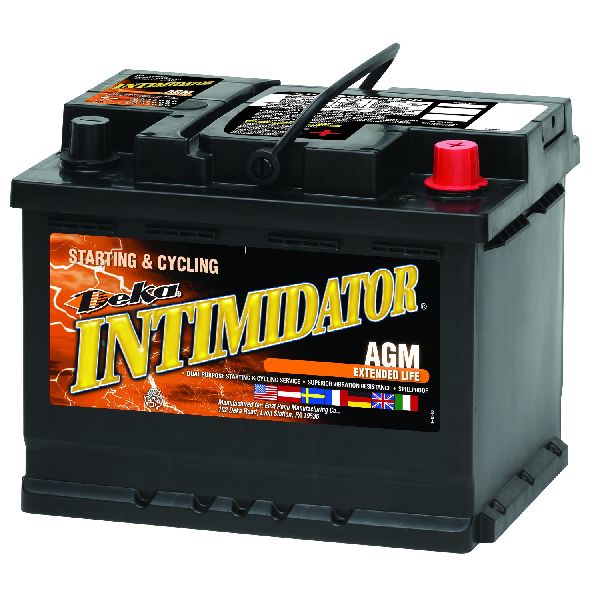
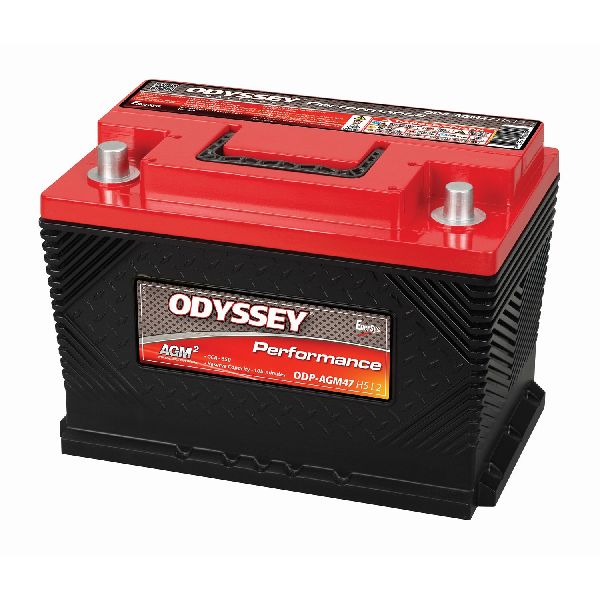
OEM price range: $1112-$1467 - 12V AGM Battery — Low battery voltage is a known cause of erroneous control module faults in many modern Acura vehicles. This is the first and cheapest component to verify.
Trusted brands: ACDelco, Interstate, DieHard
OEM price range: $300-$450
Aftermarket price range: $200-$350
Technical Service Bulletins (TSBs) & Recalls
- B21100A - ServiceNews Article: SRS DTC U3000-49 Internal Failure Of The SRS Unit.
- 24-015 - Safety Recall: 2020–22 RDX Seat Weight Sensor (DTC U3000-49).
- 24-014 - Safety Recall: 2020 MDX Seat Weight Sensor (DTC U3000-49).
- 24-017 - Safety Recall: 2020 TLX Seat Weight Sensor (DTC U3000-49).
Platform-Specific Known Issues
- Acura has issued Technical Service Bulletin (TSB) #B21100A, which covers the 2020-2021 NSX among other models, for DTC U3000-49. The bulletin emphasizes that the SRS unit should be the last component replaced and provides a diagnostic tip for identifying a faulty seat weight sensor as the root cause.
- For other affected models like the RDX and TLX, this same code and symptom set has resulted in safety recall campaigns (e.g., 24-015, 24-017) to replace improperly manufactured seat weight sensors that could crack or short circuit.
Mechanic-Grade Diagnostic Values
- SWS+/PWR SWS wire to ground (short to power check) — expected: 0.2 V or less. Failure: Voltage significantly above 0.2V indicates a short to power in the harness.
- Resistance between SWS+/PWR SWS and SWS-/GND SWS wires (shorted wire check) — expected: At least 1 MΩ (Megaohm). Failure: Resistance significantly less than 1 MΩ indicates a short between the power and ground wires for the seat weight sensor.
Scan Tool Commands That Help
- Acura i-HDS (Honda Diagnostic System): All DTC Check — Used to initially verify U3000-49 and to check for any other related codes before and after diagnostic steps.
- Acura i-HDS (Honda Diagnostic System): Clear DTCs — Required after disconnecting the seat weight sensors to see if code U3000-49 returns, which isolates the fault to the sensors.
- Acura i-HDS (Honda Diagnostic System): SWS Initialization (SWS INIT) — This function must be performed after replacing the seat weight sensors or the entire seat assembly to calibrate the new sensors to the SRS unit. It is found under the SRS menu, in Misc Test or Adjustments.
- Acura i-HDS (Honda Diagnostic System): Front Weight Sensor Operation Check — Used after initialization to verify that the new seat weight sensors are reading weight correctly and communicating properly with the SRS module.
Real Owner Repair Stories
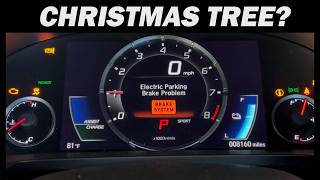
- YouTube channel 'Car Problems Awais' (2019 Honda Vezel (Note: Not an NSX, but a related Honda platform)) — SRS light on, along with Power System and Parking Brake warning lights. Scanner showed DTC U3000, internal failure of the SRS unit.
❌ Tried (didn't work) Clearing the code with a scanner did not work; the code immediately returned.
✅ What actually fixed it The vehicle was water-damaged. The mechanic removed the SRS control unit and found water had gotten inside. After cleaning the circuit board and repairing a broken wire on an IC chip that was damaged during a previous cleaning attempt, the module was reinstalled. All warning lights, including the SRS light, went away and the code was cleared successfully.
"I Checked Everything" — The Actual Cause
- The primary diagnostic pattern for this code follows this logic without a smoke test. The SRS module's self-diagnosis reports an internal failure (U3000-49), leading a technician to believe the module itself is faulty. However, Acura's TSB directs the technician to test external components first. By disconnecting the seat weight sensors and observing that the 'internal failure' code disappears, the true cause is proven to be the external sensor, not the module.
OEM Part Supersession History
77960-T6N-A01→77960-T6N-A02— Standard part revision by the manufacturer.
Helpful Videos
We Have This Part in Stock


The information in this article is provided for general reference and educational purposes only. Vehicle specifications, procedures, and part compatibility can vary by production date, trim level, and region. Always consult your vehicle's factory service manual and verify part numbers before purchasing or performing repairs. Safety-critical components such as airbags, seat belts, and braking systems should be installed by a qualified professional.
- Acura NSX:
- 🧭 Diagnostic Flowchart
- 🎬 Helpful Videos
- 🛍️ Shop This Part
- What's Unique About the 2020-2021 Acura NSX
- Symptoms You May Notice
- Most Likely Causes
- Rare But Worth Checking
- Diagnosis Steps
- Parts You'll Likely Need
- Technical Service Bulletins (TSBs) & Recalls
- Platform-Specific Known Issues
- Mechanic-Grade Diagnostic Values
- Scan Tool Commands That Help
- Real Owner Repair Stories
- "I Checked Everything" — The Actual Cause
- OEM Part Supersession History
- 🎟️ Get 5% Off