

U3000 on 2010-2012 Chevrolet Malibu: Control Module Fault Causes and Fixes
U3000 on a 2010-2012 Malibu indicates an internal fault in an electronic module. The most common culprits are the Body Control Module (BCM) or the Electronic Brake Control Module (EBCM). Before replacing parts, always check for a weak battery, as low voltage is a frequent cause of this code. A professional scan tool is needed to pinpoint the exact module.
- U3000 is a general code; you must use an advanced scanner to find out which module is faulty.
- Before any other diagnosis, test your battery and charging system. Low voltage is the #1 cause of false U3000 codes.
- On a 2010-2012 Malibu, the most likely modules to fail and set this code are the Body Control Module (BCM) and the Electronic Brake Control Module (EBCM).
- Do not replace any modules without confirming they are the source of the code and that their power/ground connections are good.
- Most replacement modules (BCM, EBCM, ECM) will require professional programming to work with your car.
What's Unique About the 2010-2012 Chevrolet Malibu
The 2010-2012 Malibu is built on the GM Epsilon platform, shared with the Pontiac G6 and Saturn Aura. On these vehicles, the U3000 code is frequently traced back to issues with the Body Control Module (BCM), often due to poor electrical connections at the main connectors, a problem addressed by a safety recall. Failures of the Electronic Brake Control Module (EBCM), which controls the ABS and StabiliTrak systems, are also a well-documented problem on this platform and can trigger a U3000 code.
Symptoms You May Notice
- ABS, Traction Control, or 'Service StabiliTrak' warning lights on the dashboard.
- Loss of power steering assist or 'Service Power Steering' message.
- Erratic or non-functional electronics (e.g., power windows, door locks, interior lights, brake lights staying on or not illuminating).
- Check Engine Light may be illuminated.
- Vehicle may have trouble starting or stall.
- Inability to shift the gear selector out of Park.
- Replacing a control module without first testing the battery and charging system. Low voltage is a very common cause of false module fault codes.
- Replacing a module without checking for known wiring or ground issues first. A bad ground can mimic a failed module.
Most Likely Causes
- Low or Unstable Battery Voltage 🔴 High Probability → Shop Vehicle Battery Modern control modules are highly sensitive to voltage. A weak battery, failing alternator, or poor battery cable connections can cause modules to glitch and set false internal fault codes during startup.
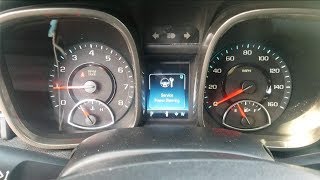
How to confirm: With the engine off, use a multimeter to test the battery voltage. A healthy battery should read approximately 12.4-12.6 volts. 🎬 Watch: How to test your battery and fix StabiliTrak warnings. Perform a load test to ensure the battery can supply adequate cranking amps. With the engine running, the voltage should be between 13.5-14.5 volts.
Typical fix: Charge or replace the battery. If charging system voltage is low, diagnose and replace the alternator. Clean battery terminals and cable ends.
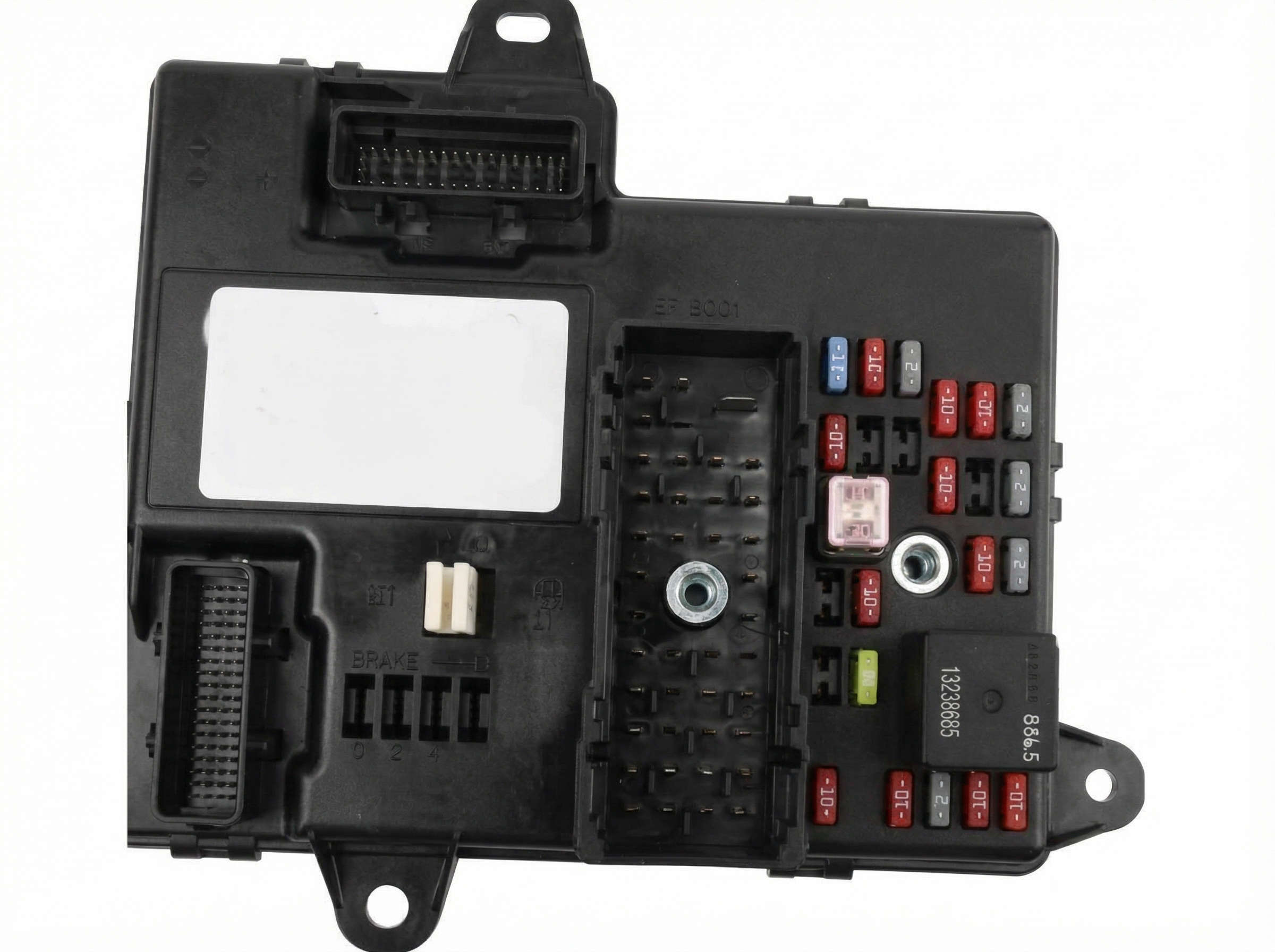
Est. part cost: $150-$250 - Body Control Module (BCM) Failure or Connection Issue 🟡 Medium Probability → Shop Body Control Module This is a common failure point on the Malibu's platform, often due to poor connections at the BCM connectors or internal module faults. A related recall for the BCM (NHTSA 14V252000) addresses voltage fluctuations in the Brake Apply Sensor (BAS) circuit due to increased resistance in the BCM connector, which can disable stability control and cause incorrect brake light operation.
How to confirm: After confirming battery voltage is good, use a scan tool to see if the U3000 code was set by the BCM. Visually inspect the BCM and its connectors for corrosion or loose pins. A technician may perform a wiggle test on the harness while monitoring communication.
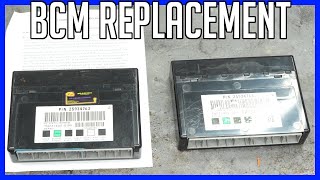
Typical fix: Performing the fix for recall 14V252000, which involves securing the harness, applying dielectric grease, and reprogramming the module. In other cases, the BCM must be replaced. 🎬 See this walkthrough on how to replace the BCM. A replacement BCM will require programming by a dealer or qualified shop.
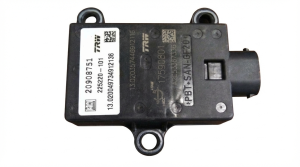
Est. part cost: $200-$400 - Electronic Brake Control Module (EBCM) Failure 🟡 Medium Probability → Shop ABS Control Module The EBCM is a known failure point on this generation of Malibu, leading to ABS and StabiliTrak warnings. An internal failure of this module is a direct cause for a U3000 code.
How to confirm: Use a scan tool to confirm the EBCM is the module that has set the U3000 code. This is almost always accompanied by ABS and traction control warning lights.
Typical fix: Replace the EBCM. The replacement module must be programmed to the vehicle's VIN to function correctly.
Est. part cost: $120-$300 - Faulty Wiring or Poor Ground Connection ⚪ Low Probability Corrosion and vibration can degrade ground connections over time, leading to floating voltages and communication errors between modules.
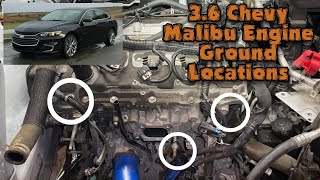
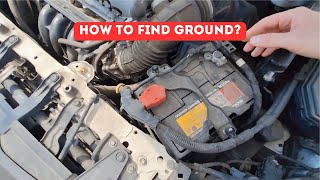
How to confirm: Visually inspect harnesses to major modules (BCM, EBCM, ECM) for damage or corrosion. Check main chassis ground points to ensure they are clean and tight. Key locations include the primary battery ground to the chassis, engine block to frame straps, and smaller ground points in the engine bay and behind interior panels. 🎬 Watch: How to locate the engine ground points on a Malibu. A multimeter can be used to test for voltage drops between the ground point and the battery negative terminal.
Typical fix: Repairing the damaged section of the wiring harness or removing, cleaning, and re-tightening a ground connection. Applying dielectric grease can prevent future corrosion.
Est. part cost: $10-$100
Rare But Worth Checking
- Power Steering Control Module (PSCM) Failure: → Shop Power Steering Control Module The 2010-2012 Malibu uses electric power steering. If you experience a loss of power steering along with the U3000 code, the PSCM, which is often part of the steering column assembly, may have an internal fault.
- Engine Control Module (ECM) Failure: → Shop Engine Control Module (ECM) While less common for setting a U3000 code specifically, an internal ECM failure can cause a wide range of communication and drivability issues.
Diagnosis Steps
- Connect a professional-grade OBD-II scanner capable of reading manufacturer-specific codes from all vehicle modules.
- Identify which specific module (e.g., BCM, EBCM, PSCM) has stored the U3000 code. Note any suffix codes (e.g., :49, :54) if available.
- Crucial First Step: Thoroughly test the battery and charging system. Using a multimeter and a load tester, verify the battery is healthy. Check that voltage is ~12.5V with the engine off and ~14.0V with the engine running.
- Check for aftermarket accessories (remote starters, alarms, dash cams) that may be improperly tapped into the CAN bus, causing network interference.
- If the battery/charging system is healthy, inspect the wiring and connectors going to the identified module. Look for any signs of corrosion, damage, or loose pins.
- Inspect and clean major ground connections. Key points include the battery-to-chassis ground, engine-to-chassis ground straps, and the ground points for the BCM and EBCM.
- Check for any applicable Technical Service Bulletins (TSBs) or recalls for your vehicle's VIN related to the faulting module, especially NHTSA recall 14V252000 for the BCM.
- If wiring, connections, and power supply are good, the fault is likely internal to the control module itself.
- If replacing a module, be aware that most (including the BCM and EBCM) require programming to your vehicle's VIN to function.
Parts You'll Likely Need
- Vehicle Battery — A weak or failing battery is the most common trigger for false U3000 codes across all modules.
Trusted brands: ACDelco, DieHard, Interstate
OEM price range: $200-$250
Aftermarket price range: $150-$220 - Body Control Module (BCM)
(OEM #20941534)— A very common point of failure for this code on the 2010-2012 Malibu and its platform mates. Often related to connection issues addressed in recall 14V252000.
Trusted brands: ACDelco GM Genuine Parts
OEM price range: $250-$350
Aftermarket price range: $150-$250 - Electronic Brake Control Module (EBCM)
(OEM #20908753)— Another common module failure on this platform that will set a U3000 code, typically disabling ABS and StabiliTrak.
Trusted brands: ACDelco GM Genuine Parts
OEM price range: $200-$300
Aftermarket price range: $120-$200
Related Codes That Often Appear With This One
- U0140 - Lost Communication With Body Control Module
- C0561 - System Disabled Information Stored
Platform-Specific Known Issues
- A GM recall (14V252000) was issued for a Body Control Module (BCM) connection issue that can cause voltage fluctuations. Symptoms include brake lights illuminating incorrectly, cruise control not disengaging properly, and the disabling of traction/stability control. The fix involves adding a spacer to the harness connector, applying dielectric lubricant, and reprogramming the module.
Technical Service Bulletins (TSBs) & Recalls
- Bulletin #PIT6398: This bulletin notes that DTC U3000 SYM49 may be set falsely in the Serial Data Gateway Module; technicians are advised to reset the module by cycling the battery.
- Bulletin #PIC6607B: Manufacturer guidance suggests not replacing the Image Processing Module if U3000 SYM49 is found as a history code alongside other communication codes like U0140.
- Bulletin #24-NA-138: A service bulletin describes a customer concern of a "Forward Collision Alert Unavailable" message appearing on the dashboard when U3000 SYM44 is stored in the Front Camera Module.
- Bulletin #PIT6287A: If a "Service 4WD" message appears with DTC U3000 SYM47 or SYM49 in the TCCM, technicians are instructed to check and clear codes while a design improvement is developed.
- Bulletin #PIT6423: Provides diagnostic guidance for U3000-97, which may indicate that the Long Range Radar is blocked.
Mechanic-Grade Diagnostic Values
- High-Speed GMLAN Bus Resistance — expected: Approximately 60 Ohms (± 5 Ohms). Failure: A reading of ~120 Ohms indicates an open in the bus or one of the two termination resistors is not communicating. A reading significantly less than 60 Ohms indicates the GMLAN (+) and (-) wires are shorted together.
- High-Speed GMLAN Bus Voltage (Idle/Recessive State) — expected: Approximately 2.5V on both GMLAN+ (Pin 6) and GMLAN- (Pin 14) relative to ground.. Failure: Voltages that do not return to the 2.5V idle state can indicate a short to power or ground on one of the bus lines.
- High-Speed GMLAN Bus Voltage (Active/Dominant State) — expected: GMLAN+ (Pin 6) rises to ~3.5V and GMLAN- (Pin 14) drops to ~1.5V.. Failure: Inability to reach these voltage levels during communication indicates a problem with a module's transceiver or a wiring issue.
Hidden / Shadow Codes Worth Checking
- U3000:49: Control Module Internal Electronic Failure. This is a common suffix code indicating the module has detected an internal, unrecoverable fault. It often points directly to the need for module replacement. (see via A professional scan tool like the GM GDS2/Tech2 or a high-end aftermarket scanner capable of reading manufacturer-specific DTCs and their suffixes.)
- U3000:5A: Control Module Software - Plausibility Fault. This indicates the software within the module has encountered an unexpected or illogical state, which can sometimes be resolved by a software update or module reprogramming. (see via A professional scan tool like the GM GDS2/Tech2 or a high-end aftermarket scanner.)
Scan Tool Commands That Help
- GM GDS2 / Techline Connect (SPS): Service Programming System (SPS) — This function is required after replacing a BCM, EBCM, or ECM. It downloads the correct VIN, RPO codes (vehicle options), and security credentials from GM's servers and flashes them to the new module.
- GM GDS2 / Techline Connect (SPS): BCM Setup / EBCM Configuration — After programming a new module with SPS, a setup or configuration function must be run. This finalizes the installation and tells other modules on the network that the new module is present and configured correctly. Failing to do this can set new codes, such as 'EBCM not configured'.
- Vehicle Ignition / Key: 30-Minute Key Relearn Procedure — After replacing the BCM, the vehicle's keys must be relearned to the new module for the Vehicle Theft Deterrent (VTD) system to allow the engine to start. This typically involves three 10-minute cycles of turning the ignition ON and waiting for the security light to go out.
Wiring & Ground Locations
- BCM (Body Control Module) — Located under the center console.. This is a primary suspect for the U3000 code. Poor connections at its multi-pin connectors are a known issue addressed by recall 14V252000. It serves as a central hub for many electronic functions and network communications.
- EBCM (Electronic Brake Control Module) — Located on the left front strut tower in the engine compartment.. An internal failure of the EBCM is a common cause of U3000, usually accompanied by ABS and StabiliTrak warnings. Its ground and power connections are critical for proper function.
- G109 — Located in the left front corner of the engine compartment.. Provides a key ground point for components in the engine bay. A corroded or loose G109 can cause various difficult-to-diagnose electrical issues.
- G201 — Located under the center console, near the BCM.. This is a critical ground point for the Body Control Module and other interior electronics. A fault here can directly impact BCM operation and network communication.
- G305 — Located in the right kick panel area.. Serves as a ground for various interior and body components. Ensuring it is clean and tight is part of a thorough ground check.
- DLC (Data Link Connector) Pins 6 & 14 — Under the driver's side of the dashboard.. These are the High-Speed GMLAN bus pins. All network diagnostic resistance and voltage tests are performed here to assess the health of the entire communication bus.
OEM Part Supersession History
20941534→This part number is listed as discontinued by some GM parts suppliers.— End of life for the part. Replacement may involve a newer hardware revision or a remanufactured unit.
Heads up: When sourcing a replacement, ensure it is designated for the 2010-2012 Malibu. While the part number itself may be discontinued, compatible modules are available through ACDelco or aftermarket suppliers.
Diagnostic Flowchart
Other Known Issues on This Vehicle
Issues unrelated to this code that are worth knowing about as an owner of this generation:
- 2.4L Ecotec Timing Chain Failure 🔴 High — Common issue, often appearing after 80,000 miles. Caused by stretched chains, worn tensioners, and broken plastic guides.
- 6T40/6T45 Transmission Problems 🔴 High — Widespread reports of hard shifting, slipping, no reverse, or complete failure, often before 100,000 miles. A broken 3-5-R wave plate is a very common internal failure point. (Ref: Multiple TSBs exist, including PI0376A for shift flares.)
- Electric Power Steering (EPS) Failure 🔴 High — Sudden loss of power steering assist is a well-documented problem, making the vehicle difficult to steer at low speeds. (Ref: Multiple recalls, including GM recall N140115, were issued to address failing torque sensors or the entire steering column on various model years.)
- BCM Electrical Connection Faults 🟠 Medium — Poor electrical connections at the BCM can cause a host of erratic issues like brake lights not working correctly, loss of traction control, and inability to shift from park. (Ref: NHTSA Recall 14V252000)
Used vs. New Parts: Buying Guide for This Vehicle
When a used part is the smart pick: Using a salvaged part for a control module like the BCM or EBCM on this vehicle is strongly discouraged. While the initial cost is lower, the hidden costs and complexities often make it a poor choice.
Donor-vehicle mileage cap: roughly under 100000 miles for the part to have meaningful remaining life.
What to inspect on the donor part:
- Verify the part number exactly matches the original.
- Inspect connectors for any signs of corrosion, bent pins, or heat damage.
- If possible, get the VIN of the donor vehicle to check its history.
OEM-only on this vehicle (don't cheap out):
- Body Control Module (BCM)
- Electronic Brake Control Module (EBCM)
- Engine Control Module (ECM)
Aftermarket brands forum-validated for this vehicle:
- ACDelco GM Genuine Parts (New or Remanufactured)
- Reputable programming services that provide a pre-programmed module (e.g., Flagship One, FS1)
Brands owners have reported issues with on this vehicle:
- Unknown 'plug-and-play' modules from online marketplaces without a clear programming service or warranty. A used BCM from a junkyard is VIN-locked to the donor car and cannot be reprogrammed by a dealer to work in your vehicle. Installing one will cause a no-start condition and multiple communication errors.
Real Owner Stories
Aggregated from forums and TSBs cited above. Mileages and costs reflect what owners reported in those sources.
2010-2012 Chevrolet Malibu
Symptoms: Brake lights illuminating incorrectly, cruise control not disengaging properly, and the disabling of traction/stability control.
What fixed it: Performing the fix for recall 14V252000, which involved adding a spacer to the harness connector, applying dielectric lubricant, and reprogramming the module.
Source hint: NHTSA recall 14V252000 / vehicle_specific_issues
2008-2012 Chevrolet Malibu
Symptoms: Erratic electrical gremlins and communication errors between modules.
What fixed it: Checking and cleaning ground points, specifically under the hood near the strut towers, on the engine block, and the main battery ground.
Source hint: chevymalibuforum.com / Ground Locations
2005-2010 Pontiac G6
Symptoms: U3000 code set by the BCM and EBCM modules.
What fixed it: Replacement of the BCM or EBCM, as these are documented failure points on the shared Epsilon platform.
Source hint: Go-Parts.com / Epsilon Platform Analysis
Related OBD-II Codes
Frequently Asked Questions
Is there a recall for the 2010-2012 Chevrolet Malibu that addresses the U3000 code and BCM issues?
My 2012 Malibu is showing 'Service StabiliTrak' and 'Service Power Steering' messages. Could this be the U3000 code?
Can a weak battery cause a U3000 code on my Chevrolet Malibu?
What is the fix for the BCM recall (14V252000) on the Malibu?
If I need to replace the EBCM to fix the U3000 code, can I just plug in a new one?
Does the U3000 issue affect other cars similar to the Malibu?
Helpful Videos

Used OEM Parts in Stock
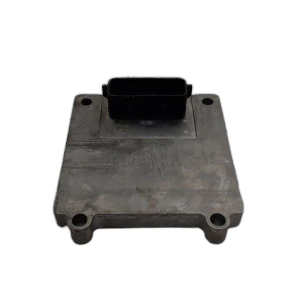
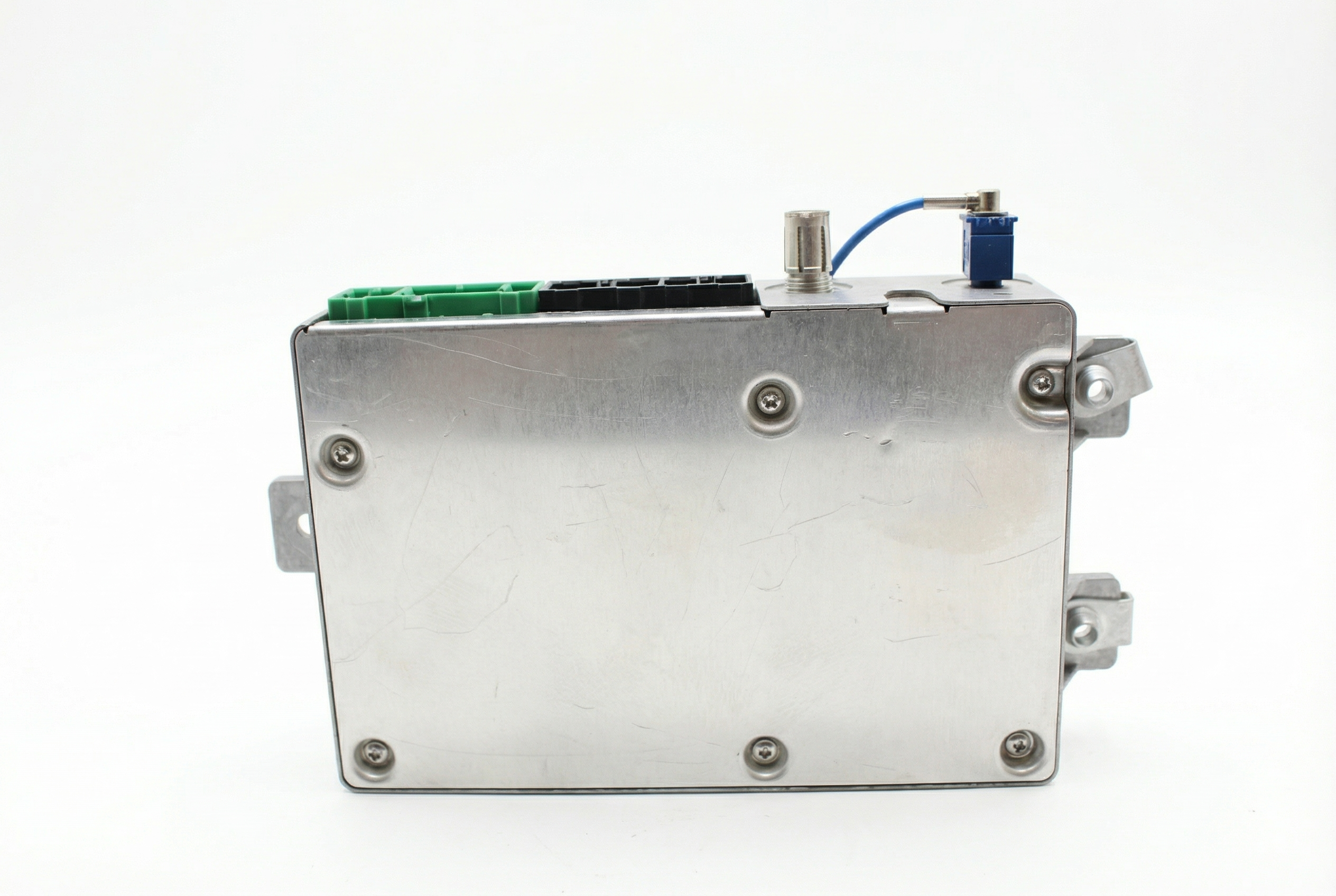
New Aftermarket Parts Available


The information in this article is provided for general reference and educational purposes only. Vehicle specifications, procedures, and part compatibility can vary by production date, trim level, and region. Always consult your vehicle's factory service manual and verify part numbers before purchasing or performing repairs. Safety-critical components such as airbags, seat belts, and braking systems should be installed by a qualified professional.
- Chevrolet Malibu:
- 🧭 Diagnostic Flowchart
- 🎬 Helpful Videos
- 🛍️ Shop This Part
- What's Unique About the 2010-2012 Chevrolet Malibu
- Symptoms You May Notice
- Most Likely Causes
- Rare But Worth Checking
- Diagnosis Steps
- Parts You'll Likely Need
- Related Codes That Often Appear With This One
- Platform-Specific Known Issues
- Technical Service Bulletins (TSBs) & Recalls
- Mechanic-Grade Diagnostic Values
- Hidden / Shadow Codes Worth Checking
- Scan Tool Commands That Help
- Wiring & Ground Locations
- OEM Part Supersession History
- Other Known Issues on This Vehicle
- Used vs. New Parts: Buying Guide for This Vehicle
- Real Owner Stories
- 2010-2012 Chevrolet Malibu
- 2008-2012 Chevrolet Malibu
- 2005-2010 Pontiac G6
- Related OBD-II Codes
- Frequently Asked Questions
- 🎟️ Get 5% Off