

U3000 on 2016-2023 Honda Civic: Causes for Steering, Brake, and Airbag Faults
Code U3000 on a 2016-2023 Honda Civic indicates an internal failure in a control module. It commonly appears with a -49 suffix. Before suspecting a bad module, test the 12V battery; low voltage is a frequent cause of this code appearing in the power steering, brake, and airbag systems.
- U3000 is a generic internal module failure code; you MUST use a good scanner to find out which module is at fault.
- The #1 most likely cause for this code on a 2016-2023 Civic is a weak 12V battery causing a low-voltage glitch.
- Always load-test the battery and check for relevant TSBs or recalls before replacing any expensive control modules.
- This code can affect critical safety systems like steering, brakes, and airbags, so it should be diagnosed promptly.
- If a module needs replacement (like the SRS unit or Multipurpose Camera), it will often require professional calibration to function correctly.
What's Unique About the 2016-2023 Honda CIVIC

On the 10th and 11th generation Honda Civic, the electrical systems are highly sensitive to battery voltage. A slightly weak or degrading 12V battery can cause a momentary voltage drop during startup, which can trick various control modules into setting a false U3000-49 code. Honda has issued Technical Service Bulletin A24-006 specifically acknowledging that a degrading battery can cause the Electric Power Steering (EPS) module to set this code because the low voltage stops the steering angle calculation.
Diagnostic Flowchart

Tap your situation to follow the diagnostic path that matches what you're seeing on this vehicle.
Generation note: This issue affects both the 10th generation (2016-2021) and 11th generation (2022-2023) Civic. TSBs from Honda confirm that modules in both generations, such as the EPS and SRS systems, can set this code. The seat weight sensor recall also spans multiple model years within this range, causing U3000-49 in the SRS module.
Symptoms You May Notice

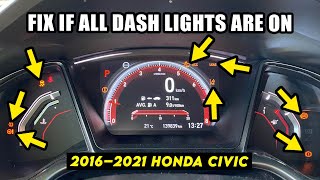
- Multiple warning lights on the dashboard (a "Christmas tree&quo 🎬 Watch: How to fix multiple dashboard warning lights on your Civict; effect)
- SRS / Airbag warning light illuminated
- Electric Power Steering (EPS) system indicator on; increased steering effort
- Brake System warning light on
- Blinking Electric Parking Brake (EPB) light
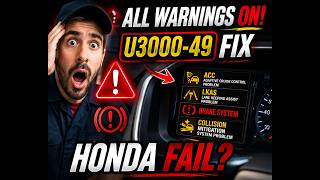
- Warning messages for Adaptive Cruise Control (ACC), Lane Keeping Assist (LKAS), or Collision Mitigation Braking System (CMBS)
- Passenger airbag 'OFF' indicator illuminated despite an adult in the seat
- Replacing a control module without first load-testing the battery. A weak battery is the most common trigger for this code and replacing a module will not fix the issue.
- Clearing crash data from an SRS module after an accident without addressing the underlying hardware failure. Technicians on forums note that if the U3000-49 code is present, simply clearing the EEPROM will not fix it, and the module must be replaced.
Most Likely Causes

- Weak or Failing 12V Battery 🔴 High Probability → Shop Vehicle Battery Modern Civics have sensitive electronics that can misinterpret low voltage during an ignition cycle as a module failure. TSB #A24-006 directly links a degrading battery to the EPS system setting a U3000-49 code. Many owners on forums like CivicX have reported that replacing an aging battery resolved a dashboard full of warning lights, including the U3000 code.
How to confirm: Perform a load test on the battery using an electronic battery tester. A simple voltage check is not enough, as a battery can show 12.6V at rest but fail under the load of starting the engine. Ensure terminals are clean and tight.
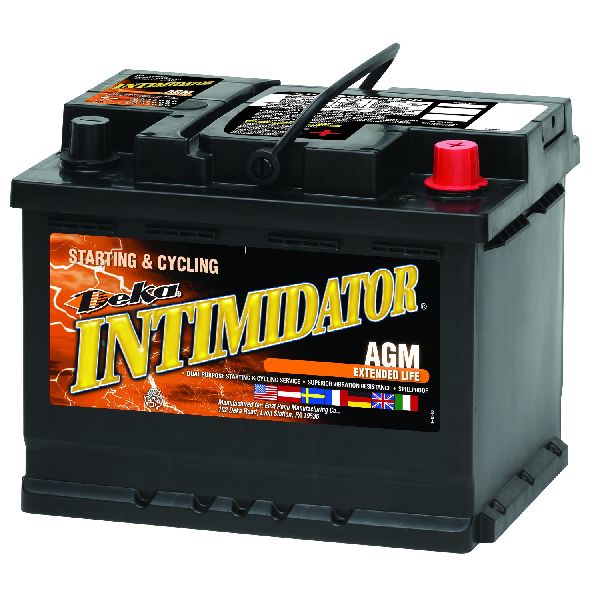
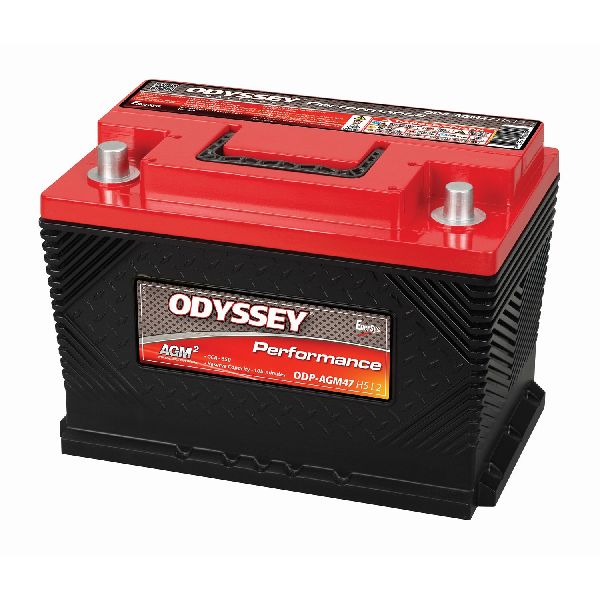
Typical fix: Replace the 12V battery. It is often recommended to use an Enhanced Flooded Battery (EFB) as specified by the manufacturer.
Est. part cost: $150-$300 - Faulty Control Module 🟡 Medium Probability This code can indicate a genuine hardware failure within a module. The most common culprits are the SRS (Airbag) unit, the VSA Modulator (Brakes), or the Multipurpose Camera for Honda Sensing features. These failures can occur spontaneously and are not always related to external factors.
How to confirm: After confirming the battery and its connections are good, follow the specific troubleshooting steps for the module that set the code. This usually involves checking for software updates and then verifying power/ground to the module before condemning it. A professional scan tool is required.
Typical fix: Replace the failed control module and perform any necessary programming or calibration. For example, replacing an SRS module requires ODS/OPDS calibration.
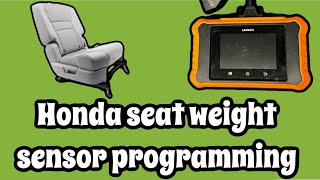
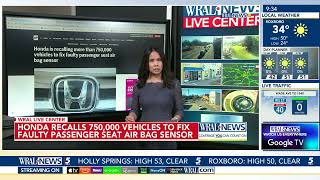
Est. part cost: $400-$1800 - Faulty Seat Weight Sensor ⚪ Low Probability Honda has issued safety recalls (NHTSA #24V-064) for seat weight sensors that can crack, short circuit, and cause the SRS module to store DTC U3000-49. This was due to a temporary change in materials 🎬 Watch: Details on the Honda seat weight sensor recall by a parts supplier.
How to confirm: Check the vehicle's VIN for open recalls on the NHTSA website or Honda's owner portal. A technician follows a specific diagnostic procedure outlined in the recall bulletin (e.g., 24-017) to confirm the fault.
Typical fix: Replace the seat weight sensor assembly as per the recall instructions. The part is often referred to as the Seat Weight Sensor Kit (P/N 04945-TBA-A00 for some models).
Est. part cost: $0 (if covered by recall)
Rare But Worth Checking
- Poor Connection or Damaged Wiring: While less common than a bad battery or module, a loose connector or chafed wire at the offending module can cause an internal fault code. This should be checked before replacing an expensive module. The official Honda troubleshooting guide for U3000-49 in the VSA system explicitly calls for checking the 46P connector for loose terminals.
- Software Glitch: In some cases, particularly with the ADAS multipurpose camera, a software glitch can cause a false U3000-49. Checking for and applying any available software updates for the specific module should be a diagnostic step before hardware replacement. A recall for the 2016 Civic (NHTSA #16V-725, Honda Service Bulletin 16-090) involved a software update to the VSA modulator to fix a communication error that could set U3000-49.
Diagnosis Steps
- Connect a professional-grade OBD-II scanner that can read all vehicle modules (not just the engine computer).
- Perform an 'All DTC Scan' to identify which specific module (e.g., SRS, EPS, VSA, Multipurpose Camera) has stored the U3000-49 code.
- Thoroughly test the 12V battery with a load tester. Do not trust a simple voltage reading. Inspect battery terminals for corrosion and tightness. Also inspect the battery sensor connector for security.
- If the battery is weak, old, or fails the load test, replace it. Clear all DTCs from all modules and drive the vehicle to see if the code returns.
- If the battery is good, check the vehicle's VIN on the NHTSA website for any open recalls. Specifically check for recalls related to the seat weight sensor (NHTSA #24V-064) or VSA modulator software (NHTSA #16V-725).
- Check for any applicable Technical Service Bulletins (TSBs) related to the specific module that set the code. For example, TSB #A24-006 for EPS, TSB #A21100B for SRS, or TSB #16-090 for VSA.
- Inspect the wiring connector at the identified module for any signs of damage, corrosion, or loose pins.
- Follow the manufacturer's diagnostic procedure for U3000-49 for that specific module. This may involve checking for software updates, then verifying power, ground, and communication lines at the module connector.
- If the battery, wiring, and software are all confirmed to be good, the control module itself has likely failed and requires replacement, followed by any required calibration or programming.
Parts You'll Likely Need
- 12V Battery — A weak battery is the most common cause of false U3000-49 codes across multiple systems on this vehicle.
Trusted brands: Yuasa, Interstate, ACDelco
OEM price range: $200-$350
Aftermarket price range: $150-$250 - SRS Control Unit (Airbag Module)
(OEM #77960-TBA-A04 (2018 Civic), 77960-TBG-A05 (2016-2020 Civic Coupe))🎬 See this walkthrough on replacing the SRS airbag control module — Can fail internally, setting U3000-49. This is a common point of failure if the code is stored in the SRS system and the battery is good.
Trusted brands: Honda (OEM)
OEM price range: $500-$800 - Multipurpose Camera Unit (Honda Sensing)
(OEM #36160-T20-A06 (2022 Civic), 04361-T47-A21 (2022-2024 Civic Hatchback))— This camera, used for ACC and LKAS, can fail and set a U3000-49 code in the driver support module.
Trusted brands: Honda (OEM)
OEM price range: $900-$1200 - VSA Modulator-Control Unit — This module controls the ABS and Electric Parking Brake. It can set U3000-49 when it fails internally, causing brake system warnings. Replacement can be very expensive.
Trusted brands: Honda (OEM)
OEM price range: $1200-$1800
Technical Service Bulletins (TSBs) & Recalls
- A24-006: EPS System Indicator On with DTC U3000-49 due to degrading battery.
- A21100B: Troubleshooting for SRS DTC U3000-49 (Internal Failure of the SRS Unit).
- 16-090: Safety Recall: Electric Parking Brake and VSA DTC U3000-49 (Software Update).
- 24-017 / 24-041: Safety Recall for Seat Weight Sensor causing SRS DTC U3000-49.
Platform-Specific Known Issues
- TSB #A24-006: States that a degrading 12-volt battery can cause low voltage during startup, leading the Electric Power Steering (EPS) module to log DTC U3000-49.
- TSB #A21100B: Notes that U3000-49 in the SRS (Airbag) unit has several possible causes and requires step-by-step troubleshooting, with module replacement being the last resort. It suggests disconnecting seat weight sensors to help isolate the fault.
- Safety Recall #16-090 (NHTSA #16V-725): For 2016 Civics, a software update for the VSA modulator was issued to fix a communication error that could set U3000-49.
Mechanic-Grade Diagnostic Values
- CAN Bus Network Resistance — expected: ~60 Ω between CAN_H and CAN_L pins at the OBD-II connector (with battery disconnected).. Failure: A reading of ~120 Ω indicates one of the two terminating resistors is offline. A reading near 0 Ω indicates a short between the CAN lines.
- CAN Bus Voltage (Key On, Engine Off) — expected: CAN_H to ground should be ~2.6V. CAN_L to ground should be ~2.4V.. Failure: Voltages that are the same (e.g., both 2.5V) can indicate a short between the lines. Both at 0V can indicate a short to ground.
- SRS Unit - Seat Weight Sensor (SWS) Line Voltage — expected: 0.2 V or less between the SWS+/PWR SWS wire and ground (at the disconnected SRS unit connector B).. Failure: Voltage significantly higher than 0.2V indicates a short to power in the SWS circuit, which can trigger a U3000-49 in the SRS module.
Scan Tool Commands That Help
- Honda HDS (i-HDS): VSA Sensor Neutral Position Memorization (All Sensors) — Required after updating or replacing the VSA modulator-control unit to prevent stability control issues and clear related faults. This is part of the procedure in recall bulletin 16-090.
- Honda HDS (i-HDS): Static/Dynamic Camera Aiming — Required after replacing the multipurpose camera unit or the windshield. Failure to aim the camera will result in Honda Sensing features being inoperative and can set faults.
- Honda HDS (i-HDS) or professional aftermarket scanner: SWS (Seat Weight Sensor) Initialization — Must be performed after replacing the SRS control unit to calibrate the passenger seat occupancy detection system.
- Honda HDS (i-HDS): Clear DTCs — In the official diagnostic procedure for U3000-49, the first step is to clear the code and cycle the ignition to see if it is a hard fault or an intermittent one.
Wiring & Ground Locations
- G602 — Under the front passenger's seat.. This is a ground point shown in wiring diagrams for the SRS system. A poor connection at this ground could potentially cause communication or internal logic errors in the SRS unit, leading to a U3000-49 code.
- SRS Unit Connectors — Under the center console, forward of the shifter assembly.. The SRS unit is located under the center console and can be difficult to access. To remove it, the entire center console assembly often needs to be unbolted and shifted backward. Technicians note that trying to pry side panels off to gain access will break them.
Real Owner Repair Stories
- Reddit user imma_create on r/hondafit (2018 Honda Fit) — After the battery died and the car was jump-started, multiple warnings appeared: adaptive cruise control problem, lane keeping assist problem, collision mitigation system problem, and road departure mitigation problem.
❌ Tried (didn't work) The user first suspected issues related to a recent windshield replacement, but the shop only found the U3000-49 code.
✅ What actually fixed it The multipurpose camera located behind the windshield had to be replaced. The user confirmed, "I absolutely had to replace the camera." - Honda-Tech forum user DCFIVER (2018 Honda Accord 1.5L) — After replacing a faulty VSA modulator with a used unit, a new code U3000-49 appeared in the brake module, along with other communication codes.
❌ Tried (didn't work) Installing a used VSA modulator with a matching part number did not resolve the issue and introduced the U3000-49 code.
✅ What actually fixed it The issue was identified as the used module being VIN-locked to the original vehicle. The forum expert noted that for some manufacturers, once a module is coded to a VIN, it cannot be reprogrammed for another vehicle. The final fix requires either attempting to code the module with HDS (which may fail) or replacing it with a new, uncoded VSA modulator.
OEM Part Supersession History
77960-TBA-A01, 77960-TBA-A02, 77960-TBA-A03, 77960-TBA-A04, 77960-TBA-A05→77960-TBA-A06— Part revisions for the SRS Control Unit for the 2016-2021 Civic.
Heads up: These parts are generally interchangeable for the specified models (Civic Sedan without Si), but it is always best to use the latest revision (A06) when replacing the module.
Model Year Variations Within This Range
- 2022+: The multipurpose camera on the 11th generation (2022+) Civic can be aimed using either a static (targets in a shop) or dynamic (driving on a road with clear lane markings) procedure, depending on technician preference and conditions. Some earlier 10th gen models may have required only one specific method.
Helpful Videos
We Have This Part in Stock


The information in this article is provided for general reference and educational purposes only. Vehicle specifications, procedures, and part compatibility can vary by production date, trim level, and region. Always consult your vehicle's factory service manual and verify part numbers before purchasing or performing repairs. Safety-critical components such as airbags, seat belts, and braking systems should be installed by a qualified professional.
- Honda CIVIC:
- 🧭 Diagnostic Flowchart
- 🎬 Helpful Videos
- 🛍️ Shop This Part
- What's Unique About the 2016-2023 Honda CIVIC
- Symptoms You May Notice
- Most Likely Causes
- Rare But Worth Checking
- Diagnosis Steps
- Parts You'll Likely Need
- Technical Service Bulletins (TSBs) & Recalls
- Platform-Specific Known Issues
- Mechanic-Grade Diagnostic Values
- Scan Tool Commands That Help
- Wiring & Ground Locations
- Real Owner Repair Stories
- OEM Part Supersession History
- Model Year Variations Within This Range
- 🎟️ Get 5% Off