

U3000 on 2017-2022 Kia Sportage: Understanding the Control Module Fault Code
U3000 on a 2017-2022 Kia Sportage indicates a generic fault in an unspecified electronic control module. A professional scan tool is required to identify the exact module. The most critical possibility is a fault in the ABS module (HECU), which has been subject to a major fire-risk recall (NHTSA 21V137000 / Kia SC206).
- U3000 is a generic code; you MUST use a professional scan tool to find out which module is at fault.
- Before any repairs, check if your Sportage is affected by the HECU fire risk recall (NHTSA 21V137000), as this is a primary suspect and a critical safety issue.
- Always test the battery and check its connections first, as low voltage can cause false module fault codes.
- This is not a DIY-friendly repair. Module replacement almost always requires dealer-level programming and calibration.
What's Unique About the 2017-2022 Kia Sportage
For the 2017-2022 Kia Sportage, there isn't one single, commonly reported cause for a U3000 code. However, this vehicle generation is subject to a major safety recall for the Hydraulic Electronic Control Unit (HECU), which is the main component of the ABS system. An internal short circuit in the HECU can cause a fire, even when the car is parked and off. While the recall doesn't explicitly mention code U3000, a failure of this critical module could certainly trigger a generic module fault code, making it a primary suspect during diagnosis. The recall remedy involves replacing fuses and, for some models, a software update.
Symptoms You May Notice
- Check Engine Light or other warning lamps (ABS, Power Steering, Airbag) are illuminated.
- Loss of power steering assist, making the wheel hard to turn.
- Malfunction of electronic accessories like power windows, locks, or interior lights.
- Vehicle may enter a 'limp mode' or safety mode with reduced power.
- Inability to communicate with a specific module using a scan tool.
- A burning or melting smell from the engine compartment, particularly near the HECU.
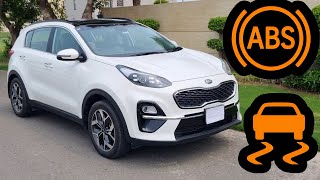
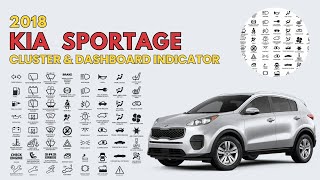
- ABS, traction control, or stability control systems are disabled. 🎬 Watch: Guide to Kia Sportage dashboard warning light meanings.
- Replacing the Powertrain Control Module (PCM) without confirming it is the source of the fault. The U3000 code is often set *in* a specific module, not necessarily the main engine computer.
- Replacing a module when the actual cause was low battery voltage or a poor ground connection.
Most Likely Causes
- Internal Failure of the ABS Control Module (HECU) 🔴 High Probability → Shop ABS Control Module A widespread safety recall (Kia SC206 / NHTSA 21V137000) was issued for 2017-2021 Sportage models due to risk of an electrical short circuit inside the HECU, which can cause a fire. This internal failure is a prime candidate for triggering a U3000 fault code.
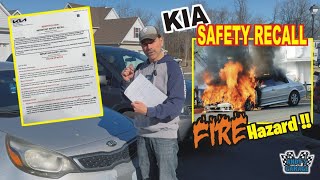
How to confirm: Use a professional scan tool to check for codes specifically within the ABS module. Check the vehicle's VIN against Kia's recall database to see if recall SC206 applies and has been completed. The recall affects vehicles manufactured from December 10, 2015, through October 23, 2020, that are not equipped with Smart Cruise Control. 🎬 Watch: Why Kia owners must get this ABS fuse replacement.
Typical fix: If related to the recall, a Kia dealer will replace specific fuses in the junction box (e.g., replacing 40A fuses with 25A or 30A versions) and, on vehicles with an Electronic Parking Brake (EPB), perform a HECU software update. If the module has failed independently, it requires replacement and variant coding.
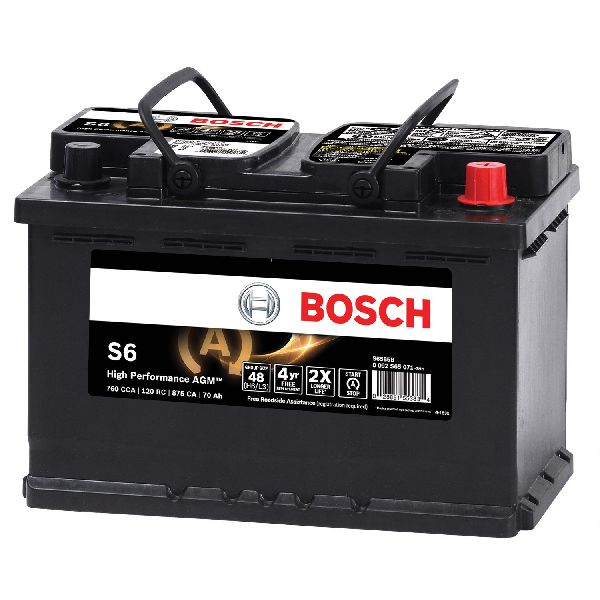
Est. part cost: $0 (if under recall) or $500-$1500 for a new HECU. - Low Battery Voltage or Poor Connection 🟡 Medium Probability → Shop Vehicle Battery Modern control modules are sensitive to voltage fluctuations. A weak battery can cause voltage to drop below the required threshold during engine cranking, leading modules to set false internal error codes like U3000.
How to confirm: Test the battery voltage with a multimeter (should be ~12.6V with engine off, ~14.0V+ with engine running). Perform a load test on the battery. Check battery terminals and main ground connections for corrosion or looseness.
Typical fix: Clean terminals and connections. Charge or replace the battery if it fails a load test.
Est. part cost: $150-$300 for a new battery. - Internal Failure of another Control Module (BCM, PSCM, etc.) ⚪ Low Probability
How to confirm: This requires a professional scan tool that can communicate with all vehicle modules (Body Control Module, Power Steering Control Module, etc.) to see which one is logging the U3000 fault internally. While documented on other manufacturers, NHTSA ODI Investigation #PE14030 notes that U3000 (with various sub-codes) can be stored alongside power steering failures, necessitating the replacement of the steering system.
Typical fix: Replacement of the specific faulty module, which often requires programming by a dealer or qualified shop.
Est. part cost: $400-$1000+ depending on the module. - Wiring Harness or Connector Issue ⚪ Low Probability Corrosion or damage to wiring can interrupt communication on the CAN bus, leading to a U3000 code. Another recall for some Sportage models (NHTSA 22V633000) involves a fire risk from moisture on the tow hitch harness module, highlighting the platform's susceptibility to wiring issues.
How to confirm: After identifying the faulty module with a scanner, visually inspect its wiring harness and connectors for damage, corrosion, or loose pins. Check for continuity and resistance on the power, ground, and communication lines to the module.
Typical fix: Repair the damaged section of the harness or clean/replace the faulty connector.
Est. part cost: $10-$100 for wiring repair supplies.
Diagnosis Steps
- Connect a professional-grade scan tool capable of reading manufacturer-specific codes from all vehicle modules, such as the Kia GDS.
- Perform a full system scan to identify which specific control module (e.g., ABS, BCM, PSCM) has stored the U3000 fault code and if there is a suffix (e.g., :49, :53).
- Check your vehicle's VIN for open recalls, especially the HECU fire risk recall (NHTSA Campaign ID: 21V137000 / Kia SC206). Have this performed by a dealer immediately if it is outstanding.
- Thoroughly test the vehicle's battery and charging system. Ensure voltage is stable and above 12.4 volts with the engine off and that it does not drop excessively during cranking.
- If a communication issue is suspected, perform a CAN bus resistance test at the OBD-II port (Pins 6 and 14). With the battery disconnected, a healthy network should read approximately 60 Ohms.
- Once the specific module is identified, inspect its connectors and wiring harness for any signs of corrosion, moisture, or physical damage.
- Check the fuses and power/ground supplies for the identified module. The HECU recall itself involves changing fuse ratings from 40A to 25A or 30A.
- If wiring, power, and ground are good, the module itself is the most likely cause of the failure. A software reflash may be attempted before replacement if a TSB exists.
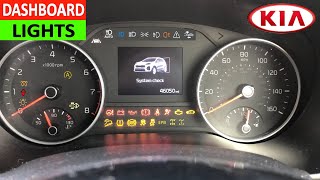
- Replace the faulty module. Note that many modules, especially the ABS/HECU and PSCM, require programming/calibration ('Variant Coding') to the vehicle after installation. This is a mandatory step. 🎬 See how to program new ABS and airbag modules.
Parts You'll Likely Need
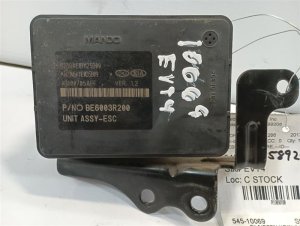
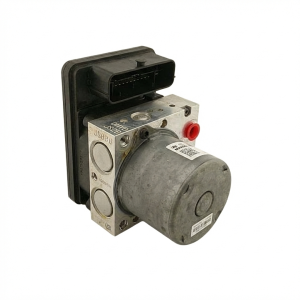
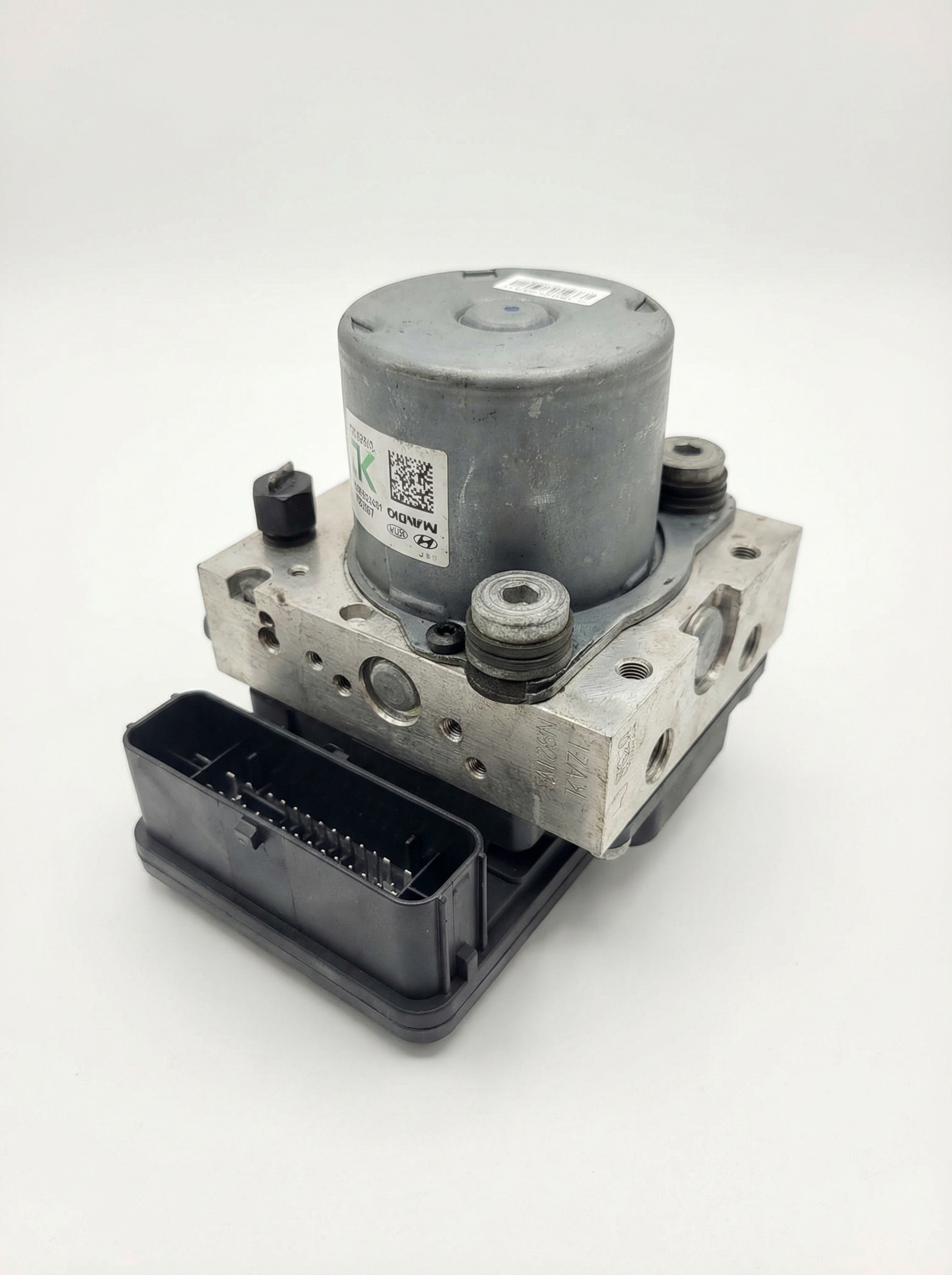
- ABS Control Module / HECU
(OEM #58920-D9100 (For models without electronic park brake))— This is a known failure point on the 2017-2021 Sportage and is subject to a major safety recall for fire risk. An internal failure can trigger a generic module fault code like U3000.
Trusted brands: Kia (OEM)
OEM price range: $800-$1500
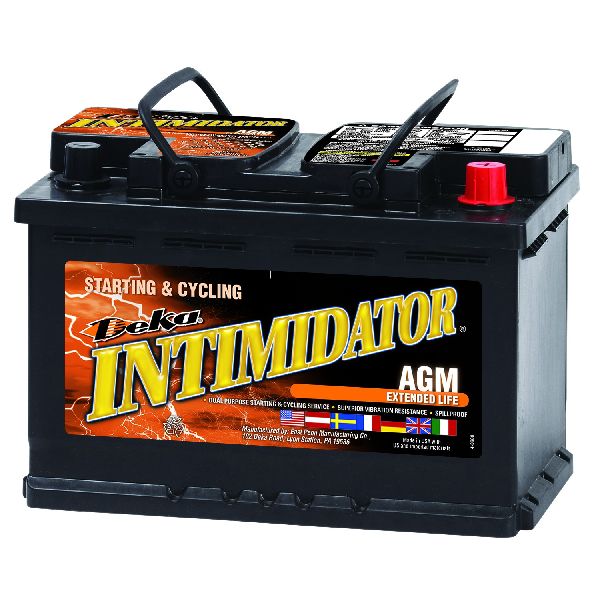
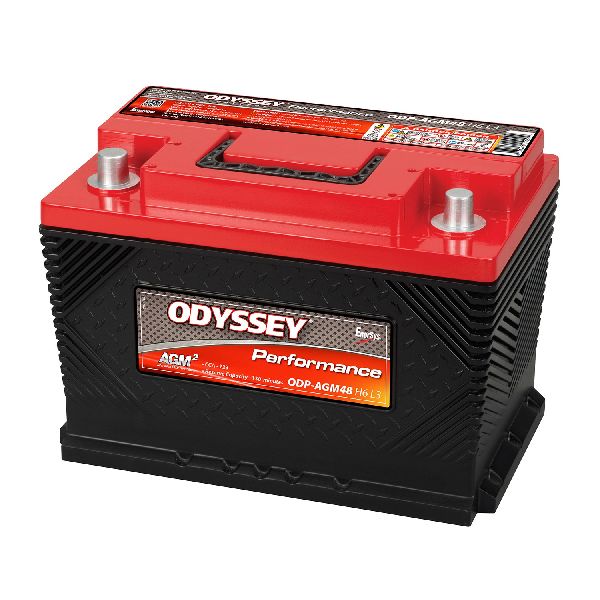
Aftermarket price range: $500-$900 (Remanufactured) - Vehicle Battery — Low system voltage is a common cause for various electronic modules to set communication or internal fault codes.
Trusted brands: Interstate, DieHard, Duralast
OEM price range: $200-$350
Aftermarket price range: $150-$250
Related Codes That Often Appear With This One
- U0121 - Lost Communication With ABS Control Module
- U3003:16 - Battery Voltage Below Threshold
- U3000:49 - Control Module Internal Electronic Failure
- C1702 - Variant Coding Error (often appears after replacing a module without programming it)
Technical Service Bulletins (TSBs) & Recalls
- NHTSA Campaign ID 21V137000 / Kia Recall SC206: Recall for HECU electrical short circuit that can cause a fire. The remedy involves replacing fuses and potentially a software update.
- NHTSA Campaign ID 22V633000: Recall for tow hitch harness module fire risk due to moisture intrusion.
Platform-Specific Known Issues
- Recall 21V137000 (Kia recall SC206): Affects 2017-2021 Sportage models. An electrical short within the Hydraulic Electronic Control Unit (HECU) can lead to an engine compartment fire, even when the vehicle is parked and off. This is a critical safety issue and a likely suspect for any ABS-related module faults.
- Recall 22V633000: Affects 2017-2022 Sportage models equipped with a tow hitch harness. Debris and moisture can cause an electrical short on the harness module's circuit board, leading to a fire risk. This highlights a general vulnerability to electrical/wiring issues.
Mechanic-Grade Diagnostic Values
- CAN Bus Network Resistance — expected: Approximately 60 Ω. Failure: A reading of 120 Ω indicates one of the two terminating resistors is offline. A reading significantly less than 60 Ω suggests a short circuit in the wiring.
- CAN High Voltage to Ground — expected: 2.5V to 3.5V (typically ~2.6V on a multimeter). Failure: A voltage of 1.4V or less can indicate a failure in the CAN port of the device being tested.
- CAN Low Voltage to Ground — expected: 1.5V to 2.5V (typically ~2.4V on a multimeter). Failure: A voltage of 1.4V or less can indicate a failure in the CAN port of the device being tested.
Hidden / Shadow Codes Worth Checking
- U3000:49: Control Module: Internal Electronic Failure. This suffix code points directly to an internal hardware or software fault within the module that set the code. (see via A professional-grade scan tool capable of reading manufacturer-specific DTCs, like the Kia GDS.)
- U3000:53: Control Module: Deactivated. This indicates the module has been shut down, often due to a detected critical fault or as a result of a failed programming or setup procedure. The module is present on the network but is not operational. (see via A professional-grade scan tool capable of reading manufacturer-specific DTCs.)
- C1702: Variant Coding Error. This code is not a shadow code but is critically related. It will set if a new or used module (like the HECU) is installed but not programmed to the vehicle's VIN and options. It confirms a programming failure, not necessarily a part failure. (see via A professional-grade scan tool after a module replacement has been attempted.)
Scan Tool Commands That Help
- Kia GDS (Global Diagnostic System): Variant Coding — This is a mandatory procedure after replacing a major control module like the HECU (ABS), PSCM, or Airbag Control Unit. It programs the new module with the vehicle's specific VIN and configuration (e.g., with/without Electronic Parking Brake). Failure to perform this will result in a non-functional system and a C1702 code.
- Kia GDS or equivalent bidirectional scanner: Automated Bleed / Service Bleed — After replacing the HECU/ABS pump, air becomes trapped inside the new unit. This scan tool function cycles the internal pump and valves to purge the trapped air into the brake lines, which can then be bled normally. This is a required step before the brakes will function correctly.
- Kia GDS: Actuation Test — As part of the diagnostic flowchart for some recalls, an actuation test is used to command the HECU to cycle. This can help determine if the module is responsive or if specific DTCs are triggered only after the test, confirming a fault.
Wiring & Ground Locations
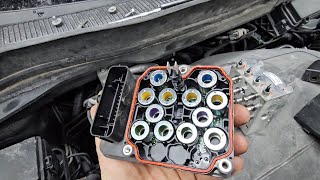
- HECU (ABS Module) — In the engine bay, typically located behind the air filter box or near the firewall on the driver's or passenger's side. It is a metal block with multiple brake lines and a large electrical connector.. As the primary suspect for a U3000 code on this platform due to the fire recall, locating the HECU is the first step for visual inspection of its connector and wiring for melting or corrosion.
- Engine Compartment Fuse Box — Located in the engine bay, usually near the battery.. This box contains the main fuses for the ABS/HECU. The recall procedure involves replacing the original 40A fuses with lower-rated 25A or 30A fuses. Checking these fuses is a critical diagnostic step.
- OBD-II Data Link Connector — Under the driver's side dashboard.. Pins 6 (CAN High) and 14 (CAN Low) are used to test the resistance of the entire CAN bus network. This is the most accessible point for a network health check.
Real Owner Repair Stories
- Reddit user report (2018 Kia Sportage) — While driving, the Blind Spot Detection (BSD) disabled, followed by the illumination of power steering, charging system, and AWD warning lights. Power steering assist was lost. Subsequently, more warning lights appeared, the media screen went black, and the car would not restart, showing a 'press the start button with the key' message.
❌ Tried (didn't work) Restarting the car initially failed.
✅ What actually fixed it After waiting about 5 minutes, the car started and ran normally. The user did not post a final repair, but the symptoms (multiple, cascading electronic failures, loss of power steering, charging system warning) are classic signs of a failing alternator or severe battery/connection issue, which can cause modules to malfunction and set U-codes. The extreme cold (0°F) also points towards a battery issue.
OEM Part Supersession History
58920-D9100→58920-D9510— Model year update/revision.
Heads up: Part 58920-D9100 is for 2017-2019 models without Electronic Parking Brake (EPB). Part 58920-D9510 is for 2020-2022 models without EPB. Compatibility is critical.58920-D9200→58920-D9530— Model year update/revision.
Heads up: Part 58920-D9200 is for 2017-2019 models with Electronic Parking Brake (EPB). Part 58920-D9530 is for 2020-2022 models with EPB. Using the wrong module for the parking brake system will result in a configuration error.
Model Year Variations Within This Range
- 2017-2019 vs 2020-2022: The OEM part numbers for the HECU (ABS module) changed around the 2020 model year. There are different part numbers for vehicles with and without the Electronic Parking Brake (EPB), and these numbers were updated for the later model years. It is critical to match the part number to the vehicle's year and specific options.
- 2017-2021: These model years are subject to the NHTSA recall 21V137000 for HECU fire risk. The recall remedy involves replacing the 40A HECU fuses with lower amperage (25A or 30A) fuses and, for EPB-equipped models, a HECU software update.
Diagnostic Flowchart
Other Known Issues on This Vehicle
Issues unrelated to this code that are worth knowing about as an owner of this generation:
- Theta II GDI Engine Failure 🔴 High — Widespread across 2011-2019 models. Can lead to excessive oil consumption, engine knocking, stalling, and catastrophic failure, often before 100,000 miles. (Ref: Subject of multiple class-action lawsuits and warranty extensions (e.g., lifetime warranty for certain repairs) rather than a single recall.)
- Tow Hitch Harness Fire Risk 🔴 High — Affects vehicles with an OEM or dealer-installed tow hitch harness. Moisture and debris can short the module's circuit board, causing a fire even when parked. (Ref: NHTSA Recall 22V633000)
- Excessive Oil Consumption 🟠 Medium — Commonly reported on models with the Theta II engine, often starting around 80,000 miles. It is a precursor to more serious engine failure. (Ref: Covered under engine-related warranty extensions and settlements.)
- Faulty Airbag Control Module / Non-Deployment 🔴 High → Shop Air Bag Control Module — Multiple owner complaints filed with NHTSA report airbag warning lights illuminating or, more critically, airbags failing to deploy in collisions.
- Transmission Slippage / Rough Shifting 🟡 Low — Some owners report issues with rough acceleration or transmission slippage, which may be linked to a faulty torque converter.
Used vs. New Parts: Buying Guide for This Vehicle
When a used part is the smart pick: A used HECU/ABS module can be a cost-effective option if the new OEM part is prohibitively expensive or on backorder. However, it only makes sense if you have confirmed access to a shop with a Kia-compatible scan tool (like GDS) that is willing and able to perform the 'Variant Coding' on a used part.
Donor-vehicle mileage cap: roughly under 80000 miles for the part to have meaningful remaining life.
What to inspect on the donor part:
- Verify the part number from your original unit EXACTLY matches the donor unit, including designations for Electronic Parking Brake (EPB).
- Inspect the electrical connector pins on the used module for any signs of corrosion, bending, or heat damage.
- Check the housing for any cracks or evidence of brake fluid leaks.
- Purchase from a reputable recycler that offers a warranty and guarantees the part is from a non-recalled VIN if possible.
OEM-only on this vehicle (don't cheap out):
- ABS Control Module / HECU
Aftermarket brands forum-validated for this vehicle:
- For the electronic HECU module itself, no reliable aftermarket brands exist. The only options are new OEM, used OEM, or a remanufactured OEM unit from a specialist.
Brands owners have reported issues with on this vehicle:
- Any unbranded 'white box' or new non-OEM electronic modules should be avoided. They are highly unlikely to have the correct software for integration and programming ('Variant Coding') with the vehicle's other systems, leading to failure and codes like C1702.
Real Owner Stories
Aggregated from forums and TSBs cited above. Mileages and costs reflect what owners reported in those sources.
2016-2021 Hyundai Tucson (Platform Mate)
Symptoms: Owners discussed receiving official recall notices regarding the Hydraulic Electronic Control Unit (HECU) internal corrosion and fire risk, noting the issue spans both Hyundai and Kia brands.
What fixed it: HECU recall service (NHTSA recalls 20V543000, 19V568000) involving component inspection and fuse/software updates.
Source hint: https://www.team-bhp.com/forum/technical-stuff/241834-hyundai-tucson-recall-hydraulic-electronic-control-unit-hecu.html
Documented NHTSA Reports
While specific to another manufacturer, NHTSA ODI Investigation #PE14030 describes a scenario where U3000-49 and U3000-46 were stored in the power steering system, leading to a complete loss of assist and requiring system replacement.
Related OBD-II Codes
Frequently Asked Questions
Is there a recall for my 2017-2021 Kia Sportage regarding the ABS module and fire risk?
What does the dealer actually do to fix the HECU recall on a Sportage with an Electronic Parking Brake?
Can a tow hitch on my 2022 Sportage cause electrical issues or a U3000 code?
My steering is heavy and the ABS light is on; could this be the U3000 code?
How much does it cost to fix a U3000 code if my Sportage is out of warranty and not under recall?
Could a simple battery issue trigger a U3000 internal module fault on a Kia Sportage?
Helpful Videos

Used OEM Parts in Stock
New Aftermarket Parts Available


The information in this article is provided for general reference and educational purposes only. Vehicle specifications, procedures, and part compatibility can vary by production date, trim level, and region. Always consult your vehicle's factory service manual and verify part numbers before purchasing or performing repairs. Safety-critical components such as airbags, seat belts, and braking systems should be installed by a qualified professional.
- Kia Sportage:
- 🧭 Diagnostic Flowchart
- 🎬 Helpful Videos
- 🛍️ Shop This Part
- What's Unique About the 2017-2022 Kia Sportage
- Symptoms You May Notice
- Most Likely Causes
- Diagnosis Steps
- Parts You'll Likely Need
- Related Codes That Often Appear With This One
- Technical Service Bulletins (TSBs) & Recalls
- Platform-Specific Known Issues
- Mechanic-Grade Diagnostic Values
- Hidden / Shadow Codes Worth Checking
- Scan Tool Commands That Help
- Wiring & Ground Locations
- Real Owner Repair Stories
- OEM Part Supersession History
- Model Year Variations Within This Range
- Other Known Issues on This Vehicle
- Used vs. New Parts: Buying Guide for This Vehicle
- Real Owner Stories
- 2016-2021 Hyundai Tucson (Platform Mate)
- Documented NHTSA Reports
- Related OBD-II Codes
- Frequently Asked Questions
- 🎟️ Get 5% Off