

U3000 on 2017-2019 Lincoln Continental: Control Module Failure Causes and Fixes
On a 2017-2019 Lincoln Continental, code U3000 typically indicates a software glitch in a specific control module, such as the one for cruise control or steering. The most common fix is a software update performed by a dealer or qualified shop, not an expensive part replacement. An advanced scan tool is required to identify the specific module and the two-digit suffix (e.g., :49) to determine the correct repair path.
- U3000 on your Continental means a control module has an internal error, but it doesn't tell you which one without an advanced scan.
- The most common cause is a software glitch in the cruise control (CCM) or steering (SECM) modules, which is fixed by a dealer software update or reset procedure, not a new part.
- You must have the vehicle scanned with a professional tool (like Ford FDRS or FORScan) to identify the specific module and the two-digit suffix (e.g., :49) before attempting any repairs.
- Do not replace any expensive modules unless the specific TSB-recommended software procedure has been attempted and has failed to resolve the issue.
What's Unique About the 2017-2019 Lincoln CONTINENTAL
For the 2017-2019 Lincoln Continental, this code is well-documented by Lincoln in official Technical Service Bulletins (TSBs). These bulletins often point to a software fix for modules controlling the adaptive cruise control (CCM) and power steering systems (SECM), rather than an immediate hardware failure. TSB SSM 48049 specifically addresses the CCM, while SSM 47854 addresses the SECM. This is a crucial distinction, as it means the solution is often a reprogram instead of a costly module replacement.
Diagnostic Flowchart
Tap your situation to follow the diagnostic path that matches what you're seeing on this vehicle.
Symptoms You May Notice
- "Collision Warning Not Available" message in the instrument cluster.
- "Adaptive Cruise Fault" message in the instrument cluster.
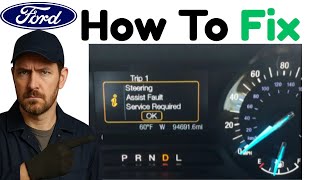
- "Steering Assist Fault Service Required" warning mes 🎬 Watch: Common causes and fixes for steering assist faultssage.
- Loss of adaptive cruise control functionality.
- Potential changes in power steering effort or, in severe cases, a locked steering wheel.
- Service AdvanceTrac warning light may illuminate.
- Replacing a control module before checking for software updates. Given the prevalence of TSBs for this issue, reprogramming should always be the first step.
- Ignoring the two-digit suffix code. A U3000:49 in the CCM has a different resolution (reprogram) than a U3000:49 in the SECM (reset routine), making the suffix and module location critical.
Most Likely Causes
- Control Module Software Glitch 🔴 High Probability Lincoln has issued multiple Technical Service Bulletins (TSBs) for the Continental indicating that software anomalies in the Cruise Control Module (CCM) and Steering Effort Control Module (SECM) can trigger a U3000:49 code. This is the most common and well-documented cause.
How to confirm: Use a Ford/Lincoln-specific scan tool (like FDRS or FORScan) to confirm that code U3000:49 is present in the CCM or SECM. Check for open TSBs (SSM 48049 for CCM, SSM 47854 for SECM) related to the code and module.
Typical fix: For the CCM, reprogram the module to the latest software level per TSB SSM 48049. For the SECM, TSB SSM 47854 instructs technicians to perform the "SASM Module Reset" routine using the Ford diagnostic tool. These are software-based fixes.
Est. part cost: $0 - Failing Control Module 🟡 Medium Probability While software is the most common issue, the code's definition is "Internal Electronic Failure," meaning the module itself can fail due to internal component fatigue or damage. This is particularly true for the SECM, where a persistent U3000 code after a reset attempt may point to hardware failure requiring steering rack replacement.
How to confirm: If reprogramming or resetting the module (per TSBs) does not resolve the code, or if the module is unresponsive to the scan tool, it points to a hardware failure. A technician would also verify power and ground circuits to the module before condemning it.
Typical fix: Replace the faulty control module (e.g., CCM or the entire steering rack if the SECM has failed) and program the new module to the vehicle.
Est. part cost: $400-$1200 - Low Battery Voltage or Weak Battery ⚪ Low Probability → Shop Vehicle Battery Modern vehicles with many electronic modules are sensitive to voltage fluctuations. A weak or failing battery can cause modules to malfunction during startup and set spurious communication or internal error codes, including U3000.
How to confirm: Test the battery's state of charge and health with a digital battery tester. Check the alternator's output to ensure the charging system is working correctly. The fault may appear after the vehicle has been sitting or during cold weather.
Typical fix: Charge or replace the vehicle's 12V battery. Ensure the Battery Monitoring System (BMS) is reset after replacement.
Est. part cost: $150-$350
Rare But Worth Checking
- Wiring Harness or Connector Issues:
Diagnosis Steps
- Connect a professional-grade scan tool (Ford FDRS, FORScan) capable of reading manufacturer-specific codes from all vehicle modules.
- Perform a full network scan and identify which module (e.g., CCM, SECM, ABS) has stored the U3000 code. Note the critical two-digit suffix (e.g., :49).
- Check for any relevant Technical Service Bulletins (TSBs) for your vehicle's year and model that match the code and the affected module. The primary TSBs are SSM 48049 (for CCM) and SSM 47854 (for SECM).
- Test the vehicle's battery and charging system to rule out low-voltage as the root cause.
- If TSB SSM 48049 applies (U3000:49 in CCM), perform the module reprogramming using the appropriate Ford/Lincoln diagnostic software.
- If TSB SSM 47854 applies (U3000:49 in SECM), perform the 'SASM Module Reset' routine found under Toolbox > Chassis > Steering > Adaptive Front Steering > SASM Module Reset in the diagnostic software.
- If reprogramming/resetting does not fix the issue, inspect the wiring and connectors for the affected module for any signs of damage, corrosion, or poor connection. Verify the module is receiving proper power (12V+) and has a good ground (typically <100mV).
- If wiring is intact and the code persists after software procedures have been exhausted, the module itself has likely failed and requires replacement and programming.
Parts You'll Likely Need
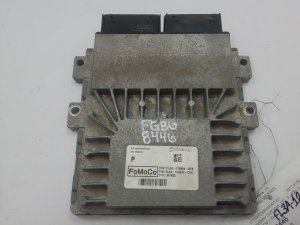
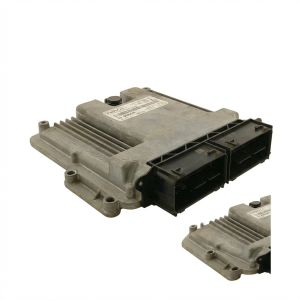
- Cruise Control Module (CCM)
(OEM #GD9Z-9E731-AA)— This module can set a U3000:49 code due to a software glitch, as noted in TSB SSM 48049. If reprogramming fails, the module itself may need replacement. The TSB causal part is listed as 9E731.
Trusted brands: Motorcraft
OEM price range: $240-$400
Aftermarket price range: $150-$300 - Steering Effort Control Module (SECM)
(OEM #HU5Z-14B561-C)— This module can set a U3000:49 code, as documented in TSB SSM 47854. While often a software/reset issue, a persistent code may indicate module failure. Note: This module is often part of a larger assembly and may not be sold separately from the steering column or rack.
Trusted brands: Motorcraft
OEM price range: $215-$425
Aftermarket price range: N/A
Technical Service Bulletins (TSBs) & Recalls
- SSM 48049: Addresses DTC U3000:49 in the Cruise Control Module (CCM) causing collision warning/adaptive cruise fault messages on vehicles built on or before 19-Oct-2017. The specified fix is to reprogram the CCM.
- SSM 47854: Addresses DTC U3000:49 setting in the Steering Effort Control Module (SECM) with no other codes. The fix is to perform the 'SASM Module Reset' routine using the Ford IDS scan tool.
Platform-Specific Known Issues
- A known software issue in the Cruise Control Module (CCM) on vehicles built on or before Oct 19, 2017, can cause "Collision Warning Not Available" messages and store DTC U3000:49. The fix is reprogramming the CCM per TSB SSM 48049.
- A known issue can cause DTC U3000:49 to set in the Steering Effort Control Module (SECM) with no other codes present. TSB SSM 47854 directs technicians to perform a 'SASM Module Reset' rather than replace parts.
- An owner of a 2017 Continental in Lithuania reported a persistent U3000 code in the SECM after a minor accident, which eventually led to the steering wheel locking during a sharp turn. This highlights the potential severity of an unaddressed SECM fault.
Mechanic-Grade Diagnostic Values
- Power supply to affected control module (e.g., PSCM, CCM) — expected: 12V+ (Battery Voltage) with key on. Failure: Low or no voltage indicates a wiring or fuse issue upstream of the module.
- Ground circuit integrity at module connector — expected: < 100 millivolts (mV). Failure: A higher reading indicates a poor ground connection, which can cause a module to set internal fault codes.
Hidden / Shadow Codes Worth Checking
- U3000:49: Internal Electronic Failure. This is the most common suffix for this vehicle, cited in TSBs for both the CCM and SECM. (see via Ford IDS/FDRS, FORScan, or other professional-grade scan tool capable of reading manufacturer-specific codes.)
- U3000:96: Component Internal Failure. On other Ford platforms, this suffix in the PSCM has pointed to a mandatory module replacement. (see via Ford IDS/FDRS, FORScan, or other professional-grade scan tool.)
- U3000:42: General Memory Failure. On some Ford models, this can be set by the Audio Control Module (ACM) during a self-test without a true fault. (see via Ford IDS/FDRS, FORScan, or other professional-grade scan tool.)
Scan Tool Commands That Help
- Ford IDS/FDRS or FORScan: SASM Module Reset — This is the specific fix mandated by TSB SSM 47854 when a lone U3000:49 code is present in the Steering Effort Control Module (SECM). The path is typically Toolbox > Chassis > Steering > Adaptive Front Steering > SASM Module Reset.
- Ford IDS/FDRS: Module Reprogramming (CCM) — This is the fix mandated by TSB SSM 48049 for a U3000:49 in the Cruise Control Module (CCM) on vehicles built before Oct 19, 2017.
- Ford IDS/FDRS or FORScan: CCM Calibration — This procedure is required after replacing the Cruise Control Module (CCM) to correctly aim the radar sensor. Failure to calibrate can cause the system to be inoperative and may set faults.
Real Owner Repair Stories
- Hands On Auto Training (YouTube) (Ford Transit (demonstrates Ford diagnostic principles)) — Ignition would not turn on (invalid power mode), U3000:49 code stored in the Body Control Module (BCM).
❌ Tried (didn't work) Replacing and reprogramming the Body Control Module (BCM) did not fix the issue; the code returned after a few key cycles.
✅ What actually fixed it The root cause was a shorted wire in the driver's door harness. The short corrupted the power mode signal to the BCM, causing it to incorrectly set the U3000:49 internal fault code. Repairing the harness resolved all symptoms.
OEM Part Supersession History
HU5Z-14B561-A, HU5Z-14B561-B→HU5Z-14B561-C— Part revision by manufacturer.
Model Year Variations Within This Range
- 2017-2018: For vehicles built on or before October 19, 2017, a U3000:49 code in the Cruise Control Module (CCM) is addressed by a software update per TSB SSM 48049. Vehicles built after this date likely have the updated software from the factory.
Helpful Videos


We Have This Part in Stock

The information in this article is provided for general reference and educational purposes only. Vehicle specifications, procedures, and part compatibility can vary by production date, trim level, and region. Always consult your vehicle's factory service manual and verify part numbers before purchasing or performing repairs. Safety-critical components such as airbags, seat belts, and braking systems should be installed by a qualified professional.
- Lincoln CONTINENTAL:
- 🧭 Diagnostic Flowchart
- 🎬 Helpful Videos
- 🛍️ Shop This Part
- What's Unique About the 2017-2019 Lincoln CONTINENTAL
- Symptoms You May Notice
- Most Likely Causes
- Rare But Worth Checking
- Diagnosis Steps
- Parts You'll Likely Need
- Technical Service Bulletins (TSBs) & Recalls
- Platform-Specific Known Issues
- Mechanic-Grade Diagnostic Values
- Hidden / Shadow Codes Worth Checking
- Scan Tool Commands That Help
- Real Owner Repair Stories
- OEM Part Supersession History
- Model Year Variations Within This Range
- 🎟️ Get 5% Off