

U3000 on 2011-2015 Lincoln MKX: Control Module Fault Causes and Fixes
Code U3000 on a 2011-2015 Lincoln MKX signifies an internal failure in one of its many electronic modules. The most common culprits are the ABS module, Remote Function Actuator (RFA), or a weak battery. Diagnosis requires a professional scan tool to identify the specific module and suffix code (e.g., U3000:49) before any parts are replaced. Always test the battery first, as low voltage is a frequent trigger.
- U3000 is a generic code. You MUST use a high-level scan tool to find out which module is at fault and what the two-digit suffix is.
- The most likely causes on a 2011-2015 MKX are a failed ABS module, a failed Remote Function Actuator (RFA) module, or simply a weak battery.
- If you experience sudden heavy steering, stop driving and have the vehicle checked for Safety Recall 15S18, as it may apply.
- Do not replace any modules without a specific diagnosis. Many modules require expensive programming by a dealer or specialist after installation.
What's Unique About the 2011-2015 Lincoln MKX
For this generation of Lincoln MKX and its Ford Edge counterpart, the U3000 code can point to several distinct and well-documented issues in different modules. Unlike a simple sensor fault, this code often indicates a failure within a complex electronic unit like the ATE MK100 ABS module or the Remote Function Actuator (RFA) module. Additionally, this vehicle's era saw Ford issue recalls for similar platforms (like the MKT, built in the same plant) due to Power Steering Control Module (PSCM) faults that could cause a loss of steering assist, making any steering-related warnings with this code a serious concern.
Symptoms You May Notice
- Illumination of the ABS, traction control, or 'Service Brakes' warning lights.
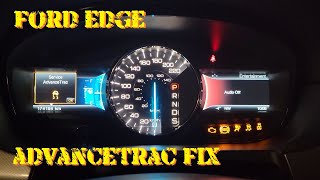
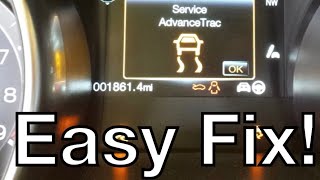
- A 'Service AdvanceTrac' message in the instrument cluster.
- Loss of power steering assist, making the wheel hard to turn, especially at low speeds.
- A 'Power Steering Assist Fault' message in the instrument cluster.
- Issues with remote keyless entry or the anti-theft system.
- Multiple, seemingly unrelated warning lights on the dashboard.
- Replacing a single wheel speed sensor when the U3000 code indicates a failure of the entire ABS control module.
- Replacing the Powertrain Control Module (PCM) when the fault lies in a body or chassis module like the ABS or RFA.
- Condemning the ABS module before thoroughly testing the 12V battery and charging system.
Most Likely Causes
- ABS Control Module Internal Failure 🔴 High Probability → Shop ABS Control Module Owner complaints and forum discussions for both the MKX and its platform-mate Ford Edge point to failures of the ABS module, specifically with a U3000:49-68 code. The ATE MK100 ABS unit used in many Fords of this era is known to have internal electronic and hydraulic failure issues.
How to confirm: Scan the ABS module with a Ford-specific scan tool. The presence of DTC U3000 with a :49 suffix within the ABS module points to an internal failure. The '-68' status byte indicates it was a past fault, which could mean it's intermittent or was triggered by low voltage.
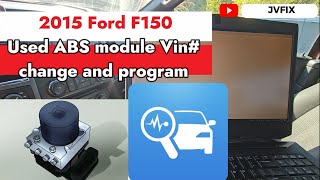
Typical fix: Replace the ABS control module and hydraulic unit. 🎬 Watch this step-by-step guide on replacing the ABS module. The new module will require programming to the vehicle's VIN and a PMI (Programmable Module Installation) procedure, followed by a brake system bleed and IVD Initialization.
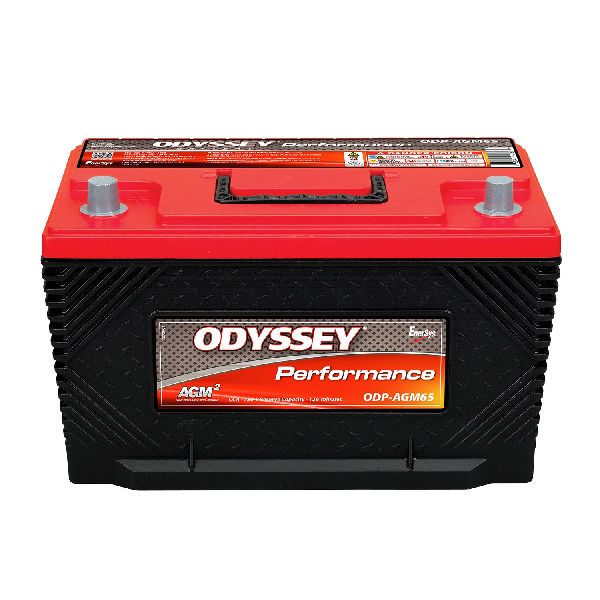
Est. part cost: $400-$1200 - Weak or Failing 12V Battery 🟡 Medium Probability → Shop Vehicle Battery Modern vehicles with many electronic modules are highly sensitive to voltage. A weak battery can cause modules to temporarily malfunction during startup and set spurious internal fault codes. There are documented cases on the Ford Edge platform where U3000:49 and ABS/AdvanceTrac warnings were resolved simply by replacing an old battery.
How to confirm: Test the 12V battery with a digital battery tester that can measure its health under load, not just its static voltage. Any reading below 12.4V at rest, or poor performance on a load test, is suspect.
Typical fix: Replace the 12V battery and reset the Battery Management System (BMS) using a scan tool to ensure proper charging.
Est. part cost: $200-$400 - Remote Function Actuator (RFA) Module Failure 🟡 Medium Probability → Shop Keyless Entry Module The factory service manual for the 2011 MKX contains a specific diagnostic procedure for DTC U3000:49 in the RFA module, indicating it's a known potential failure.
How to confirm: Scan the RFA module with a Ford-specific scan tool. If DTC U3000:49 is present and does not clear, or returns immediately, the module has failed its self-test.
Typical fix: Install a new RFA module. The new module must be programmed for the passive anti-theft system (PATS). Additionally, the factory 5-digit keypad code must be configured from the Smart Junction Box (SJB) into the new RFA module to prevent a U2100:55 DTC.
Est. part cost: $250-$500 - Power Steering Control Module (PSCM) Fault ⚪ Low Probability → Shop Power Steering Control Module Ford issued Safety Recall 15S18 for a PSCM motor position sensor fault on 2011-2013 models on the same platform (Flex/MKT) built at the same Oakville plant. While the MKX was not explicitly named, the shared architecture, build location, and components make it a possible point of failure.
How to confirm: Scan the PSCM for DTCs. Check the vehicle's VIN against Ford's recall database for Safety Recall 15S18 or extended warranty 15N01. Symptoms include a sudden loss of steering assist.
Typical fix: If the vehicle is part of the recall, a dealer will reprogram the PSCM or replace the entire steering gear assembly at no charge. If not covered, the PSCM or steering gear may need to be replaced.
Est. part cost: $0 (if recall applies) - $1500+
Rare But Worth Checking
- Wiring Harness or Connector Issues:
Diagnosis Steps
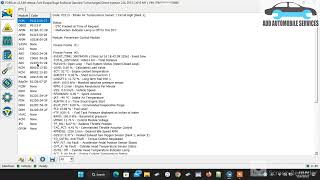
- Connect a professional-grade scan tool capable of reading manufacturer-specific codes from all vehicle modules (e.g., FORScan, Ford IDS).
- Perform a full vehicle DTC scan to identify which module(s) are storing the U3000 code.
- Record the full DTC, including the two-digit suffix and status byte (e.g., U3000:49-68).
- CRITICAL: Test the 12V battery's state of health under load. A weak battery must be replaced and the BMS reset before any further diagnosis.
- Check for any parasitic battery drain that could be causing the low voltage condition.
- If the code is in the ABS module, use a multimeter to test power and ground at the C135 connector. Check for >10V at the power pins and <5 ohms resistance to ground at the ground pins.
- Inspect the primary ground point for the ABS module, G105, located at the left front of the engine compartment, for corrosion or looseness.
- If the code is in the RFA module, check for issues with keyless entry or vehicle starting. Follow the service manual procedure for RFA replacement if the code persists.
- If the code is in the PSCM and symptoms include heavy steering, check for applicability of Safety Recall 15S18.
- Inspect the wiring and connector at the faulting module for any visible damage or corrosion.
- If a module is replaced, ensure it is properly programmed to the vehicle's VIN and configuration using a tool like Ford's IDS/FDRS or FORScan.
Parts You'll Likely Need
- ABS Control Module and Pump Assembly
(OEM #DT4Z-2C219-B (for models w/o adaptive cruise, from 01/28/2011))— A common point of failure on this platform, leading to U3000:49-68 and various brake system warnings. This part number supersedes CT4Z-2C219-A and DT4Z-2C219-A.
Trusted brands: Motorcraft, ATE
OEM price range: $800-$1200
Aftermarket price range: $300-$700 (Remanufactured) - Remote Function Actuator (RFA) Module
(OEM #BA1T-15604-AP (example, verify by VIN))— Specifically identified in the service manual as the fix for a persistent U3000:49 code in that module. Requires programming.
Trusted brands: Motorcraft
OEM price range: $250-$500
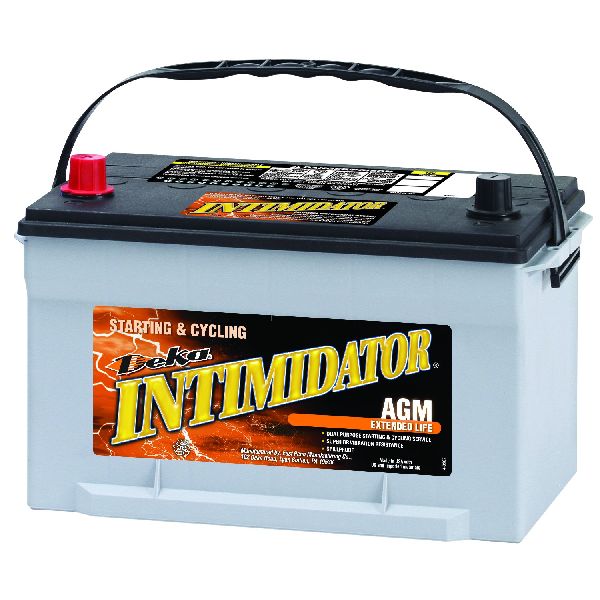
Aftermarket price range: $100-$250 (Used) - AGM 12V Battery
(OEM #BXT-65-AGM)— A weak battery is a frequent cause of spurious electronic fault codes on modern Ford/Lincoln vehicles and has been confirmed to cause U3000:49 on this platform.
Trusted brands: Motorcraft, Interstate, DieHard
OEM price range: $250-$400
Aftermarket price range: $200-$300
Related Codes That Often Appear With This One
- U3000:49 — This is a common suffix for 'Internal Electronic Failure' and is specifically cited in service information and owner complaints for the RFA and ABS modules.
- U0401-68 — This code for 'Invalid Data Received from ECM/PCM' can appear with U3000:49 when a module fault occurs, sometimes triggered by a weak battery.
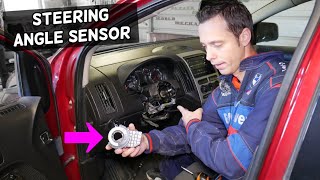
- P193C — This code for 'Steering Wheel Angle Signal' often appears alongside an ABS module fault, as the ABS module uses this data for stability control calculations.
Technical Service Bulletins (TSBs) & Recalls
- SSM 49684: Notes that on some 2021 F-150s, U3000:49 in the IPMA may not clear without a specific 'Reset Learned Values' procedure in the Ford diagnostic software, highlighting that clearing codes isn't always straightforward.
- TSB 23-2146: Details how U3000:49 in the IPMA on 2021-2023 F-150s can be caused by a poor coaxial cable connection between the camera and module, demonstrating a wiring-related cause for this code.
- SSM 51226: Shows that low battery voltage (below 8v) during startup can log a U3000 code in the PSCM on newer F-150s, reinforcing the battery-as-a-cause theory.
Platform-Specific Known Issues
- Confirmed ABS Module Failure on 2013 MKX: → Shop ABS Control Module A complaint filed for a 2013 Lincoln MKX with 92,109 miles reported the 'Service Brakes' light and other warnings. A dealer retrieved DTC U3000:49-68 and diagnosed a failed ABS module. At the time of the complaint, the part was on national backorder, suggesting a high failure rate.
- Platform-Mate Ford Edge U3000:49 Fixed by Battery: → Shop Vehicle Battery An owner of a 2013 Ford Edge 3.5L reported that after starting their car, the traction control and ABS lights came on with a 'Service AdvanceTrac' message. The codes pulled were U3000-49 and U0401-68. After initial research suggested a bad module, they tested the battery and found it was bad. Replacing the battery and clearing the codes completely resolved the issue.
- Shared Plant and PSCM Failure Pattern with Recalled Models: Ford Safety Recall 15S18 was issued for the 2011-2013 Lincoln MKT for a Power Steering Control Module (PSCM) fault causing loss of power steering. The MKT was built in the same Oakville, Ontario plant as the MKX during the same time period (2010-2012), suggesting a potential for shared component or manufacturing issues even though the MKX was not officially included in the recall.
Mechanic-Grade Diagnostic Values
- ABS Module (C135) Power Supply Voltage — expected: > 10 Volts. Failure: Voltage below 10V indicates a problem with the power supply circuit or fuse (BJB Fuses #5, #43, #92 on Edge platform).
- ABS Module (C135) Ground Circuit Resistance — expected: < 5 Ohms. Failure: Resistance greater than 5 ohms indicates a poor ground connection at G105 or a fault in the ground circuit wiring.
- Passive Wheel Speed Sensor Resistance — expected: 800 - 1700 Ohms. Failure: A reading outside this range, or an open/short circuit, indicates a failed sensor.
- Passive Wheel Speed Sensor AC Voltage Output — expected: > 100 millivolts (AC) while spinning the wheel. Failure: No AC voltage signal while the wheel is spinning points to a faulty sensor or reluctor ring issue.
Hidden / Shadow Codes Worth Checking
- U3000:49-68: Indicates an Internal Electronic Failure (:49) that was previously set but is not currently active (-68). This often points to an intermittent fault, such as one triggered by a low voltage event during startup. (see via Ford IDS, FORScan, or other professional-grade scan tools that can read manufacturer-specific status bytes.)
- U3000:49-28: Indicates an Internal Electronic Failure (:49) that is present at the time of request but was previously cleared (-28). This suggests a hard, persistent fault within the module. (see via Ford IDS, FORScan, or other professional-grade scan tools.)
Scan Tool Commands That Help
- Ford IDS / FORScan: Programmable Module Installation (PMI) — When installing a new or used ABS module. This function copies the As-Built configuration data from the original module (if it can still communicate) to the replacement module.
- FORScan: Load Factory As-Built Data — When the original ABS module is completely dead and cannot be read. This function downloads the vehicle's original configuration from Ford's servers using the VIN and writes it to the replacement module.
- Ford IDS / FORScan: IVD Initialization / Longitudinal Sensor Calibration — After replacing and programming the ABS module. This calibrates the yaw rate and accelerometer sensors for the stability control system, which is required for the system to function correctly.
- FORScan: ABS Service Bleed — After replacing the ABS hydraulic unit or if air has entered the ABS pump. This procedure cycles the internal pump and valves to purge trapped air from the hydraulic circuits.
Wiring & Ground Locations
- G105 — Left front of the engine compartment.. This is a primary ground point for the Anti-lock Brake System (ABS) module. A corroded or loose connection here can cause low voltage, communication errors, and trigger a U3000 code.
- C135 — The main electrical connector at the ABS module, located behind the battery and under the brake booster.. This is where all power, ground, and communication signals for the ABS module are routed. Pinpoint voltage and resistance tests are performed here to confirm the integrity of the module's circuits before condemning the part.
- Engine Compartment Fuse Box (BJB) — Located in the engine compartment on the driver's side, near the battery.. This box contains the primary power fuses for the ABS module and pump. On the related Ford Edge platform, these are fuses #5, #43, and #92.
- G200 — Lower left 'A' pillar, inside the passenger cabin.. This is a major interior ground point for multiple modules. While not the primary ground for the ABS module, a fault here can cause widespread communication issues on the CAN bus.
Real Owner Repair Stories
- Reddit user on r/FordEdge (2013 Ford Edge SEL, 163,989 miles) — Intermittent ABS, brake, and Service AdvanceTrac lights on the dash. Codes P193C-00 and U3000-49 present.
❌ Tried (didn't work) Mechanic cleared steering wheel angle code, but lights returned., Driving the vehicle, as the symptoms were intermittent and braking felt normal.
✅ What actually fixed it The user was advised by other owners to check the ABS module connector for corrosion and to check all chassis grounds before paying for a full module replacement. Another user suggested checking the battery, as low voltage is a common cause. The final fix was not posted, but the diagnostic path highlights common community-sourced solutions beyond simple module replacement. - Ford Edge Forum user 'tuxnet' (2014 Ford Edge Limited) — ABS, ACC, and AdvanceTrac system warnings. FORScan showed ABS DTC U3000:49-68 (Internal Electronic Failure, previously set).
❌ Tried (didn't work) Replacing the 12V battery did not resolve the issue.
✅ What actually fixed it The owner noted that since the brakes functioned normally (hydraulically), the issue was likely confined to the electronic portion of the ABS module. The final fix was to replace only the electronic control module (Part DT4Z-2C219-B) instead of the entire expensive hydraulic assembly, which resolved the electronic fault code. This highlights that the module can often be serviced in two separate parts.
OEM Part Supersession History
CT4Z-2C219-A, DT4Z-2C219-A→DT4Z-2C219-B— Standard part revision and update by the manufacturer.
Heads up: This part is for vehicles without adaptive cruise control. Using the wrong module will result in configuration errors and DTCs.
Model Year Variations Within This Range
- 2011: A mid-year part change occurred for the ABS control module. Vehicles built from January 28, 2011, use a different part number (DT4Z-2C219-B and its predecessors) than those built before that date. Verifying the build date is critical when sourcing a replacement part.
Diagnostic Flowchart
Used vs. New Parts: Buying Guide for This Vehicle
When a used part is the smart pick: For the ABS module, a used part from a reputable salvage yard can be a cost-effective option, but ONLY if the part numbers match exactly and you have access to a scan tool like FORScan or Ford IDS to perform the programming. Given the high cost of a new OEM module, this is a common and viable repair path for advanced DIYers or independent shops.
Donor-vehicle mileage cap: roughly under 100000 miles for the part to have meaningful remaining life.
What to inspect on the donor part:
- Verify the part number on the used module is an exact match to the original.
- Source from a vehicle that was not involved in a front-end collision.
- Inspect the connector pins for any signs of corrosion, moisture, or damage.
- If possible, get the VIN of the donor vehicle to download its original As-Built data as a backup.
OEM-only on this vehicle (don't cheap out):
- While used OEM is an option, it is strongly recommended to use either new OEM (Motorcraft) or a used OEM part for the ABS module. Avoid remanufactured units from certain brands due to high failure rates reported on forums.
Aftermarket brands forum-validated for this vehicle:
- ATE (Original Equipment Manufacturer)
Brands owners have reported issues with on this vehicle:
- Cardone (Remanufactured)
- Dorman (Remanufactured)
Real Owner Stories
Aggregated from forums and TSBs cited above. Mileages and costs reflect what owners reported in those sources.
2013 Lincoln MKX — 92109 miles
Symptoms: The 'Service Brakes' light and other warnings appeared on the dashboard.
What fixed it: A dealer retrieved DTC U3000:49-68 and diagnosed a failed ABS module. The owner noted the replacement part was on national backorder.
Source hint: carcomplaints.com complaint for a 2013 Lincoln MKX
2013 Ford Edge 3.5L
Symptoms: After starting the car, the traction control and ABS lights came on with a 'Service AdvanceTrac' message.
What fixed it: After initial research pointed to a bad module, the owner tested the battery and found it was bad. Replacing the battery and clearing the codes completely resolved the issue.
Source hint: fordedgeforum.com thread titled 'U3000-49 and U0401-68 code fix - replace battery'
Related OBD-II Codes
Frequently Asked Questions
My 2013 MKX has a 'Service Brakes' light and code U3000:49. Is this a common failure?
I have a 'Service AdvanceTrac' message and a U3000 code. Should I replace the ABS module right away?
My power steering suddenly became very heavy. Could this be related to a U3000 code?
What does the ':49-68' part of the U3000 code mean on my Lincoln MKX?
My keyless entry isn't working and I have a U3000 code. Are these issues connected?
If the ABS module is the cause of my U3000 code, what is involved in the repair?
Helpful Videos
We Have This Part in Stock

The information in this article is provided for general reference and educational purposes only. Vehicle specifications, procedures, and part compatibility can vary by production date, trim level, and region. Always consult your vehicle's factory service manual and verify part numbers before purchasing or performing repairs. Safety-critical components such as airbags, seat belts, and braking systems should be installed by a qualified professional.
- Lincoln MKX:
- 🧭 Diagnostic Flowchart
- 🎬 Helpful Videos
- 🛍️ Shop This Part
- What's Unique About the 2011-2015 Lincoln MKX
- Symptoms You May Notice
- Most Likely Causes
- Rare But Worth Checking
- Diagnosis Steps
- Parts You'll Likely Need
- Related Codes That Often Appear With This One
- Technical Service Bulletins (TSBs) & Recalls
- Platform-Specific Known Issues
- Mechanic-Grade Diagnostic Values
- Hidden / Shadow Codes Worth Checking
- Scan Tool Commands That Help
- Wiring & Ground Locations
- Real Owner Repair Stories
- OEM Part Supersession History
- Model Year Variations Within This Range
- Used vs. New Parts: Buying Guide for This Vehicle
- Real Owner Stories
- 2013 Lincoln MKX — 92109 miles
- 2013 Ford Edge 3.5L
- Related OBD-II Codes
- Frequently Asked Questions
- 🎟️ Get 5% Off