

U3000 on 2016-2018 Lincoln MKX: Control Module Fault Causes and Fixes
U3000 on a 2016-2018 Lincoln MKX indicates an internal fault in a specific control module. The fix depends entirely on which module set the code—common culprits are the Steering, Cruise Control, or SYNC modules. Diagnosis requires a high-level scan tool, and the solution is often a software update or module replacement. Before any complex repairs, checking for a weak battery is crucial, as low voltage is a very common trigger for this code.
- U3000 is a generic 'Control Module' fault; the first diagnostic step is to identify WHICH module stored the code.
- For the 2016-2018 MKX, this code is commonly found in the steering, cruise control, or SYNC modules.
- Many U3000 issues on this vehicle are resolved with a software update from a Lincoln dealer, not by replacing parts.
- A fault in the steering (SECM) or cruise control (CCM) modules represents a safety issue and should be addressed immediately.
- DIY repair is not recommended as it requires specialized tools for diagnosis and module programming.
What's Unique About the 2016-2018 Lincoln MKX

On this generation of Lincoln MKX and its Ford Edge counterpart, the U3000 code is well-documented by the manufacturer across several unrelated systems. Unlike vehicles where this code might point to a simple wiring or power issue, on the MKX it frequently indicates a known software glitch or internal module fault for which Lincoln has issued specific repair instructions via Technical Service Bulletins (TSBs). The fix is rarely a simple part swap and often requires a dealership-level software reflash of the affected module or a specific reset procedure. Numerous owner reports confirm that a failing battery can also trigger these faults, making battery health a primary diagnostic check.
Diagnostic Flowchart

Tap your situation to follow the diagnostic path that matches what you're seeing on this vehicle.
Symptoms You May Notice

- "Adaptive/active steering fault" message in the instrument cluster.
- Steering feels heavier than normal or requires more effort.
- "Collision Warning Not Available" message.
- "Adaptive Cruise Fault" message.
- Inoperative adaptive cruise control or collision warning systems.
- Illuminated ABS or traction control warning lights.
- SYNC 3 screen is black, unresponsive, or reboots.
- In some cases, particularly with the SYNC (APIM) or Battery Energy Control Module (BECM), there may be no noticeable symptoms.
- Replacing a module without first checking for software updates. Many U3000 issues on this platform are resolved with a reflash.
- Replacing the steering rack or other mechanical parts when the fault is purely electronic within the SECM.
- Replacing the APIM module when TSBs suggest simply clearing a phantom code is the correct first step.
- Overlooking a weak or aging 12V battery as the root cause of the electronic fault code.
Most Likely Causes

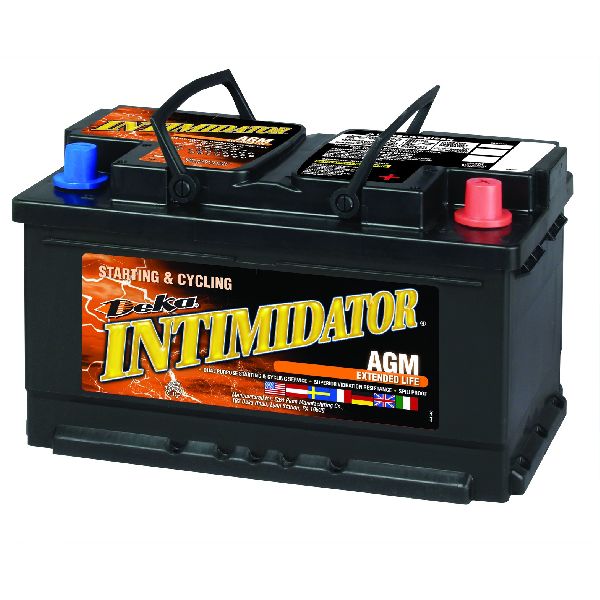
- Low Battery Voltage 🟡 Medium Probability → Shop Vehicle Battery Modern vehicles with 30+ control modules are extremely sensitive to voltage fluctuations. A weak or failing battery can cause various modules to report internal errors spuriously during startup. This is a widely reported cause on owner forums for the MKX and its platform-mate, the Ford Edge.
How to confirm: Test the battery's health, including its state of charge and ability to hold a load. A resting voltage below 12.4V is a red flag. Check for corroded terminals or loose connections. Many owners report issues disappearing after replacing a 3-4 year old original battery.
Typical fix: Recharge or replace the vehicle's 12V AGM battery. After replacement, the Battery Management System (BMS) should be reset using a scan tool.
Est. part cost: $200-$400 for a new AGM battery. - Steering Effort Control Module (SECM) Internal Fault or Software Issue 🔴 High Probability This is a documented issue with multiple TSBs issued by Ford/Lincoln for the 2016-2018 MKX. The fault can be triggered by software anomalies or internal hardware failure.
How to confirm: Scan the SECM with a Ford-specific scan tool. If U3000:49 is stored alone, TSB SSM 47854 applies. If U3000 is stored with other codes (C2003, B137F, B1380, U210A, U2000), TSB SSM 47235 points to a hardware failure.
Typical fix: If only U3000:49 is present, perform the 'SASM Module Reset' routine using Ford's IDS software per TSB SSM 47854. If other codes are present, the SECM (which is located within the steering wheel) requires replacement per TSB SSM 47235.
Est. part cost: $400-$700 for a new SECM. - Cruise Control Module (CCM) Software Anomaly 🟡 Medium Probability → Shop Cruise Control Module TSB SSM 48049 specifically addresses this issue for the 2016-2018 MKX, indicating a software-level problem rather than a hardware failure for vehicles built on or before Oct 19, 2017.
How to confirm: A scan of the CCM reveals DTC U3000:49, and the vehicle displays messages like "Adaptive Cruise Fault".
Typical fix: Reprogram the Cruise Control Module (CCM) with the latest software level using a Ford diagnostic tool. This is a labor-only fix that typically takes 1-1.5 hours at a dealership.
Est. part cost: $0 (if only software is needed, labor charges of $150-$300 apply). - Accessory Protocol Interface Module (APIM / SYNC 3) Software Glitch 🟡 Medium Probability → Shop Audio System TSBs SSM 46048 and SSM-45809 identify this as a potential issue where the code may be stored without any customer-facing symptoms.
How to confirm: Scan the APIM and find DTC U3000:04, U3000, B108E, or U1A00 stored, often with no reported infotainment system problems.
Typical fix: If no symptoms are present, the TSB recommends simply clearing the DTCs. If issues persist, a module software update (or master reset via the touchscreen) may be required.
Est. part cost: $0 (if only clearing codes or software is needed, labor charges may apply).
Rare But Worth Checking
- Instrument Panel Cluster (IPC) Internal Fault: → Shop Instrument Cluster
Diagnosis Steps
- Test the vehicle's 12V AGM battery and charging system FIRST. Ensure voltage is stable and above 12.4V at rest. A weak battery is a very common cause of spurious module faults and should be ruled out before proceeding.
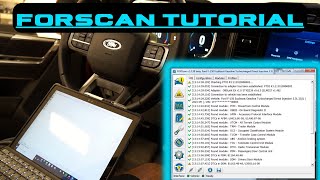
- Perform a full vehicle network scan using a high-level diagnostic tool (like Ford IDS/FDRS or FORScan) to determine exactly which module(s) are storing the U3000 code.
- Record the full DTC, including the two-digit suffix (e.g., :49, :04). This is critical for diagnosis.
- If the code is in the Steering Effort Control Module (SECM): check for other codes. If U3000 is with C2003, B137F, B1380, U210A, or U2000, TSB SSM 47235 recommends replacing the SECM. If U3000:49 is alone, perform the 'SASM Module Reset' procedure using the scan tool as directed by TSB SSM 47854.
- If the code is U3000:49 in the Cruise Control Module (CCM), TSB SSM 48049 advises reprogramming the module with the latest software.
- If the code is U3000:04 in the Accessory Protocol Interface Module (APIM), and there are no symptoms, clear the code as per TSB SSM 46048.
- If a module requires replacement, it will need to be programmed and calibrated to the vehicle after installation.
Parts You'll Likely Need
- 12V AGM Battery
(OEM #BAGM-48H6-760 or similar)— A weak or failing battery is a frequent root cause of spurious U3000 codes across various modules.
Trusted brands: Motorcraft, Interstate, Duralast
OEM price range: $250-$350
Aftermarket price range: $200-$300 - Steering Effort Control Module (SECM)
(OEM #DG9Z-14B561-A (Service Part #). Note: The number on the part itself may be an engineering number like DG9T-14B561-AC.)— TSB SSM 47235 calls for replacement of this module when U3000 is present with a specific set of other codes.
Trusted brands: Motorcraft
OEM price range: $400-$700
Aftermarket price range: $300-$500 (Used) - Software Reprogramming Service — The most common fix for U3000 in the Cruise Control Module (CCM) per TSB SSM 48049 is a software update, not a hardware replacement.
OEM price range: $150-$300 (Labor)
Aftermarket price range: N/A
Related Codes That Often Appear With This One
- C2003 — When seen with U3000 in the SECM, it points toward module replacement per TSB SSM 47235.
- B137F — Another code that, when paired with U3000 in the SECM, indicates a module replacement is necessary per TSB SSM 47235.
- U210A — Appears with U3000 and other codes in the SECM, signaling a need for module replacement per TSB SSM 47235.
- U3000:49 — This specific suffix indicates an 'Internal Electronic Failure' and is the variant cited in TSBs for both the SECM and CCM modules.
Technical Service Bulletins (TSBs) & Recalls
- SSM 48049: Addresses U3000:49 in the Cruise Control Module (CCM) causing adaptive cruise/collision warning faults, fixed by reprogramming.
- SSM 47854: Pertains to U3000:49 in the Steering Effort Control Module (SECM) and provides a specific 'SASM Module Reset' procedure in the Ford IDS tool to eliminate the DTC.
- SSM 47235: Recommends replacing the SECM when U3000 is stored along with other specific DTCs like C2003, B137F, etc.
- SSM 46048: Advises clearing DTC U3000:04 in the APIM (SYNC 3) if no other symptoms are present.
- SSM-45809: Also notes U3000 as a possible code in the SYNC 3 APIM.
Platform-Specific Known Issues
- The 2016-2018 Lincoln MKX has multiple manufacturer-documented instances where a U3000 code is set due to software issues in various modules, including those for adaptive cruise control, steering, and the SYNC 3 system. A diagnostic approach that starts with checking for software updates is often the most effective path.
Hidden / Shadow Codes Worth Checking
- U3000:96: Internal Component Failure. When this DTC is present in the Steering Effort Control Module (SECM), it indicates a non-recoverable internal fault. (see via Ford Integrated Diagnostic System (IDS) or equivalent advanced scan tool like FORScan. This code specifically points to mandatory module replacement.)
Scan Tool Commands That Help
- Ford IDS: SASM Module Reset — Per TSB SSM 47854, this routine is the specific fix for a lone U3000:49 DTC in the Steering Effort Control Module (SECM). The path is Toolbox > Chassis > Steering > Adaptive Front Steering > SASM Module Reset.
- Ford IDS/FDRS: CCM Reprogramming — Used to load the latest software into the Cruise Control Module (CCM) to fix DTC U3000:49 as per TSB SSM 48049.
- Ford IDS/FDRS: CCM Calibration — After replacing or reprogramming the Cruise Control Module (CCM), a calibration procedure must be performed. This involves a scan tool command followed by driving the vehicle for several minutes to allow the radar to align.
- FORScan: PSCM Module Configuration/Reset — Advanced users can use FORScan to access the Power Steering Control Module (PSCM) to reset adaptations or even reprogram As-Built data if the module has been replaced with a used unit.
Wiring & Ground Locations
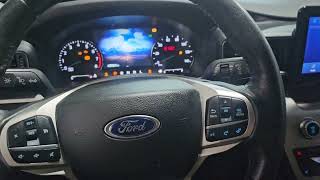
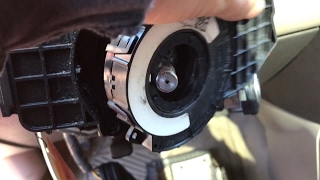
- Steering Effort Control Module (SECM) — The SECM is located within the steering wheel itself as part of the adaptive steering system components.. This is a primary source of U3000 codes. Access requires removing the airbag and steering wheel.
- Cruise Control Module (CCM) — The CCM, which is the radar sensor, is located in the front of the vehicle, typically in the lower grille area on the driver's side.. This module sets U3000:49 when it has a software fault or is misaligned/blocked. Its exposed location makes it vulnerable to minor impacts and debris.
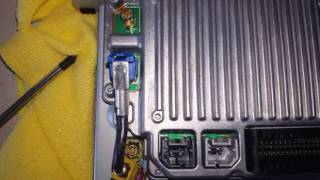
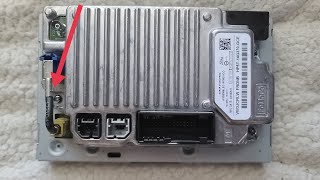
- Accessory Protocol Interface Module (APIM) — The APIM is the silver metal box mounted to the back of the 8-inch SYNC 3 touchscreen display.. This is the brain of the infotainment system. To access it, the trim around the screen and the screen/head unit assembly must be removed using a 7mm socket and trim tools.
- Passenger Compartment Fuse Box — Located under the dashboard to the left of the steering column, behind a trim panel.. Contains fuses for many of the modules that can set a U3000 code, including the APIM and SECM. Checking relevant fuses here is a basic but critical diagnostic step.
Real Owner Repair Stories
- Ford Edge Forum user (2013 Ford Edge 3.5L (sister platform)) — Not specified, but codes U3000:49 and U0401-68 were present.
❌ Tried (didn't work) Initial diagnosis was inconclusive.
✅ What actually fixed it The owner replaced the vehicle's battery. After clearing the codes, the problem did not return after one week of driving. - Ford Edge Forum user (2016 Ford Edge) — Adaptive steering fault message with DTC U3000:49.
❌ Tried (didn't work) The fault appeared intermittently.
✅ What actually fixed it The owner realized their dash cam had been left on, causing a low voltage condition. After charging the battery, the fault cleared and did not return, pointing to low battery voltage as the root cause.
OEM Part Supersession History
Various older versions→DG9Z-14B561-A— This is the current service part number for the Steering Effort Control Module (also called Heated Steering Wheel Module) for this vehicle range.
Heads up: While this part number fits a wide range of Ford/Lincoln vehicles from 2013-2024, it's critical to verify fitment by VIN as internal programming may differ.Original 2016 USB Media Hub→HC3Z-19A387-F (or newer)— The original USB hub in 2016 models does not support Apple CarPlay.
Heads up: If replacing or servicing the APIM on a 2016 model, this USB hub must be upgraded to enable Apple CarPlay functionality. Android Auto works with the original hub.
Model Year Variations Within This Range
- 2016-2017 (built on or before Oct 19, 2017): Vehicles built on or before this date with U3000:49 in the Cruise Control Module (CCM) are specifically addressed by TSB SSM 48049, which calls for a software reprogram. Vehicles built after this date likely have the updated software from the factory.
Helpful Videos
![Avoid Expensive Shop Repairs: DIY Reset the Ford Vehicle Battery Monitoring System [BMS]](https://img.youtube.com/vi/QTtb7rKaZTE/mqdefault.jpg)
Used OEM Parts in Stock
New Aftermarket Parts Available



The information in this article is provided for general reference and educational purposes only. Vehicle specifications, procedures, and part compatibility can vary by production date, trim level, and region. Always consult your vehicle's factory service manual and verify part numbers before purchasing or performing repairs. Safety-critical components such as airbags, seat belts, and braking systems should be installed by a qualified professional.
- Lincoln MKX:
- 🧭 Diagnostic Flowchart
- 🎬 Helpful Videos
- 🛍️ Shop This Part
- What's Unique About the 2016-2018 Lincoln MKX
- Symptoms You May Notice
- Most Likely Causes
- Rare But Worth Checking
- Diagnosis Steps
- Parts You'll Likely Need
- Related Codes That Often Appear With This One
- Technical Service Bulletins (TSBs) & Recalls
- Platform-Specific Known Issues
- Hidden / Shadow Codes Worth Checking
- Scan Tool Commands That Help
- Wiring & Ground Locations
- Real Owner Repair Stories
- OEM Part Supersession History
- Model Year Variations Within This Range
- 🎟️ Get 5% Off