

OBD-II Code U3001: Control Module Improper Shutdown
The Ultimate 2026 Guide to What U3001 Means, Why It Triggers, and How to Fix It for Good
- Code U3001 flags a power supply failure—usually a weak 12V battery—rather than a broken control module.
- Test the 12V battery with a digital load analyzer before replacing any parts; a resting voltage below 12.4V guarantees the battery is failing.
- Perform a Battery Management System (BMS) reset using a scan tool after installing a new battery to prevent the alternator from undercharging and ruining it.
- Measure the main ground cable with a multimeter; a voltage drop exceeding 0.1V (100mV) reveals hidden resistance causing the U3001 code.
- Search NHTSA for Technical Service Bulletins (TSBs) tied to your VIN, as manufacturers like Ford and Land Rover issue specific software updates to resolve U3001.
What Does U3001 Mean?
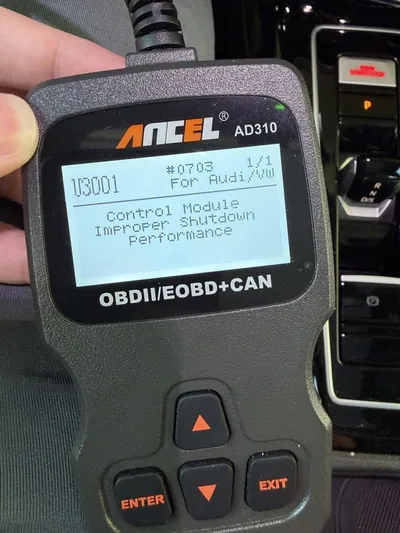
The U3001 code means a vehicle control module failed to shut down correctly the last time the ignition turned off. Instead of powering down in sequence, it lost power abruptly. This is overwhelmingly caused by low battery voltage during startup or shutdown, forcing the module to reset.
Technical definition: SAE/ISO defines U3001 as "Control Module Improper Shutdown Performance." A control module logs this fault when its power-down sequence fails to complete during the previous ignition-off cycle. This triggers when the system voltage supplied to the module drops below a critical threshold (typically 9 volts) for a few seconds during engine cranking or shutdown.
Can I Drive With U3001?
Yes, But With Caution. You can drive, but it carries significant risks. If linked to the Power Steering Control Module (PSCM), you risk a sudden loss of power assist, making the vehicle extremely difficult to steer. If linked to the Electronic Parking Brake (EPB), the brake fails to disengage (stranding you) or fails to engage (risking a roll-away). Driving with a partially engaged EPB destroys the rear brakes, adding $400-$800 in collateral damage. Ignoring the root cause, like a failing alternator, guarantees a no-start condition.
Common Causes

- Weak or Failing 12V Battery (Very Common) — This is the primary cause. Modern vehicles are extremely sensitive to voltage. An aging battery causes a significant voltage drop during the high-load event of engine start-up, triggering the code even if it has enough power to crank the engine.
- Loose or Corroded Battery Terminals/Ground Straps (Common) — A poor connection at the battery terminals or a corroded main chassis ground wire creates high resistance. This interrupts stable power to modules, causing an improper shutdown under load.
- Failing Auxiliary Battery (Start-Stop Systems) (Common) — On vehicles with dual-battery Engine Start-Stop systems (like Chrysler/Jeep), a failing smaller auxiliary battery causes this code. The PCM monitors auxiliary voltage during cranks; if it drops too low, it sets a fault.
- Failing Alternator or Voltage Regulator (Less Common) — A faulty alternator fails to charge the battery, leading to a low state of charge. A failing internal voltage regulator produces excessive AC ripple voltage on the DC system, disrupting sensitive electronics and causing modules to reset.
- Parasitic Battery Drain & Aftermarket Accessories (Less Common) — A component (faulty relay, module failing to 'sleep', or poorly installed aftermarket alarm/stereo) draws current after the vehicle turns off. This slowly drains the battery, leading to a low voltage state that triggers U3001 on the next startup.
- Corrupted Software or Pending Update (Less Common) — A module's software becomes corrupted, or a manufacturer releases an update to make the module less sensitive to minor voltage fluctuations. This is a known issue on Ford and Land Rover models, addressed by TSBs.
- Water Intrusion in Junction Box / Fuse Box (Rare) — On certain vehicles (notably Ford Super Duty trucks), water leaks into the main battery junction box (BJB). This causes corrosion and short circuits that lead to improper module shutdown.
- Faulty Control Module (BCM, PSCM, ABS, etc.) (Rare) — The module itself fails internally. This is rare and must only be considered after exhaustively ruling out all power and ground-related causes.
Symptoms

- Warning Lights on Dash — The Check Engine Light, battery light, or system-specific warnings (e.g., 'Steering Assist Fault', 'Service EPB', 'Service Start-Stop System') illuminate.
- Features Not Working or Inoperative — Functions controlled by the affected module, such as power steering, electronic parking brake, or ABS, disable as a precaution.
- Intermittent Electrical Issues — Random problems occur, like the radio failing to turn off, interior lights staying on, or power steering assist failing temporarily at startup.
- Parasitic Battery Drain (also visible on scanner) — The battery dies overnight or after being parked for a short period because a module fails to turn off and continues drawing current.
- Communication Errors with Scan Tool (scan-tool only — no driver-felt sign) — A scan tool reports it cannot communicate with a specific module immediately after the vehicle starts, indicating the module reset.
Diagnostic Flowchart
Tap your situation to follow the diagnostic path that matches what you're seeing on this code.
Common Fixes & Costs
- Replace 12V Battery & Perform BMS Reset — Parts: $200-$300, Labor: $75-$150, ~1.0 hr book time (DIY)
- Clean or Replace Battery Terminals/Cables/Grounds — Parts: $10-$50, Labor: $50-$100, ~0.8 hr book time (DIY)
- Replace Auxiliary Battery (ESS Systems) — Parts: $100-$180, Labor: $50-$100, ~0.5 hr book time (DIY)
- Replace Alternator — Parts: $300-$600, Labor: $150-$300, ~2.5 hr book time (Intermediate)
- Reprogram or Update Control Module Software — Parts: $0, Labor: $150-$250, ~1.5 hr book time (Professional)
- Replace Control Module (BCM, PSCM, ABS) — Parts: $600-$1200, Labor: $200-$400, ~2.0 hr book time (Professional)
Used vs. New Parts: Buying Guide
When a used part is worth it: For an alternator, a quality remanufactured unit provides the best balance of cost and reliability. Buying a used alternator from a salvage yard is a gamble and only makes sense as a temporary fix on an old vehicle. Buying a used 12V battery is never recommended due to its unknown history.
Donor-vehicle mileage cap: roughly under 60000 miles for the part to have meaningful remaining life.
Donor quality checklist:
- For remanufactured alternators, choose a brand offering a multi-year warranty.
- Verify the part number and amperage rating match your vehicle's original alternator exactly.
- Source used alternators from low-mileage vehicles scrapped for non-electrical reasons.
Decision logic:
- If The part is a 12V battery → Always buy new. The savings from a used battery are not worth the risk of being stranded.
- If The part is an alternator and the vehicle is a daily driver → Buy a new OEM or high-quality remanufactured unit with a good warranty.
- If The part is an alternator, the vehicle is older (>150k miles), and budget is the primary concern → A lower-cost remanufactured unit is acceptable. A used part is a last resort.
Warranty tradeoff: Used/salvage parts typically have a 30-90 day warranty. Remanufactured parts come with a 1-year to lifetime warranty. New OEM parts carry a 1-2 year warranty.
Worst-case if a used part fails: $300-$600 if a used alternator fails shortly after installation, requiring repeat labor costs.
What Happens If You Wait — Timeline
- 0-1 month: Code sets intermittently, often with a specific symptom like a 'Steering Assist Fault' at startup that clears after a restart. The root cause is a weakening battery or loose connection. (MPG impact: 0%% · Added cost: $0)
- 1-3 months: The code becomes persistent. Symptoms like power steering loss happen more frequently. If caused by a failing alternator, it shortens the battery's life. The risk of a no-start condition increases significantly. (MPG impact: 0-1%% · Added cost: $250-$300 (for a new battery damaged by a failing alternator))
- 3-6 months: Cascading problems begin. Chronically low voltage from a bad alternator or parasitic drain stresses all electronic modules. A sudden, non-recoverable loss of power steering poses a serious safety risk. (MPG impact: 1-3%% · Added cost: $400-$1000 (Cost to replace a battery and alternator, or damage to other electronic modules).)
- 6+ months: Catastrophic failure is imminent. Complete alternator failure causes the vehicle to stall while driving. Unstable voltage permanently damages expensive control modules (BCM or ABS). (MPG impact: N/A (Vehicle likely undrivable)% · Added cost: $1500-$5000+ (Cost of multiple module replacements, towing, and potential accident-related repairs))
Cost of Not Fixing It
- 0-1 month: Intermittent electrical issues, potential no-start condition, and risk of sudden power steering loss. A failing alternator damages the battery. (Added cost: $250-$300 (for a new battery killed by a bad alternator))
- 1-6 months: Increased risk of being stranded. A failing alternator damages other sensitive electronic modules due to unstable voltage. An EPB fault destroys rear brake pads and rotors. (Added cost: $400-$1000 (for rear brake job or replacement of damaged modules))
- 6+ months: Cascading electrical failures. A chronically failing charging system stresses all vehicle electronics. Sudden power steering failure leads to an accident. (Added cost: $1500-$5000+ (Cost of multiple module replacements or accident-related repairs))
Diagnosis Steps

- Read All Trouble Codes from All Modules
Use an advanced OBD-II scanner capable of reading codes from ALL modules (ABS, PSCM, BCM). Note which specific module stored U3001 and any related voltage (U3003, P0562) or system-specific (C-series) codes. These point directly to the root cause.
Tools: Advanced OBD-II Scanner (Beginner) - Perform a Professional Battery & Charging System Test
A simple multimeter voltage check is insufficient. A professional digital analyzer load tests the battery to confirm its State of Health (SOH). A healthy battery has a resting voltage of 12.6V or higher; below 12.4V indicates a weak battery. Charging system output must be 13.5-14.7 volts with the engine running.
Tools: Digital Battery Load Tester, Multimeter (Beginner) - Inspect Battery Terminals and Main Grounds
Visually inspect battery terminals for white or greenish corrosion. Ensure terminal clamps are tight and cannot be moved by hand. Follow the main negative battery cable to the chassis and engine block; ensure these connections are clean, free of paint, and tight.
Tools: Wrench set, wire brush (Beginner) - Check for Technical Service Bulletins (TSBs)
Check the NHTSA database for manufacturer TSBs related to code U3001 for your specific VIN. A known software update is often the required fix on Ford and Land Rover models.
Tools: Internet access (Intermediate) - Pro Tip: Perform a Parasitic Draw Test
If the battery and alternator pass but the battery keeps dying, perform a parasitic draw test. Disconnect the negative battery terminal and connect a multimeter in series (10A scale). Wait up to 60 minutes for modules to 'sleep'. A normal draw is below 50 milliamps (0.050A). A reading over 100mA confirms a drain. Pull fuses one by one to isolate the circuit.
Tools: Multimeter with Ammeter function (Advanced) - Pro Tip: Perform a Voltage Drop Test
Set a multimeter to DC Volts. Place the red lead on the negative battery post and the black lead on a known good chassis ground. A reading above 100mV (0.1V) indicates a poor ground connection. For the positive side, test between the positive battery post and the module's power feed pin. A reading over 200mV indicates a power feed issue.
Tools: Multimeter, Wiring Diagram (Advanced) - Pro Tip: Perform an Alternator Ripple Test
Set a multimeter to a low AC voltage scale (e.g., 2000mV AC). With the engine running and electrical loads on, touch the probes to the battery terminals. A reading above 100mV AC (0.1V AC) indicates a failing alternator diode requiring replacement.
Tools: Multimeter with AC Voltage function (Advanced) - Inspect Junction/Fuse Boxes for Water Intrusion
Carefully inspect the main Battery Junction Box (BJB) under the hood for signs of moisture, corrosion, or a poorly fitting cover. A compromised BJB causes this code and multiple electrical faults.
Tools: Flashlight, basic hand tools (Intermediate) - Verify Power and Ground at the Affected Module
Obtain a wiring diagram and check for battery voltage at the flagged module's main power pin and for good ground (less than 0.5 Ohms resistance) at its ground pin. This confirms whether the module is faulty or if there is a wiring break.
Tools: Multimeter, Wiring Diagram (Advanced) - Pro Tip: Check CAN Bus Network Resistance
Disconnect the battery. Use a multimeter to measure resistance between CAN High and CAN Low pins at the OBD-II port (pins 6 and 14). A healthy network reads 60 Ohms. 120 Ohms suggests a terminating resistor is offline. Near 0 Ohms indicates a short circuit.
Tools: Multimeter, OBD-II port pinout diagram (Advanced)
When This Code Triggers (Freeze-Frame Conditions)
- Module Voltage: 9.0-11.5V (During engine crank or immediately after key-off)
- Engine RPM: 0 or < 200 RPM (Event logged at key-off or during a failed start attempt)
- Ignition Status: OFF or CRANK (The fault is logged when the module loses power unexpectedly, not during normal driving)
- Time Since Key-Off: < 5 seconds (Indicates the shutdown sequence was interrupted almost immediately)
Related Codes
- U3000 - Control Module — Seen with U3001, especially with suffix :96. Ford TSBs list U3000:96 and U3001:89 together, indicating an internal component failure within the PSCM triggered by the low voltage event.
- U3003-16 - Battery Voltage - Circuit Voltage Below Threshold — U3001 means a module experienced an improper shutdown. U3003 indicates the module directly detected its supply voltage is below minimum specification. Seeing both guarantees a power supply problem.
- P0562 - System Voltage Low — P0562 is a generic PCM code indicating a general low voltage condition. Seeing P0562 alongside U3001 confirms the root cause is a weak battery or failing charging system.
- C-codes (e.g., C2005, C2006) — On Land Rovers, chassis codes related to parking brake actuators appear with U3001. The C-codes indicate the root cause (a stuck actuator) preventing the ABS module from shutting down correctly.
Climate & Environmental Factors
- Cold Weather: Cold temperatures slow the chemical reactions inside a 12V battery, reducing cranking amperage. A weak battery fails during the first cold snap, causing a large voltage drop that triggers U3001.
- Hot Weather / High Heat: Extreme heat evaporates the battery's internal electrolyte and accelerates lead plate corrosion. This permanently reduces capacity. A heat-damaged battery often fails in winter when cold exposes its diminished performance.
- High Humidity: Humidity accelerates corrosion on battery terminals, ground straps, and fuse box connections. This increased resistance causes intermittent voltage drops and triggers U3001.
How to Talk to a Mechanic About This Code
Say this: "I have a U3001 code, and I want to start with a comprehensive battery and charging system test, including a professional load test and an alternator ripple test. Please do not replace any modules until we have conclusive data showing the power supply system is healthy."
This signals to the shop that you understand the code's causes are related to power supply. It directs them to perform correct, low-cost initial tests and prevents them from jumping to an expensive module replacement.
Avoid saying:
- 'My check engine light is on, can you look at it?'
- 'My power steering is acting weird, just fix it.'
- 'I think I need a new power steering computer.'
Questions to ask before authorizing the repair:
- Can you show me the printout from the digital battery load tester showing its state of health?
- What was the result of the alternator ripple test, measured in millivolts AC?
- If the battery and alternator are good, what was the parasitic draw in milliamps after the car went to sleep?
- If you are recommending a module replacement, can you show me that it is receiving correct voltage and has a good ground?
- Is there a Technical Service Bulletin for this code on my vehicle, and does it involve a software update?
Where to Take It: Dealer vs Independent vs Chain
- Dealer:
Recommended if a known TSB requires a software flash. A good second choice for complex diagnostics if a trusted independent shop is unavailable.
Best for: Vehicles under warranty., Repairs requiring a manufacturer-specific software update or programming identified by a TSB., Complex, brand-specific electrical issues where an independent shop failed.
Downsides: Significantly higher labor and parts costs., Follows rigid diagnostic trees leading to replacing large assemblies instead of smaller components. (Typical cost: +50% vs. baseline) - Independent Shop:
Best fit for most U3001 situations. A good independent shop performs all necessary power supply tests effectively and at a lower cost than the dealer.
Best for: Out-of-warranty vehicles where cost is a factor., Diagnosing the most common causes of U3001 (battery, alternator, connections, parasitic draw)., Building a long-term relationship with a technician.
Downsides: Quality and diagnostic equipment vary greatly; must vet the shop's reputation., Lacks access to the latest manufacturer-only software updates. (Typical cost: +0% vs. baseline) - Chain Shop:
Acceptable for a battery test and replacement. AVOID for any further diagnostics if a new battery doesn't solve the problem.
Best for: Selling you a new battery., Simple, unrelated maintenance like oil changes or tires.
Downsides: Not equipped or trained for in-depth electrical diagnostics beyond a battery test., High pressure to upsell services; misdiagnoses the issue as something more complex., Unable to perform TSB-related software updates. (Typical cost: -10% vs. baseline)
When to Walk Away From the Repair
If the estimated repair cost for the U3001 fault exceeds 40-50% of your car's current private-party value, seriously consider selling or trading it in.
- Car worth $30000, fix is $400: Fix it. A battery and BMS reset on a 2021 Ford F-150 is a routine and necessary repair well below the threshold.
- Car worth $9000, fix is $1200: Fix it. Replacing the EPB actuators on a 2016 Land Rover Discovery Sport is a significant but worthwhile repair to restore safety.
- Car worth $9000, fix is $4500: Walk away. If a shop quotes multiple module replacements and extensive wiring diagnosis approaching 50% of the vehicle's value, it is not an economic repair.
What Scan Tool You Need for This Code
Minimum: A scanner that reads codes from ALL vehicle modules (ABS, BCM, PSCM), not just engine codes. It must support service functions like Battery Management System (BMS) reset and Electronic Parking Brake (EPB) service mode.
A basic $20 code reader will not see the U3001 code, as it is rarely stored in the main engine computer. You must know WHICH module is setting it and perform necessary resets after the repair.
Budget: FORScan with compatible ELM327 adapter (for Ford/Mazda) (~$80) — The most powerful tool for Ford owners. Reads codes from all modules, performs BMS resets, runs PSCM reset procedures specified in TSBs, and reprograms module data.
Mid-range: Autel MaxiCOM MK808 / Foxwell NT510 Elite (~$250-400) — Offers all-module scanning for a wide range of brands. Performs essential service functions like BMS resets and EPB calibration, critical for fixing U3001.
Professional: Autel MS906BT / XTOOL D7S (~$500-1200) — Provides full bidirectional controls, allowing you to command specific components to test function without disassembly. Essential for commanding a module to sleep to confirm parasitic draw.
How to Clear the Code After You Fix It
- Reconnect battery (if disconnected for repair)
- Use an OBD-II scan tool to clear all Diagnostic Trouble Codes (DTCs) from all modules
- Perform a Battery Management System (BMS) reset if the battery was replaced
- Perform a complete drive cycle to allow readiness monitors to run
Drive cycle (~20 minutes): Start with a cold start (engine temp below 122°F). Idle for 2-3 minutes with electrical loads on. Accelerate to 55 mph and hold steady for 3-5 minutes. Coast down to 20 mph without braking. Accelerate again to 55-60 mph and hold steady for 5 minutes. Come to a stop and idle for 1 minute before shutting off the engine.
Readiness monitors affected: Catalyst (CAT), Evaporative System (EVAP), Oxygen (O2) Sensor, EGR System
Before emissions retest: drive at least 50 miles to fully set monitors.
Watch out for:
- Disconnecting the battery will not clear the code from all modules and resets all readiness monitors to 'Not Ready'.
- The U3001 code returns immediately if the underlying power supply issue is not fixed.
- Forgetting to perform a BMS reset after battery replacement causes the code to return and shortens the new battery's life.
Will This Fail Emissions / State Inspection?
Yes — this code typically fails an OBD-II emissions inspection.
- California: A U3001 code causing the Check Engine Light to illuminate results in an automatic smog check failure. After clearing the code, readiness monitors must be set to 'Ready'.
- New York: Any diagnostic trouble code commanding the Check Engine Light on is an automatic failure. 2001 and newer vehicles are only allowed one readiness monitor to be 'Not Ready'.
- Texas: In the 17 counties requiring emissions testing, an illuminated Check Engine Light from a U-code causes the vehicle to fail the OBD portion of the inspection.
Most Commonly Affected Vehicles
- Ford F-150 (2021-2023) — Extremely common issue causing a 'Steering Assist Fault' message. TSBs 51894, 51226, and 50484 point to low voltage during startup. Fix requires a battery replacement, BMS reset, and sometimes a PSCM software update.
- Land Rover Discovery / Range Rover Sport (2014-2018) — Frequently caused by a weak battery or a fault in the Electronic Parking Brake (EPB) system. TSB SSM73905 notes stuck EPB actuators cause the ABS module to log U3001-77.
- Ford Mondeo / Focus / Escape (2015-2020) — This code frequently appears in various Ford models, pointing back to an issue with the battery's state of charge or its connections.
- Chevrolet / GMC Silverado / Sierra (2019-2023) — Appears due to low battery voltage. GM requires a battery registration process with a scan tool to ensure its variable-voltage charging system works correctly after replacement.
- Subaru Outback / Forester / Ascent (2018-2022) — Appears in conjunction with battery drain issues and Auto Start-Stop system problems. The cause is a weak battery failing to support electrical loads during shutdown.
- Volkswagen / Audi ID.4, Tiguan, Passat, A4 (2018-2023) — On VW's electric vehicles, U3001 is triggered by 12V battery issues, not the high-voltage system. A VW Tech Tip states the code requires clearing by cycling 'Transport Mode' with a diagnostic tool.
- Chrysler / Dodge / Jeep Pacifica, Durango, Grand Cherokee (2017-2022) — On models with Engine Start-Stop (ESS), this code is accompanied by P00FD. This points directly to a failure of the secondary auxiliary battery.
- Mazda CX-5, Mazda3, Mazda6 (2016-2021) — Appears in the Power Steering Control Module (PSCM) due to a momentary voltage drop during startup. Perform a comprehensive battery test before suspecting the steering system.
Manufacturer-Specific Notes
- Ford: Ford vehicles set this code in the Power Steering Control Module (PSCM) due to low voltage during startup. TSBs (SSM 51894, 51226) recommend a PSCM software update or reset procedure before replacing hardware.
- Land Rover / Jaguar: U3001 is a symptom of a weak battery or a failing Electronic Parking Brake (EPB) actuator. TSB SSM73905 provides a specific diagnostic path. Resetting the BMS with a scan tool after replacing the battery is mandatory.
- General Motors (GM): The battery must be 'registered' with the Body Control Module (BCM) after replacement. Skipping this leads to improper charging by the variable-voltage alternator, causing U3001 to return.
- Volkswagen / Audi: On 2018+ models, after fixing a battery issue, a persistent U3001 code stores in the ECM. A VW Tech Tip advises clearing the fault by enabling and disabling 'Transport Mode' via a diagnostic tool.
Real Owner Stories
2021 Ford F-150 at 35K miles
Owner experienced a 'Steering Assist Fault' message at startup. Power steering temporarily failed but returned after restarting the truck. The issue worsened on cold mornings.
What they tried:
- Ignored the intermittent warnings.
- Took it to the dealer, who suspected the battery based on Ford TSBs.
- Dealer performed a professional load test on the 12V AGM battery, which failed despite normal resting voltage.
Outcome: The dealer replaced the 12V battery and performed a BMS reset. The U3001 code and steering fault message permanently resolved.
Lesson: On modern Ford trucks, a 'Steering Assist Fault' with code U3001 is a battery problem, not a steering rack problem. Insist on a professional load test and BMS reset before authorizing expensive repairs.
2016 Land Rover Discovery Sport at 60K miles
Vehicle displayed 'HDC Fault', 'ABS Fault', and 'Parking Brake Fault'. The U3001 code appeared in the ABS module alongside parking brake codes (C2005, C2006). The electronic parking brake stuck on, stranding the vehicle.
What they tried:
- A local shop quoted $2,000 to replace the ABS module.
- Owner found Land Rover TSB SSM73905 linking U3001 in the ABS module to failing Electronic Parking Brake (EPB) actuators.
- Battery tested weak due to electrical strain from the failing EPB.
Outcome: A specialist replaced both rear parking brake actuators and the weak battery, then performed a BMS reset and EPB calibration for $1,200. All faults cleared.
Lesson: The module logging U3001 is often the victim, not the cause. On Land Rovers, U3001 in the ABS module accompanied by C-codes points directly to parking brake actuators.
2018 Chrysler Pacifica at 75K miles
The 'Start/Stop Unavailable' light illuminated, and the van cranked slowly. Scanner showed U3001 and P00FD ('Battery B State of Charge Performance').
What they tried:
- Owner considered replacing the main 12V battery.
- Researched P00FD and learned 'Battery B' refers to the secondary auxiliary battery for the start-stop system.
- Tested the auxiliary battery voltage, which read significantly below spec.
Outcome: Owner replaced the auxiliary battery for $150. Both U3001 and P00FD resolved, and the start-stop system functioned correctly.
Lesson: Read all codes. P00FD alongside U3001 on a start-stop vehicle points directly to the auxiliary battery, saving the cost of replacing the main battery.
How to Prevent This Code From Triggering
- Perform periodic battery terminal cleaning (Every 6-12 months) — Corrosion on battery terminals acts as an insulator, increasing resistance and hindering current flow. Cleaning with a wire brush and applying anti-corrosion spray ensures a solid connection and prevents voltage drops.
- Drive the vehicle regularly for longer durations (At least one 20-30 minute drive per week) — Frequent short trips drain the battery without giving the alternator time to replenish the charge. This leads to a chronically undercharged state, sulfation, and shortened battery life.
- Have the battery professionally tested annually (Once per year (especially before winter)) — A professional digital load tester measures a battery's State of Health (SOH). This identifies a weakening battery requiring replacement before it fails and causes electrical faults.
- Minimize power use when the engine is off (Daily habit) — Using the radio or lights with the engine off drains the starting battery directly, shortening its lifespan. Ensure the car is locked, as an unlocked state keeps computer systems awake, creating a slow drain.
- Visually inspect alternator belt and connections (During every oil change) — A loose serpentine belt slips, preventing the alternator from spinning at the correct speed and charging the battery. Tight, clean electrical connections prevent charging system issues.
Frequently Asked Questions
Can a bad battery cause a U3001 code?
Yes. A weak or failing battery is the primary cause of a U3001 code across all makes and models. Modern car electronics are highly sensitive to the voltage drop that occurs when cranking the engine with a degraded battery.
What is a BMS reset and why is it important?
The Battery Management System (BMS) monitors battery health and controls the alternator's charging rate. A BMS reset tells the vehicle it has a new battery, instructing it to use a full charging cycle. Skipping this causes the car to undercharge the new battery, triggering the U3001 code again.
I replaced the battery, but the U3001 code came back. Why?
The most common reason is failing to perform a BMS reset or battery registration after installation. Other causes include a faulty alternator failing to output 13.5-14.7V, a parasitic drain exceeding 50mA, or a corroded main ground connection.
Will the U3001 code clear itself?
If the code resulted from a temporary low voltage event, it clears on its own after several successful drive cycles. However, if the underlying power supply problem persists, the code returns immediately.
What are the most common mistakes when diagnosing U3001?
The biggest mistake is replacing an expensive control module without exhaustively testing the vehicle's power supply system. Technicians often assume the flagged module is bad, when it is actually just resetting due to low voltage. Always perform a professional battery load test first.
How does a parasitic draw cause a U3001 code?
A parasitic draw occurs when a component uses power while the vehicle is off, slowly draining the battery. During the next engine crank, the depleted battery's voltage dips low enough to cause modules to shut down improperly. A normal draw is under 50mA.
Is it expensive to fix a U3001 code?
Repair costs depend entirely on the root cause. Cleaning battery terminals or replacing a battery costs between $60 and $450. If the cause is a failed alternator or a damaged control module, repairs range from $450 to over $1,500.
What does the suffix code on U3001 (like U3001:89) mean?
The two digits after the main code are a failure type byte providing specific diagnostic context. For example, U3001:89 on a Ford F-150 indicates a blocked system operation, specifically linked to low voltage affecting the Power Steering Control Module.
Key Takeaways
- Code U3001 flags a power supply failure—usually a weak 12V battery—rather than a broken control module.
- Test the 12V battery with a digital load analyzer before replacing any parts; a resting voltage below 12.4V guarantees the battery is failing.
- Perform a Battery Management System (BMS) reset using a scan tool after installing a new battery to prevent the alternator from undercharging and ruining it.
- Measure the main ground cable with a multimeter; a voltage drop exceeding 0.1V (100mV) reveals hidden resistance causing the U3001 code.
- Search NHTSA for Technical Service Bulletins (TSBs) tied to your VIN, as manufacturers like Ford and Land Rover issue specific software updates to resolve U3001.
Shop the Parts Behind U3001
Below are the parts most often responsible for code U3001, ranked by how frequently each one is the actual culprit (per the diagnosis above). Tap any to see what we have for your vehicle.


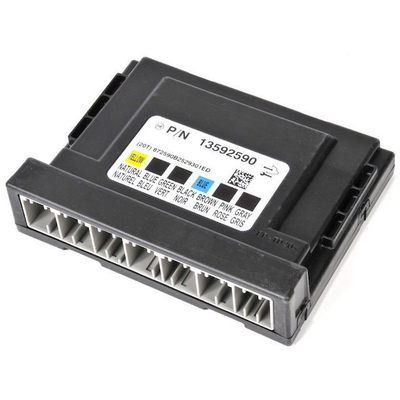
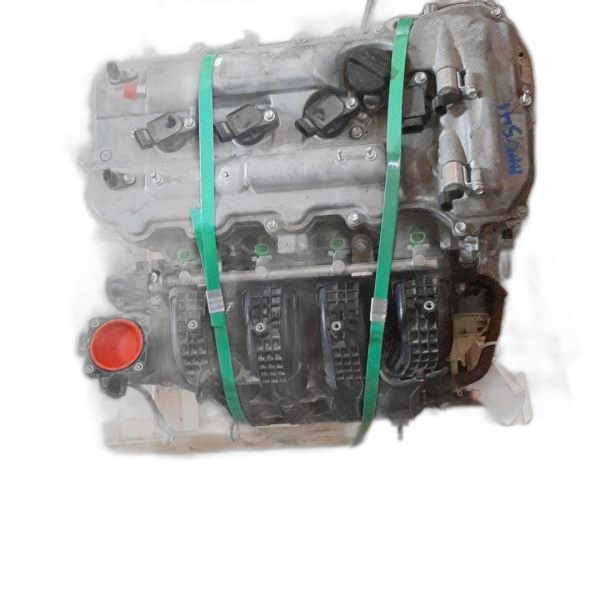


The information in this article is provided for general reference and educational purposes only. Vehicle specifications, procedures, and part compatibility can vary by production date, trim level, and region. Always consult your vehicle's factory service manual and verify part numbers before purchasing or performing repairs. Safety-critical components such as airbags, seat belts, and braking systems should be installed by a qualified professional.
- 🧭 Diagnostic Flowchart
- 🛍️ Shop This Part
- What Does U3001 Mean?
- Can I Drive With U3001?
- Common Causes
- Symptoms
- Common Fixes & Costs
- Used vs. New Parts: Buying Guide
- What Happens If You Wait — Timeline
- Cost of Not Fixing It
- Diagnosis Steps
- When This Code Triggers (Freeze-Frame Conditions)
- Related Codes
- Climate & Environmental Factors
- How to Talk to a Mechanic About This Code
- Where to Take It: Dealer vs Independent vs Chain
- When to Walk Away From the Repair
- What Scan Tool You Need for This Code
- How to Clear the Code After You Fix It
- Will This Fail Emissions / State Inspection?
- Most Commonly Affected Vehicles
- Manufacturer-Specific Notes
- Real Owner Stories
- 2021 Ford F-150 at 35K miles
- 2016 Land Rover Discovery Sport at 60K miles
- 2018 Chrysler Pacifica at 75K miles
- How to Prevent This Code From Triggering
- Frequently Asked Questions
- Can a bad battery cause a U3001 code?
- What is a BMS reset and why is it important?
- I replaced the battery, but the U3001 code came back. Why?
- Will the U3001 code clear itself?
- What are the most common mistakes when diagnosing U3001?
- How does a parasitic draw cause a U3001 code?
- Is it expensive to fix a U3001 code?
- What does the suffix code on U3001 (like U3001:89) mean?
- Key Takeaways
- 🎟️ Get 5% Off