

U3003 on 2021-2024 Ford Bronco: Battery Voltage Fault Causes and Fixes
On a 2021-2024 Ford Bronco, code U3003 almost always means the 12V battery is weak or dying. The most common fix is to charge, test, and likely replace the AGM battery, followed by a mandatory Battery Management System (BMS) reset. Do not replace any control modules before testing the battery. This code is often a silent, early warning of impending battery failure.
- U3003 on a Ford Bronco is a voltage problem, not a module failure.
- The most likely cause is a weak or dying 12V AGM battery.
- Always start your diagnosis by fully charging and load-testing the battery.
- If you replace the battery, a Battery Management System (BMS) reset is mandatory.
- Do not replace expensive electronic modules until all power supply issues, including ground connections, have been ruled out.
What's Unique About the 2021-2024 Ford Bronco
The 6th generation Bronco, like other modern Fords, has a high level of passive electrical draw from its numerous onboard computers. This can lead to a low battery state of charge, especially with infrequent use or many short trips. The vehicle's systems are very sensitive to voltage and will quickly set a U3003 code in various modules as a first symptom of a weakening battery, often before the driver notices any other issues. The factory Battery Management System (BMS) is programmed to only charge the battery to around 80% capacity to leave room for regenerative charging, which can shorten battery life if the vehicle isn't driven frequently for long distances.
Symptoms You May Notice
- Vehicle enters "Deep Sleep Mode" or "Battery Saver Mode" to conserve power
- Warning messages on the dash, such as "Check Brake System," as modules lose stable power
- Slow or sluggish engine cranking
- No-start condition, sometimes intermittent
- Remote features via the FordPass app are disabled
- Dimming or flickering interior lights or headlights
- Code may be "silent" with no check engine light, found only when scanning for DTCs
- Intermittent failure of electrical accessories like power windows or radio
- Replacing the ABS module, Body Control Module (BCM), or other control modules. The U3003 code is almost always a symptom of a power supply issue, not a fault in the module that stored the code.
Most Likely Causes
- Weak or Failing 12V AGM Battery 🔴 High Probability → Shop Vehicle Battery Modern vehicles have high parasitic draws that can drain the battery over time, especially with short trips. Factory batteries often have a lifespan of only 3-5 years under these conditions. The BMS strategy of not fully charging the battery can exacerbate this.
How to confirm: Fully charge the battery with an AGM-compatible charger, then perform a load test using a digital battery tester. A simple voltage check is insufficient. Voltage should not drop below 9.6V during the test.
Typical fix: Replace the 12V AGM battery and perform a Battery Management System (BMS) reset.
Est. part cost: $200-$450 - Battery Management System (BMS) Reset Needed 🟡 Medium Probability → Shop Vehicle Battery If the battery was recently replaced but the BMS was not reset, the system will continue to charge it as if it were an old, degraded battery, leading to undercharging and a premature low voltage state.
How to confirm: This is a process-of-elimination step. If the battery is new and tests good, but the code persists, a BMS reset is the next logical step. This can be confirmed with a tool like FORScan by checking the 'BATTERY_AGE' PID, which should be near zero days after a successful reset.
Typical fix: Perform a BMS reset using a capable scan tool (like FORScan) or have a dealer perform the service. A manual reset procedure also exists. 🎬 Watch: How to manually reset your Ford BMS
Est. part cost: $0 - Loose or Corroded Battery Terminals/Grounds ⚪ Low Probability → Shop Vehicle Battery Vibration from off-road use can potentially loosen connections over time. Some owners have reported finding loose ground connections from the factory.
How to confirm: Visually inspect the battery terminals for corrosion. Physically attempt to twist the terminal clamps; they should not move. Trace the main negative cable from the battery to the chassis and the engine block ground strap; ensure these connections are clean and tight.
Typical fix: Clean the battery posts, terminals, and chassis/engine ground points with a wire brush and ensure all connections are securely tightened.
Est. part cost: $5-$15 - Failing Alternator or Charging System ⚪ Low Probability → Shop Alternator
How to confirm: With the engine running, measure the voltage at the battery terminals. A healthy charging system should show a voltage between 13.8V and 14.5V. A reading above 15.5V could indicate a faulty voltage regulator and trigger U3003:17.
Typical fix: Replace the alternator if it is not providing adequate voltage.
Est. part cost: $400-$800
Rare But Worth Checking
- Excessive Parasitic Draw: If a new, fully charged battery drains overnight, an excessive parasitic draw is likely. This can be caused by a malfunctioning module or a faulty aftermarket accessory. A parasitic draw test with a multimeter is required for diagnosis. The draw should be under 50mA after all modules go to sleep (approx. 45 minutes).
- Environmental Contamination: Manufacturer service bulletin TSB 23-2133 notes that a no-crank/no-start condition with U3003 in the ABS module can sometimes result from water or moisture intrusion into the battery junction box (BJB).
Diagnosis Steps
- Scan for Codes: Use a Ford-capable OBD-II scanner to confirm the presence of U3003 and note the two-digit suffix (e.g., :16 or :17) and which module(s) have stored the code.
- Charge the Battery: Fully charge the 12V AGM battery using a smart charger designed for AGM batteries.
- Load Test the Battery: Use a digital battery analyzer to perform a load test. A healthy battery should maintain voltage above 9.6V during the test. If it fails, the battery is the primary suspect.
- Inspect Connections: Check the battery terminals and the main chassis ground points for tightness and corrosion. A Reddit user with a 2021 Bronco reported a no-start issue that was resolved by simply loosening and re-tightening a loose ground wire. 🎬 See: How to clean and fix bad ground connections Clean and tighten as necessary.
- Test the Charging System: Start the engine and measure the voltage at the battery terminals. The reading should be between 13.8V and 14.5V. If it's lower, the alternator may be faulty. If it's higher (above 15.5V), the voltage regulator may have failed, potentially setting a U3003:17 code.
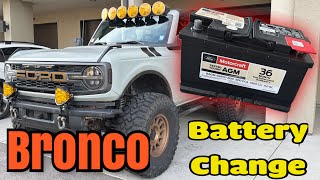
- Replace Battery and Reset BMS: If the battery is confirmed bad, replace it with a new Group 94R AGM battery. 🎬 Watch: Step-by-step 6th Gen Bronco battery replacement guide Immediately after installation, perform a Battery Management System (BMS) reset. This step is critical and cannot be skipped.
- Clear Codes and Re-test: After addressing the power supply issue, clear all DTCs and drive the vehicle to see if the code returns.
Parts You'll Likely Need
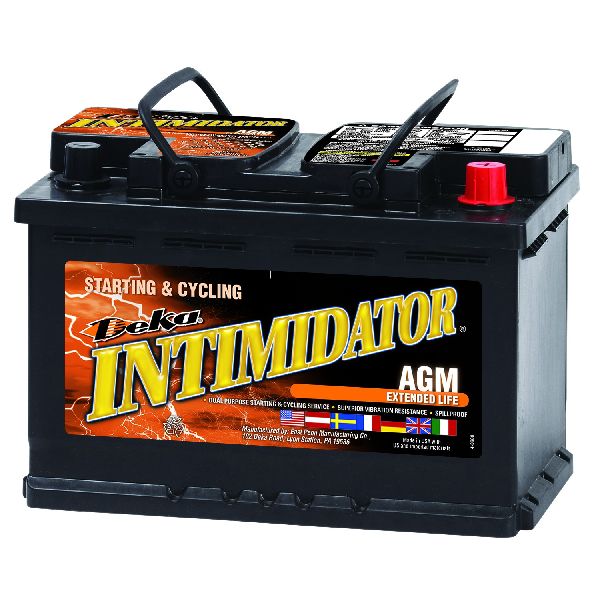
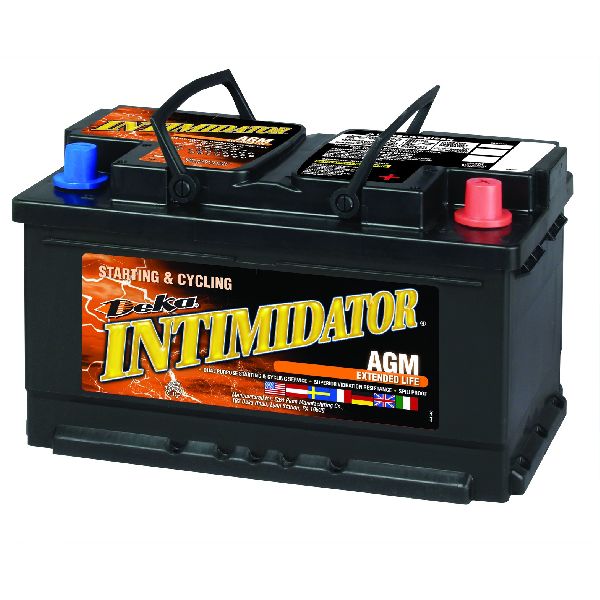
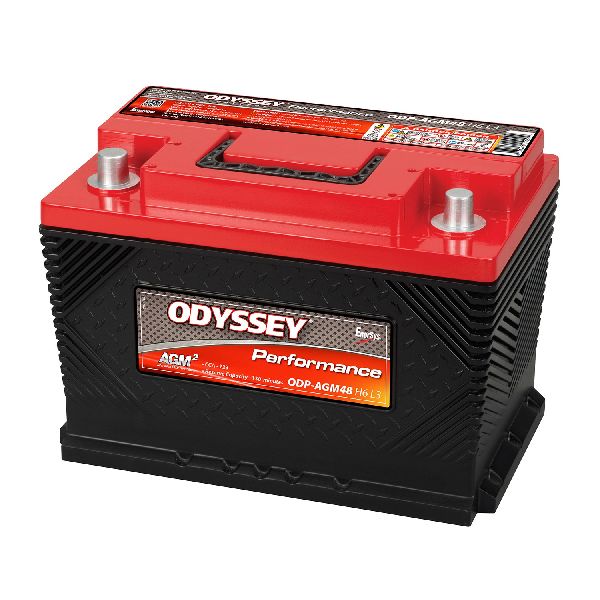
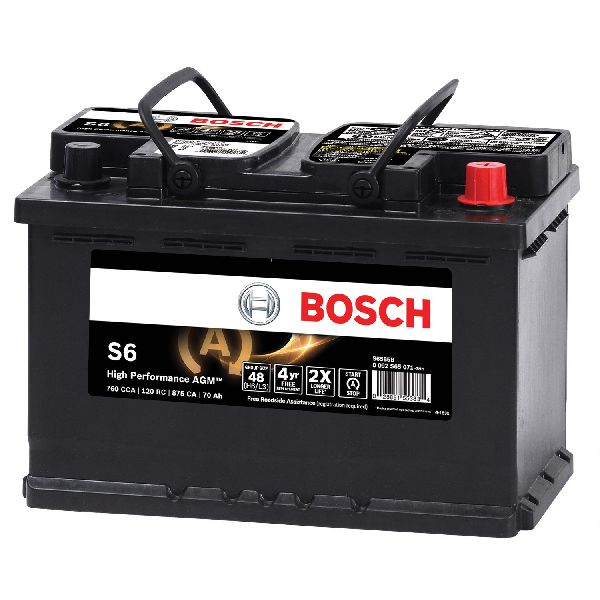
- AGM Battery (Group Size 94R)
(OEM #BAGM-94RH7-800)— This is the most common cause of the U3003 code. The original battery weakens over time and can no longer hold a sufficient charge to power the vehicle's sensitive electronics.
Trusted brands: Motorcraft, Interstate, DieHard, Odyssey
OEM price range: $250-$350
Aftermarket price range: $200-$450
Technical Service Bulletins (TSBs) & Recalls
- Recall 24S24 (for Bronco Sport / Maverick): While not for the full-size Bronco, this recall is highly relevant. It addresses a software issue in the BCM and PCM that fails to detect a dying 12V battery, which can lead to stalling or a no-restart condition. This highlights Ford's acknowledgment of battery detection issues on related platforms.
- SSM 52594: A manufacturer service bulletin notes that a "Check Brake System" message and/or "12V Battery State Of Charge Low" message with DTC U3003:16 stored in the ABS module may be due to the state of charge of the battery.
- SSM 52201: This bulletin describes a condition where the 12V battery voltage is low or discharged with diagnostic trouble code U3003:62 stored in the DC/DC converter control module, along with U3003:16 in other modules.
Platform-Specific Known Issues
- Owner Experience: Silent Code and Deep Sleep Mode: An owner on the Ford Truck Enthusiasts forum found a silent U3003 code using FORScan while investigating why their truck was entering deep sleep mode frequently. This was an early indicator that the original battery was beginning to fail due to infrequent use and short trips.
- Owner Experience: No-Start Solved by Ground Wire: A user on Reddit with a 2021 Bronco experienced a no-start condition where the vehicle reported a dead battery, even after testing the battery and finding it fully charged. The issue was traced to a loose ground wire. Simply loosening and re-tightening the connection resolved the problem.
- Owner Experience: Multiple Modules Logging U3003:16: A thread on Bronco6G.com shows a diagnostic report where multiple modules, including the passenger and driver door modules (DDM/PDM), logged U3003:16. This is a classic symptom of a system-wide low voltage event caused by a weak battery, rather than individual module failures.
Mechanic-Grade Diagnostic Values
- Module Low Voltage Threshold (U3003:16) — expected: > 9.5 Volts. Failure: Voltage below 9.0 - 9.5V for more than 500ms can trigger the code in various modules.
- Parasitic Draw (All Modules Asleep) — expected: < 50 milliamps (0.05A). Failure: A sustained draw above 50mA after a 45-minute sleep period indicates a component is not shutting down properly.
- FORScan Live Data PID: Battery State of Charge (BMS) — expected: Typically maintained around 80% by the BMS.. Failure: Consistently low values (e.g., <60%) despite driving, or values that drop rapidly with the engine off, indicate a weak battery or charging issue.
- FORScan Live Data PID: BATTERY_AGE (BMS) — expected: 0-10 days after a successful BMS reset.. Failure: A high number of days (e.g., >1000) after a new battery installation confirms the BMS reset was not performed, leading to incorrect charging.
- Ground Circuit Resistance — expected: < 5.0 Ohms. Failure: Resistance higher than 5 ohms between a component's ground wire and the negative battery terminal indicates a poor ground connection.
Scan Tool Commands That Help
- FORScan / Ford IDS: BMS Reset (Battery Management System Reset) — This service function is mandatory after replacing the 12V battery. It resets the battery age parameter and recalibrates the charging strategy for the new battery. Failure to perform this is a primary cause of recurring U3003 codes.
- Manual Procedure (No Scan Tool): BMS Reset — After installing a new battery, if a scan tool is unavailable. The procedure involves a sequence of flashing the high beams and pressing the brake pedal within 10 seconds. 1. Switch ignition ON (engine off). 2. Flash high beams 5 times. 3. Press brake pedal 3 times. A flashing battery light on the dash confirms the reset.
- FORScan / Ford IDS: BCM Self-Test / PCM Self-Test — Used to check for other DTCs that may be stored in the Body Control Module or Powertrain Control Module which could indicate a broader charging system issue.
Wiring & Ground Locations
- B+ Connection Point — Underhood, on the battery terminal block. There are M5 and M6 studs available for adding fused accessory circuits.. Improperly installed aftermarket accessories are a common source of parasitic draws or poor connections that can lead to voltage issues and U3003 codes. Connections here must be secure and properly fused.
- B- (Ground) Connection Point — Underhood, on the battery negative terminal. A dedicated 8.5mm diameter hole is provided for high-current accessory grounds (like a winch).. A secure and clean main ground path is critical. Using the designated point ensures a solid connection to the vehicle's main grounding system.
- Cargo Area Grounds — Behind both side trim panels in the rear cargo area.. These are common connection points for aftermarket amplifiers or accessories. A loose or poorly made ground connection here can cause intermittent electrical issues and parasitic draws.
- Kick Panel Grounds — In the driver and passenger footwells, near the kick-panel speakers.. These grounds serve numerous interior electronics. A loose connection here could cause issues in multiple modules located inside the cabin.
- BCM Connector C2280C — At the Body Control Module (BCM).. Pin 3 (LDC59, BU-WH wire) and Pin 19 (RDC59, GY-BN wire) are the circuits for the Battery Monitoring System Sensor. A problem with these specific pins or wires could cause incorrect battery data to be sent to the BCM, leading to improper charging and voltage codes.
Real Owner Repair Stories
- PowerStroke Tech Talk w/ARod YouTube Channel (2017 Ford F-350 Super Duty (similar electrical architecture), 155,000 miles) — Intermittent parasitic battery draw (measured at 2.6 amps) that would kill a new set of batteries within a week. The draw would only appear 1-6 hours after shutdown.
❌ Tried (didn't work) Replaced batteries three times, Initial voltage drop testing across fuses (draw was not present at time of testing)
✅ What actually fixed it The technician isolated the draw by unplugging the Gateway Module (V-CAN). The faulty Gateway Module itself was intermittently waking up other modules on the network, causing the draw. Replacing the Gateway Module resolved the issue. - Bronco6G Forum Member (2023 Ford Bronco, 400 miles) — Intermittent no-start condition. Battery would be dead overnight sometimes, but fine on other nights.
❌ Tried (didn't work) Dealer tested the battery and electrical system, found no issues.
✅ What actually fixed it Another user reported a similar case on a different vehicle where a power control module for the driver's seat was faulty and would only drain the battery in sub-zero temperatures. While not a confirmed fix for the Bronco owner, it highlights that temperature-dependent module faults can be a rare cause of intermittent parasitic draws that are very difficult to diagnose. - NHTSA ODI #11533082: An owner reported a lack of power steering accompanied by DTCs C1B00, U0415, and U3003.
- NHTSA ODI #10905479: A report describes a "Terrain Management System Fault" light and check engine light with code U3003, which the dealer initially associated with a mechanical failure of the transmission.
Model Year Variations Within This Range
- 2021-2024: Ford has issued BCM software updates that can alter the charging strategy of the Battery Management System. A forum user noted that after a BMS software update, their system spent more time in conventional charging modes. It's possible that newer models or updated vehicles will have different charging behavior than early 2021 models.
- 2021 vs 2023+: While no major electrical system redesigns have been noted that would directly affect the U3003 code, minor changes like improved sound systems and different lighting options have occurred between model years. These changes are unlikely to alter the fundamental diagnosis of a U3003 code but indicate ongoing revisions to vehicle components.
Diagnostic Flowchart
Other Known Issues on This Vehicle
Issues unrelated to this code that are worth knowing about as an owner of this generation:
- 2.7L EcoBoost V6 Valvetrain Failure 🔴 High — Primarily affects early production 2021-2022 models, particularly engines built between May and October 2021. Can lead to catastrophic engine failure at very low mileage. (Ref: NHTSA Investigation / Ford Recall 24V635. Remedy involves an engine cycle test and potential engine replacement.)
- Molded-in-Color (MIC) Hard Top Defects 🟠 Medium — Common on 2021-2022 models. Issues include cosmetic discoloration ('honeycomb' pattern), headliner separation, and panel delamination. (Ref: Ford has issued recalls and a replacement program for affected tops due to poor manufacturing quality from the initial supplier.)
- Rear Shock Absorber Corrosion and Failure 🟠 Medium — Reported across 2021-2024 models, where corrosion can lead to the shock absorber detaching. (Ref: Ford Recalls 25V025000 and others address this issue.)
- Accessory Protocol Interface Module (APIM) Overheating 🟡 Low — Affects the SYNC 4 infotainment system across all model years, causing the screen to go black or reboot. (Ref: Recall 26V124000 involves a software update (OTA or dealer-installed) to fix the issue.)
Used vs. New Parts: Buying Guide for This Vehicle
When a used part is the smart pick: For a U3003 code, used parts are generally not recommended for the primary fixes. However, if a rare module failure (like a BCM or Gateway Module) is confirmed, a used module from a reputable recycler can be a cost-effective option, provided it is correctly programmed to the vehicle.
Donor-vehicle mileage cap: roughly under 50000 miles for the part to have meaningful remaining life.
What to inspect on the donor part:
- Verify the donor vehicle's VIN to check for compatible part numbers.
- Inspect for any signs of water damage, corrosion, or physical impact on the module and connectors.
- Choose a supplier that offers a warranty and return policy.
OEM-only on this vehicle (don't cheap out):
- 12V AGM Battery: Never buy a used battery. A new battery is the most critical part of this repair.
- Battery Management System Sensor: Given its critical role in charging and relatively low cost, a new OEM sensor is the only reliable choice if it is found to be faulty.
Aftermarket brands forum-validated for this vehicle:
- AGM Batteries: Interstate, DieHard, Odyssey, and other reputable battery manufacturers are considered reliable alternatives to the OEM Motorcraft battery.
Brands owners have reported issues with on this vehicle:
- Avoid off-brand or unusually cheap electronic modules, as they may have compatibility or quality control issues.
Real Owner Stories
Aggregated from forums and TSBs cited above. Mileages and costs reflect what owners reported in those sources.
2021 Ford Bronco
Symptoms: Vehicle reported a dead battery and would not start, despite the battery testing as fully charged.
What fixed it: Traced the issue to a loose ground wire; loosening and then re-tightening the connection resolved the problem.
Source hint: Reddit r/bronco - 'Loose ground wire?'
2021-2024 Ford Bronco
Symptoms: The truck was entering deep sleep mode frequently; a scan with FORScan revealed a silent U3003 code despite no check engine light.
What fixed it: Identified as an early indicator of a failing original battery due to infrequent use and short trips.
Source hint: Ford Truck Enthusiasts Forums - 'Silent DTC U3003?'
2021 Ford Bronco
Symptoms: Experienced low-voltage symptoms and no-start conditions during freezing weather; diagnostic logs showed U3003:16 in multiple modules including the Door Modules (DDM/PDM).
What fixed it: System-wide low voltage event addressed by battery service/replacement.
Source hint: Bronco6G.com - 'Won't start in freezing weather'
Related OBD-II Codes
Frequently Asked Questions
My 2021 Bronco won't start and says the battery is dead, but my charger says it's full. Could it be a ground issue?
Does the battery recall for the Bronco Sport (24S24) apply to my full-size Bronco?
Why is my Bronco entering 'Deep Sleep Mode' so often?
I just replaced my battery; do I really need to pay for a BMS reset?
Can a U3003 code cause my 'Check Brake System' light to come on?
What specific battery should I use to replace the factory one in my Bronco?
Helpful Videos
![Avoid Expensive Shop Repairs: DIY Reset the Ford Vehicle Battery Monitoring System [BMS]](https://img.youtube.com/vi/QTtb7rKaZTE/mqdefault.jpg)

We Have This Part in Stock


The information in this article is provided for general reference and educational purposes only. Vehicle specifications, procedures, and part compatibility can vary by production date, trim level, and region. Always consult your vehicle's factory service manual and verify part numbers before purchasing or performing repairs. Safety-critical components such as airbags, seat belts, and braking systems should be installed by a qualified professional.
- Ford Bronco:
- 🧭 Diagnostic Flowchart
- 🎬 Helpful Videos
- 🛍️ Shop This Part
- What's Unique About the 2021-2024 Ford Bronco
- Symptoms You May Notice
- Most Likely Causes
- Rare But Worth Checking
- Diagnosis Steps
- Parts You'll Likely Need
- Technical Service Bulletins (TSBs) & Recalls
- Platform-Specific Known Issues
- Mechanic-Grade Diagnostic Values
- Scan Tool Commands That Help
- Wiring & Ground Locations
- Real Owner Repair Stories
- Model Year Variations Within This Range
- Other Known Issues on This Vehicle
- Used vs. New Parts: Buying Guide for This Vehicle
- Real Owner Stories
- 2021 Ford Bronco
- 2021-2024 Ford Bronco
- 2021 Ford Bronco
- Related OBD-II Codes
- Frequently Asked Questions
- 🎟️ Get 5% Off