

U3003 on 2020-2024 Ford Explorer Hybrid: Battery Voltage Causes and Fixes
On a 2020-2024 Ford Explorer Hybrid, code U3003 almost always means the 12V battery is weak or failing. Before suspecting complex hybrid issues, the first step is to test the 12V battery and check its connections. A replacement AGM battery costs between $200 and $450.
- Code U3003 on your Explorer Hybrid almost always points to a problem with the 12V battery. Start by having the battery professionally load tested.
- If you replace the 12V battery, you MUST perform a Battery Management System (BMS) reset, or the new battery may fail prematurely.
- On a hybrid, the 12V battery is charged by the DC/DC converter. If a new battery doesn't solve the issue, the charging system needs professional diagnosis.
- Check for recalls, especially on 2024 models, related to the 12V battery cable chafing.
- Do not replace any expensive electronic modules (like the ABS controller) until the 12V battery and its charging system have been proven to be in perfect working order.
What's Unique About the 2020-2024 Ford Explorer
On the Explorer Hybrid, the traditional alternator is replaced by a DC/DC converter that charges the 12V battery using power from the high-voltage hybrid battery. Therefore, a U3003 code can be caused not only by a failing 12V battery but also by a fault in the high-voltage charging system, such as the DC/DC converter or its associated wiring and fuses. Some early 2020 models have also been noted by owners to have parasitic draw issues that can prematurely drain the 12V battery, sometimes addressed with module software updates or investigation into modules failing to 'sleep'.
Symptoms You May Notice
- "Service Vehicle Soon" or "Charging System Fault" message on the dashboard
- Slow or hesitant engine cranking
- Vehicle enters 'deep sleep' mode frequently, showing a "System off to save Battery" message
- Intermittent failure of electronic accessories like the radio, power windows, or dashboard lights
- A 'silent' code found with a scanner, with no obvious symptoms yet
- Complete no-start condition
- Power running boards (if equipped) may automatically switch to 'Off' and become disabled
- Sudden "Terrain Management System Fault" warnings accompanying the check engine light
- Replacing the ABS module. The ABS module is very sensitive to voltage and is often the first module to report a U3003 code, but it is almost never the cause of the problem.
- Replacing other electronic modules. Before replacing any expensive computer, the 12V battery and charging system must be thoroughly tested and confirmed to be working correctly.
Most Likely Causes
- Weak or Failing 12V Battery 🔴 High Probability → Shop Vehicle Battery The vehicle's numerous electronic modules place a constant demand on the 12V battery. Short trips may not be long enough for the DC/DC converter to fully recharge the battery, leading to a gradual decline in its state of charge and health. Owners report batteries often failing within 3-4 years.
How to confirm: Perform a professional load test on the 12V battery. A simple voltage check is insufficient. A healthy, fully charged AGM battery should read ~12.5-12.8V with the vehicle off, and the voltage should not drop below 9.6V during cranking. Many auto parts stores offer free battery testing.
Typical fix: Replace the 12V AGM battery and perform a Battery Management System (BMS) reset. The BMS reset is critical; without it, the system may not charge the new battery correctly, leading to its premature failure.
Est. part cost: $200-$450 - Failed Battery Management System (BMS) Reset 🟡 Medium Probability → Shop Vehicle Battery This is a procedural issue. If the 12V battery was recently replaced but the U3003 code appeared afterward, it's highly likely the mandatory BMS reset was skipped. The system will continue to charge the new battery as if it were the old, degraded one.
How to confirm: This is diagnosed by exclusion. If a new battery was just installed and problems persist, a missed BMS reset is the prime suspect.
Typical fix: Perform the BMS reset. This can be done with a scan tool like FORScan or via a manual procedure: with the ignition on (engine off), flash the high beams 5 times, then press the brake pedal 3 times. The battery light on the dash should flash to confirm the reset. 🎬 See how to perform the manual BMS reset procedure.
Est. part cost: $0 - Loose or Corroded Battery Terminals/Grounds ⚪ Low Probability → Shop Vehicle Battery Vibration and time can cause battery connections to loosen. The BMS sensor is located on the negative terminal, and a poor connection there can cause false readings. Ford has also issued recalls on other models for improperly secured battery connections.
How to confirm: Visually inspect the positive and negative battery terminals for tightness and any signs of white or blue-green corrosion. Check the main chassis ground connection for the battery to ensure it is clean and tight.
Typical fix: Clean the battery posts and terminals with a wire brush. Reconnect the terminals and tighten them securely. Apply a thin layer of dielectric grease to prevent future corrosion.
Est. part cost: $5-$15
Rare But Worth Checking
- Faulty DC/DC Converter: → Shop Power Converter The DC/DC converter serves as the alternator for the 12V system. If the 12V battery is new and tests good, but the voltage is low when the vehicle is in 'Ready' mode (typically below 13.5V), the DC/DC converter may not be charging it. Diagnosis requires a qualified technician due to the high-voltage system.
- Open 300-Amp Mega Fuse: A known issue on other Ford hybrids (Escape, Maverick, Corsair) covered by TSB SSM 52201 involves an open 300A mega fuse in the high-current battery junction box, which prevents the DC/DC converter from charging the 12V battery. This is a highly plausible cause for the Explorer Hybrid and should be investigated by a professional if the battery and connections are good. Forum users have pointed to this TSB as a likely fix.
- Faulty Underhood Fuse Box Assembly: → Shop Fuse Box A mechanic on YouTube documented an issue on a 2020 Police Interceptor Hybrid where the entire underhood fuse box assembly had an internal short, causing excessive heat and charging system faults. 🎬 Watch a mechanic diagnose this hybrid fuse box issue. This was resolved by replacing the entire fuse box assembly.
- Chafed 12V Battery Cable (2024 Models): → Shop Vehicle Battery Recall 24S61 (NHTSA Campaign 24V685000) was issued for a small number of 2024 Explorer Hybrids where the 12V positive battery cable can chafe against the belt-integrated starter generator, causing a short circuit, potential no-start, and related trouble codes.
- Parasitic Draw from Software Glitches: Ford has issued service messages like SSM 50804 for other models, noting that third-party apps using the vehicle's modem can prevent modules from entering sleep mode, causing battery drain. For early 2020 Explorers, TSB SSM 49128 addresses battery drain on vehicles built before Aug 30, 2019. These software-based parasitic draws are a possible, though harder to diagnose, cause.
Diagnosis Steps
- Check the 12V Battery: Have the 12V AGM battery professionally load tested. This is the most common point of failure.
- Inspect Connections: Check the battery terminals for corrosion and ensure they are tight. Inspect the main battery ground cable connection to the chassis.
- Verify Charging Voltage: With the vehicle in 'Ready' mode, measure the voltage across the 12V battery terminals. A healthy charging system should provide 13.8V - 14.5V. If the voltage is low (e.g., 12.5V or less), the 12V battery is not being charged.
- Check for TSBs and Recalls: Check for any open recalls, particularly the 12V cable chafing recall 24S61 on 2024 models. Ask a dealer if any TSBs related to parasitic draw (SSM 49128) or software updates (TSB 20-2345) apply to your vehicle. Manufacturer TSB #SSM 50151 advises that if low voltage (less than 10V) is observed in DTC snapshots, the 12V system should be diagnosed before replacing high-voltage modules like the SOBDMC.
- Perform BMS Reset: If the battery has been replaced, ensure the Battery Management System (BMS) has been reset using the manual procedure or a scan tool.
- Seek Professional Diagnosis: If the battery is good and the charging voltage is low, the problem likely lies within the hybrid charging system. Instruct the technician to investigate the 300-amp mega fuse as described in TSB SSM 52201 for other Ford hybrids, as this is a very likely cause.
Parts You'll Likely Need
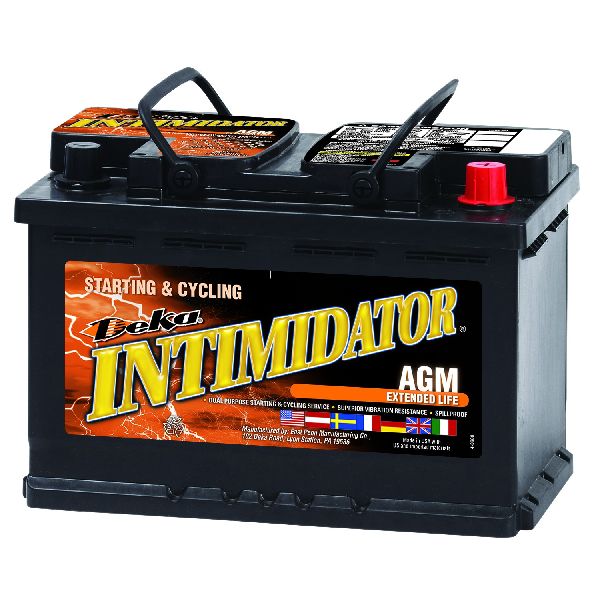
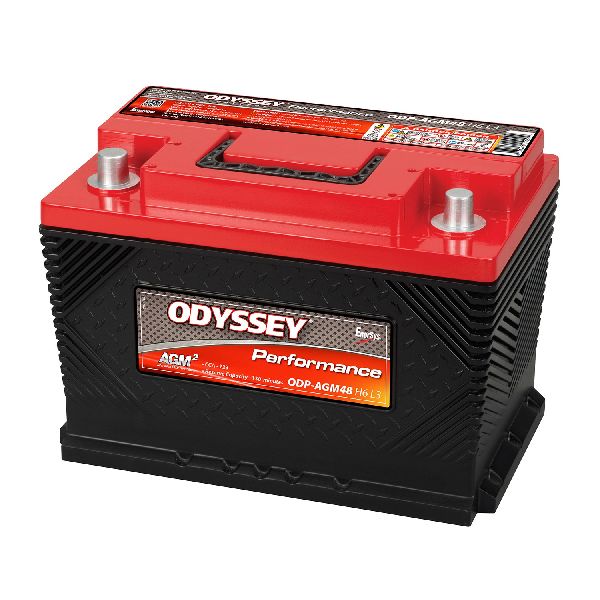
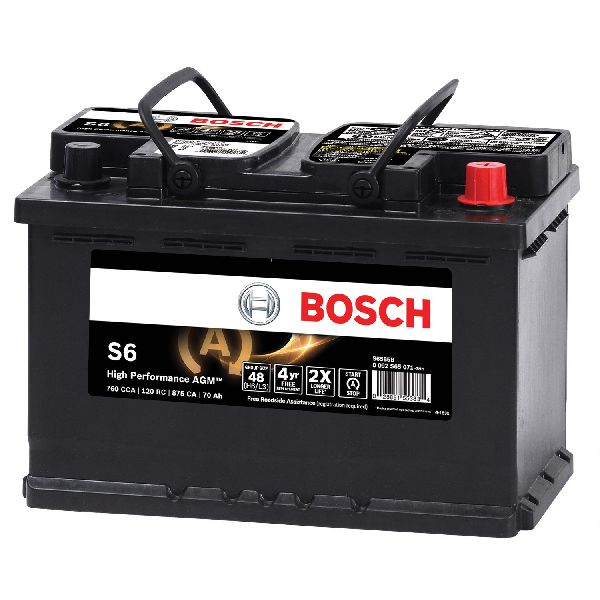
- 12V AGM Battery
(OEM #BAGM-48H6-760)— This is the most frequent cause of code U3003. The original battery often fails after 3-4 years due to the high electrical demands of the vehicle.
Trusted brands: Motorcraft, Interstate, DieHard, Duralast
OEM price range: $250-$350
Aftermarket price range: $200-$300
Related Codes That Often Appear With This One
- U3003:16 — This is the most common suffix, specifically indicating the voltage dropped below the required threshold.
- P0562 — This is the generic powertrain code for 'System Voltage Low,' which often accompanies U3003 as it flags the same underlying low-voltage condition.
- U3003:62 — This suffix is specifically called out in TSB SSM 52201 for other Ford Hybrids, pointing towards the open 300-amp mega fuse as the cause.
- U3003-68 — This variant has been reported by owners (NHTSA ODI #11567087) alongside steering-related codes like U3000-96 and C1B00-2F.
Technical Service Bulletins (TSBs) & Recalls
- SSM 52201 - While for other Ford Hybrids, it notes a no-charge condition caused by an open 300-amp mega fuse leading to U3003, which is a relevant diag
- TSB Bulletin #SSM 50151 - Notes that U3003 can occur at vehicle key-on and may be difficult to reproduce; it mandates diagnosing the 12V system first if voltage is below 10V before replacing other modules.
Platform-Specific Known Issues
- A recall (24S61) for some 2024 Explorer Hybrids exists for a 12V positive battery cable that may chafe against the belt-integrated starter generator, potentially causing a short circuit and a no-start condition.
- Owners of early (2020) models have reported issues with parasitic battery drain causing the vehicle to enter 'deep sleep' mode. TSB SSM 49128 was released for vehicles built on or before 30-Aug-2019 to address this.
- While not specific to the Explorer, TSB SSM 52201 points to a common failure of a 300-amp mega fuse on other Ford hybrids with similar powertrains (Escape, Maverick), making it a highly probable cause for the Explorer as well.
Mechanic-Grade Diagnostic Values
- DC/DC Converter Output Voltage — expected: 13.5V - 14.7V with vehicle in 'Ready' mode.. Failure: A reading near 12V or below indicates the 12V battery is not being charged by the high-voltage system.
- BCM Voltage Supply Threshold — expected: 9.0 - 16.0 volts.. Failure: DTC U3003:16 sets when voltage drops below 9.0 volts for a calibrated amount of time.
- 300-Amp Mega Fuse Resistance — expected: < 1.0 Ohm (near zero continuity).. Failure: An open reading (OL) or any significant resistance. A hairline crack may cause intermittent failure under load, even if it tests good when cold.
- FORScan PID: BATT_V (Battery Voltage) — expected: ~12.5V-12.8V (vehicle off), 13.5V-14.7V (vehicle 'Ready').. Failure: Voltage below 13.0V while in 'Ready' mode points to a charging system fault.
Hidden / Shadow Codes Worth Checking
- U3003:09: Component Failures. This suffix can indicate an internal hardware failure within the module that sets the code, such as the BCM or PCM. (see via Professional diagnostic tools like Ford's IDS or advanced aftermarket scanners like FORScan.)
- U3003:16-0A: Circuit Voltage Below Threshold. The '-0A' is an occurrence counter, indicating the fault has happened multiple times. It does not change the meaning of the base code but adds diagnostic context. (see via Ford's IDS or FORScan.)
Scan Tool Commands That Help
- FORScan / Ford IDS: BMS Reset — This is a mandatory procedure after replacing the 12V battery. It resets the battery's age and state-of-charge parameters in the BCM, ensuring correct charging of the new battery.
- FORScan / Ford IDS: BCM Self-Test — To command the Body Control Module to run an internal diagnostic check. This can help determine if the BCM itself has an internal fault (e.g., setting U3003:09) after external wiring and power sources have been verified as good.
- Ford IDS: DC/DC Converter Test — A guided diagnostic routine that commands the DC/DC converter to operate and monitors its output. This is the definitive way to confirm if the converter is faulty after the battery and mega fuse have been ruled out.
Wiring & Ground Locations
- G401 — In the rear of the vehicle, near the 12V battery location in the cargo area.. This is the primary chassis ground point for the 12V battery. A loose or corroded connection here will cause high resistance, leading to charging problems, incorrect BMS readings, and U3003.
- G104 — On the left-hand (driver's side) of the engine compartment, near the strut tower.. This is a major ground point for front-end modules and the DC/DC converter case. A poor connection here can affect the converter's operation and set codes.
- G205 — Behind the passenger side kick panel in the footwell.. This is a primary ground for the Body Control Module (BCM). If this ground is compromised, the BCM can get false voltage readings and set U3003.
- High Current Battery Junction Box (HCBJB) — In the engine compartment, typically near the 12V battery jump-start posts.. This box contains the 300-amp mega fuse that is the critical link between the DC/DC converter and the 12V battery. A failure of this fuse is a known issue.
Real Owner Repair Stories
- Ford Explorer Forum user (2020 Explorer Hybrid) — U3003 code, frequent 'deep sleep' mode messages, and battery drain.
❌ Tried (didn't work) Replacing the 12V battery (problem returned after 2 weeks), Replacing the battery a second time
✅ What actually fixed it The dealer performed TSB 20-2345, which involves reprogramming the PCM and BCM to correct faulty charging logic and parasitic draw issues. - YouTube Mechanic (Ford Boss Me) (2020 Ford Police Interceptor Hybrid) — Charging System Fault message, U3003, and excessive heat in the engine bay around electrical components.
❌ Tried (didn't work) Initial diagnostics on battery and charging system did not pinpoint the cause.
✅ What actually fixed it The entire underhood fuse box assembly had an internal short. Replacing the complete assembly (which contains the High Current Battery Junction Box) resolved the short and the charging fault message. - Reddit user, r/FordExplorer (2021 Explorer Hybrid) — U3003:16 code stored.
❌ Tried (didn't work) Having the battery tested at an auto parts store, where it passed.
✅ What actually fixed it The battery failed a more comprehensive dealer-level GR8 load test. Replacing the 12V AGM battery and performing the manual BMS reset procedure (high beams/brake pedal) permanently fixed the issue. - Owner Report (NHTSA ODI #10905479) — An owner reported that their vehicle displayed a "Terrain Management System Fault" light and stored code U3003. While the dealer initially suggested a mechanical transmission failure, these symptoms are often linked to low system voltage.
- Owner Report (NHTSA ODI #11567087) — A driver experienced the steering locking up without warning, with diagnostic scans revealing U3003-68 alongside several other communication and steering module codes.
OEM Part Supersession History
L1MZ-10C666-B→L1MZ-10C666-C— Revision to improve reliability and potentially address the mega fuse failure issue seen in earlier versions.
Heads up: The new part is a direct replacement for the old one. When replacing, it is critical to use the updated part number.
Model Year Variations Within This Range
- 2020: Early build 2020 models are more prone to parasitic draw and incorrect battery charging logic. Ford issued TSB 20-2345 and TSB 20-2249 to reprogram the PCM and BCM to fix these software-related issues, which can cause U3003.
- 2024: A small number of 2024 models are subject to Recall 24S61 for a 12V positive battery cable that can chafe against the starter generator, causing a short circuit and related codes.
Diagnostic Flowchart
Other Known Issues on This Vehicle
Issues unrelated to this code that are worth knowing about as an owner of this generation:
- Rear Axle Bolt Fracture 🔴 High — Common on 2020-2022 models, affecting over 238,000 vehicles. Can lead to loss of power or vehicle rollaway. (Ref: Recall 23S55 (supersedes 22S27/22V255). This is the third recall for the same issue, indicating previous software-only fixes were insufficient.)
- 360-Degree Camera System Failure ('Blue Screen') 🟠 Medium — Very common on 2020-2023 models, affecting over 460,000 Ford/Lincoln vehicles. The screen goes blue or black, disabling the rearview camera. (Ref: Recall 23S23 (supersedes 21S44). Multiple recalls have been issued as software and hardware fixes have been attempted.)
- Harsh/Erratic Shifting (10R60 Transmission) 🟠 Medium — Widespread complaint on 2020+ models. Owners report clunky, jerky shifting and delayed engagement. Often attributed to low fluid from the factory or software calibration. (Ref: TSB 23-2176 (Delayed Reverse), TSB 23-2250 (Harsh Shifting). Subject of multiple TSBs and class-action lawsuits.)
- Parasitic Battery Drain (Non-Hybrid Specific) 🟡 Low → Shop Vehicle Battery — Reported frequently on early (2020) models. Can be caused by modules not entering sleep mode. (Ref: SSM 49128 (for vehicles built before Aug 2019), SSM 50804 (related to third-party apps).)
Used vs. New Parts: Buying Guide for This Vehicle
When a used part is the smart pick: For this specific code, used parts are generally not recommended. However, a complete Underhood Fuse Box assembly from a low-mileage, non-crashed donor vehicle could be a cost-effective option if an internal short is diagnosed, as this part can be expensive new.
Donor-vehicle mileage cap: roughly under 40000 miles for the part to have meaningful remaining life.
What to inspect on the donor part:
- Verify the part number on the used component matches the latest superseded part number if possible.
- Inspect for any signs of heat damage, melting, or corrosion on the connectors and housing.
- Ensure the donor vehicle was not in a front-end collision or flood.
- Obtain the VIN of the donor vehicle to check its history.
OEM-only on this vehicle (don't cheap out):
- DC/DC Converter: This is a sensitive high-voltage component. Its history is unknown when purchased used, and failure can strand the vehicle. New OEM is the only reliable option.
- 12V AGM Battery: A used battery is never a good investment; its remaining lifespan is unknown. Always buy new.
- High Current Battery Junction Box (HCBJB) / Mega Fuse: Given that the fuse failing is a known issue, installing a used one is a significant risk. A new, updated part is strongly recommended.
Aftermarket brands forum-validated for this vehicle:
- For the 12V AGM Battery: Motorcraft (OEM), Interstate, DieHard, Duralast Platinum are all well-regarded brands for H6/H7 AGM batteries.
Brands owners have reported issues with on this vehicle:
- Avoid non-AGM (flooded) batteries. The vehicle's charging system is designed specifically for an AGM battery.
Real Owner Stories
Aggregated from forums and TSBs cited above. Mileages and costs reflect what owners reported in those sources.
2020 Ford Explorer Hybrid
Symptoms: The vehicle frequently entered 'deep sleep' mode, showing a 'System off to save Battery' message on the dashboard.
What fixed it: Application of TSB SSM 49128 to address parasitic battery drain for vehicles built before August 30, 2019.
Source hint: vehicle_specific_issues
2024 Ford Explorer Hybrid
Symptoms: Complete no-start condition and potential short circuit symptoms.
What fixed it: Repair of the 12V positive battery cable under recall 24S61 to prevent chafing against the belt-integrated starter generator.
Source hint: vehicle_specific_issues
2020 Ford Police Interceptor Utility Hybrid
Symptoms: U3003 code and hybrid system diagnostic trouble codes.
What fixed it: Software updates as specified in TSB 20-2345.
Source hint: platform_mates
2021 Ford Explorer Hybrid
Symptoms: Persistent U3003:16-08 low battery voltage code even after the 12V battery was replaced.
What fixed it: Performing a Battery Management System (BMS) reset using a scan tool or the manual high-beam/brake pedal sequence.
Source hint: Reddit r/FordFusion - Code U3003:16-08 low battery voltage. I replaced the battery...
Related OBD-II Codes
Frequently Asked Questions
My 2024 Explorer Hybrid has a 'Charging System Fault' message; is there a specific recall for this?
I replaced the 12V battery in my Explorer Hybrid but the U3003 code returned. Did I miss a step?
My 2020 Explorer keeps entering 'Deep Sleep' mode. Is there a known software fix?
The dealer mentioned TSB 20-2345 for my Police Interceptor Utility Hybrid. Is that related to battery issues?
If my 12V battery is fine but not charging, what should a technician check based on Ford service messages?
Can a low battery cause my power running boards to stop working?
Helpful Videos
We Have This Part in Stock


The information in this article is provided for general reference and educational purposes only. Vehicle specifications, procedures, and part compatibility can vary by production date, trim level, and region. Always consult your vehicle's factory service manual and verify part numbers before purchasing or performing repairs. Safety-critical components such as airbags, seat belts, and braking systems should be installed by a qualified professional.
- Ford Explorer:
- 🧭 Diagnostic Flowchart
- 🎬 Helpful Videos
- 🛍️ Shop This Part
- What's Unique About the 2020-2024 Ford Explorer
- Symptoms You May Notice
- Most Likely Causes
- Rare But Worth Checking
- Diagnosis Steps
- Parts You'll Likely Need
- Related Codes That Often Appear With This One
- Technical Service Bulletins (TSBs) & Recalls
- Platform-Specific Known Issues
- Mechanic-Grade Diagnostic Values
- Hidden / Shadow Codes Worth Checking
- Scan Tool Commands That Help
- Wiring & Ground Locations
- Real Owner Repair Stories
- OEM Part Supersession History
- Model Year Variations Within This Range
- Other Known Issues on This Vehicle
- Used vs. New Parts: Buying Guide for This Vehicle
- Real Owner Stories
- 2020 Ford Explorer Hybrid
- 2024 Ford Explorer Hybrid
- 2020 Ford Police Interceptor Utility Hybrid
- 2021 Ford Explorer Hybrid
- Related OBD-II Codes
- Frequently Asked Questions
- 🎟️ Get 5% Off