

U3003 on 2013-2019 Ford Kuga: Battery Voltage Fault Causes and Fixes
On a 2013-2019 Ford Kuga, code U3003 almost always means the 12V battery is weak or failing. Before replacing any modules, fully charge and load-test the battery. If the battery is replaced, the Battery Management System (BMS) must be reset, a critical step that is often missed. Failure to reset the BMS will cause the new battery to be undercharged and fail prematurely.
- U3003 on a Ford Kuga almost always points to a problem with the 12V battery.
- Before replacing any parts, have the battery professionally load-tested and check the charging system.
- If you replace the battery, you MUST perform a Battery Management System (BMS) reset.
- Do not replace expensive control modules unless the battery, connections, and charging system have been proven to be in perfect working order.
What's Unique About the 2013-2019 Ford Kuga
The 2013-2019 Ford Kuga (and its North American twin, the Escape) uses a sophisticated Battery Management System (BMS) to monitor the battery's health and control the charging strategy. This system is very sensitive to battery degradation. As the battery ages, the BMS may set a U3003 code and start disabling non-essential features (like Start-Stop or keyless entry features) to conserve power, sometimes even before the driver notices any starting issues. A critical and often-missed step on this platform is the necessity of resetting the BMS after a battery replacement. Failure to do so will cause the system to continue using the charging profile for the old, degraded battery, leading to undercharging, premature failure of the new battery, and a swift return of the U3003 code.
Symptoms You May Notice
- "System off to save Battery" message on the infotainment screen
- Auto Start-Stop system is disabled or works intermittently
- Intermittent or non-functional SYNC/infotainment system
- Slow or sluggish engine cranking
- Warning lights on the instrument cluster (ABS, Power Steering, etc.)
- Dimming headlights or interior lights
- Power tailgate or keyless entry features become unreliable
- Replacing control modules (BCM, ABS, etc.) before testing the battery and charging system. The U3003 code is a symptom of a power supply issue, and the module logging the code is often the victim, not the cause.
- Replacing the battery but failing to perform the mandatory BMS reset, leading to a recurrence of the problem within a few months.
Most Likely Causes
- Weak or Failing 12V Battery 🔴 High Probability → Shop Vehicle Battery The vehicle's Battery Management System (BMS) is highly sensitive to the battery's state of health and charge. The original factory batteries often last only 3-5 years before their degradation triggers this code, especially on vehicles with many short trips.
How to confirm: Perform a professional load test on the battery. A simple voltage check with a multimeter is insufficient, as a failing battery can show 12.4V at rest but drop below 9.6V under load. A scan tool like FORScan can also read the battery's state of charge (SOC) as perceived by the BMS.
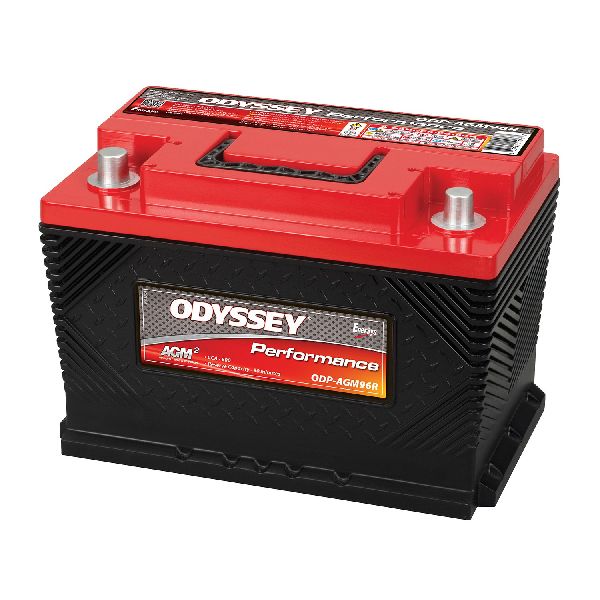
Typical fix: Replace the 12V battery with a quality AGM or EFB type and perform a BMS reset. The reset procedure informs the vehicle that a new battery has been installed, adjusting the charging profile accordingly.
Est. part cost: $150-$350 - Battery Management System (BMS) Reset Not Performed 🔴 High Probability → Shop Vehicle Battery This is a procedural error, not a part failure. Many owners or shops replace the battery but are unaware that the BMS must be reset. The system then undercharges the new battery, causing it to fail within months and bringing back the U3003 code.
How to confirm: If the battery was recently replaced and the code has returned, this is the most likely cause. A scan tool can check the 'battery age' parameter stored by the BMS. If it's not zero or a low number, the reset was likely missed.
Typical fix: Perform the BMS reset. This can be done with a scan tool (FORScan is a popular choice for DIY) or via a manual sequence: Ignition ON (engine off), flash high beams 5 times, then press the brake pedal 3 times. The battery light on the dash should flash to confirm the reset.
Est. part cost: $0 - Failing Alternator or Charging System Issue 🟡 Medium Probability → Shop Alternator While less common than a simple battery failure, the alternator is responsible for charging the battery and powering the vehicle's electronics. A failing alternator can either undercharge (leading to U3003:16) or overcharge (U3003:17) the system.
How to confirm: With the engine running, measure the voltage at the battery terminals. A healthy charging system should read between 13.8 and 14.5 volts. Readings above 15.0V may indicate a faulty voltage regulator in the alternator.
Typical fix: Replace the alternator.
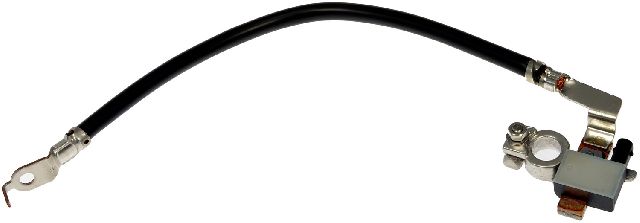
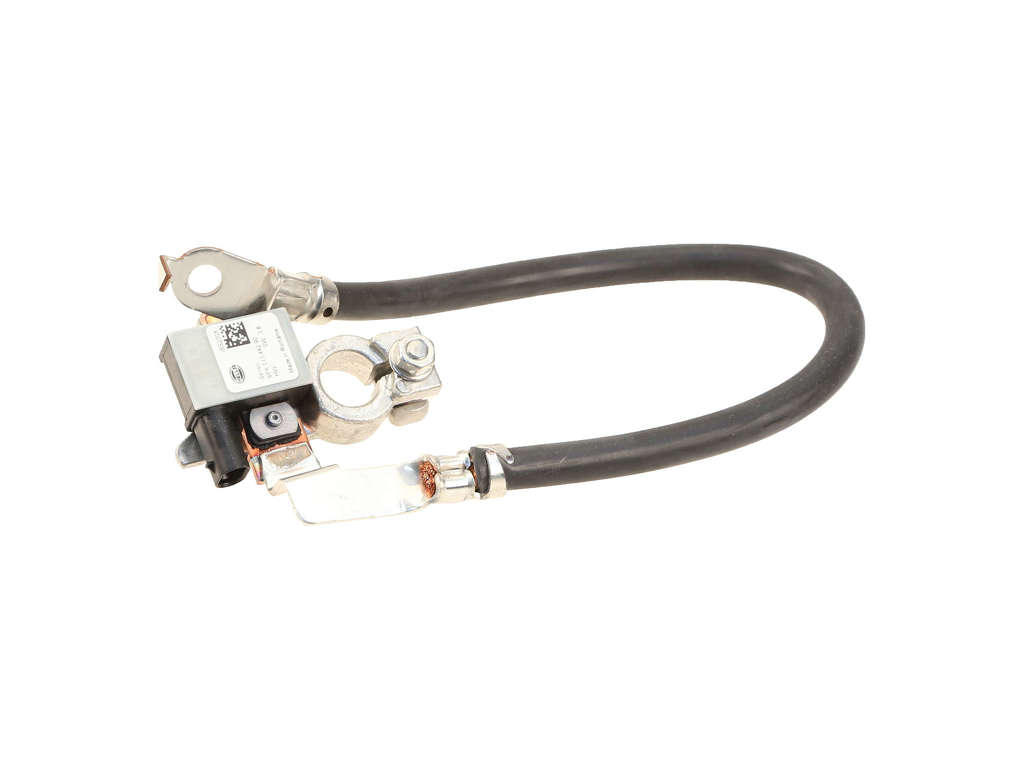
Est. part cost: $400-$1000 - Corroded or Loose Battery Terminals/Grounds 🟡 Medium Probability → Shop Vehicle Battery Corrosion or loose connections act as a resistor, impeding current flow and causing voltage drops under load, which can mimic the symptoms of a failing battery. The BMS sensor itself is located on the negative battery terminal, making this connection particularly critical.
How to confirm: Visually inspect the battery terminals for white or greenish corrosion. Physically check that the terminal clamps are tight and cannot be moved by hand. Inspect the main chassis ground strap for corrosion and tightness.
Typical fix: Clean the battery terminals and cable ends with a wire brush. Ensure all connections are tight and secure. Apply a dielectric grease to prevent future corrosion.
Est. part cost: $5-$15
Rare But Worth Checking
- Parasitic Battery Drain: → Shop Vehicle Battery If a fully charged, healthy battery goes dead overnight, a module or component may not be 'sleeping' correctly, continuously drawing power. A draw over 50 milliamps after the vehicle has entered its 'sleep mode' (approx. 30-45 minutes) is considered excessive and can trigger a U3003 code on the next startup.
- Faulty Control Module: In rare cases, a specific control module (like the ABS, BCM, or PSCM) may have an internal fault causing it to incorrectly report a voltage issue. This should only be considered after thoroughly ruling out the battery, BMS state, and charging system.
Diagnosis Steps
- Read All DTCs: Use a scanner capable of reading Ford-specific codes from all modules (e.g., FORScan). Note which module(s) are storing the U3003 code and any suffixes (:16, :17).
- Inspect Battery Connections: Check for clean, tight connections at the positive and negative battery terminals, the BMS sensor on the negative terminal, and the main chassis ground point.
- Test the Battery: Perform a professional load test on the battery. Voltage should not drop below 9.6V during cranking. If it does, the battery is the primary suspect.
- Test the Charging System: With the engine running, check the voltage at the battery terminals. It should be stable, between 13.8V and 14.5V.
- Check for Parasitic Drain: If the battery and alternator test good but the battery dies over time, perform a parasitic draw test to find any circuits drawing power when the vehicle is off.
- Perform BMS Reset: If the battery is replaced, it is MANDATORY to perform a Battery Management System reset. This can be done with a scan tool or the manual procedure: Ignition ON (engine off), flash high beams 5 times, press brake pedal 3 times, and wait for the battery light to flash.
Parts You'll Likely Need
- 12V AGM Battery
(OEM #BAGM-48H6-760)— This is the most common cause of code U3003. The original battery often lasts 3-5 years, and its degradation is detected by the sensitive Battery Management System. An AGM (Absorbent Glass Mat) battery is recommended.
Trusted brands: Motorcraft, Bosch, Varta
OEM price range: $200-$300
Aftermarket price range: $150-$250
Related Codes That Often Appear With This One
- U3003:16 — This is a more specific version of the code, meaning 'Circuit Voltage Below Threshold.' It confirms the issue is low voltage, which strongly points to a weak battery or charging system fault.
- U3003:17 — This variant means 'Circuit Voltage Above Threshold' and would point towards a faulty alternator over-charging the system, typically registering voltage above 15.5 or 16.0 volts.
- U3000 — This code for 'Control Module Internal Failure' can sometimes be triggered by severe voltage fluctuations. If U3003 is present, the U3000 code is likely a symptom of the power supply issue, not a primary fault.
Technical Service Bulletins (TSBs) & Recalls
- SSM 50154: While written for F-series trucks and Expeditions, this TSB is relevant as it notes that U3003:16 can be set in various modules (specifically the Power Running Board module in this case) due to a low battery voltage event. It instructs technicians to diagnose and correct the root cause (battery or charging system) before replacing any modules, confirming the nature of the U3003 code.
Platform-Specific Known Issues
- Failure to perform a Battery Management System (BMS) reset after installing a new battery is a very common issue on this platform. It will cause the new battery to be improperly charged and fail prematurely, leading to the return of the U3003 code.
- The manual BMS reset procedure (high beams/brake pedal) is widely reported to work but can be finicky. Some owners report needing multiple attempts. Using a scan tool like FORScan is the most reliable method.
Mechanic-Grade Diagnostic Values
- Battery Voltage (Engine Off, Rest) — expected: 12.4V - 12.8V. Failure: Below 12.2V indicates a low state of charge or failing battery.
- Battery Voltage (During Engine Cranking) — expected: Should remain above 9.6V. Failure: Dropping below 9.6V indicates a weak battery that cannot handle the starter load.
- Alternator Output Voltage (Engine Running at Idle) — expected: 13.8V - 14.5V. Failure: Below 13.5V or above 15.0V suggests a faulty alternator or voltage regulator.
- Parasitic Draw (After 45-minute sleep period) — expected: < 50 milliamperes (mA). Failure: A sustained draw above 50mA indicates a module or component is not shutting down correctly, draining the battery.
Hidden / Shadow Codes Worth Checking
- U3003:16-0A: Indicates 'Circuit Voltage Below Threshold' with an occurrence counter. The '-0A' or '-08' suffix is a hexadecimal counter indicating how many times the fault has occurred. This confirms a persistent or repeated low voltage event. (see via Advanced scan tools like FORScan or Ford's IDS.)
- U3003:17-0A: Indicates 'Circuit Voltage Above Threshold' with an occurrence counter. This points directly to an over-charging situation, most commonly a faulty alternator. (see via Advanced scan tools like FORScan or Ford's IDS.)
- B1438:03-08: A fault code for the 'Battery Current Sensor'. If seen alongside U3003, it can indicate a problem with the BMS sensor itself, not just the battery state. (see via Advanced scan tools like FORScan or Ford's IDS.)
Scan Tool Commands That Help
- FORScan: BMS Reset (Body Control Module Service Procedures) — This is the most reliable method to reset the Battery Management System after a battery replacement. It clears the old battery's learned data and starts the aging process from zero for the new battery. Failure to perform this step is a primary cause of the code returning.
- FORScan: Read BCM PIDs: 'BATT_AGE', 'BATT_SOC' — Use this to check the 'Battery Age' (days in service) and 'State of Charge' (%) as seen by the BCM. If 'BATT_AGE' is high after a recent battery change, it confirms the BMS reset was not performed. 'BATT_SOC' can show if the system perceives the battery as undercharged despite good voltage.
Wiring & Ground Locations
- BMS Sensor Connector — A small plastic connector plugged into the sensor that is part of the negative battery terminal clamp.. This is the direct communication line from the BMS sensor to the BCM. Corrosion or a loose connection here can prevent the BCM from accurately reading battery state, leading to U3003 or other charging system faults.
- Primary Chassis Ground — The main ground cable from the negative battery terminal to the vehicle's chassis, typically on the inner fender or frame rail near the battery.. A loose or corroded main ground creates high resistance for the entire electrical system, causing a significant voltage drop under load and mimicking a bad battery.
- G105 / G129 (example ground points) — Ford designates ground points with a 'G' number. These are often found behind kick panels in the passenger footwell or in the engine compartment on the firewall or inner fenders.. Various control modules (BCM, PSCM, ABS) have their own ground points. A loose or corroded ground for a specific module can cause it to misread its own supply voltage and set a U3003 code, even if the main battery and charging system are healthy.
- BCM Connector C2280B — The Body Control Module (BCM) is typically located in the passenger footwell area. C2280B is one of its main connectors, and specific pins (e.g., Pin 17, 21, 22) are the main power feeds from the battery junction box.. A voltage test at these specific BCM power input pins can confirm if full battery voltage is reaching the module. A significant drop between the battery post and these pins indicates a wiring or fuse box issue.
Real Owner Repair Stories
- Reddit user on r/fordfusion (2017 Ford Fusion Titanium (platform mate)) — Code U3003:16-08 (Low Battery Voltage) appeared after a recent battery replacement.
❌ Tried (didn't work) Replacing the battery. The code returned on the new battery.
✅ What actually fixed it Performing the Battery Management System (BMS) reset. The user was unaware this procedure was necessary, and the car was continuing to charge the new battery with the profile of the old, failing battery. - Carly forum user (2019 Ford Kuga, 23,755 km) — Weak starting, flickering/dim lights, low battery voltage reading.
❌ Tried (didn't work) Initially suspecting the battery itself.
✅ What actually fixed it A professional diagnosis revealed a defective Battery Management System (BMS) sensor on the negative terminal. Replacing the sensor resolved all symptoms.
Model Year Variations Within This Range
- 2017-2019 (Facelift models): The manual BMS reset procedure can be particularly finicky on facelifted models. Some owners report the high-beam/brake-pedal method does not work, while others suggest alternative combinations like using the rear fog light button. For these models, using a scan tool like FORScan is the most reliable reset method.
- PHEV Models (2020+ but relevant context): While outside the 2013-2019 range, it's notable that later Kuga PHEV models had a major recall for the high-voltage traction battery pack due to fire risk from cell contamination. This is a separate system from the 12V system that sets U3003, but it highlights the complexity of Ford's battery systems.
Diagnostic Flowchart
Other Known Issues on This Vehicle
Issues unrelated to this code that are worth knowing about as an owner of this generation:
- 1.5L/1.6L EcoBoost Coolant Intrusion 🔴 High — Common enough to trigger multiple TSBs (19-2139, 20-2100) and a customer satisfaction program (21N12). Affects engines where coolant can leak into the cylinders, causing misfires and eventual engine failure. (Ref: TSB 19-2139, Customer Satisfaction Program 21N12)
- PowerShift Automatic Transmission Problems 🟠 Medium → Shop Transmission Assembly — Affects models with the dual-clutch PowerShift transmission. Owners report shuddering, hesitation, and rough shifting. While the wet-clutch version in the Kuga is more reliable than the dry-clutch version in smaller Fords, problems with clutch packs and control modules are still documented, often appearing after 70,000 miles.
- Tailgate Wiring Harness Failure 🟡 Low — Common on models with a power tailgate. The wiring loom that passes from the body to the tailgate can fatigue and break from repeated opening and closing, causing failure of the latch, camera, or license plate lights.
- 1.6L EcoBoost Engine Overheating/Fire Risk 🔴 High — Primarily affects early models (2013-2014) with the 1.6L engine. A design flaw could lead to localized overheating, cracking the cylinder head, and causing an oil leak that could result in an engine fire. (Ref: Recall 17V209)
Used vs. New Parts: Buying Guide for This Vehicle
When a used part is the smart pick: For this specific U3003 code, using used parts is generally not recommended. The primary culprits are the battery and potentially the BMS sensor, both of which are wear items. A used alternator is a possibility but carries risk. A used Body Control Module (BCM) could be considered only if the original is definitively diagnosed as faulty, but it will require professional reprogramming to the vehicle's VIN.
Donor-vehicle mileage cap: roughly under 60000 miles for the part to have meaningful remaining life.
What to inspect on the donor part:
- For an alternator: Check for smooth bearing rotation with no noise or roughness. Ensure the pulley is in good condition. Ask for the donor vehicle's mileage.
- For a BCM: Ensure the part number matches exactly. Inspect for any signs of water damage or corrosion on the connectors and casing.
OEM-only on this vehicle (don't cheap out):
- 12V Battery: While aftermarket is fine, it must be a NEW, high-quality AGM or EFB type. A used battery is never a good idea.
- BMS Sensor: This part is critical and relatively inexpensive. Given the labor to diagnose, buying a new OEM sensor is the only logical choice if it's deemed faulty.
Aftermarket brands forum-validated for this vehicle:
- Battery: Bosch, Varta, Yuasa are frequently cited as reliable aftermarket alternatives to Motorcraft.
Brands owners have reported issues with on this vehicle:
- Avoid unbranded, 'white-box' batteries or alternators from online marketplaces, as their quality and longevity are highly questionable.
Real Owner Stories
Aggregated from forums and TSBs cited above. Mileages and costs reflect what owners reported in those sources.
2016 Ford Mustang
Symptoms: The 'Screen off to save battery' message appeared on the infotainment system. Even though the car started fine, the U3003 code was present.
What fixed it: Replacement of the weak OEM battery with a quality AGM battery and performing a BMS reset.
Source hint: Mustang6G.com - 'U3003 - Battery Voltage DTC -- tho the car's fine'
2015 Ford F-150
Symptoms: A 'silent' U3003 code was found using FORScan before any noticeable symptoms occurred.
What fixed it: Replacing the factory battery, which was noted to have a short life (3-5 years), and performing a BMS reset.
Source hint: Ford Truck Enthusiasts Forum - 'Silent DTC U3003?'
2017 Ford Mustang
Symptoms: Multiple U3003:16 (low voltage) and U3003:17 (high voltage) codes appeared across various modules simultaneously, indicating an unstable electrical system.
What fixed it: The charging system (alternator) was found to be at fault and required replacement.
Source hint: Reddit r/MechanicAdvice - 'My Wife Bought a Ford, and I need some help.'
Related OBD-II Codes
Frequently Asked Questions
My 2013-2019 Ford Kuga is showing 'System off to save Battery' on the SYNC screen; is this related to U3003?
Does TSB SSM 50154 apply to the U3003 code found in my Ford Kuga?
I just replaced the battery in my Kuga but the U3003 code returned. Did I buy a bad battery?
Can I perform the BMS reset on my Ford Kuga without a professional scan tool?
Why is my Auto Start-Stop no longer working on my 2017 Kuga?
What voltage should I see on my Kuga's charging system to rule out an alternator fault?
Helpful Videos

We Have This Part in Stock



The information in this article is provided for general reference and educational purposes only. Vehicle specifications, procedures, and part compatibility can vary by production date, trim level, and region. Always consult your vehicle's factory service manual and verify part numbers before purchasing or performing repairs. Safety-critical components such as airbags, seat belts, and braking systems should be installed by a qualified professional.
- Ford Kuga:
- 🧭 Diagnostic Flowchart
- 🎬 Helpful Videos
- 🛍️ Shop This Part
- What's Unique About the 2013-2019 Ford Kuga
- Symptoms You May Notice
- Most Likely Causes
- Rare But Worth Checking
- Diagnosis Steps
- Parts You'll Likely Need
- Related Codes That Often Appear With This One
- Technical Service Bulletins (TSBs) & Recalls
- Platform-Specific Known Issues
- Mechanic-Grade Diagnostic Values
- Hidden / Shadow Codes Worth Checking
- Scan Tool Commands That Help
- Wiring & Ground Locations
- Real Owner Repair Stories
- Model Year Variations Within This Range
- Other Known Issues on This Vehicle
- Used vs. New Parts: Buying Guide for This Vehicle
- Real Owner Stories
- 2016 Ford Mustang
- 2015 Ford F-150
- 2017 Ford Mustang
- Related OBD-II Codes
- Frequently Asked Questions
- 🎟️ Get 5% Off