

U3003 on 2018-2022 Honda Accord: Battery Voltage Fault Causes and Fixes
On a 2018-2022 Honda Accord, code U3003, especially U3003-16, almost always means the 12V battery is weak or failing. This causes electrical issues like multiple dashboard warning lights and a brake pedal that kicks back on startup. A new battery, typically costing $150-$300, usually resolves the problem.
- Code U3003 on a 2018-2022 Accord almost certainly means you need a new 12V battery.
- Symptoms like multiple warning lights and a 'kick' from the brake pedal on startup are classic signs of this issue.
- Before replacing any expensive electronic modules, get your battery professionally load-tested.
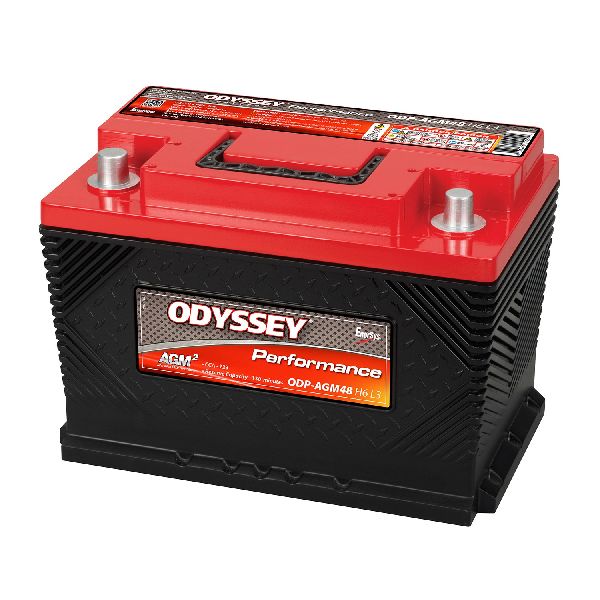
- When replacing the battery, use the correct size (H5 for 1.5T, H6 for 2.0T) and type (EFB or AGM) to ensure compatibility with the vehicle's systems.
- After replacing the battery, most warning lights should clear on their own after a short drive.
What's Unique About the 2018-2022 Honda Accord
The 10th generation Accord (2018-2022) uses a modern Electronic Brake Booster (EBB) instead of a traditional vacuum-operated one. This electronic system is highly sensitive to voltage fluctuations. A slightly weak battery, which might not prevent the car from starting, can still cause a momentary voltage drop sufficient to reset the EBB control unit. This reset is what triggers the U3003-16 code and often causes a distinct 'kickback' or 'pop' from the brake pedal immediately after starting the engine, a symptom frequently reported by owners and specifically addressed in Honda technical literature.
Symptoms You May Notice
- A cluster of multiple warning lights on the dashboard appearing simultaneously (Brake System, VSA, ACC, CMBS, etc.). 🎬 Watch: What causes all dashboard warning lights to turn on
- A noticeable 'kick' or 'pop' from the brake pedal immediately after starting the engine.
- Slow or hesitant engine cranking, especially after the vehicle has been sitting.
- Dimming headlights or interior lights.
- Failure of the auto start/stop system to engage.
- Inconsistent starting, where the car starts fine sometimes and struggles at other times.
- Replacing the Electronic Brake Booster (EBB) or other control modules. The U3003 code is almost always a symptom of a power supply issue, not a failure of the module itself. Always diagnose the battery and charging system first.
- Replacing the brake pedal switch. While a faulty brake pedal switch can cause some brake-related warnings, it does not typically cause the U3003 code or the widespread 'Christmas tree' effect on the dash.
Most Likely Causes
- Weak or Failing 12V Battery 🔴 High Probability → Shop Vehicle Battery The factory-installed batteries in these models have a widely reported lifespan of 2-4 years, which is shorter than average. The vehicle's reliance on numerous electronic modules, especially the sensitive Electronic Brake Booster, makes it intolerant of the voltage drops caused by an aging battery during engine start.
How to confirm: Perform a load test on the 12V battery. 🎬 See how to test and replace your Accord battery A simple voltage check is insufficient. Most auto parts stores can do this for free. During a cold start, the voltage should not drop below 9.6V. An 'unstable' or 'replace' result on a professional battery tester confirms the issue. Many owners report that a battery may pass a simple test but still be the cause, with replacement being the only definitive confirmation.
Typical fix: Replace the 12V battery. Ensure the replacement is the correct size (Group Size H5/47 for 1.5L engine, H6/48 for 2.0L engine) and type (EFB or AGM is recommended). After replacement, drive the vehicle for a few minutes to allow the warning lights to clear as the systems recalibrate.
Est. part cost: $150-$300 - Loose or Corroded Battery Terminals 🟡 Medium Probability → Shop Vehicle Battery
How to confirm: Visually inspect the battery terminals for white or blue-green crusty buildup (corrosion). Attempt to twist the terminals by hand; if they move, they are loose. A poor connection here can mimic a weak battery.
Typical fix: Disconnect the battery (negative terminal first). Clean the terminals and cable clamps with a wire brush and a mixture of baking soda and water. Reconnect and tighten the terminals securely (positive terminal first).
Est. part cost: $1-$10 - Failing Alternator ⚪ Low Probability → Shop Alternator
How to confirm: With the engine running, use a multimeter to check the voltage at the battery terminals. A healthy alternator should provide a charging voltage between 13.8V and 14.5V. If the voltage is below this range or erratic, the alternator is likely failing.
Typical fix: Replace the alternator.
Est. part cost: $250-$600
Rare But Worth Checking
- Faulty Battery Sensor: → Shop Vehicle Battery The battery sensor, located on the negative terminal, monitors the battery's state of charge for the vehicle's charging system. A faulty sensor can lead to improper charging and premature battery failure, which in turn causes the U3003 code. The OEM part number is 38920-TVA-A02, which supersedes 38920-TVA-A01.
- Poor Ground Connection: A corroded or loose main engine or chassis ground strap can cause widespread electrical issues, including voltage drops to various modules. This is less common than a bad battery but can produce similar symptoms.
Diagnosis Steps
- Scan the vehicle for all DTCs. Note if U3003-16 is present and which module(s) have stored it (commonly the Electric Servo Brake control unit). Also, note any other communication codes.
- Visually inspect the 12V battery terminals for looseness or corrosion. Clean and tighten as necessary.
- Perform a professional load test on the 12V battery. This is the most critical step. A simple voltage reading is not sufficient. If the battery fails the load test or is older than 4 years, replace it.
- If the battery passes the load test, check the charging system. With the engine running, measure the voltage at the battery terminals. It should be stable and within the 13.8V-14.5V range.
- If the battery and alternator are confirmed to be good, inspect the main power and ground connections to the chassis and engine block for corrosion or looseness.
- Check the battery sensor on the negative terminal. Ensure its connection is clean and tight. A faulty sensor (Part No. 38920-TVA-A02) can cause incorrect charging.
- If the code returns after confirming the power supply is stable, investigate the specific circuit for the module that is setting the code (e.g., the Electric Servo Brake control unit), checking for blown fuses or wiring issues as per the service manual.
Parts You'll Likely Need
- 12V Battery
(OEM #31500-T2F-A11 (Varies by engine/trim))— This is the root cause in over 90% of cases for this code on this vehicle, due to the sensitivity of the electronic systems to voltage drops during startup.
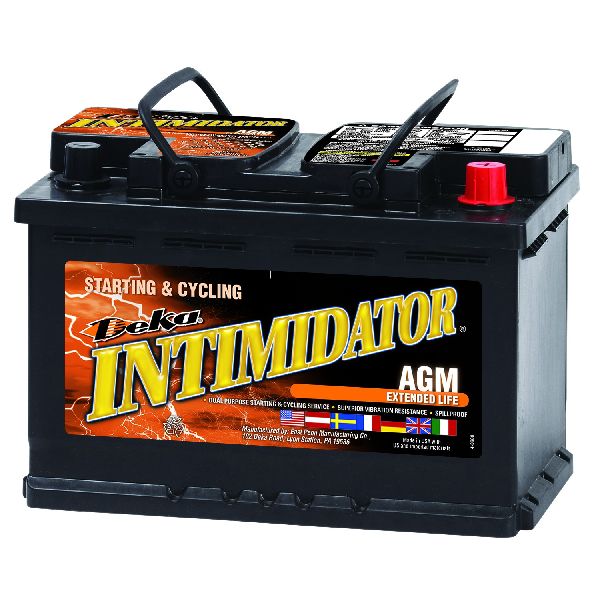
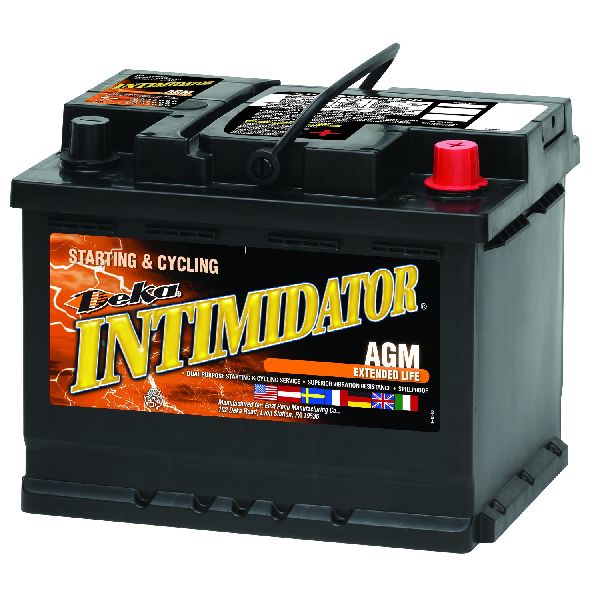
Trusted brands: Interstate, Duracell, Deka, Honda OE
OEM price range: $200-$250
Aftermarket price range: $150-$300
Related Codes That Often Appear With This One
- U3003-16 — This is the most common variant of the code, specifically indicating 'Power Supply Voltage Too Low'. NHTSA ODI #11442366 specifically identifies this as "Electric Parking Brake Control Unit Power Source Circuit (+B) Low Voltage."
- U3003-17 — NHTSA ODI #11442363 describes this variant as "Battery Voltage Circuit Voltage Above Threshold."
- Multiple U-codes (e.g., U0100, U0122) — A significant voltage drop can cause temporary loss of communication between multiple modules on the CAN bus network, leading to a cascade of 'Lost Communication' codes along with the U3003. NHTSA ODI #11558336 reports U3003-16 appearing alongside U0401-68 and various misfire codes.
Technical Service Bulletins (TSBs) & Recalls
- NHTSA ID: 10145949 (Honda Tech Line Summary, September 2018) 🎬 Watch: Video explanation of the brake pedal kickback issue - Confirms brake pedal kickback on startup is caused by a low battery charge resetting the Electronic Brake Booster.
Platform-Specific Known Issues
- A Honda Technical Service Tip (NHTSA ID: 10145949) from September 2018 directly addresses the symptom of 'Brake Pedal Kicks Back During Engine Start'. It explicitly states the cause is a low battery charge causing the Electronic Brake Booster (EBB) to reset and confirms the proper fix is to test, charge, or replace the battery.
- The OEM battery has a reputation for premature failure, often within 2-4 years of service, which is a common topic in owner forums.
Mechanic-Grade Diagnostic Values
- EPS (Electric Power Steering) Control Unit Minimum Voltage — expected: > 9.0 V. Failure: Voltage dropping below 9.0V will trigger a fail-safe action and can contribute to setting a U3003 code.
- Battery Sensor Internal Resistance — expected: 0.8Ω – 1.2Ω. Failure: A reading outside this range, particularly a much higher one, indicates an internal fault in the sensor. An older Honda TSB for a similar sensor considered a reading below 5.0 kΩ to be a failure.
- HDS vs. Multimeter Voltage Differential — expected: < 3.0 V. Failure: A difference of 3.0V or more between the voltage reported by the HDS scan tool and the actual voltage measured at the battery terminals indicates a problem with the battery or wiring, not necessarily the module.
Scan Tool Commands That Help
- Honda HDS (or equivalent): Check 'IDLE STOP INHIBIT (BATTERY DETERIORATION)' in PGM-FI Data List — This is used to confirm if the Battery Management System has successfully learned the internal resistance of a new battery after performing the manual reset procedure. If it still reads 'INHIBITED', the reset was not successful or the new battery is faulty.
- Manual Procedure (No Tool Required): 12-Volt Battery Internal Resistance Reset — After replacing the 12V battery, this procedure is necessary to make the Battery Management System (BMS) relearn the new battery's characteristics, ensuring proper charging and operation of the Auto Idle Stop system. The procedure involves a specific sequence of key cycles (OFF -> ACCESSORY -> ON -> START -> IDLE 1 min -> OFF) repeated at least four times.
- Honda HDS (or equivalent): Electric Servo Brake Control Unit - Data List — To monitor the 'Battery Voltage' parameter as seen by the brake control unit in real-time. This helps confirm if the module itself is experiencing the voltage drop that is triggering the code.
Wiring & Ground Locations
- Electric Brake Booster — Located on the left side of the driver's engine compartment, on the firewall.. This is the module that most commonly sets the U3003-16 code and causes the brake pedal kickback symptom when it resets due to low voltage.
- G501 — A major chassis ground point located at the upper left end of the dash.. This ground is used by multiple modules, including the VSA (Vehicle Stability Assist) modulator-control unit. A poor connection at G501 can cause intermittent voltage-related issues for several safety systems.
- CAN Bus Access — The CAN bus can be accessed in the driver-side footwell, above the hood release lever on a Left Hand Drive vehicle. The bus speed is 500k.. For advanced diagnostics, technicians may need to tap into the CAN bus to monitor communication between modules during a startup event to see which modules are dropping off the network.
Real Owner Repair Stories
- Reddit user hungrycactus in r/accord (2018 Honda Accord) — Car could not accelerate past 50-60 mph, and the Brake Alert came on.
❌ Tried (didn't work) Initially, the user was confused as there was no low battery warning light.
✅ What actually fixed it The dealership found DTC U3003-16. They determined the battery was simply low on charge. Recharging the battery with a GR8 charger resolved the symptoms and the code did not return. - Reddit user in r/Honda (2018 Honda Accord) — After replacing a dead battery, every warning light on the dash came on and would not go off even after driving.
❌ Tried (didn't work) Driving the car for a while., Performing a 'capacitive reset' by disconnecting the battery and touching the cable ends together. This cleared the lights, but they returned after about 50 miles.
✅ What actually fixed it The issue ultimately turned out to be failing fuel injectors, which caused a misfire. The injectors were replaced under the powertrain warranty, and this resolved the warning light issues. The U3003 and other codes were likely a symptom of the electrical instability caused by the engine problem, not the battery itself. - NHTSA ODI #11442336 — An owner reported that even after installing a new battery, the vehicle continued to trigger U3003-16, indicating "Battery Voltage Circuit Voltage Below Threshold" within the Electric Brake Booster (EBB) system.
- NHTSA ODI #11442362 — An owner expressed frustration after experiencing multiple issues, specifically citing U3003-16 as "Issue #17" with their vehicle and requesting a manufacturer fix.
"I Checked Everything" — The Actual Cause
- This is an electrical code not typically diagnosed with a smoke test. However, a common parallel exists: a 12V battery may pass a standard load test at an auto parts store, but still be the root cause of U3003-16. The specific, brief, high-current draw from the Electronic Brake Booster during its startup self-test can cause a momentary voltage drop that a generic load tester does not replicate. In these cases, the battery is internally weak and cannot handle the specific load profile of the vehicle, even if it passes a general health check.
When the Usual Fixes Don't Work
- In a notable case, an owner replaced their battery and was subsequently plagued by a full dashboard of warning lights that would not clear. After a temporary fix (capacitive reset) failed, the dealer diagnosed the root cause as faulty fuel injectors. The electrical faults, including likely a U3003 code, were a secondary symptom of the engine misfiring and causing system-wide electrical instability. The final repair was replacing the fuel injectors, not any part of the charging or battery system.
- NHTSA ODI #11558336 describes a scenario where U3003-16 appeared alongside misfire codes (P0300, P0301, P0304) and ECM failure alerts, suggesting that engine performance issues can trigger these electrical codes.
OEM Part Supersession History
38920-TVA-A01→38920-TVA-A02— While not officially stated by Honda for this specific part, battery sensors are often superseded to improve their resistance to moisture. TSBs for prior Honda generations note that improperly sealed sensor casings could allow moisture entry, leading to short circuits and incorrect readings.
Model Year Variations Within This Range
- 2021-2022: The 2021 mid-cycle refresh introduced several electrical and software changes. Engine management software was updated for more linear throttle control, and the Display Audio system became standard on all trims. Higher trims also gained Low Speed Braking Control. While these changes don't alter the root cause of U3003 (a weak battery), the updated software and additional electronic systems underscore the importance of a stable 12V power supply.
Diagnostic Flowchart
Other Known Issues on This Vehicle
Issues unrelated to this code that are worth knowing about as an owner of this generation:
- A/C Condenser Leaks 🟠 Medium — Common on 2018-2020 models. Refrigerant leaks from tiny holes, causing the A/C to stop blowing cold. (Ref: Warranty Extension (Service Bulletin 21-018) extends coverage to 10 years/unlimited miles for this specific issue.)
- 1.5T Engine Oil Dilution 🟠 Medium — Affects 1.5L Turbo engines, especially in cold climates with frequent short trips. Fuel mixes with engine oil, reducing lubrication. (Ref: Honda released software updates (e.g., TSB 19-037) and a warranty extension for certain components on related models like the Civic/CR-V.)
- Low-Pressure Fuel Pump Failure 🔴 High — Affects certain 2018-2020 models. The fuel pump can fail, causing the engine to stall while driving. (Ref: NHTSA Recall 20V-314 (and subsequent expansions). Dealers will replace the fuel pump assembly free of charge.)
- Sticky Steering 🔴 High — More prevalent on newer Honda platforms (Civic/CR-V 2022+), but some 10th gen owners report similar feel. Steering can feel momentarily 'stuck' at highway speeds. (Ref: TSB 23-037 was issued for newer models, involving EPS gearbox replacement.)
- Body Control Module (BCM) Malfunction 🟡 Low — Affects some 2018-2020 models, causing various electrical issues like inoperative wipers, turn signals, or rearview camera. (Ref: NHTSA Recall 20V-777. A software update performed by the dealer resolves the issue.)
Used vs. New Parts: Buying Guide for This Vehicle
When a used part is the smart pick: For this specific code, a used OEM alternator from a low-mileage donor vehicle can be a cost-effective alternative to a new unit if the alternator is diagnosed as the fault.
Donor-vehicle mileage cap: roughly under 60000 miles for the part to have meaningful remaining life.
What to inspect on the donor part:
- For an alternator, check that the pulley spins freely without noise or roughness.
- Visually inspect for any signs of corrosion, fluid leaks, or physical damage to the casing or connectors.
- If possible, verify the donor vehicle's mileage and ensure it's from a region without heavy road salt usage.
OEM-only on this vehicle (don't cheap out):
- 12V Battery: Never buy a used battery. Always purchase new from a reputable brand to ensure reliability.
- Battery Sensor (38920-TVA-A02): Given that this part was superseded and the original may have design flaws, it is strongly recommended to buy the latest OEM version new. A used sensor could be the failure-prone original part or have unseen damage.
Aftermarket brands forum-validated for this vehicle:
- For batteries, brands like Interstate, Duracell (manufactured by East Penn), and Deka are well-regarded alternatives to the Honda OE battery.
Brands owners have reported issues with on this vehicle:
- Avoid generic, unbranded, or suspiciously cheap battery sensors from online marketplaces, as their accuracy and durability are questionable and can cause persistent charging system problems.
Real Owner Stories
Aggregated from forums and TSBs cited above. Mileages and costs reflect what owners reported in those sources.
2018 Honda Accord
Symptoms: A cluster of multiple warning lights on the dashboard appearing simultaneously (Brake System, VSA, ACC, CMBS, etc.) and a noticeable 'kick' from the brake pedal immediately after starting the engine.
What fixed it: Replacing the original 12V battery with a new one, as the factory-installed batteries often fail within 2-4 years.
Source hint: YouTube - 'Honda Tips: Brake Pedal Kicks Back During Engine Start (U3003-16)'
2018-2022 Honda Accord
Symptoms: A sudden cascade of warning lights including Brake System, ACC, and LKAS, along with a brake pedal pop on startup.
What fixed it: Replacing the original 12V battery; owners noted that a simple voltage test was misleading and a load test was necessary to identify the failure.
Source hint: DriveAccord.net 10th generation section
2018 Honda Accord
Symptoms: Vehicle could not accelerate past 50-60mph and the Brake Alert appeared even when no cars were in front.
What fixed it: The report mentions bringing it in for safety concerns related to the Brake Alert and acceleration issues.
Source hint: reddit r/Cartalk
Documented NHTSA Reports
NHTSA ODI #11442336
Symptoms: An owner reported that their vehicle displayed U3003-16 (Battery Voltage Circuit Voltage Below Threshold) within the Electric Brake Booster (EBB) system.
What fixed it: The owner noted the issue persisted even with a new battery, highlighting the complexity of the voltage threshold requirements for the EBB.
NHTSA ODI #11442366
Symptoms: This report identifies U3003-16 specifically as "Electric Parking Brake Control Unit Power Source Circuit (+B) Low Voltage."
Related OBD-II Codes
Frequently Asked Questions
Why does my 2018-2022 Honda Accord brake pedal 'pop' or 'kick' immediately after I start the engine?
My dashboard looks like a Christmas tree with Brake System, VSA, and ACC lights all on. Is this a major mechanical failure?
I tested my battery with a multimeter and it showed 12.6V, but I still have the U3003 code. Is the battery still the likely culprit?
What specific battery size should I buy for my 2.0L Turbo Accord to fix these electrical issues?
Is there a specific part I should check if my battery and alternator both pass their tests?
Could my Accord's auto start/stop failure be related to the U3003 code?
Helpful Videos
We Have This Part in Stock


The information in this article is provided for general reference and educational purposes only. Vehicle specifications, procedures, and part compatibility can vary by production date, trim level, and region. Always consult your vehicle's factory service manual and verify part numbers before purchasing or performing repairs. Safety-critical components such as airbags, seat belts, and braking systems should be installed by a qualified professional.
- Honda Accord:
- 🧭 Diagnostic Flowchart
- 🎬 Helpful Videos
- 🛍️ Shop This Part
- What's Unique About the 2018-2022 Honda Accord
- Symptoms You May Notice
- Most Likely Causes
- Rare But Worth Checking
- Diagnosis Steps
- Parts You'll Likely Need
- Related Codes That Often Appear With This One
- Technical Service Bulletins (TSBs) & Recalls
- Platform-Specific Known Issues
- Mechanic-Grade Diagnostic Values
- Scan Tool Commands That Help
- Wiring & Ground Locations
- Real Owner Repair Stories
- "I Checked Everything" — The Actual Cause
- When the Usual Fixes Don't Work
- OEM Part Supersession History
- Model Year Variations Within This Range
- Other Known Issues on This Vehicle
- Used vs. New Parts: Buying Guide for This Vehicle
- Real Owner Stories
- 2018 Honda Accord
- 2018-2022 Honda Accord
- 2018 Honda Accord
- Documented NHTSA Reports
- NHTSA ODI #11442336
- NHTSA ODI #11442366
- Related OBD-II Codes
- Frequently Asked Questions
- 🎟️ Get 5% Off