

U3003 on 2016-2021 Honda Civic: Battery Voltage Fault Causes and Fixes
On a 2016-2021 Honda Civic, code U3003 almost always means the 12V battery is weak or failing. Before suspecting expensive modules, test and likely replace the battery. A new battery costs between $150 and $250 and is a 1/5 difficulty DIY job.
- U3003 on a 10th-gen Civic is almost always a battery problem.
- Always perform a proper load test on the battery; a simple voltage check is insufficient.
- A key symptom is a 'kick-back' or pulsation from the brake pedal on startup.
- Clean and tighten battery terminals and grounds before replacing any parts.
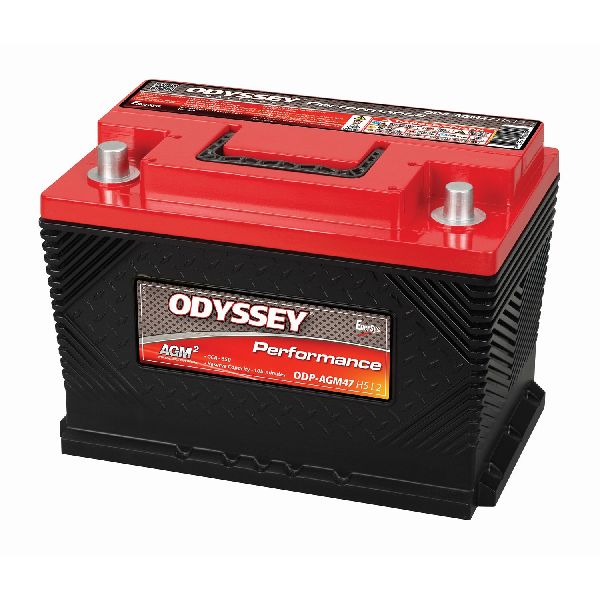
- Consider replacing the original battery with a more durable AGM type.
- Do not replace expensive electronic modules unless the battery, battery sensor, and charging system have been proven to be in perfect working order.
What's Unique About the 2016-2021 Honda Civic
The 10th generation Honda Civic (2016-2021) is equipped with numerous electronic modules for safety and convenience features. These systems place a high demand on the relatively small factory battery (Group Size 51R). As the battery ages and its capacity diminishes, it can struggle to provide stable voltage, especially during engine start-up or when high-draw systems like the electronic parking brake are used, making this code a very common complaint as these cars get older. Furthermore, these models use a battery sensor on the negative terminal (part of the Battery Management System or BMS) to monitor the battery's state of charge. A faulty sensor or failure to reset the BMS after a battery replacement can also lead to charging system problems and low voltage codes.
Symptoms You May Notice
- Multiple warning lights on the dashboard (Brake, ABS, Power Steering, Vehicle Stability Assist, etc.)
- "Brake" light flashes when disengaging the electronic parking brake.
- Brake pedal kicks back or pulsates immediately upon engine start. 🎬 Watch: Why your brake pedal kicks back on startup
- Sluggish or slow engine cranking
- Dimming headlights or interior lights, especially at idle.
- Intermittent failure or warnings from safety systems like Forward Collision Warning (FCW) or Lane Departure Warning (LDW).
- Power windows or locks operating slowly.
- Replacing the ABS module, EPS (Electric Power Steering) module, or other control units before properly testing the battery and charging system. These expensive modules are rarely the root cause.
Most Likely Causes
- Weak or Failing 12V Battery 🔴 High Probability → Shop Vehicle Battery The stock battery has a limited capacity (Group 51R), and the vehicle's electrical demands can cause it to wear out in 3-5 years. This is the most frequent cause of U3003.
How to confirm: Use a multimeter to check the resting voltage (should be >12.4V). More effectively, use a carbon pile or electronic battery load tester to check cranking amps. Voltage should not drop below 9.6V during a cranking test. Many auto parts stores perform this test for free.
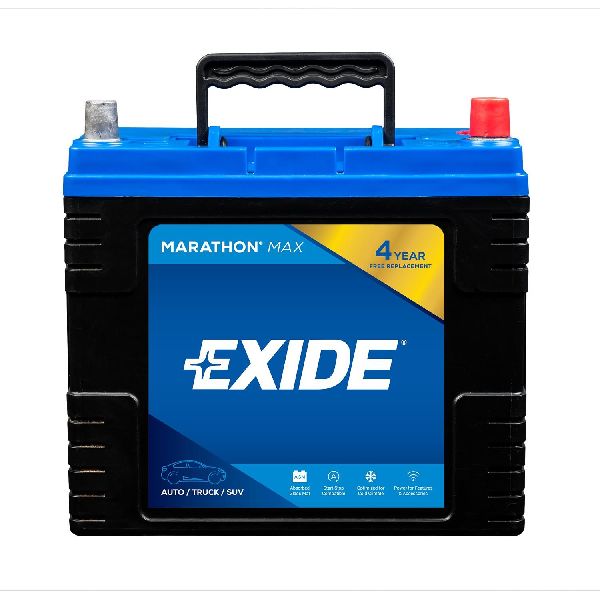
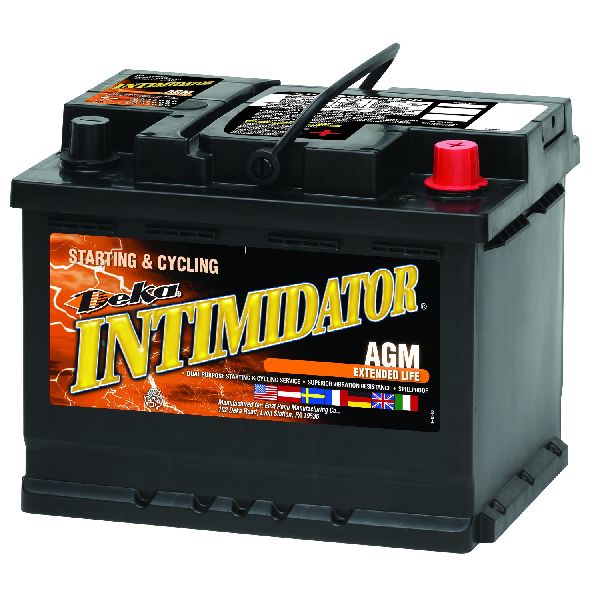
Typical fix: Replace the 12V battery. It is recommended to use an AGM (Absorbent Glass Mat) battery as a more robust replacement for the original EFB (Enhanced Flooded Battery). After replacement, a battery sensor/BMS reset may be required. 🎬 See this 10th Gen Civic battery replacement and reset guide
Est. part cost: $150-$250 - Loose or Corroded Battery Terminals/Grounds 🟡 Medium Probability → Shop Vehicle Battery Corrosion is a common issue on all vehicles and creates resistance, which leads to a voltage drop under load.
How to confirm: Visually inspect the battery terminals, clamps, and the main chassis ground strap for white or greenish corrosion and ensure they are tight. Pay close attention to the negative terminal where the battery sensor is located.
Typical fix: Disconnect the battery, clean the terminals and clamps with a wire brush, and re-tighten securely. Clean the chassis ground contact point.
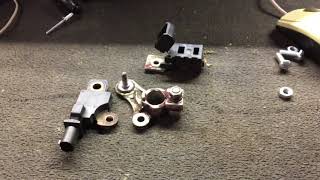
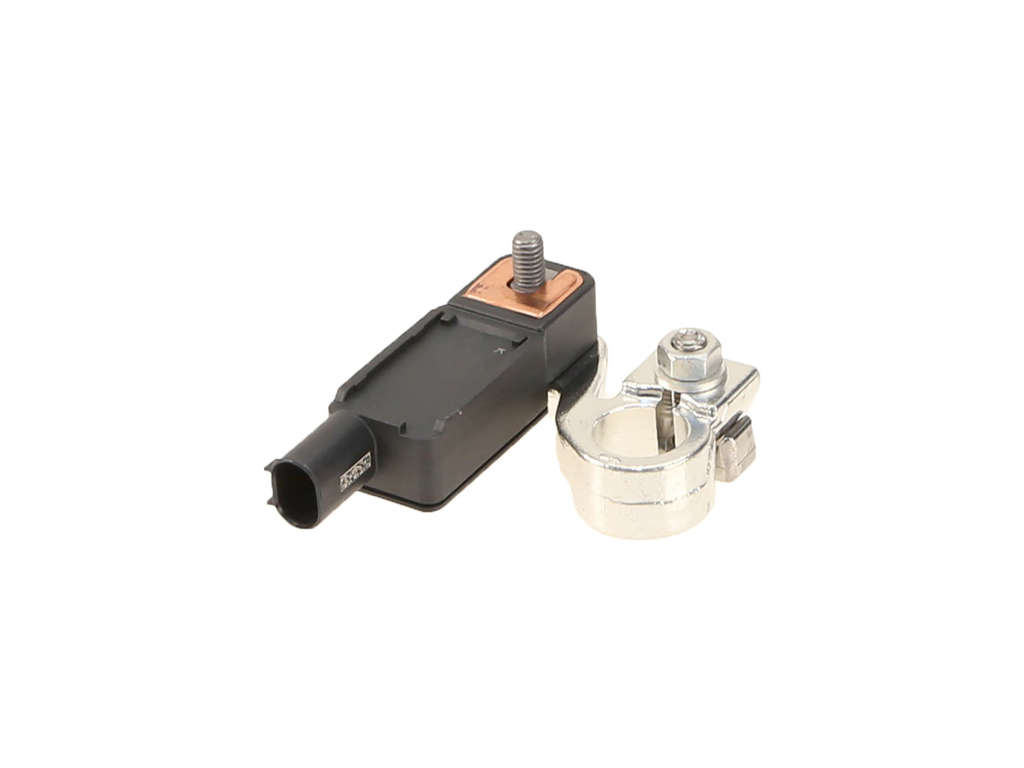
Est. part cost: $5-$10 for a terminal cleaning kit - Faulty Battery Sensor 🟡 Medium Probability → Shop Vehicle Battery The battery sensor, located on the negative terminal, monitors the battery's state of charge for the charging system. It can fail or be damaged, leading to improper charging and low voltage conditions.
How to confirm: After confirming the battery and alternator are good, inspect the sensor for physical damage or corrosion. A professional scanner can read data from the BMS to see if the sensor is reporting erratically. If the battery was recently replaced without a BMS reset, the system may be miscalibrated.
Typical fix: Replace the battery sensor assembly on the negative terminal. The OEM part number is typically 38920-TBA-A02 (or superseding part 38920-TBA-A01).
Est. part cost: $100-$160 - Failing Alternator ⚪ Low Probability → Shop Alternator
How to confirm: With the engine running, use a multimeter to measure the voltage at the battery terminals. A healthy alternator should provide a charge between 13.5V and 14.8V. If the voltage is low or fluctuates wildly, the alternator is likely faulty.
Typical fix: Replace the alternator.
Est. part cost: $250-$500
Rare But Worth Checking
- Blown Fuse: A specific module (like the EPS or ABS unit) may have its own dedicated power supply fuse. If that fuse is blown, the module will be unpowered and may report a voltage issue.
- Faulty Control Module: In very rare cases, the module setting the code (e.g., the EPS or ABS control unit) may have an internal power supply fault. This should only be considered after all other power supply issues have been ruled out.
Diagnosis Steps
- Read all stored Diagnostic Trouble Codes (DTCs) with an OBD-II scanner to see which module(s) are reporting the U3003 code. Note if it is U3003-16.
- Perform a thorough visual inspection of the battery, its terminals, and cables. Look for corrosion, swelling of the battery case, or loose connections. Pay special attention to the negative terminal assembly containing the battery sensor.
- With the engine off, measure the battery's static voltage using a multimeter. A healthy battery should read between 12.4V and 12.8V.
- Perform a battery load test. This is the most critical step. A simple voltage check is not enough. Most auto parts stores will do this for free.
- If the battery tests good, start the engine and measure the charging system voltage at the battery terminals. It should be approximately 13.5V to 14.8V.
- If voltage is low, the alternator is the likely culprit. If voltage is normal, inspect the battery sensor (Honda P/N 38920-TBA-A02) and its connection.
- If a new battery was installed, perform a Battery Management System (BMS) reset. This procedure allows the system to relearn the new battery's state of charge. The procedure can vary but often involves a sequence of key cycles and headlight activation or the use of a professional scan tool.
- If all power and ground systems are confirmed to be good, investigate the specific module that set the code for potential blown fuses or, as a last resort, module failure.
Parts You'll Likely Need
- 12V Battery (Group Size 51R)
(OEM #31500-TBA-A01)— This is the most common failure point leading to code U3003 on this vehicle.
Trusted brands: Interstate (AGM), DieHard (AGM), Duralast (Platinum AGM), EverStart (Platinum AGM)
OEM price range: $200-$250
Aftermarket price range: $180-$250 - Battery Sensor Assembly (Negative Terminal)
(OEM #38920-TBA-A02)— This sensor can fail or become damaged, leading to incorrect battery charging and low voltage faults. It replaces the previous part number 38920-TBA-A01.
Trusted brands: Genuine Honda
OEM price range: $110-$165
Aftermarket price range: N/A
Related Codes That Often Appear With This One
- U3000 (Control Module), U0100 (Lost Communication With ECM/PCM), and other 'U' codes often appear alongside U3003, indicating a systemic voltage drop is affecting multiple modules simultaneously.
Platform-Specific Known Issues
- On the CivicX.com forums, a common owner experience involves a sudden Christmas-tree effect on the dashboard, with multiple system failure warnings (Brake System, Power Steering, Hill Start Assist). This is almost universally traced back to the original factory battery failing after 3-4 years. Replacement with an AGM battery is the standard, effective fix.
- A Reddit thread in r/CivicSi describes a car that would barely move after the battery died and was recharged, displaying code U3003-16. The consensus confirmed that a simple recharge is insufficient and that the battery's inability to hold a load was the root cause, requiring replacement.
- Cross-platform data from other Honda models reinforces these findings; for example, NHTSA ODI #11442336 describes an Electric Brake Booster reporting U3003-16 for battery voltage below threshold even with a new battery, while NHTSA ODI #11442362 highlights the same code as a recurring electrical system failure.
Mechanic-Grade Diagnostic Values
- Normal Parasitic Draw — expected: < 50 mA (0.05 A). Failure: A reading consistently above 50-60 mA after all modules have gone to sleep (approx. 15-30 minutes) indicates a parasitic draw that can drain the battery.
- Alternator Output Voltage — expected: 13.5V - 14.8V. Failure: Voltage below 13.5V indicates a weak alternator; voltage above 15V indicates a faulty voltage regulator, which can damage the battery and electronics.
- Battery Voltage Drop During Cranking — expected: Should remain above 9.6V. Failure: Dropping below 9.6V during engine start indicates a weak battery that cannot handle the load, a primary trigger for U3003-16.
- U3003-16 Set Threshold (ABS Module) — expected: Voltage must be > 9.6V. Failure: The code sets when module voltage is between 7.9V and 9.6V for 700ms or more. More severe fail-safes engage at lower voltages.
- U3003-16 Set Threshold (EPS Module) — expected: Voltage must be > 9.0V. Failure: The EPS control unit will log U3003-16 if the voltage drops below its threshold, but may continue to function. It will return to normal when voltage recovers above 9.0V.
Scan Tool Commands That Help
- Honda HDS (Honda Diagnostic System): BMS/ECM Reset — The official Honda tool should be used after replacing the 12V battery or the battery sensor to clear learned values and make the system recognize the new component's state of health. This ensures the alternator charges the new battery correctly.
- Honda HDS (Honda Diagnostic System): Live Data List (Battery Voltage) — Use this to compare the voltage reading from a specific module (e.g., the Electric Servo Brake Control Unit) with the actual voltage measured at the battery terminals with a multimeter. A difference of more than 3V points to a wiring or connection issue between the battery and that module.
- Manual Procedure (No Scanner): ECU/Idle Relearn — After replacing the battery without a scanner, a manual reset can help the system relearn idle parameters. The procedure typically involves turning the ignition to 'ON' for 10 minutes, then off for 5 minutes, then starting the engine and letting it idle for 15-20 minutes. This is a general ECU reset, not a specific BMS reset, but is often recommended after power loss.
Wiring & Ground Locations
- G101 — Typically located on the thermostat housing or on the driver's side of the intake manifold.. This is a primary ground point for the engine control module (ECM/PCM) and several critical sensors. A loose or corroded G101 can cause erratic sensor readings and communication errors that may be misinterpreted as a voltage problem by other modules.
- Battery Sensor Connector — A 2-pin or 3-pin connector attached to the battery sensor on the negative battery terminal.. The wires to this connector can be damaged or corroded, interrupting communication between the sensor and the ECM/PCM. On some Honda models, the white wire is a B+ feed from a 10A fuse in the under-hood fuse box. Loss of this signal prevents the BMS from working, leading to improper charging and voltage codes.
- Main Battery Negative Cable Ground — The point where the main negative battery cable bolts to the vehicle's chassis or transmission housing.. This is the primary return path for all electrical current. Corrosion or looseness at this point creates high resistance, causing a significant voltage drop under load (like starting the engine), which is a direct cause of U3003-16.
Real Owner Repair Stories
- BobIsTheOilGuy.com user 'parshisa' (2017 Honda Civic Hatchback) — The 'BRAKE' light would flash a few times when disengaging the electronic parking brake. A scan revealed DTC U3003-16 in the EPS module.
❌ Tried (didn't work) The user continued to drive on the original battery, even though a battery test two years prior had recommended replacement.
✅ What actually fixed it The user acknowledged the 7-year-old original battery was the prime suspect. The community consensus was to replace the battery as the definitive first step, which is the standard fix for this symptom and code combination.
OEM Part Supersession History
38920-TBA-A01→38920-TBA-A02— Likely an internal revision for improved reliability or to address a known failure pattern. The function remains the same.
Heads up: None. The new part number is a direct replacement for the old one.
Model Year Variations Within This Range
- 2019-2021: The 2019 model year received a mid-cycle refresh. While the core powertrain and electrical architecture remained the same, a key change was making the Honda Sensing suite of safety features standard on all trims. This increases the number of modules that are sensitive to low voltage conditions, potentially making the U3003 code appear more readily on lower-trim 2019+ models compared to pre-2019 base models.
- 2019-2021: The 2019 refresh included minor interior updates, such as adding a physical volume knob and updated HVAC buttons. While not directly related to the U3003 code, it's a key identifier for the refreshed models. The exterior also received minor styling changes to bumpers and wheels.
Documented NHTSA Reports
- An owner of a related Honda model reported in NHTSA ODI #11656540 that code U3003-16 appeared alongside gearshift slipping and the emergency brake system activating when nothing was in the road.
- In NHTSA ODI #11558336, a driver noted that U3003-16 appeared with multiple misfire codes (P0301, P0304) and ECM failure alerts during a diagnostic session.
- NHTSA ODI #11685172 describes a case where U3003-16 (Electric Servo Brake Control Unit Power Source Low Voltage) was found in conjunction with door lock circuit errors and communication loss with the driver's door module.
Diagnostic Flowchart
Other Known Issues on This Vehicle
Issues unrelated to this code that are worth knowing about as an owner of this generation:
- A/C Condenser Failure 🔴 High — Very common across all trims and model years. Leaks develop due to a manufacturing defect causing corrosion. (Ref: Honda Service Bulletin 19-091; Honda extended the warranty for the A/C condenser to 10 years with unlimited mileage.)
- Oil Dilution (1.5T L15B7/L15BA Engine) 🟠 Medium — More common on 2016-2018 models, especially in cold climates and on vehicles used for frequent short trips. Unburnt fuel contaminates the engine oil. (Ref: Honda issued software updates (e.g., TSB 19-037 for Accord) to help the engine warm up faster, but the primary mitigation is more frequent oil changes (every 3,000-5,000 miles).)
- Sticky Electronic Parking Brake (EPB) Switch 🟡 Low — Can occur if liquids are spilled into the center console area, causing the switch to stick or malfunction.
- Premature Head Gasket Failure (1.5T Engine) 🔴 High — Less common than oil dilution but a known issue, particularly on CR-Vs and Accords with the 1.5T, but also seen on Civics. Often presents as a cold-start misfire and coolant loss between 40,000-70,000 miles.
- VTC Actuator Rattle on Cold Start (K20C2 & L15B7) 🟠 Medium — A brief, loud rattle for about 2 seconds on a cold start (after sitting for 6+ hours) can indicate a faulty VTC actuator. More common on earlier models. (Ref: Honda Service Bulletin 16-012 (for older K-series, but symptom is identical))
Used vs. New Parts: Buying Guide for This Vehicle
When a used part is the smart pick: For this repair, a used part is generally not recommended for the primary failure items. However, if a known-good OEM alternator from a low-mileage, rear-ended donor vehicle is available at a significant discount, it could be a viable option.
Donor-vehicle mileage cap: roughly under 60000 miles for the part to have meaningful remaining life.
What to inspect on the donor part:
- For an alternator: Check for smooth, quiet bearing rotation with no grinding. Ensure the pulley is not damaged and the electrical connector is intact.
- For a battery sensor: Visually inspect for any cracks in the plastic housing or corrosion on the terminals or connector pins. Ensure the wiring pigtail is not cut or frayed.
OEM-only on this vehicle (don't cheap out):
- Battery Sensor (38920-TBA-A02): Aftermarket availability is scarce, and the OEM part is critical for proper charging system function. Given its importance and relatively moderate cost, sticking with the Genuine Honda part is strongly advised.
Aftermarket brands forum-validated for this vehicle:
- Battery: Interstate (AGM), DieHard (AGM), Duralast Platinum (AGM), EverStart Platinum (AGM). The consensus is that any reputable AGM battery is a significant upgrade over the stock EFB.
Brands owners have reported issues with on this vehicle:
- Avoid non-AGM or basic flooded-cell batteries if possible. The vehicle's electrical system is designed for an EFB or AGM battery, and a standard battery may have a shorter lifespan and be more prone to causing voltage issues.
Real Owner Stories
Aggregated from forums and TSBs cited above. Mileages and costs reflect what owners reported in those sources.
2017 Honda Civic HB — ~70000 miles
Symptoms: The 'BRAKE' light would flash specifically when disengaging the electronic parking brake. The car was still using its 7-year-old original OEM battery.
What fixed it: Replacing the aging OEM battery, as the community consensus identified it as the prime suspect for voltage-related codes.
Source hint: BobIsTheOilGuy.com: A thread on a 2017 Civic with U3003-16
2016-2021 Honda Civic (10th Gen) — ~45000 miles
Symptoms: Sudden 'Christmas-tree' effect on the dashboard with multiple system failure warnings including Brake System, Power Steering, and Hill Start Assist.
What fixed it: Replacement of the original factory Group 51R battery with a higher-quality AGM unit.
Source hint: CivicX.com (10th Gen Civic Forum)
Honda Civic Si
Symptoms: The car would barely move after the battery had died and was subsequently recharged; the scan tool showed code U3003-16.
What fixed it: Battery replacement, as a simple recharge was insufficient for a battery that could no longer hold a load.
Source hint: Reddit thread in r/CivicSi
Related OBD-II Codes
Frequently Asked Questions
My 2017 Civic's 'BRAKE' light is flashing when I use the electronic parking brake and I have code U3003-16. Is my brake system failing?
Should I replace my 2016-2021 Civic battery with the same factory model to fix U3003?
Is there a specific part number for the battery sensor if that is causing my U3003 code?
I just replaced my battery but the U3003 code and warnings persist. Did I miss a step?
Could my Civic's A/C condenser failure be related to the U3003 code?
My brake pedal kicks back immediately when I start my Civic; is this a U3003 symptom?
Helpful Videos
We Have This Part in Stock


The information in this article is provided for general reference and educational purposes only. Vehicle specifications, procedures, and part compatibility can vary by production date, trim level, and region. Always consult your vehicle's factory service manual and verify part numbers before purchasing or performing repairs. Safety-critical components such as airbags, seat belts, and braking systems should be installed by a qualified professional.
- Honda Civic:
- 🧭 Diagnostic Flowchart
- 🎬 Helpful Videos
- 🛍️ Shop This Part
- What's Unique About the 2016-2021 Honda Civic
- Symptoms You May Notice
- Most Likely Causes
- Rare But Worth Checking
- Diagnosis Steps
- Parts You'll Likely Need
- Related Codes That Often Appear With This One
- Platform-Specific Known Issues
- Mechanic-Grade Diagnostic Values
- Scan Tool Commands That Help
- Wiring & Ground Locations
- Real Owner Repair Stories
- OEM Part Supersession History
- Model Year Variations Within This Range
- Documented NHTSA Reports
- Other Known Issues on This Vehicle
- Used vs. New Parts: Buying Guide for This Vehicle
- Real Owner Stories
- 2017 Honda Civic HB — ~70000 miles
- 2016-2021 Honda Civic (10th Gen) — ~45000 miles
- Honda Civic Si
- Related OBD-II Codes
- Frequently Asked Questions
- 🎟️ Get 5% Off