

U3003 on 2012-2017 Hyundai Azera: Battery Voltage Causes and Fixes
Code U3003 on a 2012-2017 Hyundai Azera almost always points to a failing battery or alternator. A very common cause for alternator failure on this car is oil leaking from the front valve cover gasket directly onto the alternator. Expect to pay $150-$300 for a battery and $400-$800 for an alternator replacement. Always replace the leaking gasket with the alternator.
- U3003 means your Azera has an electrical voltage problem, most often a failing battery or alternator.
- Before replacing any parts, test the battery's health and the alternator's output voltage.
- **Crucially, check the alternator for oil contamination.** A leaking valve cover gasket is a very common cause of alternator failure on this specific car.
- If you replace an oil-soaked alternator, you MUST also replace the valve cover gasket to prevent the new part from failing quickly.
- Do not continue to drive the vehicle. A failing charging system can cause the car to stall unexpectedly, which is a major safety hazard.
What's Unique About the 2012-2017 Hyundai Azera
For the 2012-2017 Hyundai Azera, which uses a 3.3L V6 'Lambda II' GDI engine, the U3003 code is frequently a direct consequence of alternator failure. What makes this platform different is a well-documented tendency for the front valve cover gasket to leak oil directly onto the alternator. This oil saturation contaminates the alternator's internal components, leading to premature failure and triggering the U3003 code. While a bad battery is always a possibility, the oil-soaked alternator is a uniquely common failure point on this specific vehicle and its platform mates (like the Kia Cadenza and Hyundai Santa Fe) that owners and technicians should investigate immediately.
Symptoms You May Notice
- Battery or charging system warning light illuminated on the dashboard.
- Dimming or flickering headlights and interior lights.
- Slow or sluggish operation of power windows, sunroof, or door locks.
- Engine is slow to crank or won't start at all.
- Radio or navigation system resets intermittently.
- Whining or grinding noise from the engine bay, indicating a failing alternator bearing.
- Multiple, seemingly unrelated electronic malfunctions or warning lights.
- A rhythmic clicking sound when trying to start, as the starter solenoid engages but lacks power to turn the engine.
- Replacing the battery without checking the alternator. If a bad alternator is the root cause, the new battery will quickly be drained and the problem will return.
- Replacing a failed alternator without replacing the leaking valve cover gasket. This will almost certainly lead to another alternator failure in the near future. 🎬 See how a leaking valve cover ruins your alternator.
Most Likely Causes
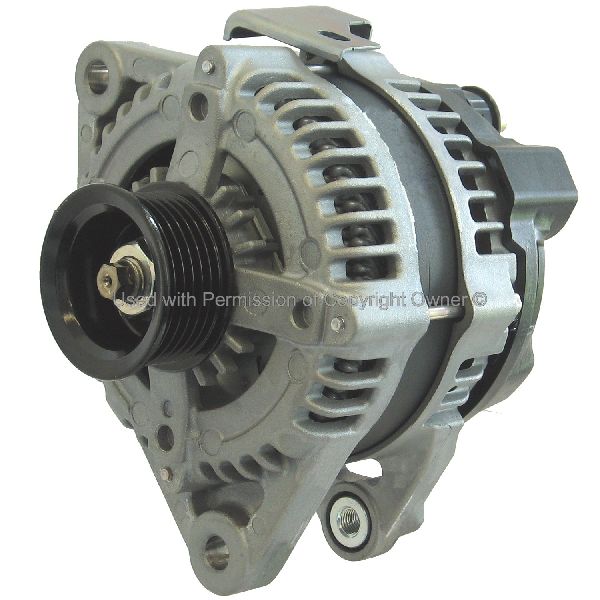
- Failing Alternator (Often due to oil leak) 🔴 High Probability → Shop Alternator The alternator is located directly below the front valve cover, and a leaking gasket will drip oil onto it, causing premature failure. This is a widely reported issue for this engine, confirmed in owner forums and by mechanics.
How to confirm: With the engine running, use a multimeter to measure the voltage at the battery terminals. A healthy alternator should produce between 13.5 and 14.8 volts. Also, visually inspect the alternator for signs of oil saturation from above. A Reddit user specifically identified this on a Hyundai 3.3L, noting it's a common sight in repair shops.
Typical fix: Replace the alternator and the serpentine belt. It is critical to also replace the leaking front valve cover gasket (Part No. 22441-3CGA1) to prevent the new alternator from failing for the same reason.
Est. part cost: $250-$500 - Weak or Failing Battery 🔴 High Probability → Shop Vehicle Battery Car batteries have a finite lifespan of 3-5 years. Some Azera owners report chronic parasitic drain issues that can prematurely kill batteries, even new ones, within a year.
How to confirm: With the engine off for at least 30 minutes, measure the battery's resting voltage. A healthy battery should read approximately 12.4-12.8 volts. A reading below 12.4V requires charging and re-testing. Most auto parts stores can perform a load test to check the battery's health under load, which is more definitive.
Typical fix: Replace the battery. If it's a recurring problem, a parasitic drain test is necessary.
Est. part cost: $150-$300 - Loose or Corroded Battery Terminals/Grounds 🟡 Medium Probability → Shop Vehicle Battery
How to confirm: Visually inspect the battery terminals for white or blue-green corrosion. Check that the battery cables are tight and cannot be moved by hand. Inspect the main ground strap from the battery's negative terminal to the vehicle chassis and the engine block for corrosion or looseness.
Typical fix: Disconnect the battery (negative first) and clean the terminals and cable clamps with a wire brush and battery terminal cleaner. Ensure all connections are tight upon reassembly.
Est. part cost: $5-$15 for a terminal cleaning kit
Rare But Worth Checking
- Parasitic Battery Drain: → Shop Vehicle Battery Some Azera owners have reported mysterious battery drain issues that can kill a battery overnight or over a few days. Forum discussions point to the 'Multimedia' fuse circuit or the Body Control Module (BCM) as potential culprits. One owner noted a 1.5-3.0A draw that dropped significantly after pulling the Multimedia fuse. Diagnosing this requires a multimeter and pulling fuses one by one to isolate the draining circuit after the car has been off for at least 30-60 minutes to allow all modules to sleep.
Diagnosis Steps
- Retrieve all stored Diagnostic Trouble Codes (DTCs) with an OBD-II scanner. Note if U3003 appears with the '-16' suffix, which confirms a low voltage condition.
- Visually inspect the battery terminals for corrosion and ensure the cable clamps are tight. Clean and tighten as necessary.
- With the engine off, use a multimeter to measure the battery's resting voltage. A reading below 12.4V suggests a discharged or weak battery. Have the battery load-tested at an auto parts store.
- Start the engine. Measure the charging voltage at the battery terminals. The reading should be between 13.5V and 14.8V. If the voltage is low (below 13V) or not increasing with engine RPM, the alternator is likely faulty.
- Crucial Step for Azera: Carefully inspect the alternator and the area around it. Look for signs of fresh or caked-on oil on the alternator housing, which indicates a leak from the front valve cover gasket above it.
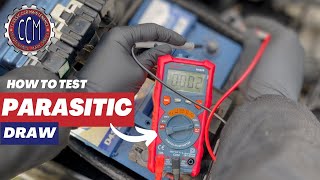
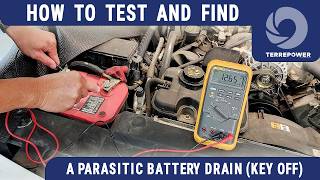
- If the battery and alternator test good, check for a parasitic drain. This involves connecting a multimeter in series with the negative battery cable to measure amperage draw 🎬 Watch the easiest way to test for parasitic draw. with the vehicle off and all doors closed. A draw over 50-85mA (0.05-0.085A) after all modules have gone to sleep (approx. 30 mins) indicates a problem.
- Inspect main power and ground connections to the engine and chassis for tightness and corrosion. A poor ground can mimic a failing alternator.
Parts You'll Likely Need
- Alternator
(OEM #37300-3C510-SJ (replaces 37300-3C510, 37300-3C610))— This is a primary cause of U3003, especially when it fails due to oil contamination from a leaking valve cover gasket.
Trusted brands: Hyundai (OEM), Denso, Remy, BBB Industries
OEM price range: $400-$600
Aftermarket price range: $200-$400 - Battery — A weak or dead battery is the simplest and often a very common cause for a low voltage code. Some Azeras have drain issues that shorten battery life.
Trusted brands: Interstate, DieHard, Duralast, ACDelco
OEM price range: $200-$300
Aftermarket price range: $150-$250 - Valve Cover Gasket (Front)
(OEM #22441-3CGA1)— This is a mandatory preventative replacement. If the alternator failed due to oil contamination, this gasket must be replaced to protect the new alternator.
Trusted brands: Hyundai (OEM), Fel-Pro, Mahle
OEM price range: $30-$50
Aftermarket price range: $20-$40 - Serpentine Belt — The serpentine belt must be removed to replace the alternator. It is best practice to replace it at the same time, especially if it is contaminated with oil from the valve cover leak or is showing signs of age.
Trusted brands: Continental, Gates, Bando
OEM price range: $30-$50
Aftermarket price range: $20-$40
Technical Service Bulletins (TSBs) & Recalls
- TSB 17-ST-001: Describes the procedure to replace the flexible steering coupler in the MDPS system for 2012-2014 Azera models, addressing a common clunking noise. While not related to U3003, it's a critical TSB for this platform.
Platform-Specific Known Issues
- A recall was issued for the Anti-Lock Brake System (ABS) module on 2012-2015 Azera models, which could leak fluid and cause an electrical short, potentially leading to a fire. While not a direct cause of U3003, it highlights a known electrical system vulnerability. The recall number is 23V651000.
Documented NHTSA Reports
While U3003 is a standard code for battery voltage, its implications can vary across manufacturers. For instance, NHTSA ODI #11582867 describes a Mazda where U3003 was associated with an EPB control module power supply failure (type 16), while NHTSA ODI #11685172 notes a Honda where U3003-16 indicated an Electric Servo Brake Control Unit Power Source Low Voltage. In a Ford Explorer, NHTSA ODI #10905479 reported U3003 alongside transmission codes, which the dealer interpreted as a mechanical failure. Furthermore, NHTSA ODI #11533082 mentions U3003 in a Ford Ranger context where power steering was lost, and NHTSA ODI #11656540 describes a Honda CR-V where U3003-16 appeared when the gearshift was slipping and the emergency brake system activated unexpectedly.
Mechanic-Grade Diagnostic Values
- Battery Voltage (Engine Off, Open-Circuit) — expected: 12.4V - 12.8V. Failure: Below 12.4V indicates a discharged or failing battery.
- Battery Voltage (During Engine Cranking) — expected: Should not drop below 9.6V.. Failure: A drop below 9.6V indicates a weak battery unable to handle the starter load.
- Charging System Voltage (Engine Running at Idle) — expected: 13.5V - 14.8V. Failure: Voltage below 13.5V or above 14.8V suggests a faulty alternator or voltage regulator.
- Parasitic Current Draw (Key Off, Modules Asleep) — expected: Under 50mA (0.050A). Some luxury models may be up to 85mA.. Failure: A sustained draw above 50-85mA after 30-60 minutes indicates a module or component is not shutting down correctly.
Hidden / Shadow Codes Worth Checking
- U3003-16: Indicates 'Battery Voltage Below Threshold'. This is a manufacturer-specific suffix that explicitly confirms the U3003 code was set due to a low voltage condition, as opposed to a high voltage one. (see via Professional scan tools, including the Hyundai GDS, will display this more detailed code.)
Scan Tool Commands That Help
- Hyundai GDS (Global Diagnostic System): Vehicle S/W Management -> Resetting adaptive values — After replacing a major electrical component like the battery or alternator, or after resolving a parasitic drain, it can be beneficial to reset learned values in the engine control module to ensure it adapts correctly to the restored stable voltage.
- Hyundai GDS (Global Diagnostic System): Flight Record / Data Analysis — For intermittent voltage drops that are hard to catch. The GDS can record vehicle data over a period of time, which can be triggered to capture events leading up to the fault, helping to diagnose elusive issues.
Wiring & Ground Locations
- G115 — Located on the left rear of the engine compartment.. This is a primary engine ground. A loose or corroded connection here can cause high resistance in the charging circuit, leading to improper alternator function and voltage-related codes.
- G06 — Located at the left front of the engine compartment.. Another key chassis and engine ground point. Ensuring this ground is clean and tight is a fundamental step in diagnosing any electrical issue, including U3003.
- Alternator Connector Pigtail (S2548) — The 4-pin electrical connector on the alternator itself.. In some cases, the alternator's internal rectifier can fail and overheat, burning the plastic connector and its wiring. This creates a poor connection or short, causing charging issues even if the alternator is replaced. The pigtail (RockAuto P/N S2548) may need to be spliced in.
- Engine Compartment Junction Block — On the left side of the engine compartment.. This box contains the main fuses and relays for the charging system. Corrosion or a faulty main fuse within this block can interrupt power from the alternator.
Real Owner Repair Stories
- YouTube user comment on alternator replacement video (2016 Hyundai Azera) — Charging system failure, likely U3003.
❌ Tried (didn't work) Initial diagnosis pointed to a bad alternator.
✅ What actually fixed it The alternator's rectifier had burned up and destroyed the 4-pin electrical connector. The owner had to source a new pigtail connector (RockAuto P/N S2548), cut out the melted original, and solder the new one in. The pinout was critical: Pin 1-Blank, Pin 2-Orange/Tan, Pin 3-Green, Pin 4-Lavender/Dark Blue. - Hyundai-Forums user Emorris (2012 Hyundai Azera) — Chronic parasitic battery drain that ruins a new battery every 8-12 months. The dealer acknowledged the problem but could not find the source after multiple attempts.
❌ Tried (didn't work) Multiple battery replacements by the dealer., Dealer diagnostics could not isolate the fault.
✅ What actually fixed it The owner performed a parasitic draw test and isolated a massive 1.5-3.0A draw to the 'Multimedia' fuse circuit in the interior fuse box. The issue was traced to the radio/telematics unit not going to sleep properly. Pulling this fuse stopped the drain.
OEM Part Supersession History
37300-3C510→37300-3C510-SJ— The -SJ part is the current service replacement, likely a remanufactured unit or a revised design.
Heads up: Part number 37300-3C610 is also listed as being replaced by 37300-3C510-SJ, indicating they are interchangeable for service purposes.
Model Year Variations Within This Range
- 2015-2017: The Azera received a significant facelift for the 2015 model year. This included a redesigned center stack, a standard 8-inch navigation display, and the next-generation Blue Link telematics system. While the core engine and charging system remained the same, these additional electronic modules (infotainment, Blind Spot Detection, etc.) introduce more potential sources for parasitic battery drains compared to the 2012-2014 models.
Diagnostic Flowchart
Other Known Issues on This Vehicle
Issues unrelated to this code that are worth knowing about as an owner of this generation:
- Failing Flexible Steering Coupler 🔴 High — Extremely common. Owners report a 'clunk' or 'thud' noise from the steering column when turning, typically starting around 60,000-80,000 miles. (Ref: TSB 17-ST-001 was issued for this problem, but unlike other Hyundai models, the Azera was not given an extended warranty or recall, often leaving owners to pay for the repair.)
- Potential for Catastrophic Engine Failure 🔴 High — Less common than the Theta II engine issues, but a significant number of owners of the 3.3L Lambda II GDI engine have reported premature engine failure, sometimes before 80,000 miles, due to bearing issues. This has led to class-action lawsuits. (Ref: No specific recall for the Azera, but Hyundai has faced NHTSA investigations and extended warranties for other models with this engine family.)
- Chronic Parasitic Battery Drain 🟠 Medium → Shop Vehicle Battery — Multiple owners report batteries dying repeatedly, often after 8-12 months of a new battery being installed. The cause is often a module that fails to go to sleep.
- Carbon Buildup on Intake Valves 🟠 Medium — As a Gasoline Direct Injection (GDI) engine, the 3.3L Lambda II is prone to carbon accumulation on the back of the intake valves over time, which can lead to reduced performance and misfires. This is a common issue for all GDI engines.
Used vs. New Parts: Buying Guide for This Vehicle
When a used part is the smart pick: Given the high failure rate from oil leaks, buying a used alternator is very risky unless its history is known. A used part is not recommended for this specific component. Other related parts like brackets or tensioner assemblies are generally safe to source from a junkyard.
Donor-vehicle mileage cap: roughly under 40000 miles for the part to have meaningful remaining life.
What to inspect on the donor part:
- For an alternator, inspect the donor vehicle's valve cover for any sign of oil leaks. Do not buy the alternator if there is any oil residue on or above it.
- Check the alternator's pulley for smooth, quiet rotation. Any grinding or roughness indicates bad bearings.
- Examine the electrical connector on the alternator for any signs of melting, charring, or corrosion.
OEM-only on this vehicle (don't cheap out):
- Valve Cover Gasket: To prevent a repeat failure of the alternator, using a high-quality OEM gasket is strongly recommended to ensure the best possible seal against oil leaks.
Aftermarket brands forum-validated for this vehicle:
- Alternator: Denso (often the original OEM supplier), Remy.
- Valve Cover Gasket: Fel-Pro, Mahle.
- Serpentine Belt: Continental, Gates, Bando.
Brands owners have reported issues with on this vehicle:
- Avoid no-name, 'white box' alternators from online marketplaces. While cheap, they have a high rate of being dead-on-arrival or failing prematurely, and warranty returns can be difficult.
Real Owner Stories
Aggregated from forums and TSBs cited above. Mileages and costs reflect what owners reported in those sources.
2012 Hyundai Azera 3.3L V6
Symptoms: The owner experienced a parasitic draw that repeatedly killed new batteries once they reached 8 or 9 months of age.
What fixed it: The source indicates a need for a parasitic drain test to identify a module that fails to go to sleep, though a specific single-component fix was not finalized in the discussion.
Source hint: hyundai-forums.com thread titled 'Parasitic draw that starts after a new battery is 8 or 9 months old.'
2014 Hyundai Azera 3.3L V6 — ~70000 miles
Symptoms: A 'clunk' or 'thud' noise from the steering column when turning.
What fixed it: Replacement of the flexible steering coupler in the MDPS system.
Source hint: TSB 17-ST-001
2013 Hyundai Azera 3.3L V6
Symptoms: Alternator soaked in oil; mechanic reports seeing this 'all the time' on the 3.3L engine.
What fixed it: Replacement of the alternator and the front valve cover gasket to stop the oil leak.
Source hint: Reddit r/MechanicAdvice thread 'Alternator soaked in oil'
Related OBD-II Codes
Frequently Asked Questions
My 2012 Azera has a clunking noise in the steering; is this related to the U3003 voltage code or TSB 17-ST-001?
Is there a recall for the electrical issues causing U3003 on my 2013 Hyundai Azera?
Why does my Azera keep killing brand new batteries every 8 to 12 months?
I see oil on my alternator; could this be causing my battery light and U3003 code?
Can I just replace the alternator to fix the U3003 code?
Helpful Videos
Used OEM Parts in Stock
New Aftermarket Parts Available


The information in this article is provided for general reference and educational purposes only. Vehicle specifications, procedures, and part compatibility can vary by production date, trim level, and region. Always consult your vehicle's factory service manual and verify part numbers before purchasing or performing repairs. Safety-critical components such as airbags, seat belts, and braking systems should be installed by a qualified professional.
- Hyundai Azera:
- 🧭 Diagnostic Flowchart
- 🎬 Helpful Videos
- 🛍️ Shop This Part
- What's Unique About the 2012-2017 Hyundai Azera
- Symptoms You May Notice
- Most Likely Causes
- Rare But Worth Checking
- Diagnosis Steps
- Parts You'll Likely Need
- Technical Service Bulletins (TSBs) & Recalls
- Platform-Specific Known Issues
- Documented NHTSA Reports
- Mechanic-Grade Diagnostic Values
- Hidden / Shadow Codes Worth Checking
- Scan Tool Commands That Help
- Wiring & Ground Locations
- Real Owner Repair Stories
- OEM Part Supersession History
- Model Year Variations Within This Range
- Other Known Issues on This Vehicle
- Used vs. New Parts: Buying Guide for This Vehicle
- Real Owner Stories
- 2012 Hyundai Azera 3.3L V6
- 2014 Hyundai Azera 3.3L V6 — ~70000 miles
- 2013 Hyundai Azera 3.3L V6
- Related OBD-II Codes
- Frequently Asked Questions
- 🎟️ Get 5% Off