

U3003 on 2017-2020 Hyundai Elantra: Battery Voltage Fault Causes and Fixes
Code U3003 on a 2017-2020 Hyundai Elantra almost always points to a weak or failing battery that can't provide stable voltage. Start by testing and likely replacing the 12V battery. A new battery typically costs between $150 and $250. This is a common issue as these vehicles reach 3-5 years of age and the original battery degrades.
- U3003 means there's a power supply problem, and it's not a sensor failure.
- The most likely cause on a 2017-2020 Elantra is an aging battery. Test this first, even if the car starts.
- Do not replace any expensive computer modules until you have confirmed the battery and alternator are working perfectly.
- Check for simple fixes first: loose or corroded battery terminals and ground straps can cause this code and are free to fix.
- If the battery and terminals are good, test the alternator's output voltage while the engine is running.
What's Unique About the 2017-2020 Hyundai Elantra
For the sixth-generation (AD) Elantra, the onboard electronics are particularly sensitive to voltage fluctuations. While U3003 is a generic voltage code, on this platform it frequently appears as the first sign of a weakening battery, sometimes even before the car has trouble starting. Communication codes like U0100 are also common companions to U3003 on this vehicle, often stemming from the same root cause: an unstable power supply from an aging battery.
Symptoms You May Notice
- Slow or hesitant engine cranking
- Dimming or flickering headlights and interior lights
- Battery or charging system warning light on the dashboard
- Power windows, radio, or other accessories working slowly or intermittently
- The vehicle may fail to start
- Warning messages appearing and disappearing on the instrument cluster
- Electronic accessories (radio, navigation) resetting or losing settings
- Replacing a control module. The U3003 code is almost always caused by a problem with the power supplied TO the module, not the module itself. Always diagnose the battery and charging system first.
Most Likely Causes
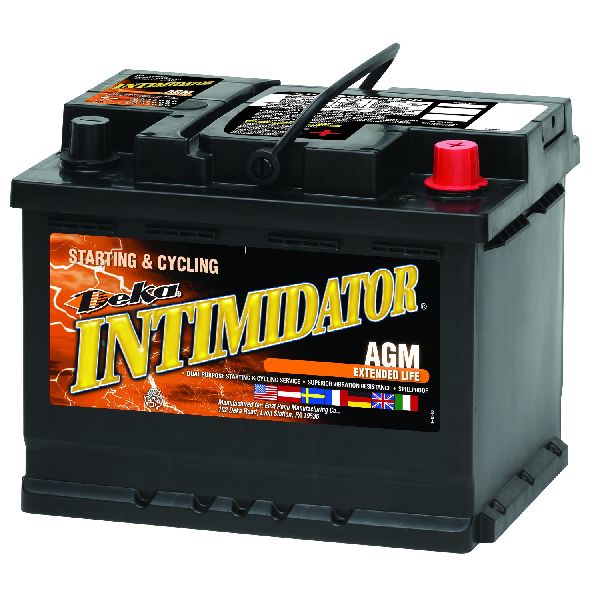
- Weak or Failing 12V Battery 🔴 High Probability → Shop Vehicle Battery Vehicle electronics are sensitive to voltage, and batteries typically have a 3-5 year lifespan. Cars in this year range are now at an age where original batteries are likely failing. Many models use an AGM battery (Absorbent Glass Mat), which can be more sensitive to deep discharge cycles.
How to confirm: Use a multimeter to check the battery voltage with the engine off; a healthy battery should read between 12.4V and 12.8V. Perform a load test (most auto parts stores do this for free) to see if the voltage drops below 9.6V during cranking. A reading below this threshold indicates a weak battery, even if it still starts the car.
Typical fix: Replace the 12V battery. Common sizes are Group H5/47 or H6/48.
Est. part cost: $150-$300 - Faulty Alternator 🟡 Medium Probability → Shop Alternator Heat and high mileage can cause the alternator's internal voltage regulator to fail, leading to undercharging or overcharging. The 2.0L engine commonly uses a 150 Amp alternator.
How to confirm: With the engine running, use a multimeter to measure the voltage at the battery terminals. A healthy alternator should output between 13.5V and 14.8V. Readings below this range indicate undercharging, while readings above may indicate an overcharging condition.
Typical fix: Replace the alternator. The OEM part number for the 2.0L engine is often 37300-2E721.
Est. part cost: $200-$450 - Corroded or Loose Battery Terminals/Grounds 🟡 Medium Probability → Shop Vehicle Battery Corrosion is common on battery terminals and acts as a resistor, preventing proper current flow and causing voltage drops. Ground straps can also corrode or loosen over time.
How to confirm: Visually inspect the battery terminals for white or greenish crusty buildup. Check that the terminal clamps are tight and cannot be moved by hand. Inspect the main chassis ground strap (OEM P/N examples: 91861-F2020, 91865-F2030) for tightness and corrosion where it bolts to the frame and transmission.
Typical fix: Disconnect the battery (negative first), clean the terminals and clamps with a wire brush and a baking soda/water solution, and re-tighten securely. Clean ground connection points with a wire brush until shiny.
Est. part cost: $5-$15
Rare But Worth Checking
- Parasitic Drain: A faulty module, aftermarket accessory (like a dash cam or remote starter), or short circuit can slowly drain the battery overnight, causing a low voltage condition at startup. This would require a more in-depth parasitic draw test with a multimeter to diagnose.
- Faulty Battery Sensor: → Shop Vehicle Battery Some models have a battery sensor on the negative terminal that monitors the battery's state of charge. If this sensor fails, it can lead to improper charging by the alternator and eventually trigger voltage codes. This is less common than a failed battery or alternator.
Diagnosis Steps
- Read All Fault Codes: Use an OBD-II scanner to confirm the presence of U3003 and note any other stored codes, which can help pinpoint the issue.
- Visually Inspect the Battery: Check for obvious signs of damage, swelling, or leaking. Inspect the battery terminals for corrosion or looseness. Clean and tighten as necessary.
- Test Static Battery Voltage: With the car off for at least an hour, use a multimeter to measure the voltage across the battery terminals. A reading below 12.4V suggests the battery is discharged or failing.
- Perform a Battery Load Test: Start the engine while monitoring the battery voltage. If the voltage drops below 9.6V during cranking, the battery is weak and needs replacement. Many auto parts stores will perform this test for free.
- Test the Charging System: With the engine running at idle, measure the voltage at the battery terminals. The reading should be stable, between 13.5V and 14.8V. Rev the engine to ~2000 RPM and ensure the voltage remains stable. If it's too low, too high, or fluctuates wildly, the alternator is likely faulty.
- Inspect Grounds: Check the main battery-to-chassis ground cable and the engine/transmission ground strap. Ensure they are clean, tight, and free of corrosion. OEM part numbers for these ground straps include 91861-F2020 and 91865-F2030.
- Check for Parasitic Draw: If the battery and alternator test good but the battery keeps dying, perform a parasitic draw test to find a circuit that is drawing power when the car is off. This involves placing a multimeter in series with the negative battery cable and pulling fuses one by one. 🎬 Watch: How to test and find a parasitic battery drain
Parts You'll Likely Need
- 12V Battery
(OEM #37110-F2620 (60Ah AGM), 37110-F0720 (70Ah Conventional))— This is the most common cause of code U3003, as batteries have a limited service life and the vehicle's electronics are sensitive to the resulting voltage instability. Check if your car requires a standard flooded or an AGM type battery.
Trusted brands: Hyundai OE, Interstate, DieHard, Duralast
OEM price range: $200-$340
Aftermarket price range: $150-$280 - Alternator
(OEM #37300-2E721 (For 2.0L US-built models))— If the battery is good but not being charged correctly (or is being overcharged), the alternator is the next most likely culprit.
Trusted brands: Hyundai OE, Denso, Valeo, Mando
OEM price range: $400-$600
Aftermarket price range: $200-$450 - Ground Cable
(OEM #91861-F2020 (Engine Ground), 91865-F2030 (Transmission Ground))— If a ground cable is corroded or broken, it can cause high resistance and symptoms identical to a failing battery or alternator. It's a less common but important part to inspect.
Trusted brands: Hyundai OE
OEM price range: $40-$65
Aftermarket price range: $25-$50
Related Codes That Often Appear With This One
- U0100 — U0100 indicates a loss of communication with the Engine Control Module (ECM). On voltage-sensitive cars like the Elantra, a significant voltage drop from a weak battery can cause modules to temporarily shut down, triggering this code alongside U3003.
- P0562 — P0562 is a more specific code for 'System Voltage Low'. It often appears with U3003 and further points to a battery, alternator, or connection issue rather than a module fault.
Technical Service Bulletins (TSBs) & Recalls
- TSB 22-BD-010H: While not directly related to U3003, this TSB details a warranty extension for peeling white paint on 2017-2018 Elantras, highlighting a known platform-level quality issue.
Mechanic-Grade Diagnostic Values
- Battery Resting Voltage (Engine Off) — expected: 12.4V - 12.8V. Failure: A reading below 12.4V indicates a discharged or failing battery.
- Battery Voltage During Cranking (Load Test) — expected: Should remain above 9.6V. Failure: Dropping below 9.6V indicates a weak battery that cannot handle the starter load.
- Charging System Voltage (Engine Running) — expected: 13.5V - 14.8V. Failure: Below 13.5V indicates undercharging; above 15.0V indicates an overcharging/regulator fault.
- Alternator AC Ripple Voltage — expected: < 0.5V AC. Failure: Any reading above 0.5V AC suggests a failing alternator diode is leaking AC voltage into the DC system, which can confuse modules.
- Module Ground Circuit Resistance — expected: < 5.0 Ω. Failure: Resistance higher than 5.0 Ohms between a module's ground pin and the negative battery terminal indicates a poor ground connection.
Hidden / Shadow Codes Worth Checking
- U3003-16: This is a manufacturer-specific sub-code that explicitly means 'Battery power - Circuit voltage below threshold', confirming a low voltage condition triggered the generic U3003 code. (see via A professional scan tool capable of reading Hyundai-specific codes, such as the Hyundai GDS.)
Scan Tool Commands That Help
- Hyundai GDS (Global Diagnostic System): Battery Diagnosis Function — Use this function to diagnose complex or intermittent battery issues. It accesses the battery sensor's 30-day history and ICU data to analyze State of Charge (SOC) trends and parasitic draw history, providing a more detailed fault analysis than a simple code read.
- Hyundai GDS (Global Diagnostic System): Battery Charge Performance Test — The GDS may automatically prompt for this 5-minute test if it detects a history of significant battery discharge. It actively charges the battery and measures its ability to accept that charge, helping to diagnose a defective battery (R03 result) that may otherwise seem okay.
- Manual Procedure / GDS: Battery Sensor Calibration — This procedure is required after disconnecting or replacing the battery on models equipped with Idle Stop and Go (ISG) to ensure the system functions correctly. The manual method involves letting the vehicle sit for 4 hours, then cycling the ignition 3-4 times. The GDS can be used to verify the calibration by checking the SOC and SOH status.
- Physical Button: 12V Battery Reset Switch — On some models (notably the Elantra Hybrid), if the vehicle detects an abnormal drain, it will disconnect the 12V battery to preserve it. If the key fob is unresponsive, use the mechanical key to enter and press this button (usually on the lower-left dash) to temporarily reconnect the battery, allowing you to start the car.
Wiring & Ground Locations
- Engine Compartment Fuse Box — Located on the left side of the engine bay.. This box contains main fuses and relays for the charging system and various control modules. A fault here can cause widespread power issues.
- Instrument Panel Fuse Box — Located on the driver's side of the dashboard, behind a removable cover.. Contains fuses for many interior body modules. A module powered by a fuse in this panel may be the one setting the U3003 code.
- Main Chassis Ground — Typically located on the frame rail in the front corner of the engine compartment, near the battery.. This is the primary return path for the battery's current. Corrosion or a loose connection here creates high resistance for the entire electrical system, causing voltage drops and triggering U3003.
- Engine/Transmission Ground Strap — A braided strap connecting the engine block or transmission case to the vehicle's chassis.. Ensures the alternator and engine-mounted sensors have a solid ground reference. A poor connection can cause charging system faults and erratic sensor behavior.
Real Owner Repair Stories
- Auto Repair (Ver.2) YouTube Channel (2017 Hyundai Elantra 2.0L MPI, 94,466 miles) — Car running very rough, no power, engine shakes, Check Engine Light on.
❌ Tried (didn't work) Swapped ignition coil from cylinder #3 to cylinder #1; the misfire did not move with the coil.
✅ What actually fixed it The scan tool showed a P0303 misfire code along with several 'low voltage' codes. The root cause of the misfire was a failed spark plug on cylinder #3; the ceramic element was severely damaged, causing the spark to jump internally instead of at the gap. Replacing all four spark plugs resolved the misfire.
Model Year Variations Within This Range
- 2020: For the 2020 model year, the standard 2.0L engine was paired with a Continuously Variable Transmission (CVT), replacing the 6-speed automatic from 2017-2019. This change affects the transmission but not the fundamental 12V electrical system that causes U3003.
- 2019-2020: The 2019 model year introduced a significant exterior facelift and additional advanced safety features. These extra electronic modules could potentially be another source for setting a U3003 code if they experience a power supply issue.
- 2017-2020 (Models with ISG or Hybrid): Models equipped with Idle Stop & Go (ISG) or hybrid systems require a specific Battery Sensor Calibration procedure after battery replacement. Hybrid models also feature a '12V Battery Reset' switch on the dashboard to recover from a discharged state, a feature not present on standard gasoline models.
Diagnostic Flowchart
Other Known Issues on This Vehicle
Issues unrelated to this code that are worth knowing about as an owner of this generation:
- Excessive Oil Consumption & Piston Slap (2.0L Nu MPI Engine) 🔴 High — Common enough to trigger a recall (NHTSA 21V301). Affects 2019-2020 models primarily. Piston rings were improperly heat-treated, leading to cylinder bore scuffing, oil consumption, engine knocking, and potential engine failure. (Ref: Recall 203 / NHTSA Campaign 21V301000)
- Peeling White Paint 🟠 Medium — Widespread on white and pearl-white painted vehicles, typically appearing after 3-5 years. The paint bubbles and flakes off the hood, roof, and fenders. (Ref: Warranty Extension TXXW (TSB 22-BD-010H), extends paint warranty to 10 years/unlimited miles for this issue.)
- Ignition Coil Failure 🟡 Low — Some owners report premature failure of ignition coils, leading to misfires (e.g., code P0303 for cylinder 3). This is a relatively common issue mentioned in owner forums.
- Timing Chain Tensioner Wear 🟠 Medium — Reports exist of the timing chain stretching or the tensioner failing around 90,000 miles, which can cause codes like P0017 and require extensive repairs.
Used vs. New Parts: Buying Guide for This Vehicle
When a used part is the smart pick: A used OEM alternator from a reputable salvage yard can be a cost-effective option. Other electrical components like a main fuse box (junction block) or a specific control module (if diagnosed as faulty) are also good candidates for used parts, provided they are from a vehicle with no signs of water damage.
Donor-vehicle mileage cap: roughly under 60000 miles for the part to have meaningful remaining life.
What to inspect on the donor part:
- For an alternator, spin the pulley by hand to check for rough or noisy bearings.
- Visually inspect the alternator housing for signs of extreme heat or fluid leaks.
- For any electronic module or fuse box, carefully inspect all connector pins for corrosion, moisture, or damage.
- Check the date code on the donor vehicle if possible; newer is always better.
OEM-only on this vehicle (don't cheap out):
- 12V Battery: Never buy a used car battery. The unknown history, lack of warranty, and dramatically shorter lifespan are not worth the small savings.
- Battery Sensor: Given its critical role in managing the charging system, a new OEM sensor is recommended to avoid repeat issues.
Aftermarket brands forum-validated for this vehicle:
- Alternators: Denso and Valeo are often the original equipment manufacturers for Hyundai and offer high-quality aftermarket replacements.
Brands owners have reported issues with on this vehicle:
- No specific brands were consistently reported as problematic in research, but ultra-cheap, unbranded alternators from online marketplaces often have a high failure rate and should be avoided.
Real Owner Stories
Aggregated from forums and TSBs cited above. Mileages and costs reflect what owners reported in those sources.
2017 Hyundai Elantra — 119023 miles
Symptoms: Multiple codes stored in the system including U3003-16, B129A-86, B1131-87, U3000-92, U1007-00, and U0155.
What fixed it: The battery was charged and tested; it failed the test and required replacement.
Source hint: ATG Auto Tech Group
2017-2020 Hyundai Elantra 2.0L — ~90000 miles
Symptoms: Owner reported timing chain stretching or tensioner failure symptoms.
What fixed it: Replacement of the timing chain and tensioner.
Source hint: Reddit r/Hyundai - 'What are all the different problems you've had with your 6th gen Hyundai Elantra's? (2017-2020)'
Documented NHTSA Reports
While the following reports originate from other manufacturers, they provide critical context for how U3003 behaves across modern vehicle platforms:
- According to NHTSA ODI #11533105, the U3003 code can set on-demand if the voltage supply to a critical module, such as the ABS module, falls below 10 volts.
- NHTSA ODI #11685172 describes U3003-16 as an "Electric Servo Brake Control Unit Power Source Low Voltage" fault, often triggered by connection issues or power source instability.
- A report in NHTSA ODI #11582867 noted that U3003 appeared as an "EPB control module power supply failure type 16" alongside other errors, and the vehicle's battery failed the very next day.
- In some instances, U3003 is associated with steering issues; NHTSA ODI #11533082 documented the code during a diagnostic for a total lack of power steering.
- NHTSA ODI #11656540 reports that U3003-16 was found when a vehicle's gearshift was slipping between neutral and drive and the dashboard failed to illuminate the gear status.
Related OBD-II Codes
Frequently Asked Questions
My 2017 Elantra has a U3003 code and the battery tested weak. What specific battery size do I need for replacement?
I'm seeing U3003 along with flickering lights on my 2.0L Elantra. Could it be the alternator, and what is the part number?
Does the paint peeling TSB 22-BD-010H have anything to do with my U3003 battery voltage code?
Could a bad ground strap cause U3003 on my Elantra? Which parts should I check?
My car starts fine, but I have a U3003 code stored. Is it possible the battery is still the problem?
Are there any recalls for the 2019-2020 Elantra 2.0L engine that I should be aware of while diagnosing electrical issues?
Helpful Videos
![How to [EASILY] Replace the Battery - Hyundai Elantra (2017 / 2018)](https://img.youtube.com/vi/KFDGb3F1brQ/mqdefault.jpg)
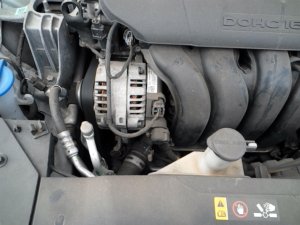
Used OEM Parts in Stock
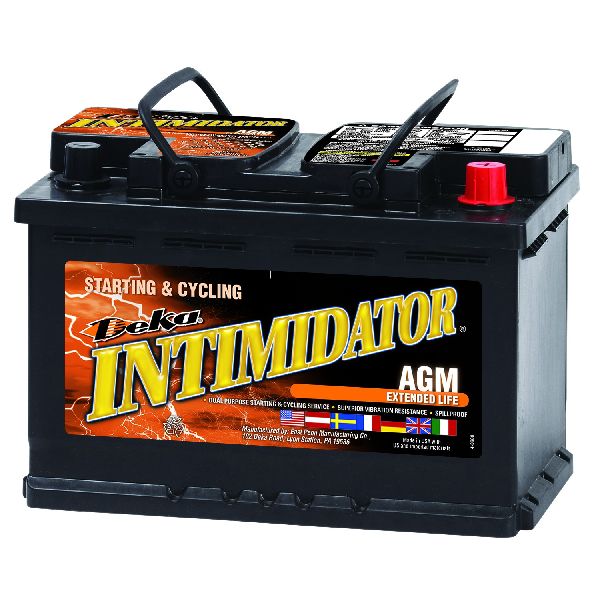
New Aftermarket Parts Available


The information in this article is provided for general reference and educational purposes only. Vehicle specifications, procedures, and part compatibility can vary by production date, trim level, and region. Always consult your vehicle's factory service manual and verify part numbers before purchasing or performing repairs. Safety-critical components such as airbags, seat belts, and braking systems should be installed by a qualified professional.
- Hyundai Elantra:
- 🧭 Diagnostic Flowchart
- 🎬 Helpful Videos
- 🛍️ Shop This Part
- What's Unique About the 2017-2020 Hyundai Elantra
- Symptoms You May Notice
- Most Likely Causes
- Rare But Worth Checking
- Diagnosis Steps
- Parts You'll Likely Need
- Related Codes That Often Appear With This One
- Technical Service Bulletins (TSBs) & Recalls
- Mechanic-Grade Diagnostic Values
- Hidden / Shadow Codes Worth Checking
- Scan Tool Commands That Help
- Wiring & Ground Locations
- Real Owner Repair Stories
- Model Year Variations Within This Range
- Other Known Issues on This Vehicle
- Used vs. New Parts: Buying Guide for This Vehicle
- Real Owner Stories
- 2017 Hyundai Elantra — 119023 miles
- 2017-2020 Hyundai Elantra 2.0L — ~90000 miles
- Documented NHTSA Reports
- Related OBD-II Codes
- Frequently Asked Questions
- 🎟️ Get 5% Off