

U3003 on 2019-2023 Hyundai Santa Fe: Battery Voltage Issues, Causes, and Fixes
Code U3003 on a 2019-2023 Hyundai Santa Fe most often means the 12V AGM battery is failing or weak. Before replacing any parts, fully charge and load test the battery. If the battery is replaced, the battery sensor must be recalibrated per a specific procedure. A new OEM-spec AGM battery costs around $250-$400.
- U3003 means there's a problem with the vehicle's electrical system voltage, most often a weak battery.
- This Santa Fe requires a specific, more expensive AGM battery. Do not use a standard lead-acid battery.
- If you replace the battery, you MUST have the battery sensor recalibrated, or the problem will likely return.
- Before replacing expensive parts, have the battery and alternator professionally tested.
- Check if your vehicle is affected by the recall for the trailer hitch wiring module, as it can cause battery drain.
What's Unique About the 2019-2023 Hyundai Santa Fe
The 2019-2023 Santa Fe (TM generation) relies on an Absorbent Glass Mat (AGM) battery, particularly in models with Idle Stop & Go (ISG), to support the high electrical demands. These batteries are more sensitive and expensive than conventional ones. Critically, after replacing the battery or disconnecting the battery sensor, a recalibration procedure is required for the charging system to work correctly, as outlined in Hyundai Technical Service Bulletin 19-FL-002H. The owner's manual specifies a simplified procedure: after reconnecting, let the vehicle sit for 4 hours with all accessories off, then start and stop the engine 3-4 times. Ignoring this step can lead to chronic undercharging or overcharging, premature battery failure, and a repeat of the U3003 code.
Symptoms You May Notice
- Dimming or flickering headlights and interior lights
- Slow-operating power windows or locks
- Engine is slow to crank or won't start
- Battery/Charging system warning light on the dashboard
- Intermittent warnings from other systems (ABS, traction control, etc.)
- Radio or infotainment system randomly resetting
- Idle Stop & Go (ISG) system is disabled or works intermittently
- Whining or grinding noise from the engine bay, indicating a possible alternator issue
- Replacing the battery without performing the mandatory battery sensor recalibration. This can cause the new battery to be undercharged or overcharged, leading to a quick return of the U3003 code.
- Replacing control modules. The U3003 code is almost always caused by a power supply issue, not a failure of the modules that are reporting the code.
Most Likely Causes
- Weak or Failing 12V AGM Battery 🔴 High Probability → Shop Vehicle Battery Modern vehicles have a high electrical demand even when off. Batteries typically last 3-5 years, and the OEM battery may be reaching the end of its life in earlier models of this year range. The ISG system places additional stress on the battery.
How to confirm: Perform a professional load test on the battery. A simple voltage check is not enough. Resting voltage should be ~12.4-12.6V. During cranking, voltage should not drop below 9.6V. Many auto parts stores offer free battery testing.
Typical fix: Replace the battery with a new AGM battery of the correct group size and specifications. After replacement, the battery sensor must be recalibrated per TSB 19-FL-002H. The simplified owner's manual procedure involves letting the car sit for 4 hours, then cycling the ignition 3-4 times.
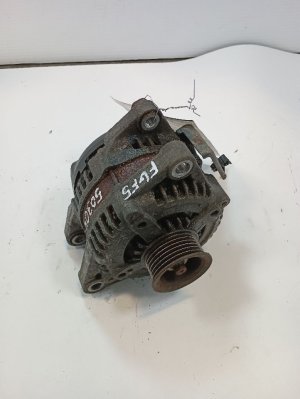
Est. part cost: $250-$400 - Failing Alternator 🟡 Medium Probability → Shop Alternator While not a universal defect, some owners have reported premature alternator failure on this platform, even at low mileage like 30,000 miles. The alternator may not be charging the battery sufficiently or could be overcharging it due to a faulty internal voltage regulator.
How to confirm: With the engine running, use a multimeter to measure the voltage at the battery terminals. A healthy alternator should output between 13.5V and 14.8V. Readings below 13.2V or above 15.0V indicate a problem. Also listen for whining or grinding noises from the alternator.
Typical fix: Replace the alternator and inspect the serpentine belt for wear or damage. In some cases, only the alternator brushes may need replacement, which is a cheaper repair.
Est. part cost: $770-$832 (OEM Part) - Loose or Corroded Battery Terminals/Grounds 🟡 Medium Probability → Shop Vehicle Battery Corrosion is a common issue on all vehicles over time. A poor connection at the battery terminals or a corroded chassis ground strap can create high resistance, mimicking a bad battery or alternator.
How to confirm: Visually inspect the battery terminals for white or greenish powder (corrosion). Ensure the terminal clamps are tight and cannot be moved by hand. Check the main ground strap from the battery to the chassis for corrosion and tightness.
Typical fix: Disconnect the battery (negative terminal first), clean the terminals and clamps with a wire brush and baking soda solution, and re-tighten securely. Replace corroded cables if necessary.
Est. part cost: $5-$20 (Cleaning supplies) or $50-$150 (New cables) - Parasitic Battery Drain ⚪ Low Probability → Shop Vehicle Battery A recall/TSB (Recall 244 / TSB 23-01-027H-1) was issued for a faulty accessory tow hitch wiring module that could allow moisture intrusion, causing an electrical short and draining the battery or even causing a fire on 2019-2023 models. Some owners also report battery drain if the key fob is left in or near the vehicle, causing modules to repeatedly wake up.
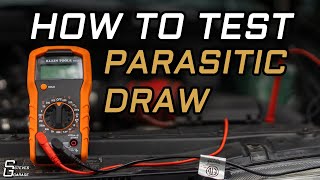
How to confirm: A parasitic draw test using a multimeter is required. 🎬 Watch: How to perform a parasitic draw test on a Santa Fe This involves measuring the amperage draw from the battery with the vehicle turned off. A draw above 50-85mA after all modules have gone to sleep indicates a problem. The faulty circuit can be isolated by pulling fuses one by one, though this can sometimes reset the module causing the draw.
Typical fix: If the tow hitch module is the cause, it needs the remedy outlined in the recall, which involves installing a new wire extension and a 15-amp fuse. Otherwise, the specific component causing the drain must be identified and repaired or replaced.
Est. part cost: $0 (Recall work) or varies widely depending on the faulty component.
Rare But Worth Checking
- Faulty Battery Monitoring Sensor (BMS): → Shop Vehicle Battery The sensor on the negative battery terminal (Part # 37180-L2000 or similar) can fail, providing incorrect state-of-charge information to the ECU, leading to improper charging. If the battery and alternator test good, this sensor is a possible culprit. A replacement OEM sensor can cost around $100-$150.
Diagnosis Steps
- Read all stored Diagnostic Trouble Codes (DTCs) to see which modules are reporting the U3003 code. Check for sub-codes like U3003:16 (low voltage) or U3003:17 (high voltage) to narrow the diagnosis.
- Visually inspect the battery terminals, positive and negative cables, and the main chassis ground strap for tightness and corrosion. Clean and tighten as needed.
- With the engine off, measure the battery's resting voltage. It should be at least 12.4V.
- Perform a battery load test to check its health. Voltage should not drop below 9.6V during engine cranking. Replace if it fails.
- If the battery is new or passes the load test, start the engine. Measure the voltage at the battery terminals. It should be between 13.5V and 14.8V. If it's outside this range, the alternator is likely faulty.
- If the battery and alternator test good, perform a parasitic draw test to check for modules or components that are not shutting down properly. A draw over 50-85mA is cause for concern. Real-world failures have shown draws of 400-800mA.
- Check for open recalls, especially Recall 244 / TSB 23-01-027H-1 related to the trailer hitch wiring harness.
- If the battery was replaced, ensure the Battery Monitoring Sensor was recalibrated according to Hyundai procedure TSB 19-FL-002H or the owner's manual procedure.
Parts You'll Likely Need
- AGM Battery — The most common cause for U3003 is a weak or failing battery. This vehicle requires a specific AGM type battery to function correctly with its advanced electronics and Idle Stop & Go system.
Trusted brands: Duralast Platinum, Odyssey, NorthStar, Hyundai Genuine
OEM price range: $300-$450
Aftermarket price range: $250-$350 - Alternator
(OEM #e.g., 37300-L1300 (Varies by engine, verify by VIN))— If the battery is good, a faulty alternator is the next most likely cause, either by undercharging or overcharging the system.
Trusted brands: Denso, Bosch, Hyundai Genuine
OEM price range: $770-$832
Aftermarket price range: $400-$600 - Battery Monitoring Sensor
(OEM #37180-L2000 (Verify by VIN))— A rare but possible cause, this sensor on the negative terminal can fail and cause incorrect charging behavior.
Trusted brands: Hyundai Genuine
OEM price range: $100-$150
Technical Service Bulletins (TSBs) & Recalls
- 19-FL-002H: Describes the Idle Stop & Go (ISG) system and the mandatory battery sensor recalibration procedure.
- 23-01-027H-1 (Recall 244): Details the inspection and repair for a potential short circuit in the accessory tow hitch harness module.
- 23-EE-010H: Mentions an extended battery diagnostic procedure.
- 19-01-002H-4 (Campaign 953): An engine control logic update to better detect abnormal engine bearing noise.
Platform-Specific Known Issues
- A mandatory battery sensor recalibration procedure (TSB 19-FL-002H) is required after battery replacement or disconnection to ensure proper charging system function.
- Recall Campaign 244 (TSB 23-01-027H-1) addresses a potential short circuit in the accessory trailer hitch wiring harness that can cause battery drain or fire risk.
- A separate recall (Recall 246 / TSB 23-01-071H) exists for a faulty transmission electric oil pump for the ISG system, which can also cause electrical issues and fire risk, though it doesn't typically present as a U3003 code.
Mechanic-Grade Diagnostic Values
- U3003:16 Low Voltage Threshold — expected: >9.5V. Failure: Voltage drops below 9.0V - 9.5V, triggering the code.
- U3003:17 High Voltage Threshold — expected: <15.5V. Failure: Voltage exceeds 15.5V - 16.0V (or higher in some cases), pointing to a faulty alternator regulator.
- Parasitic Current Draw (Key Off, Modules Asleep) — expected: < 50-85 mA. Failure: A sustained draw above 85mA. Real-world examples show draws of 440mA to 800mA indicate a significant issue.
- Idle Stop & Go (ISG) Minimum Battery State of Charge (SOC) — expected: >=70%. Failure: If SOC is below 70%, the ISG system will be disabled, which can be a symptom of the underlying voltage issue.
Hidden / Shadow Codes Worth Checking
- U3003:16: Battery Voltage - Circuit Voltage Below Threshold. This specifically points to a low voltage condition (e.g., weak battery, bad connection, parasitic draw). (see via A professional OBD-II scanner capable of reading manufacturer-specific or enhanced trouble codes.)
- U3003:17: Battery Voltage - Circuit Voltage Above Threshold. This specifically points to a high voltage condition, almost always caused by a failing alternator/voltage regulator. (see via A professional OBD-II scanner capable of reading manufacturer-specific or enhanced trouble codes.)
Scan Tool Commands That Help
- Hyundai GDS (Global Diagnostic System): Battery Diagnosis Function (per TSB 22-EE-001H) — To perform an extended battery test that analyzes the battery sensor's 30-day history to check for internal shorts, deterioration, or charging defects that a simple load test might miss.
- Hyundai GDS (Global Diagnostic System): Battery Charge Performance Test — As part of the GDS battery diagnosis, this is a 5-minute engine-running test to actively check the charging system's performance when a history of significant discharge is detected.
- Hyundai GDS (Global Diagnostic System): BMS Data Check / Reset — To view the current State of Charge (SOC) and State of Health (SOH) values stored by the Battery Monitoring Sensor, or to reset the BMS history counters after certain repairs.
Wiring & Ground Locations
- Main Engine/Chassis Grounds — Typically found on the inner fender panel in the engine bay, on the engine block itself, and from the negative battery terminal to the chassis.. A corroded or loose main ground point creates high resistance for the entire electrical system, causing voltage drops that can trigger a U3003:16 code.
- Interior Ground Points — Common locations on other Hyundai models include behind the left/right kick panels and under the center console. Specific identifiers for the 2019-2023 Santa Fe (e.g., Gf01) were not available in search results.. A poor ground for a specific module (like the instrument cluster) can cause it to malfunction or stay awake, creating a parasitic draw that leads to a dead battery and a U3003 code.
Real Owner Repair Stories
- YouTube channel 'DiagnoseDan' (2019 Hyundai Santa Fe 2.0L Turbo) — Battery keeps dying after two days, even after a new battery and alternator were installed.
❌ Tried (didn't work) New battery installed, New alternator installed
✅ What actually fixed it A parasitic draw of ~800mA was discovered. Using a thermal imager, the technician found the instrument cluster was hot even with the vehicle off. The cluster was not going to sleep, causing the drain. The final repair would be to replace the instrument cluster. - YouTube channel 'Pine Hollow Auto Diagnostics' (2012 Hyundai Santa Fe (older generation, but demonstrates a key failure pattern)) — Battery goes dead overnight. Parasitic draw is intermittent and hard to replicate.
❌ Tried (didn't work) Initial parasitic draw test showed a normal 23mA draw., Customer had already replaced the alternator.
✅ What actually fixed it The technician found a 400+ mA draw could be triggered by cycling the key. After extensive testing, the draw was traced back to the remanufactured alternator. The internal voltage regulator was faulty, causing it to draw power when the vehicle was off. Replacing the alternator with another unit fixed the problem.
Model Year Variations Within This Range
- 2021-2023: The 2021 facelift introduced an 'all-new third-generation vehicle platform' with a different electrical architecture to support new hybrid and plug-in hybrid powertrains. It also features a new digital instrument cluster and a 10.25-inch infotainment screen. While U3003 still relates to the 12V system, the presence of hybrid components and different modules could introduce new diagnostic paths compared to the 2019-2020 models.
Diagnostic Flowchart
Other Known Issues on This Vehicle
Issues unrelated to this code that are worth knowing about as an owner of this generation:
- Excessive Oil Consumption (2.5L Smartstream GDI) 🔴 High — Reported in some 2021+ models with the 2.5L GDI engine. Not universal, but a known concern leading to class-action lawsuits.
- Dual-Clutch Transmission (DCT) Hesitation/Failure 🟠 Medium → Shop Transmission Assembly — Primarily affects the 7-speed dry DCT in earlier models, but the 8-speed wet DCT in some Santa Fe models can also exhibit low-speed shudder or hesitation. (Ref: Multiple software updates and a recall (NHTSA 23V-472) on some models for transmission oil pump issues.)
- Engine Failure / Knock Sensor Detection (Theta II Engines) 🔴 High — Mainly affects 2019 models with the 2.0L Turbo and 2.4L GDI engines. A software update campaign (953) was issued to detect bearing wear early and put the engine in a protection mode (limp mode). (Ref: Service Campaign 953 (TSB 19-01-002H-4))
- Peeling Paint (White Color) 🟡 Low — Some owners of various Hyundai models, including the Santa Fe, report issues with white paint peeling off, particularly on the hood and roof.
- Forward Collision-Avoidance/Braking Malfunctions 🟠 Medium — Complaints exist about the forward collision avoidance system engaging unexpectedly (phantom braking) or hesitating to accelerate, which owners attribute to powertrain or sensor issues.
Used vs. New Parts: Buying Guide for This Vehicle
When a used part is the smart pick: For this specific issue, buying used parts is generally not recommended. The potential for hidden faults in used electrical components outweighs the cost savings. A used alternator could have a faulty regulator causing a draw, and a used battery has an unknown history and lifespan.
Donor-vehicle mileage cap: roughly under 40000 miles for the part to have meaningful remaining life.
What to inspect on the donor part:
- For a Battery Monitoring Sensor (BMS), ensure it comes from a vehicle that did not have a collision near the battery.
- For an alternator, check for any signs of corrosion, damage to the pulley, or oil contamination. Ask for the donor vehicle's mileage if possible.
- Never buy a used 12V AGM battery.
OEM-only on this vehicle (don't cheap out):
- Battery Monitoring Sensor (BMS): To ensure perfect communication and calibration with the vehicle's Engine Control Unit (ECU) and charging strategy, an OEM sensor is the safest choice.
Aftermarket brands forum-validated for this vehicle:
- AGM Battery: Odyssey, NorthStar, Duralast Platinum.
- Alternator: Denso (often the original equipment supplier), Bosch.
Brands owners have reported issues with on this vehicle:
- No specific brands were consistently reported as problematic in search results, but be cautious with unbranded, 'white-box' alternators, as quality control on internal components like the voltage regulator can be poor, leading to issues like parasitic draw.
Real Owner Stories
Aggregated from forums and TSBs cited above. Mileages and costs reflect what owners reported in those sources.
2019 Hyundai Santa Fe — 30000 miles
Symptoms: The owner experienced a bad alternator at very low mileage.
What fixed it: Replacement of the alternator.
Source hint: Reddit: 2019 Hyundai Santa Fe- bad alternator at 30K miles
2024 Hyundai Santa Fe XRT
Symptoms: Recurring dead battery issues; suspected parasitic draw.
What fixed it: The discussion suggested the digital key feature was waking the car up because the phone was left near the edge of the Bluetooth range.
Source hint: Reddit: 2024 Santa Fe XRT parasitic draw
Documented NHTSA Reports
NHTSA ODI #11710373
Symptoms: An owner reported an engine code scan showing U3003-16 Battery Voltage Below Threshold. The vehicle later suffered significant property damage after an incident involving a neighbor's garage and a wooden fence.
What fixed it: A subsequent EEC test at the dealer showed no codes in any systems.
NHTSA ODI #11533105
Symptoms: A report notes that DTC U3003 sets on-demand if the voltage supplies to the ABS module falls below 10 volts.
NHTSA ODI #11533082
Symptoms: A diagnostic verification showed a lack of power steering accompanied by DTCs C1B00, U0415, and U3003.
NHTSA ODI #11582867
Symptoms: An owner reported FCM, LDW, and E-Brake warnings staying on with error codes C1001 and U3003 (EPB control module power supply failure type 16). The battery failed the day after the vehicle was returned from service.
NHTSA ODI #11685172
Symptoms: Diagnostic results showed error codes B1142, U0199, and U3003-16 (Electric Servo Brake Control Unit Power Source Low Voltage) following an audio installation.
Related OBD-II Codes
Frequently Asked Questions
I just replaced the battery in my 2019 Santa Fe; do I need to do anything special to clear the U3003 code?
Could my Santa Fe's trailer hitch be causing my battery to die and trigger electrical codes?
My Idle Stop & Go (ISG) system stopped working. Is this related to U3003?
Is there a recall for the transmission oil pump that might cause electrical issues?
Can leaving my key fob near my 2023 Santa Fe cause the battery to drain?
Helpful Videos
We Have This Part in Stock

The information in this article is provided for general reference and educational purposes only. Vehicle specifications, procedures, and part compatibility can vary by production date, trim level, and region. Always consult your vehicle's factory service manual and verify part numbers before purchasing or performing repairs. Safety-critical components such as airbags, seat belts, and braking systems should be installed by a qualified professional.
- Hyundai Santa Fe:
- 🧭 Diagnostic Flowchart
- 🎬 Helpful Videos
- 🛍️ Shop This Part
- What's Unique About the 2019-2023 Hyundai Santa Fe
- Symptoms You May Notice
- Most Likely Causes
- Rare But Worth Checking
- Diagnosis Steps
- Parts You'll Likely Need
- Technical Service Bulletins (TSBs) & Recalls
- Platform-Specific Known Issues
- Mechanic-Grade Diagnostic Values
- Hidden / Shadow Codes Worth Checking
- Scan Tool Commands That Help
- Wiring & Ground Locations
- Real Owner Repair Stories
- Model Year Variations Within This Range
- Other Known Issues on This Vehicle
- Used vs. New Parts: Buying Guide for This Vehicle
- Real Owner Stories
- 2019 Hyundai Santa Fe — 30000 miles
- 2024 Hyundai Santa Fe XRT
- Documented NHTSA Reports
- NHTSA ODI #11710373
- NHTSA ODI #11533105
- NHTSA ODI #11533082
- NHTSA ODI #11582867
- NHTSA ODI #11685172
- Related OBD-II Codes
- Frequently Asked Questions
- 🎟️ Get 5% Off