

U3003 on 2012-2022 Hyundai Veloster: Battery Voltage Problem Causes and Fixes
U3003 indicates a battery voltage problem, meaning the voltage is outside the normal 9.5V to 15.5V range. The most likely cause is a weak or dying 12V battery. Before replacing any parts, fully charge and load test the battery, check for clean/tight connections, and verify the alternator's output is between 13.5V and 14.8V.
- U3003 means your car's computer detected an issue with the battery voltage.
- The most common fix is replacing the 12V battery, especially if it is more than 3 years old.
- Always test the battery and alternator before buying any parts.
- Check and clean the battery terminals and ground connections, as a poor connection can mimic a bad battery or alternator.
- While you can drive with this code, there is a risk of the car not starting, so it's best to diagnose it promptly.
What's Unique About the 2012-2022 Hyundai Veloster
For the 2012-2022 Veloster, the causes for U3003 are standard electrical system faults. However, some owners report experiencing parasitic battery drains that can lead to this code. These drains have been anecdotally linked to the factory amplifier, door lock circuits, or trunk latch button. Additionally, some first-generation models have had issues with melting HVAC control units, indicating potential for other electrical shorts. Unlike some brands that require a complex Battery Management System (BMS) reset, the Veloster does not typically require this procedure, though some second-generation models may have a battery sensor that can fail and cause drain-like symptoms. Second-generation models with Idle Stop & Go (ISG) may require a battery sensor calibration procedure after battery replacement.
Generation note: This guide covers both the first generation (FS, 2012-2018) and second generation (JS, 2019-2022) Hyundai Veloster. The fundamental electrical systems are similar, and the causes for U3003 are generally the same. However, parasitic drains related to door lock circuits and trunk latches have been noted in forum discussions for first-gen models. Second-gen models may have a battery sensor on the negative terminal that can fail and cause charging issues or battery drain.
Symptoms You May Notice
- Check Engine Light or other warning lamps on the dashboard (including the battery light).
- Slow or sluggish engine cranking.
- Dimming or flickering interior lights or headlights, especially at idle.
- Electrical accessories (radio, power windows, sunroof) behaving erratically, resetting, or moving slowly.
- In some cases, a no-start condition where the engine won't turn over.
- Strange smells like burning rubber or hot metal from an overworked alternator.
- Whining or grinding noises from a failing alternator.
- Needing to use the shift-lock release to get the car out of Park.
- Replacing a control module before verifying the battery and alternator are working correctly. The U3003 code is almost always caused by a problem with the power source, not the module that reports it.
- Replacing the battery without checking the alternator. If the alternator is not charging properly, the new battery will also be drained quickly.
Most Likely Causes
- Weak or Failing 12V Battery 🔴 High Probability → Shop Vehicle Battery Batteries are a standard wear item with a typical lifespan of 3-5 years. Age, extreme temperatures, and frequent short trips accelerate degradation. The Veloster commonly uses a Group Size 47/H5 or 121R battery.
How to confirm: Perform a battery load test. Most auto parts stores offer this service for free. A healthy battery should have a resting voltage of ~12.4-12.6V and should not drop below ~10V during cranking. If the battery is several years old, it's the primary suspect.
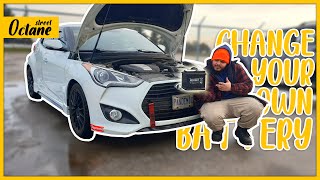
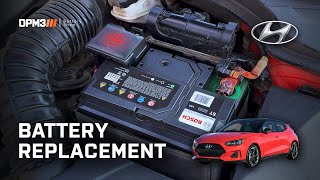
Typical fix: Replace the 12V battery. Ensure the new battery is fully charged before installation. 🎬 Watch: How to replace your Veloster battery
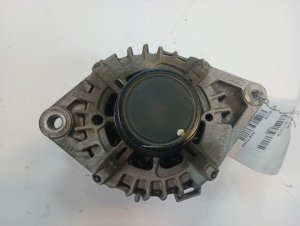
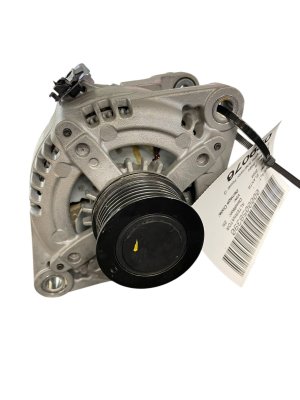
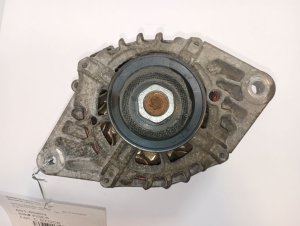
Est. part cost: $150-$300 - Faulty Alternator 🟡 Medium Probability → Shop Alternator Alternators wear out over time, typically lasting 7-10 years. Heat and high electrical loads can cause premature failure of the internal voltage regulator or diodes.
How to confirm: With the engine running, use a multimeter to measure the voltage at the battery terminals. A healthy alternator should produce a charging voltage between 13.5V and 14.8V. If the voltage is too low (undercharging) or too high (overcharging), the alternator or its voltage regulator is likely faulty.
Typical fix: Replace the alternator.
Est. part cost: $250-$600 - Loose or Corroded Battery Terminals/Cables 🟡 Medium Probability → Shop Vehicle Battery Corrosion is common in all vehicles. The first-generation Veloster (2012-2017) has a known service campaign (989) for underbody corrosion prevention in salt-belt states, indicating a general susceptibility to corrosion that can affect electrical grounds. The main engine-to-chassis ground strap is a known weak point that can corrode and cause a variety of electrical issues.
How to confirm: Visually inspect the battery terminals for white or blue-green crust (corrosion). Check that the terminal clamps are tight and cannot be moved by hand. Inspect the main ground cable connection from the battery to the chassis and from the chassis to the engine block for tightness and corrosion.
Typical fix: Disconnect the battery (negative terminal first). Clean the terminals and clamps with a wire brush and a baking soda/water solution. Reconnect and tighten securely. Apply dielectric grease to prevent future corrosion. Replace cables if corrosion is severe.
Est. part cost: $5-$20 for cleaning supplies, $50-$150 for new cables
Rare But Worth Checking
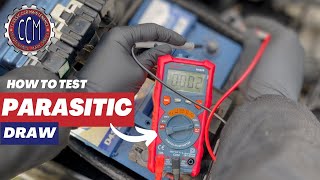
- Parasitic Battery Drain: → Shop Vehicle Battery An electrical component that fails to shut off when the car is parked can slowly drain the battery, leading to a low voltage state and a U3003 code upon startup. Owners have reported drains from the door lock circuits, trunk latch, and factory amplifier. Diagnosis involves an amperage draw test with a multimeter, pulling fuses to isolate the faulty circuit. 🎬 Watch: How to diagnose a Hyundai parasitic battery drain
- Faulty Battery Sensor (2nd Gen): → Shop Vehicle Battery On some newer models, a battery sensor on the negative terminal monitors battery state. A faulty sensor can cause improper charging and battery drain issues, leading to voltage codes. One owner reported a repair cost of ~€315 for this sensor.
- Faulty Control Module: A specific module (like the ECU or BCM) could have an internal power supply fault, causing it to incorrectly report a voltage issue. This is rare and should only be considered after confirming the battery, alternator, and wiring are all in good condition.
Diagnosis Steps
- Read all stored fault codes from all modules using a capable OBD-II scanner. Note any codes that accompany U3003, especially specific suffixes like -16 or -17.
- Visually inspect the battery terminals, main power cables, and ground straps for looseness, damage, or corrosion. Clean and tighten as necessary.
- With the engine off, measure the battery's resting voltage using a multimeter. It should be approximately 12.4V-12.6V. If it's lower, charge the battery fully before proceeding.
- Perform a battery load test to confirm its health. This is the most reliable way to identify a weak battery that fails under load.
- If the battery is healthy, start the engine. Measure the charging voltage at the battery terminals. It should be between 13.5V and 14.8V.
- If voltage is below 13.5V, the alternator is likely undercharging. If it's above 15.0V, it is overcharging. In either case, the alternator is the primary suspect. Also check the main alternator fuse.
- If the battery and alternator test good, check for a parasitic draw. With the car off for at least 30 minutes, perform a current draw test at the negative battery terminal. A draw over 50-80mA indicates a problem. Pull fuses one by one to isolate the circuit causing the draw. Common culprits on the Veloster include the 'Door Lock' fuse and multimedia/amp fuses.
- If all of the above check out, the issue may be a poor connection at a main fuse block, a faulty battery sensor (on newer models), or in rare cases, a faulty control module.
Parts You'll Likely Need
- 12V Automotive Battery
(OEM #37110-2V480 (Gen 2, 60Ah), 37110-2V370 (Gen 1))— This is the most common failure point for a U3003 code, as batteries are a consumable part that degrade over time. Common sizes are Group 47/H5 or 121R.
Trusted brands: Hyundai OEM, DieHard, Duralast, Interstate
OEM price range: $200-$300
Aftermarket price range: $150-$250 - Alternator
(OEM #e.g., 37300-2E601)— A failed alternator or internal voltage regulator will cause undercharging or overcharging, directly triggering a U3003 code.
Trusted brands: Denso, Bosch, Valeo, Carquest
OEM price range: $400-$600
Aftermarket price range: $250-$500 - Negative Battery Cable/Sensor
(OEM #91880-2V120 (Auto), 91880-2V130 (Manual), 37180-2V500 (Sensor))— Cables can corrode internally, causing high resistance. On newer models, the integrated battery sensor can fail, leading to charging
Related Codes That Often Appear With This One
- U3003-16 — This is a more specific version of the code indicating 'Circuit Voltage Below Threshold'. It points directly to a low voltage condition, often seen during engine cranking with a weak battery.
- U3003-17 — This indicates 'Circuit Voltage Above Threshold', which points to an overcharging condition, almost always caused by a faulty voltage regulator within the alternator.
- U0100 — This code means 'Lost Communication With ECM/PCM'. Severe voltage drops can cause modules to temporarily shut down and lose communication with each other, triggering various U-codes.
- P0335 — Crankshaft Position Sensor Circuit Malfunction. Low voltage during cranking can sometimes cause erratic sensor readings, leading to this code being set alongside U3003.
Technical Service Bulletins (TSBs) & Recalls
- 21-BE-003H / 21-BE-003H-1: Clock Spring Warranty Extension for 2012-2014 Veloster (FS). Extends warranty to 15 years/unlimited miles for the clock spring, which is part of the vehicle's electrical system. While not a direct cause of U3003, it's a relevant electrical system TSB.
- 22-01-092H (Campaign 989): Underbody Corrosion Preventative Service for 2012-2017 Veloster (FS) in salt-belt states. Highlights potential for corrosion which can affect electrical grounds and connections, a primary cause of voltage issues.
- 24-01-027H (Recall 251): ABS Module electrical short risk for 2012-2015 Veloster (FS). An internal electrical short in the ABS module could cause a fire and potentially trigger various electrical fault codes. The remedy involves replacing the ABS fuse.
Platform-Specific Known Issues
- Parasitic Drain from Door Lock Circuit: Multiple owners on Reddit have traced significant parasitic battery drains (over 1 amp) to the 'Door Lock' fuse circuit. Pulling the fuse drops the draw to acceptable levels (~20-30mA), but may cause other issues like the door ajar light staying on. The root cause within the circuit can be difficult to pinpoint.
- Parasitic Drain from Trunk Latch/Button: A user on Reddit with a parasitic draw issue ultimately found the cause to be a faulty trunk button. This is a common failure point for parasitic drains on many modern cars as the switch can fail internally.
- Melting HVAC Control Unit: While not a direct cause of U3003, there are numerous owner complaints about the HVAC control unit wiring overheating and melting the switch on first-generation Velosters. This indicates a potential for electrical system weaknesses or shorts that could manifest in various ways, including voltage instability.
Documented NHTSA Reports
While U3003 is often a power supply issue, cross-manufacturer records show it can impact critical safety systems. NHTSA ODI #11533082 describes a vehicle where U3003 was found alongside codes for a lack of power steering. In another instance, NHTSA ODI #11582867 notes U3003 as an "EPB control module power supply failure type 16," where the battery failed shortly after the code appeared. NHTSA ODI #11685172 describes U3003-16 as "Electric Servo Brake Control Unit Power Source Low Voltage," occurring alongside door lock circuit faults. Furthermore, NHTSA ODI #11656540 reports U3003-16 appearing when a gearshift was slipping between neutral and drive, and NHTSA ODI #11232429 notes the code appearing when a car would "shutter and lose power" while driving under 40 miles per hour.
Mechanic-Grade Diagnostic Values
- Battery Resting Voltage (engine off) — expected: 12.4V - 12.6V. Failure: Below 12.4V indicates a discharged or failing battery.
- Battery Voltage During Cranking — expected: Should not drop below ~10.0V. Failure: A drop below 9.6V-10V indicates a weak battery unable to hold a load.
- Alternator Charging Voltage (engine running) — expected: 13.5V - 14.8V. Failure: Below 13.5V indicates undercharging; above 15.0V indicates overcharging.
- Parasitic Draw (key off, modules asleep) — expected: < 50-80 mA. Failure: A sustained draw above 80mA indicates a component is not shutting down properly. Some owners report draws of 100mA+ related to door lock or multimedia circuits.
- Alternator AC Ripple Voltage — expected: < 100 mV AC. Failure: Excessive AC voltage (ripple) indicates failing alternator diodes.
Scan Tool Commands That Help
- Hyundai GDS / GDS-M: Battery Diagnosis Function — When diagnosing a potential battery failure or after replacing a battery. The GDS can analyze the battery sensor's 30-day history to identify issues like internal shorts, deterioration, or charging defects that a simple load test might miss.
- Hyundai GDS / GDS-M: Battery Charge Performance Test — If the GDS detects a history of significant discharge, it may prompt this 5-minute test. The vehicle is started, and the GDS measures the battery's ability to accept a charge, helping to diagnose a 'Charging Defect'.
- Hyundai GDS / GDS-M: Adaptive Learning Reset — After replacing a battery or major electrical component, this function can be used to clear learned values and help the ECU adapt to the new component more quickly.
Wiring & Ground Locations
- Main Battery Ground — Thick cable from the negative battery terminal to a bolt on the vehicle's chassis/frame, typically on the shock tower or inner fender in the engine bay.. This is the primary ground for the entire vehicle. Corrosion or looseness here creates high resistance for the entire electrical system, causing system-wide low voltage and triggering U3003.
- Engine Ground Strap — A braided strap connecting the engine block (often near the alternator or starter) to the vehicle's chassis/frame.. This ground is critical for the alternator's performance. A poor connection here can cause the alternator to function erratically, leading to undercharging or overcharging conditions. This strap is known to corrode and fail.
- G(GGT01) — On the left side of the engine compartment for 2013 models.. This is a major ground distribution point for several engine compartment components. A wiring diagram shows it's a common point for multiple circuits.
- G(GM02) — Located at the top left side of the dash for 2013 models.. This is a key interior ground point. A fault here could explain issues with interior electronics that might accompany a U3003 code.
Real Owner Repair Stories
- Reddit user in r/veloster (2017 Veloster Value Edition) — Car stalling, alternator testing bad at AutoZone.
❌ Tried (didn't work) Replaced the alternator with an aftermarket unit from AutoZone, which also tested bad two weeks later., Battery was confirmed to be good.
✅ What actually fixed it The root cause was a bad computer system (ECU/PCM). The owner updated that the computer was replaced to resolve the issue of it repeatedly destroying alternators. - Reddit user in r/veloster (2016 Veloster) — Parasitic battery drain, needing to jump the car if not driven daily.
❌ Tried (didn't work) Replacing the battery.
✅ What actually fixed it A parasitic draw test isolated the issue to the 'multimedia' fuse. The dealership identified that the audio/visual/navigation (AVN) head unit was not shutting down properly, causing the drain. The final fix was to replace the head unit. - Reddit user in r/veloster (2017 Veloster DCT, Base trim) — Parasitic battery drain of ~1.2 amps when the car is locked with the fob.
❌ Tried (didn't work) Replacing the Body Control Module (BCM)., Disconnecting door locks and tailgate latch one by one.
✅ What actually fixed it The issue was isolated to the 'DRLOCK' fuse. While the user did not post a final confirmed repair, they noted the drain dropped to a near-normal 100mA if the car was left unlocked, and another user in a similar thread fixed their drain by replacing a faulty trunk latch button. This strongly points to a fault within the door/trunk latching or security system.
OEM Part Supersession History
37180-2V500→37180-J3000— Part revision for the battery sensor assembly on second-generation Veloster models.
Heads up: Part 37180-J3000 is specified for 2019-2021 Veloster models (non-N). While it may physically fit other models, using the incorrect sensor can lead to improper charging logic.
Model Year Variations Within This Range
- 2019-2022 (Second Generation JS): These models, especially those with Idle Stop & Go (ISG), feature an Intelligent Battery Sensor (IBS) on the negative terminal. After replacing the battery, a sensor calibration procedure may be required. This involves letting the vehicle sit for 4 hours with the engine off, then cycling the ignition 3-4 times to allow the sensor to re-learn battery characteristics.
- 2012-2018 (First Generation FS): These models have a simpler charging system without the sophisticated Intelligent Battery Sensor. Diagnosis is more straightforward, focusing on the battery, alternator, and primary ground connections. Parasitic drains related to the factory amplifier and door/trunk latches are more commonly reported on these models.
Diagnostic Flowchart
Other Known Issues on This Vehicle
Issues unrelated to this code that are worth knowing about as an owner of this generation:
- Theta II Engine Rod Bearing Failure 🔴 High — Common on 2011-2017 2.0L and 2.4L GDI engines. Manufacturing debris could block oil passages, leading to bearing wear and catastrophic engine failure, often before 100k miles. (Ref: Multiple recalls and a class-action lawsuit resulted in warranty extensions and a Knock Sensor Detection Software update (Campaign 953) to detect failure.)
- Dual-Clutch Transmission (DCT) Issues 🟠 Medium → Shop Transmission Assembly — Affects both 6-speed (Gen 1) and 7-speed (Gen 2 Turbo) DCTs. Symptoms include hesitation, shuddering from a stop, harsh shifting, and overheating in traffic. Problems can appear early, sometimes under 60k miles. (Ref: Various software updates (TCM logic) have been released. A class-action lawsuit was filed regarding the 7-speed DCT.)
- Gasoline Direct Injection (GDI) Carbon Buildup 🟠 Medium — Inherent to all GDI engines, including those in the Veloster. Carbon deposits accumulate on intake valves over time (typically noticeable by 60k-80k miles), causing reduced performance, rough idle, and misfires.
- ABS Module Electrical Short 🔴 High — Affects 2012-2015 models. An internal short circuit in the ABS module can occur, creating a risk of an engine compartment fire, even when the vehicle is parked. (Ref: Hyundai Recall 251 (NHTSA 24V-122))
- Clock Spring Failure 🟡 Low — Common on 2012-2014 models. A faulty clock spring causes the airbag warning light to illuminate and steering wheel controls (horn, cruise, radio) to stop working. (Ref: TSB 21-BE-003H-1 (Warranty Extension TXXJ))
Used vs. New Parts: Buying Guide for This Vehicle
When a used part is the smart pick: Used parts are generally not recommended for the primary causes of a U3003 code. A used battery is never a good idea. A used or junkyard alternator is a high-risk gamble, as its remaining lifespan is unknown. A 'remanufactured' alternator from a reputable brand is a viable cost-saving alternative to a new OEM unit.
Donor-vehicle mileage cap: roughly under 60000 miles for the part to have meaningful remaining life.
What to inspect on the donor part:
- For a remanufactured alternator, check for a warranty.
- Ensure the pulley spins freely and quietly with no grinding or roughness.
- Inspect the electrical connector for any signs of melting, corrosion, or broken pins.
OEM-only on this vehicle (don't cheap out):
- Battery Sensor (IBS): While aftermarket versions exist, the OEM sensor is recommended to ensure full compatibility with the vehicle's charging logic and diagnostic systems.
- ECU/PCM: If the main computer is diagnosed as the fault, a new or professionally remanufactured OEM unit programmed to the vehicle's VIN is the only reliable option.
Aftermarket brands forum-validated for this vehicle:
- Battery: DieHard, Duralast, Interstate, Bosch (AGM models recommended for vehicles with high electronic loads or ISG).
- Alternator (Remanufactured): Denso, Valeo, Bosch.
Brands owners have reported issues with on this vehicle:
- Unbranded or 'white box' alternators from online marketplaces have a high failure rate. A Reddit user reported an AutoZone-branded alternator failing within two weeks, a common story with budget-tier remanufactured parts.
Real Owner Stories
Aggregated from forums and TSBs cited above. Mileages and costs reflect what owners reported in those sources.
2016 Hyundai Veloster
Symptoms: A parasitic battery drain of approximately 140mA was detected.
What fixed it: The draw was traced to the 'Door Lock' fuse circuit.
Source hint: Reddit r/veloster - 'Door Lock Parasitic Battery Drain (2016)'
2019 Hyundai Veloster
Symptoms: Battery drain and various electrical issues.
What fixed it: Replacing a faulty battery sensor.
Cost: $340-$350
Source hint: Carly Community - 'Veloster electrical issue battery drain'
2012 Hyundai Veloster
Symptoms: A 0.5A parasitic draw was identified.
What fixed it: The issue was traced to the factory amplifier circuit after an aftermarket head unit was installed.
Source hint: CarAudio.com - 'Parasitic drain in '12 Veloster'
2017 Hyundai Veloster
Symptoms: Intermittent dead battery even after the battery was replaced.
What fixed it: Diagnosis pointed toward a parasitic draw or alternator issue.
Source hint: Reddit r/veloster - '2017 Battery Drain'
Related OBD-II Codes
Frequently Asked Questions
My 2012 Veloster has a risk of an ABS module short; could this be related to my U3003 code?
I'm having trouble shifting my Veloster out of Park along with electrical flickering. Is this a known symptom?
Is there a specific battery size I should buy for my Veloster to avoid voltage issues?
Does the underbody corrosion service campaign apply to my 2015 Veloster in a snowy state?
My 2013 Veloster's clock spring is acting up; is there a warranty extension for this electrical component?
I suspect a parasitic drain is killing my battery. Which fuses should I check first on a Veloster?
Helpful Videos
We Have This Part in Stock

The information in this article is provided for general reference and educational purposes only. Vehicle specifications, procedures, and part compatibility can vary by production date, trim level, and region. Always consult your vehicle's factory service manual and verify part numbers before purchasing or performing repairs. Safety-critical components such as airbags, seat belts, and braking systems should be installed by a qualified professional.
- Hyundai Veloster:
- 🧭 Diagnostic Flowchart
- 🎬 Helpful Videos
- 🛍️ Shop This Part
- What's Unique About the 2012-2022 Hyundai Veloster
- Symptoms You May Notice
- Most Likely Causes
- Rare But Worth Checking
- Diagnosis Steps
- Parts You'll Likely Need
- Related Codes That Often Appear With This One
- Technical Service Bulletins (TSBs) & Recalls
- Platform-Specific Known Issues
- Documented NHTSA Reports
- Mechanic-Grade Diagnostic Values
- Scan Tool Commands That Help
- Wiring & Ground Locations
- Real Owner Repair Stories
- OEM Part Supersession History
- Model Year Variations Within This Range
- Other Known Issues on This Vehicle
- Used vs. New Parts: Buying Guide for This Vehicle
- Real Owner Stories
- 2016 Hyundai Veloster
- 2019 Hyundai Veloster
- 2012 Hyundai Veloster
- 2017 Hyundai Veloster
- Related OBD-II Codes
- Frequently Asked Questions
- 🎟️ Get 5% Off