

U3003 on 2018-2024 Jeep Wrangler: Battery Voltage Fault Causes and Fixes
On a 2018-2024 Jeep Wrangler (JL), code U3003 almost always points to a failing auxiliary battery, which is part of the dual-battery system for the Engine Stop-Start (ESS) feature. This often causes the 'Service Stop/Start System' message to appear. The most common fix is to replace both the main and auxiliary batteries, as the failure of one often compromises the other.
- Code U3003 on a Jeep Wrangler JL is almost always a battery problem, not an alternator problem.
- The small auxiliary battery for the stop-start system is the most likely culprit. Have it load tested first.
- It is highly recommended to replace BOTH the main and auxiliary batteries at the same time to prevent future issues.
- After replacing the batteries, you must reset the Intelligent Battery Sensor (IBS) by briefly unplugging its connector on the negative terminal.
- For 2018 models, check if your VIN is part of recall U87 for a potential PCM issue.
What's Unique About the 2018-2024 Jeep Wrangler
The 2018-2024 Jeep Wrangler (JL) is unique due to its standard dual-battery system designed to manage the Engine Stop-Start (ESS) feature. It has a primary starting battery and a smaller, secondary auxiliary battery. This auxiliary battery has a shorter lifespan and is the most frequent cause of the U3003 code and other electrical issues on this platform. A failing auxiliary battery can disable the ESS system and put extra strain on the main battery, leading to a cascade of electrical problems that are less common on vehicles with a single battery.
Generation note: The 2018-2024 year range covers the Jeep Wrangler JL generation. The 2018 model year was a transition, with the older JK and the new JL being sold. This guide specifically applies to the JL model with its dual-battery system, which is the primary platform for this code's common causes.
Symptoms You May Notice
- "Stop/Start Not Ready" or "Service Stop/Start System" message on the dashboard
- Check Engine Light is on
- Sluggish or slow engine cranking
- Dimming or flickering headlights and interior lights
- Electrical accessories behaving erratically (radio resetting, etc.)
- Inability to start the vehicle
- Vehicle enters 'limp mode' with reduced power
- Replacing only the main battery without testing or replacing the auxiliary battery. The new main battery will likely be drained or damaged by the old, failing auxiliary battery, causing the code to return.
- Replacing the alternator when the batteries are the actual cause. The fluctuating voltage from the smart charging system can be misinterpreted as a faulty alternator.
- Assuming a good voltage reading on a battery means the battery is healthy. A load test is essential to determine the battery's true condition.
Most Likely Causes
- Failing Auxiliary Battery 🔴 High Probability → Shop Vehicle Battery The auxiliary battery is smaller and has a typical lifespan of only 3-5 years. It is crucial for the ESS system and its failure is a well-documented issue in the JL community. Its failure often causes the main battery to work harder, leading to its premature failure as well.
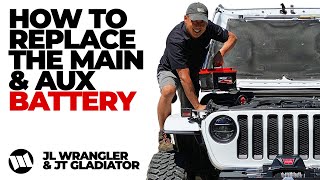
How to confirm: Perform a load test on the auxiliary battery. A simple voltage reading is not sufficient. Many auto parts stores can do this for free. The battery is located under the main power distribution center (fuse box) and is more difficult to access than the main battery. Some owners report success accessing it from the top by removing the main battery and fuse box, while others prefer removing the passenger side fender liner. 🎬 Watch this step-by-step auxiliary battery replacement guide.
Typical fix: Replace the auxiliary battery. It is highly recommended to replace the main battery at the same time, as a failing auxiliary battery often damages the main one. Ensure both batteries are fully disconnected before starting the replacement.
Est. part cost: $120-$180 - Failing Main Battery 🔴 High Probability → Shop Vehicle Battery The complex dual-battery system and the Intelligent Battery Sensor (IBS) can lead to charging issues that shorten the main battery's life. Often, it fails as a direct result of a bad auxiliary battery.
How to confirm: Perform a professional load test on the main battery (Group H6/48 AGM). A voltage reading alone is insufficient.
Typical fix: Replace the main battery. It is best practice to replace both batteries 🎬 Watch the easiest way to replace both batteries together. simultaneously to ensure a balanced and healthy electrical system.
Est. part cost: $200-$300 - Intelligent Battery Sensor (IBS) Needs Reset 🟡 Medium Probability → Shop Vehicle Battery The IBS, located on the main battery's negative terminal, monitors the battery's state of charge. If batteries are replaced or disconnected without resetting the IBS, it can result in improper charging voltages, triggering the U3003 code.
How to confirm: This is often a process-of-elimination step after confirming the batteries are healthy. If batteries were recently replaced and the code appeared, an IBS reset is likely needed. This is a common point of discussion in owner forums.
Typical fix: Reset the IBS. This can be done by unplugging its small electrical connector for several minutes. Some owners suggest a 10-15 minute disconnect. The system will then enter a relearning process that can take a few days and multiple start/stop cycles to complete.
Est. part cost: $0 - Loose or Corroded Battery Terminals/Grounds ⚪ Low Probability → Shop Vehicle Battery
How to confirm: Visually inspect all battery terminals, cable ends, and major chassis ground points for looseness or corrosion. Pay close attention to the main ground strap from the battery to the chassis.
Typical fix: Clean the terminals and connections with a wire brush and battery terminal cleaner. Ensure all connections are tight.
Est. part cost: $5-$15 for cleaning supplies
Rare But Worth Checking
- Faulty Alternator: → Shop Alternator While less common than battery issues, a failing alternator can cause over-charging (voltage >15V) or under-charging (voltage <13V while running), triggering the U3003 code. The JL's 'smart charging' system means voltage will fluctuate normally, so diagnosis requires checking if it's within the expected range.
- Faulty Powertrain Control Module (PCM): A specific recall (U87 / NHTSA 18V-524) was issued for some 2018 Wranglers due to a faulty voltage regulator chip inside the PCM. This could cause stalling or a no-start condition. Check your VIN with a dealer or on the NHTSA website to see if your vehicle was affected. The remedy involves replacing the PCM.
- Unseated Fuses in Power Distribution Center: A widely reported issue on early JL models was that fuses in the main fuse box (Power Distribution Center) were not fully seated from the factory. This can cause a host of intermittent electrical issues. Owners have resolved various problems by simply pressing down firmly on every fuse in the box.
Diagnosis Steps
- Read the codes with an OBD-II scanner and note any other codes present.
- Check the vehicle's voltage display while driving. Note if it fluctuates, and what the typical running voltage is. Normal for a JL is to fluctuate between ~12.7V and the mid-14s.
- Have BOTH the main and auxiliary batteries professionally load tested. This is the most critical step and cannot be skipped.
- If the batteries test good, inspect all battery terminals and primary ground straps for corrosion or looseness. Clean and tighten as needed.
- Check that all fuses in the Power Distribution Center are fully seated by pressing down on each one.
- If batteries are replaced, ensure the Intelligent Battery Sensor (IBS) is reset. Unplugging its connector for 10-15 minutes is a common method to force a relearn cycle.
- If the code persists after replacing batteries and resetting the IBS, have the alternator's output tested to ensure it is charging correctly.
- For 2018 models, check if Safety Recall U87 applies to your vehicle's VIN, as a faulty PCM could be the cause.
Parts You'll Likely Need
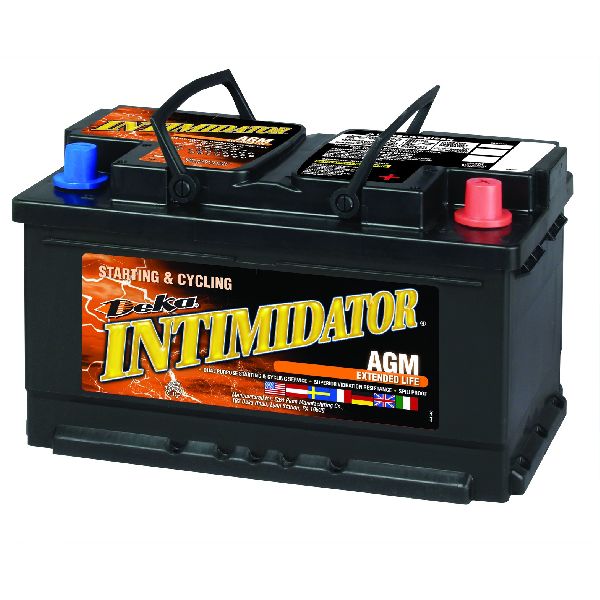
- Auxiliary Battery
(OEM #56029759AB)— This is the most common failure point on the JL platform that leads to a U3003 code. Its failure destabilizes the entire electrical system.
Trusted brands: Mopar, Duralast (AUX14), DieHard (Platinum AUX14), Odyssey
OEM price range: $140-$180
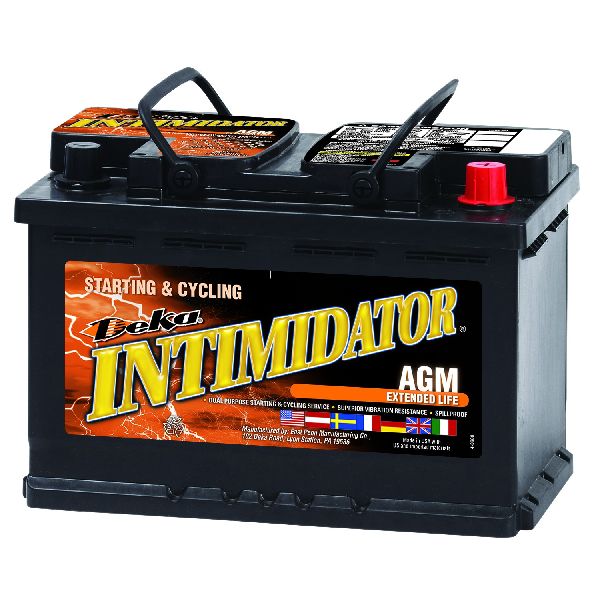
Aftermarket price range: $120-$160 - Main Battery (AGM)
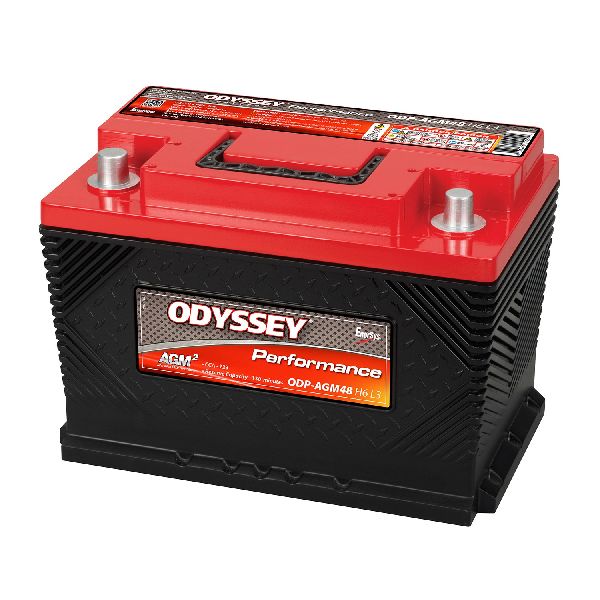
(OEM #68292150AA (Group 48/H6))— Often fails as a direct result of the auxiliary battery's failure or simply due to age. It is best practice to replace both together.
Trusted brands: Mopar, Odyssey (ODP-AGM48 H6), Duralast (Platinum AGM H6), DieHard (Platinum AGM H6)
OEM price range: $250-$320
Aftermarket price range: $200-$280
Related Codes That Often Appear With This One
- P06EF — This code relates to Engine Restart Performance and is often triggered when the ESS system fails to restart the engine due to low voltage from the failing dual-battery system.
- U1442 — This is a network error code that some owners have reported seeing in conjunction with a failing auxiliary battery, suggesting it's part of the cascade of electrical faults caused by the voltage instability.
- B14DA-2A — TSB S2108000170 notes this code for a stuck head unit button, but owners have anecdotally reported various radio and Uconnect glitches alongside battery-related voltage codes.
- U113E — This code indicates a loss of communication with the Intelligent Battery Sensor (IBS). It can be caused by a faulty IBS, a blown fuse for the IBS, or a wiring issue in the LIN bus circuit.
- B2193 — This code points to an internal fault within the Intelligent Battery Sensor (IBS) itself. If this code is active and does not clear after an IBS reset, the sensor itself likely needs to be replaced.
Technical Service Bulletins (TSBs) & Recalls
- Safety Recall U87 / NHTSA 18V-524: Addresses a potential faulty voltage regulator in the PCM on some 2018 models, which can cause stalling.
Platform-Specific Known Issues
- The dual-battery system for the Engine Stop-Start (ESS) is a known weak point, with the auxiliary battery frequently failing within 3-5 years.
- Accessing and replacing the auxiliary battery is more complex than the main battery. Owners debate whether it's easier to remove the Power Distribution Center (fuse box) from the top or to remove the passenger-side fender liner for access from the side.
- Early production JLs (2018-2019) were known to have fuses that were not fully seated in the fuse box from the factory, leading to various electrical gremlins.
Mechanic-Grade Diagnostic Values
- Key Off Battery Resting Voltage (AGM) — expected: 12.4V - 12.8V. Failure: A reading below 12.4V indicates a discharged or failing battery.
- Engine Cranking Voltage Drop — expected: Should not drop below 9.6V. Failure: Voltage dropping below 9.6V during cranking indicates a weak battery unable to hold a load.
- Charging System Voltage (Engine Running) — expected: Fluctuates between ~12.7V and ~14.7V. Failure: Consistently staying high (e.g., 14.5V+) can indicate the IBS is constantly trying to charge failing batteries. Consistently low voltage (below 13.0V) may indicate an alternator issue.
- Intelligent Battery Sensor (IBS) Power Supply — expected: Voltage at Pin 2 ('RD' wire) of the IBS 2-way connector should be > 11.8V.. Failure: Voltage below 11.8V suggests a power supply issue to the sensor itself, which should be investigated before replacing the sensor.
Hidden / Shadow Codes Worth Checking
- U3003:16: This is a sub-code specifying 'Circuit Voltage Below Threshold'. It explicitly confirms the U3003 was set due to a low voltage condition, which is the most common scenario for this vehicle. (see via A professional scan tool or advanced DIY tool like AlfaOBD or JScan that can read manufacturer-specific code suffixes.)
- U113E: Lost Communication with Intelligent Battery Sensor (IBS). This code indicates a problem with the communication line (LIN bus) between the IBS and the Body Control Module (BCM), or a blown fuse for the IBS. (see via A professional scan tool like wiTECH or an advanced DIY tool.)
- B2193: Intelligent Battery Sensor Internal Fault. This code points directly to a failure within the IBS module itself. (see via A professional scan tool like wiTECH or an advanced DIY tool.)
Scan Tool Commands That Help
- wiTECH (Dealer Tool), Autel, JScan, AlfaOBD: Battery Replacement / IBS Reset — This function should be performed after replacing either or both batteries. It resets the learned data in the Intelligent Battery Sensor (IBS), including the battery's age and state of health, ensuring the new battery is charged correctly. Failure to perform this reset is a common cause for the U3003 code to return after a battery replacement.
- wiTECH (Dealer Tool): Proxi Configuration Alignment — This may be required if modules have been replaced or if there are widespread communication issues. In some TSBs, a Proxi alignment is used to reboot modules like the Telematics Box Module (TBM) after ensuring correct battery state of charge.
- wiTECH, advanced scan tools: View Battery State Of Charge (SOC) — To check the SOC as reported by the IBS. A reading of 100% can paradoxically mean the IBS is still calibrating and has not yet determined the true state of charge. A healthy, calibrated system will typically show a value between 71% and 99%.
Wiring & Ground Locations
- Main Engine Bay Grounds — On the passenger side of the engine bay, there is a set of three ground studs by the battery, and another one further forward towards the air box.. These are the primary grounding points for components in the engine bay. A loose or corroded connection at any of these studs can create high resistance, causing voltage drops and triggering a U3003 code.
- Passenger Footwell Ground — Located in the lower right of the passenger footwell, behind the plastic kick panel. Forum posts identify this as G201/G203 for the older JK model, but a similar location exists for the JL.. This is a key interior grounding point. While less likely to be the primary cause for a U3003, a poor connection here can cause erratic behavior in interior modules that might misinterpret system voltage.
- Intelligent Battery Sensor (IBS) Connector — A small 2-wire connector attached to the IBS, which is itself clamped to the main battery's negative terminal.. This connector provides power and the LIN bus communication line to the IBS. Wiggling this connector while monitoring DTCs can help diagnose a harness or pin-fit issue. A fault here will trigger codes U113E or B2193.
Real Owner Repair Stories
- JL Wrangler Forums user (2018+ Jeep Wrangler JL (details unspecified)) — "Service Start/Stop" warning light came on.
❌ Tried (didn't work) Replacing only the auxiliary battery.
✅ What actually fixed it The user replaced the auxiliary battery, but the warning returned a week later. They learned that the main battery, despite testing 'good', was likely compromised. The final fix was replacing the main battery as well, solving the problem. This highlights the common pitfall of not replacing both batteries together.
Documented NHTSA Reports
- An owner reported in NHTSA ODI #11533105 that the U3003 code can set on-demand if the voltage supply to the ABS module falls below 10 volts, suggesting that the vehicle may limit battery recharging to approximately 75%.
- NHTSA ODI #11533082 describes a situation where U3003 appeared alongside a lack of power steering and other codes related to the steering angle sensor.
- In NHTSA ODI #11685172, the sub-code U3003-16 was documented as an "Electric Servo Brake Control Unit Power Source Low Voltage" fault.
- An owner filed a report under NHTSA ODI #11656540 noting that code U3003-16 appeared when the gearshift was slipping between neutral and drive and the dash failed to illuminate the drive gear.
- NHTSA ODI #11582867 notes a case where U3003 was identified as an "EPB control module power supply failure type 16" and the vehicle's battery failed the following day.
OEM Part Supersession History
56029759→56029759AB— Standard part revision and update by the manufacturer.
Diagnostic Flowchart
Other Known Issues on This Vehicle
Issues unrelated to this code that are worth knowing about as an owner of this generation:
- Steering Wander / Loose Steering ('Death Wobble' Precursor) 🔴 High — Common on 2018-2020 models with the original aluminum steering box. Less common on newer models with the updated steel box. (Ref: TSB 08-074-20 REV. B instructs dealers to replace the original aluminum steering gear with an updated steel version to correct wander and pull.)
- Frame Weld Quality Issues 🔴 High — Primarily affects 2018-2019 models. NHTSA opened an investigation into numerous complaints of porous, spattered, and misaligned welds. (Ref: Recall 18V-675 (related to track bar bracket separation) was issued for a specific weld failure. A broader NHTSA investigation (PE 18-011) was opened for general frame weld quality.)
- Manual Transmission Clutch Overheating 🔴 High → Shop Transmission Assembly — Affects 2018-2023 Wranglers and 2020-2023 Gladiators with manual transmissions. Multiple recalls have been issued. (Ref: Recalls 21V-028, W12, and 23V-116 address clutch pressure plates that can overheat, fracture, and pose a fire risk.)
- Water Leaks (Freedom Panels / Door Seals) 🟡 Low — A persistent and common complaint across all years of the JL generation. Often requires dealer adjustments or seal replacement.
- Instrument Panel Cluster Failure 🟠 Medium — Affects a wide range of 2018-2024 Wranglers and Gladiators, leading to a blank display. (Ref: Recall 24V652000 was issued, requiring dealers to replace the entire instrument panel cluster.)
- 4xe Plug-In Hybrid High-Voltage Battery Failures 🔴 High → Shop Vehicle Battery — A significant issue for 2021-2024 Wrangler 4xe models, leading to multiple recalls for fire risk. (Ref: Multiple recalls (e.g., 23V-787, 24V-720) advise owners to stop charging and park outdoors due to risk of battery fire.)
Used vs. New Parts: Buying Guide for This Vehicle
When a used part is the smart pick: For this specific repair, using used parts is strongly discouraged. The primary failure components are the batteries, which are consumable items with a finite lifespan. A used alternator or PCM could be considered, but only from a reputable recycler with a warranty and known vehicle history.
Donor-vehicle mileage cap: roughly under 15000 miles for the part to have meaningful remaining life.
What to inspect on the donor part:
- For non-battery components, look for a donor vehicle with low mileage and no signs of collision or flood damage.
- Verify the part number exactly matches the original part.
- Ask for a warranty or return policy, even from a junkyard.
OEM-only on this vehicle (don't cheap out):
- Intelligent Battery Sensor (IBS): While aftermarket versions may exist, the OEM Mopar sensor is validated to communicate correctly with the vehicle's modules. Given its critical role in the charging system, sticking with OEM is the safest choice.
Aftermarket brands forum-validated for this vehicle:
- Batteries: Odyssey, Northstar, and high-end AGM lines from Duralast (Platinum) and DieHard (Platinum) are frequently cited by owners as reliable, high-quality replacements for the OEM Mopar batteries.
- Dual Battery Trays/Kits: Genesis Offroad is a well-regarded brand in the Jeep community for aftermarket dual-battery solutions that replace the stock setup entirely.
Brands owners have reported issues with on this vehicle:
- Avoid off-brand, generic, or non-AGM batteries. The Jeep JL's electrical system is specifically designed for AGM batteries, and using a conventional flooded battery can lead to charging problems, venting issues in the cabin, and premature failure.
Real Owner Stories
Aggregated from forums and TSBs cited above. Mileages and costs reflect what owners reported in those sources.
2018 Jeep Wrangler Unlimited Sahara (JLUR)
Symptoms: Significant electrical issues including a cascade of problems from failing batteries; owner noted the importance of checking fuses and TSBs.
What fixed it: Replacing the failing batteries and addressing TSB/recall requirements.
Source hint: jlwranglerforums.com thread titled '2018 JLUR significant electrical issues'
2018-2024 Jeep Wrangler (JL)
Symptoms: Owner debated the 'top-down' vs 'fender liner' approach for battery access; confirmed the need for specific aftermarket part numbers (AUX14 vs AUX12).
What fixed it: Replacement of the auxiliary battery.
Source hint: jlwranglerforums.com thread titled 'Replacing the Auxiliary battery'
2018-2024 Jeep Wrangler (JL)
Symptoms: Stop/start system errors and voltage issues; community consensus was to avoid replacing just one battery.
What fixed it: Replacing both the main and auxiliary batteries together to ensure a balanced electrical system.
Source hint: jlwranglerforums.com thread titled 'Aux battery replacement help!'
Related OBD-II Codes
Frequently Asked Questions
My 2018 Wrangler is stalling and showing electrical codes; is there a recall for this?
I'm seeing 'Stop/Start Not Ready' on my JL dashboard. Which battery is likely the culprit?
How do I reset the Intelligent Battery Sensor (IBS) after replacing my batteries?
Is it true I have to remove the fender to change the auxiliary battery on my Wrangler?
Why did my main battery fail so soon after the auxiliary battery went bad?
My 2019 Wrangler has weird electrical gremlins but the batteries test fine. What else should I check?
Helpful Videos
We Have This Part in Stock


The information in this article is provided for general reference and educational purposes only. Vehicle specifications, procedures, and part compatibility can vary by production date, trim level, and region. Always consult your vehicle's factory service manual and verify part numbers before purchasing or performing repairs. Safety-critical components such as airbags, seat belts, and braking systems should be installed by a qualified professional.
- Jeep Wrangler:
- 🧭 Diagnostic Flowchart
- 🎬 Helpful Videos
- 🛍️ Shop This Part
- What's Unique About the 2018-2024 Jeep Wrangler
- Symptoms You May Notice
- Most Likely Causes
- Rare But Worth Checking
- Diagnosis Steps
- Parts You'll Likely Need
- Related Codes That Often Appear With This One
- Technical Service Bulletins (TSBs) & Recalls
- Platform-Specific Known Issues
- Mechanic-Grade Diagnostic Values
- Hidden / Shadow Codes Worth Checking
- Scan Tool Commands That Help
- Wiring & Ground Locations
- Real Owner Repair Stories
- Documented NHTSA Reports
- OEM Part Supersession History
- Other Known Issues on This Vehicle
- Used vs. New Parts: Buying Guide for This Vehicle
- Real Owner Stories
- 2018 Jeep Wrangler Unlimited Sahara (JLUR)
- 2018-2024 Jeep Wrangler (JL)
- 2018-2024 Jeep Wrangler (JL)
- Related OBD-II Codes
- Frequently Asked Questions
- 🎟️ Get 5% Off