

U3003 on 2021-2023 Lincoln Corsair: Battery Voltage Fault Causes and Fixes
On a 2021-2023 Lincoln Corsair, especially hybrid models, code U3003 indicates a problem with the 12V battery system. The most common causes are a weak 12V battery or, as identified in a TSB, a blown 300-amp fuse in the high-current battery junction box. Start by load testing the 12V battery. This issue is also common on its platform mates, the Ford Escape and Maverick hybrids.
- U3003 is a voltage code; the first step is always to test the 12V battery under load.
- On 2.5L hybrid models, be aware of TSB SSM 52201, which points to a specific 300-amp fuse as a likely cause for a dead battery and this code.
- Do not replace any electronic modules until the 12V battery and its charging system have been proven to be in good working order.
- After replacing the battery, the Battery Monitoring System (BMS) should be reset to ensure proper charging and longevity.
What's Unique About the 2021-2023 Lincoln CORSAIR
The Lincoln Corsair, especially the 2.5L Hybrid (FHEV/PHEV) variant, has specific issues related to this code documented by Ford/Lincoln. Unlike a simple alternator issue on a conventional car, the Corsair hybrid uses a DC/DC converter to charge the 12V battery. Technical Service Bulletin SSM 52201 directly addresses a dead 12V battery and code U3003:62, pointing to a specific 300-amp fuse as a potential culprit. This is a known issue on this platform and its siblings, the Ford Escape and Ford Maverick hybrids, which are also explicitly mentioned in the same TSB.
Diagnostic Flowchart
Tap your situation to follow the diagnostic path that matches what you're seeing on this vehicle.
Symptoms You May Notice
- Low or completely discharged 12V battery
- Vehicle fails to start or has a no-crank condition
- "Stop Safely Now" message on the instrume 🎬 Watch: Diagnosing the Stop Safely Now message on hybrid modelsnt cluster
- "Battery Saver Mode" message, preventing remote start.
- Dimming interior or exterior lights
- Warning lights appearing intermittently on the dash
- Electronic accessories (radio, navigation) resetting or losing settings
- Replacing the control module that stored the code. TSB SSM 50151 specifically warns against replacing modules like the SOBDMC before diagnosing the 12V system first, as the low voltage is the root cause, not the module itself.
- Replacing the 12V battery without performing a Battery Monitoring System (BMS) reset. The system may continue to undercharge the new battery, leading to a recurrence of the problem.
Most Likely Causes
- Weak or Failing 12V Battery 🔴 High Probability → Shop Vehicle Battery Modern vehicles have a high parasitic draw, and the original equipment 12V battery is a common failure point. Owners on forums like Blue Oval Forums have noted the poor quality of the stock 12V battery. A battery that cannot hold a charge will drop below the required voltage, triggering the code.
How to confirm: Perform a professional load test on the 12V battery. A simple voltage check is insufficient, as a battery can show 12V but fail under load. Most auto parts stores offer this service for free.
Typical fix: Replace the 12V battery and, crucially, reset the Battery Monitoring System (BMS). Failure to reset the BMS can cause the new battery to be charged improperly, leading to a repeat failure.
Est. part cost: $200-$300 - Blown 300 Amp High-Current Fuse 🟡 Medium Probability Specifically for 2.5L Hybrid models, TSB SSM 52201 identifies an open in the 300A fuse (F4) in the high-current Battery Junction Box (BJB) as a direct cause for U3003:62 and a dead 12V battery. Technicians and owners on forums speculate this fuse can develop hairline cracks from vibration, leading to an intermittent or complete failure of 12V battery charging.
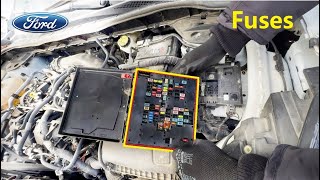
How to confirm: A technician must follow the procedure in Workshop Manual Section 414-05, Pinpoint Test H, to check for continuity across the fuse. This is more involved than a standard fuse check and requires accessing the high-current BJB. 🎬 See this guide to locate your fuse box and diagrams
Typical fix: Replace the 300-amp high-current fuse. Per the TSB, the underlying cause for the fuse blowing must also be investigated, though in many cases the fuse itself is the point of failure.
Est. part cost: $20-$60 - Loose or Corroded Battery Terminals/Cables ⚪ Low Probability → Shop Vehicle Battery
How to confirm: Visually inspect the 12V battery terminals and main ground connections for corrosion or looseness. Also check the small connector for the Battery Monitoring System (BMS) on the negative terminal, as a poor connection there can cause charging issues.
Typical fix: Clean the battery posts and cable terminals with a wire brush and ensure they are securely fastened.
Est. part cost: $1-$10
Rare But Worth Checking
- DC/DC Converter Control Module Fault: → Shop Power Converter On hybrid models, this module charges the 12V battery. While TSB SSM 52201 points to the fuse first, a failure of the module itself is possible if the fuse and battery are good.
- Charging System Fault (Alternator on non-hybrids): On the non-hybrid models with 2.0L or 2.3L engines, a failing alternator can cause low or high voltage conditions, triggering this code.
- Software Issue / Parasitic Draw: Some owners report ongoing battery drain issues that require software updates to various modules. TSBs for the related Ford Escape, like 22-2169, address the 12V battery discharging while the high-voltage battery is charging, requiring module reprogramming.
Diagnosis Steps
- Read all DTCs from all modules. Note any codes accompanying U3003, especially subtypes like :16 or :62, which are critical for diagnosis.
- Perform a professional load test on the 12V battery. If it fails, replace the battery.
- Crucial Step: After replacing the battery, perform a Battery Monitoring System (BMS) reset. This can be done with a diagnostic tool or sometimes via a specific sequence of in-car commands (e.g., flashing high beams and pressing the brake). Failure to do so may result in continued charging problems.
- If the battery is good, inspect the battery terminals and primary ground connections for looseness or corrosion. Clean and tighten them.
- For 2.5L Hybrid models with code U3003:62, the primary suspect is the 300-amp fuse per TSB SSM 52201. A technician should follow the pinpoint test in WSM Section 414-05 to verify if the fuse is open.
- With the engine running (or in 'Ready' mode for hybrids), check the charging system voltage at the battery terminals. It should be approximately 13.8-14.5 volts. If it's low (and the 300A fuse is good), the DC/DC converter may be at fault.
- If all of the above check out, the issue could be an intermittent wiring problem or a parasitic draw that may require a software update or more advanced diagnostics.
Parts You'll Likely Need
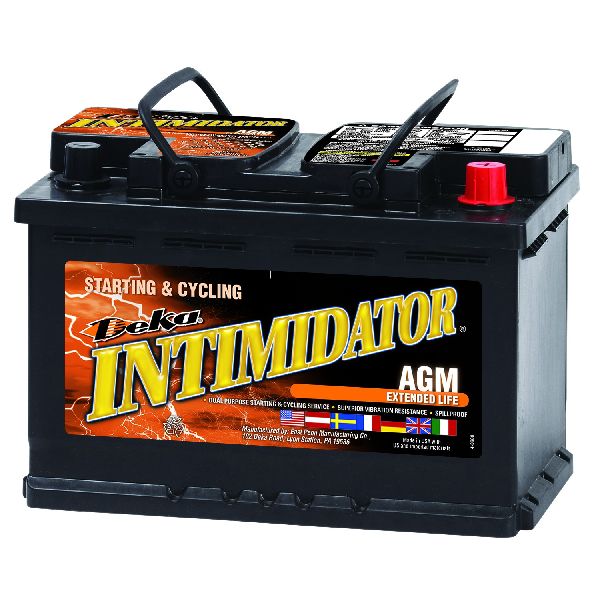
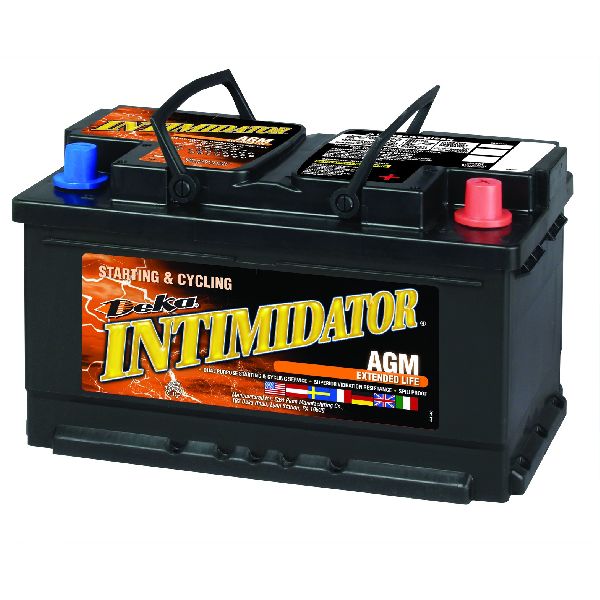
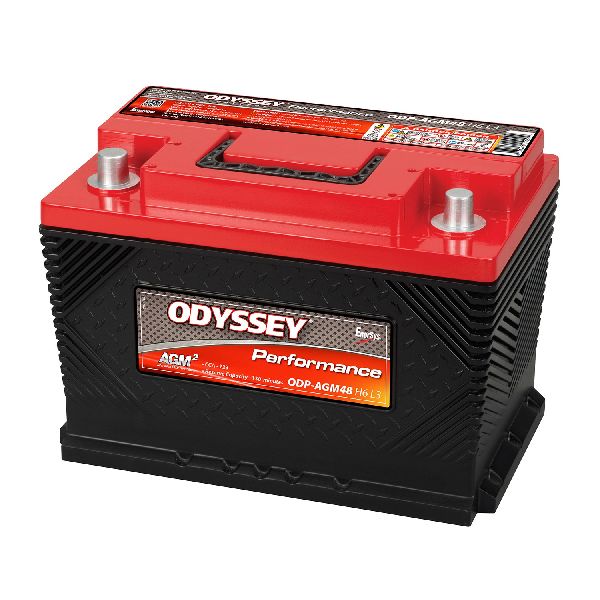
- 12V AGM Battery
(OEM #BAGM-48H6-760)— This is the most frequent cause of low voltage codes. The original battery may not have sufficient longevity, a complaint echoed by owners.
Trusted brands: Motorcraft, Interstate, DieHard
OEM price range: $200-$250
Aftermarket price range: $180-$280 - 300 Amp High-Current Fuse
(OEM #MU5Z14526K)— Identified in TSB SSM 52201 as a specific failure point on hybrid models that causes code U3003:62 and a dead 12V battery. This part is sometimes called a 'mega fuse'.
Trusted brands: Motorcraft
OEM price range: $20-$60
Aftermarket price range: $15-$40
Related Codes That Often Appear With This One
- U3003:62 — A specific subtype noted in TSB SSM 52201 for hybrid models, indicating a 'Signal Compare Failure' related to battery voltage. This is the key code pointing towards the 300A fuse issue.
- U3003:16 — A subtype indicating 'Circuit Voltage Below Threshold,' directly related to the low voltage condition from a dead battery or charging fault.
- U3000:04 — A general control module failure code that can appear alongside U3003 when a module experiences a system internal failure due to low voltage, as mentioned in TSB SSM 52201.
- P0562 — This is a generic code for 'System Voltage Low,' which TSB SSM 50151 groups with U3003 as a primary low voltage indicator.
Technical Service Bulletins (TSBs) & Recalls
- SSM 52201: Addresses a low or discharged 12V battery with DTC U3003:62 on 2.5L hybrid models (Corsair, Escape, Maverick), pointing to a faulty 300-amp fuse.
- SSM 50151: Advises diagnosing the 12V system for low voltage before replacing control modules when U3003 is present.
Platform-Specific Known Issues
- TSB SSM 52201: On 2.5L FHEV/PHEV models, a low or discharged 12V battery with DTC U3003:62 may be caused by an open 300-amp fuse in the high-current battery junction box. This TSB also applies to the Ford Escape and Maverick.
- TSB SSM 50151: Warns that low voltage DTCs like U3003 can be set at key-on and advises diagnosing the 12V system before replacing any control modules.
- Owner Experience: A recurring theme in owner forums is the premature failure of the 12V battery, leading to 'Battery Saver Mode' messages and no-start conditions. Some owners on Reddit reported dealers replacing the battery under warranty to solve the issue.
Mechanic-Grade Diagnostic Values
- DC/DC Converter Output Voltage (Engine running or in 'Ready' mode) — expected: 13.8 - 14.5 Volts. Failure: Voltage below 13.8V indicates a fault in the 12V charging system (e.g., DC/DC converter, 300A fuse, wiring).
- 12V Battery Voltage (Key Off, fully charged) — expected: ~12.6 Volts. Failure: A reading below 12.2V suggests a discharged or failing battery that requires load testing.
- 12V Battery Voltage (During engine crank) — expected: Should not drop below 9.6 Volts. Failure: A drop below 9.6V indicates a weak battery that cannot sustain a load, even if open-circuit voltage appears normal.
- RCM Module Voltage Threshold (U3003:16) — expected: Above 9.5 Volts. Failure: The Restraints Control Module (RCM) may set U3003:16 if it detects system voltage below 9.5V.
- RCM Module Voltage Threshold (U3003:17) — expected: Below 16.0 Volts. Failure: The Restraints Control Module (RCM) may set U3003:17 if it detects system voltage above 16.0V.
Hidden / Shadow Codes Worth Checking
- Silent U3003: The code can be stored in various modules, such as the Power Steering Control Module (PSCM), without illuminating the Check Engine Light. It indicates the module has experienced a low voltage event. (see via Advanced scan tools like FORScan are often required to read DTCs from all vehicle modules, not just the PCM/ECM.)
Scan Tool Commands That Help
- Manual Procedure (No Tool): Battery Monitoring System (BMS) Reset — This is a mandatory step after replacing the 12V battery. With the ignition on (engine off), flash the high beams 5 times, then press the brake pedal 3 times. The battery warning light on the instrument cluster should flash to confirm the reset.
- Automatic Relearn (No Tool): BMS State of Charge Relearn — If a manual reset is not performed after a battery replacement, the vehicle can relearn the new battery's state of charge by being left completely undisturbed (no doors opened, no key fob presses) for approximately 8 hours.
- Ford IDS / FORScan: BMS Reset — The official dealership method for resetting the Battery Monitoring System after a battery replacement. This function is typically found under the 'Service Functions' or 'Body Control Module' section of the software.
- Instrument Cluster: Engineering Test Mode — Can be used to view live battery voltage directly from the instrument cluster. To enter, press and hold the 'OK' button on the steering wheel, then turn the ignition on and continue holding 'OK' until 'Engineering Test Mode' appears. You can then cycle through options to find the battery voltage display.
Wiring & Ground Locations
- High-Current Battery Junction Box (BJB) — In the engine compartment, typically near the 12V battery.. This box contains the 300-amp 'mega fuse' (labeled F4 in some diagrams) that is the subject of TSB SSM 52201. An open in this fuse directly causes U3003:62 on hybrid models by cutting off the charging supply from the DC/DC converter to the 12V battery.
Real Owner Repair Stories
- Ford Truck Enthusiasts Forums (2018 Ford F-150 (similar BMS system)) — Silent U3003 code found in the Power Steering Control Module (PSCM) via FORScan. No Check Engine Light.
❌ Tried (didn't work) The user noted the truck had not been used much, implying a trickle charger might be a temporary fix but not a solution.
✅ What actually fixed it A responding user with a similar issue on their 2018 model stated their battery was 'junk' at 20k miles. The final fix was replacing the OEM battery with a higher quality Northstar AGM battery and performing a BMS reset.
"I Checked Everything" — The Actual Cause
- A common scenario for this code is replacing the 12V battery, only for the U3003:16 code to return. One owner reported replacing the battery but still measuring low voltage (12.2V) afterward. This indicates the root cause was not the battery itself, but rather a fault in the charging system (like the 300A fuse per TSB 52201) or a parasitic drain that is discharging the new battery.
OEM Part Supersession History
MU5Z-14526-K→No supersession information found.— This is the 300-amp high-current fuse identified in TSB SSM 52201.
Heads up: Ensure this specific part number is used for this application, as other similar-looking 'mega fuses' may have different ratings or physical dimensions.
Helpful Videos
![Avoid Expensive Shop Repairs: DIY Reset the Ford Vehicle Battery Monitoring System [BMS]](https://img.youtube.com/vi/QTtb7rKaZTE/mqdefault.jpg)
We Have This Part in Stock

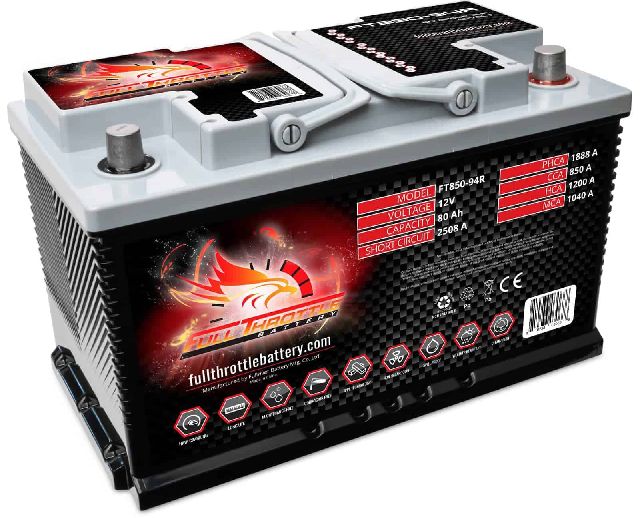

The information in this article is provided for general reference and educational purposes only. Vehicle specifications, procedures, and part compatibility can vary by production date, trim level, and region. Always consult your vehicle's factory service manual and verify part numbers before purchasing or performing repairs. Safety-critical components such as airbags, seat belts, and braking systems should be installed by a qualified professional.
- Lincoln CORSAIR:
- 🧭 Diagnostic Flowchart
- 🎬 Helpful Videos
- 🛍️ Shop This Part
- What's Unique About the 2021-2023 Lincoln CORSAIR
- Symptoms You May Notice
- Most Likely Causes
- Rare But Worth Checking
- Diagnosis Steps
- Parts You'll Likely Need
- Related Codes That Often Appear With This One
- Technical Service Bulletins (TSBs) & Recalls
- Platform-Specific Known Issues
- Mechanic-Grade Diagnostic Values
- Hidden / Shadow Codes Worth Checking
- Scan Tool Commands That Help
- Wiring & Ground Locations
- Real Owner Repair Stories
- "I Checked Everything" — The Actual Cause
- OEM Part Supersession History
- 🎟️ Get 5% Off