

U3003 on 2018-2020 Lincoln Navigator: Power Running Board Failure Causes and Fixes
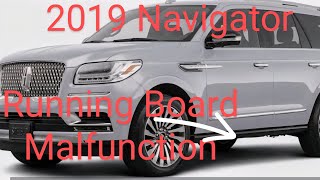
On a 2018-2020 Navigator, code U3003 almost always means the 12V battery is weak, causing the power running boards to automatically turn off as a power-saving measure. The fix is typically a new AGM Group H7/94R battery (around $250-$450), a BMS reset, and re-enabling the boards in the dashboard settings.
- Code U3003 on your Navigator almost certainly means you have a battery problem, not a running board problem.
- The first and most important diagnostic step is to have your 12V AGM battery professionally load tested.
- If you replace the battery yourself, you MUST perform a Battery Monitoring System (BMS) reset for the vehicle to charge it properly.
- After fixing the voltage issue, you must manually re-enable the power running boards in the vehicle's settings menu via the instrument cluster.
- Regularly cleaning and lubricating the running board hinge mechanisms can prevent mechanical failure and extend the life of the motors.
What's Unique About the 2018-2020 Lincoln NAVIGATOR
Ford and Lincoln designed this platform (U554, shared with the Ford Expedition) with a sensitive Battery Management System (BMS). To protect more critical vehicle functions and prevent the running board motors from operating on low voltage, the system is programmed to proactively shut down accessories like the power running boards. This makes the running boards failing a very common and specific early warning sign of a weak battery, a behavior explicitly documented in Ford's technical service communications.
Diagnostic Flowchart
Tap your situation to follow the diagnostic path that matches what you're seeing on this vehicle.
Symptoms You May Notice
- Power running boards are stuck in the retracted position and will not deploy.
- The running board setting in the instrument panel cluster (IPC) automatically switches from 'Auto' to 'Off'.
- A 'Charging System Service Now' or battery indicator light may or may not be illuminated on the dashboard.
- General symptoms of a weak battery, such as slow engine cranking, dim interior lights, or failure of the auto start-stop system.
- The issue may be intermittent at first before becoming permanent.
- Replacing the running board motor or the entire running board assembly. The TSB and overwhelming owner experiences confirm the issue is almost always related to battery voltage, not a faulty motor.
- Assuming the Running Board Control Module (RBM) is bad. While possible, module failure is rare compared to simple battery issues. Always rule out the battery and charging system first.
Most Likely Causes
- Weak or Failing 12V Battery 🔴 High Probability → Shop Vehicle Battery These vehicles have a high electrical demand from numerous modules. The factory-installed AGM batteries have a lifespan that owners report to be as short as 2-4 years. Infrequent driving or short trips can accelerate their decline and trigger this fault.
How to confirm: Perform a professional load test on the 12V battery. Most auto parts stores can do this for free. A healthy, fully charged AGM battery should read approximately 12.6-12.8 volts at rest and must maintain voltage above 9.6V during cranking.
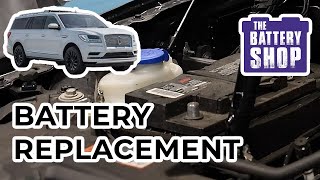
Typical fix: Replace the 12V battery with a new AGM (Absorbent Glass Mat) battery, specifically a Group Size H7 or 94R 🎬 See this walkthrough for replacing the battery on your Navigator. with at least 800 CCA. After replacement, the Battery Monitoring System (BMS) must be reset using a scan tool like FORScan or by a dealer to ensure the charging system works correctly with the new battery.
Est. part cost: $250-$450 - Failing Charging System 🟡 Medium Probability
How to confirm: With the engine running, use a multimeter to check the voltage at the battery terminals. A healthy alternator should provide a steady voltage between 13.8 and 14.5 volts.
Typical fix: If the voltage is too low, too high, or fluctuating wildly, the alternator or its voltage regulator likely needs to be replaced.
Est. part cost: $400-$800 - Battery Monitoring System (BMS) Reset Needed ⚪ Low Probability → Shop Vehicle Battery If the battery was recently replaced but the BMS was not reset, the system may still be charging based on the parameters of the old, degraded battery, leading to an undercharged new battery and a recurrence of the U3003 code.
How to confirm: This is difficult to confirm without a diagnostic scan tool. It is typically assumed if voltage issues persist immediately after a battery replacement without a BMS reset.
Typical fix: Use a capable OBD-II scan tool (like FORScan) or have a shop perform the BMS reset procedure. A manual procedure involving flashing high beams and pressing the brake pedal exists but is considered unreliable for this platform.
Est. part cost: $0-$50
Rare But Worth Checking
- Binding or Seized Running Board Hinges: While this is a mechanical issue, it can cause the running board motor to draw excessive current, which may contribute to a voltage drop or cause the module to shut the system down to prevent motor burnout. This is a very common failure on its own, especially in regions with snow and salt. Owners recommend regular cleaning and lubrication of the pivot points with products like Fluid Film or a quality silicone spray to prevent this.
- Parasitic Battery Drain: → Shop Vehicle Battery A module or component may not be shutting down correctly when the vehicle is off, slowly draining the battery. This requires a more in-depth electrical diagnosis to locate the source of the drain, which can sometimes take a technician several hours. Some owners have reported issues with telematics modules (TCU) or third-party apps causing the vehicle's network to stay awake.
Diagnosis Steps
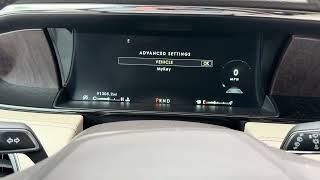
- Verify the symptom: Check the running board setting in the instrument cluster via the steering wheel controls: Advanced Settings > Vehicle > Power Running Boards. If it is set to 'Off', try setting it back to 'Auto'. If it reverts to 'Off' or doesn't work, proceed.
- Test the 12V Battery: Have the battery professionally load tested. Even if it starts the car, it may not have enough capacity to handle the vehicle's full electrical load. This is the most critical step.
- Inspect Battery Terminals: Ensure the positive and negative battery terminals are clean, tight, and free of corrosion.
- Test the Charging System: With the engine running, measure the voltage at the battery. It should be stable and within the 13.8V-14.5V range.
- Address the Root Cause: If the battery is bad, replace it. If the alternator is faulty, replace it.
- Reset the BMS: After replacing the battery, perform a Battery Monitoring System reset using a scan tool (like FORScan) or by having a dealership perform the service. This step is critical for the new battery's longevity and performance.
- Clear Codes and Re-enable Boards: Clear the U3003 DTC with a scan tool and go back into the instrument cluster menu to set the running boards to 'Auto'.
- Clean and Lubricate Hinges: As preventative maintenance, lower the boards and thoroughly clean and lubricate all pivot points on the front and rear hinges with a quality lubricant like Fluid Film or silicone spray to ensure smooth operation and prevent future motor strain.
Parts You'll Likely Need
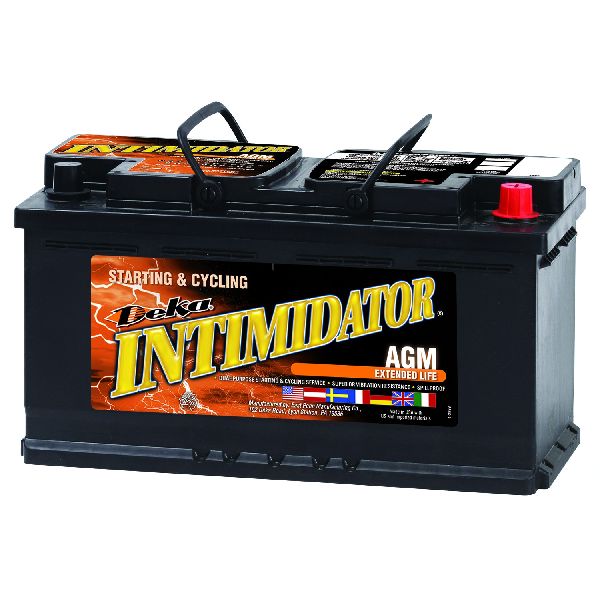
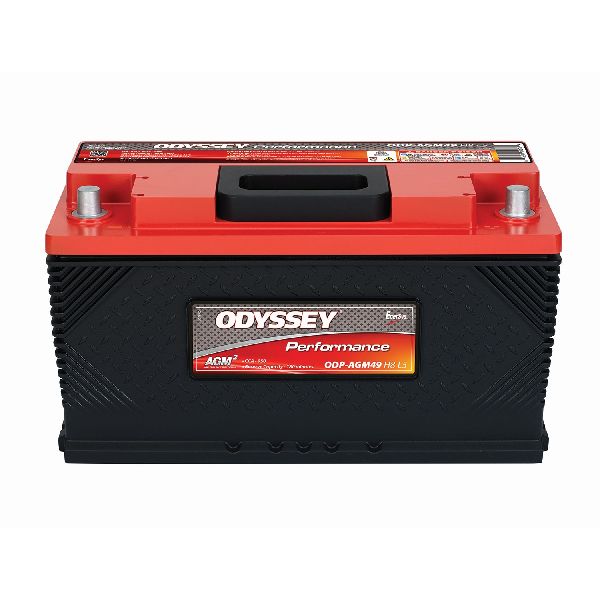
- AGM Battery (Group Size H7/94R, 800+ CCA)
(OEM #BAGM-94RH7-800)— This is the most frequent cause of the U3003 code and the subsequent disabling of the power running boards. The original battery often fails prematurely.
Trusted brands: Motorcraft, Interstate, Deka, Odyssey
OEM price range: $300-$450
Aftermarket price range: $250-$350
Related Codes That Often Appear With This One
- U3003:16 — This is the full code, including the Failure Mode Identifier (:16), which specifically means 'Circuit Voltage Below Threshold'. It confirms the low voltage condition as the root cause.
Technical Service Bulletins (TSBs) & Recalls
- SSM 50154: Notes that 2018-2020 Navigator/Expedition and 2015-2020 F-150 vehicles may have the power running boards (PRB) disabled due to a low battery voltage event, which stores DTC U3003:16 in the RBM. The fix is to correct the battery issue and re-enable the feature in the IPC menu.
- TSB 22-2224: While not directly for U3003, this TSB addresses inoperative power running boards on 2018-2022 models due to motor or bracket issues, which can be a related mechanical problem causing electrical strain.
Platform-Specific Known Issues
- Per Technical Service Bulletin (TSB) SSM 50154, a low battery voltage event is the documented cause for the power running boards becoming disabled and storing DTC U3003:16 in the Running Board Control Module.
Mechanic-Grade Diagnostic Values
- Running Board Control Module (RBM) Voltage Input — expected: 12.0V - 14.5V. Failure: Voltage below 9.5V for more than 500ms will trigger DTC U3003:16.
- Running Board Motor Winding Resistance — expected: Greater than 3 ohms. Failure: Resistance less than 3 ohms indicates a shorted motor requiring replacement.
- Parasitic Drain (after all modules are asleep) — expected: Less than 50-60 milliamps (0.05-0.06A). Failure: A sustained draw above this level (e.g., 400mA) indicates a module is not entering sleep mode or there is a short.
Scan Tool Commands That Help
- FORScan: BMS Reset / Battery Monitoring System Reset — This service procedure must be run immediately after replacing the 12V battery. It resets the battery's 'days in service' counter and charging profile in the Body Control Module (BCM), preventing undercharging of the new battery.
- Ford IDS (Integrated Diagnostic System): RBM Self-Test — This command, found under the RBM module diagnostics, can be used to cycle the running boards and check for internal module or motor faults after clearing DTCs.
- Ford FDRS (Ford Diagnosis and Repair System): Driver Front Seat Module (DSM) Configuration — Per SSM 52044, this is used on 2022-2023 models if the running boards fail to deploy on approach detection, which is caused by a software parameter issue in the DSM.
Wiring & Ground Locations
- Running Board Control Module (RBM) — On older (pre-2018) Navigators, it was often located behind the LH (driver's side) B-pillar trim panel. For the 2018-2020 generation, it is integrated or located near the Body Control Module (BCM) which is typically in the passenger footwell area.. This module is what stores the U3003:16 code. Checking its power and ground connections is a key step if a new battery does not resolve the issue. The module part number is JL1Z-14C177-A.
- Main Body Ground — There are multiple factory ground points bolted directly to the vehicle's metal body/chassis, often found behind kick panels in the footwells. A specific battery ground cable connects the negative battery terminal to the chassis.. A loose or corroded body ground can create high resistance, causing a voltage drop to various modules, including the RBM, mimicking the symptoms of a failing battery.
- Running Board Motor Connector — This is the electrical connector at each running board motor assembly, underneath the vehicle.. Corrosion or water intrusion in this 5-pin or 6-pin connector can cause high resistance or short circuits, leading to excessive current draw, which could potentially trigger a voltage-related code or damage the RBM.
Real Owner Repair Stories
- Reddit user 'slotkar' (2018 Lincoln Navigator) — Battery would die after about 50 hours of sitting. Remote start would fail with a blinking red light. Required a jump start. Problem persisted even after replacing the battery with a premium Odyssey AGM.
❌ Tried (didn't work) Replacing the 12V battery.
✅ What actually fixed it After nearly a week at the dealership for a parasitic drain test, the cause was identified and fixed as a 'loose ground'. - Blue Oval Forums user 'Rerichardson1' (2018 Lincoln Navigator L) — Chronic battery draining issue requiring multiple service visits.
❌ Tried (didn't work) Two separate battery replacements.
✅ What actually fixed it The user did not post the final resolution, but the vehicle was at the dealer for over two weeks for diagnosis, indicating a complex parasitic drain issue beyond a simple battery swap. This highlights that while rare, the cause can be more complex than the battery itself.
OEM Part Supersession History
JL1Z16A507A→JL1Z16A507G, JL1Z16A507J— Part revision or manufacturer change for the running board motor assembly.
Heads up: These parts are for the standard wheelbase (122.5") model only and are not interchangeable with the long wheelbase (L) models.
Helpful Videos
We Have This Part in Stock


The information in this article is provided for general reference and educational purposes only. Vehicle specifications, procedures, and part compatibility can vary by production date, trim level, and region. Always consult your vehicle's factory service manual and verify part numbers before purchasing or performing repairs. Safety-critical components such as airbags, seat belts, and braking systems should be installed by a qualified professional.
- Lincoln NAVIGATOR:
- 🧭 Diagnostic Flowchart
- 🎬 Helpful Videos
- 🛍️ Shop This Part
- What's Unique About the 2018-2020 Lincoln NAVIGATOR
- Symptoms You May Notice
- Most Likely Causes
- Rare But Worth Checking
- Diagnosis Steps
- Parts You'll Likely Need
- Related Codes That Often Appear With This One
- Technical Service Bulletins (TSBs) & Recalls
- Platform-Specific Known Issues
- Mechanic-Grade Diagnostic Values
- Scan Tool Commands That Help
- Wiring & Ground Locations
- Real Owner Repair Stories
- OEM Part Supersession History
- 🎟️ Get 5% Off