

U3003 on 2016-2020 Mazda CX-9: Power Liftgate Voltage Fault Causes and Fixes
Code U3003 on a 2016-2020 Mazda CX-9 almost always means there's a power supply problem with the power liftgate, causing it to stop working. The most common cause is a weak or dying vehicle battery, which is a relatively inexpensive fix. Before attempting any other repairs, test and, if necessary, replace the battery.
- U3003 on a 2016-2020 Mazda CX-9 is a specific code for a Power Liftgate (PLG) module voltage problem.
- Before suspecting expensive liftgate parts, always test the vehicle's main 12V battery. It is the most common and cheapest fix.
- Check and clean the battery terminals and ground connections, as corrosion or loose connections can mimic a bad battery.
- If the battery is replaced or disconnected, a specific reset procedure involving disconnecting the battery and clearing the Keep Alive Memory (KAM) may be required.
- If the liftgate was open during a power loss, it must be closed manually to restore automatic functionality.
What's Unique About the 2016-2020 Mazda CX-9
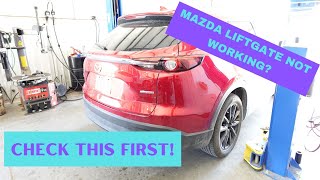
The power liftgate system on the second-generation Mazda CX-9 is known to be particularly sensitive to the vehicle's battery voltage. Mazda has issued multiple Technical Service Bulletins (TSBs) specifically for this code on this vehicle, which is a strong indicator of a common issue. The TSBs, such as MT-006-18 and MT-003-20, confirm that an inoperative power liftgate and a stored U3003:16 code are frequently caused by nothing more than a low vehicle battery, not a failure of the liftgate components themselves. 🎬 Watch: A quick check to perform before replacing expensive parts. This sensitivity means that even a battery that can still start the car may not provide sufficient stable voltage for the PLG module, leading to misdiagnosis.
Diagnostic Flowchart
Tap your situation to follow the diagnostic path that matches what you're seeing on this vehicle.
Symptoms You May Notice
- Inoperative power liftgate (will not open or close electronically).
- Power liftgate may attempt to move but then stop.
- Multiple beeps (often three) when trying to operate the liftgate, with no movement.
- No response at all (no beeps) when pressing liftgate buttons.
- In some cases, other electrical issues like dimming lights, slow starting, or infotainment system glitches if the battery is the root cause.
- Replacing the power liftgate motors/drive units without checking the battery and charging system first.
- Replacing the Power Liftgate Control Module when the issue is simply a weak battery or poor connection.
Most Likely Causes
- Weak or Failing Vehicle Battery 🔴 High Probability → Shop Vehicle Battery Mazda TSB #MT-003-20, #MT-006-18, and others directly link low battery voltage to this code and symptom on the CX-9. The PLG module is sensitive to voltage drops that occur even on a battery that can still start the engine. Owners report the issue appearing after a jump-start or when the battery is a few years old.
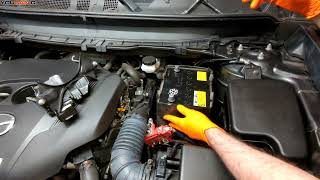
How to confirm: Test the battery's state of charge with a multimeter. A healthy battery should read about 12.6 volts with the engine off. A reading below 12.2 volts indicates a need for charging or replacement. A load test at an auto parts store is the most definitive way to confirm a weak battery.
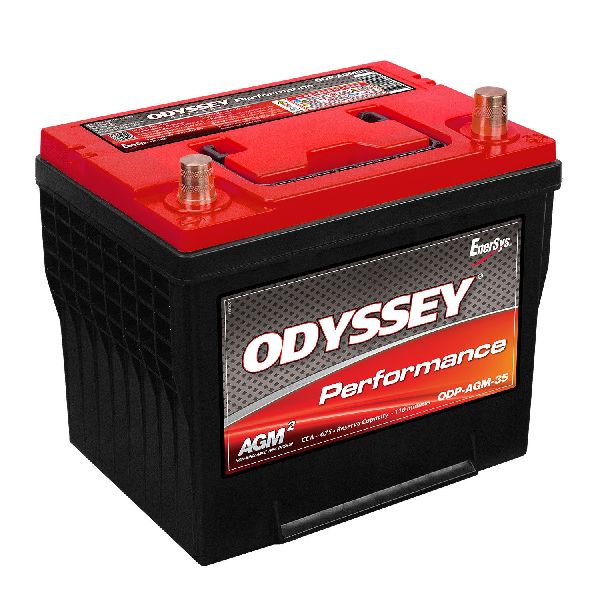
Typical fix: Fully charge or replace the vehicle's 12V battery. The common battery group size for this vehicle is 35. 🎬 See this DIY guide for replacing your CX-9 battery.
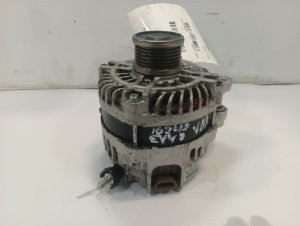
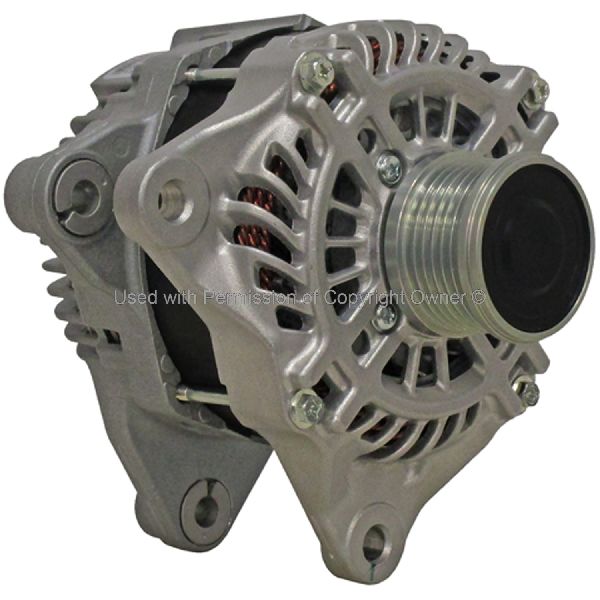
Est. part cost: $150-$300 - Failing Alternator 🟡 Medium Probability → Shop Alternator An undercharging alternator will cause low battery voltage (U3003:16), while a failing voltage regulator can cause voltage spikes (U3003:17). The PLG module is sensitive to both conditions.
How to confirm: With the engine running, measure the voltage at the battery terminals. It should be between 13.5 and 14.5 volts. If it's lower or higher, the alternator is likely faulty.
Typical fix: Replace the alternator.
Est. part cost: $300-$600 - Corroded or Loose Battery Terminals/Grounds 🟡 Medium Probability → Shop Vehicle Battery Corrosion creates resistance, which causes a voltage drop under load, tricking the PLG module into thinking the battery is weak.
How to confirm: Visually inspect the battery terminals for a white or blue-green powdery substance. Check that the terminal clamps are tight and cannot be moved by hand. Inspect the main body ground strap for corrosion or looseness.
Typical fix: Disconnect the battery and clean the terminals and clamps with a wire brush and a baking soda/water solution. Ensure all connections are tight.
Est. part cost: $0-$10
Rare But Worth Checking
- Blown Fuse: A blown fuse for the power liftgate circuit will cut power entirely. While this won't typically cause a low voltage code (it would just be no power), it's a simple check worth performing if the liftgate is completely unresponsive.
- Wiring Harness Damage: The wiring that passes through the flexible hinge area between the body and the liftgate can fatigue and break over time, causing an intermittent or open circuit. While not specific to U3003, Mazda did issue a recall (3419E) for some 2018 CX-9s for a wiring harness issue that could disrupt electrical communications, highlighting the potential for harness problems.
- Failed Power Liftgate (PLG) Control Module: → Shop Liftgate Control Module It is possible for the module itself to fail, but this should only be considered after all power supply issues have been definitively ruled out. The module is located in the rear of the vehicle. The OEM part number is typically TK49-62-6H0.
Diagnosis Steps
- Scan the vehicle for codes and confirm U3003 is present, noting any suffixes like :16 or :17.
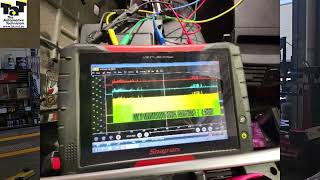
- Perform a comprehensive test of the 12V battery. This includes checking the open-circuit voltage and, ideally, performing a load test. This is the most critical step.
- With the engine running, test the alternator output at the battery terminals to ensure it is between 13.5V and 14.5V.
- Thoroughly inspect the battery terminals, clamps, and main chassis ground straps for any signs of corrosion or looseness. Clean and tighten as necessary.
- If battery and charging systems are confirmed to be good, locate and inspect the fuse for the Power Liftgate.
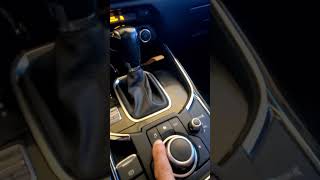
- Perform the TSB-recommended reset procedure: Fully charge the battery, ensure the liftgate is closed, disconnect the negative battery terminal, then clear the Keep Alive Memory (KAM) by stepping on the brake pedal for one minute. Some TSBs also mention holding the high beam on during this time. Reconnect the negative terminal and test the liftgate operation. 🎬 Watch: How to reset your liftgate and touchscreen after battery service.
- If the liftgate was left open when the battery was disconnected or died, it may need to be manually closed fully to restore automatic operation.
- If the problem persists, the wiring to the PLG module and the module itself would be the next items to inspect, which may require professional assistance.
Parts You'll Likely Need
- Vehicle Battery
(OEM #Q85Y-0S-S00 (This is an example EFB battery, confirm fitment))— This is the most common cause for code U3003 on this vehicle, as documented in multiple Mazda TSBs.
Trusted brands: Interstate, DieHard (Group 35), Duralast (Group 35), NAPA The Legend (BCI No. 35)
OEM price range: $250-$400
Aftermarket price range: $150-$300 - Alternator — A faulty alternator can cause either low or high voltage conditions, triggering U3003:16 or U3003:17 respectively.
Trusted brands: Denso, Bosch, Motorcraft
OEM price range: $500-$800
Aftermarket price range: $300-$600 - Power Liftgate Control Module
(OEM #TK49-62-6H0)— A rare but possible cause of failure if all power supply issues are ruled out.
Trusted brands: Mazda (OEM)
OEM price range: $200-$350
Aftermarket price range: $100-$200 (Used)
Technical Service Bulletins (TSBs) & Recalls
- MT-003-20: Mentions U3003:16 and U3003:17 for inoperative power liftgate on CX-9 and CX-5. Provides a detailed reset procedure.
- MT-006-18: Cites U3003:16 for an inoperative power liftgate on CX-9 and CX-5, blaming low battery voltage.
- SA297: Associates U3003:16 with an inoperative power liftgate.
- 1104M: Directly states an inoperative power liftgate with DTC U3003:16 may be caused by low battery voltage and provides a KAM reset procedure.
Platform-Specific Known Issues
- Mazda has issued multiple TSBs for the 2016-2020 CX-9 regarding an inoperative power liftgate associated with code U3003:16, explicitly stating that low battery voltage is a likely cause.
- TSB MT-003-20 provides a specific repair procedure: Check battery/charging system, ensure liftgate is closed, disconnect negative battery terminal, clear KAM (by pressing brake pedal for 1 min), reconnect, and test.
Mechanic-Grade Diagnostic Values
- Module Power Supply Voltage (Low Threshold) — expected: ~12.6V (Engine Off), 13.5-14.5V (Engine On). Failure: Code U3003:16 may be set when voltage drops below 8V or 9V. This specific threshold is documented for the EPS and SAS modules but is a strong indicator for the PLG module's behavior.
- Module Power Supply Voltage (High Threshold) — expected: ~12.6V (Engine Off), 13.5-14.5V (Engine On). Failure: Code U3003:17 may be set when voltage exceeds 17.5V or 18V. This specific threshold is documented for the EPS and SAS modules.
- Battery Voltage During Cranking (Load Test) — expected: Should not fall below 9.6V. Failure: A voltage drop below 9.6V during engine cranking indicates a weak battery that cannot support the electrical load, likely causing the U3003:16 code.
Scan Tool Commands That Help
- Mazda M-MDS (Mazda Modular Diagnostic System): Self Test / DTC Inspection for 'LTM' (Liftgate Module) — To officially retrieve and clear manufacturer-specific codes from the Power Liftgate module after a repair has been performed.
- Manual Procedure (No Scan Tool): Keep Alive Memory (KAM) Clear — This is a critical reset procedure recommended by Mazda TSBs after addressing a low/high voltage condition. With the liftgate closed, disconnect the negative battery terminal, then step on the brake pedal for one minute to drain residual power and reset modules.
Wiring & Ground Locations
- G12 (Unconfirmed for this generation) — At the right 'C' pillar, in the rear quarter panel area.. This is the documented ground point for the PLG control module on the first-generation (2007) CX-9. Component locations are often carried over between generations, making this a highly probable location to check for a poor ground connection causing voltage issues on the 2016-2020 models. A loose or corroded ground at this point would directly affect the PLG module's power supply.
Real Owner Repair Stories
- Mazdas247 Forum User 'youri' (2018 Mazda CX-9) — Power liftgate was completely inoperative.
❌ Tried (didn't work) Initial attempts to operate the liftgate via any button failed.
✅ What actually fixed it The owner's battery had died and the vehicle required a jump-start, after which the liftgate would not work. The final fix was simply disconnecting the negative battery terminal for a moment and then reconnecting it. This hard reset restored full power liftgate functionality immediately.
OEM Part Supersession History
TK49-62-6H0 (and revisions C, E, F)→TA0A-62-6H0 (and revisions A, B, C, D, E, F)— Standard part evolution and revision. The change from the 'TK' prefix to 'TA' suggests a potentially significant design update.
Heads up: The latest part number, TA0A-62-6H0F, is listed as the replacement for all previous versions, including the TK49 series, for the 2016-2023 CX-9. Using the latest revision is recommended.
Model Year Variations Within This Range
- 2020: For the 2020 model year, the power liftgate became a standard feature on the Touring trim level. On prior years (2016-2019), it was generally reserved for Grand Touring and Signature trims.
- 2020 (Grand Touring): The Grand Touring trim introduced a hands-free power liftgate feature, adding a kick sensor for operation.
Helpful Videos
Used OEM Parts in Stock
New Aftermarket Parts Available



The information in this article is provided for general reference and educational purposes only. Vehicle specifications, procedures, and part compatibility can vary by production date, trim level, and region. Always consult your vehicle's factory service manual and verify part numbers before purchasing or performing repairs. Safety-critical components such as airbags, seat belts, and braking systems should be installed by a qualified professional.
- Mazda CX-9:
- 🧭 Diagnostic Flowchart
- 🎬 Helpful Videos
- 🛍️ Shop This Part
- What's Unique About the 2016-2020 Mazda CX-9
- Symptoms You May Notice
- Most Likely Causes
- Rare But Worth Checking
- Diagnosis Steps
- Parts You'll Likely Need
- Technical Service Bulletins (TSBs) & Recalls
- Platform-Specific Known Issues
- Mechanic-Grade Diagnostic Values
- Scan Tool Commands That Help
- Wiring & Ground Locations
- Real Owner Repair Stories
- OEM Part Supersession History
- Model Year Variations Within This Range
- 🎟️ Get 5% Off