

U3003 on 2012-2020 Volkswagen Golf: Battery Voltage Causes and Fixes
On a 2012-2020 VW Golf, code U3003 almost always means the 12V battery is failing. For 2015-2020 models (Mk7), you MUST code the new battery to the car's computer (BMS) to prevent future issues. A new battery costs between $150 and $350.
- U3003 on a VW Golf is almost always a problem with the 12V power supply; start by testing the battery.
- Do not replace any electronic control modules until you have confirmed the battery and alternator are in perfect health.
- If you have a 2015-2020 Golf (Mk7), replacing the battery requires an extra step: it must be 'coded' to the car with a scan tool.
- A cascade of warning lights for unrelated systems (ABS, ESC, Airbags) is a common symptom of a low battery on this platform.
What's Unique About the 2012-2020 Volkswagen Golf
The 2012-2020 range covers two distinct Golf generations, the Mk6 (PQ35 platform) and Mk7 (MQB platform), which handle battery management very differently. The later Mk7 generation (2015-2020), especially models with Start-Stop, uses a sophisticated Battery Management System (BMS). This system, which relies on a sensor module (J367) attached to the negative battery terminal, requires a new battery to be 'coded' or 'registered' using a diagnostic tool. Failing to perform this critical step will cause the system to overcharge the new battery, assuming it is still the old, degraded one. This leads to premature failure of the new battery and the U3003 code returning. Mk6 models (2012-2014) do not have this requirement.
Generation note: This guide covers the Volkswagen Golf Mk6 (approx. 2012-2014 on the PQ35 platform) and Mk7 (approx. 2015-2020 on the MQB platform). The single most important difference is that the Mk7 has a Battery Management System (BMS) that requires a new battery to be electronically coded to the vehicle. The Mk6 does not require this step. Failure to code the battery on a Mk7 is a very common cause for this code to reappear after a battery replacement.
Symptoms You May Notice
- Check Engine Light or battery/charging warning light on the dashboard.
- Slow or sluggish engine cranking.
- Multiple, seemingly unrelated warning lights for systems like ESC, ABS, Airbag, Park Assist, or Front Assist, especially after starting the car.
- Dimming headlights and interior lights.
- Radio, infotainment screen, or other electronics randomly resetting or shutting down.
- Auto Start-Stop system is disabled or malfunctions.
- Keyless entry (Kessy) may not work correctly.
- Electric power steering feels heavy or a power steering warning light appears.
- Message on infotainment screen: "Battery low. Please start engine."
- Replacing expensive electronic modules (like the Body Control Module or ABS module) that have stored the U3003 code. The code in these modules is almost always a symptom of the low voltage, not the cause.
- Replacing the battery on a 2015-2020 Golf without coding the new battery, leading to the problem returning within months.
- Replacing the battery when the actual fault is a corroded main chassis ground strap causing high resistance.
Most Likely Causes
- Weak or Failing 12V Battery 🔴 High Probability → Shop Vehicle Battery Vehicle batteries are consumable items with a typical lifespan of 3-5 years. Modern Golfs with many electronic modules and features like Start-Stop are very sensitive to even slight drops in voltage as the battery ages.
How to confirm: Test the battery's resting voltage (should be 12.4V-12.8V). Perform a load test; the voltage should not drop below 9.6V during engine cranking. Most auto parts stores can perform this test for free.
Typical fix: Replace the 12V battery. For 2015-2020 (Mk7) models, the new battery MUST be coded to the vehicle's Battery Management System (BMS) using a compatible scan tool like VCDS or OBDeleven. 🎬 Watch: How to replace and adapt a VW battery
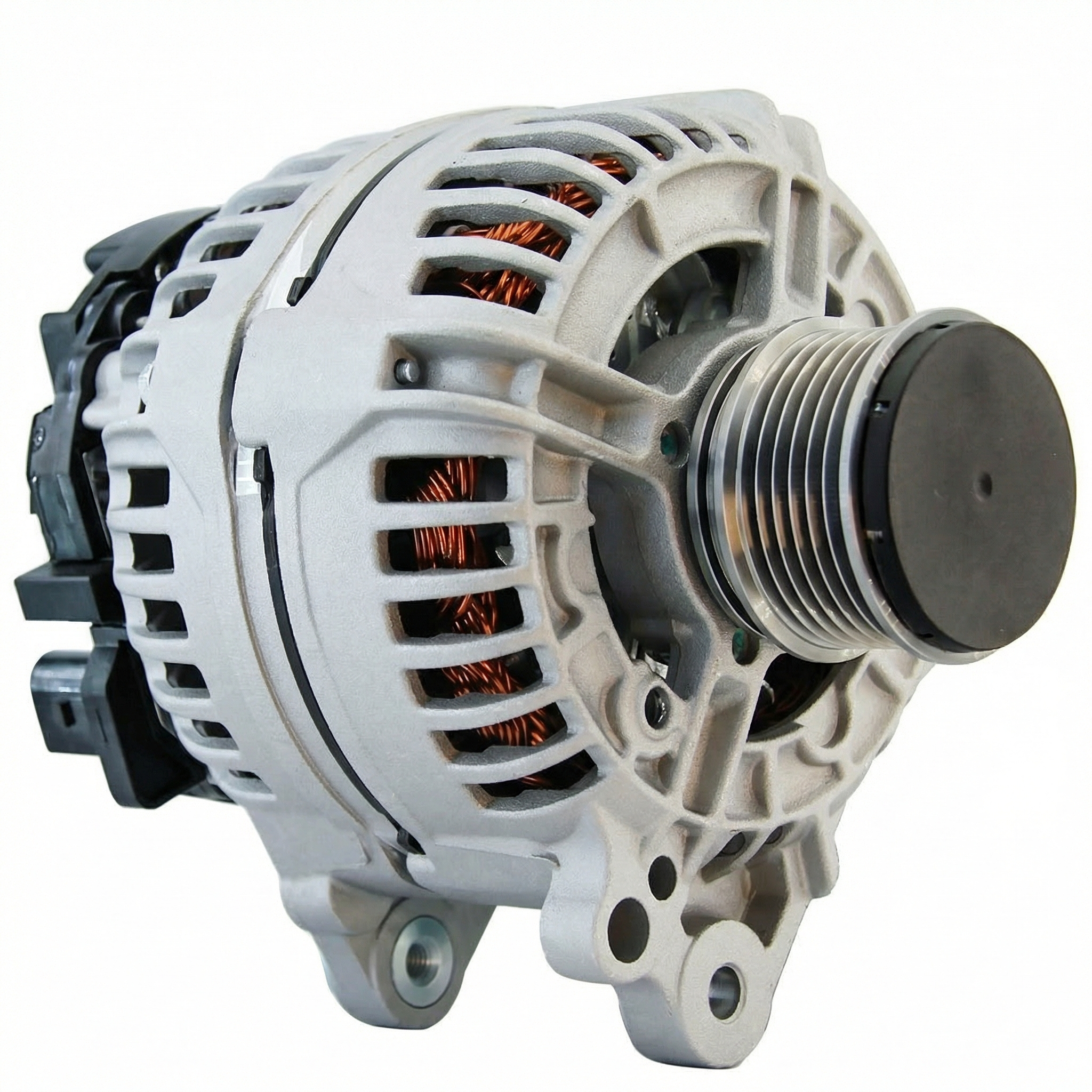
Est. part cost: $150-$350 - Failing Alternator 🟡 Medium Probability → Shop Alternator The alternator recharges the battery and powers the car when running. If its internal voltage regulator fails, it can either undercharge (voltage below ~13.5V) or overcharge (voltage above ~15.0V) the battery, triggering U3003.
How to confirm: With the engine running, use a multimeter to measure the voltage at the battery terminals. A healthy alternator should output between 13.5V and 14.8V. If the voltage is too low, too high, or fluctuating wildly, the alternator is likely faulty. 🎬 See this step-by-step VW Golf MK7 alternator replacement guide
Typical fix: Replace the alternator and serpentine belt.
Est. part cost: $300-$700 - Loose or Corroded Battery Terminals/Grounds 🟡 Medium Probability → Shop Vehicle Battery Corrosion builds up over time, creating resistance that prevents the battery from charging or delivering power effectively. The main chassis ground strap, often located under the battery tray or from the transmission to the frame, is a known weak point for corrosion on these platforms.
How to confirm: Visually inspect the battery terminals for white, blue, or green crust. Check that the terminal clamps are tight and cannot be moved by hand. Inspect the main ground wire from the battery to the vehicle's chassis for tightness and corrosion.
Typical fix: Disconnect the battery (negative terminal first). Clean the terminals and clamps with a wire brush and a mixture of baking soda and water. Reconnect and tighten securely. Replace corroded cables or ground straps if necessary.
Est. part cost: $5-$50 - Failure to Code New Battery (Mk7 Models) ⚪ Low Probability → Shop Vehicle Battery On 2015-2020 models, the BMS adjusts charging based on battery age, type (AGM/EFB), capacity, and even serial number. If a new battery isn't coded, the BMS will continue to use an aggressive charging profile meant for an old, worn battery, which will damage the new battery and trigger voltage faults.
How to confirm: This occurs after a recent battery replacement. The U3003 code returns, and battery performance degrades quickly. A scan tool can be used to check the battery information stored in Gateway control module (Address 19).
Typical fix: Use a VW-compatible scan tool (like VCDS or OBDeleven) to properly code the new battery's specifications (capacity in Ah, technology, manufacturer code, and serial number) into the BMS.
Est. part cost: $0 (if you have the tool) or $50-$150 (shop labor)
Rare But Worth Checking
- Parasitic Battery Drain: → Shop Vehicle Battery An electrical component may not be shutting off correctly when the car is parked, slowly draining the battery overnight. Common culprits on this platform include faulty door latch modules, aftermarket accessories, or a failing Kessy 🎬 Watch: The easiest way to test parasitic draw (keyless entry) module that prevents the car from entering sleep mode.
- Faulty Battery Monitoring Sensor (BMS): → Shop Vehicle Battery On Mk7 models, the sensor itself (part of the negative battery terminal cable, e.g., Part No. 5Q0915181) can fail, providing incorrect voltage and state-of-charge data to the gateway module. This can cause symptoms identical to a failing battery.
Diagnosis Steps
- Read all fault codes from all vehicle modules, not just the engine computer. Note any other codes that are present, especially communication (U-codes) or specific voltage faults.
- Visually inspect the battery terminals, cables, and main chassis ground strap for corrosion, damage, or looseness. Clean and tighten as needed.
- With the engine off, measure the battery's resting voltage using a multimeter. It should be approximately 12.4V to 12.8V. If it's below 12.4V, the battery is discharged or failing.
- Perform a battery load test. While a helper cranks the engine, monitor the voltage. It should not drop below 9.6V. A significant drop indicates a weak battery.
- Start the engine. Measure the charging system voltage at the battery terminals. It should be stable, between approximately 13.5V and 14.8V. If it's outside this range, the alternator or voltage regulator is likely faulty.
- For 2015-2020 (Mk7) models, if the battery was recently replaced, use a scan tool to connect to the Gateway module (19) and verify the battery was properly coded. Check the stored values for capacity, type, and serial number.
- If the battery and alternator test good, investigate for a parasitic drain that could be discharging the battery when the car is off. This involves using a multimeter in series with the negative battery cable to measure amperage draw after all modules have gone to sleep (approx. 30-60 minutes).
- On Mk7 models, if all else checks out, suspect a faulty Battery Monitoring Sensor on the negative terminal. Compare the voltage reading from the sensor (via scan tool) to the actual voltage measured by a multimeter. A significant discrepancy points to a faulty sensor.
Parts You'll Likely Need
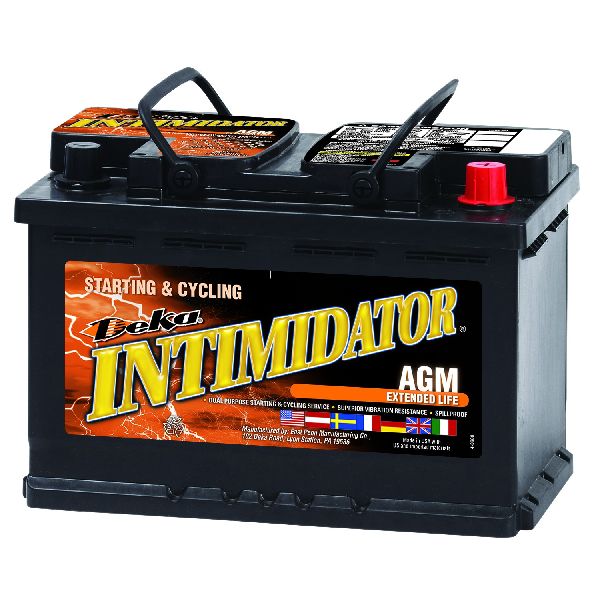
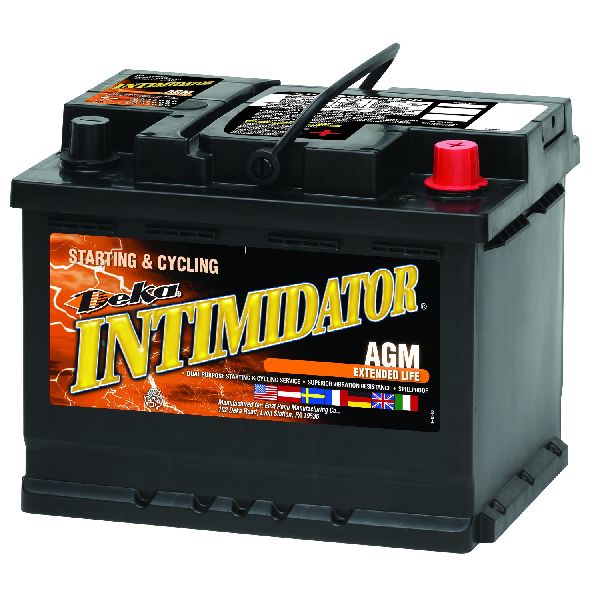
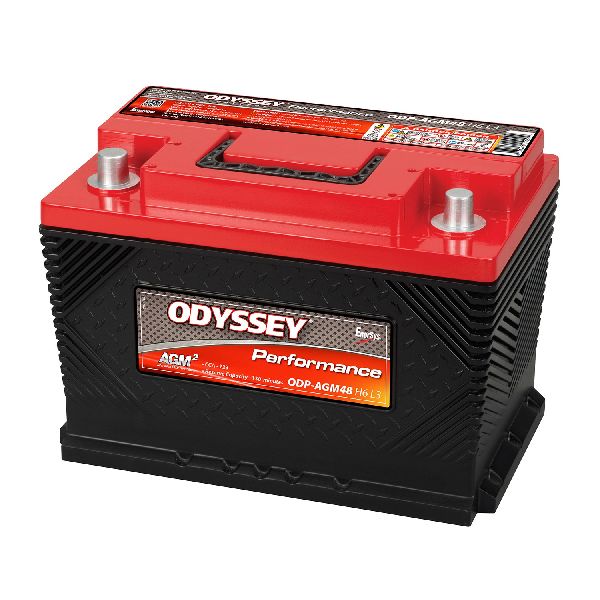
- 12V Battery — This is the most common cause of U3003. The battery is a wearable item that loses its ability to hold a charge over time.
Trusted brands: Varta, Bosch, Exide, Banner
OEM price range: $250-$400
Aftermarket price range: $150-$300 - Alternator — The second most likely cause. A failed alternator cannot properly charge the battery, leading to low voltage, or can overcharge it, leading to high voltage.
Trusted brands: Bosch, Valeo
OEM price range: $500-$800
Aftermarket price range: $300-$500 - Battery Monitoring Sensor (Mk7)
(OEM #5Q0915181)— On Mk7 models, this sensor on the negative terminal can fail, sending incorrect data to the Gateway module and causing charging system malfunctions.
Trusted brands: Volkswagen (Genuine), VEMO
OEM price range: $150-$250
Aftermarket price range: $100-$180
Related Codes That Often Appear With This One
- P0562 — This is a generic powertrain code for 'System Voltage Low,' which often appears alongside U3003 to indicate the same underlying voltage problem.
- Multiple U-codes (e.g., U0121, U1123) — When system voltage is unstable, communication between various control modules on the CAN bus network is disrupted, leading to a cascade of 'Lost Communication' codes.
- 00446 - Function Limitation due to Insufficient Voltage — This is a VW-specific fault code often found in various modules (like ABS, Power Steering) that explicitly states the module has reduced its functionality due to low voltage, directly corroborating the U3003.
Technical Service Bulletins (TSBs) & Recalls
- VW TPI 2043373 (Technical Problem Information, EU market) - Details the correct procedure for testing and replacing batteries, including the mandatory coding step for vehicles with a Battery Monitoring Control Module (J367).
Platform-Specific Known Issues
- On 2015-2020 (Mk7) models, failure to code a new battery to the Battery Management System (BMS) is a frequent cause of recurring U3003 codes and premature failure of the new battery.
- A user on GOLFMK7.com reported symptoms of a low battery (infotainment shutting down) and a scan tool showing low voltage, while a multimeter showed 12.5V. This discrepancy pointed towards a failing Battery Monitor Sensor, not the battery itself.
- Cross-manufacturer data from NHTSA ODI #11533082 indicates that U3003 can be associated with a lack of power steering and steering angle sensor faults (C1B00), while NHTSA ODI #11582867 describes it as an Electric Parking Brake (EPB) control module power supply failure.
Mechanic-Grade Diagnostic Values
- Parasitic Current Draw (Quiescent Current) — expected: < 50 mA. Failure: A sustained reading above 50mA after the vehicle has been off and locked for 30-60 minutes indicates a parasitic drain.
- Alternator AC Ripple Voltage — expected: < 100 mV AC. Failure: Excessive AC voltage (ripple) on the DC charging circuit, measured with a multimeter in AC mode, points to failing diodes within the alternator.
- VCDS Gateway (19) Measuring Block - Battery State of Charge (SOC) — expected: Typically 80-100% on a healthy, charged battery.. Failure: A low SOC percentage that does not increase with charging, or a value that wildly differs from multimeter readings, can indicate a failing battery or a faulty BMS sensor.
- VCDS Gateway (19) Measuring Block - Battery Internal Resistance — expected: Increases over the life of the battery. A new battery will have a low baseline value.. Failure: A very high internal resistance value indicates the battery is aged and can no longer deliver sufficient current under load.
Hidden / Shadow Codes Worth Checking
- U3003:16: This is a sub-code or suffix that specifies the nature of the voltage fault. The ':16' indicates 'Circuit Voltage Below Threshold', confirming the issue is low voltage, not high voltage. (see via Most comprehensive OBD-II scanners, including VCDS, OBDeleven, and other professional tools, will display this suffix along with the main DTC.)
Scan Tool Commands That Help
- VCDS or OBDeleven: Gateway (19) -> Adaptation -> Channel 004 (or Long Adaptation for newer gateways) — This is used to code a new battery to the vehicle on Mk7 models. You must enter the new battery's capacity (Ah), vendor code, and a new serial number. Changing the serial number is what tells the Battery Management System (J367) that a new battery has been installed, resetting its charging algorithm.
- VCDS or OBDeleven: Instruments (17) -> Adaptation -> Channel 'Battery Charge' — This function can be used to enable the 'State of Charge' (SOC) display in the Multi-Function Display (MFD) on some models, allowing the driver to monitor the battery's charge level directly.
- VCDS or OBDeleven: Gateway (19) -> Measuring Blocks — Used to view live data from the Battery Monitoring Sensor (J367), including State of Charge, battery temperature, internal resistance, and calculated aging factors. This is critical for diagnosing if the battery is truly bad or if the sensor is providing faulty data.
Wiring & Ground Locations
- Main Engine/Chassis Ground — On the Mk7, a primary ground point with multiple brown wires is located on the chassis bulkhead behind the battery. Other key grounds are on the transmission case and from the negative battery terminal to the longitudinal frame member.. Corrosion or looseness at these main ground points creates high resistance for the entire vehicle's electrical system, causing a system-wide voltage drop that can trigger U3003 in multiple modules.
- Battery Monitoring Control Module (J367) — This module is integrated into the negative battery terminal clamp on Mk7 models.. This is the sensor that directly measures battery voltage, current, and temperature. All diagnostic data for the Battery Management System originates here. A fault in its connector or the unit itself will lead to incorrect charging and trigger voltage codes.
- Ground Point 673 — Earth point 3, on the front of the left longitudinal member.. This is a key grounding location for components in the engine bay. Verifying its integrity is part of a thorough electrical diagnosis.
Real Owner Repair Stories
- GOLFMK7 Forum (VW Golf Mk7) — A sudden cascade of errors: ABS light, 'Start & Stop system not working', and 'Electronic parking brake' fault. A VCDS scan revealed faults in nearly every control module.
❌ Tried (didn't work) Clearing codes with VCDS (they returned immediately)., Suspecting a recent clutch replacement was the cause (it was unrelated).
✅ What actually fixed it The user noted the original battery was old. They replaced it with a new, genuine VW battery and properly coded it to the car. After driving for a short while, most errors cleared, though a few remained, suggesting the initial widespread faults were all caused by the failing battery.
Documented NHTSA Reports
- NHTSA ODI #11685172 describes a scenario where U3003-16 (Electric Servo Brake Control Unit Power Source Low Voltage) appeared alongside door lock and communication errors (B1142, U0199) due to an improperly installed connector.
- NHTSA ODI #11656540 reports that U3003-16 was found when a vehicle's gearshift was slipping between neutral and drive, and the emergency brake system activated unexpectedly.
- NHTSA ODI #10937177 notes U3003:13 and U3003:16 appearing in the Power Steering Control Module (PSCM) and Battery Energy Control Module (BECM) as part of a widespread electrical system failure.
OEM Part Supersession History
5Q0915181→5Q0915181J, 5Q0915181K, and other letter revisions.— Revisions often address reliability improvements, changes in internal electronics, or manufacturing updates.
Heads up: While later revisions are generally backward compatible, it is critical to ensure the replacement part is for the MQB platform. When coding a new battery, some gateway modules may only accept vendor codes like 'Varta' (VA0) even if another brand is installed.
Model Year Variations Within This Range
- 2012-2014 (Mk6): These models on the PQ35 platform have a simpler charging system. They do NOT have a Battery Monitoring Sensor (J367) on the negative terminal and do NOT require battery coding. Diagnosis is more traditional, focusing on the battery, alternator, and main power/ground cables.
- 2015-2020 (Mk7): These models on the MQB platform use a sophisticated Battery Management System (BMS) with the J367 sensor on the negative terminal. Replacing the battery REQUIRES coding the new battery's specifications into the CAN Gateway (19) using a tool like VCDS. Failure to do so is a primary cause of this code returning after a battery replacement.
Diagnostic Flowchart
Other Known Issues on This Vehicle
Issues unrelated to this code that are worth knowing about as an owner of this generation:
- Water Pump / Thermostat Housing Leak (Mk6 & Mk7) 🔴 High — Common failure between 60,000-100,000 miles. The plastic housing becomes brittle and cracks, leading to coolant loss. (Ref: A class-action lawsuit settlement extended the warranty for this part on some models, but it is not a formal recall.)
- Timing Chain Tensioner Failure (Mk6 2.0TSI) 🔴 High — Primarily affects earlier Mk6 models (pre-2013) with an older tensioner design. Failure can cause catastrophic engine damage. A rattling noise on cold start is a key symptom. (Ref: No recall, but a well-documented issue leading to an updated part design.)
- Carbon Buildup on Intake Valves (Mk6 & Mk7 Direct Injection Engines) 🟠 Medium — Inevitable on direct-injection engines over 60,000-80,000 miles. Causes misfires, rough idle, and reduced performance.
- DSG Mechatronic Unit Failure (Mk6) 🔴 High — More common on early 6-speed and 7-speed dry-clutch DSG gearboxes. Symptoms include jerky shifting, loss of drive, and flashing gear indicator. (Ref: Various service campaigns and warranty extensions have been issued over the years.)
- Panoramic Sunroof Leaks (Mk7) 🟠 Medium — Commonly caused by clogged drain tubes or a cracked sunroof frame. Can lead to water ingress, damaging headliners and electronics.
- Early Turbo Failure (Mk7 GTI/R) 🔴 High — Affected early production Mk7s (approx. 2015-2016). The IHI IS20/IS38 turbochargers were prone to catastrophic failure. VW has since released multiple revised part numbers.
Used vs. New Parts: Buying Guide for This Vehicle
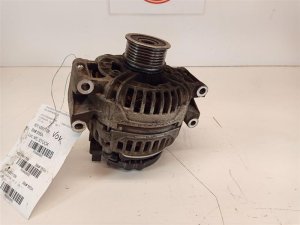
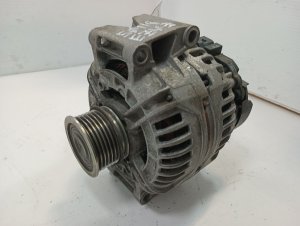
When a used part is the smart pick: A used alternator from a low-mileage donor vehicle can be a cost-effective option. Other electronic modules (like the Gateway), if required, are also viable as used parts provided they come from a reputable salvage yard with a warranty.
Donor-vehicle mileage cap: roughly under 60000 miles for the part to have meaningful remaining life.
What to inspect on the donor part:
- For alternators, check for smooth bearing rotation with no noise or roughness.
- Inspect the pulley for damage or excessive wear.
- For any used part, check electrical connectors for corrosion, bent pins, or signs of water intrusion.
- Verify the part number exactly matches the one being replaced or is a known compatible supersession.
OEM-only on this vehicle (don't cheap out):
- 12V Battery: Never buy a used battery. It is a consumable item with a finite lifespan. Always purchase a new battery that matches the vehicle's required specifications (AGM/EFB, Capacity).
- Battery Monitoring Sensor (BMS / J367): While available used, the price difference for a new aftermarket or OEM part is often small enough that buying new is recommended to ensure reliability, as it's a critical system component.
Aftermarket brands forum-validated for this vehicle:
- Battery: Varta, Bosch, Exide, Banner
- Alternator: Bosch, Valeo (often the OEM suppliers)
Brands owners have reported issues with on this vehicle:
- Avoid unbranded, no-name electronics from online marketplaces, especially for critical components like the alternator or BMS sensor. Sticking to known OEM or reputable aftermarket suppliers is crucial for long-term reliability.
Real Owner Stories
Aggregated from forums and TSBs cited above. Mileages and costs reflect what owners reported in those sources.
2015-2020 Volkswagen Golf Mk7
Symptoms: A 'Christmas tree' of warning lights including ACC, Front Assist, and ABS appeared on the dashboard immediately upon startup.
What fixed it: Replacement of the 12V battery followed by proper coding of the new battery to the vehicle's system.
Source hint: golfmk7.com forum threads
2015-2020 Volkswagen Golf Mk7
Symptoms: The infotainment screen was shutting down and a scan tool showed low voltage, despite a multimeter reading of 12.5V at the battery.
What fixed it: Replacing the Battery Monitor Sensor (J367) on the negative terminal.
Source hint: GOLFMK7.com user report
2012-2014 Volkswagen Golf Mk6
Symptoms: U3003 code present with electrical instability.
What fixed it: Cleaning or replacing a corroded ground strap located under the battery tray.
Source hint: vwvortex.com Mk6 Golf threads
Related OBD-II Codes
Frequently Asked Questions
I just replaced the battery in my 2017 Golf Mk7; do I really need to use a scan tool to code it?
Does VW have an official technical procedure for testing batteries on the Golf to avoid U3003?
My infotainment says 'Battery low. Please start engine,' but my multimeter shows 12.5V. What is wrong?
Why did my dashboard light up like a 'Christmas tree' with ABS and ESC errors right after I started my Mk7 Golf?
Is the U3003 diagnosis different for a 2012 Mk6 Golf compared to a 2019 Mk7?
Where is the most common ground point failure on the Golf platform?
Helpful Videos


Used OEM Parts in Stock
New Aftermarket Parts Available



The information in this article is provided for general reference and educational purposes only. Vehicle specifications, procedures, and part compatibility can vary by production date, trim level, and region. Always consult your vehicle's factory service manual and verify part numbers before purchasing or performing repairs. Safety-critical components such as airbags, seat belts, and braking systems should be installed by a qualified professional.
- Volkswagen Golf:
- 🧭 Diagnostic Flowchart
- 🎬 Helpful Videos
- 🛍️ Shop This Part
- What's Unique About the 2012-2020 Volkswagen Golf
- Symptoms You May Notice
- Most Likely Causes
- Rare But Worth Checking
- Diagnosis Steps
- Parts You'll Likely Need
- Related Codes That Often Appear With This One
- Technical Service Bulletins (TSBs) & Recalls
- Platform-Specific Known Issues
- Mechanic-Grade Diagnostic Values
- Hidden / Shadow Codes Worth Checking
- Scan Tool Commands That Help
- Wiring & Ground Locations
- Real Owner Repair Stories
- Documented NHTSA Reports
- OEM Part Supersession History
- Model Year Variations Within This Range
- Other Known Issues on This Vehicle
- Used vs. New Parts: Buying Guide for This Vehicle
- Real Owner Stories
- 2015-2020 Volkswagen Golf Mk7
- 2015-2020 Volkswagen Golf Mk7
- 2012-2014 Volkswagen Golf Mk6
- Related OBD-II Codes
- Frequently Asked Questions
- 🎟️ Get 5% Off