

OBD-II Code U3005: Retained Accessory Power
What U3005 means, why it triggers, and how to fix the parasitic drain killing your battery
- Code U3005 indicates a parasitic electrical drain caused by a computer failing to shut off accessory power, which will kill your battery within 24 hours.
- Always test the 12V battery first; a weak battery dropping below 12.4V triggers false U3005 codes and mimics BCM failure.
- On 2015-2019 Subaru models, this code is almost exclusively caused by a faulty Starlink DCM module, which has an extended 8-year/150,000-mile warranty.
- Replacing a Body Control Module (BCM) costs between $700 and $1,200 and requires mandatory dealer-level programming to start the vehicle.
What Does U3005 Mean?
The code U3005 means the vehicle's computer, specifically the Body Control Module (BCM), is not shutting off power to your accessories (like the radio, interior lights, or power windows) after you turn off the car. This creates a parasitic electrical drain that kills your battery overnight. This system is officially called Retained Accessory Power (RAP).
Technical definition: The SAE/OBD-II definition for U3005 is "Retained Accessory Power". This indicates a fault in the system responsible for keeping accessories powered for a short time after the ignition turns off. The BCM contains a dedicated internal relay or solid-state switch for this function. When a fault occurs, this circuit remains energized indefinitely, causing a parasitic draw that logs code U3005.
Can I Drive With U3005?
Yes, But With Caution. You can drive the vehicle, but the battery will likely die when parked. A completely drained battery occurs within 12 to 24 hours. Repeated deep discharging permanently damages the battery, adding a $200 to $350 replacement cost to your final repair bill. The primary risk is being stranded without warning.
Common Causes
- Weak or Failing 12V Battery (Very Common) — A battery with low or unstable voltage confuses the BCM. The module fails to recognize the proper 'ignition off' state or triggers low-voltage protection routines that keep modules awake, causing the U3005 code as a symptom of the battery issue.
- Faulty Data Communication Module (DCM) - Subaru Specific (Very Common) — On 2015-2019 Subaru models, a massive parasitic drain is caused by the Starlink DCM. After the 3G network shutdown, the module gets stuck in an infinite loop searching for a signal, creating a power drain that mimics a U3005 BCM fault.
- Faulty Body Control Module (BCM) (Common) — A relay or solid-state driver inside the BCM gets stuck in the 'on' position, continuously sending power to accessories. This results from internal component failure or physical damage like corrosion from water intrusion.
- Software or Firmware Corruption (Common) — The BCM's firmware, which controls the RAP timeout period, becomes corrupted. An incomplete software update or logic bug causes the module to 'forget' how to shut down, requiring a dealership re-flash to restore function.
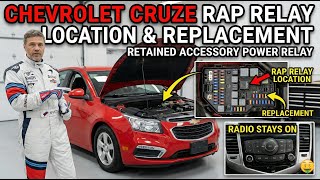
- Faulty Door Latch Switch - GM Specific (Common) — On many GM vehicles, the RAP system shuts off when the driver's door opens. A faulty or misaligned driver door latch switch prevents the BCM from receiving the 'shut down' signal, 🎬 Watch: Why your radio won't turn off and how to fix it. keeping accessories on indefinitely.
- Wiring Harness or Ground Defect (Less Common) — Corroded, frayed, or shorted wires create an unintended path for electricity, bypassing the BCM's command to turn off. A loose or broken ground strap also causes unpredictable module behavior.
- Improperly Installed Aftermarket Accessories (Less Common) — Aftermarket devices like remote starters or dashcams wired into an 'always-on' circuit instead of an ignition-switched circuit prevent modules from going to sleep, causing a parasitic drain.
Symptoms
- Dead Battery — The battery is completely dead after the vehicle is parked for several hours or overnight.
- Accessories Stay Powered On — The radio, infotainment screen, dome lights, power windows, or sunroof remain operational long after the 10-minute Retained Accessory Power (RAP) period expires.
- Accessory Power Warning on Dash — An 'Accessory Power Active' or similar warning message displays on the instrument cluster when the vehicle is completely off.
- Flickering Dashboard Lights — The instrument cluster lights flicker, or unrelated warning lights (ABS, Airbag, Traction Control) illuminate randomly due to BCM voltage instability.
Diagnostic Flowchart
Tap your situation to follow the diagnostic path that matches what you're seeing on this code.
Common Fixes & Costs
- Replace 12V Battery — Parts: $150-$350, Labor: $50-$150, ~0.5 hr book time (DIY)
- Bypass or Replace Data Communication Module (DCM) - Subaru
— Parts: $80-$1100, Labor: $150-$500, ~1.8 hr book time
(Intermediate)
Subaru Outback/Forester (2015-2019): OEM DCM Bypass Box: 86229AL400; Replacement DCM: 57433AN000 (Alt: AutoHarnessHouse Starlink Bypass Harness (AHH-69018)) - Reprogram Body Control Module (BCM) — Parts: $0, Labor: $150-$250, ~1.5 hr book time (Professional)
- Replace Body Control Module (BCM)
— Parts: $400-$900, Labor: $150-$300, ~2.0 hr book time
(Professional)
Ford F-150 (2015-2020): OEM JU5Z-15604-BZ, DL3Z-15604-B (Alt: Dorman 599-900 series)
Chevrolet Silverado (2014-2018): OEM 13521450, 13508761 (Alt: Dorman, Cardone) - Repair Wiring or Ground Connection — Parts: $10-$50, Labor: $150-$500, ~2.5 hr book time (Intermediate)
DIY vs Professional
- Replace 12V Battery 🟢 Beginner
Tools: Basic hand tools, terminal cleaner - Bypass or Replace Data Communication Module (DCM) - Subaru 🟢 Beginner
Tools: Trim removal tools, socket set, screwdrivers - Reprogram Body Control Module (BCM) 🟢 Beginner
Tools: Manufacturer-specific diagnostic tool and software subscription - Replace Body Control Module (BCM) 🟢 Beginner
Tools: Trim removal tools, socket set, dealer-level scan tool - Repair Wiring or Ground Connection 🟢 Beginner
Tools: Multimeter, wire strippers, crimpers, heat shrink
Used vs. New Parts: Buying Guide
When a used part is worth it: A used BCM is a budget-friendly option for older vehicles if you have access to a specialist who can reprogram the module to your car's VIN.
Donor-vehicle mileage cap: roughly under 100000 miles for the part to have meaningful remaining life.
Donor quality checklist:
- Match the part number exactly. A single digit difference means incompatibility.
- Source from a reputable salvage yard with a return policy.
- Avoid BCMs from vehicles with flood damage.
Decision logic:
- If The vehicle is less than 10 years old and under 120,000 miles → Purchase a new or professionally remanufactured BCM for reliability and warranty.
- If The cost of a new BCM plus programming exceeds 30% of the vehicle's value → Purchase a used BCM from a low-mileage donor and budget for professional programming.
- If The failure is due to a known software glitch → Reprogram your existing BCM at a dealership.
Warranty tradeoff: Used BCMs offer a 30-90 day parts warranty. New OEM units come with a 1-year warranty that covers labor if installed by a certified shop.
Worst-case if a used part fails: $300-$800
What Happens If You Wait — Timeline
- 0-1 week: The U3005 code is stored. The battery seems weak on cold mornings. You require an occasional jump-start. (MPG impact: 0%% · Added cost: $0-$50)
- 1 week - 2 months: The battery dies regularly overnight. Repeated deep discharge cycles cause permanent sulfation damage, ruining the battery. (MPG impact: 0%% · Added cost: $200-$350)
- 2-6 months: Constant voltage instability stresses the BCM. If caused by water intrusion, corrosion accelerates, causing flickering lights or random warnings. (MPG impact: 0%% · Added cost: $350-$700)
- 6+ months: The BCM suffers catastrophic failure. The vehicle will not start, requiring an expensive module replacement and programming. (MPG impact: 0%% · Added cost: $700-$1500)
Cost of Not Fixing It
- 0-1 month: Daily inconvenience and risk of being stranded. Frequent jump-starts put stress on the alternator and starter. (Added cost: $0-$50)
- 1-6 months: Permanent damage to the 12V battery. Repeated deep discharges cause sulfation, destroying the battery's ability to hold a charge. (Added cost: $200-$350)
- 6+ months: Increased risk of cascading electrical failures. Continued electrical activity on a wet or damaged BCM board leads to severe short circuits. (Added cost: $500-$1500)
Diagnosis Steps
- Check the Battery and Charging System
A weak battery causes false electrical codes. Test your battery and alternator at an auto parts store. A healthy, fully charged battery reads above 12.4V, and the alternator produces 13.7-14.7V when running.
Tools: Multimeter (Beginner) - Check for Technical Service Bulletins (TSBs)
Search for manufacturer TSBs related to U3005 or parasitic drains for your specific vehicle. For example, Subaru issued TSBs (15-318-24R) and warranty extensions for the DCM-related battery drain.
Tools: Internet access (Beginner) - Perform a Parasitic Draw Test
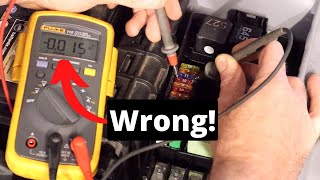
Measure the electricity drawn from the battery when the car is off. A healthy vehicle draws 20-50mA after sleeping for 30-60 minutes. A draw over 100mA confirms an active drain. Pull fuses one by one; when the amperage drops significantly, you have isolated the faulty circuit.
Tools: Multimeter with 10A DC mA setting (Intermediate) - Scan for Manufacturer-Specific Codes
Use a professional-grade scan tool to communicate directly with the BCM. Look for codes beyond the generic U3005 to pinpoint specific inputs, like a faulty door latch sensor. A 'no response' indicates a communication fault.
Tools: Professional OBD-II Scan Tool (Advanced) - Inspect Wiring and Grounds
Visually inspect the wiring harnesses connected to the BCM, typically located in the passenger-side kick panel. Look for green corrosion, chafed wires, or water damage. Ensure the main BCM ground strap is clean and tight.
Tools: Flashlight, basic hand tools (Intermediate) - Test the Retained Accessory Power (RAP) Relay
If the BCM uses an external RAP relay, listen for a 'click' from the relay when an assistant opens a door after the ignition turns off. Swap it with an identical non-critical relay (like the horn) to test functionality.
Tools: Basic hand tools (Beginner) - Pro Tip: Isolate the BCM with a Current Probe
Clamp a low-amp current probe around the main positive battery cable to get a baseline parasitic draw. Then, clamp it around the main power feed wire going into the BCM. If the BCM wire accounts for most of the draw, the BCM or its controlled circuits are the source.
Tools: Low-Amp DC Current Probe/Clamp Meter (Advanced) - Pro Tip: BCM Input/Output Voltage Drop Test
With the vehicle off and past its RAP timeout, measure the voltage on the BCM's accessory power output wire. It should be under 0.1V. If it shows 12V, the BCM has failed internally.
Tools: Multimeter, vehicle-specific wiring diagram (Advanced) - Advanced: CAN Network Health Check
With the battery disconnected, measure the resistance between the CAN-High (Pin 6) and CAN-Low (Pin 14) terminals on the OBD-II port. A healthy network reads 60 Ohms. 120 Ohms indicates a break; 0 Ohms indicates a short.
Tools: Multimeter with Ohms setting (Advanced)
When This Code Triggers (Freeze-Frame Conditions)
- Ignition Status: Off (The fault logs when the BCM fails to shut down the RAP circuit after the ignition turns off.)
- Battery Voltage: 11.8V - 12.4V (The code sets as battery voltage slowly drops due to the parasitic drain.)
- Time Since Ignition Off: > 10 minutes (The BCM expects the RAP circuit to de-energize after a 10-minute timeout. The fault stores when power remains on past this window.)
- RAP Circuit Voltage: 12V (Fault) (An internal BCM sensor reads battery voltage on the Retained Accessory Power output wire when it should be 0V.)
Related Codes
- U3000 — A general 'Control Module' failure code. Seeing U3000 alongside U3005 strongly suggests the BCM has suffered an internal hardware failure.
- U3003 — Indicates 'Battery Voltage'. The U3005 parasitic drain kills the battery, which then causes the system to log this low voltage code as a secondary effect.
- U0140 — Indicates 'Lost Communication With Body Control Module'. A bad ground or power feed to the BCM causes this network error and simultaneously triggers the U3005 code.
- B1310 — Indicates 'Run/Start Control Circuit Open'. The BCM fails to correctly sense the 'key off' state from the ignition switch, causing it to keep accessory power active.
Climate & Environmental Factors
- High Humidity and Heavy Rain: Moisture enters the cabin through clogged sunroof drains or poor windshield seals, dripping directly onto the BCM. This causes rapid circuit board corrosion and short circuits.
- Cold Weather: Cold temperatures reduce a battery's cranking amperage. A parasitic drain that goes unnoticed in summer will completely kill a weakened battery on a freezing morning.
- Coastal and Salt-Belt Regions: Airborne salt or winter road salt accelerates corrosion dramatically if moisture reaches the BCM or its wiring harness.
How to Talk to a Mechanic About This Code
Say this: "I have a parasitic battery drain and my scanner shows a U3005 code. I need a parasitic draw test performed to isolate the faulty circuit. I suspect a BCM issue but want to confirm with proper testing before replacing parts."
This signals you are an informed customer who understands the specific test needed. It sets a professional tone and prevents the shop from starting with an unnecessary battery replacement.
Avoid saying:
- 'My battery keeps dying.'
- 'My car won't start, can you fix it?'
- 'Just do whatever it takes to get it running.'
Questions to ask before authorizing the repair:
- What was the measured parasitic draw in milliamps after the car went to sleep?
- Which fuse or circuit did you isolate as the source of the draw?
- If the BCM needs replacement, is the programming cost included in the quote?
- What is the warranty on the diagnostic labor and parts?
Where to Take It: Dealer vs Independent vs Chain
- Dealer:
Best for: Vehicles under warranty, Complex cases requiring manufacturer-specific software for BCM programming, Known manufacturer-specific issues like the Subaru DCM problem
Downsides: Highest labor rates, Defaults to replacing the BCM without exploring wiring repairs (Typical cost: +50% vs. baseline) - Independent Shop:
An excellent choice if you find a well-regarded shop specializing in electrical diagnostics. They are willing to trace wiring issues and suggest non-dealer solutions.
Best for: Out-of-warranty vehicles, Shops with strong electrical diagnostic reputations and ASE-certified technicians
Downsides: Quality varies significantly; vet the shop's reviews for electrical success stories., Lacks the latest tools to program a new BCM for all makes. (Typical cost: +0% vs. baseline) - Chain Shop:
Avoid for diagnosing U3005. Use them only for a free initial battery test, then visit a specialist or dealer for the parasitic draw diagnosis.
Best for: Free battery and alternator testing to rule out the basics.
Downsides: Technician skill for complex electrical diagnosis is highly variable., Lacks advanced scan tools for BCM-level diagnostics and programming., High pressure to sell batteries, which does not fix the U3005 root cause. (Typical cost: -10% vs. baseline)
When to Walk Away From the Repair
If the estimated repair cost for the U3005 fault exceeds 50% of the car's private-party value, sell the car instead of repairing it.
- Car worth $5000, fix is $2500: Borderline. Get a second opinion. A cheaper wiring or switch fault changes the math.
- Car worth $15000, fix is $1400: Fix it. The repair cost is well below the 50% threshold and preserves the vehicle's value.
- Car worth $3000, fix is $1800: Walk away. The repair cost is over 50% of the car's value. It is a poor financial decision.
What Scan Tool You Need for This Code
Minimum: A scanner that reads manufacturer-specific codes (BCM, ABS, SRS) and displays live data.
A basic $20 code reader only shows engine codes (P-codes) and cannot communicate with the Body Control Module to see the U-series code.
Budget: BlueDriver Pro (~$120) — Reads and clears BCM codes, provides live data streaming to monitor module activity, and generates repair reports.
Mid-range: Foxwell NT510 Elite (~$200) — Provides OE-level diagnostics for a specific car brand. Offers deep access to the BCM and includes bi-directional controls to test components.
Professional: Autel MaxiCOM MK808BT (~$500) — Offers full-system diagnostics with advanced bi-directional control to command modules on or off. Performs basic programming tasks needed after a BCM replacement.
Rent vs buy: Buying a capable scanner like the BlueDriver Pro offers great value for future issues, as renting advanced scanners is difficult.
How to Clear the Code After You Fix It
- Use an OBD-II scan tool to erase the U3005 code from the BCM's memory.
- Disconnect the negative battery terminal for 30 minutes to perform a hard reset of all modules.
- Perform a parasitic draw test to confirm the drain is below 50mA after the vehicle sleeps for 60 minutes.
Drive cycle (~60 minutes): A traditional drive cycle is not required. Verify the fix by letting the vehicle sit undisturbed for one hour to ensure all modules sleep, then confirm the absence of a parasitic drain.
Readiness monitors affected: Not applicable. Emissions readiness monitors are not affected by U-series body codes.
Watch out for:
- Clearing the code without fixing the electrical drain causes the battery to die again.
- Disconnecting the battery clears temporary memory, but the code returns as 'permanent' if the fault persists.
Will This Fail Emissions / State Inspection?
Yes — this code typically fails an OBD-II emissions inspection.
- California: An active U-series code causes a failure during the OBD-II portion of the smog check, even if the check engine light is off.
- New York: Any diagnostic trouble code present during the OBD-II scan results in an inspection failure.
- Texas: An active U3005 code results in a failure during the mandatory OBD-II emissions scan.
Most Commonly Affected Vehicles
- Ford F-150 (2013-2020) — BCM failures are widely reported due to water leaking into the passenger kick panel from a clogged sunroof drain or poor windshield seal.
- Subaru Outback, Forester, Crosstrek (2015-2019) — Famously caused by the Starlink DCM failing to sleep after the 3G network shutdown. Subaru offers an extended warranty for this specific issue.
- Chevrolet Silverado, Malibu (2007-2018) — The BCM frequently fails to receive the 'door open' signal from a faulty driver door latch, leaving the RAP system powered on indefinitely.
- Ford Explorer (2013-2020) — Known for module failures causing parasitic drains. Related codes like U3000 point to the power steering control module (PSCM) causing electrical issues.
- Jeep Grand Cherokee (2018-2019) — Owners report exterior lights failing and intermittent interior lights, leading to a diagnosis of a corroded or failed BCM.
- Dodge Ram 1500 (2013-2015) — Experiences 'electrical gremlins' such as the radio rebooting or door locks acting independently, traced back to a failing BCM.
- Hyundai Sonata (2011-2017) — BCM failures cause parasitic drains that kill the battery, with symptoms including the radio and dash lights staying on.
- Honda CR-V, Odyssey, Civic (2017-2022) — Parasitic drains are often caused by the VSA modulator or gauge control module failing to go to sleep, presenting identical dead battery symptoms.
Manufacturer-Specific Notes
- Subaru: On 2015-2019 models, a severe battery drain is caused by the Starlink DCM getting stuck searching for a 3G signal. Subaru issued TSBs and an 8-year/150,000-mile warranty extension. A popular DIY fix is installing an aftermarket bypass harness.
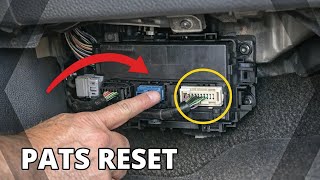
- Ford: Replacing a BCM requires programming and a PATS (Passive Anti-Theft System) parameter reset using a dealer-level scan tool. This involves a mandatory security lockout period and requires two valid programmed keys.
- General Motors (Chevy/GMC): The RAP system shuts off when the driver's door opens. A faulty driver door latch switch prevents the BCM from receiving the shut-down signal, keeping accessories on indefinitely.
- Chrysler/Dodge/Jeep: A BCM hard reset is performed by disconnecting both battery terminals and touching the cable ends together for 10 minutes. This drains module capacitors and clears temporary software glitches.
Real Owner Stories
2018 Subaru Outback with 75K miles
Battery died repeatedly overnight, even after installing a new one. No obvious lights stayed on.
What they tried:
- Replaced the battery, which died within two days.
- Performed a parasitic draw test and found a 200mA draw.
- Pulled fuses and isolated the drain to the DCM/Telematics fuse.
Outcome: The owner installed an $80 aftermarket Starlink bypass harness behind the radio. The draw dropped to 35mA, permanently solving the issue and restoring front speaker function.
Lesson: On affected Subarus, a parasitic drain is almost always the DCM, not the BCM. Investigate the well-known DCM issue and TSBs before replacing expensive parts.
2015 Ford F-150 with 110K miles
The radio stayed on after turning the truck off, killing the battery by morning. The passenger-side carpet was damp after heavy rain.
What they tried:
- Disconnected the radio, but the drain continued.
- A mechanic performed a parasitic draw test confirming a significant drain.
- Inspected the passenger-side kick panel and found a wet BCM with green corrosion.
Outcome: A dealership replaced and programmed the BCM for $1,400. The clogged sunroof drain causing the leak was cleared to prevent recurrence.
Lesson: On Ford F-150s, always check for water intrusion in the passenger footwell. Fixing the leak is mandatory before replacing the damaged module.
2012 Chevy Malibu with 130K miles
The battery died intermittently. The radio sometimes stayed on after opening the driver's door.
What they tried:
- Replaced the battery, which worked temporarily.
- A shop diagnosed a bad BCM and quoted $900.
- The owner tested the driver's door latch switch based on forum advice.
Outcome: The driver's door latch switch was faulty and not sending the 'door open' signal to the BCM. Replacing the $150 latch assembly fixed the issue completely.
Lesson: On GM vehicles, check the driver's door latch switch before suspecting the BCM. Simple input failures are cheaper and more common than module failures.
How to Prevent This Code From Triggering
- Clean sunroof drains and cowl vents. (Once per year.) — Clogged drains cause water to overflow directly onto the BCM, causing corrosion and failure. Cleaning prevents thousands in damage.
- Clean and tighten battery terminals and ground connections. (Every 6 months.) — Corrosion creates resistance, leading to unstable voltage that damages sensitive modules like the BCM.
- Use a battery maintainer if parked long-term. (Whenever parked for more than 2 weeks.) — Normal parasitic draw (20-50mA) eventually drains a battery. A maintainer prevents deep discharge cycles that shorten battery life.
- Ensure aftermarket accessories are professionally installed. (During installation.) — Wiring accessories to an 'always-on' power source instead of an ignition-switched circuit is a leading cause of parasitic drains.
Frequently Asked Questions
What are common mistakes when diagnosing a U3005 code?
The most common mistake is replacing the battery without performing a parasitic draw test. If an underlying electrical drain exists, it will quickly ruin the new battery. Always rule out simpler causes like a bad ground connection or faulty door latch switch before replacing the expensive BCM.
Can I just replace the battery to fix a U3005 code?
Replacing the battery temporarily solves the starting issue, but it does not fix the root cause. A parasitic drain will quickly destroy the new battery, significantly shortening its lifespan. Proper diagnosis is mandatory to prevent repeat failures.
What is a Body Control Module (BCM)?
The BCM is a central computer that controls non-engine electronics like power windows, interior lights, door locks, and the security system. It acts as the main hub for the vehicle's body electronics.
Why did my radio stay on but the car won't start?
The BCM failed to turn off the radio, which slowly drained the battery overnight. The battery now has enough power to illuminate a low-draw radio display, but lacks the cranking amps to turn the engine over.
Is a BCM expensive to replace?
Yes, replacing a BCM typically costs between $700 and $1,200. The part itself ranges from $400 to $900, while labor and mandatory dealer-level programming add another $150 to $300.
Can I reset the BCM by disconnecting the battery?
Disconnecting the battery for 30 minutes performs a hard reset and temporarily clears software glitches. However, if a hardware fault or wiring short exists, the problem returns immediately.
Can a bad BCM cause a fire?
While extremely rare, a severe internal short circuit within the BCM generates enough heat to melt wiring. More commonly, a faulty BCM causes localized electrical shorts or overloaded circuits without igniting.
Key Takeaways
- Code U3005 indicates a parasitic electrical drain caused by a computer failing to shut off accessory power, which will kill your battery within 24 hours.
- Always test the 12V battery first; a weak battery dropping below 12.4V triggers false U3005 codes and mimics BCM failure.
- On 2015-2019 Subaru models, this code is almost exclusively caused by a faulty Starlink DCM module, which has an extended 8-year/150,000-mile warranty.
- Replacing a Body Control Module (BCM) costs between $700 and $1,200 and requires mandatory dealer-level programming to start the vehicle.
Helpful Videos
Shop the Parts Behind U3005
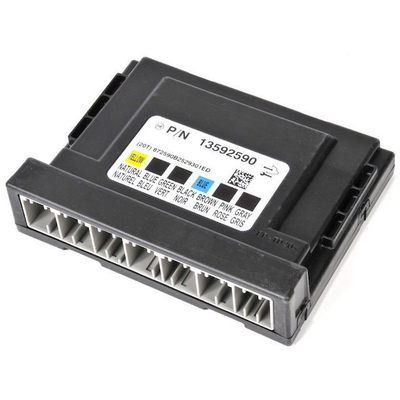
Below are the parts most often responsible for code U3005, ranked by how frequently each one is the actual culprit (per the diagnosis above). Tap any to see what we have for your vehicle.


The information in this article is provided for general reference and educational purposes only. Vehicle specifications, procedures, and part compatibility can vary by production date, trim level, and region. Always consult your vehicle's factory service manual and verify part numbers before purchasing or performing repairs. Safety-critical components such as airbags, seat belts, and braking systems should be installed by a qualified professional.
- 🧭 Diagnostic Flowchart
- 🎬 Helpful Videos
- 🛍️ Shop This Part
- What Does U3005 Mean?
- Can I Drive With U3005?
- Common Causes
- Symptoms
- Common Fixes & Costs
- DIY vs Professional
- Used vs. New Parts: Buying Guide
- What Happens If You Wait — Timeline
- Cost of Not Fixing It
- Diagnosis Steps
- When This Code Triggers (Freeze-Frame Conditions)
- Related Codes
- Climate & Environmental Factors
- How to Talk to a Mechanic About This Code
- Where to Take It: Dealer vs Independent vs Chain
- When to Walk Away From the Repair
- What Scan Tool You Need for This Code
- How to Clear the Code After You Fix It
- Will This Fail Emissions / State Inspection?
- Most Commonly Affected Vehicles
- Manufacturer-Specific Notes
- Real Owner Stories
- 2018 Subaru Outback with 75K miles
- 2015 Ford F-150 with 110K miles
- 2012 Chevy Malibu with 130K miles
- How to Prevent This Code From Triggering
- Frequently Asked Questions
- What are common mistakes when diagnosing a U3005 code?
- Can I just replace the battery to fix a U3005 code?
- What is a Body Control Module (BCM)?
- Why did my radio stay on but the car won't start?
- Is a BCM expensive to replace?
- Can I reset the BCM by disconnecting the battery?
- Can a bad BCM cause a fire?
- Key Takeaways
- 🎟️ Get 5% Off