

OBD-II Code U3007: Control Module Input Power 'B' Circuit
What U3007 means, why it triggers, and how to fix it
- Code U3007 indicates a critical vehicle computer, typically the Body Control Module (BCM) or ABS module, has lost voltage on its secondary 'B' power circuit.
- Test your battery and alternator first, as a voltage drop below 12.4V is the most frequent trigger for this code.
- Expect electrical failures like dead power windows, inoperative door locks, or flickering headlights, even while the engine runs normally.
- Fix this immediately to prevent sudden loss of critical safety systems, including anti-lock brakes (ABS) and exterior nighttime lighting.
What Does U3007 Mean?

Code U3007 means a vehicle computer—often the Body Control Module (BCM) or ABS module—is not receiving steady electrical power. The 'B' circuit is a specific, secondary power feed that has an open circuit or incorrect voltage.
Technical definition: The SAE definition for U3007 is "Control Module Input Power 'B' Circuit/Open". A control module logs this fault when it detects a voltage loss on its secondary power supply circuit. The 'B' designates a redundant power feed managing specific internal functions. The code triggers when circuit voltage drops below a calibrated threshold (typically 9-10 volts) for a set duration.
Can I Drive With U3007?
Yes, But With Caution. Yes, but schedule a diagnostic immediately. The vehicle runs because the fault isolates to a body or chassis module, leaving engine controls unaffected. However, critical systems fail without warning. You risk losing headlights at night or disabling ABS, which increases stopping distances. A faulty Body Control Module (BCM) also prevents airbag deployment in a crash. Driving with this fault puts severe strain on the alternator if the module has an electrical short.
Common Causes

- Weak or Failing Car Battery (Very Common) — An old or deeply discharged battery fails to provide the stable 12-volt power modules require. This frequently triggers electrical codes, especially after a jump-start or if the vehicle sits unused.
- Blown Fuse or Faulty Relay (Common) — A fuse protects the power circuit for the affected module. A blown fuse cuts power and triggers this code instantly.
- Corroded or Loose Wiring/Connectors (Common) — Vibration and moisture cause wiring to break or connectors to corrode. This creates high resistance in the circuit, starving the module of power.
- Poor Ground Connection (Common) — Every circuit requires a solid ground. A rusted or loose ground strap prevents the module from powering up, causing symptoms identical to a power-side fault.
- Faulty Alternator (Common) — A failing alternator produces insufficient or erratic voltage. When system voltage drops too low while running, sensitive modules shut down and log this code.
- Faulty Control Module (Less Common) — The control module fails internally due to cracked solder joints, burnt voltage regulators, or moisture intrusion, preventing it from powering up even on a good circuit.
- Aftermarket Accessories Installation (Less Common) — Improperly installed aftermarket electronics (remote starters, stereos) overload circuits or interfere with module power supplies.
- Parasitic Battery Drain (Uncommon) — A malfunctioning module fails to 'sleep' when the car is off, causing a continuous power draw that drains the battery. The resulting low voltage triggers U3007 upon startup.
- Rodent Damage (Uncommon) — Rodents chew through wiring harnesses, causing an open or short in the power supply circuit. This happens frequently in vehicles parked outside for extended periods.
Symptoms

- Warning Lights on Dash — A 'Check Engine', 'Body Control', 'ABS', or 'Service Vehicle Soon' warning light illuminates on the instrument cluster.
- Inoperative Electronic Accessories — Power windows, power door locks, interior dome lights, or power seats stop working entirely or work intermittently.
- Exterior Lighting Failure — Headlights, parking lights, side marker lights, or brake lights controlled by the affected module fail to turn on or flicker.
- Radio or Infotainment System Malfunction — The center display goes blank, or the radio and navigation systems fail, as the Body Control Module controls them.
- Parasitic Battery Drain — The vehicle's battery dies overnight because the faulty module fails to shut down with the ignition off.
- No Communication with Scan Tool (scan-tool only — no driver-felt sign) — A scan tool fails to communicate with the specific module that lost power during diagnosis.
Diagnostic Flowchart
Tap your situation to follow the diagnostic path that matches what you're seeing on this code.
Common Fixes & Costs
- Replace Vehicle Battery — Parts: $150-$350, Labor: $50-$100, ~0.5 hr book time (DIY)
- Replace Blown Fuse — Parts: $1-$10, Labor: $0-$50, ~0.2 hr book time (DIY)
- Repair Wiring or Connector — Parts: $10-$50, Labor: $150-$450, ~2 hr book time (Professional)
- Replace Control Module (BCM, ABS, etc.) — Parts: $400-$1200, Labor: $200-$500, ~1.5 hr book time (Professional)
- Repair/Rebuild Control Module — Parts: $150-$400, Labor: $100-$200, ~1.5 hr book time (Professional)
Used vs. New Parts: Buying Guide
When a used part is worth it: On older, high-mileage vehicles (>150k miles) where the cost of a new OEM module is a significant portion of the car's value. A used part is a budget-conscious choice to restore function cheaply.
Donor-vehicle mileage cap: roughly under 100000 miles for the part to have meaningful remaining life.
Donor quality checklist:
- Match the part number EXACTLY. A single letter difference means incompatibility.
- Source from a reputable recycler offering a warranty (30-90 days is typical).
- Avoid parts from flood-damaged or severely wrecked vehicles.
Decision logic:
- If The part requires VIN programming (most BCMs, some ABS modules) → Favor a new part or a 'repair and return' service for your original module. A used module contains the VIN of the donor car and resists reprogramming, resulting in a no-start condition.
- If Vehicle is < 10 years old and part is < $600 new → Buy new or remanufactured for better warranty and guaranteed compatibility.
- If The original module can be rebuilt (e.g., common ABS module failure) → Choose a rebuild service. This is the best value as it avoids programming issues entirely.
Warranty tradeoff: Used parts typically have a 30-90 day warranty covering the part only. New aftermarket parts carry a 1-year to lifetime warranty. OEM parts installed by a dealer have a 1-2 year warranty on parts and labor.
Worst-case if a used part fails: $300-$600 if a used part is faulty or incompatible, representing repeat labor costs and purchasing another part.
What Happens If You Wait — Timeline
- 0-1 month: Code sets, and a warning light ('Service Vehicle Soon', 'ABS') appears. Symptoms are intermittent, like a power window occasionally failing or lights flickering. (MPG impact: 0%% · Added cost: $0)
- 1-3 months: Symptoms become consistent. A specific set of accessories fails completely. If the faulty module causes a parasitic drain, the battery struggles during engine cranking. (MPG impact: 0%% · Added cost: $150-$350 (for a new battery if the parasitic drain kills the original))
- 3-6 months: Critical safety systems reliably disable (e.g., ABS light is always on). A shorting module or wire puts continuous strain on the charging system, leading to premature alternator failure. (MPG impact: 1-3% (if alternator is under heavy load)% · Added cost: $500-$900 (for alternator replacement))
- 6+ months: The faulty module sends corrupt data over the vehicle's CAN bus network, causing unrelated modules to malfunction. A prolonged short circuit overheats and melts wiring within a harness. (MPG impact: 0-5%% · Added cost: $1500-$3000+ (for network diagnosis and potential wiring harness repair))
Cost of Not Fixing It
- 0-1 month: Intermittent or total failure of accessories (lights, locks, windows). Potential for a dead battery due to parasitic drain from the faulty module. (Added cost: $150-$350 (for a new battery if drained completely))
- 1-6 months: Increased safety risk due to failure of critical systems like ABS or exterior lighting. A shorting module puts continuous strain on the alternator, leading to premature failure. (Added cost: $500-$900 (for alternator replacement))
- 6+ months: A faulty module causes communication errors across the vehicle's data network, affecting other modules. An internal short damages the wiring harness, leading to complex repairs. (Added cost: $1500-$3000+ (for module network diagnosis and harness repair))
Diagnosis Steps

- Read All Codes & Check Battery State
Use a professional scan tool to read codes from all modules. Note any voltage or communication-related codes. Use a multimeter to test the battery. A healthy battery reads above 12.4 volts with the engine off. Charge and re-test if low.
Tools: ['OBD-II Scan Tool', 'Digital Multimeter'] - Inspect Fuses and Relays
Locate the fuse box using your owner's manual. Find the fuse protecting the affected module (e.g., BCM, ABS). Visually inspect the fuse and use a multimeter to test it for continuity. Inspect the corresponding relay.
Tools: ['Digital Multimeter', 'Fuse Puller'] - Visually Inspect Wiring and Connectors
Look for obvious damage to the wiring harness leading to the control module. Check for chafed wires, loose connectors, rodent damage, or green/white corrosion on connector pins. Focus on areas where the harness passes through the firewall.
Tools: ['Flashlight'] - Test for Power at the Module
Using a wiring diagram, identify the 'Input Power B' wire at the module's connector. With the key on, probe the back of the connector to verify battery voltage (12.4V+ engine off, ~14V engine on). If 0 volts, the circuit is open. If under 11V, proceed to a voltage drop test.
Tools: ['Digital Multimeter', 'Vehicle Wiring Diagram', 'Back-probe Pins'] - Test for Ground at the Module
Identify the ground wire for the module. With the multimeter set to Ohms, check for a connection between the ground pin and a known-good chassis ground. The reading must be under 0.5 Ohms. A reading over 1 Ohm indicates a problem.
Tools: ['Digital Multimeter', 'Vehicle Wiring Diagram'] - Pro Tip: Perform a Power-Side Voltage Drop Test
Connect the red lead of your multimeter (DC Volts) to the battery's positive terminal. Connect the black lead to the 'Input Power B' pin at the module. Activate the circuit (key on). A reading over 0.2 volts indicates excessive resistance in the power feed wire.
Tools: ['Digital Multimeter'] - Pro Tip: Perform a Ground-Side Voltage Drop Test
Connect the red lead of your multimeter to the module's ground pin. Connect the black lead to the battery's negative terminal. Activate the circuit. A reading over 0.1 volts points to high resistance in the ground strap or wiring.
Tools: ['Digital Multimeter'] - Advanced: Analyze Scan Tool Live Data
Navigate to the affected module's live data stream. Look for PIDs related to module voltage (e.g., 'BCM Voltage Supply'). This value must match the charging system voltage (13.5-14.5V running). A significantly lower or fluctuating value confirms a power supply issue.
Tools: ['Advanced Bi-Directional Scan Tool'] (Advanced) - Check for Module Communication
If power and ground pass voltage drop tests but the module fails to function, attempt to communicate directly with it using an advanced scan tool. If the module fails to respond, it has failed internally.
Tools: ['Advanced Bi-Directional Scan Tool']
When This Code Triggers (Freeze-Frame Conditions)
- Module Voltage: < 10.0 Volts (The voltage measured by the affected module at the moment the fault logged.)
- Battery Voltage: 11.5 - 14.5 Volts (Overall system voltage; low if battery/alternator is the cause, or normal if the fault is a specific circuit break.)
- Ignition Status: RUN / START (Fault occurs during startup when voltage sag is highest, or while running when a circuit fails.)
- Vehicle Speed: 0 MPH (Many U3007 faults log at key-on or during engine cranking before the vehicle moves.)
Related Codes
- U3006 — Indicates 'Control Module Input Power A', the primary power feed. Seeing both U3006 and U3007 points to a major power supply problem (dead battery or main fuse) affecting the entire module. If you only see U3007, the problem isolates to the 'B' circuit.
- U3003 — Indicates 'Battery Voltage'. It frequently accompanies U3007 because low system voltage from a weak battery or failing alternator is a common root cause. If U3003 is present, diagnose the battery and charging system first.
- U3008 / U3009 — Indicates 'Control Module Ground A/B'. A bad ground causes identical symptoms to a bad power feed. Differentiate by testing both circuits at the module connector. A voltage drop test fails on the power side for U3007, and on the ground side for U3008/U3009.
- B1317 / B1318 — Manufacturer-specific codes for 'Battery Voltage High' and 'Battery Voltage Low'. They function similarly to U3003 and appear with U3007 to indicate an over-voltage or under-voltage condition affecting the entire vehicle.
Climate & Environmental Factors
- High Humidity & Moisture: High humidity accelerates the corrosion of electrical connectors, wiring, and chassis ground points. This corrosion increases resistance, causing a voltage drop that triggers code U3007.
- Cold Weather: Low temperatures reduce a battery's chemical efficiency. A weak battery fails to meet the modules' minimum voltage requirements during a cold start, triggering U3007.
- Road Salt & De-icing Chemicals: Road salt and chemical de-icers are highly corrosive. Splashed onto under-vehicle wiring harnesses and ground straps, these chemicals eat through protective coatings and cause rapid circuit failure.
How to Talk to a Mechanic About This Code
Say this: "I have a U3007 code and symptoms like [mention specific symptoms, e.g., 'power locks not working']. I need a diagnostic to confirm the root cause. Please start by testing the battery, fuses, and performing voltage drop tests on the power and ground circuits for the affected module before recommending a module replacement."
This directs the mechanic toward a logical, cost-effective diagnostic process. It prevents them from immediately suggesting an expensive module replacement and insists on testing cheaper, common failure points (wiring, power supply) first.
Avoid saying:
- 'My car is acting weird, can you fix it?'
- 'The check engine light is on, just do whatever it takes.'
- 'I think I need a new BCM, can you give me a price?' (This invites them to sell you the part without proper diagnosis.)
Questions to ask before authorizing the repair:
- Did you perform a voltage drop test on both the power and ground sides of the module's circuit? What were the readings?
- Can you confirm the fuse for this circuit is good and has power?
- Before we replace the module, can you show me that it receives proper voltage and has a good ground, but still fails to communicate?
- What is the warranty on the proposed repair, including both parts and labor?
Where to Take It: Dealer vs Independent vs Chain
- Dealer:
A safe but expensive option. Necessary if a new, VIN-programmed module is the only fix.
Best for: Vehicles under warranty., Complex, brand-specific electrical issues (e.g., Jaguar, BMW)., When a new module requires proprietary VIN programming.
Downsides: Highest labor rates., Defaults to replacing a module rather than repairing a simple wiring issue., Refuses to program a used or customer-supplied module. (Typical cost: +50% vs. baseline) - Independent Shop:
Best fit for diagnosis. A good independent electrical specialist finds the true cause (bad wire, ground, fuse) and saves you from an unnecessary module replacement. Ensure they have programming capabilities if a new module is required.
Best for: Out-of-warranty vehicles., Diagnosing the root cause (wiring or power supply issues)., Shops with ASE-certified electrical diagnostic specialists.
Downsides: Quality and expertise vary widely., Lacks expensive, dealer-specific tools to program certain new modules. (Typical cost: +0% vs. baseline) - Chain Shop:
AVOID for diagnosis. Acceptable only for a free battery test as a first step. Do not authorize further diagnostic work for U3007 here.
Best for: Battery testing and replacement (the most common cause of U3007).
Downsides: Technicians lack deep electrical diagnostic training for complex U-codes., High pressure to sell parts leads to misdiagnosis., Not equipped for module programming. (Typical cost: -10% vs. baseline)
When to Walk Away From the Repair
If the estimated repair cost exceeds 40-50% of the car's private-party value, sell or trade in the vehicle.
- Car worth $4000, fix is $2000: Walk away. A $2000 repair for a BCM replacement hits the 50% threshold. The risk of other age-related failures is too high.
- Car worth $15000, fix is $1200: Fix it. A $1200 module replacement is well below the threshold and restores full functionality and safety.
- Car worth $3000, fix is $450: Fix it. A wiring repair for $450 is a small percentage of the car's value and a sensible repair.
What Scan Tool You Need for This Code
Minimum: A scanner that reads codes from ALL vehicle modules, including the Body Control Module (BCM) and ABS. A basic engine-only code reader cannot see U-codes.
A cheap $20 scanner only reads generic engine and emissions codes (P-codes). U3007 is a network/module code completely invisible to a basic scanner. You need a tool that communicates with the BCM and ABS to know this code exists.
Budget: BlueDriver Pro, Ancel BD310 (~$100) — Connects to a smartphone app to read codes from all modules (ABS, SRS, BCM), view live data for module voltage, and access manufacturer-specific codes. This is the minimum required to diagnose U3007.
Mid-range: Foxwell NT530/NT650, Autel MaxiCOM MK808 (~$250-400) — Adds bidirectional control. This allows you to command components directly (e.g., 'turn on headlights,' 'actuate door lock') to test if the module's output works, isolating a bad module from a wiring problem.
Professional: Autel MK900BT, Launch X431 series (~$500-1200) — Offers full bidirectional controls, ECU coding, and module programming capabilities. These tools diagnose the fault and program a replacement module, bypassing the dealer.
Rent vs buy: You cannot rent a scanner capable of diagnosing U3007. Free rental tools at auto parts stores are basic engine code readers. You must buy a suitable scanner or pay for a professional diagnosis.
How to Clear the Code After You Fix It
- Reconnect battery if disconnected for repair.
- Use an OBD-II scan tool to clear Diagnostic Trouble Codes (DTCs) from ALL modules.
- Perform a complete drive cycle to allow readiness monitors to become 'Ready'.
Drive cycle (~20 minutes): A generic drive cycle includes a cold start, a few minutes of idling, mixed city driving (stop-and-go), and a period of steady-state highway speed (e.g., 55 mph for 10-15 minutes). The goal is to run all onboard self-tests.
Readiness monitors affected: Since U3007 is not an emissions code, it does not directly affect monitors like Catalyst or O2 sensors. However, clearing the code resets ALL monitors to 'Not Ready'.
Before emissions retest: drive at least 50 miles to fully set monitors.
Watch out for:
- Disconnecting the battery fails to clear the code from all modules and resets all readiness monitors.
- The code returns instantly if the underlying electrical fault (wiring, fuse, bad module) remains unrepaired.
Will This Fail Emissions / State Inspection?
Yes — this code typically fails an OBD-II emissions inspection.
- California: A U-code like U3007, if it causes the Check Engine Light to illuminate, is an automatic failure. After repair, complete a full drive cycle to set all required readiness monitors before re-testing.
- New York: The NYS inspection includes an OBD-II scan. Any active Diagnostic Trouble Code that commands the Malfunction Indicator Lamp (MIL) on results in a failure.
- Texas: In the 17 counties requiring emissions testing, an OBD-II scan is performed. Any code turning on the check engine light results in an automatic failure. After clearing the code, drive the vehicle to set readiness monitors, as Texas allows only one 'Not Ready' monitor on 2001+ vehicles.
Most Commonly Affected Vehicles
- Ford F-150 (2007-2024) — Often related to a failing ABS module or Body Control Module (BCM). TSB 18-2282 exists for 2018 models where water in the tail lamp wiring causes this. A recall (24S27) was issued for 2024 models for a BCM software update.
- Ford Explorer (2011-2019) — Frequently points to power supply issues with the ABS or Body Control Module, which are known failure points.
- Chevrolet / GMC Silverado / Sierra (2019-2022) — Appears as a 'phantom code' following a battery change or low voltage event, stored in history. Clearing the code resolves it if no symptoms are present.
- Chevrolet Equinox (2018-2022) — Triggered by a weak battery or issues within the Body Control Module (BCM) power circuits.
- Jeep Grand Cherokee (2014-2020) — Associated with failures in the Body Control Module or the Totally Integrated Power Module (TIPM), which acts as the power distribution center.
- Dodge Ram 1500 (2006-2019) — Appears due to wiring harness issues or a faulty ABS module, a common issue on 2006-2012 models.
- Subaru Crosstrek / Forester / Outback (2016-2021) — Owners report seeing U3007 along with other voltage-related codes after a battery replacement. These are 'phantom codes' from temporary low voltage and can be cleared.
- BMW X5 (E70) (2007-2013) — Triggered by an internal failure in the electronic parking brake (EMF) module, a known issue on this platform.
Manufacturer-Specific Notes
- Ford: U3007 is often appended with a two-digit failure code. For example, 'Circuit Voltage Below Threshold' (U3007:16) or 'Circuit Voltage Above Threshold' (U3007:17) points to a low/high voltage condition rather than a complete open circuit.
- General Motors (Chevrolet/GMC): U3007 frequently stores as a 'history' code after a low voltage event, such as changing the battery or a jump-start. If there are no active symptoms, clear the code.
- Mazda: U3007 is set by the Rear Body Control Module (RBCM) and relates to issues with the lighting or rear accessory power circuits.
- Jaguar / Land Rover: U3007 is a common network code triggered by a wide range of issues, from a simple battery problem to a fault in interconnected modules. Diagnosis requires a specialized JLR scan tool.
- All Manufacturers: Always check for active recalls, Technical Service Bulletins (TSBs), or extended warranty programs related to the specific module logging the code, as manufacturers sometimes cover known widespread failures.
Real Owner Stories
2021 Jeep Wrangler with multiple electrical warnings
Owner experienced the start-stop system failing, followed by a no-start condition. After a jump start, the vehicle lost power steering and displayed numerous warning lights.
What they tried:
- Jump-started the vehicle twice.
- Scanned for codes, revealing U3007, C2100-00 (Battery Voltage Low), and others.
Outcome: The root cause was a failed auxiliary battery (part #56029759AB), a known issue. Replacing the auxiliary battery for $150 resolved the codes. Replace the main battery at the same time.
Lesson: On vehicles with dual-battery systems (especially Jeep Wranglers), codes like U3007 are frequently caused by the smaller auxiliary battery failing. Test and replace both batteries together.
2019 Ford F-150 with exterior lighting failure
The owner found their taillights, third brake light, and driver's side headlight were not working. No obvious wiring damage was visible.
What they tried:
- Checked all related fuses and relays, which were good.
- Verified the bulbs were not burnt out.
- Scanned the vehicle with FORScan, showing code U3007:16 (Control Module Input Power 'B' Circuit Voltage Below Threshold) in the Body Control Module (BCM).
Outcome: The problem traced to an internal failure within the BCM itself, which failed to provide power to those specific lighting circuits. The fix required replacing and reprogramming the BCM.
Lesson: When a specific group of unrelated lights fails simultaneously and fuses are good, it points to a fault in the control module (usually the BCM). A scan tool reading manufacturer-specific codes confirms this.
2017 Ram 1500 with rodent damage
After the truck parked for a week, the check engine light came on. A visual inspection under the hood revealed rodent feces and a chewed wiring harness.
What they tried:
- Took the vehicle to a shop, which diagnosed a code for a deactivation control circuit.
- The owner investigated further and found the damaged wires.
Outcome: The rodent chewed through the power supply wire for a specific engine component, causing an open circuit. The repair involved splicing the damaged wires, costing an estimated $1000 at a dealership due to the location. Comprehensive insurance covers rodent damage.
Lesson: If U3007 appears suddenly on a vehicle parked outdoors, perform a thorough visual inspection of engine bay and under-vehicle wiring harnesses for rodent damage before starting complex electrical diagnosis.
Subaru Outback with 'phantom codes' after battery replacement
Immediately after replacing the car battery, the owner noticed several warning lights and codes including U3007 stored in various modules.
What they tried:
- Cleared the diagnostic trouble codes using a scan tool.
Outcome: After clearing the codes, they did not return. The temporary voltage drop during the battery swap triggered the sensitive modules to store a fault code.
Lesson: If code U3007 appears immediately following a battery change or jump-start and there are no active symptoms, it is a 'phantom' code. Clear the codes and perform a drive cycle before beginning repairs.
How to Prevent This Code From Triggering
- Test Battery Annually (Once per year, especially before winter) — A weak battery is the #1 cause of U3007. Auto parts stores test your battery for free. Replacing a battery (every 3-5 years) is cheaper than diagnosing complex electrical faults.
- Clean Battery Terminals (Every oil change or twice a year) — Corrosion on battery terminals creates resistance, causing voltage drops that trigger U3007. Clean them with a wire brush and a baking soda/water solution.
- Apply Dielectric Grease to Connectors (When performing any electrical repair or in humid/salty climates) — Dielectric grease is a non-conductive sealant protecting electrical pins from moisture and corrosion, which cause open circuits and voltage drops.
- Inspect and Secure Ground Wires (Once per year) — A loose or corroded ground strap is an overlooked cause of module power issues. Ensure all main chassis and engine ground connections are tight and rust-free.
- Ensure Professional Installation of Aftermarket Electronics (During installation of alarms, stereos, remote starters) — Improperly tapping into module power circuits overloads them, causing shorts or introducing electrical noise. A professional uses the correct circuits and fuse ratings.
Frequently Asked Questions
Can I just clear the U3007 code?
You can clear the code, but if the underlying power issue remains, it returns immediately. However, if the code appeared after a battery change or jump-start, clearing it resolves the issue if it was a temporary voltage fluctuation.
Is U3007 a serious problem?
It is moderately serious. While your car still drives, the loss of power to a module disables safety features like ABS or airbags, or causes headlights to fail. Do not ignore it.
Why does the code say 'Circuit B'?
Modern control modules have multiple power inputs for redundancy and to power different internal functions. 'Circuit B' refers to one of these specific, secondary power supply lines, distinguishing it from the primary 'A' circuit.
Will replacing the battery fix code U3007?
If the cause is a weak or failing battery, replacing it solves the problem. Always test the battery and charging system first, as low voltage is a very common cause for this code.
What is a common misdiagnosis for U3007?
A common mistake is immediately replacing the control module without testing the power and ground circuits with a voltage drop test. The actual fault is often a much cheaper fix like a corroded wire, loose ground, or blown fuse. Always verify power and ground integrity before condemning the module.
My scan tool shows U3007 but there are no symptoms. What should I do?
This happens frequently after a low battery event or jump-start, resulting in 'phantom' or 'history' codes. Clear the code and see if it returns during normal driving. If it does not come back, it was a temporary glitch.
Can a bad alternator cause code U3007?
Yes. A failing alternator producing low or unstable voltage starves control modules of required power. This often sets code U3003 (Battery Voltage) alongside U3007, indicating a system-wide charging problem.
Key Takeaways
- Code U3007 indicates a critical vehicle computer, typically the Body Control Module (BCM) or ABS module, has lost voltage on its secondary 'B' power circuit.
- Test your battery and alternator first, as a voltage drop below 12.4V is the most frequent trigger for this code.
- Expect electrical failures like dead power windows, inoperative door locks, or flickering headlights, even while the engine runs normally.
- Fix this immediately to prevent sudden loss of critical safety systems, including anti-lock brakes (ABS) and exterior nighttime lighting.
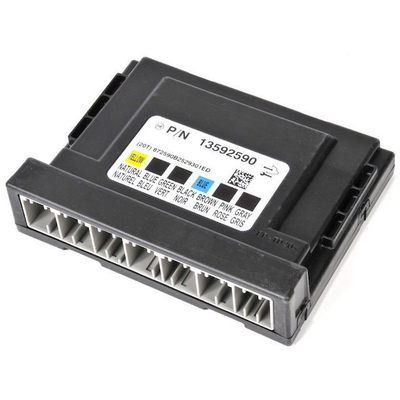
Shop the Parts Behind U3007
Below are the parts most often responsible for code U3007, ranked by how frequently each one is the actual culprit (per the diagnosis above). Tap any to see what we have for your vehicle.



The information in this article is provided for general reference and educational purposes only. Vehicle specifications, procedures, and part compatibility can vary by production date, trim level, and region. Always consult your vehicle's factory service manual and verify part numbers before purchasing or performing repairs. Safety-critical components such as airbags, seat belts, and braking systems should be installed by a qualified professional.
- 🧭 Diagnostic Flowchart
- 🛍️ Shop This Part
- What Does U3007 Mean?
- Can I Drive With U3007?
- Common Causes
- Symptoms
- Common Fixes & Costs
- Used vs. New Parts: Buying Guide
- What Happens If You Wait — Timeline
- Cost of Not Fixing It
- Diagnosis Steps
- When This Code Triggers (Freeze-Frame Conditions)
- Related Codes
- Climate & Environmental Factors
- How to Talk to a Mechanic About This Code
- Where to Take It: Dealer vs Independent vs Chain
- When to Walk Away From the Repair
- What Scan Tool You Need for This Code
- How to Clear the Code After You Fix It
- Will This Fail Emissions / State Inspection?
- Most Commonly Affected Vehicles
- Manufacturer-Specific Notes
- Real Owner Stories
- 2021 Jeep Wrangler with multiple electrical warnings
- 2019 Ford F-150 with exterior lighting failure
- 2017 Ram 1500 with rodent damage
- Subaru Outback with 'phantom codes' after battery replacement
- How to Prevent This Code From Triggering
- Frequently Asked Questions
- Can I just clear the U3007 code?
- Is U3007 a serious problem?
- Why does the code say 'Circuit B'?
- Will replacing the battery fix code U3007?
- What is a common misdiagnosis for U3007?
- My scan tool shows U3007 but there are no symptoms. What should I do?
- Can a bad alternator cause code U3007?
- Key Takeaways
- 🎟️ Get 5% Off