

OBD-II Code U3017: Control Module Timer/Clock Problem
What U3017 means, why it triggers, and how to fix it
- Code U3017 is almost always caused by a software glitch or a weak battery, not a failed $900 computer module.
- Driving with this code is mechanically safe, but the active Check Engine Light masks new, potentially severe engine faults.
- Call a dealership with your VIN to check for open software updates (TSBs) before paying for any diagnostic labor, especially for 2014-2021 Ram trucks.
- A weak battery dropping below 10.0V during cranking or disconnecting the battery before the 10-minute module power-down sequence finishes are the top physical triggers.
What Does U3017 Mean?
Trouble code U3017 indicates that a vehicle control module, such as the Powertrain Control Module (PCM) or Body Control Module (BCM), has detected a problem with its internal clock. This clock time-stamps events and coordinates communication between modules. When the clock's timing is inaccurate, its stored time is illogical, or it fails a self-check, the computer triggers this fault. On Ram trucks, the PCM specifically compares the ignition-off time reported by the BCM to the measured drop in engine coolant temperature, setting the code if they do not align.
Technical definition: Control Module Timer/Clock Performance
Can I Drive With U3017?
Yes. Driving with code U3017 is mechanically safe and will not damage your engine or affect drivability. However, the active check engine light prevents you from being alerted to new, potentially severe problems. Diagnose the code promptly to ensure you are not masking a more serious underlying issue.
Common Causes
- Outdated Control Module Software (Very Common) — Manufacturer software logic is often too sensitive, falsely flagging a clock problem when none exists. Ram, Volvo, and Nissan have released numerous Technical Service Bulletins (TSBs) to patch this known bug via a software update.
- Weak Battery or Low Voltage Event (Very Common) — Control modules require stable voltage (above 12.4V) to maintain their internal clocks. A weak battery dropping below 10.0V during startup, or a parasitic draw from leaving accessories on, causes the clock to lose time or reset.
- Improper Battery Disconnection (Common) — Disconnecting the battery before the modules fully power down (which takes 5 to 10 minutes after key-off) scrambles their non-volatile memory. This corrupts the timer data and triggers the code upon the next startup.
- Poor Power or Ground Connection (Less Common) — A loose battery terminal, a corroded ground strap, or a damaged module connector causes intermittent voltage drops. Ground resistance exceeding 0.1 Ω disrupts the internal clock's power supply.
- Low Engine Coolant or Air in System (Ram Specific) (Less Common) — Ram PCMs validate the key-off timer by measuring the drop in coolant temperature. Low coolant or trapped air causes erratic temperature readings, falsely triggering a timer fault.
- Blown Module Backup Power Fuse (Rare) — Control modules use a dedicated, fused circuit providing constant battery power to maintain memory. A blown fuse resets the clock every time the vehicle turns off.
- Internal Control Module Failure (Rare) — The physical real-time clock (RTC) inside the module has failed. This hardware failure is extremely rare; manufacturers advise exhausting all other diagnostics before replacing a module.
Symptoms
- Check Engine Light is On — The Malfunction Indicator Lamp (MIL) illuminates on the dashboard. This is typically the only symptom.
- No Drivability Issues — Engine performance, shifting, and braking remain completely unaffected.
- Clock or Timed Displays Reset — The radio clock resets to 12:00, loses time, or instrument cluster service reminders fail to update correctly.
- Scheduled Functions Fail — Timer-reliant convenience features, such as automatic headlights or remote start schedules, stop working.
- Communication Warning Lamp On — A specific communication system warning light illuminates instead of, or alongside, the check engine light.
Common Fixes & Costs
- Reprogramming the Control Module (Software Reflash) — Parts: $0, Labor: $150-$250, ~1.0 hr book time (Professional)
- Replacing the Vehicle Battery — Parts: $200-$300, Labor: $20-$50, ~0.5 hr book time (DIY)
- Cleaning or Repairing Ground Connections — Parts: $5-$20, Labor: $50-$150, ~0.8 hr book time (Intermediate)
- Topping Off and Bleeding Cooling System (Ram Specific) — Parts: $15-$25, Labor: $50-$100, ~0.5 hr book time (DIY)
- Replacing the Control Module (PCM or BCM) — Parts: $600-$900, Labor: $200-$300, ~2.0 hr book time (Professional)
Used vs. New Parts: Buying Guide
When a used part is worth it: A used PCM or BCM is almost never recommended due to programming complexities. It only makes sense for advanced DIYers with access to programming tools or when purchasing a pre-programmed remanufactured unit.
Donor-vehicle mileage cap: roughly under 50000 miles for the part to have meaningful remaining life.
Donor quality checklist:
- Must match the OEM part number exactly.
- Verify the donor vehicle's options and VIN are compatible.
- Avoid modules from flood-damaged or high-impact collision vehicles.
Decision logic:
- If A software update (TSB) is available for your VIN → Do not buy any module. Get the software update first.
- If The cause is a weak battery or bad connection → Do not buy any module. Fix the electrical issue.
- If Module replacement is confirmed as the only fix → Buy a new OEM part or a VIN-programmed remanufactured unit with a lifetime warranty. Avoid junkyard parts.
Warranty tradeoff: Used junkyard parts offer a 30-day warranty. Remanufactured units offer a 1-year to lifetime warranty. New OEM parts carry a 1-2 year warranty.
Worst-case if a used part fails: $500-$1000 if a used module fails or cannot be programmed, requiring repeat labor and a new part.
Cost of Not Fixing It
- Short-Term (0-3 months): The active Check Engine Light masks new, potentially severe codes. There is no direct mechanical damage from U3017 itself. (Added cost: $0)
- Medium-Term (3-12 months): If a failing battery is the root cause, you risk a sudden no-start condition requiring a tow and emergency battery replacement. (Added cost: $150 - $300)
- Long-Term (1+ years): Ignoring the Check Engine Light causes you to miss critical engine or transmission faults, leading to catastrophic failure that an early warning would have prevented. (Added cost: $2000 - $8000)
Diagnosis Steps
- Check for Technical Service Bulletins (TSBs)
Call a dealership with your VIN and ask if there are open TSBs related to code U3017. A software bug is the most common cause, and a reflash is the definitive fix for many vehicles.
Tools: Phone, Vehicle Identification Number (VIN) (Beginner) - Test the Battery and Charging System
Check battery voltage at rest (should be 12.4V-12.6V). During engine cranking, voltage must not drop below 10.0V. A dedicated electronic battery tester is required for a proper load test. For dual-battery systems, isolate and test each battery individually.
Tools: Multimeter, Automotive Battery Load Tester (Beginner) - Scan for Related Codes
Use an OBD-II scanner to check for companion codes. P2509 indicates a battery or power loss issue, while U1421 confirms a software logic flaw. On Ram trucks, diagnose any coolant temperature sensor codes first.
Tools: OBD-II Scanner (Beginner) - Inspect Power and Ground Connections
Visually inspect battery terminals for corrosion. Follow the main ground strap to the chassis and engine block, ensuring it is tight. Check the resistance of the ground connection; it must be less than 0.1 Ω.
Tools: Wrench set, Wire brush, Multimeter (Intermediate) - Perform a Parasitic Draw Test
If the battery dies overnight, perform a parasitic draw test. With the vehicle off and doors closed for 30 minutes, place a multimeter in series with the negative terminal. A reading above 50 milliamps (0.050A) indicates a component is draining the battery.
Tools: Multimeter with 10A capability (Advanced) - Analyze Scan Tool Live Data
Monitor PIDs related to module voltage and timers. 'Module Supply Voltage' should match battery voltage. On Ram trucks, ensure 'Engine Coolant Temperature' and 'Ambient Air Temperature' match closely after a long cold soak.
Tools: Professional OBD-II Scanner with Live Data (Advanced) - Verify Ram Diagnostic Monitor Conditions
On Ram trucks, the U3017 test only runs if the engine reached 170°F (76.6°C) before shutdown and cools by at least 18°F (10°C) over a two-hour soak. The monitor will not run if an engine block heater is detected.
Tools: OBD-II Scanner with Live Data (Advanced) - Perform a Hard Reset and Drive Cycle
Disconnect the negative battery terminal for 30 minutes to perform a hard reset. Reconnect and drive the vehicle to meet the specific drive cycle conditions, allowing the modules to re-run their internal checks.
Tools: Wrench set (Intermediate) - Perform a Software Reflash
If a TSB exists, a dealership or qualified shop must reprogram the control module with updated software. This requires a J2534 Pass-thru device and a stable power supply of 13.2-13.5V during the procedure.
Tools: J2534 Pass-thru device, stable high-amperage power supply, OEM software (Professional)
When This Code Triggers (Freeze-Frame Conditions)
- RPM: 0 (Key-On, Engine-Off, or immediately at startup.)
- Vehicle Speed: 0 mph (Vehicle is stationary, as the code is logged at startup.)
- Engine Coolant Temp: Matches Ambient Temp (After a cold soak. On Ram trucks, the monitor runs at startup after the engine cools by at least 18°F (10°C).)
- Battery Voltage: 10.5V - 12.0V (Lower than normal during cranking, indicating a weak battery.)
Related Codes
- P2509 — 'PCM/ECM Power Input Signal Intermittent'. This is the strongest indicator that the root cause is electrical power, not software. Focus on the battery, terminals, and charging system.
- U1421 — 'Implausible Ignition Key Off Time Received'. A direct companion to U3017 on Ram trucks. Both indicate a software logic flaw and are fixed simultaneously with a single PCM software reflash.
- U0422 — 'Implausible Data Received From Body Control Module'. A consequence of U3017. The PCM stops trusting time-related data from the BCM. Resolving U3017 clears U0422.
- P0128 — 'Thermostat Rationality'. A faulty thermostat causes the engine to warm up or cool down too slowly, interfering with the timer validation process on Ram trucks and indirectly contributing to U3017.
Climate & Environmental Factors
- Cold Weather: Freezing temperatures reduce battery power output by up to 60% while increasing the power required to crank thick engine oil. This severe voltage drop corrupts module timers.
- Short Trips in Winter: Frequent short drives prevent the alternator from fully recharging the battery, leading to a chronically undercharged state that triggers U3017 during cold starts.
- High Humidity: Excess moisture accelerates corrosion on battery terminals and chassis ground points, increasing electrical resistance and causing intermittent voltage drops.
How to Clear the Code After You Fix It
- Perform the required repair (e.g., replace battery, reflash PCM).
- Use an OBD-II scan tool to perform a 'Clear Codes' command.
- Perform the specific drive cycle to allow the internal monitor to run and pass.
Drive cycle (~30 minutes): For Ram trucks: Drive until engine temp exceeds 170°F. Shut off and cold soak for at least 2 hours until coolant temp drops by 18°F. Restart and idle for 5 minutes. For other vehicles: Cold start, 5 min idle, 15 min mixed driving, then cool down.
Readiness monitors affected: Comprehensive Component Monitor
Before emissions retest: drive at least 50 miles to fully set monitors.
Watch out for:
- Using a scan tool to clear a 'Permanent DTC' fails; the vehicle's computer must run its internal test and pass to clear the code.
- Failing to meet the specific cold soak conditions prevents the diagnostic monitor from running.
Will This Fail Emissions / State Inspection?
Yes — this code typically fails an OBD-II emissions inspection.
- California: An illuminated Check Engine Light due to a 'U' code is an automatic failure of the smog check. All required readiness monitors must be complete.
- New York: Any code that turns on the MIL, including U3017, results in an inspection failure.
- Texas: An active U3017 code with the MIL on causes the vehicle to fail the OBD portion of the inspection.
Most Commonly Affected Vehicles
- Ram 1500 (2014-2021) — Extremely common issue addressed by multiple TSBs for a PCM/BCM software update. The code also appears after changing the vehicle from 'Shipping Mode' to 'Customer Mode'.
- Ram 2500 / 3500 (with Cummins) (2014-2020) — Very common software issue addressed by numerous TSBs. Dual-battery failure is a common secondary cause.
- Nissan Titan XD (with 5.0L Cummins) (2016-2017) — A known issue addressed by TSB NTB17-066, requiring a software update to the Engine Control Module (ECM) to fix a bug that incorrectly sets code U3017.
- Volvo Trucks (Various Models) (2016-2017) — A known software issue in the Engine ECU caused this code. A service bulletin instructed technicians not to replace parts and that a software update was the only fix.
- Mack Trucks (Various Models) (2016-2017) — Shares the same Engine ECU software issue as Volvo trucks, requiring a software update to resolve.
- Jeep Grand Cherokee / Cherokee (2014-2018) — Shares similar powertrain and body control modules with Ram trucks, making them susceptible to the same software and battery-related triggers.
- Ford F-Series / Transit (2015-2024) — Triggered by general electrical issues like a failing battery, poor grounds, or parasitic draws from improperly installed aftermarket accessories.
- Chevrolet / GMC Silverado / Sierra (2014-2024) — Triggered by weak batteries, improper battery disconnection procedures, or faulty aftermarket electrical components.
Manufacturer-Specific Notes
- Ram (Stellantis): The diagnostic monitor compares the BCM's ignition-off timer with the PCM's expected time based on coolant temperature drop. The monitor only runs if the engine cools by at least 18°F over a multi-hour soak, and aborts if a block heater is detected.
- Volvo / Mack Trucks: For 2016-2017 models, a bulletin explicitly told technicians NOT to replace any hardware for this code. It was a known software bug requiring an updated software release.
- Nissan: On 2016-2017 Titan XD trucks, TSB NTB17-066 requires an ECM software re-program. Battery voltage must be strictly maintained between 12.0V and 15.5V during the procedure to prevent ECM damage.
- General (All Makes): Code U3017 is often stored as a 'permanent' DTC. It cannot be erased with a standard scan tool command and only clears after the vehicle successfully runs and passes its internal timer diagnostic.
Frequently Asked Questions
Is it safe to drive my car with code U3017?
Yes, it is mechanically safe. This code does not affect your vehicle's engine performance, braking, or steering. However, the active check engine light masks new, more serious codes.
Will replacing my car battery fix code U3017?
It might, as a weak battery is a primary trigger. If your battery is over 4 years old or drops below 10.0V during cranking, replace it. However, if the root cause is a software glitch, a new battery will not fix the code.
My mechanic wants to replace the PCM for $900. Is this necessary?
It is highly unlikely. Before authorizing a $900 module replacement, verify there are no open software updates (TSBs) for your VIN and perform a proper battery load test. Module failure is the least common cause for this specific code.
Can aftermarket accessories cause code U3017?
Yes, improperly installed aftermarket parts like remote starters cause parasitic battery drains. A drain exceeding 50mA lowers system voltage overnight, corrupting module timers. If the code appeared after installing an accessory, disconnect it and retest.
Why did this code appear right after I disconnected my battery?
Modern vehicles require 5 to 10 minutes to power down their computer modules after turning off the ignition. Disconnecting the battery before this sequence completes corrupts the timer's memory. This triggers code U3017 and often P2509.
My scanner says the code is 'permanent'. How do I clear it?
A 'permanent' code cannot be erased by a simple scan tool command. The vehicle's computer must verify the fault is fixed by completing a specific drive cycle. Once the onboard diagnostic monitor runs and passes, the computer clears the code automatically.
My dealer said there is no fix for this code. What should I do?
Early on, manufacturers had not yet developed software fixes for this code. Ask the dealer to check again, as updates (TSBs) are frequently released to solve this exact issue. If they refuse, get a second opinion from another dealership.
Can a block heater cause code U3017 on my Ram truck?
A block heater does not directly cause the code. However, on Ram trucks, the diagnostic test for U3017 relies on measuring a natural drop in coolant temperature. The test will not run if it detects a block heater is keeping the engine warm.
Key Takeaways
- Code U3017 is almost always caused by a software glitch or a weak battery, not a failed $900 computer module.
- Driving with this code is mechanically safe, but the active Check Engine Light masks new, potentially severe engine faults.
- Call a dealership with your VIN to check for open software updates (TSBs) before paying for any diagnostic labor, especially for 2014-2021 Ram trucks.
- A weak battery dropping below 10.0V during cranking or disconnecting the battery before the 10-minute module power-down sequence finishes are the top physical triggers.
Shop the Parts Behind U3017
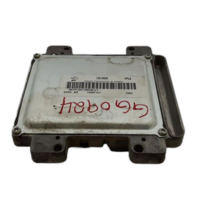
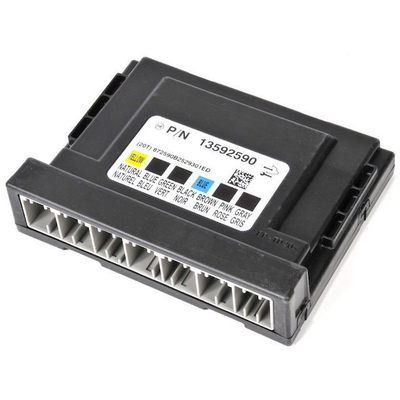
Below are the parts most often responsible for code U3017, ranked by how frequently each one is the actual culprit (per the diagnosis above). Tap any to see what we have for your vehicle.


The information in this article is provided for general reference and educational purposes only. Vehicle specifications, procedures, and part compatibility can vary by production date, trim level, and region. Always consult your vehicle's factory service manual and verify part numbers before purchasing or performing repairs. Safety-critical components such as airbags, seat belts, and braking systems should be installed by a qualified professional.
- 🛍️ Shop This Part
- What Does U3017 Mean?
- Can I Drive With U3017?
- Common Causes
- Symptoms
- Common Fixes & Costs
- Used vs. New Parts: Buying Guide
- Cost of Not Fixing It
- Diagnosis Steps
- When This Code Triggers (Freeze-Frame Conditions)
- Related Codes
- Climate & Environmental Factors
- How to Clear the Code After You Fix It
- Will This Fail Emissions / State Inspection?
- Most Commonly Affected Vehicles
- Manufacturer-Specific Notes
- Frequently Asked Questions
- Is it safe to drive my car with code U3017?
- Will replacing my car battery fix code U3017?
- My mechanic wants to replace the PCM for $900. Is this necessary?
- Can aftermarket accessories cause code U3017?
- Why did this code appear right after I disconnected my battery?
- My scanner says the code is 'permanent'. How do I clear it?
- My dealer said there is no fix for this code. What should I do?
- Can a block heater cause code U3017 on my Ram truck?
- Key Takeaways
- 🎟️ Get 5% Off