

U3017 on 2014-2021 Ram 1500: Control Module Timer/Clock Performance Explained
U3017 on a Ram 1500 means a module's internal clock is out of sync. It's most often a software glitch fixed by a dealer update, as confirmed by multiple TSBs. Other causes include a weak battery or, rarely, a faulty module like the BCM or PCM. Do not replace parts before checking for software updates.
- U3017 is almost always a software or power supply issue, not a major mechanical problem.
- Before replacing any parts, check your battery's health and ask a dealer to check for any available software updates for your truck's VIN.
- The code is often triggered by disconnecting the battery; if it happened after a battery change, clear the code and see if it returns.
- You can continue to drive your truck with this code, but the check engine light will prevent you from knowing if a new, more serious issue arises.
What's Unique About the 2014-2021 Ram 1500
On Ram trucks, U3017 is frequently a software-related issue rather than a hardware failure. Numerous Technical Service Bulletins (TSBs) have been issued by Ram to address this code with software updates for various modules, including the PCM and BCM. Owners often report the check engine light appearing for this code after a battery disconnect, a separate software update, or sometimes for no apparent reason, only for a dealer reflash to resolve it permanently. In one documented case from 2014, a Ram owner was told by Ram 'CARE' support that a software fix was known to be needed and was pending release, potentially delayed by the EPA, confirming it was a known bug from the factory.
Diagnostic Flowchart
Tap your situation to follow the diagnostic path that matches what you're seeing on this vehicle.
Generation note: This guide covers the end of the 4th Generation Ram 1500 (2014-2018, 'DS' platform) and the beginning of the 5th Generation (2019-2021, 'DT' platform). While the code's meaning is the same, the specific module setting the code and the required software update (TSB) may differ between generations due to significant changes in the electrical architecture. The underlying causes (software, battery voltage) are common to both. The existence of TSBs for model years like 2014, 2015, and 2016 confirms the problem spans both platforms.
Symptoms You May Notice
- Check Engine Light (MIL) is on.
- Incorrect time on the infotainment display or instrument cluster clock.
- Scheduled functions, like automatic headlights or timed door locks, may not work correctly.
- On some diesel models, this code may appear after the vehicle has been idling for an extended period.
- The code may appear with no other noticeable symptoms or drivability issues.
- Replacing a control module before checking for software updates. Many owners have had this code resolved with a simple reflash, saving hundreds or thousands of dollars on unnecessary hardware.
- Replacing the battery without confirming it's faulty. While a weak battery is a common cause, a simple power interruption or glitch can also set the code, which may not return after being cleared.
Most Likely Causes
- Software Glitch in a Control Module 🔴 High Probability Ram has released multiple TSBs (e.g., 18-001-16 Rev. C, 18-021-15 Rev. F, 18-030-14 Rev. A) to fix this exact code, indicating it's a known software issue that was corrected in later calibrations. This can happen after a module is reprogrammed for another issue or during new vehicle prep.
How to confirm: A dealer or a shop with advanced tools (like wiTECH) can check the current software calibration of the vehicle's modules (PCM, BCM) against the latest available versions from Ram. The presence of a relevant TSB for your VIN is strong confirmation.
Typical fix: Reprogramming (flashing) the affected module with the updated software. This is typically a dealer service. A forum user on Turbo Diesel Register confirmed a dealer re-flash fixed his code and it did not return.
Est. part cost: $0 - Low Battery Voltage or Interrupted Power 🟡 Medium Probability → Shop Vehicle Battery Modern trucks have a high electrical demand, and modules require stable voltage to maintain memory and timers. Disconnecting the battery without letting the modules power down correctly (a process that can take several minutes) can corrupt timer memory and trigger U3017, often along with P2509.
How to confirm: Test the battery voltage with a multimeter (should be ~12.6V with engine off) and perform a load test to check its health. Inspect battery terminals for corrosion and tightness. Many forum users report this code appearing after leaving the key in the accessory position for too long, draining the battery.
Typical fix: Recharge or replace the weak battery. Clean or tighten battery terminals. After fixing, clear the codes; they may not return.
Est. part cost: $150-$400 - Faulty Body Control Module (BCM) or Powertrain Control Module (PCM) ⚪ Low Probability → Shop Engine Control Module (ECM) While less common than software issues, the internal crystal oscillator or timer circuit within a module can fail over time. However, official service documents from other manufacturers for the same code explicitly state NOT to replace modules until software and power issues are ruled out.
How to confirm: This is a process of elimination. If the battery is good and all relevant software updates have been performed, but the code persists, the module itself is suspect. A technician may use an advanced scan tool to try and communicate directly with the module's clock function.
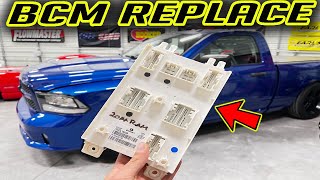
Typical fix: Replacement of the faulty module (e.g., BCM or PCM). 🎬 See this walkthrough on how to replace the Body Control Module. The new module will need to be programmed to the vehicle's VIN.
Est. part cost: $300-$1000
Rare But Worth Checking
- Faulty Coolant Temperature Sensor: On some diesel models, the diagnostic for U3017 uses the rate of engine cooling to verify the ignition-off timer. If the coolant sensor gives an erratic reading, it can cause the timer check to fail and falsely trigger U3017. This is rare, but the diagnostic procedure explicitly says to check for coolant sensor DTCs first.
- Scan Tool Procedure: Service documentation notes that this DTC can be set when a technician uses a scan tool to change the vehicle from 'Shipping Mode' to 'Customer Mode' during new vehicle preparation, as this can reset the BCM's ignition-off timer. If the code appears after this procedure, it is considered a glitch and should be cleared.
Diagnosis Steps
- Use a scan tool to confirm which module is storing the U3017 code. It could be the PCM, BCM, or another module.
- Check for any other stored DTCs. If P2509 is present, address the battery/power supply first by performing a load test and checking all connections. If U1421 is present, it strongly points to the software/communication glitch addressed by TSBs.
- Inspect the battery. Check for a state of charge below 12.4 volts, and clean any corrosion from the terminals. Have the battery load-tested, as surface voltage can be misleading.
- If the battery was recently disconnected or went dead, clear the code. Turn the ignition off and wait a full 10 minutes for modules to power down, then perform several drive cycles to see if it returns. The code may have been a one-time event.
- Check for available Technical Service Bulletins (TSBs) for your truck's VIN. Several TSBs for Ram trucks specifically address U3017 with a software update, particularly for diesel models.
- If a TSB is available, have a dealer or qualified shop perform the software update using a tool like wiTECH. Ensure a battery charger maintaining 13.2-13.5V is used during the flash.
- If no TSBs apply and the battery is healthy, the issue may be the module itself. This requires advanced diagnostics to confirm before replacement and should be the last resort.
Parts You'll Likely Need
- Body Control Module (BCM)
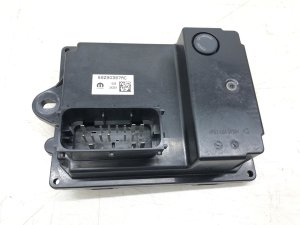
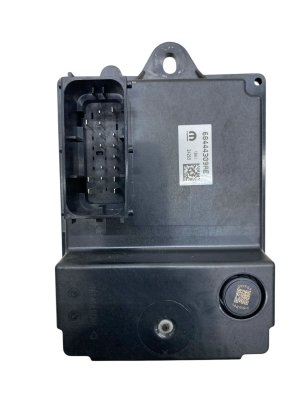
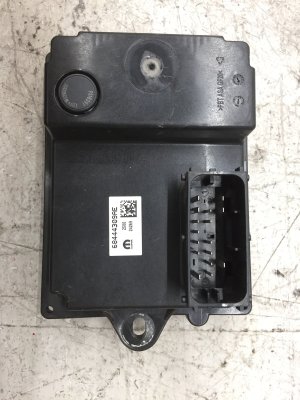
(OEM #68236153AC (example for 2014), 68357472AC (example for 2018))— The BCM often manages timers for various vehicle functions and communicates this to the PCM. It's a potential hardware failure point if software and battery issues are ruled out. Replacement requires programming.
Trusted brands: Mopar
OEM price range: $300-$600
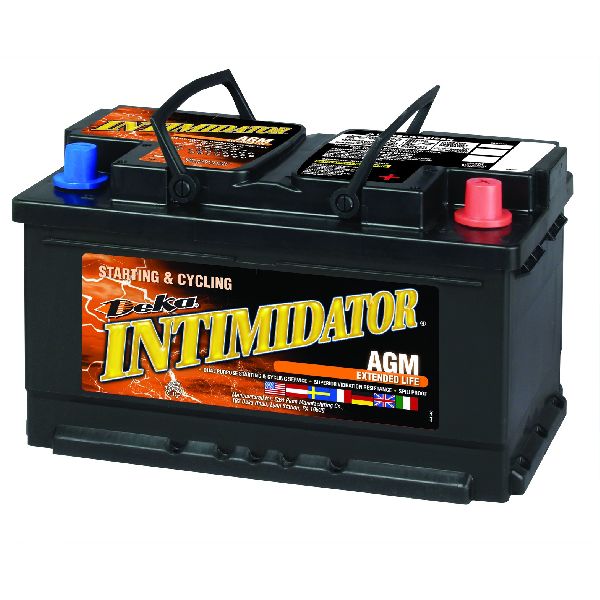
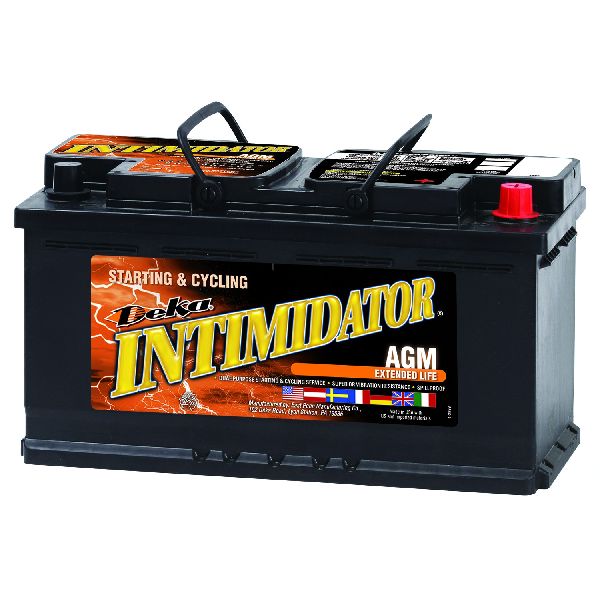
Aftermarket price range: $200-$450 - Vehicle Battery — A weak or failing battery is a common trigger for this code due to unstable voltage supplied to the modules during startup or shutdown.
Trusted brands: Interstate, Duralast, DieHard, Mopar
OEM price range: $250-$400
Aftermarket price range: $150-$300
Related Codes That Often Appear With This One
- P2509 — P2509 (PCM Power Input Signal Intermittent) often appears with U3017. 🎬 Watch: How to diagnose and fix the P2509 power signal code. Service information explicitly states that when these two codes are present together, the cause is almost certainly a battery disconnect before the modules could fully power down (a 10-minute process). Forum users with Cummins engines frequently associate P2509 with a failing driver-side battery.
- U1421 — U1421 (Implausible Ignition Key Off Time Received) is listed alongside U3017 in TSB 18-030-14 REV. A. This code is a direct companion, indicating the PCM received a nonsensical 'key off' duration from another module, which is the core logic that triggers U3017.
Technical Service Bulletins (TSBs) & Recalls
- 0803224: BACK OVER PREVENTION
- 18-001-16 REV. C: Flash: 3.0L Powertrain Diagnostic And System Enhancements
- 18-019-15 REV C: Flash: 3.0L Powertrain Diagnostic And System Enhancements
- 18-021-15 REV. F: Flash: 3.0L Powertrain Diagnostic And System Enhancements
- 18-030-14 REV. A: Flash: Powertrain Diagnostic And System Enhancements
Platform-Specific Known Issues
- TSB #18-001-16 REV. C for 2016 3.0L diesel models involves a PCM reflash to address U3017 and other codes.
- TSB #18-021-15 REV. F for 2014 3.0L diesel models involves a PCM reflash to address U3017 among a list of other DTCs.
- On 6.7L Cummins models, the diagnostic logic specifically compares the BCM's ignition-off timer to the rate of coolant temperature drop to check for plausibility. The monitor runs after engine startup if there was at least a 10°C (18°F) coolant temp drop since the last shutdown.
- Forum discussions from 2014-2016, like the thread '2014 ram 2500 6.7 engine check light on code u3017' on turbodieselregister.com, confirmed owners being told by dealers that a software fix was pending from Ram, confirming this was a known issue that was later resolved with updates.
Mechanic-Grade Diagnostic Values
- CAN Bus Resistance — expected: ~60 Ω (measured between CAN_H and CAN_L at the DLC with battery disconnected). Failure: A reading of ~120 Ω indicates a missing terminating resistor or open circuit. A reading near 0 Ω indicates a short between the CAN lines.
- CAN Bus Voltage to Ground — expected: ~2.5V on both CAN_H and CAN_L with key on, engine off.. Failure: Significant deviation from 2.5V, or voltage being present with the key off, indicates a module or wiring fault.
- Battery Voltage During Reflash — expected: 13.2V - 13.5V. Failure: Voltage dropping below 13.2V or climbing above 13.5V can cause the reflash to fail and potentially corrupt the module.
- BCM Low Voltage Set Condition — expected: Voltage should remain above 9.0V.. Failure: If the BCM detects voltage below 9.0V on its main power feeds for more than one second, it can set a fault.
Hidden / Shadow Codes Worth Checking
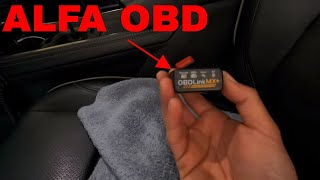
- U3017-00: The '-00' is a Failure Type Byte (FTB) indicating a general 'Component Failures' or 'No Subtype Information' fault. It's the most common variant seen on Ram trucks for this DTC. (see via Advanced scanners like wiTECH or AlfaOBD will display the full code with the FTB. Basic code readers may only show 'U3017'.)
Scan Tool Commands That Help
- wiTECH or AlfaOBD: Restore Vehicle Configuration — This function is used after replacing a BCM or to correct configuration data that may have been corrupted, causing electrical issues after a battery disconnect or other service.
- wiTECH or AlfaOBD: Backup Vehicle Configuration to File — This should be performed BEFORE replacing a BCM. It saves the truck's specific configuration (options, VIN, etc.) to a file, which can then be written to the new module.
- wiTECH: Reprogram BCM/PCM — This is the specific function used to perform the software updates outlined in the Technical Service Bulletins that are the most common fix for U3017.
Wiring & Ground Locations
- BCM Location (4th Gen) — High in the driver's side dashboard, above the pedals and behind other components. It is difficult to access and requires removing lower dash panels.. A poor connection at one of the main BCM harness plugs or a bad ground near the module can cause intermittent power and communication issues, triggering timer faults like U3017.
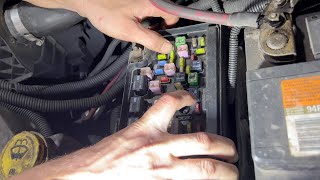
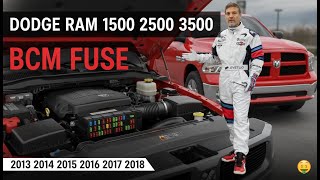
- BCM Fuses (4th Gen) — In the under-hood fuse box (Power Distribution Center). Specifically, fuses F10, F12, F14, and F23 have been identified as being related to the BCM.. A loose or corroded fuse can cause intermittent low voltage to the BCM, leading to memory and timer corruption without outright blowing the fuse.
- Main Body Ground — General locations include the A-pillar behind the driver's side kick panel and on the cowl side. A specific ground point mentioned in service literature is GD233.. The BCM relies on a solid ground connection. A loose or corroded ground (often showing as blue-green corrosion) can cause erratic behavior in multiple systems controlled by the BCM, including its internal clock.
Real Owner Repair Stories
- Turbo Diesel Register forum user 'DILLWINKLE' (2014 Ram 2500, 3,900 miles) — Check Engine Light with code U3017.
❌ Tried (didn't work) Taking it to the dealer twice, where they confirmed existing TSBs did not fix the issue.
✅ What actually fixed it The owner was informed by Ram 'CARE' support in late 2014 that a new software fix was known to be required but was pending release (and possibly delayed by the EPA). This confirms the issue was a factory software bug requiring a specific, later update. - Turbo Diesel Register forum user 'RikDavis' (4th Gen Ram Diesel) — Check Engine Light with U3017, sometimes accompanied by a low system voltage code.
❌ Tried (didn't work) Clearing the code with a standard reader; it was stored as 'permanent'.
✅ What actually fixed it The owner identified a pattern: the code appeared after leaving the key in the accessory position for an extended period, which drained the battery. Recharging the battery and clearing the code (when possible) resolved it until the next low-voltage event. This strongly links the code to battery health. - YouTube user 'Hammerdown Motorsports' (2019 Ram Rebel) — After disconnecting the battery for an accessory install, the backup camera, heated seats/wheel, and A/C were all gone from the infotainment system.
❌ Tried (didn't work) Immediately restarting the truck., Panicking and assuming a dealer visit was required to reflash the BCM.
✅ What actually fixed it The owner let the truck sit locked overnight. The next morning, all functions had returned to normal without any intervention. This demonstrates that the modules can sometimes re-synchronize and restore their configuration after a sufficient 'sleep' period.
OEM Part Supersession History
68236153AC→68236153AD— Revision to address hardware or software compatibility issues.
Heads up: Applies to early 4th Gen Ram 1500 (e.g., 2014). Using the latest revision (AD) is recommended for replacement.68357472AA, ...AB, ...AC→68357472AD— Multiple revisions indicate ongoing updates to the part through its lifecycle.
Heads up: Applies to later 4th Gen and 'Classic' models (e.g., 2018-2020). The chain of supersession is 68357472AA -> AB -> AC -> AD. Always use the latest available part number for replacement.
Model Year Variations Within This Range
- 2019-2021 (5th Gen 'DT'): The 5th Gen introduced a completely new, more complex electrical architecture, including a Security Gateway Module (SGW) that blocks unauthorized diagnostic commands. The BCM is different, the CAN bus layout is different, and the truck uses an 8HP75 transmission (vs. 8HP70). This means diagnostic procedures and software fixes are not interchangeable with 4th Gen 'DS' trucks.
- 2014-2018 (4th Gen 'DS'): These models use an older, non-SGW electrical system. The BCM is located high in the driver's side dash. While still complex, it is more accessible to aftermarket diagnostic tools like AlfaOBD for performing resets and configuration changes compared to the 5th Gen.
Helpful Videos


Used OEM Parts in Stock
New Aftermarket Parts Available



The information in this article is provided for general reference and educational purposes only. Vehicle specifications, procedures, and part compatibility can vary by production date, trim level, and region. Always consult your vehicle's factory service manual and verify part numbers before purchasing or performing repairs. Safety-critical components such as airbags, seat belts, and braking systems should be installed by a qualified professional.
- Ram 1500:
- 🧭 Diagnostic Flowchart
- 🎬 Helpful Videos
- 🛍️ Shop This Part
- What's Unique About the 2014-2021 Ram 1500
- Symptoms You May Notice
- Most Likely Causes
- Rare But Worth Checking
- Diagnosis Steps
- Parts You'll Likely Need
- Related Codes That Often Appear With This One
- Technical Service Bulletins (TSBs) & Recalls
- Platform-Specific Known Issues
- Mechanic-Grade Diagnostic Values
- Hidden / Shadow Codes Worth Checking
- Scan Tool Commands That Help
- Wiring & Ground Locations
- Real Owner Repair Stories
- OEM Part Supersession History
- Model Year Variations Within This Range
- 🎟️ Get 5% Off