

U3017 on 2014-2020 Ram 3500: Control Module Timer/Clock Performance Fixes
On a 2014-2020 Ram 3500, code U3017 is most often caused by a software glitch requiring a dealer-installed Powertrain Control Module (PCM) update, as outlined in multiple Technical Service Bulletins. Before suspecting failed parts, check for software updates and test the battery/batteries, as low voltage is the second most common cause. This code is typically a nuisance and does not affect drivability.
- U3017 on a Ram 3500 is almost always a software issue or a battery problem, not a failed hardware component.
- Your first step should be to call a Ram dealer with your VIN to check for open TSBs related to a PCM update.
- On diesel models with two batteries, always test them individually and replace them as a pair if one is faulty.
- Do not replace the PCM or BCM for this code unless a software update has been performed and the battery system has been tested and confirmed to be healthy.
- The vehicle is safe to drive with this code, as it does not typically impact engine performance or safety systems.
What's Unique About the 2014-2020 Ram 3500
The 2014-2020 model years span two generations of the Ram 3500 (Fourth and Fifth), but this code is a persistent software issue across both. Ram has released numerous Technical Service Bulletins (TSBs) to fix overly sensitive diagnostic logic that triggers U3017 unnecessarily, especially in cold weather or when seen with other specific codes. The dual-battery system on the Cummins diesel models is also a frequent source of low-voltage conditions that can trigger this fault, often in conjunction with code P2509.
Diagnostic Flowchart
Tap your situation to follow the diagnostic path that matches what you're seeing on this vehicle.
Generation note: The 2014-2020 year range covers the end of the Fourth Generation (2014-2018) and the beginning of the Fifth Generation (2019-2020) Ram 3500. The code's meaning is consistent, but the specific TSBs and software updates are often year-specific. For example, TSB 18-056-22 Rev. A applies to 2019+ trucks.
Symptoms You May Notice
- Check Engine Light (MIL) is on
- No noticeable drivability issues in most cases
- In some rare cases on other platforms, it can be associated with the clock losing time or scheduled functions failing, but this is not a common complaint for the Ram 3500.
- Replacing the Powertrain Control Module (PCM)
- Replacing the Body Control Module (BCM)
Most Likely Causes
- Outdated Powertrain Control Module (PCM) Software 🔴 High Probability → Shop Engine Control Module (ECM) Ram has issued numerous TSBs (e.g., #1800824, #1800724, #1811322, #18-056-22) to correct the logic that triggers U3017, often related to cold weather performance or in combination with other codes. The diagnostic logic was initially too sensitive. TSB 18-056-22 Rev. A for 2019+ models, for instance, bundles a fix for U3017 with dozens of other DTCs and performance enhancements.
How to confirm: Contact a Ram dealership with your vehicle's VIN. They can check if any open TSBs apply to your truck and if a software update is available. An independent shop with access to OEM service information can also perform this check.
Typical fix: Reprogramming the PCM with the latest available software using the dealer's wiTECH diagnostic tool. This is often referred to as a "reflash."
Est. part cost: $150-$350 for labor, as no parts are replaced. The cost is typically equivalent to one or two hours of the dealer's shop labor rate. - Low Battery Voltage or Failing Battery/Batteries 🟡 Medium Probability → Shop Vehicle Battery The 6.7L Cummins uses a dual-battery system connected in parallel. If one battery weakens, it can pull the other down, causing system voltage to drop below the stable level required by control modules, especially during startup when grid heaters are active. This condition often sets code P2509 (PCM/ECM Power Input Signal) alongside U3017.
How to confirm: Perform a load test on each battery individually (they must be isolated by disconnecting the terminals first). A resting voltage above 12.4V is a good start, but a load test is definitive. Check for the presence of code P2509 🎬 Watch: How to troubleshoot and fix the P2509 power signal code., which strongly points to a battery or connection issue. Many owners on forums report that even batteries that pass a simple parts store test can be the culprit.
Typical fix: Recharge or replace the weak or failing batteries. It is critical to replace both batteries as a matched pair on dual-battery systems to prevent premature failure of the new battery.
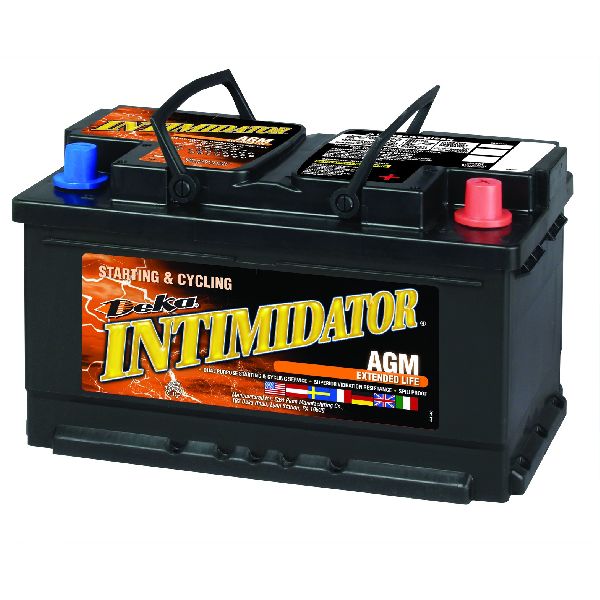
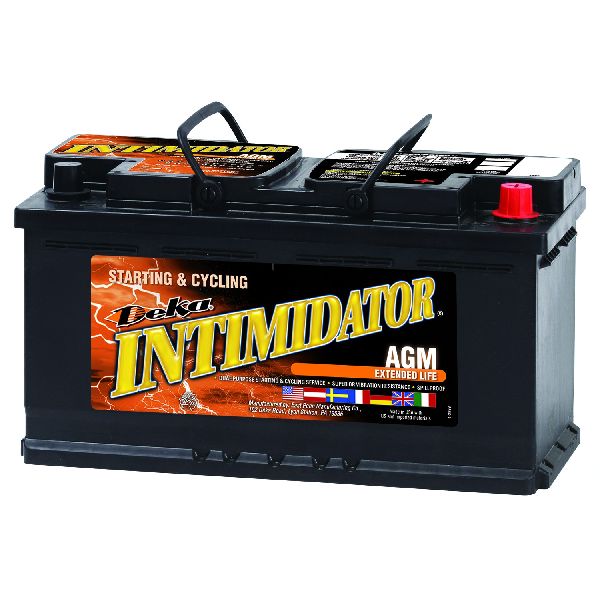
Est. part cost: $450-$700 for a pair of quality Group 94R/H7 AGM batteries.
Rare But Worth Checking
- Recent Battery Disconnect or Module Reprogramming: → Shop Vehicle Battery This code can be falsely set if the battery is disconnected before the modules complete their power-down sequence (approx. 10 minutes), or immediately after a module is reprogrammed. In these cases, simply clearing the code and performing a few drive cycles may resolve the issue. Some owners use a memory saver device connected to the OBD-II port during battery changes to prevent this.
- Faulty Coolant Temperature Sensor: Because the PCM uses the coolant temperature drop to validate the ignition-off timer, a faulty sensor providing irrational data can trigger this code. This is unlikely unless other coolant sensor-related DTCs are also present. The diagnostic procedure specifically calls for addressing any coolant sensor DTCs first.
Diagnosis Steps
- Check for Technical Service Bulletins (TSBs): This is the most important first step. Contact a Ram dealer with your VIN to see if any TSBs related to U3017 apply to your vehicle. The provided NHTSA records list #1800824, #1800724, #1811322, and #18-056-22.
- Scan for Other Codes: Use an OBD-II scanner to check for other codes that provide context. The presence of P2509 strongly suggests a battery/power supply issue, while other codes listed in TSBs point towards a software update.
- Test Battery and Charging System: On diesel models, disconnect and isolate the two batteries. Perform a proper load test on each one individually. A simple voltage check is often insufficient. Ensure the alternator is charging correctly (typically 13.5–14.8V).
- Clear Codes and Monitor: If the code appeared after a battery disconnect, jump start, or service, clear the code, drive the vehicle through several key cycles, and see if it returns. A user on Turbo Diesel Register noted a reflash can also temporarily set the code, which can then be cleared.
- Perform PCM Software Update: If a TSB applies, have the dealer or a qualified shop perform the software reflash. This is the most common definitive fix.
- Inspect Module and Wiring: Only after software and battery issues are ruled out, inspect the PCM and BCM wiring and connectors for damage or corrosion. A module replacement is a last resort and explicitly advised against by some service documents until all other steps are taken.
Parts You'll Likely Need
- Battery
(OEM #BB0H7730AA (Superseded by BBH7F001AA))— Low system voltage from a weak or failing battery (or pair of batteries on diesel models) is a common trigger for this module communication code. The Cummins models use two Group 94R (H7) batteries.
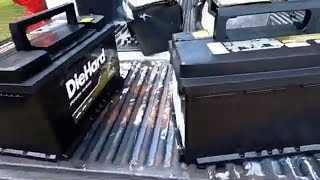
Trusted brands: Mopar, Interstate, Odyssey, DieHard, X2POWER
OEM price range: $250-$400 per battery
Aftermarket price range: $220-$350 per battery
Related Codes That Often Appear With This One
- P2579 — Turbocharger Speed Sensor Circuit. Listed together in multiple TSBs (#1800824, #1800724, #18-056-22) as being resolved by a PCM software update.
- U0101 — Lost Communication with TCM. Also listed in the same TSBs as P2579, indicating a software calibration issue is the root cause for the group of codes.
- U1421 — Implausible Ignition Key Off Time Received. This code is directly related to U3017, as they both deal with the vehicle's modules disagreeing on the time. TSB #1811322 lists them together.
- P2509 — PCM/ECM Power Input Signal. This code often points to a low battery voltage condition, a primary cause of U3017. It can also be set if the batteries are disconnected before the modules fully power down. Owners on Reddit and diesel forums frequently report these two codes appearing together when a battery fails.
Technical Service Bulletins (TSBs) & Recalls
- 1800824: Addresses U3017 along with other codes, related to electronic stability control.
- 1800724: Lists U3017 with other codes related to equipment and cold temperatures.
- 1811322: Bundles U3017 with several other codes, including U1421 (Implausible Ignition Key Off Time).
- 18-056-22: Involves a PCM reflash for U3017 and other codes related to engine and cooling performance in cold temperatures.
- 1805622: A TSB for the fuel system that also includes U3017 as a code fixed by a software update.
Platform-Specific Known Issues
- Multiple TSBs (#1800824, #1800724, #1811322, #18-056-22, #1805622) have been released by Ram to address this code via a PCM software update, confirming it's a known software calibration issue.
- The code can be falsely set when a dealership changes the vehicle from 'Shipping Mode' to 'Customer Mode' during new vehicle prep. In this case, simply clearing the code may resolve it.
- The dual-battery system in Cummins models is a frequent source of electrical issues that can trigger this code if one battery fails. Owners on forums consistently advise replacing both batteries at the same time, even if only one tests bad.
Mechanic-Grade Diagnostic Values
- Battery Resting Voltage — expected: 12.4V - 12.8V. Failure: Below 12.4V indicates a discharged or failing battery.
- Battery Voltage During Cranking — expected: Above 11.0V. Failure: A drop below 11.0V signifies a weak battery unable to hold a load.
- Charging System Voltage (Engine Running) — expected: 13.5V - 14.8V. Failure: Voltage outside this range indicates a potential alternator or voltage regulator issue.
- Ground Strap Resistance — expected: Under 0.1 Ω. Failure: Higher resistance indicates a corroded or loose ground connection, which can cause intermittent module issues.
- Coolant Temperature Drop (for monitor to run) — expected: Minimum 10°C (18°F) drop after a hot shutdown.. Failure: If the temperature drop isn't sufficient, the diagnostic monitor for U3017 will not run.
Hidden / Shadow Codes Worth Checking
- U3017-00: This is the most common variant of the code, with the '-00' being a Failure Type Byte (FTB) indicating a general 'Control Module Timer/Clock Performance' fault with no further subtype specified. Its inclusion in TSBs confirms it as the primary code. (see via A professional OBD-II scanner, wiTECH, or advanced DIY tool like AlfaOBD will display the full code with the FTB suffix.)
Scan Tool Commands That Help
- wiTECH (Dealer Tool): ECU Flash / Update Controller — This is the primary function used to perform the software update (reflash) on the PCM as prescribed by numerous TSBs to fix the root cause of the code.
- wiTECH / AlfaOBD: Clear All Faults — Used after a repair (battery replacement, software flash) to erase the stored code. The code can sometimes be stored as 'permanent' and may require this command followed by a specific drive cycle to fully clear.
- wiTECH: Change Shipping Mode to Customer Mode — This code can be falsely set during new vehicle prep when changing modes. If the code appears after this procedure, it's considered a glitch and should be cleared.
- wiTECH / AlfaOBD: Read Faults — To confirm the presence of U3017 and, crucially, to check for other codes like P2509 (power issue) or U1421 (related timer issue) that help direct the diagnosis.
Wiring & Ground Locations
- G301 / G302 — Located on the left front of the body, near the engine compartment.. These are primary body grounds. Corrosion or looseness at these points can cause intermittent voltage drops or communication issues for the BCM and PCM, potentially leading to timer/memory faults like U3017.
- Main Connector behind Left Wheel Well Liner — A large harness connector is located behind the driver's side front wheel well liner.. This is a major junction between the engine bay and cabin electronics. It is known to be susceptible to water intrusion and corrosion, which can cause a wide range of communication faults between modules, including those that trigger U3017.
- Trailer Wiring Harness Connector — At the rear bumper, connecting to the 7-pin trailer plug.. Corrosion or damage to the trailer wiring harness, particularly the 4-pin connector often hidden behind the bumper, can cause electrical shorts or feedback that disrupt module communication and potentially set codes like U3017.
Real Owner Repair Stories
- Turbo Diesel Register Forum user 'DILLWINKLE' (2014 Ram 2500 with 6.7L Cummins, 3900 miles) — Check Engine Light on with code U3017.
❌ Tried (didn't work) Initial dealer visit in late 2014 where they acknowledged the code but stated no software fix was available yet.
✅ What actually fixed it A subsequent dealer visit to perform a PCM software update (re-flash) finally resolved the issue permanently. - Turbo Diesel Register Forum user (Ram with Cummins engine (year not specified)) — U3017 code appeared, sometimes accompanied by a low system voltage code.
❌ Tried (didn't work) Clearing the code with a standard reader; it was stored as 'permanent' and would return.
✅ What actually fixed it The owner identified that the code only set after leaving the key in the accessory position for an extended period, draining the batteries. Fully charging the batteries and then getting the TSB 18-030-14 Rev. A software update provided the final fix. - Turbo Diesel Register Forum user 'Reno Dave' (2014 Ram with 3,600 miles) — Check Engine Light with code U3017.
❌ Tried (didn't work) Initial diagnosis by the dealer.
✅ What actually fixed it The code appeared after a recent PCM re-flash for other updates. The dealer followed the diagnostic procedure, determined it was a temporary glitch caused by the reprogramming, and simply cleared the code. It did not return.
OEM Part Supersession History
BB0H7700AA, BB0H7730AA, BB0H7730AB, BB94R750AA→BBH7F001AA— Standard part evolution, consolidating previous Mopar battery part numbers into a single replacement number for service.
Model Year Variations Within This Range
- 2019-2020: These first years of the 5th Generation have a different electrical architecture and module communication strategy than the 4th Gen (2014-2018). While the cause of U3017 is often the same (software/battery), the specific TSBs and software update files are unique to the generation. For example, TSB #18-056-22 applies specifically to 2019+ trucks.
- 2018+: Starting in 2018, FCA introduced a Secure Gateway Module (SGW) that prevents most aftermarket scan tools from performing bidirectional commands like clearing codes or running resets. To perform these functions on a 2018+ truck, you either need a dealer tool (wiTECH) or an aftermarket tool with an SGW bypass cable and appropriate software (like AlfaOBD).
Helpful Videos

We Have This Part in Stock


The information in this article is provided for general reference and educational purposes only. Vehicle specifications, procedures, and part compatibility can vary by production date, trim level, and region. Always consult your vehicle's factory service manual and verify part numbers before purchasing or performing repairs. Safety-critical components such as airbags, seat belts, and braking systems should be installed by a qualified professional.
- Ram 3500:
- 🧭 Diagnostic Flowchart
- 🎬 Helpful Videos
- 🛍️ Shop This Part
- What's Unique About the 2014-2020 Ram 3500
- Symptoms You May Notice
- Most Likely Causes
- Rare But Worth Checking
- Diagnosis Steps
- Parts You'll Likely Need
- Related Codes That Often Appear With This One
- Technical Service Bulletins (TSBs) & Recalls
- Platform-Specific Known Issues
- Mechanic-Grade Diagnostic Values
- Hidden / Shadow Codes Worth Checking
- Scan Tool Commands That Help
- Wiring & Ground Locations
- Real Owner Repair Stories
- OEM Part Supersession History
- Model Year Variations Within This Range
- 🎟️ Get 5% Off