

OBD-II Code U3023: Control Module Power Supply Circuit
The Ultimate 2026 Guide: What U3023 means, why it triggers, and how to fix it for good.
- Code U3023 indicates a control module is receiving less than 9 volts on its ignition power circuit, frequently causing sudden engine stalls or no-start conditions.
- Inspect wiring harnesses and test the 12V power relays before replacing any parts; chafed wires and blown fuses cause over 80% of U3023 faults.
- Do not drive a vehicle with an active U3023 code, as a sudden loss of Engine Control Module (ECM) power will shut off the engine at highway speeds.
- Check for manufacturer Technical Service Bulletins (TSBs) first; for example, 2020-2024 GM HD trucks have a known wiring chafe issue (TSB #24-NA-124) that triggers this exact code.
- Never replace a control module without a professional diagnosis; new modules cost $800 to $1,600 and require dealer-level software programming to function.
What Does U3023 Mean?
Code U3023 means a specific control module (computer) in your vehicle is not receiving required electrical power when the ignition is turned to the 'ON' or 'START' position. This computer needs a steady 12-volt signal on its 'Ignition Input Power Circuit A' to wake up and communicate with the rest of the vehicle. The code triggers when the module reports this power is missing or inconsistent. A professional scan tool confirms the power loss by showing a voltage reading below 9V on the affected circuit.
Technical definition: Control Module Input Power Circuit A - Ignition Input On/Start Circuit Correlation. The module detected a mismatch or complete loss of voltage on the dedicated circuit energized when the key is turned on.
Can I Drive With U3023?
No — Do Not Drive. Do not drive the vehicle. If a critical module like the Engine Control Module (ECM) or Fuel Pump Control Module loses power, the engine stalls unexpectedly at any speed, creating a severe safety hazard in traffic. On vehicles like GM HD trucks, stalling is a known, frequent symptom of this code. Even if the car currently runs, you risk sudden failure and further electrical damage. Tow the vehicle for a professional diagnosis.
Common Causes
- Damaged or Corroded Wiring and Connectors (Very Common) — This is the most frequent root cause. Wires chafe, get pinched, or rub through their insulation from engine vibration and improper routing. Connectors also corrode from moisture, creating high resistance that blocks power from reaching the module.
- Blown Fuse or Faulty Relay (Common) — A blown fuse in the ignition circuit instantly cuts power and triggers this code. Relays, which act as electronically controlled switches, wear out internally and fail to send power to the module when commanded by the ignition switch.
- Water Intrusion (Common) — Water leaking into the cabin from clogged sunroof drains or a bad windshield seal seeps directly into modules like the Body Control Module (BCM). This causes immediate short circuits and corrosion. This is a heavily documented issue on many Volkswagen models.
- Aftermarket Device Interference (Common) — Improperly installed aftermarket accessories like remote starters or alarms frequently cause electrical faults. Poorly spliced wires create parasitic draws or interfere with the CAN bus network, leading to severe power and communication drops.
- Faulty Underhood Fuse Block (UBEC/PDC) (Less Common) — The main fuse block develops internal corrosion or bad connections between its internal layers, causing a loss of power to specific circuits even if the individual fuses test good. Loose mounting bolts on the fuse block are a known trigger on GM trucks.
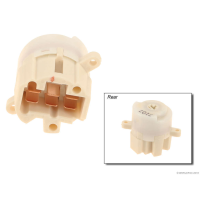
- Failing Ignition Switch (Less Common) — The ignition switch sends the 'key-on' signal to the relays that power up various control modules. Worn internal contacts fail to send a consistent signal, causing a module to lose power intermittently.
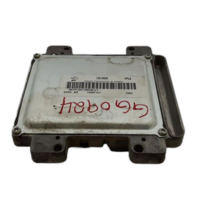
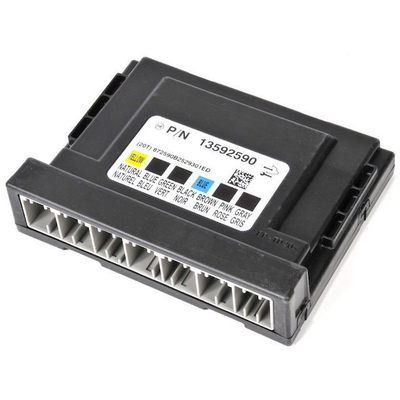
- Defective Control Module (Rare) — An internal hardware failure within the module's power circuit is the least likely cause. Always exhaust wiring, ground, and relay diagnostics before condemning an expensive computer module.
Symptoms
- Engine Stalls or Will Not Start — If the ECM, Fuel Pump Control Module, or Transmission Control Module loses power, the engine stalls while driving or cranks endlessly without starting.
- Cascade of Dashboard Warning Lights — The Check Engine Light illuminates immediately, often accompanied by a cascade of other warnings like 'Service ESC', 'Service Transmission', or 'Service Parking Brake' as multiple systems lose communication with the offline module.
- Failure of Electronic Accessories — Power windows, the radio, interior lights, and power door locks stop working entirely. This confirms the Body Control Module (BCM) lost its ignition power signal.
- Intermittent Instrument Cluster Reboots — Warning lights flicker on and off, or the entire instrument cluster reboots while driving, pointing to an intermittent wiring short or a failing ignition switch.
Diagnostic Flowchart
Tap your situation to follow the diagnostic path that matches what you're seeing on this code.
Common Fixes & Costs
- Repairing a Damaged Wire or Connector
— Parts: $10-$50, Labor: $150-$450, ~2.0 hr book time
(Intermediate)
: OEM - Replacing a Faulty Relay or Blown Fuse — Parts: $10-$30, Labor: $50-$100, ~0.5 hr book time (DIY)
- Professional Diagnostic Scan — Parts: $0, Labor: $150-$200, ~1.0 hr book time (Professional)
- Replacing the Underhood Fuse Block — Parts: $200-$600, Labor: $150-$300, ~1.5 hr book time (Professional)
- Replacing a Control Module (ECM, BCM, etc.)
— Parts: $400-$1200, Labor: $250-$400 (including programming), ~2.0 hr book time
(Professional)
: OEM
: OEM
: OEM
DIY vs Professional
- Replacing a Faulty Relay or Blown Fuse 🟢 Beginner
Tools: Fuse puller, owner's manual. - Repairing a Damaged Wire or Connector 🟢 Beginner
Tools: Multimeter, wire strippers, wire cutters, heat shrink tubing, soldering iron or quality crimp connectors. - Replacing the Underhood Fuse Block 🟢 Beginner
Tools: Socket set, torque wrench, plastic trim removal tools. - Replacing a Control Module (ECM, BCM, etc.) 🟢 Beginner
Tools: Socket set, trim removal tools, professional scan tool with manufacturer-specific software.
Used vs. New Parts: Buying Guide
When a used part is worth it: For older, high-mileage vehicles where a new OEM module is cost-prohibitive. A used module from a reputable dismantler works if you have access to programming services.
Donor-vehicle mileage cap: roughly under 100000 miles for the part to have meaningful remaining life.
Donor quality checklist:
- Verify the part number matches your original module EXACTLY.
- Purchase from a professional dismantler offering a 30-90 day warranty.
- Visually inspect connector pins for corrosion or physical damage.
- Avoid parts from flood-damaged vehicles.
Decision logic:
- If The part requires 'Component Protection' or VIN-locking (Common on VW, GM, Ford) → Buy a new OEM part. Used modules are often impossible to program without specialized 'cloning' services.
- If Vehicle is less than 10 years old and the part is under $500 new → Buy new for the longer warranty and guaranteed compatibility.
- If Budget is the primary concern and you accept the risk of a shorter lifespan → Buy a tested, warrantied used module, factoring in professional programming costs.
Warranty tradeoff: Used parts have a 30-90 day warranty. New aftermarket parts carry a 1-year warranty. New OEM parts have a 1-2 year warranty.
Worst-case if a used part fails: $300-$600 if a used module is dead on arrival, requiring repeat labor and programming.
What Happens If You Wait — Timeline
- 0-1 Month: Intermittent fault. A warning light flickers over bumps. The U3023 code stores in history. A loose connection or slightly chafed wire is the root cause. (MPG impact: 0%% · Added cost: $0)
- 1-3 Months: Frequent intermittent failure. The Check Engine Light stays on. The vehicle occasionally fails to start on the first crank, but a restart fixes it. (MPG impact: 0%% · Added cost: $150 (Towing fee if it fails to restart))
- 3-6 Months: Hard failure. The vehicle stalls while driving or enters a persistent no-start condition. The chafed wire breaks completely or shorts to ground, blowing a fuse. (MPG impact: N/A (Vehicle is disabled)% · Added cost: $200-$500 (Cost of diagnosing and repairing the wiring fault, plus towing))
- 6+ Months (If ignored/improperly fixed): Collateral damage. Repeated voltage spikes from the short circuit fry the delicate internal circuits of the ECM or BCM. (MPG impact: N/A% · Added cost: $800-$1600 (Cost of wiring repair PLUS a new programmed module))
Cost of Not Fixing It
- Immediate: Catastrophic engine stall while driving, creating a severe safety hazard. (Added cost: Towing fees ($150-$300) and potential accident costs.)
- 1-30 Days: Intermittent power loss and voltage spikes stress other electronic components. (Added cost: $0, but secondary damage risk increases.)
- 1-6 Months: An ignored wiring short causes an internal failure in the connected control module, turning a $300 wiring repair into a $1500 module replacement. (Added cost: $800-$1600)
Diagnosis Steps
- Check for TSBs and Recalls
Search for Technical Service Bulletins (TSBs) related to your vehicle's make, model, and year. Manufacturers release bulletins for known wiring chafe points that cause a U3023 code. For example, GM TSB #24-NA-124 is mandatory reading for diagnosing this code on Silverado/Sierra trucks.
Tools: Online Access or Dealer Inquiry (Beginner) - Perform a Full Vehicle Scan
Use a professional-grade OBD-II scanner to read codes from all modules. Note which modules are not communicating. On GM vehicles, read the 2-digit symptom byte (e.g., U3023 04) for specific fault information.
Tools: Professional OBD-II Scanner (Beginner) - Inspect Fuses and Relays
Locate the fuse box and visually inspect all fuses related to the ignition, BCM, and ECM. If a fuse is blown, trace the circuit for a short. Swap the relevant power relay with an identical known-good one (like the horn relay) to test for relay failure.
Tools: Owner's Manual, Fuse Puller (Beginner) - Check Battery and Main Grounds
Ensure the battery reads above 12.4 volts. Use a multimeter to perform a voltage drop test on the main ground connections from the battery to the chassis and engine block. Clean any connections showing high resistance.
Tools: Multimeter, Socket Set, Wire Brush (Intermediate) - Visually Inspect Wiring Harnesses
Inspect areas where the harness runs near hot exhaust parts, sharp metal edges, or moving components. Look for rubbed-through insulation or pinched wires.
Tools: Flashlight, Inspection Mirror (Intermediate) - Targeted Pinpoint Voltage Testing
Identify the 'Ignition Power' wire at the affected module's connector using a wiring diagram. With the key 'ON', use a multimeter to check for 12V+. A reading below 9V confirms a critical power loss in that specific circuit.
Tools: Multimeter, Vehicle-Specific Wiring Diagram (Advanced) - Perform a Voltage Drop Test
If voltage at the module is low, place one multimeter lead on the power source (fuse output) and the other on the module's power input pin. A reading above 0.5 volts indicates excessive resistance in the wire that must be repaired.
Tools: Multimeter, Wiring Diagram (Advanced) - CAN Bus Network Resistance Check
Disconnect the battery. Measure resistance between CAN High (Pin 6) and CAN Low (Pin 14) at the OBD-II port. A healthy network reads 60 ohms. 120 ohms indicates a break; 0 ohms indicates a short.
Tools: Multimeter, OBD-II Pinout Diagram (Advanced) - CAN Bus Network Voltage Check
Reconnect the battery and turn the ignition 'ON'. Measure DC voltage. CAN High (Pin 6) to ground should be ~2.6V. CAN Low (Pin 14) to ground should be ~2.4V. Deviations indicate a module or wiring fault.
Tools: Multimeter, OBD-II Pinout Diagram (Advanced) - Fuse Block Torque and Integrity Check
On GM trucks, verify the Underhood Fuse Block bolts are torqued to exactly 53 lb-in (6 Nm). Inspect for corrosion or heat damage at the fuse block terminals.
Tools: Torque Wrench (inch-pounds), Socket Set (Advanced) - Network Isolation Test
For a completely dead network, disconnect all modules from the network splice pack. Reconnect each module one by one while monitoring network voltage. The module that crashes the voltage is the faulty unit.
Tools: Oscilloscope or Multimeter, Wiring Diagram (Professional)
When This Code Triggers (Freeze-Frame Conditions)
- Module Voltage: < 9.0V (The code sets when a module's ignition-on voltage drops critically low.)
- Ignition Status: On/Run or Start (The fault occurs when the key turns and power is expected but not received.)
- Vehicle Speed: 0 mph or 35-65 mph (The fault occurs at key-on (no-start) or during steady driving when a wire chafes through, causing a stall.)
- Communicating Modules: N-1 (Other network modules report a 'Lost Communication' code for the failed module, confirming it is offline.)
Related Codes
- P2534 — 'Ignition 1 Switch Circuit Low Voltage'. This code indicates the primary power circuit from the ignition switch is failing. Finding P2534 with U3023 strongly points to a wiring, fuse, or relay issue.
- U0100 — 'Lost Communication With ECM/PCM'. If the ECM loses power and sets U3023 internally, all other modules set U0100 because they cannot communicate with the ECM.
- U0140 — 'Lost Communication With Body Control Module'. If the BCM loses power and sets U3023, the ECM and other modules set U0140. This confirms a BCM power failure.
- P0700 — 'Transmission Control System Malfunction'. If the TCM loses its ignition power signal, it stores U3023 and sets P0700 to illuminate the check engine light. Frequently seen on GM trucks.
Climate & Environmental Factors
- Salt Belt Regions: Road salt accelerates the corrosion of wiring, ground straps, and fuse block terminals, creating the high resistance that triggers a U3023 code.
- High Humidity / Heavy Rain: Moisture bypasses damaged weather seals and enters electrical connectors and modules, causing immediate short circuits.
- Extreme Cold: Cold temperatures reduce battery voltage. This lower system voltage exposes pre-existing weaknesses in a circuit, dropping module voltage below the 9V threshold.
How to Talk to a Mechanic About This Code
Say this: "I have a U3023 code causing stalling and electrical issues. Please check for relevant TSBs, inspect fuses and relays, and perform voltage drop tests on the affected module's power and ground circuits before quoting a module replacement."
This signals you know the code relates to a power supply issue and that the cause is usually wiring or a relay. It directs the shop to perform a systematic electrical diagnosis rather than jumping to an expensive module replacement.
Avoid saying:
- 'Just fix my check engine light.'
- 'My car is acting weird, I think it's the computer.'
- 'The internet said to replace the BCM.'
Questions to ask before authorizing the repair:
- Did you find a TSB that applies to this issue?
- What was the voltage reading at the module's power and ground pins?
- Can you show me the damaged wire or the failed relay?
- If a module needs replacement, is programming included in the quote?
- What is the warranty on this specific repair?
Where to Take It: Dealer vs Independent vs Chain
- Dealer:
Recommended if the issue points to a known TSB or requires module programming.
Best for: Vehicles under warranty., Known manufacturer-specific issues covered by a TSB., Repairs requiring module replacement and proprietary software programming.
Downsides: Highest labor rates., Often quicker to replace a whole harness rather than perform a detailed wiring repair. (Typical cost: +50% vs. baseline) - Independent Shop:
Best fit for most U3023 scenarios, as the issue is typically a wiring or relay fault. An auto electric specialist is ideal.
Best for: Out-of-warranty vehicles., Diagnosing and repairing wiring, fuse, relay, and ground issues., Owners looking for better pricing and personalized service.
Downsides: Quality varies; ensure the shop specializes in electrical diagnostics., May lack the expensive tools to program a new module. (Typical cost: +0% vs. baseline) - Chain Shop:
AVOID. This code requires specialized electrical skills beyond the scope of chain shops.
Best for: Simple jobs like battery replacement.
Downsides: Technicians lack training for complex electrical or network diagnosis., High pressure to sell parts; frequently misdiagnoses the issue as a bad battery. (Typical cost: -10% vs. baseline)
When to Walk Away From the Repair
If the estimated repair cost exceeds 40-50% of the car's private-party value, evaluate your options.
- Car worth $5000, fix is $2500: Walk away. The repair cost is 50% of the car's value, and other electrical problems may be lurking.
- Car worth $25000, fix is $1500: Fix it. The repair cost is 6% of the vehicle's value and is necessary for safe operation.
- Car worth $3500, fix is $400: Fix it. A $400 wiring repair restores significant value and function to the car.
What Scan Tool You Need for This Code
Minimum: A scanner that reads codes from ALL vehicle modules (BCM, ECM, TCM) and displays live voltage data.
A basic $20 code reader only checks engine codes and will not see a U-code stored in the BCM. You must know WHICH module is setting the code.
Budget: Ancel BD310 or Motopower MP69033 (~$60) — Reads codes from multiple systems and displays live voltage data, the bare minimum needed to confirm module voltage drops.
Mid-range: Innova 5610 or Foxwell NT510 Elite (~$350) — Offers full-system scans, reads manufacturer-specific codes, and provides limited bi-directional controls for electrical diagnosis.
Professional: Autel MaxiCOM MK808 or Launch X431 CRP919XBT (~$450-800) — Provides full bi-directional control to command relays and components, isolating faults in power circuits. Performs module programming.
Rent vs buy: Buy. Free rental scanners at auto parts stores are basic code readers that cannot perform the required all-module scan.
How to Clear the Code After You Fix It
- Use a professional OBD-II scan tool to clear all DTCs from all modules.
- Do not disconnect the battery, as it clears all learned data.
- Perform a complete OBD-II drive cycle to allow readiness monitors to run.
Drive cycle (~30 minutes): Start with a cold-soak (engine off for 8+ hours). Start the engine and idle for 3 minutes. Drive a mix of city stop-and-go and highway speeds (steady 55 mph for 5 minutes). Coast down without braking to meet enabling criteria for all emissions monitors.
Readiness monitors affected: All non-continuous monitors (Catalyst, EVAP, O2 Sensor) reset to 'Not Ready'.
Before emissions retest: drive at least 100 miles to fully set monitors.
Watch out for:
- Clearing the code resets all readiness monitors to 'Not Ready', causing an immediate emissions test failure.
- The code returns immediately if the underlying electrical short or bad relay is not repaired.
- Highway driving alone is insufficient; a varied drive cycle is required to set all monitors.
Will This Fail Emissions / State Inspection?
Yes — this code typically fails an OBD-II emissions inspection.
- California: An illuminated Check Engine Light is an automatic failure. After repairs, monitors must be 'Ready', requiring 100+ miles of driving.
- New York: Fails the NYVIP3 OBD-II inspection if the Check Engine Light is on. 2001+ vehicles are allowed only one 'Not Ready' monitor.
- Texas: An active U3023 code results in an automatic failure. Readiness monitors must be set before passing a re-test.
Most Commonly Affected Vehicles
- Chevrolet Silverado 2500/3500 (2020-2024) — Highly prone to this code. GM TSB #24-NA-124 details how the engine wiring harness chafes against brackets on the driver's side, causing stalls.
- GMC Sierra 2500/3500 (2020-2024) — Shares the same platform and wiring harness chafing issues as the Silverado. U3023 paired with P2534 guarantees a wiring fault.
- Volkswagen Jetta, Golf, Passat, Atlas (2005-2019) — Known for BCM failures caused by water intrusion from clogged sunroof drains or leaking windshield cowls.
- Ford F-150 (2021-2023) — Prone to poor electrical connections and module communication failures. TSB 23-2146 addresses similar U-codes caused by poor cable connections.
- Dodge / Ram 1500 / 2500 (2019-2024) — Experiences CAN bus issues and poor grounds. A bad ground pin at a module connector is a frequent cause of stalling and accessory loss.
- Hyundai Elantra (2021-2023) — Owners report electrical faults stemming from module and communication problems, particularly with the Integrated Thermal Management module.
- Kia Forte (2017-2023) — Experiences no-start conditions and infotainment screen failures after jump-starting due to ECU or BCM power supply faults.
- Subaru Outback / Legacy (2020-2022) — A TSB exists for communication faults between the Cockpit Control Module and Telematics module caused by poor connector seating.
Manufacturer-Specific Notes
- General Motors: On 2020+ HD trucks, U3023 is a critical code indicating a rubbed-through wiring harness. Technicians use a GDS2 scan tool to read the 2-digit symptom byte (e.g., '04' for System Internal Failures) to narrow the diagnosis.
- Ford: Multiple U-codes appearing simultaneously point to a weak battery, a bad ground, or a software glitch. Always check battery health and apply TSB software reflashes before diagnosing wiring.
- Volkswagen: VW uses a 'Component Protection' system. A replacement BCM will not function until it is programmed and adapted to the vehicle's VIN online by a dealer or specialist.
- Dodge / Ram: The Totally Integrated Power Module (TIPM) is a common failure point. Technicians check main power and ground connections at the TIPM first, as poor grounds are the primary root cause for U-codes.
Real Owner Stories
2021 Chevy Silverado 2500 HD at 45K miles
The truck stalled suddenly on the highway. After towing to the dealer, it cranked but would not start. The dash displayed 'Service Transmission' and the Check Engine Light.
What they tried:
- The dealer performed a full vehicle scan, revealing codes U3023, P2534, and P0700.
Outcome: Following GM TSB #24-NA-124, the technician inspected the engine wiring harness on the driver's side. The harness had rubbed through its insulation against the ECM bracket, causing a dead short. The dealer repaired the damaged wires and rerouted the harness with protective sleeves under warranty. The truck runs perfectly 10,000 miles later.
Lesson: On modern GM HD trucks, the combination of U3023, P2534, and P0700 guarantees a wiring harness chafing issue, not a failed module. Mentioning the TSB to your service advisor speeds up diagnosis.
2013 VW Passat at 110K miles
After a heavy rainstorm, the driver's side floor mat was damp. The car started, but the radio, power windows, and interior lights were dead. A 'Service BCM' warning appeared.
What they tried:
- The owner replaced fuses for the affected accessories, but all were intact.
- An independent shop scanned the car, finding U3023 in the BCM and U0140 (Lost Communication with BCM) in other modules.
Outcome: A clogged sunroof drain caused water to run down the A-pillar directly onto the BCM, shorting it out. Replacing and programming the BCM cost $900. The technician cleared the clogged drain using compressed air to prevent recurrence.
Lesson: Strange electrical issues after rain strongly indicate water intrusion. Fixing the leak is mandatory before replacing the damaged electronics.
2019 Ram 1500 at 70K miles
The truck experienced intermittent no-start conditions. It clicked once, but the engine wouldn't turn over. All lights worked. The dealer couldn't replicate the problem.
What they tried:
- The owner replaced the battery, but the problem returned.
- A second shop found a stored U3023 in the BCM history and performed a voltage drop test.
Outcome: The voltage drop test revealed high resistance on the main ground strap from the engine block to the chassis due to hidden corrosion. The technician cleaned the contact points and re-secured the strap for $150. The intermittent no-start issue was completely resolved.
Lesson: Intermittent electrical problems are frequently caused by bad grounds. Insist on a voltage drop test of the main power and ground circuits before replacing parts.
2017 Kia Forte after aftermarket remote start installation
Two weeks after installing an aftermarket remote starter, the check engine light illuminated and the infotainment screen randomly rebooted.
What they tried:
- The owner pulled code U3023 at an auto parts store.
- The owner returned the car to the audio shop.
Outcome: The installer used a low-quality 'T-tap' connector to pull ignition power, cutting through wire strands and creating high resistance. This caused voltage drops that triggered the U3023 code. The installer soldered the connection properly, resolving the issue at no charge.
Lesson: Improperly installed aftermarket electronics are a primary cause of U3023. If a fault appears shortly after installation, the new wiring is the culprit.
How to Prevent This Code From Triggering
- Periodically clean sunroof and cowl drains (Once per year (Fall)) — Debris clogs drains, causing water to overflow into the cabin and drip directly onto the BCM or fuse box, resulting in severe corrosion and short circuits.
- Apply dielectric grease to major connectors (When performing other under-hood maintenance) — Dielectric grease seals electrical connectors from moisture and oxygen, preventing pin corrosion that causes high resistance and voltage drops.
- Inspect and clean main battery and ground connections (Every oil change) — Removing corrosion from battery terminals and ground straps ensures modules receive stable voltage and a solid ground reference.
- Secure and inspect wiring harnesses (When working in the engine bay) — Securing harnesses with clips and zip ties prevents vibration from rubbing wires against sharp metal brackets, avoiding short circuits.
- Wash the underbody after winter storms (Seasonally (in Salt Belt regions)) — Removing road salt from the undercarriage slows down the corrosion of frame rails, ground points, and exposed electrical connectors.
Frequently Asked Questions
Can a bad battery cause a U3023 code?
Yes, a weak battery causes system voltage to drop during startup, triggering a U3023 code. However, this code specifically points to a failure in a single ignition circuit, not a system-wide issue. Test the battery first; if it reads above 12.4V, the problem lies within the specific circuit.
What are the most common misdiagnosis mistakes for U3023?
The most common mistake is replacing the expensive control module without performing proper electrical checks. The problem is usually a cheaper fix, like a chafed wire, bad ground, or faulty relay. Never replace a blown fuse without finding the short circuit that caused it.
Can an aftermarket remote starter or alarm cause a U3023 code?
Yes. Improperly installed aftermarket devices are a frequent cause of communication and power-related trouble codes. If wired incorrectly or interfering with the CAN bus, they cause voltage drops that trigger a U3023 code.
Is it safe to drive my car with code U3023?
No. If the module losing power controls the engine or transmission, your vehicle stalls unexpectedly in traffic. This is a major safety hazard, so towing is the safest option.
How much does it cost to fix code U3023?
Costs range from $150 for a simple relay replacement to $1,600 for a new programmed control module. A standard diagnostic fee is $150-$200. Repairing a damaged wire, the most common fix, typically costs $200-$500.
I replaced the fuse and it blew again. What now?
A repeatedly blowing fuse indicates a persistent short circuit where the power wire is touching a metal ground. Do not install a larger fuse, as this creates a severe fire hazard. You must trace the wire to find and repair the damaged insulation.
What is a 'symptom byte' on a GM vehicle?
On GM vehicles, a professional scan tool reads a 2-digit code following the main DTC (e.g., U3023 04). This 'symptom byte' provides specific fault information, such as '04' for System Internal Failures. This helps technicians narrow down the diagnostic path significantly.
Can a bad ground connection cause U-codes?
Yes. A loose, corroded, or broken ground strap prevents a module from powering up or communicating, even if the power wire is intact. The module requires a complete circuit, and a bad ground absolutely triggers a U3023 code.
Why did my car stall without a check engine light at first?
An electrical fault can be so sudden that the module responsible for the check engine light (usually the ECM) loses power instantly. The engine stalls, but the module lacks the power to store a code or illuminate the light immediately. The code is then stored during the next startup attempt.
Key Takeaways
- Code U3023 indicates a control module is receiving less than 9 volts on its ignition power circuit, frequently causing sudden engine stalls or no-start conditions.
- Inspect wiring harnesses and test the 12V power relays before replacing any parts; chafed wires and blown fuses cause over 80% of U3023 faults.
- Do not drive a vehicle with an active U3023 code, as a sudden loss of Engine Control Module (ECM) power will shut off the engine at highway speeds.
- Check for manufacturer Technical Service Bulletins (TSBs) first; for example, 2020-2024 GM HD trucks have a known wiring chafe issue (TSB #24-NA-124) that triggers this exact code.
- Never replace a control module without a professional diagnosis; new modules cost $800 to $1,600 and require dealer-level software programming to function.
Helpful Videos
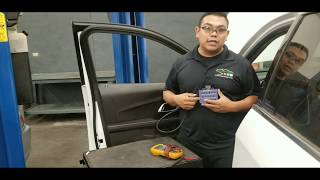
Shop the Parts Behind U3023
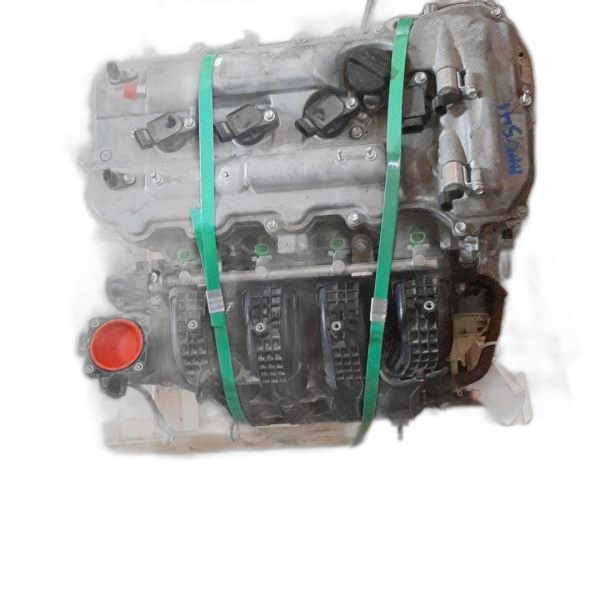
Below are the parts most often responsible for code U3023, ranked by how frequently each one is the actual culprit (per the diagnosis above). Tap any to see what we have for your vehicle.





The information in this article is provided for general reference and educational purposes only. Vehicle specifications, procedures, and part compatibility can vary by production date, trim level, and region. Always consult your vehicle's factory service manual and verify part numbers before purchasing or performing repairs. Safety-critical components such as airbags, seat belts, and braking systems should be installed by a qualified professional.
- 🧭 Diagnostic Flowchart
- 🎬 Helpful Videos
- 🛍️ Shop This Part
- What Does U3023 Mean?
- Can I Drive With U3023?
- Common Causes
- Symptoms
- Common Fixes & Costs
- DIY vs Professional
- Used vs. New Parts: Buying Guide
- What Happens If You Wait — Timeline
- Cost of Not Fixing It
- Diagnosis Steps
- When This Code Triggers (Freeze-Frame Conditions)
- Related Codes
- Climate & Environmental Factors
- How to Talk to a Mechanic About This Code
- Where to Take It: Dealer vs Independent vs Chain
- When to Walk Away From the Repair
- What Scan Tool You Need for This Code
- How to Clear the Code After You Fix It
- Will This Fail Emissions / State Inspection?
- Most Commonly Affected Vehicles
- Manufacturer-Specific Notes
- Real Owner Stories
- 2021 Chevy Silverado 2500 HD at 45K miles
- 2013 VW Passat at 110K miles
- 2019 Ram 1500 at 70K miles
- 2017 Kia Forte after aftermarket remote start installation
- How to Prevent This Code From Triggering
- Frequently Asked Questions
- Can a bad battery cause a U3023 code?
- What are the most common misdiagnosis mistakes for U3023?
- Can an aftermarket remote starter or alarm cause a U3023 code?
- Is it safe to drive my car with code U3023?
- How much does it cost to fix code U3023?
- I replaced the fuse and it blew again. What now?
- What is a 'symptom byte' on a GM vehicle?
- Can a bad ground connection cause U-codes?
- Why did my car stall without a check engine light at first?
- Key Takeaways
- 🎟️ Get 5% Off