

OBD-II Code U3033: Module Security Communication Error
What U3033 means, why it triggers, and how to fix it
- Code U3033 indicates a missing or invalid security certificate in a control module, disabling features like Wi-Fi or preventing the engine from starting.
- Do not replace hardware immediately; over 80% of U3033 codes on 2018+ vehicles are resolved with a 1-hour dealer software update costing $150 to $300.
- Check if the code is 'Stored' rather than 'Active'; a stored U3033 code often self-clears after 40 ignition cycles following a successful Over-The-Air (OTA) update.
- Test your battery first, as a cranking voltage drop below 10 volts corrupts module memory and triggers this security lockout.
- Never buy a used security module (like a BCM or SGW) to fix this code, as they are VIN-locked and cannot be reprogrammed to a different vehicle.
What Does U3033 Mean?
Code U3033 means a critical computer in your car, like the Body Control Module (BCM) or Security Gateway Module (SGW), has a missing or invalid digital 'handshake' known as a security certificate. This certificate proves the module is a trusted part of the vehicle's network. Without it, the module is blocked from communicating, which disables specific features or prevents the engine from starting.
Technical definition: Control Module Security Certificate Missing/Invalid. This indicates that a control module's security credentials, required to authenticate and communicate on the vehicle's network, are missing or corrupted.
Can I Drive With U3033?
Yes, But With Caution. Drivability depends entirely on the failed module. If the code triggers in the Security Gateway (SGW), the car drives normally but loses features like Wi-Fi or GPS. If the fault hits the Body Control Module (BCM) or Immobilizer, the anti-theft system activates and prevents the engine from starting. The primary risk is being stranded if the car refuses to restart at your next stop.
Common Causes
- Software Glitch or Failed Over-The-Air (OTA) Update (Very Common) — On modern vehicles, this code is triggered by a software bug or an incomplete wireless update to the Security Gateway (SGW). The module's software becomes corrupt or awaits a pending update, invalidating its security certificate until a dealer successfully updates it.
- Low Battery Voltage (Common) — A weak battery causes voltage to drop below 10 volts when you start the car. This interrupts a module's power-on sequence, corrupting the memory where the security certificate is stored and triggering the code.
- Improper Module Programming After Replacement (Common) — If a control module is replaced, it must be electronically programmed to the specific vehicle's VIN. Skipping this step immediately triggers a U3033 code because the module's certificate does not match the vehicle's security system.
- Internal Control Module Failure (Less Common) — The internal memory chip within the control module fails due to age, manufacturing defects, or moisture damage. The module permanently loses its ability to store its security certificate, requiring a complete replacement.
- Failed Cellular/Satellite Antenna (Less Common) — For issues caused by a failed OTA update, the root cause is sometimes a faulty 'sharkfin' antenna. The module tries to download a new certificate but fails due to a dead connection, eventually triggering the code.
- Wiring Harness or Connector Damage (Rare) — Damage to the vehicle's communication wiring (CAN bus) or corrosion in a connector prevents the security certificate signal from being sent or received. The module is fine, but the network cannot verify its identity.
- Module Clock/Time Mismatch (Rare) — Security certificates have expiration dates. If the internal clock of a module resets due to power loss, it perceives a valid certificate as expired, causing the network to reject it.
Symptoms
- Loss of specific features (Wi-Fi, GPS, Alexa, etc.) — The car drives normally, but features relying on the affected module, like in-car Wi-Fi, Alexa, or live traffic updates, are disabled.
- 'Anti-Theft System Fault' or 'uConnect Box Needs Service' Message — The instrument panel or infotainment screen displays a specific warning message indicating a fault with the security system or telematics unit.
- Engine will not start or crank — The anti-theft system (immobilizer) activates because it cannot verify the security of a critical module, preventing the starter from engaging.
- Keyless entry and remote start inoperative — The functions on your key fob, such as locking/unlocking doors or remote starting the engine, stop working entirely.
- Flashing security or anti-theft light — The dashboard displays a flashing light, often shaped like a key or a car with a lock, indicating an active security system lockout.
Diagnostic Flowchart
Tap your situation to follow the diagnostic path that matches what you're seeing on this code.
Common Fixes & Costs
- Module Software Update / Reprogramming — Parts: $0, Labor: $150-$300, ~1.5 hr book time (Professional)
- Battery Replacement
— Parts: $150-$450, Labor: $50-$100, ~0.5 hr book time
(DIY)
Ram 1500 (2022): OEM [{'part_number': '68372205AQ', 'brand': 'Mopar'}] (Alt: {"part_number": "BAT 9894R", "brand": "NAPA The Legend (AGM, 800 CCA)"}, {"part_number": "H7-AGM", "brand": "DieHard Platinum (AGM, 850 CCA)", "price_comparison": "Comparable in price to OEM, a)
Ford F-150 (2019): OEM [{'part_number': 'BAGM-94RH7-800', 'brand': 'Motorcraft'}] (Alt: {"part_number": "H7-AGM", "brand": "Duralast Platinum (AGM, 850 CCA)"}, {"part_number": "94RPLT", "brand": "Super Start Platinum (AGM, 800 CCA)"}) - Control Module Replacement and Programming
— Parts: $600-$900, Labor: $200-$300, ~2 hr book time
(Professional)
Ram 1500/2500 (2022-2026): OEM [{'part_number': '68541056AA', 'brand': 'Mopar'}, {'part_number': '68624552AA', 'brand': 'Mopar (latest revision)'}] (Alt: {"part_number": "Z_SGW", "brand": "ZAutomotive (Bypass Module)", "price_comparison": "Significantly cheaper ($70-$95), b)
Jeep Grand Cherokee L / Wagoneer (2022-2025): OEM [{'part_number': '68410619AG', 'brand': 'Mopar'}, {'part_number': '68624552AA', 'brand': 'Mopar (latest revision)'}]
Ford F-150 (2018-2024): OEM [{'part_number': 'RU6T-14H474-BAE', 'brand': 'Ford / Motorcraft'}] - Wiring Harness or Connector Repair — Parts: $20-$100, Labor: $150-$400, ~2.5 hr book time (Professional)
- Module Repair (Component Level) — Parts: $50-$150, Labor: $300-$500, ~3 hr book time (Professional)
DIY vs Professional
- Module Software Update / Reprogramming — Beginner: No
Tools: OEM-specific diagnostic tool (e.g., wiTECH, IDS), J2534 Pass-Thru device, stable power supply (13.2V+), laptop, OEM software subscription. - Control Module Replacement and Programming — Beginner: No
Tools: Basic hand tools for removal/installation, plus all tools required for reprogramming. - Battery Replacement — Beginner: Yes
Tools: Wrench set, terminal cleaner, memory saver (optional but recommended). - Wiring Harness or Connector Repair — Beginner: No
Tools: Multimeter, wiring diagrams, pin-out tools, wire strippers, soldering iron or quality crimpers.
Used vs. New Parts: Buying Guide
When a used part is worth it: For modern security-integrated control modules like an SGW or BCM, buying used is never a good idea. These modules are VIN-locked to the original vehicle and cannot be reprogrammed. A used module only makes sense as a last resort for older, discontinued vehicles where specialist cloning services exist.
Donor-vehicle mileage cap: roughly under 20000 miles for the part to have meaningful remaining life.
Donor quality checklist:
- Match the part number exactly, including any hardware and software revision numbers.
- Verify the seller has a return policy, as there is a high probability the part cannot be programmed to your vehicle.
- Avoid modules from flood-damaged or high-impact collision vehicles due to risk of internal damage.
Decision logic:
- If The vehicle is from 2010 or newer and the part is a security-related module (BCM, SGW, ECU, Immobilizer) → Buy a new OEM part. A used part will fail to program, wasting time and money.
- If The repair is a software reflash, not a hardware replacement → This guide does not apply; software must be sourced from the manufacturer.
- If The vehicle is very old and the part is discontinued → A used part is the only option, but budget for specialist services to 'clone' the data from your old module to the used one.
Warranty tradeoff: Used parts from a salvage yard typically have a 30-day warranty at best, which expires before programming issues are discovered. New OEM parts installed by a dealer carry a 12-month/12,000-mile or greater warranty.
Worst-case if a used part fails: $500-$1000 (Cost of the used part + non-refundable labor for installation and failed programming attempt + cost of towing to a dealer to do the job correctly)
What Happens If You Wait — Timeline
- 0-1 month: Code is set as 'Stored' or 'Active' in a non-critical module like the SGW. The only symptom is the loss of minor features like the Wi-Fi hotspot. The Check Engine Light is NOT on. (MPG impact: 0%% · Added cost: $0)
- 1-3 months: An intermittent fault in a critical module (BCM, Immobilizer) begins. The vehicle occasionally fails to start, but works on the second try. The security light flashes intermittently. (MPG impact: 0%% · Added cost: $75-$200 (Risk of needing a tow truck if the intermittent failure becomes permanent))
- 3-6 months: The fault becomes a hard failure. If in the BCM, the car will not start at all. If in the SGW, other modules are unable to communicate, masking other potential DTCs. (MPG impact: 0%% · Added cost: $350-$600 (Cost of towing, plus professional diagnosis. The initial software fix is no longer an option if the module fails completely.))
- 6+ months: Driving with a disabled network gateway (SGW) leads to un-diagnosed secondary problems. A failing transmission sensor's trouble code is not reported, leading to transmission damage. (MPG impact: 0-15% (depending on masked secondary faults)% · Added cost: $1000-$3000+ (Cost of repairing major components that failed because their warning codes were blocked))
Cost of Not Fixing It
- Immediate: If the fault is in a critical module (BCM, Immobilizer), the vehicle does not start, leaving you stranded. If the fault is in a non-critical module (SGW), only minor features like Wi-Fi are lost. (Added cost: $75-$200 (for a tow truck and initial diagnosis if stranded))
- 1-6 months: The risk of being stranded increases. An intermittent fault becomes permanent, causing the anti-theft system to engage unexpectedly and prevent the car from starting. (Added cost: Negligible, but high cost of inconvenience and risk.)
- 6+ months: Ignoring a network communication fault masks other serious diagnostic codes. A module that is offline cannot report other potential issues with the systems it controls. (Added cost: $500-$2000+ (Potential for secondary, undiagnosed issues to cause more significant component damage))
Diagnosis Steps
- Check for Technical Service Bulletins (TSBs)
Search for TSBs for your vehicle's specific year and model related to code U3033. Manufacturers frequently release bulletins for this code with a known software update as the fix, explicitly warning against replacing hardware.
Tools: Internet Access, Vehicle VIN (Beginner) - Scan with a Professional Scan Tool
A basic code reader only shows the U-code. A professional scan tool is required to communicate with the specific module, determine if the code is 'Active' or 'Stored', and read related sub-codes. An AutoAuth subscription is required for newer vehicles.
Tools: Professional OBD-II Scan Tool, AutoAuth Subscription (Advanced) - Check Battery Health and Charge
Ensure the battery is fully charged. Resting voltage must be 12.4V-12.6V. Low voltage during startup (cranking voltage below 10V) is a primary cause of memory corruption, so load-test the battery before proceeding.
Tools: Multimeter, Electronic Battery Tester (Beginner) - Inspect Module Wiring and Connectors
Visually inspect the wiring harness and connectors going to the affected module (often the SGW or BCM). Look for corrosion, pushed-out pins, or physical damage. Check major body ground connections in the engine bay.
Tools: Flashlight, Trim Removal Tools (Intermediate) - Verify Module Power and Ground During Reprogramming
During a software flash, voltage stability is critical. Connect a high-quality battery maintainer. Use a multimeter to confirm the voltage at the module's power and ground pins remains between 13.2V and 13.5V.
Tools: Multimeter, Professional Battery Maintainer, Wiring Diagrams (Advanced) - Attempt Module Reprogramming (Reflash)
Using a manufacturer-specific tool, a technician reloads or updates the module's software. This is the most common repair. A stable power supply is mandatory during this process to prevent permanently bricking the module.
Tools: OEM Diagnostic Tool, Stable Battery Maintainer (Professional) - Perform CAN Bus Resistance Check
With the battery disconnected, measure the resistance between Pin 6 (CAN High) and Pin 14 (CAN Low) on the OBD-II port. A healthy network reads 60 Ohms. 120 Ohms indicates an open circuit; below 60 Ohms indicates a short.
Tools: Multimeter (Professional) - Verify Module Communication
If reprogramming fails, perform a network test to confirm if the module is communicating on the CAN bus. A 'Fail' result points toward a wiring issue or a completely dead module.
Tools: Professional OBD-II Scan Tool with Network Test Function (Professional) - Perform Module Isolation (Advanced)
If a network-wide communication failure exists, systematically unplug modules from the CAN bus. Place a 120-Ohm resistor across the CAN terminals in the unplugged connector. If network resistance returns to 60 Ohms, the unplugged module is the fault source.
Tools: Multimeter, 120-Ohm Resistor, Wiring Diagrams (Professional)
When This Code Triggers (Freeze-Frame Conditions)
- Module Voltage: 9.0V - 11.5V (During engine crank, a voltage drop from a weak battery corrupts a module's startup sequence.)
- Ignition Status: Key-On Engine-Off (KOEO) or Cranking (The fault occurs during the initial 'handshake' process when modules first power up and try to authenticate on the network.)
- Network Status: Module Not Responding / Security Lockout (Freeze frame shows the affected module is offline or that a security lockout is active, preventing communication.)
- Time Since Start: 0-5 seconds (The error is logged immediately upon startup as modules fail their security checks.)
Related Codes
- U3033-00 / U3033-01 — These are manufacturer-specific sub-codes. U3033-00 is a general failure, while U3033-01 points to a 'General Electrical Failure'. Both require the same diagnostic path.
- C221C-00 — This code means 'ECU Not Flashed or Incorrectly Flashed' and points to a failed software update. It confirms the module's software is corrupt, invalidating its security certificate (U3033).
- U0140 — This means 'Lost Communication With Body Control Module (BCM)'. If the BCM has an invalid certificate (U3033), it is kicked off the network, causing other modules to log U0140.
- U3033-87 — This sub-code means 'Missing Message'. The primary module did not receive the expected security handshake message, pointing to a wiring issue or an offline module.
Climate & Environmental Factors
- Low Temperatures: Cold weather significantly reduces a battery's cranking power. A weak battery lacks sufficient voltage to properly initialize control modules during a cold start, triggering a U3033 code.
- High Humidity: Prolonged exposure to high humidity accelerates corrosion on module connectors and wiring pins. This increased resistance disrupts CAN bus communication and causes security faults.
- Poor Cellular Reception: Parking in areas with poor cellular service prevents the vehicle from downloading necessary Over-The-Air (OTA) updates. This causes a pending update to time out and set a U3033 fault.
How to Talk to a Mechanic About This Code
Say this: "I have a U3033 code and I'd like to schedule a diagnostic. I understand this is often a software issue, so could you please start by checking for any related TSBs and determine if a module reflash is the recommended repair before quoting any hardware replacement?"
This signals you are an informed customer, directing the shop to the most common and least expensive fix first. It prevents them from immediately quoting an unnecessary and costly module replacement.
Avoid saying:
- 'My car won't start, can you fix it?'
- 'The security light is flashing.' (Too vague, invites a wide-ranging and expensive diagnostic process)
- 'Just do whatever it takes to fix it.'
Questions to ask before authorizing the repair:
- Did you check for TSBs related to U3033 for my vehicle's VIN?
- Is the code 'Active' or 'Stored'? If it's stored, should we wait to see if it clears itself?
- If you are recommending a module replacement, can you confirm that you already attempted a software reflash and it failed?
- Is this repair covered under the 3-year/36,000-mile basic warranty or any other extended warranty?
- What is your warranty on this specific repair, covering both parts and labor?
Where to Take It: Dealer vs Independent vs Chain
- Dealer:
Highly Recommended. The dealer is the most-equipped and most-likely to fix this problem correctly the first time, often with a simple software update.
Best for: Vehicles under warranty., This specific code (U3033), as they have proprietary software (wiTECH, IDS) and direct access to TSBs., Any repair requiring module programming or security access.
Downsides: Higher labor rates if the vehicle is out of warranty., May be less flexible on repair options. (Typical cost: +50% vs. baseline) - Independent Shop:
Use with caution. Only choose a high-end independent shop that can prove they have OEM-level diagnostic tools (e.g., a J2534 device with an active subscription) and experience with module flashing for your specific car brand.
Best for: Out-of-warranty vehicles for common repairs., Building a long-term relationship with a trusted mechanic.
Downsides: May not have the expensive, manufacturer-specific programming tools required for this code., Quality and expertise vary widely; must be vetted carefully. (Typical cost: +0% vs. baseline) - Chain Shop:
AVOID. Chain shops are not equipped to handle module security and programming issues. Taking your car here for a U3033 code wastes time and money.
Best for: Simple, routine maintenance like oil changes, tires, and batteries.
Downsides: Lack the specialized tools and training for complex electronic and network diagnostics., High likelihood of misdiagnosis, leading to unnecessary replacement of parts like the battery or starter. (Typical cost: -10% vs. baseline)
When to Walk Away From the Repair
If the estimated repair cost exceeds 40-50% of the car's private-party value, you should pause and evaluate whether to repair, sell as-is, or trade in.
- Car worth $40000, fix is $250: Fix it. The repair cost is a tiny fraction of the vehicle's value.
- Car worth $8000, fix is $1200: Fix it. The repair is significant but well below the 50% threshold and restores a critical function.
- Car worth $3000, fix is $1800: Walk away. The repair cost is over 50% of the car's value. The risk of other age-related failures is high.
What Scan Tool You Need for This Code
Minimum: A scanner that reads manufacturer-specific 'U' codes (network codes) and distinguishes between 'Active', 'Stored', and 'Pending' codes.
A basic $20 code reader only shows a generic powertrain code or fails to see the U3033 code entirely. It cannot tell you if the code is 'Active' or 'Stored'—a critical distinction for U3033, as a 'Stored' code often requires no action and clears itself.
Budget: BlueDriver Pro (~$100) — Connects to a smartphone app and reads enhanced codes (like B, C, and U codes) for many manufacturers. It shows the specific U3033 code and its status (Confirmed, Pending), helping you decide if a dealer visit is necessary.
Mid-range: Innova 5610 or Topdon ArtiDiag Pro (~$300) — These bidirectional scan tools offer full system diagnostics. While they cannot perform the dealer-level reflash needed to fix U3033, they perform diagnostic commands, view live data, and confirm if other modules on the network are communicating.
Professional: Autel MaxiCOM MK808 / Launch X431 CRP919XBT (~$450-800) — Offers dealer-level diagnostics, full bidirectional control, and advanced coding functions. These tools are the entry point for professional shops and perform nearly every diagnostic step short of the final software reflash.
Rent vs buy: For this code, renting a basic scanner from a parts store is not recommended as it lacks necessary detail. Buying a tool like the BlueDriver Pro offers the best value for diagnosing this and future issues.
How to Clear the Code After You Fix It
- Perform required software reflash or replace faulty hardware.
- Use a professional OBD-II scan tool to clear all Diagnostic Trouble Codes (DTCs).
- Perform a full network scan to confirm all modules are communicating.
- Complete a full drive cycle to allow readiness monitors to run.
Drive cycle (~30 minutes): After clearing codes, a universal drive cycle helps reset emissions monitors: 1) Cold start and idle for 2-3 minutes. 2) Drive in mixed city/highway conditions for 15-20 minutes, including steady-state cruising and acceleration/deceleration. 3) Allow the vehicle to cool completely.
Readiness monitors affected: Comprehensive Component Monitor, Misfire Monitor
Before emissions retest: drive at least 100 miles to fully set monitors.
Watch out for:
- Simply clearing the code with a scanner does not fix the underlying software or hardware issue, and the code returns immediately.
- On many Stellantis vehicles, an 'Active' code cannot be cleared until a software update is performed; a 'Stored' code clears on its own after 40 key cycles.
- Disconnecting the battery erases all readiness monitors, guaranteeing an emissions test failure until a full drive cycle is completed.
Will This Fail Emissions / State Inspection?
Yes — this code typically fails an OBD-II emissions inspection.
- California: An active U-code causes a smog check failure if it contributes to a lit Check Engine Light. If codes are cleared, all readiness monitors must be 'Ready' (except EVAP). If a Permanent DTC is stored, the vehicle must be driven through multiple drive cycles to verify the fix.
- New York: New York's NYVIP3 inspection includes an OBD-II scan. Any active code that causes an emissions increase or a lit Check Engine Light results in an automatic failure. After a repair, readiness monitors must be set to 'Ready'.
- Texas: In the 17 counties requiring emissions testing, the OBD-II test automatically fails if any emissions-related DTCs are active. A U-code often accompanies other codes that trigger a failure.
Most Commonly Affected Vehicles
- Ram 1500 / 2500 / 3500 (2022-2026) — Extremely common software glitch in the Security Gateway (SGW) module, related to failed Over-The-Air (OTA) updates. TSBs S2508000014 REV. A and S2008000164 apply.
- Jeep Grand Cherokee L / Wagoneer / Grand Wagoneer (2022-2025) — Known issue where the SGW module software needs an update, which must be performed by a dealer. TSBs 08-336-25 REV. B and 08-335-25 address this.
- Buick Enclave (2010-2019) — Older models suffer from failed OnStar modules or water intrusion in connectors causing network faults, while newer models have TSBs for module reprogramming.
- Chevrolet Equinox / Suburban (1999-2017) — A TSB exists for 2nd Gen Equinox models where water intrusion into a rear connector causes network codes. The U3033 code is also noted in older models like the 1999 Suburban.
- Ford F-150 (2018-2024) — Communication issues are traced to a faulty Smart Data Link Connector (the gateway module) or its associated wiring. Covered under the 3-year/36,000-mile warranty.
- Toyota / BMW GR Supra / Z4 (2019-2026) — These jointly-developed platforms share complex electronic modules. A security handshake failure requires specialized diagnostic tools that communicate with both BMW and Toyota systems.
- Nissan GT-R (2009-2024) — The complex, multi-module electronics and security systems set this code if a module's security handshake fails during startup or operation.
- Hyundai / Kia Various (2018-2024) — Modern vehicles with advanced driver-assistance systems (ADAS) and secured CAN gateway modules set this code, pointing to a BCM or gateway module software issue.
Manufacturer-Specific Notes
- Stellantis (Jeep, Ram, Chrysler): This code is almost always a software issue in the Security Gateway (SGW) module. TSBs explicitly warn against replacing hardware. The code may appear as 'stored' and clear itself after 40 key cycles.
- General Motors (Chevrolet, GMC, Buick): On GM vehicles, this fault is caused by an internal failure of the telematics (OnStar) module, or water intrusion into body harness connectors disrupting network communication.
- Ford: Network communication problems are traced back to a faulty gateway module (Smart Data Link Connector) or damage to its wiring connectors. This is covered under the standard bumper-to-bumper warranty.
- Toyota / BMW: On the shared Supra/Z4 platform, technicians must use BMW's ISTA diagnostic software in addition to Toyota's Techstream, as some modules are purely BMW-derived and require proprietary tools.
Real Owner Stories
2020 Ram 1500 with 5.7L eTorque
Vehicle suddenly died in the middle of the road. The owner had recently seen a software update notification.
Outcome: Dealer diagnosis confirmed a failed OTA update corrupted critical data, requiring the replacement of the alternator and the 48V eTorque battery. The truck was out of service for over 34 days.
Lesson: For critical software updates, letting a dealership perform the update prevents a catastrophic failure if the OTA process goes wrong.
2022 Ram 1500 Limited Longhorn
Persistent 'Uconnect Box requires service' message on every startup, along with a U3033 code.
Outcome: The actual fix was the replacement of the 'sharkfin' cellular/GPS antenna and its wiring harness, which had failed and prevented the OTA update from completing.
Lesson: Do not immediately replace expensive control modules. The root cause is often a cheaper component in the communication chain, like an antenna.
2015 Jeep Cherokee 2.4L
Complete no-start, no-crank condition. Turning the key resulted in no ignition or accessory power.
Outcome: The problem was only resolved by installing a brand new WIN module and a new key, which were then successfully programmed to the vehicle.
Lesson: Used security components are 'VIN-locked' and cannot be reprogrammed to a different vehicle. Always use new OEM parts for security-related module replacements.
2024 Ram 1500
The U3033 code was found during a routine service, but the owner had not noticed any symptoms. The in-vehicle Wi-Fi hotspot was the only feature not working.
Outcome: The dealer followed a TSB advising against replacing parts for a stored U3033 code. The code cleared itself after 40 ignition cycles once a pending OTA update completed.
Lesson: If a U3033 code is present with no major symptoms, check if it is 'Active' or 'Stored'. A stored code often indicates the issue is resolved and will clear on its own.
How to Prevent This Code From Triggering
- Maintain Battery Health with a Smart Charger (Monthly, or if vehicle sits for more than a week) — Prevents low voltage conditions (below 12.4V at rest) that corrupt a module's memory during startup. Use a multi-stage smart charger compatible with AGM batteries.
- Ensure Stable Power During Any Software Updates (During any DIY or professional programming) — Connecting a dedicated power supply that maintains 13.2V-13.5V prevents voltage drops that interrupt a reflash and permanently brick the module.
- Regularly Inspect and Clean Module Connectors (Every 2-3 years, or if driving in high-humidity/salt environments) — Prevents corrosion and moisture ingress on CAN bus and module power pins, which disrupts communication and causes security faults.
- Allow Over-The-Air (OTA) Updates to Complete (When notified by the vehicle) — Many U3033 codes are triggered by a pending security certificate update. Ensure the vehicle is parked in an area with good cell reception and allow the update to finish.
- Address Water Leaks Promptly (After heavy rain or car washes) — Water intrusion into the cabin or engine bay is a primary cause of module failure. Check for moisture near the A-pillars and sunroof drains to prevent shorts.
Frequently Asked Questions
What is the most common misdiagnosis for a U3033 code?
The most common mistake is replacing hardware, like the radio or Security Gateway (SGW), when the problem is strictly software. Manufacturer bulletins specifically instruct dealers not to replace parts for this code because a software update is the required fix. Owners waste hundreds of dollars on unnecessary parts that do not solve the problem.
Can code U3033 clear itself?
Yes, if the vehicle receives Over-The-Air (OTA) updates. If the code triggers due to a pending update, it resolves automatically once the vehicle gains cellular reception and downloads the new certificate. A 'Stored' U3033 code typically clears itself after 40 ignition cycles.
Why did the U3033 code appear if there are no symptoms?
On many newer vehicles, the Security Gateway (SGW) module sets the U3033 code erroneously without impacting vehicle operation. It is often discovered during routine service. This software glitch requires a dealer update but does not compromise drivability or safety.
Can I fix code U3033 myself?
It is highly unlikely. The most common fix is a software update requiring manufacturer-specific tools and software access only available at dealerships or specialized shops. While you can test the battery, the repair itself is a professional job.
Why does my car need a 'security certificate'?
Think of it as a password for your car's computers. It ensures only authorized modules communicate and control vehicle functions. This critical cybersecurity measure prevents unauthorized access and forms the backbone of the anti-theft system.
Will a weak battery really cause such a serious code?
Yes, modern cars are extremely sensitive to voltage drops. A voltage drop during startup (below 10 volts) corrupts a module's memory, similar to unplugging a computer while it saves a file. This erases or invalidates the stored security certificate.
The dealer mentioned a 'reflash.' What is that?
A reflash erases and reinstalls the software on a vehicle's control module. It is identical to updating the operating system on your smartphone to fix bugs, improve performance, or restore missing security certificates.
Key Takeaways
- Code U3033 indicates a missing or invalid security certificate in a control module, disabling features like Wi-Fi or preventing the engine from starting.
- Do not replace hardware immediately; over 80% of U3033 codes on 2018+ vehicles are resolved with a 1-hour dealer software update costing $150 to $300.
- Check if the code is 'Stored' rather than 'Active'; a stored U3033 code often self-clears after 40 ignition cycles following a successful Over-The-Air (OTA) update.
- Test your battery first, as a cranking voltage drop below 10 volts corrupts module memory and triggers this security lockout.
- Never buy a used security module (like a BCM or SGW) to fix this code, as they are VIN-locked and cannot be reprogrammed to a different vehicle.
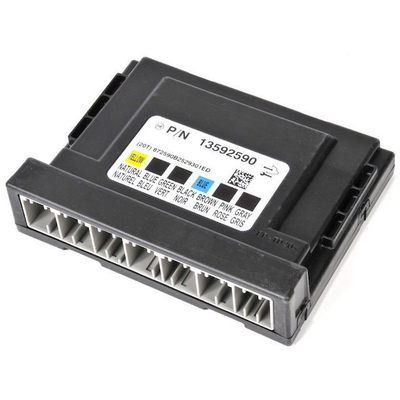
Shop the Parts Behind U3033
Below are the parts most often responsible for code U3033, ranked by how frequently each one is the actual culprit (per the diagnosis above). Tap any to see what we have for your vehicle.


The information in this article is provided for general reference and educational purposes only. Vehicle specifications, procedures, and part compatibility can vary by production date, trim level, and region. Always consult your vehicle's factory service manual and verify part numbers before purchasing or performing repairs. Safety-critical components such as airbags, seat belts, and braking systems should be installed by a qualified professional.
- 🧭 Diagnostic Flowchart
- 🛍️ Shop This Part
- What Does U3033 Mean?
- Can I Drive With U3033?
- Common Causes
- Symptoms
- Common Fixes & Costs
- DIY vs Professional
- Used vs. New Parts: Buying Guide
- What Happens If You Wait — Timeline
- Cost of Not Fixing It
- Diagnosis Steps
- When This Code Triggers (Freeze-Frame Conditions)
- Related Codes
- Climate & Environmental Factors
- How to Talk to a Mechanic About This Code
- Where to Take It: Dealer vs Independent vs Chain
- When to Walk Away From the Repair
- What Scan Tool You Need for This Code
- How to Clear the Code After You Fix It
- Will This Fail Emissions / State Inspection?
- Most Commonly Affected Vehicles
- Manufacturer-Specific Notes
- Real Owner Stories
- 2020 Ram 1500 with 5.7L eTorque
- 2022 Ram 1500 Limited Longhorn
- 2015 Jeep Cherokee 2.4L
- 2024 Ram 1500
- How to Prevent This Code From Triggering
- Frequently Asked Questions
- What is the most common misdiagnosis for a U3033 code?
- Can code U3033 clear itself?
- Why did the U3033 code appear if there are no symptoms?
- Can I fix code U3033 myself?
- Why does my car need a 'security certificate'?
- Will a weak battery really cause such a serious code?
- The dealer mentioned a 'reflash.' What is that?
- Key Takeaways
- 🎟️ Get 5% Off