

OBD-II Code U3035: Invalid Communication Signal
What U3035 means, why it triggers, and how to fix it
- Code U3035 triggers when a vehicle control module receives an unverified network message, acting like a failed digital handshake.
- Improper module programming accounts for the majority of U3035 codes, especially immediately following a part replacement.
- Driving is possible, but a U3035 code in critical systems like the ABS or power steering disables those safety features entirely.
- Fixing this code requires an advanced bidirectional scan tool to pinpoint the failing module and perform mandatory security programming.
What Does U3035 Mean?
The U3035 code triggers when a vehicle control module receives a network message it cannot verify. Think of it as a failed digital handshake between computers. This communication failure disables electronic features and often triggers a "communication error" or "module not authorized" message on the instrument cluster.
Technical definition: The SAE/OBD-II definition is "Communication Authentication Signal Invalid Data." A control module detects that a message received over the CAN bus failed its security authentication check. This occurs when the cryptographic key or signature within the data packet is incorrect, malformed, or missing, proving the sending module is unverified.
Can I Drive With U3035?
Yes, But With Caution. You can drive with a U3035 code, but the risks depend on the failing module. If the fault lies in a convenience module (like the radio), the risk is low. However, if the code originates from a critical safety system like the Anti-Lock Brake System (ABS) or power steering, it disables that function entirely. Do not drive for extended periods, as communication failures escalate into no-start conditions.
Common Causes
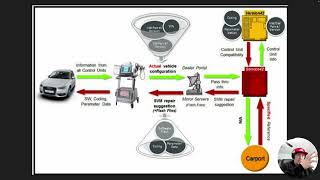
- Improper Module Programming or Mismatched Keys (Very Common) — When a control module is replaced, the new unit requires programming with the vehicle's specific VIN and security keys. Skipping this authentication procedure causes other modules to reject the new part, triggering a U3035 code immediately. 🎬 Watch: An overview of how automotive module programming works.
- Corrupted or Outdated Module Software (Common) — Control module software corrupts after failed updates or flash memory degradation. This prevents the module from sending the correct cryptographic handshake signal to the network.
- Failing or Faulty Control Module (Common) — Internal hardware damage from vibration or voltage spikes causes a control module to broadcast scrambled or invalid messages to other modules on the network.
- Low Battery Voltage or Power Supply Issues (Common) — Control modules require a steady voltage supply. A weak battery or failing alternator causes voltage drops that scramble data packets during transmission, leading to authentication errors.
- Wiring Harness Damage or Water Intrusion (Common) — Damaged, pinched, or corroded CAN bus wires distort communication signals. Water intrusion into junction boxes (like the Battery Junction Box) bridges circuits and corrupts the data packets required for authentication.
- Aftermarket Device Interference (Less Common) — Poorly installed aftermarket remote starters, alarms, or telematics units broadcast electrical noise onto the CAN bus, interfering with normal module communication.
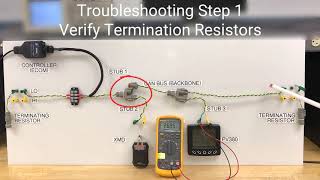
- CAN Bus Network Termination Issues (Rare) — The CAN bus network requires a specific 60-ohm resistance to function. A failed terminating resistor at either end of the network corrupts data packets and causes authentication failures.
Symptoms
- Warning Lights on the Dashboard — A 'Check Engine' light, 'Service Soon' wrench icon, or a specific communication error message appears on the instrument cluster.
- Loss of Electronic Features — Body-related functions stop working, including power door locks, interior lights, power windows, or the radio.
- Vehicle Fails to Start or Goes into Limp Mode — If the code relates to the immobilizer or powertrain control module, the vehicle refuses to start or enters a reduced-power 'limp mode'.
- Intermittent System Resets — An affected system, like the infotainment screen or climate control, shuts down and restarts on its own.
- Erratic Gauge Behavior — The instrument cluster gauges sweep erratically or drop to zero while driving.
Diagnostic Flowchart
Tap your situation to follow the diagnostic path that matches what you're seeing on this code.
Common Fixes & Costs
- Software/Firmware Update and Module Programming — Parts: $0, Labor: $100-$250, ~1.5 hr book time (Professional)
- Replacing a Weak or Failing Battery — Parts: $150-$400, Labor: $50-$100, ~0.7 hr book time (Beginner)
- Replacing a Faulty Control Module — Parts: $400-$2200, Labor: $150-$300, ~3 hr book time (Professional)
- Repairing Damaged Wiring or Connectors — Parts: $10-$100, Labor: $200-$600, ~2.5 hr book time (Intermediate)
- Full Diagnostic Scan and Test by a Professional — Parts: $0, Labor: $150-$250, ~1.5 hr book time (Professional)
Used vs. New Parts: Buying Guide
When a used part is worth it: A used control module makes sense only for experienced technicians with manufacturer-level programming tools. Cost savings on the part are quickly offset by complex programming challenges.
Donor-vehicle mileage cap: roughly under 100000 miles for the part to have meaningful remaining life.
Donor quality checklist:
- Match the part number EXACTLY. Superseded modules contain different internal hardware.
- Source from a vehicle of the identical year, model, and trim level.
- Avoid modules from flood-damaged vehicles due to hidden internal corrosion.
Decision logic:
- If You lack access to advanced programming tools and manufacturer software subscriptions → buy a new OEM part or a pre-programmed aftermarket unit.
- If The vehicle is a common domestic model and your budget is tight → buy a used module, but confirm a local specialist shop agrees to program it beforehand.
- If The part is for a European brand or a vehicle less than 5 years old → buy new. Manufacturers block the reprogramming of used security modules.
Warranty tradeoff: Salvage yards offer 30-90 day part-only warranties. New aftermarket parts provide 1-year warranties. New OEM parts carry 1-2 year warranties, honored only if installed by a dealer.
Worst-case if a used part fails: $500-$1500 if the used part is faulty or locked, requiring you to buy a new unit anyway.
What Happens If You Wait — Timeline
- 0-1 month: Intermittent glitches appear. The radio resets or a power window hesitates. The code stores without triggering a warning light. (MPG impact: 0%% · Added cost: $0)
- 1-4 months: Glitches become frequent. Critical systems like ABS temporarily disable. The vehicle occasionally struggles to start. (MPG impact: 0-2%% · Added cost: $150-$300 in potential towing fees.)
- 4-8 months: A key module consistently fails. The vehicle frequently fails to start. A parasitic draw kills the battery overnight. (MPG impact: 0-5%% · Added cost: $200-$400 for a new battery.)
- 8+ months: Complete failure of a primary control module. The vehicle is permanently inoperable. (MPG impact: N/A% · Added cost: $800-$2500 for module replacement and programming.)
Cost of Not Fixing It
- Short-Term (Weeks): Intermittent failure of non-critical systems like the radio, power windows, or interior lights. (Added cost: $0)
- Medium-Term (1-6 Months): Increased frequency of issues, intermittent no-start conditions, or disabled safety systems like ABS and stability control. (Added cost: $150-$300 for towing and emergency diagnosis.)
- Long-Term (6+ Months): Complete failure of a critical control module (BCM, PCM) resulting in a permanent no-start condition. (Added cost: $800-$2500 to replace and program a destroyed module.)
Diagnosis Steps
- Check for Other Trouble Codes
Use an advanced OBD-II scanner to read codes from all modules. Note which specific module reports the U3035 code, as it often appears alongside other U-codes that pinpoint the offline component.
Tools: Advanced OBD-II Scanner (Beginner) - Inspect the Battery and Check Voltage
Clean and tighten the battery terminals. Use a multimeter to verify the battery voltage reads between 12.0 and 12.6 volts with the engine off. Replace the battery if it fails a load test.
Tools: Wrench, Multimeter (Beginner) - Perform a Hard Reset
Disconnect both battery cables and touch the cable ends together for 30 seconds. This drains reserve power from the modules, forcing them to reset and re-establish communication handshakes.
Tools: Wrench (Intermediate) - Disconnect Aftermarket Devices
Completely unplug any aftermarket remote starters, alarms, or OBD-II plug-in trackers. Clear the codes and re-test the vehicle to rule out network interference.
Tools: Basic hand tools (Beginner) - Visually Inspect Wiring and Connectors
Inspect the wiring harnesses connecting to the module that stored the code. Look for green corrosion in connectors, pinched wires, or rodent damage.
Tools: Flashlight (Intermediate) - Perform Network Test & Module Handshake
Use a bidirectional scan tool to run a network communication test. This identifies exactly which modules fail to respond or authenticate, isolating the faulty hardware.
Tools: Advanced Bidirectional Scan Tool (Professional) - Test CAN Bus Resistance
With the battery disconnected, measure resistance between Pin 6 (CAN High) and Pin 14 (CAN Low) on the OBD-II port. A healthy network reads 60 ohms. A reading of 120 ohms indicates an open circuit; 0 ohms indicates a short.
Tools: Multimeter, OBD-II Breakout Box (Advanced) - Measure CAN Bus Voltages
With the battery connected and ignition ON, measure the DC voltage of the CAN lines to ground. CAN High should read approximately 2.7V, and CAN Low should read 2.3V. Deviations indicate a short to power or ground.
Tools: Multimeter, OBD-II Breakout Box (Advanced) - Check for Leakage to Ground
Disconnect the suspect module. Measure resistance between the module's CAN pins and its ground pin. A low resistance reading confirms an internal short, meaning the module requires replacement.
Tools: Multimeter (Advanced) - Analyze CAN Bus Waveform
Connect an oscilloscope to the CAN High and Low lines. A healthy waveform shows clean, mirrored square waves. Distorted or flat-lined signals definitively identify electrical interference or shorts.
Tools: Automotive Oscilloscope, Probes (Professional)
When This Code Triggers (Freeze-Frame Conditions)
- Network State: Active/Initializing (The fault logs during the vehicle's power-up sequence (Key On, Engine Off) when modules perform their initial handshake.)
- Module Voltage: 11.5-12.5V (Occurs when system voltage drops, corrupting data packets during transmission.)
- Time Since Start: 0-10 seconds (The authentication check happens immediately after turning the ignition to the 'ON' position.)
- Key/Ignition Status: RUN (The code sets when modules begin communicating as the vehicle prepares for operation.)
Related Codes
- U3036 — Relates to an authentication failure occurring when the network enters sleep mode.
- U0100 — Indicates 'Lost Communication with ECM/PCM'. Other modules log U3035 because they cannot authenticate with the offline engine computer.
- U0401 — Indicates 'Invalid Data Received From ECM/PCM'. Focuses on data content rather than the security handshake.
- B1325 — Indicates 'Device Power Circuit Failure'. A voltage drop causes a module to send corrupt data, triggering U3035 in other modules.
Climate & Environmental Factors
- High Humidity / Water Intrusion: Moisture entering connectors or fuse boxes causes corrosion. This bridges the CAN High and CAN Low circuits, distorting the communication signal and triggering U-codes.
How to Talk to a Mechanic About This Code
Say this: "I have a U3035 communication code and intermittent electrical issues. I need a diagnostic appointment with a technician strong in vehicle network diagnosis to perform a full network scan and identify the failing module."
This language signals you understand U3035 is a complex network issue. It directs the shop toward network analysis and prevents a technician from simply clearing the code.
Avoid saying:
- 'My check engine light is on.'
- 'Just fix whatever is wrong.'
- 'The internet said I need a new BCM.'
Questions to ask before authorizing the repair:
- Which specific module is logging the U3035 code?
- Did you test the CAN bus network for correct resistance and voltage?
- Is the cost of programming included in the module replacement quote?
- Can you confirm this is a hardware failure and not a software bug?
- What is the warranty on both the part and the labor?
Where to Take It: Dealer vs Independent vs Chain
- Dealer:
A strong, safe choice. Dealers possess the mandatory manufacturer-specific diagnostic tools and software required for programming.
Best for: Vehicles under warranty., Complex programming needs for vehicles less than 5 years old., Manufacturer-specific issues or known TSBs.
Downsides: Highest labor rates., Defaults to expensive module replacement over wiring fixes. (Typical cost: +50% vs. baseline) - Independent Shop:
Excellent choice, provided the shop specializes in electrical diagnostics and confirms they can perform module programming for your brand.
Best for: Out-of-warranty vehicles where cost is a major factor., Shops specializing in electrical diagnostics.
Downsides: Many lack the expensive subscriptions required for module programming., Quality and expertise vary widely. (Typical cost: +0% vs. baseline) - Chain Shop:
AVOID. Chain shops are not equipped to diagnose or repair complex network communication faults.
Best for: Routine maintenance like oil changes and brake pads.
Downsides: Technicians lack specialized training for network diagnostics., High pressure to sell irrelevant services. (Typical cost: -10% vs. baseline)
When to Walk Away From the Repair
If the estimated repair cost exceeds 50% of the car's private-party value, seriously consider selling the vehicle instead of repairing it.
- Car worth $4000, fix is $2200: Walk away. The repair cost exceeds 50% of the vehicle's value.
- Car worth $15000, fix is $1800: Fix it. The repair cost is a reasonable investment to keep a valuable car running.
- Car worth $3000, fix is $1500: Borderline. Get a second opinion. If the rest of the car is in excellent shape, it might be worth it.
What Scan Tool You Need for This Code
Minimum: A scanner that reads manufacturer-specific codes from ALL vehicle modules (ABS, BCM, PCM), not just generic engine codes.
A basic code reader only confirms a U-code exists. Diagnosing U3035 requires knowing exactly which computer sent the error message.
Budget: BlueDriver Pro (~$100) — Reads and clears codes from all vehicle systems, identifying the specific module logging the U3035 code.
Mid-range: Innova 5610 (~$350) — Offers bidirectional controls to perform active tests and network scans to see which modules communicate.
Professional: Launch X431 CRP919XBT or Autel MaxiCOM MK808 (~$450-600) — Provides full bidirectional capabilities and module coding functions required to fix the code after a part replacement.
Rent vs buy: Renting is not viable. Free rental scanners are basic readers insufficient for network diagnosis. Purchase a budget-pick scanner or leave the diagnosis to a professional.
How to Clear the Code After You Fix It
- Reconnect the battery if disconnected during repair.
- Use an OBD-II scan tool to erase the DTC from the specific module, then perform a global code clear.
- Cycle the ignition off, then on, and wait 30 seconds. If the code returns immediately, the root cause remains.
- Perform one complete drive cycle to ensure all modules communicate correctly under load.
Drive cycle (~20 minutes): Start the engine cold and idle for 3 minutes. Drive for 15 minutes in mixed city and highway conditions. Perform three key-off/key-on cycles to confirm the initial handshake succeeds every time.
Readiness monitors affected: Not directly applicable to U-codes
Before emissions retest: drive at least 100 miles to fully set monitors.
Watch out for:
- Clearing the code with a scanner never fixes the problem; the code returns on the next key cycle if the module remains unauthenticated.
- Disconnecting the battery resets all emissions readiness monitors, requiring a full 50-100 mile drive cycle before an emissions test.
Will This Fail Emissions / State Inspection?
Yes — this code typically fails an OBD-II emissions inspection.
- California: A U3035 code that illuminates the Check Engine light causes an immediate smog check failure. Disconnecting the battery for repair resets OBD-II monitors, also resulting in a failure.
- New York: Any diagnostic trouble code that commands the MIL on, including U3035, guarantees an inspection failure.
- Texas: In emissions-testing counties, an illuminated Check Engine light from a U3035 code results in a failed OBD-II test and blocks the annual safety inspection.
Most Commonly Affected Vehicles
- Ford F-Super Duty (2023) — TSB SSM 51497 notes this code appears in the PCM during a self-test and requires no repair if no other codes or symptoms exist.
- Ford Various (2023-2025) — TSB SSM 53638 indicates this code sets after replacing a network module on TRON architecture vehicles if the 'TRON Module Authentication' procedure is skipped.
- Ford F-Super Duty (2020-2022) — TSB 23-2133 links various communication codes to water intrusion into the Battery Junction Box (BJB).
- Chevrolet / GMC Suburban, Tahoe, Sierra, Silverado (2019-2025) — Module replacement requires mandatory online programming via the SPS to align security keys. Failure to do so guarantees a U3035 code.
- Hyundai Various (2015-2025) — Module replacement requires programming with the GDS (Global Diagnostic System) to satisfy secure CAN bus gateways.
- Kia Various (2015-2025) — Intermittent no-start issues link to authentication failures between the SMARTRA immobilizer module and the ECU.
- BMW Various (2015-2025) — Points to issues with control units on the K-CAN or Body-CAN networks, often related to aftermarket accessories.
- Generic All (2015-2025) — Common across all modern makes utilizing secure CAN bus networks, including Toyota, Nissan, and Honda.
Manufacturer-Specific Notes
- Ford: On 2023 F-Super Duty trucks, code U3035 sets during a diagnostic self-test without a real fault. Per TSB SSM 51497, ignore the code if no other DTCs or symptoms exist.
- Ford: For 2023-2025 models with 'TRON' architecture, replacing a module triggers U3035 until the 'TRON Module Authentication' procedure runs via the FDRS dealer tool.
- General Motors (GM): On 'Global A' or 'VIP' architectures, replacing any module requires online programming using GM's SPS to prevent a U3035 communication fault.
- Hyundai / Kia: Replacing safety or security modules requires the GDS diagnostic tool and a specific 'ACU' code retrieved from the paid technical service website.
Real Owner Stories
2016 Ford F-150 with multiple system failures
HVAC, audio, BLIS, and power windows failed intermittently. Multiple U-codes were present. The dealer performed a 'battery reset' which fixed the issue for only one day.
What they tried:
- Dealer performed a battery module reprogram.
- Owner replaced the battery and performed a BMS reset via FORScan.
Outcome: The root cause was a failing battery. Replacing the battery and allowing the Battery Management System (BMS) to relearn for 8 hours resolved all communication faults.
Lesson: A weak battery causes numerous, seemingly unrelated communication codes. Replace an aging battery and ensure the BMS resets properly before suspecting a module failure.
2013 Ford F-150 with intermittent PCM communication loss
The truck randomly lost communication with the PCM, causing a no-start condition and U0100 codes in other modules.
What they tried:
- Scan tool confirmed all modules lost communication specifically with the PCM.
- Technician focused on the PCM's power and ground circuits.
Outcome: The problem traced to a spread terminal at the PCM's power fuse in the under-hood fuse box. Bending the terminal to ensure a tight fit permanently fixed the problem.
Lesson: Widespread communication loss pointing to a single module is often a power or ground issue for that specific module. Check fuse fitment before condemning an expensive computer.
2018 Mazda CX-3 with infotainment failure after battery replacement
Days after a dealer battery replacement, the infotainment screen went black. Diagnostics revealed code U3000:42 in the Connectivity Master Unit (CMU).
What they tried:
- Owner sought a second opinion.
- Technician confirmed a memory failure within the module itself.
Outcome: The CMU's memory corrupted due to a voltage spike during the battery replacement, requiring a full module replacement.
Lesson: Improper battery replacement procedures cause voltage spikes that destroy sensitive electronics, leading to expensive repairs.
How to Prevent This Code From Triggering
- Maintain a Healthy Battery (Every 6 months) — Low voltage causes data corruption and module communication errors. Replace the battery proactively every 3-5 years.
- Address Water Leaks Immediately (After heavy rain or car wash) — Moisture corrodes connectors and bridges CAN circuits, causing major network failures.
- Use Caution with Aftermarket Electronics (During installation) — Poorly installed devices inject noise onto the CAN bus, triggering authentication faults.
- Keep Manufacturer Software Updated (During routine service visits) — Firmware updates fix bugs and improve communication protocols between modules.
Frequently Asked Questions
Can I fix a U3035 code myself?
You can perform simple checks like inspecting the battery, looking for wire damage, or doing a hard reset. However, diagnosing the specific faulty module or performing software programming requires specialized tools. Leave module replacement and programming to a professional.
The mechanic says to ignore code U3035. Is that correct?
Only in one specific case: Ford issued TSB SSM 51497 for 2023 F-Super Duty trucks stating U3035 appears during a self-test without an actual problem. If there are no other codes or symptoms on that specific truck, ignore it. For all other vehicles, it indicates a real fault requiring repair.
Why did code U3035 appear right after a module was replaced?
Modern vehicle modules link via security keys. When you install a new or used module, you must electronically program it to the vehicle's network. If skipped, other modules view the new part as an unauthorized intruder and set a U3035 code.
Will clearing the code fix the problem?
No. Clearing the code turns off the warning light temporarily, but the system re-detects the fault immediately upon the next key cycle.
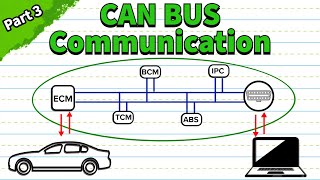
What is the CAN bus?
The Controller Area Network (CAN) bus is the primary communication network in a vehicle. It consists of twisted wires that allow all control modules to exchange information reliably.
Why does a module need 'authentication'?
Authentication ensures messages come from a trusted, legitimate source on the vehicle network. It prevents unauthorized signals from interfering with critical vehicle functions.
How much does it cost to fix a U3035 code?
Costs range from $100 for a simple software update to over $2,200 for replacing and programming a major control module. Replacing a weak battery, a common root cause, costs $200 to $500.
Key Takeaways
- Code U3035 triggers when a vehicle control module receives an unverified network message, acting like a failed digital handshake.
- Improper module programming accounts for the majority of U3035 codes, especially immediately following a part replacement.
- Driving is possible, but a U3035 code in critical systems like the ABS or power steering disables those safety features entirely.
- Fixing this code requires an advanced bidirectional scan tool to pinpoint the failing module and perform mandatory security programming.
Helpful Videos


Shop the Parts Behind U3035
Below are the parts most often responsible for code U3035, ranked by how frequently each one is the actual culprit (per the diagnosis above). Tap any to see what we have for your vehicle.


The information in this article is provided for general reference and educational purposes only. Vehicle specifications, procedures, and part compatibility can vary by production date, trim level, and region. Always consult your vehicle's factory service manual and verify part numbers before purchasing or performing repairs. Safety-critical components such as airbags, seat belts, and braking systems should be installed by a qualified professional.
- 🧭 Diagnostic Flowchart
- 🎬 Helpful Videos
- 🛍️ Shop This Part
- What Does U3035 Mean?
- Can I Drive With U3035?
- Common Causes
- Symptoms
- Common Fixes & Costs
- Used vs. New Parts: Buying Guide
- What Happens If You Wait — Timeline
- Cost of Not Fixing It
- Diagnosis Steps
- When This Code Triggers (Freeze-Frame Conditions)
- Related Codes
- Climate & Environmental Factors
- How to Talk to a Mechanic About This Code
- Where to Take It: Dealer vs Independent vs Chain
- When to Walk Away From the Repair
- What Scan Tool You Need for This Code
- How to Clear the Code After You Fix It
- Will This Fail Emissions / State Inspection?
- Most Commonly Affected Vehicles
- Manufacturer-Specific Notes
- Real Owner Stories
- 2016 Ford F-150 with multiple system failures
- 2013 Ford F-150 with intermittent PCM communication loss
- 2018 Mazda CX-3 with infotainment failure after battery replacement
- How to Prevent This Code From Triggering
- Frequently Asked Questions
- Can I fix a U3035 code myself?
- The mechanic says to ignore code U3035. Is that correct?
- Why did code U3035 appear right after a module was replaced?
- Will clearing the code fix the problem?
- What is the CAN bus?
- Why does a module need 'authentication'?
- How much does it cost to fix a U3035 code?
- Key Takeaways
- 🎟️ Get 5% Off