

OBD-II Code U3036: Control Module Communication Failure
What U3036 means, why it triggers, and how to fix it
- Code U3036 indicates a failed security handshake between control modules, instantly disabling features like power windows, door locks, or the radio.
- Test your battery first; a resting voltage below 12.4V is the leading cause of this communication failure, not a dead computer.
- Do not drive with an active U3036 code, as a sudden authentication failure in the ABS or Powertrain module causes an immediate loss of braking assist or engine power.
- Verify network integrity by measuring resistance across OBD-II pins 6 and 14; a healthy CAN bus reads exactly 60 Ohms.
- Never install a used or replacement control module without professional programming, as unprogrammed units automatically fail the security check and trigger this code.
What Does U3036 Mean?
Code U3036 means a control module failed to authenticate its identity to the rest of the vehicle's network. Think of it as a failed security handshake. Each module must pass this check to be trusted; when it fails, other modules ignore its signals as a precaution, instantly disabling affected electronic systems.
Technical definition: The official SAE definition for U3036 is "Communication Authentication Signal Performance". A control module detected a performance issue with the security credential signal of another module on the Controller Area Network (CAN) bus. The signal is weak, noisy, slow, or out of specification, preventing a successful security handshake.
Can I Drive With U3036?
Yes, But With Caution. You can drive, but features like power windows, door locks, and the radio often stop working. In rare cases, it prevents the car from starting by locking out the security system. Continued driving is highly discouraged. A critical module like the ABS or Powertrain Control Module losing authentication mid-drive causes an immediate loss of braking assistance or engine power, creating a severe safety risk.
Common Causes
- Low Battery Voltage or Unstable Power Supply (Very Common) — Control modules require a stable voltage to communicate properly. A weak battery or failing alternator causes voltage drops that interrupt the authentication process and trigger the code.
- Damaged Wiring or Corroded Connectors (Very Common) — The most frequent physical cause. Frayed CAN bus wires or moisture-corroded connectors disrupt communication signals between modules, forcing authentication to fail.
- Corrupted Software or Outdated Firmware (Common) — A software glitch, failed over-the-air update, or outdated firmware forces a module to send incorrect authentication signals. The network rejects these signals, logging a U3036.
- Bus Network Integrity Issues & Aftermarket Interference (Common) — Electrical noise from poorly installed aftermarket accessories (alarms, remote starters) or a failed terminating resistor corrupts the authentication signal.
- Faulty Control Module (Less Common) — Internal microchips dedicated to generating security tokens fail due to age, heat, or moisture. This corrupts the security handshake even if the rest of the module functions.
- Unprogrammed Replacement Module (Rare) — New or used replacement modules must be programmed with the correct VIN and security keys. Skipping this step causes an immediate authentication failure.
Symptoms
- Loss of Body Control Functions — Power door locks, windows, interior lights, and the infotainment screen work intermittently or shut down completely.
- Warning Lights and Network Messages — The dashboard displays a general communication warning (yellow exclamation mark), security light, check engine light, or a 'Network Down' message.
- No-Start Condition — The engine refuses to crank or start because the immobilizer module cannot authenticate the key.
- Loss of Remote Services (also visible on scanner) — Secure features like remote start or manufacturer telematics (OnStar, FordPass) become unavailable.
Diagnostic Flowchart
Tap your situation to follow the diagnostic path that matches what you're seeing on this code.
Common Fixes & Costs
- Replacing a Weak or Faulty Battery — Parts: $150-$250, Labor: $50-$100, ~0.5 hr book time (DIY)
- Repairing Damaged Wiring or Connectors — Parts: $20-$50, Labor: $150-$300, ~2.0 hr book time (Intermediate)
- Reflashing or Updating Module Software — Parts: $0, Labor: $150-$250, ~1.0 hr book time (Professional)
- Replacing a Faulty Control Module
— Parts: $500-$1200, Labor: $150-$300, ~1.5 hr book time
(Professional)
: OEM
: OEM - Replacing a Faulty CAN Bus Terminating Resistor
— Parts: $10-$30, Labor: $100-$200, ~1.0 hr book time
(Advanced)
: OEM
Used vs. New Parts: Buying Guide
When a used part is worth it: A used Body Control Module (BCM) is cost-effective for older vehicles if you have access to a technician capable of reprogramming it.
Donor-vehicle mileage cap: roughly under 100000 miles for the part to have meaningful remaining life.
Donor quality checklist:
- Verify the donor vehicle wasn't scrapped for flood or fire damage.
- Match the part number exactly; superseded parts often fail compatibility.
- Purchase from a reputable salvage yard offering at least a 30-day warranty.
Decision logic:
- If The vehicle is less than 8 years old or has low mileage → Buy a new OEM or remanufactured part to guarantee longevity and compatibility.
- If A used module requires complex programming that only a dealer can perform → Factor in dealer labor; a pre-programmed remanufactured module is often cheaper overall.
- If The budget is extremely tight and the vehicle's value is low → A used part is acceptable if you verify compatibility and secure a programming service.
Warranty tradeoff: Used parts typically have a 30-90 day functional warranty. New aftermarket parts often carry a 1-year to limited lifetime warranty. New OEM parts have a 1-2 year warranty if installed by a dealer.
Worst-case if a used part fails: $300-$800 if the used module is faulty or cannot be programmed, requiring repeat labor costs and the purchase of another part.
What Happens If You Wait — Timeline
- 0-4 weeks: Code sets intermittently. Minor glitches occur, like flickering interior lights or slow power locks. (MPG impact: 0%% · Added cost: $0)
- 1-3 months: Symptoms become consistent. Infotainment screens reset, and remote start fails. Poor grounds or corroding wires degrade module voltage. (MPG impact: 0%% · Added cost: $100-$250)
- 3-9 months: Cascading failures begin. Other modules log communication codes. A no-start condition becomes likely if the immobilizer is affected. (MPG impact: 0-2%% · Added cost: $400-$800)
- 9+ months: Critical authentication failure occurs while driving, causing sudden loss of ABS or power steering. Electrical stress destroys the faulty module. (MPG impact: 0-5%% · Added cost: $1000-$2500)
Cost of Not Fixing It
- Immediate: Intermittent or total loss of body features like power locks and windows. Potential no-start condition. (Added cost: $0)
- 1-6 months: Persistent communication faults cause other modules to log errors or behave erratically. Voltage issues strain electronics. (Added cost: $200-$800)
- 6+ months: Critical modules (ABS, Powertrain) fail authentication while driving, causing a sudden loss of vehicle control. Electrical stress destroys intermittently faulty modules. (Added cost: $800-$2500)
Diagnosis Steps
- Check and Charge the Battery
Use a multimeter to verify battery voltage is above 12.4V with the engine off. If low, fully charge and re-test. Ensure voltage remains stable above 13.2V with the engine running.
Tools: Digital Multimeter, Battery Charger (Beginner) - Read All Trouble Codes
Use a bi-directional scanner to perform a full network scan. Note which module reports U3036 and look for accompanying U-codes to isolate the network segment.
Tools: Bi-directional OBD-II Scanner (Beginner) - Disconnect Aftermarket Devices
Completely unplug aftermarket remote starters, alarms, or stereos. Clear the codes to see if the network interference disappears.
Tools: Basic hand tools (screwdrivers, panel removal tools) (Intermediate) - Perform a Visual Inspection
Inspect the wiring harnesses and connectors at the suspect module. Look for frayed wires, loose pins, or green corrosion, especially where harnesses rub against the frame.
Tools: Flashlight, Inspection Mirror (Intermediate) - Test Module Power and Ground (Voltage Drop)
While the circuit is active, measure voltage drop. Place one multimeter lead on the module's ground pin and the other on the negative battery terminal; readings above 0.1V indicate a bad ground. Repeat for the power feed; drops over 0.2V indicate excessive resistance.
Tools: Digital Multimeter, Vehicle-Specific Wiring Diagram (Advanced) - Check CAN Bus Terminating Resistor
With the battery disconnected, measure resistance between OBD-II Pin 6 (CAN High) and Pin 14 (CAN Low). A healthy network reads 60 Ohms. A 120-Ohm reading indicates an open circuit or missing resistor.
Tools: Digital Multimeter, OBD-II Breakout Box (optional) (Advanced) - Check for Software Updates (Reflashing)
Search for manufacturer Technical Service Bulletins (TSBs). A professional shop or dealer must verify if an updated calibration file exists for the affected module.
Tools: Manufacturer-specific scan tool and software subscription (Professional) - Analyze CAN Bus Signal with an Oscilloscope
Connect an oscilloscope to CAN High and Low. A healthy bus shows a clean square wave idling at 2.5V, jumping to 3.5V (High) and dropping to 1.5V (Low) during communication. Distorted signals pinpoint the interference source.
Tools: Automotive Oscilloscope (200 MHz+ recommended), OBD-II Breakout Box (Professional)
When This Code Triggers (Freeze-Frame Conditions)
- Module Voltage: 11.8-12.5V (During key-on or initial network wake-up, before the engine starts and alternator engages.)
- Engine RPM: 0 (Often triggers during the key-on, engine-off (KOEO) self-test sequence.)
- Vehicle Speed: 0 mph (The authentication handshake typically occurs when the vehicle is stationary, as modules wake up.)
- Network Status: Active/Initializing (Code sets during the transition from a sleep state to an active state on the CAN bus.)
Related Codes
- U3035 — Communication Authentication Signal Invalid Data. U3036 points to a performance problem (weak/noisy signal), while U3035 means the signal is present but the security data is corrupt.
- U0140 — Lost Communication With Body Control Module. Signifies a complete communication breakdown. U3036 indicates communication exists, but the security handshake fails.
- U0100 — Lost Communication With ECM/PCM. Indicates a total loss of contact with the engine computer. A failing PCM sets U3036 before failing completely and setting U0100.
- U3000 — Control Module failure. Indicates an internal hardware or software failure within a module, explaining why it fails authentication and triggers U3036.
Climate & Environmental Factors
- High Humidity / Water Intrusion: Moisture accelerates corrosion on wiring connectors and module pins, creating unwanted resistance that disrupts sensitive CAN bus voltage signals.
- Cold Weather: Extreme cold lowers battery cranking amps and stable voltage output. Modules attempting startup communication with insufficient voltage fail their security handshakes.
- Road Salt (Salt Belt Regions): Corrosive slush splashes into the engine bay, rapidly degrading ground straps and exposed connectors, leading to frequent communication faults.
How to Talk to a Mechanic About This Code
Say this: "I need a diagnostic for a U3036 communication code with intermittent electrical issues. Please test the battery, charging system, and check for common ground faults before recommending module replacement."
Signals you want a methodical, cost-effective diagnosis, preventing a rush to replace an expensive computer.
Avoid saying:
- 'Just fix whatever's wrong'
- 'My check engine light is on, can you look at it?'
- 'Whatever you recommend'
Questions to ask before authorizing the repair:
- What were the battery test results?
- Did you find a specific wiring or ground fault?
- What tests condemned the original module?
- Does the new module require programming, and is it included?
- What is the warranty?
Where to Take It: Dealer vs Independent vs Chain
- Dealer:
Best for vehicles under warranty, complex software reflashing, or TSB-related issues. Most expensive, but guarantees correct programming tools.
Best for: Vehicles still under warranty, Complex software reflashing or module programming is required, Known manufacturer-specific issues covered by a TSB
Downsides: Highest labor rates, May default to module replacement instead of component-level wiring repair (Typical cost: +50% vs. baseline) - Independent Shop:
Best value for out-of-warranty vehicles. Vet them by ensuring they have ASE-certified technicians experienced in CAN bus diagnostics.
Best for: Out-of-warranty vehicles where cost is a major factor, Shops that specialize in automotive electrical diagnostics
Downsides: Shop must be well-equipped with advanced, bi-directional scan tools and have access to wiring diagrams. (Typical cost: +0% vs. baseline) - Chain Shop:
Avoid for diagnosis. U3036 is beyond their scope. Only use them to confirm or replace a weak battery.
Best for: Confirming the battery is the cause.
Downsides: Technicians are often not trained for complex network diagnostics., High risk of misdiagnosis, leading to unnecessary parts replacement. (Typical cost: -10% vs. baseline)
When to Walk Away From the Repair
If the estimated repair cost exceeds 50% of the car's private-party value, seriously consider selling or trading it in.
- Car worth $4000, fix is $2200: Walk away. Repair exceeds half the car's value.
- Car worth $15000, fix is $1500: Fix it. Repair is 10% of vehicle value.
- Car worth $3000, fix is $1200: Borderline. Get a second opinion. If monthly repair costs approach a new car payment, move on.
What Scan Tool You Need for This Code
Minimum: A scanner capable of reading 'enhanced' or 'manufacturer-specific' codes from all modules (BCM, ABS), not just engine P-codes.
A $20 code reader only checks the engine computer and cannot see a U3036 code stored in the Body Control Module.
Budget: BlueDriver Pro (~$99) — Connects to a smartphone for full system scans. Reads enhanced U-codes and provides essential live data graphing.
Mid-range: Foxwell NT510 Elite (~$180) — Handheld scanner with bidirectional controls. Commands modules to test communication, isolating faults without swapping parts.
Professional: Autel MaxiCOM MK808S (~$450) — Tablet interface offering OE-level diagnostics, full bidirectional control, and special functions like battery registration.
Rent vs buy: AutoZone loaners rarely read BCM codes. Buying a capable scanner like the BlueDriver is a better investment for complex U-codes.
How to Clear the Code After You Fix It
- Reconnect the battery if disconnected.
- Use a bi-directional OBD-II scan tool to execute a 'Clear All Codes' command across all modules.
- Complete a full drive cycle to allow onboard diagnostics to run self-tests and verify the repair.
Drive cycle (~30 minutes): Start cold (sit 8+ hours). Idle 3 minutes with A/C and defroster on. Drive 15 minutes in stop-and-go traffic. Drive 10 minutes at a steady 55-60 mph. Let cool.
Readiness monitors affected: Comprehensive Component Monitor, Misfire Monitor
Before emissions retest: drive at least 50 miles to fully set monitors.
Watch out for:
- Disconnecting the battery rarely clears permanent U-codes.
- The code returns immediately if the root cause was not correctly repaired.
- Failing to complete a drive cycle leaves readiness monitors incomplete, causing emissions test failures.
Will This Fail Emissions / State Inspection?
Yes — this code typically fails an OBD-II emissions inspection.
- California: U3036 causes an automatic Smog Check failure. All readiness monitors must read 'Complete', requiring extensive driving post-repair.
- New York: The NYS OBD-II inspection fails any vehicle presenting an active diagnostic trouble code, including U-codes.
- Texas: In the 17 counties requiring emissions testing, an active U3036 code results in an immediate inspection failure.
Most Commonly Affected Vehicles
- Ford F-Super Duty (2023-2024) — Code sets erroneously during a diagnostic self-test as the CAN bus enters sleep mode. TSB SSM 51497 advises ignoring the code if no symptoms exist.
- Ford Explorer (2020-2022) — Prone to communication issues related to the AWD disconnect module and wiring faults under the driver's seat.
- Hyundai Santa Fe (2019-2021) — Exhibits U3036 due to intermittent faults in the main body control module (BCM) or electrical shorts in the Hydraulic Electronic Control Unit (HECU) from internal corrosion.
- Subaru Outback, Ascent (2020-2023) — Triggered by software anomalies in the telematics or Body Integrated Unit (BIU). Warranty extensions exist for the Data Communication Module (DCM) addressing battery drain.
- Jeep Grand Cherokee (2016-2017) — Powertrain control module (PCM) software issues trigger this code. Multiple TSBs require PCM software updates to resolve drivability faults.
- Chevrolet Silverado (2015-2018) — A single blown fuse in the instrument panel fuse block powers multiple components and severs communication to the airbag module and radio.
- BMW 3 Series, 5 Series (2016-2020) — Issues with the Body Domain Controller (BDC) or gateway module trigger the code, often stemming from low battery voltage during sleep/wake cycles.
- Dodge/Ram Various (2008-2018) — Wiring for the CAN bus system is susceptible to electrical interference, especially where the harness runs close to other components.
Manufacturer-Specific Notes
- Ford: On 2023+ F-Super Duty trucks, U3036 sets during a self-test without an actual problem. TSB SSM 51497 advises technicians to ignore it if no warning lights are on.
- General Motors (Chevrolet/GMC): A single blown fuse in the driver or passenger instrument panel fuse block severs communication with multiple modules, triggering U3036.
- Stellantis (Dodge/Jeep/Chrysler): Twisted-pair CAN bus wiring routed near high electrical interference corrupts communication signals without physical wire damage. PCM software updates resolve many instances.
- Subaru: Software anomalies are the primary cause. Warranty extensions cover the Data Communications Module (DCM) for battery drain issues that lead to low voltage and communication codes.
- Hyundai/Kia: Large-scale recalls address the ABS Hydraulic Electronic Control Unit (HECU). Internal corrosion causes electrical shorts, triggering a flood of communication codes including U3036.
Real Owner Stories
2018 Ford F-150 with ~60K miles
Truck intermittently failed to start in damp weather. Experienced random warning lights and loss of power windows. U3036 code was present.
What they tried:
- Replaced the battery, but it did not solve the issue.
- Mechanic visually inspected harnesses but found no obvious damage.
- Disconnected aftermarket trailer brake controller, but the problem persisted.
Outcome: A specialized shop found a corroded wire in a kick panel connector block caused by a leaking windshield seal. Repairing the pin and sealing the leak cost $450.
Lesson: Intermittent electrical issues varying with weather point to water intrusion and connector corrosion. Do not assume a module is bad.
2020 Subaru Outback at 45K miles
Check engine light, ABS light, and EyeSight disabled warnings appeared simultaneously. The car drove normally but features were offline. Dealer found code U3036.
What they tried:
- Owner cleared codes with a basic scanner, but they returned on the next drive cycle.
Outcome: The dealership diagnosed a software glitch in the Body Integrated Unit (BIU) and performed a free warranty reflash.
Lesson: A sudden cascade of warning lights without physical symptoms indicates a software anomaly. Check TSBs before replacing hardware.
2013 Chevrolet Silverado with 120K miles
Radio and instrument cluster randomly shut off while driving. Truck was sometimes completely dead after parking. Scan revealed U3036 and U0140.
What they tried:
- Replaced the BCM with a used unit, but it could not be programmed and made problems worse.
- Spent hours tracing wiring diagrams looking for a fault.
Outcome: The owner traced the issue to a single 15A fuse powering the radio and airbag module. The fuse wasn't blown but developed high internal resistance. A $2 fuse fixed it.
Lesson: Never overlook basics. A faulty fuse mimics a major network failure. Test fuses with a multimeter for resistance.
How to Prevent This Code From Triggering
- Perform regular battery maintenance (Every 6 months) — Clean terminals with a wire brush to prevent resistance. Ensure secure mounting to stop vibration damage.
- Apply dielectric grease to critical connectors (When servicing or exposing connectors) — Apply non-conductive dielectric grease to block moisture and oxygen from corroding metal pins in exterior connectors.
- Keep vehicle drains clear (Annually, or if parked under trees) — Clear sunroof and cowl drains annually to prevent water overflowing into interior fuse boxes and modules.
- Drive the vehicle regularly for 30+ minutes (At least once per week) — Drive 30+ minutes weekly. Short trips leave the battery undercharged, causing modules to fail startup authentication.
- Use adhesive-lined heat shrink on exterior wire repairs (During any wiring repair) — Use adhesive-lined heat shrink on wire repairs to create a waterproof seal, preventing moisture wicking and signal degradation.
Frequently Asked Questions
Can a bad battery really cause a U3036 code?
Yes. Control modules are highly sensitive to voltage drops. A weak battery providing below 12.4V at rest disrupts the delicate authentication process between modules, making it the most common cause for this code.
What is the most common misdiagnosis for a U3036 code?
Mechanics often mistakenly replace expensive control modules without testing the basics first. Always rule out a weak battery, poor ground connections (resistance > 0.5 Ohms), and damaged wiring before condemning a computer.
I replaced a module and now I have a U3036 code. What happened?
The new module lacks the correct programming for your specific vehicle. Replacement modules must be configured with your car's VIN and security keys to be recognized by the network. Without this, it fails the security handshake.
Is it safe to clear the U3036 code?
You can clear the code with a scanner to see if it was a temporary voltage glitch. However, if the code returns immediately or during the next drive, a persistent hardware or software problem requires repair.
My scanner shows a U3036 code, but my car works fine. What should I do?
On certain vehicles, like 2023+ Ford Super Duty trucks, U3036 sets erroneously during a normal diagnostic self-test. Ford's official bulletin (SSM 51497) advises ignoring the code if no warning lights or symptoms are present. Otherwise, monitor the vehicle for intermittent wiring issues.
Why did my remote start and power locks stop working with this code?
These features require secure, authenticated communication between the Body Control Module and the key fob receiver. When U3036 triggers, security communication fails, forcing the system to disable these functions as a precaution.
What is a 'reflash' and can it fix my car?
A reflash updates the software firmware inside a control module. If a known software bug causes the U3036 code, reflashing the module with the manufacturer's latest update provides a permanent fix.
What does checking the CAN bus resistance tell me?
Measuring resistance between OBD-II Pins 6 and 14 confirms the health of the network's terminating resistors. A normal reading is 60 Ohms. A 120-Ohm reading means one resistor is disconnected, indicating a major wiring or module fault.
Key Takeaways
- Code U3036 indicates a failed security handshake between control modules, instantly disabling features like power windows, door locks, or the radio.
- Test your battery first; a resting voltage below 12.4V is the leading cause of this communication failure, not a dead computer.
- Do not drive with an active U3036 code, as a sudden authentication failure in the ABS or Powertrain module causes an immediate loss of braking assist or engine power.
- Verify network integrity by measuring resistance across OBD-II pins 6 and 14; a healthy CAN bus reads exactly 60 Ohms.
- Never install a used or replacement control module without professional programming, as unprogrammed units automatically fail the security check and trigger this code.
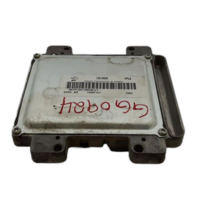
Shop the Parts Behind U3036
Below are the parts most often responsible for code U3036, ranked by how frequently each one is the actual culprit (per the diagnosis above). Tap any to see what we have for your vehicle.


The information in this article is provided for general reference and educational purposes only. Vehicle specifications, procedures, and part compatibility can vary by production date, trim level, and region. Always consult your vehicle's factory service manual and verify part numbers before purchasing or performing repairs. Safety-critical components such as airbags, seat belts, and braking systems should be installed by a qualified professional.
- 🧭 Diagnostic Flowchart
- 🛍️ Shop This Part
- What Does U3036 Mean?
- Can I Drive With U3036?
- Common Causes
- Symptoms
- Common Fixes & Costs
- Used vs. New Parts: Buying Guide
- What Happens If You Wait — Timeline
- Cost of Not Fixing It
- Diagnosis Steps
- When This Code Triggers (Freeze-Frame Conditions)
- Related Codes
- Climate & Environmental Factors
- How to Talk to a Mechanic About This Code
- Where to Take It: Dealer vs Independent vs Chain
- When to Walk Away From the Repair
- What Scan Tool You Need for This Code
- How to Clear the Code After You Fix It
- Will This Fail Emissions / State Inspection?
- Most Commonly Affected Vehicles
- Manufacturer-Specific Notes
- Real Owner Stories
- 2018 Ford F-150 with ~60K miles
- 2020 Subaru Outback at 45K miles
- 2013 Chevrolet Silverado with 120K miles
- How to Prevent This Code From Triggering
- Frequently Asked Questions
- Can a bad battery really cause a U3036 code?
- What is the most common misdiagnosis for a U3036 code?
- I replaced a module and now I have a U3036 code. What happened?
- Is it safe to clear the U3036 code?
- My scanner shows a U3036 code, but my car works fine. What should I do?
- Why did my remote start and power locks stop working with this code?
- What is a 'reflash' and can it fix my car?
- What does checking the CAN bus resistance tell me?
- Key Takeaways
- 🎟️ Get 5% Off