

OBD-II Code U3505: Control Module Input Power 'B' Circuit Low
What U3505 means, why it triggers, and how to fix it
- U3505 indicates the Body Control Module (BCM) 'B' circuit voltage has dropped below the 11.5V operational threshold.
- On 2021-2024 GM SUVs, this code paired with warm A/C guarantees a shorted center console wire (Circuit 4786) and a blown F4DR 7.5A fuse.
- Never replace a blown F4DR fuse without first repairing the chafed console wire, or the new fuse will blow instantly.
- Expect to pay $160 to $320 at an independent shop to repair the shorted GM console wire and replace the fuse.
What Does U3505 Mean?
The U3505 code means a vehicle control module, typically the Body Control Module (BCM), is receiving insufficient electrical power. The module monitors its 'B' power circuit and triggers this code when voltage drops below the 11.5V operational threshold.
Technical definition: The official definition for U3505 is "Control Module Input Power 'B' Circuit Low." This indicates the power supply to a control module's 'B' circuit falls below the required voltage threshold, almost always due to a blown protective fuse caused by a short circuit to ground.
Can I Drive With U3505?
Yes, But With Caution. Yes, the vehicle is safe to drive as the code does not affect the engine, transmission, or braking systems. However, it disables features like air conditioning, interior electronics, and window defrosting. Repair the underlying short circuit promptly to prevent permanent damage to the Body Control Module (BCM).
Common Causes
- Chafed/Shorted Wiring in Center Console (GM SUVs) (Very Common) — On 2021-2024 GM SUVs, the wiring for the center console light (Circuit 4786) rubs against the hinge and shorts to ground. This blows the fuse powering the Body Control Module, triggering U3505. This design flaw is documented in GM Technical Service Bulletin (TSB) PIT5869A.
- Blown Protective Fuse (Very Common) — A blown fuse is the direct trigger for the low-voltage reading, but it is a symptom, not the root cause. The underlying short circuit must be repaired before replacing the fuse, or the new fuse will blow instantly.
- Corroded or Damaged Main Wiring Harness (Common) — Moisture, road salt, or friction against the vehicle frame damages wire insulation. This damage increases electrical resistance, causing a severe voltage drop before power reaches the control module.
- Loose Power Feed at Auxiliary Fuse Box (Less Common) — A loose battery cable connection at an auxiliary fuse box creates high resistance and intermittent low voltage to various modules. GM TSB 16-NA-193 documents this specific failure, which triggers U3505 alongside multiple other communication codes.
- Poor Ground Connection (Less Common) — If the ground bolt for the control module is loose or rusted, it creates high resistance and causes a low voltage condition. Cleaning loose ground bolts near the radiator core support or kick panels restores the circuit.
- Weak 12V Battery (Less Common) — A battery with a resting voltage below 12.4V or one failing a load test causes low voltage conditions across the entire vehicle network. This triggers U3505 during high electrical demand or cold weather starts.
- Failing Body Control Module (BCM) (Rare) — The internal voltage regulators inside the BCM wear out from heat or moisture, causing the module to falsely report low voltage. Replace the BCM only after confirming all wiring, fuses, and grounds are fully functional.
Symptoms
- A/C Blows Warm Air — The fuse that blows (F4DR) also controls the A/C system, making this the most immediate and noticeable symptom on affected GM vehicles.
- Inoperative Center Console Light — The light inside the front floor console flickers or dies completely. This is the direct result of the chafed wire and the earliest warning sign before the fuse blows.
- Check Engine Light or Service Message — The main computer illuminates the check engine light or displays a "Service Electrical System" message on the dashboard.
- Power Accessories Stop Working — BCM-controlled features like power windows, door locks, or the infotainment screen stop working completely.
- Dim or Flickering Interior Lights — Dome lights, map lights, or exterior parking lamps appear dim or flicker due to the unstable voltage supply.
Diagnostic Flowchart
Tap your situation to follow the diagnostic path that matches what you're seeing on this code.
Common Fixes & Costs
- Repair Center Console Wiring and Replace Fuse — Parts: $10-$25, Labor: $150-$300, ~1.5 hr book time (Intermediate)
- Repair Damaged Wiring Harness Section — Parts: $10-$50, Labor: $150-$400, ~2.0 hr book time (Intermediate)
- Clean and Tighten Ground Connection — Parts: $0-$5, Labor: $75-$150, ~0.5 hr book time (DIY)
- Replace and Program Body Control Module (BCM) — Parts: $300-$600, Labor: $200-$400, ~2.0 hr book time (Professional)
Used vs. New Parts: Buying Guide
When a used part is worth it: A used BCM makes sense on vehicles over 10 years old where new OEM parts are cost-prohibitive. It must come from a reputable salvage yard with a warranty.
Donor-vehicle mileage cap: roughly under 100000 miles for the part to have meaningful remaining life.
Donor quality checklist:
- Verify the part number is an exact match.
- Ensure the donor vehicle has no flood or fire damage.
- Confirm the used BCM can be reprogrammed; some are permanently VIN-locked.
Decision logic:
- If Vehicle is < 5 years old or under warranty → Buy new OEM to ensure compatibility and longevity.
- If Budget is strict and vehicle is > 10 years old → A used part is acceptable, but factor in the mandatory $150-$250 reprogramming cost.
- If Goal is maximum reliability → Buy new OEM or a high-quality remanufactured unit from a specialist.
Warranty tradeoff: Used parts have a 30-90 day functional warranty covering the part, not labor. New OEM parts installed by a dealer carry a 1-2 year warranty on parts and labor.
Worst-case if a used part fails: $400-$600 to buy a second replacement part and pay for labor and programming again.
What Happens If You Wait — Timeline
- 0-1 month: Wire insulation begins to chafe at a pinch point. The console light flickers intermittently. A minor parasitic draw begins, and the U3505 code stores intermittently without blowing the fuse. (MPG impact: 0%% · Added cost: $0)
- 1-3 months: The chafed wire contacts ground, creating a dead short. The protective fuse (F4DR 7.5A) blows instantly. The Check Engine Light illuminates, and the A/C and console light lose power. (MPG impact: 0%% · Added cost: $50-$250 (for towing or battery replacement if parasitic draw drains the battery).)
- 3-6 months (if ignored): If an incorrect, higher-amperage fuse is installed to bypass the short, the wiring overheats. This melts insulation and permanently damages the BCM's internal voltage regulation circuits. (MPG impact: 0%% · Added cost: $800-$1200 (for BCM replacement and programming).)
- 6+ months (if ignored): Persistent, unprotected short circuits create a severe fire risk. The fault cascades, damaging other modules on the CAN bus network, requiring extensive diagnostic labor and harness replacement. (MPG impact: 0%% · Added cost: $2000+ (for multiple module replacements and harness repair).)
Cost of Not Fixing It
- 0-1 month: Loss of A/C, interior lights, and power accessories. Potential for parasitic battery drain leaving you stranded. (Added cost: $150-$250 (for towing or battery replacement).)
- 1-6 months: Overheating wiring damages the Body Control Module (BCM) internal circuits. (Added cost: $600-$900 (for BCM replacement and programming).)
- 6+ months: Persistent electrical shorts create a severe fire risk and cascade damage to other modules on the CAN bus network. (Added cost: $2000+ (for multiple module replacements and extensive diagnostic labor).)
Diagnosis Steps
- Read the Trouble Codes & Freeze Frame Data
Use an OBD-II scanner to confirm U3505. Look for related codes like B1AA3 or U3018, which strongly confirm the GM center console short. Note the freeze-frame voltage data.
Tools: OBD-II Scan Tool (Beginner) - Check Fuse F4DR (GM Vehicles)
Locate the passenger compartment fuse block on 2021+ GM SUVs. Pull fuse F4DR (7.5A mini fuse). If blown, you have confirmed the common console wiring short.
Tools: Owner's Manual, Fuse Puller or Pliers (Beginner) - Inspect the Center Console Wiring
If F4DR is blown, do NOT replace it. Open the center console, remove the trim panels near the lid hinge, and locate the Green/Violet wire (Circuit 4786). Inspect for pinched, broken, or bare copper.
Tools: Trim Removal Tools, Flashlight (Intermediate) - Test Battery Health
For non-GM vehicles, test the 12V battery. Ensure resting voltage is at least 12.4V and that the battery passes a load test. A weak battery triggers false U3505 codes.
Tools: Multimeter or Battery Load Tester (Beginner) - Inspect General Wiring and Connectors
Inspect the wiring harness routing to the BCM. Look for green corrosion on connectors, chafed insulation, or loose pins. Check for loose power connections at the main fuse box.
Tools: Flashlight, Socket Set (Intermediate) - Perform Power and Ground Voltage Drop Tests
Connect a multimeter's positive lead to the battery positive and negative lead to the BCM 'B' power input pin. With the key on, the reading must be under 0.2V. Repeat on the ground side (module ground pin to battery negative); the reading must be under 0.1V. Higher readings confirm excessive wiring resistance.
Tools: Multimeter, Wiring Diagram, Back-probe Kit (Advanced) - Monitor Live BCM Voltage
Access the BCM's live data stream with an advanced scan tool. Monitor 'Control Module Voltage' (PID 0142). If the value fluctuates wildly or reads below 11.5V while the battery tests good, the power supply circuit is compromised.
Tools: Advanced OBD-II Scan Tool (Advanced) - Isolate the Short Circuit
If a short is suspected but invisible, connect a short circuit tester in place of the blown fuse. Trace the wiring path with the receiver; the tool stops beeping exactly where the wire shorts to ground.
Tools: Short Circuit Tester/Finder (Advanced)
When This Code Triggers (Freeze-Frame Conditions)
- Control Module Voltage: 9.0V - 11.4V (Below the minimum operating threshold)
- Battery Voltage: 12.0V - 14.8V (Normal at the source, indicating a circuit drop)
- Vehicle Speed: 0 - 70 mph (Occurs at any speed, including key-on/engine-off)
- Ignition Status: Run / On (Fault detected when the module is powered)
Related Codes
- B1AA3 — Frequently stored with U3505 on GM vehicles. TSB PIT5869A confirms it is triggered by the exact same event: the F4DR fuse blowing due to the console wiring short.
- U3018 — Control Module Power Circuit Fault. Appears because the BCM loses its power supply when the fuse blows. It is a symptom of the U3505 root cause, not a distinct fault.
- U3504 — Control Module Input Power 'A' Circuit Low. If both U3504 and U3505 are present, the module has lost power on two separate circuits, indicating a major connector failure or faulty module rather than a single shorted wire.
- U3505 03 — The '03' symptom byte specifically means 'Low Voltage'. This differentiates a physical power supply issue from a data communication error.
Climate & Environmental Factors
- Cold Weather: Low temperatures reduce battery chemical efficiency, lowering voltage output. A weak battery drops below the 11.5V threshold during cold starts, triggering U3505.
- High Humidity / Road Salt: Salt spray accelerates electrical corrosion. This degrades wiring insulation and attacks ground points, increasing circuit resistance and causing severe voltage drops.
How to Talk to a Mechanic About This Code
Say this: "For a 2021+ GM SUV: "I have a U3505 code and my A/C is blowing warm. Please check the F4DR fuse and the center console wiring per GM TSB PIT5869A before recommending any module replacements." For other vehicles: "I have a U3505 code. I need a diagnostic to trace a low voltage condition on a module power circuit.""
Mentioning the TSB signals you are an informed customer. It directs the technician to the cheapest repair first, preventing expensive misdiagnoses of the A/C system or BCM.
Avoid saying:
- 'My A/C isn't working, can you add Freon?' (Invites an incorrect repair)
- 'My check engine light is on, can you just look at it?' (Invites expensive exploratory diagnosis)
- 'Just fix whatever you think is wrong.' (Gives up all control over the repair process)
Questions to ask before authorizing the repair:
- For GM TSB issue: "Did you find the blown F4DR fuse and the shorted wire in the console? What is the total cost to repair the wire?"
- If they recommend a BCM replacement: "Did you perform a voltage drop test on the power and ground circuits? What were the readings?"
- What is the warranty on this specific electrical repair?
Where to Take It: Dealer vs Independent vs Chain
- Dealer:
Recommended for in-warranty GM vehicles. They are highly aware of TSB PIT5869A.
Best for: Vehicles under bumper-to-bumper warranty., Complex cases requiring manufacturer-specific BCM programming.
Downsides: Highest labor rates., May push for a full harness replacement instead of a simple wiring repair. (Typical cost: +50% vs. baseline) - Independent Shop:
Excellent choice, provided you vet the shop. Ask if they are familiar with electrical issues on late-model GM SUVs.
Best for: Out-of-warranty vehicles., Shops specializing in automotive electrical diagnostics.
Downsides: General mechanics unfamiliar with TSB PIT5869A will misdiagnose the issue., May lack programming tools if the BCM is faulty. (Typical cost: +0% vs. baseline) - Chain Shop:
AVOID. The risk of expensive misdiagnosis is extremely high.
Best for: Simple maintenance like oil changes.
Downsides: Technicians are rarely specialized in complex electrical diagnosis., High risk of upselling an unnecessary A/C compressor replacement. (Typical cost: -10% vs. baseline)
When to Walk Away From the Repair
If the estimated repair cost exceeds 40-50% of the car's Kelley Blue Book value, consider selling the vehicle as-is.
- Car worth $45000, fix is $300: Fix it. The repair cost is less than 1% of the vehicle's value.
- Car worth $45000, fix is $900: Fix it. Even a BCM replacement is only 2% of the vehicle's value.
- Car worth $8000, fix is $900: Borderline. On an older vehicle, a $900 BCM replacement is over 10% of the value. Fix it, but evaluate other deferred maintenance.
What Scan Tool You Need for This Code
Minimum: A basic OBD-II reader clears the code, but the diagnosis for U3505 is primarily physical (checking fuses and wires).
Basic readers cannot view live data from the BCM. Advanced diagnosis requires reading 'Control Module Voltage' to identify high resistance.
Budget: BlueDriver Pro (~$99) — Reads U-codes and displays live BCM data on a smartphone app.
Mid-range: Foxwell NT510 Elite / Autel MaxiCOM MK808 (~$150-400) — Reads live data streams from all modules and offers limited bidirectional controls to test components.
Professional: Autel MaxiSys Series / Launch X431 Series (~$500-1500) — Provides full bidirectional control and module programming capabilities. Necessary for a shop to program a new BCM.
Rent vs buy: Rent first. AutoZone's Loan-A-Tool program allows you to confirm and clear the code for free.
How to Clear the Code After You Fix It
- Perform the physical wiring repair.
- Replace the blown fuse.
- Reconnect the battery.
- Use an OBD-II scan tool to clear all Diagnostic Trouble Codes (DTCs).
- Perform a complete drive cycle to reset readiness monitors.
Drive cycle (~20 minutes): Start from a cold soak (engine below 122°F). Idle for 3 minutes with A/C and rear defrost ON. Accelerate to 55 mph and hold for 5 minutes. Coast down to 20 mph without braking. Accelerate to 60 mph and hold for 5 minutes. Cool down.
Readiness monitors affected: Comprehensive Component Monitor, EVAP System, Oxygen Sensor
Before emissions retest: drive at least 100 miles to fully set monitors.
Watch out for:
- Clearing the code with a scanner resets readiness monitors to 'Not Ready', causing an automatic emissions failure.
- The code returns instantly if the short circuit is not repaired.
Will This Fail Emissions / State Inspection?
Yes — this code typically fails an OBD-II emissions inspection.
- California: An illuminated Check Engine Light is an automatic failure. A full drive cycle must be completed after repairs to set readiness monitors.
- New York: An active U3505 code fails the OBD-II scan. Clearing the code just before the test fails the vehicle for 'Not Ready' monitors.
- Texas: In emissions-testing counties, an active U3505 code fails the inspection.
Most Commonly Affected Vehicles
- Chevrolet Tahoe / Suburban (2021-2024) — The center console light wiring (Circuit 4786) chafes and shorts out, blowing the F4DR fuse. Documented in GM TSB PIT5869A.
- GMC Yukon / Yukon XL (2021-2024) — Shares the identical center console wiring design flaw as the Tahoe, leading to the exact same U3505 cause and symptoms.
- Cadillac Escalade / Escalade ESV (2021-2024) — Built on the GM T1 platform, suffering from the same console wiring short that blows the F4DR fuse.
- Chevrolet (Other Models) Various (2016-2024) — GM TSB 16-NA-193 identifies a loose battery cable connection at the auxiliary fuse box as a cause for U3505 on other GM platforms.
- Ford Various (2010-2024) — Triggers U3505 due to general electrical issues like corroded wiring, bad grounds, or failing modules. Diagnosis requires tracing power from the Battery Junction Box.
- BMW Various Models (2010-2024) — Highly sensitive to battery voltage. A failing battery or faulty Intelligent Battery Sensor (IBS) causes power-related codes like U3505.
- Toyota Various Models (2010-2024) — Exhibits U3505 due to low battery voltage or temporary software glitches. Checking battery health is the mandatory first step.
- Dodge / Jeep Various (2010-2024) — Sets U3505 from general power supply problems, often related to corrosion at the Power Distribution Center (PDC) or poor ground connections.
Manufacturer-Specific Notes
- General Motors (Chevrolet, GMC, Cadillac): On 2021-2024 full-size SUVs, U3505 combined with warm A/C is guaranteed to be a shorted center console wire (TSB PIT5869A). Repairs are covered if the vehicle is within its bumper-to-bumper warranty.
- Ford: While U-codes usually point to CAN bus communication errors, U3505 is strictly a power circuit code. Diagnosis must begin at the Battery Junction Box (BJB) fuses.
- BMW: BMWs require battery registration after replacement. Failing to register a new battery leads to improper charging and low-voltage fault codes like U3505.
Real Owner Stories
2022 Chevrolet Tahoe at 30K miles - The Classic TSB Fix
The check engine light illuminated and the A/C started blowing hot air during a road trip. The center console light had been flickering for weeks.
What they tried:
- Suspected an A/C refrigerant leak.
- Searched online for 'Tahoe hot air check engine light' and found GM TSB PIT5869A.
Outcome: The owner found the F4DR fuse blown and located the chafed green/violet wire near the center console hinge. They repaired the wire with a heat-shrink butt connector, replaced the 7.5A fuse, and restored full A/C and console light function.
Lesson: On a 2021+ GM SUV with U3505 and warm A/C, inspect the F4DR fuse and center console wiring first. This well-documented design flaw is the cause 90% of the time.
2017 Chevrolet Volt at 65K miles - A Misleading Cause
The vehicle displayed a 'Shift to Park' warning and would not start. After charging a dead 12V battery, the car started but stored a U3505 code.
What they tried:
- Replaced the 12V battery, but the code returned and the battery drained again.
- A mechanic spent hours searching for a parasitic draw.
Outcome: The issue was traced to a loose battery cable connection at the X50B auxiliary fuse box (GM TSB 16-NA-193). The nut felt tight, but the terminal was not seated on the bus bar. Torquing the terminal to 15 Nm resolved the low voltage and the U3505 code.
Lesson: A U3505 code is sometimes caused by a poor main power feed connection at a fuse box, not a component-level short. A tight nut does not guarantee a solid electrical connection.
2021 GMC Yukon Denali - The Misdiagnosis Story
The A/C suddenly blew hot air. The owner took the vehicle to a non-specialist repair shop.
What they tried:
- The shop replaced the A/C blend door actuator for $400, which failed to fix the issue.
- The shop then quoted $1,200 to replace and program the Body Control Module (BCM).
Outcome: The owner declined the BCM replacement and visited a GM dealership. The dealer immediately checked fuse F4DR, found it blown, and performed the TSB PIT5869A wiring repair in under two hours for $250.
Lesson: Mechanics unfamiliar with platform-specific TSBs waste significant money on misdiagnoses. Replacing A/C components or the BCM before checking the known console wiring short is an expensive mistake.
How to Prevent This Code From Triggering
- Protect Vulnerable Wiring (During any interior/dash repair) — Wire chafing is the primary cause of U3505. When accessing the center console or dash, wrap harnesses near hinges with high-quality Tesa cloth tape or split-loom tubing to prevent insulation wear.
- Clean and Seal Electrical Connectors (Every 3-5 years) — Moisture and road salt corrode connector pins, causing voltage drops. Spray accessible connectors with electronic contact cleaner and apply dielectric grease to the housing seal to block moisture.
- Inspect and Clean Battery Terminals and Grounds (Annually) — Corrosion on battery terminals or main ground points adds resistance to the entire electrical system. Clean terminals with a wire brush and ensure all chassis ground straps are tight and rust-free.
- Maintain Battery Health (Seasonally) — Modern vehicles are highly sensitive to voltage drops. Replace the battery if it fails a load test or rests below 12.4V to prevent modules from malfunctioning due to insufficient power.
Frequently Asked Questions
What are the most common misdiagnoses for U3505?
Mechanics unfamiliar with GM TSB PIT5869A often misdiagnose this as a failed A/C compressor or a bad Body Control Module (BCM). The correct first step on 2021+ GM SUVs is always checking the F4DR fuse and center console wiring. Replacing expensive parts without checking this wire wastes money.
Can I just replace the fuse to fix the U3505 code?
No. The blown fuse is a symptom of a short circuit. If you replace the fuse without repairing the bare wire, the new fuse will blow instantly.
Why did my A/C stop working when the code is for an electrical issue?
A single fuse often powers multiple components. On GM SUVs, the F4DR fuse powers both the BCM circuit and the A/C control system. When the console wire shorts and blows the fuse, both systems die simultaneously.
Can I 'reboot' the car to clear the U3505 code?
Disconnecting the battery clears temporary software glitches, but it will not fix U3505. Because this code is caused by a physical fault like a shorted wire or blown fuse, the code returns immediately upon startup.
Is it expensive to fix code U3505?
Repairing the common GM console wiring issue costs between $160 and $320 at an independent shop. If the Body Control Module has actually failed, replacement and programming costs $600 to $900.
What is a Body Control Module (BCM)?
The BCM is the computer that controls non-engine electronics. It manages power windows, door locks, interior lighting, the security system, and climate controls.
Can a weak battery cause a U3505 code?
Yes, a dying battery causes low voltage across the entire electrical system, triggering U3505. Always verify your battery rests above 12.4V before tearing into wiring harnesses.
What is Circuit 4786 on a GM vehicle?
Circuit 4786 is the power wire for the front floor console compartment lamp. In 2021-2024 GM SUVs, this wire chafes at the console hinge, shorts to ground, and triggers U3505.
Key Takeaways
- U3505 indicates the Body Control Module (BCM) 'B' circuit voltage has dropped below the 11.5V operational threshold.
- On 2021-2024 GM SUVs, this code paired with warm A/C guarantees a shorted center console wire (Circuit 4786) and a blown F4DR 7.5A fuse.
- Never replace a blown F4DR fuse without first repairing the chafed console wire, or the new fuse will blow instantly.
- Expect to pay $160 to $320 at an independent shop to repair the shorted GM console wire and replace the fuse.
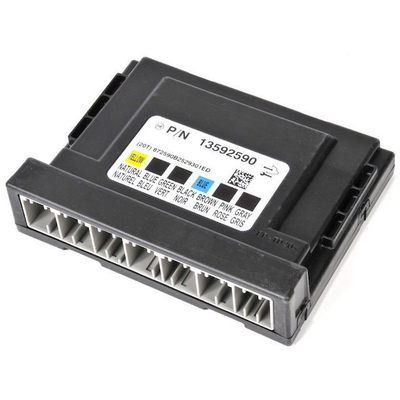
Shop the Parts Behind U3505
Below are the parts most often responsible for code U3505, ranked by how frequently each one is the actual culprit (per the diagnosis above). Tap any to see what we have for your vehicle.



The information in this article is provided for general reference and educational purposes only. Vehicle specifications, procedures, and part compatibility can vary by production date, trim level, and region. Always consult your vehicle's factory service manual and verify part numbers before purchasing or performing repairs. Safety-critical components such as airbags, seat belts, and braking systems should be installed by a qualified professional.
- 🧭 Diagnostic Flowchart
- 🛍️ Shop This Part
- What Does U3505 Mean?
- Can I Drive With U3505?
- Common Causes
- Symptoms
- Common Fixes & Costs
- Used vs. New Parts: Buying Guide
- What Happens If You Wait — Timeline
- Cost of Not Fixing It
- Diagnosis Steps
- When This Code Triggers (Freeze-Frame Conditions)
- Related Codes
- Climate & Environmental Factors
- How to Talk to a Mechanic About This Code
- Where to Take It: Dealer vs Independent vs Chain
- When to Walk Away From the Repair
- What Scan Tool You Need for This Code
- How to Clear the Code After You Fix It
- Will This Fail Emissions / State Inspection?
- Most Commonly Affected Vehicles
- Manufacturer-Specific Notes
- Real Owner Stories
- 2022 Chevrolet Tahoe at 30K miles - The Classic TSB Fix
- 2017 Chevrolet Volt at 65K miles - A Misleading Cause
- 2021 GMC Yukon Denali - The Misdiagnosis Story
- How to Prevent This Code From Triggering
- Frequently Asked Questions
- What are the most common misdiagnoses for U3505?
- Can I just replace the fuse to fix the U3505 code?
- Why did my A/C stop working when the code is for an electrical issue?
- Can I 'reboot' the car to clear the U3505 code?
- Is it expensive to fix code U3505?
- What is a Body Control Module (BCM)?
- Can a weak battery cause a U3505 code?
- What is Circuit 4786 on a GM vehicle?
- Key Takeaways
- 🎟️ Get 5% Off