

OBD-II Code U3577: High Voltage Battery System Communication Fault
The Ultimate 2026 Guide to U3577: What It Means, Why It Triggers, and How to Fix It
- Code U3577 on GM Ultium platforms (including 2024+ Honda/Acura EVs) indicates a critical communication loss with the Battery Energy Control Module (BECM).
- A software glitch causes over 80% of U3577 codes, requiring a free dealer-installed update rather than an expensive high-voltage battery replacement.
- The vehicle immediately enters 'Reduced Propulsion Power' mode and limits charging to 30%, making it unsafe for highway driving until repaired.
- Test your 12V AGM battery's resting voltage before visiting the dealer; a reading below 12.4V frequently triggers false U3577 communication errors.
- Scan for accompanying codes; seeing 10 or more simultaneous U-codes and P-codes confirms the known software anomaly outlined in GM TSB 25-NA-044.
What Does U3577 Mean?
Code U3577 is a manufacturer-specific diagnostic trouble code (DTC) for General Motors' Ultium electric vehicle platform (shared with Honda and Acura). It indicates the Battery Energy Control Module (BECM) lost communication with the main vehicle computer. The system forces the vehicle into a protective, low-power state to prevent high-voltage battery damage.
Technical definition: U3577 indicates a high-voltage battery system communication fault triggering a 'Service High Voltage Battery' message, per GM TSB 25-NA-044 and Honda TSB 25-043. It frequently appears alongside 10 or more other 'U' and 'P' codes, which confirms a single software anomaly rather than multiple hardware failures.
Can I Drive With U3577?
Yes, But With Caution. You can drive short distances, but the vehicle enters a 'Reduced Propulsion Power' mode with severely limited acceleration. Charging is often disabled or capped at 30% to protect the battery. Ignoring this warning leaves you stranded; drive directly to a safe location or an EV-certified dealer.
Common Causes
- Software Anomaly in the Battery Energy Control Module (BECM) (Very Common) — A software glitch is the most frequent cause for U3577 on new GM, Honda, and Acura EVs. The BECM's diagnostic logic incorrectly flags a fault, requiring a dealer-installed software update to correct the calibration.
- Failing or Weak 12-Volt Battery (Common) — The 12V AGM battery powers all control modules. A resting voltage below 12.2V causes random communication dropouts between modules, triggering U3577 even if the high-voltage battery is perfectly healthy. Extreme cold weather accelerates this voltage drop.
- Intermittent Low-Voltage Supply from DC-DC Converter (Less Common) — The high-voltage battery recharges the 12V battery via a DC-DC converter. An intermittent fault here starves control modules of the stable 13.5V-14.8V they need, causing communication errors.
- Faulty Battery Energy Control Module (BECM) Hardware (Less Common) — The BECM's internal processor or communication chip fails, permanently severing communication. This requires physical replacement of the module.
- Internal High-Voltage Battery Fault (Rare) — A genuine hardware problem inside the sealed high-voltage battery pack, such as a faulty temperature sensor, voltage sensor, or a single bad battery cell, triggers this code.
- Incomplete or Failed Over-The-Air (OTA) Update (Rare) — An interrupted vehicle-wide OTA software update leaves modules in a corrupted state, causing widespread communication faults that require a manual dealer re-flash. 🎬 Watch how a technician performs a professional GM module update.
- Damaged Wiring or Loose Connection (Rare) — Vibration, manufacturing defects, or rodent damage severs the physical connection between battery modules or the BECM, interrupting the CAN bus network.
Symptoms
- Service High Voltage Battery System Message & Check Engine Light — The primary warning displayed on the driver information center, accompanied by an illuminated malfunction indicator lamp (MIL).
- Reduced Propulsion Power / Limited Acceleration — The vehicle severely limits acceleration and top speed to protect the battery system.
- Charging Problems or Failure — The vehicle refuses to initiate charging, charges very slowly, or caps the maximum charge level at 30-40%.
- Vehicle Will Not Start or Go Into 'Ready' Mode — The vehicle completely immobilizes to prevent high-voltage system damage.
- Loss of Cabin Climate Control — Cabin heat or air conditioning stops working as the system prioritizes battery thermal management over passenger comfort.
Diagnostic Flowchart
Tap your situation to follow the diagnostic path that matches what you're seeing on this code.
Common Fixes & Costs
- Control Module Software Update — Parts: $0, Labor: $0 - $250, ~1.5 hr book time (Professional)
- Replace 12V AGM Battery
— Parts: $200 - $450, Labor: $50 - $150, ~0.8 hr book time
(DIY)
Honda Prologue: OEM 31500-T6N-AGM100M (Alt: BCI Group H5/L2 AGM)
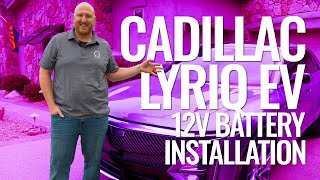
Cadillac Lyriq: OEM Dealer-verified part (Alt: BCI Group 47 or 94R AGM)
Chevrolet Silverado EV: OEM Dealer-verified part (Alt: BCI Group H7 AGM) - Replace Battery Energy Control Module (BECM)
— Parts: $300 - $600, Labor: $500 - $1000, ~6 hr book time
(Professional)
All Ultium: OEM VIN-specific; must be verified by dealer. (Alt: Not available.) - Replace DC-to-DC Converter
— Parts: $500 - $1200, Labor: $300 - $600, ~4 hr book time
(Professional)
All Ultium: OEM VIN-specific (e.g., 24062194 or 84978033) (Alt: Not available.) - High-Voltage Battery Module Replacement — Parts: $1000 - $3000, Labor: $1000 - $2000, ~10 hr book time (Professional)
DIY vs Professional
- Control Module Software Update 🟢 Beginner
Tools: GM SPS2 or Honda Techline Connect subscription and compatible VCI. - Replace 12V AGM Battery 🟢 Beginner
Tools: 10mm wrench/socket, digital multimeter, OEM service manual for high-voltage disable procedure. - Replace Battery Energy Control Module (BECM) 🟢 Beginner
Tools: Vehicle lift, high-voltage battery lift table, insulated gloves, OEM diagnostic software. - Replace DC-to-DC Converter 🟢 Beginner
Tools: Vehicle lift, high-voltage safety gear, OEM diagnostic tools.
Used vs. New Parts: Buying Guide
When a used part is worth it: Never. Battery Energy Control Modules (BECM) are VIN-locked and require dealer-level programming that cannot be performed on a used part.
Donor quality checklist:
- Do not purchase a used BECM. It cannot be reprogrammed.
- Always match the exact OEM part number for a new module.
- Installation and programming must be done by a certified dealer.
Decision logic:
- If Vehicle is under the 8-year/100,000-mile EV component warranty → The repair is covered. Use a new OEM part installed by the dealer.
- If Vehicle is out of warranty → Purchase a new OEM BECM and have it programmed by a dealer or specialized independent shop with a GM SPS2 subscription.
Warranty tradeoff: A new OEM BECM installed by a dealer includes a 12-24 month warranty. A used part offers no warranty and a 100% chance of failure due to programming incompatibility.
Worst-case if a used part fails: $800 - $1500 (cost of the useless used part, labor, plus the cost to re-do the job correctly with a new part).
What Happens If You Wait — Timeline
- Immediate: Vehicle enters 'Reduced Propulsion Power' mode, limiting speed and acceleration. Charging is disabled or capped. (Added cost: $0)
- 0-3 Days (If 12V battery is the cause): A weak 12V battery fails to hold enough charge to power control modules, resulting in a 'no-start' condition. (Added cost: $150 - $300 (towing and diagnostic fees).)
- 1-4 Weeks: Inability to charge makes the vehicle impractical for daily use. (Added cost: $250 - $450 (12V AGM battery replacement).)
- 1+ Month: Ignoring the fault prevents critical software updates. A rare internal battery hardware fault escalates into a complex failure. (Added cost: $1000+ (complex battery module repairs).)
Cost of Not Fixing It
- Immediate: Vehicle enters 'Reduced Propulsion Power' mode. Charging is disabled or capped at 30%. Risk of being stranded if the 12V battery fails completely. (Added cost: $150 - $300 (towing and diagnostic fee).)
- 1-3 months: Continued driving with a weak 12V battery leads to complete failure and a no-start condition. Persistent software glitches corrupt other modules. (Added cost: $250 - $600 (12V AGM battery replacement).)
- 3+ months: Ignoring the warning prevents critical software updates. A minor internal battery fault escalates into a significant failure requiring extensive pack repair. (Added cost: $1000+ (complex repairs if a minor hardware issue escalates).)
Diagnosis Steps
- Read All Fault Codes with a High-Quality Scanner
Use an advanced OBD-II scanner to read manufacturer-specific codes and symptom bytes. The presence of 10+ accompanying codes (like P2C8A, U3578) confirms the software anomaly described in TSBs.
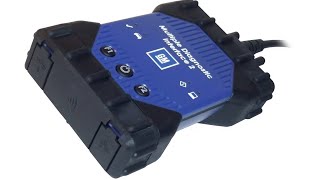
Tools: Advanced OBD-II Scanner (GM GDS2/MDI 2, Honda i-HDS) (Beginner) - Check the 12V Battery Health and State of Charge
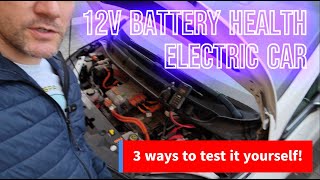
Test the 12V battery voltage after the car sits off for one hour. A healthy AGM battery reads 12.6V or higher. A reading below 12.4V requires charging; below 12.2V requires replacement.
Tools: Digital Multimeter or 12V Battery Tester (Beginner) - Check for Technical Service Bulletins (TSBs)
Verify if your specific VIN is covered under GM TSB 25-NA-044 or Honda TSB 25-043, which dictate a free software update.
Tools: Internet Access (Beginner) - Monitor 12V System Voltage While 'Ready'
With the vehicle in 'Ready' mode, measure the voltage at the 12V battery terminals. A steady 13.5V-14.8V indicates a healthy DC-DC converter. Fluctuating or low voltage points to a converter failure.
Tools: Digital Multimeter (Intermediate) - Perform a Hard Reset of the Vehicle Systems
Disconnect the 12V battery negative cable, wait 15 minutes, and reconnect. Cycle the vehicle to 'Ready' for 10 seconds, then 'Off' for 15 minutes. Repeat twice. Always follow OEM high-voltage safety procedures.
Tools: 10mm Wrench, OEM Service Manual (Intermediate) - Inspect Accessible Wiring and Grounds
Visually inspect the main 12V battery connections and chassis ground straps for corrosion, rodent damage, or loose connectors.
Tools: Flashlight, Socket Set (Intermediate) - [ADVANCED] Check CAN Bus Resistance
With the 12V battery disconnected, measure resistance between OBD-II Pin 6 and Pin 14. A healthy network reads 60 Ω. 120 Ω indicates a broken circuit; near 0 Ω indicates a short.
Tools: Digital Multimeter, OBD-II Pinout Diagram (Advanced) - [ADVANCED] Analyze Battery Cell Voltage Data
Monitor individual battery cell voltage PIDs using a professional scan tool. A cell voltage reading abnormally high (over 4.5V) or significantly lower than others indicates an internal battery fault.
Tools: Advanced OBD-II Scanner (GM GDS2/MDI 2) (Advanced) - Professional Diagnosis and Programming
Take the vehicle to an EV-certified dealer. They must perform a 'Hybrid/EV Battery Data Retrieval' using OEM software before clearing codes or replacing parts.
Tools: GM SPS2, Honda Techline Connect (Professional)
When This Code Triggers (Freeze-Frame Conditions)
- 12V System Voltage: 11.5V - 12.5V (Sets when the 12V system voltage drops during vehicle startup or when the DC-DC converter is inactive.)
- Vehicle Status: Startup or Ready (Logs when the vehicle powers on and modules initialize, or during a communication dropout while driving.)
- High Voltage Battery SOC: Any (The fault limits the SOC to 30-40% as a protective measure, regardless of the initial charge level.)
- Ambient Temperature: < 0°C / 32°F (Freezing temperatures weaken 12V battery performance, triggering false communication errors.)
Related Codes
- P1E00 — A generic code indicating a hybrid/EV powertrain module requested the check engine light. It almost always accompanies U3577.
- U3578 — Points to a communication fault on a slightly different circuit within the battery pack. It sets alongside U3577 and shares the exact same root cause and fix.
- U3636 — The equivalent battery interface control module communication fault for the older Chevy Bolt EV/EUV platform.
- P0AA6 — Hybrid Battery Voltage System Isolation Fault. Triggered by the same software issues on Ultium platforms that cause U3577.
Climate & Environmental Factors
- Cold Temperatures (Below 0°C / 32°F): Increases internal resistance, causing a weak 12V battery to fail and trigger U3577. It also reduces driving range by 30-40% and slows charging speeds.
- High Temperatures (Above 30°C / 86°F): Accelerates the degradation of the 12V AGM battery, pushing an already weak battery to failure.
- High Humidity: Accelerates corrosion on battery terminals and grounding points, creating intermittent voltage drops.
How to Talk to a Mechanic About This Code
Say this: "I'm getting a 'Service High Voltage Battery System' message and my scanner shows code U3577 alongside several other U-codes. Please check for relevant TSBs, like GM's 25-NA-044 or Honda's 25-043, as I suspect the known BECM software issue. Please also load test the 12V battery."
Directs the service advisor to the most likely, no-cost warranty fix and away from unnecessary hardware diagnostics. Mentioning the 12V battery covers the second most common cause.
Avoid saying:
- 'My car says 'Service Battery' and won't charge.'
- 'Just fix whatever is wrong, I have a warranty.'
- 'I think my main battery is dead.'
Questions to ask before authorizing the repair:
- Was the full list of codes from TSB 25-NA-044 or 25-043 present?
- What were the results of the 12V battery load test and the DC-DC converter output check?
- Can you confirm that all available 'Vehicle Wide Programming' updates have been applied?
- Is this repair fully covered under the bumper-to-bumper or 8-year EV component warranty?
Where to Take It: Dealer vs Independent vs Chain
- Dealer:
Required. The most common fix is a software update that only an authorized dealer performs. Since affected vehicles are new, the repair is covered under warranty.
Best for: Vehicles under warranty., Repairs requiring proprietary software updates., Complex high-voltage system diagnosis.
Downsides: Higher labor rates if not a warranty repair., Long wait times for EV-certified technicians. (Typical cost: +50% vs. baseline) - Independent Shop:
Not Recommended. An independent shop can diagnose a bad 12V battery but cannot perform the primary software fix.
Best for: Out-of-warranty repairs on common vehicles., Basic maintenance like tires and brakes.
Downsides: Lack the proprietary GM (SPS2) or Honda (Techline) software needed for the fix., Cannot perform warranty work. (Typical cost: +0% vs. baseline) - Chain Shop:
AVOID. Taking a modern EV with a high-voltage system fault to a chain shop is unsafe.
Best for: Simple consumable replacements (tires, wipers).
Downsides: Technicians are not trained for high-voltage EV diagnostics., High risk of misdiagnosis. (Typical cost: -10% vs. baseline)
When to Walk Away From the Repair
Because U3577 affects 2022+ model year vehicles, nearly all repairs are fully covered under the manufacturer's bumper-to-bumper or 8-year/100,000-mile EV component warranty. There is no economic reason to walk away from a warranty repair.
- Car worth $45000, fix is $0: Fix it. The repair is covered by warranty.
- Car worth $45000, fix is $450: Fix it. If the 12V battery is the sole cause and out of bumper-to-bumper warranty, a $450 repair is a necessary maintenance item.
What Scan Tool You Need for This Code
Minimum: A scanner that reads manufacturer-specific 'enhanced' codes (B, C, and U-codes) for GM vehicles.
A basic $20 scanner only shows a generic P1E00 code. You need to see the full list of U-codes to confirm the software TSB symptoms before visiting the dealer.
Budget: BlueDriver Pro (~$99) — Reads enhanced Network (U) codes directly on your smartphone, allowing you to see U3577 and accompanying codes.
Mid-range: Foxwell NT510 Elite for GM (~$180) — Offers full-system diagnostics and reads specific symptom bytes, providing deeper diagnostic insight.
Professional: Autel MaxiCOM MK808 / MK808BT (~$450-600) — Provides professional-level diagnostics, live data graphing, and reads all manufacturer codes and freeze-frame data.
Rent vs buy: Buy a budget scanner like the BlueDriver to verify the problem and arm yourself with information before the dealer performs the warranty repair.
How to Clear the Code After You Fix It
- Perform required software programming or hardware replacement.
- Use an OEM-level scan tool to clear all DTCs from all modules.
- Perform the 'Manual Reset' procedure: disconnect the 12V battery for 15 minutes, reconnect, and cycle vehicle power twice.
- Perform a complete EV drive cycle to run all system monitors.
Drive cycle (~30 minutes): Cold start (after sitting 6-8 hours). Let vehicle sit in 'Ready' for 2 minutes. Drive at a steady 55 mph for 10 minutes. Coast down to 20 mph without braking. Accelerate moderately to 55 mph and hold for 5 minutes. Stop and sit in 'Ready' for 2 minutes before shutting down.
Readiness monitors affected: Battery/Charging System Monitor, High Voltage System Monitor, Communication Bus Monitor
Before emissions retest: drive at least 50 miles to fully set monitors.
Watch out for:
- Clearing the code with a generic scanner without updating the software guarantees the code returns immediately.
- Failing to perform the specific 12V battery disconnect and power cycling procedure prevents the software fix from initializing.
- Skipping the 'cold soak' before the drive cycle prevents readiness monitors from running.
Will This Fail Emissions / State Inspection?
Yes — this code typically fails an OBD-II emissions inspection.
- California: An active MIL for a powertrain code like U3577 is an automatic failure of the smog check's OBD-II scan.
- New York: NYS DMV inspection includes an OBD-II scan for all 1996+ vehicles. EVs are not exempt, and an illuminated MIL results in failure.
- Texas: In the 17 counties requiring emissions testing, an active U3577 code causes an OBD-II test failure.
Most Commonly Affected Vehicles
- GMC Hummer EV (2022-2025) — Early models were highly susceptible before software updates were rolled out.
- Chevrolet Silverado EV (2024-2025) — Explicitly covered by GM TSBs for high-voltage system diagnostic procedures.
- GMC Sierra EV (2024-2025) — Shares the Ultium platform and is affected by the same BECM software anomalies.
- Chevrolet Blazer EV (2024-2025) — Covered by GM service bulletins regarding high-voltage battery communication faults.
- Chevrolet Equinox EV (2024-2025) — Included in the list of new GM EVs setting this series of diagnostic codes.
- Cadillac Lyriq (2023-2025) — The 2023 launch models were among the first to experience this BECM software issue.
- Honda Prologue (2024-2025) — Uses the GM Ultium platform and is explicitly named in Honda Service Bulletin 25-043.
- Acura ZDX (2024-2025) — Shares the Ultium platform with the Prologue and Lyriq, making it susceptible to the same faults.
Manufacturer-Specific Notes
- General Motors: Dealers must perform a specific 'SPS2 Hybrid/EV Battery Data Retrieval' before clearing codes or attempting repairs, per TSB 25-NA-044. Failure to do so prevents GM from gathering necessary engineering data.
- Honda / Acura: TSB 25-043 states a specific list of 11 DTCs must ALL be present to confirm the software anomaly. If only U3577 is set, the TSB does not apply, and a hardware fault is likely.
- General Motors: GM recommends 'Vehicle Wide Programming' (VWP) during any service visit (TSB 25-NA-049) to proactively apply software updates and prevent codes like U3577.
- General Motors / Honda: A 'Manual Reset' procedure is required after the BECM software update. This involves disconnecting the 12V battery, waiting, and cycling power twice to re-initialize modules.
Real Owner Stories
2024 Honda Prologue with ~1,500 miles
Received a cascade of warnings: 'Brake System Failure,' 'AWD Failure,' 'Stabilitrak Service Warning,' and 'One-pedal Driving Unavailable.'
Outcome: The dealer diagnosed the BECM software anomaly and performed the update per TSB 25-043. All codes cleared, and the repair was covered under warranty.
Lesson: A terrifying number of simultaneous warnings on an Ultium EV points to a single software glitch, not multiple hardware failures.
2023 Cadillac Lyriq in a cold climate
Experienced a 'Service High Voltage Battery System' message after the vehicle sat outside in freezing temperatures.
Outcome: Charged the 12V battery overnight with an AGM charger. The voltage returned to normal, and the error messages cleared permanently.
Lesson: Before assuming a catastrophic failure in cold weather, test the 12V battery. It is the most likely component to fail and causes misleading error codes.
2024 Chevrolet Blazer EV with ~5,000 miles
The 'Service High Voltage Battery System' light illuminated with no other codes. The vehicle entered reduced power mode.
Outcome: Because the specific list of 11+ codes was absent, technicians monitored internal battery data and found the BECM hardware was failing. The BECM was replaced under warranty.
Lesson: If only U3577 appears without the long list of other codes, it strongly indicates a hardware fault requiring professional diagnosis.
How to Prevent This Code From Triggering
- Proactively Request Software Updates (At every service visit) — GM's 'Vehicle Wide Programming' initiative encourages dealers to update all modules during any service, preventing software-related faults.
- Maintain 12V Battery Health (Monthly check; replace every 3-5 years) — Checking resting voltage (aim for >12.6V) or using a battery tender prevents voltage drops that trigger false communication codes.
- Keep High-Voltage Battery Above 20% SOC (Daily habit) — Ensures the DC-DC converter remains active to properly charge the 12V system.
- Keep Vehicle Plugged in During Extreme Cold (During winter months) — Allows the thermal management system to stabilize battery temperatures, supporting the 12V system and preventing cold-related voltage sags.
Frequently Asked Questions
Can I fix code U3577 myself?
You can perform basic checks like testing the 12V battery and performing a system hard reset. However, the most common permanent fix is a software update. Only an EV-certified dealer can perform this using specialized proprietary tools.
Is it safe to drive with code U3577?
It is safe only for short, low-speed trips to a repair shop. The vehicle enters a reduced power mode and disables charging to protect the battery. Long-distance travel will leave you stranded.
Why did my car show a dozen codes along with U3577?
This cascade of communication faults is the primary symptom of the known BECM software glitch. Service bulletins state that a specific list of 11 codes must be present to confirm the software issue. Seeing all of them simultaneously makes the technician's diagnosis straightforward.
What is the biggest misdiagnosis mistake with U3577?
The most common mistake is assuming a hardware failure and replacing the BECM without checking for software updates. TSBs from GM and Honda confirm a simple software re-flash fixes the majority of these cases. Always verify software versions before authorizing hardware replacement.
Will my warranty cover the repair for U3577?
Yes, because this code appears on new vehicles, the repair is fully covered under the bumper-to-bumper or the federally mandated 8-year/100,000-mile EV component warranty. This includes software updates, module replacements, and related diagnostics.
Why does the dealer need to do a software update? Can't it be done over-the-air (OTA)?
Critical powertrain and battery module updates require a direct, stable connection via dealer tools like GM's SPS2. This prevents installation interruptions that brick modules. It also allows the dealer to perform mandatory post-update reset procedures.
Does this mean my expensive EV battery needs to be replaced?
It is extremely unlikely. This code is almost always caused by a software glitch, a weak 12V battery, or a faulty control module. Even in rare hardware failure cases, technicians replace a single serviceable module, not the entire battery pack.
What does the 'symptom byte' mean for code U3577?
The symptom byte is a two-character hexadecimal code (e.g., U3577-71) providing specific fault details, such as 'Invalid Data Received.' Technicians use this byte to pinpoint the exact communication failure. Reading it requires a professional-level scan tool.
Key Takeaways
- Code U3577 on GM Ultium platforms (including 2024+ Honda/Acura EVs) indicates a critical communication loss with the Battery Energy Control Module (BECM).
- A software glitch causes over 80% of U3577 codes, requiring a free dealer-installed update rather than an expensive high-voltage battery replacement.
- The vehicle immediately enters 'Reduced Propulsion Power' mode and limits charging to 30%, making it unsafe for highway driving until repaired.
- Test your 12V AGM battery's resting voltage before visiting the dealer; a reading below 12.4V frequently triggers false U3577 communication errors.
- Scan for accompanying codes; seeing 10 or more simultaneous U-codes and P-codes confirms the known software anomaly outlined in GM TSB 25-NA-044.
Helpful Videos

Shop the Parts Behind U3577
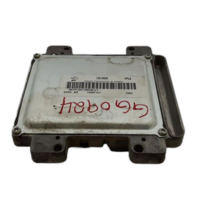
Below are the parts most often responsible for code U3577, ranked by how frequently each one is the actual culprit (per the diagnosis above). Tap any to see what we have for your vehicle.


The information in this article is provided for general reference and educational purposes only. Vehicle specifications, procedures, and part compatibility can vary by production date, trim level, and region. Always consult your vehicle's factory service manual and verify part numbers before purchasing or performing repairs. Safety-critical components such as airbags, seat belts, and braking systems should be installed by a qualified professional.
- 🧭 Diagnostic Flowchart
- 🎬 Helpful Videos
- 🛍️ Shop This Part
- What Does U3577 Mean?
- Can I Drive With U3577?
- Common Causes
- Symptoms
- Common Fixes & Costs
- DIY vs Professional
- Used vs. New Parts: Buying Guide
- What Happens If You Wait — Timeline
- Cost of Not Fixing It
- Diagnosis Steps
- When This Code Triggers (Freeze-Frame Conditions)
- Related Codes
- Climate & Environmental Factors
- How to Talk to a Mechanic About This Code
- Where to Take It: Dealer vs Independent vs Chain
- When to Walk Away From the Repair
- What Scan Tool You Need for This Code
- How to Clear the Code After You Fix It
- Will This Fail Emissions / State Inspection?
- Most Commonly Affected Vehicles
- Manufacturer-Specific Notes
- Real Owner Stories
- 2024 Honda Prologue with ~1,500 miles
- 2023 Cadillac Lyriq in a cold climate
- 2024 Chevrolet Blazer EV with ~5,000 miles
- How to Prevent This Code From Triggering
- Frequently Asked Questions
- Can I fix code U3577 myself?
- Is it safe to drive with code U3577?
- Why did my car show a dozen codes along with U3577?
- What is the biggest misdiagnosis mistake with U3577?
- Will my warranty cover the repair for U3577?
- Why does the dealer need to do a software update? Can't it be done over-the-air (OTA)?
- Does this mean my expensive EV battery needs to be replaced?
- What does the 'symptom byte' mean for code U3577?
- Key Takeaways
- 🎟️ Get 5% Off