

OBD-II Code U3620: Reduced Propulsion Power
What U3620 means, why it triggers, and how to fix it
- Read the two-digit symptom byte with an advanced OBD-II scanner; a '09' byte means a simple software fix, while a '17' byte indicates a hardware failure.
- Check your 12-volt battery with a load tester, as a drop below 12.4V frequently causes communication errors that trigger false U3620 codes.
- Search for GM Technical Service Bulletins like N242437530 before authorizing repairs, as overly sensitive diagnostic software is the most common cause of this code.
- Analyze live data for individual high-voltage battery cells; a voltage deviation of 0.08 volts or more between the highest and lowest cell confirms a failing module.
What Does U3620 Mean?
The U3620 code means the vehicle's computer detected a problem in the high-voltage battery system and forced the car into 'Reduced Propulsion Power' mode to protect itself. This generic warning is often accompanied by specific trouble codes that pinpoint the exact issue.
Technical definition: While a universal SAE definition for U3620 is not publicly listed, General Motors technical documents consistently identify it as a high-voltage battery system fault triggering a reduction in propulsion power. It belongs to a range of codes (U3620-U363E) indicating issues with the high-voltage battery, control modules, or software, distinguished by a specific two-digit symptom byte.
Can I Drive With U3620?
Yes, But With Caution. Yes, but your vehicle will have significantly less power and limited speed. Drive directly to a repair shop or home to avoid getting stranded. The system enters this mode to protect the high-voltage battery. Continuing to drive, especially with hard acceleration, stresses weak battery cells. This increases the risk of turning a $3,000 module replacement into a $16,000+ full battery pack replacement. 🎬 Watch: A walkthrough of a high-voltage battery replacement. Do not attempt long-distance travel.
Common Causes
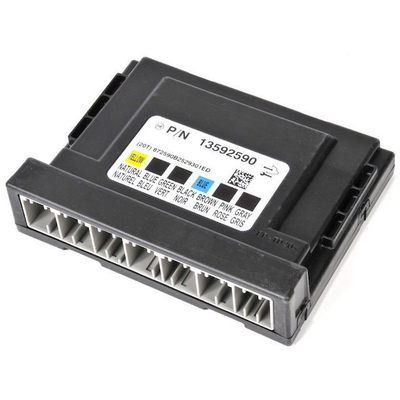
- Software or calibration issue in the Hybrid Powertrain Control Module 2 (HPCM2) (Very Common) — A frequent cause is overly sensitive diagnostic software. General Motors has issued multiple Technical Service Bulletins (TSBs) to address false diagnostic trouble codes by reprogramming the HPCM2.
- Failing high-voltage (HV) battery cell or module (Common) — The diagnostic software monitors individual battery cell health. If it detects a weak or failing cell, it triggers this code to limit strain on the battery pack.
- Unsuccessful or incomplete software update (Common) — The U3620 code often appears immediately after a dealer software update. This happens if the update fails to install correctly or if the new software detects a pre-existing hardware fault.
- Problem with the 12-volt battery (Less Common) — A weak 12-volt battery causes communication errors between modules, leading to false U3620 codes.
- Faulty Onboard Charging Module (OBCM) (Less Common) — The onboard charger converts AC power to DC to charge the high-voltage battery. A fault here is sometimes misdiagnosed as a battery problem, triggering reduced power mode.
- Malfunctioning Battery Management System (BMS) or Battery Energy Control Module (BECM) (Less Common) — The BMS/BECM monitors battery temperature, voltage, and state of charge. Internal faults lead to inaccurate readings and trigger the U3620 code.
- Corrosion or water ingress at high-voltage connectors (Rare) — On GM EV platforms like the Hummer EV, high-voltage connectors can corrode and allow water into the battery pack, causing U36xx range faults.
- Faulty battery sensor or wiring (Rare) — Damaged wires or malfunctioning temperature/voltage sensors send incorrect data to control modules, forcing the system into protective mode.
Symptoms
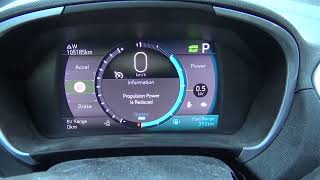
- Reduced Propulsion Power message on the dashboard — A message on the instrument cluster explicitly states that propulsion power is reduced.
- Limited vehicle speed and acceleration — The car feels noticeably slower and cannot reach highway speeds as the computer limits power output from the electric motor.
- Battery charging is limited or disabled — The vehicle limits the maximum state of charge (e.g., capped at 30% or 40%) or disables charging entirely as a safety precaution.
- Check Engine Light or Service Vehicle Soon light is on 🎬 Watch: Diagnosing reduced propulsion power on a Chevy Volt. — The vehicle's main warning light illuminates to alert the driver of a detected fault.
- Air conditioning (A/C) stops blowing cold — Because the A/C system links to the battery's thermal management system, a high-voltage battery fault disables the A/C compressor.
- Audible gurgling or pumping noise when car is off — The battery's thermal management system actively pumps coolant for an extended period after the car turns off, attempting to manage a perceived battery issue.
Diagnostic Flowchart
Tap your situation to follow the diagnostic path that matches what you're seeing on this code.
Common Fixes & Costs
- Reprogramming the Hybrid Powertrain Control Module 2 (HPCM2) — Parts: $0, Labor: $150-$400 (often $0 under warranty), ~1.5 hr book time (Professional)
- Replacement of the 12-volt battery — Parts: $150-$350, Labor: $50-$150, ~0.8 hr book time (DIY)
- Replacement of a faulty high-voltage battery module — Parts: $1,500-$3,000, Labor: $800-$1,800, ~6 hr book time (Professional)
- Replacement of the high-voltage battery pack — Parts: $16,000-$18,000, Labor: $1,000-$2,500, ~8 hr book time (Professional)
- Replacement of the Onboard Charging Module (OBCM) — Parts: $1,500-$2,500, Labor: $400-$700, ~3.5 hr book time (Professional)
- Replacing a faulty battery sensor or wiring harness — Parts: $100-$400, Labor: $200-$800, ~4 hr book time (Professional)
Used vs. New Parts: Buying Guide
When a used part is worth it: Used or remanufactured parts from reputable EV recyclers make sense for individual battery modules if the vehicle is out of warranty.
Donor-vehicle mileage cap: roughly under 50000 miles for the part to have meaningful remaining life.
Donor quality checklist:
- Verify the part comes with its own warranty (e.g., 1-4 years).
- Ensure the part number is an exact match for your vehicle's specific model and year.
- For battery modules, ask for data on the donor vehicle's mileage and the tested capacity of the module.
- Avoid parts from flood-damaged or severely crashed vehicles.
Decision logic:
- If Vehicle is under the 8-year/100,000-mile battery warranty → Use new OEM parts installed by the dealer; the repair is free.
- If Vehicle is out of warranty and only a single battery module has failed → A used or remanufactured module from a specialist saves thousands over a full pack replacement.
- If The entire battery pack requires replacement and the vehicle is out of warranty → A remanufactured pack saves 30-50% over new OEM but comes with a shorter warranty.
Warranty tradeoff: New OEM parts installed by a dealer carry the manufacturer's warranty. Used or remanufactured battery components typically come with a 1 to 4-year warranty from the seller, covering the part but not labor.
Worst-case if a used part fails: $1,500-$3,000 if a used module fails after installation, requiring repeat labor costs plus the price of another replacement part.
What Happens If You Wait — Timeline
- 0-2 weeks: Vehicle enters 'Reduced Propulsion Power' mode. Charging capped at 30-40%. Acceleration significantly reduced. (Added cost: $0)
- 2 weeks - 3 months: Continued driving puts thermal and electrical stress on adjacent cells. Thermal management system runs excessively. (Added cost: $50-$200 in wasted energy from system inefficiencies and potential need for towing.)
- 3-6 months: A single failing module damages neighboring modules through a cascading effect. Risk of being stranded increases. (Added cost: $3,000-$7,000 if a single module failure cascades and requires a more complex repair.)
- 6+ months: Catastrophic failure of the battery pack. Repair requires a full battery pack replacement. (Added cost: $16,000-$19,000+ for a full battery pack replacement.)
Cost of Not Fixing It
- Immediate: Vehicle is forced into 'Reduced Propulsion Power' mode, limiting speed and acceleration. Charging is disabled or capped at 40% SOC. The vehicle is unreliable. (Added cost: Negligible, but major inconvenience.)
- Weeks to Months: Driving on a weak battery cell puts severe stress on the entire battery pack and thermal management system. A single faulty module degrades healthy modules. (Added cost: $3,000-$7,000)
- 6+ Months: Ignoring the warning causes cascading failure within the high-voltage battery. A single module replacement escalates into a complete battery pack replacement. (Added cost: $16,000-$19,000+)
Diagnosis Steps
- Read All Trouble Codes & Symptom Bytes
Use an advanced OBD-II scanner to read manufacturer-specific codes. You MUST identify the two-digit 'symptom byte' (e.g., '09' or '17') following U3620.
Tools: Advanced OBD-II Scanner (GM-specific capability) (Beginner) - Interpret the Symptom Byte
Symptom '09' indicates a known software glitch fixed by an HPCM2 reprogram. Symptom '17' indicates a hardware fault (cell, module, wiring) requiring physical inspection.
Tools: Advanced OBD-II Scanner, TSB Database (Intermediate) - Check for Technical Service Bulletins (TSBs)
Search for TSBs like N242437530 or 23-NA-157. These bulletins point to known software issues fixed with a free dealer module reprogram.
Tools: Internet access, VIN (Beginner) - Test the 12-Volt Battery
A weak 12V battery causes EV electrical problems. Test the battery with a load tester to ensure it meets its Cold Cranking Amps (CCA) rating. Replace if it reads below 12.4V at rest.
Tools: Digital Multimeter, Electronic Battery Load Tester (Beginner) - Analyze High-Voltage Battery Cell Data
Access live data for the high-voltage battery. Record the minimum and maximum cell voltages. A deviation of 0.08 volts or more between the highest and lowest cell indicates a failing module.
Tools: Advanced OBD-II Scanner with Live Data (Advanced) - Inspect Battery Coolant System
Check the high-voltage battery coolant reservoir. Low or discolored coolant indicates a leak or contamination, which affects battery temperature and triggers protective codes.
Tools: Flashlight (Intermediate) - Perform a High-Voltage System Insulation Test
Using a megohmmeter, a technician tests insulation resistance between high-voltage cables and the chassis ground. Readings below 500 kOhms indicate a loss of isolation.
Tools: Megohmmeter, high-voltage safety equipment (Professional) - Professional Diagnosis at a Certified EV Dealer
If previous steps fail, take the vehicle to a qualified EV technician to inspect high-voltage connectors, test the BECM, and perform component replacement.
Tools: Professional diagnostic equipment, GM Service Information (SI) (Professional)
When This Code Triggers (Freeze-Frame Conditions)
- Battery State of Charge (SOC): Variable (often after charging) (Code sets after a full charge, immediately after DC fast charging, or shortly after increasing the vehicle's charge limit (e.g., 80% to 100%).)
- Ambient Temperature: < 32°F (0°C) or > 95°F (35°C) (Extreme cold causes temporary voltage drops in weak cells, while heat forces the system to limit power to prevent overheating.)
- Vehicle State: During startup or steady driving (The fault typically appears immediately after turning the vehicle on or while driving at a steady speed, rather than during hard acceleration.)
- Time Since Last Software Update: 0-10,000 miles (Frequently appears shortly after a dealer performs a diagnostic software update intended to monitor the battery.)
Related Codes
- P1E00 — A generic code meaning a control module requested the check engine light. U3620 causes P1E00. Ignore P1E00 and focus diagnosis on U3620.
- U3621-U363E — Part of the same family as U3620. Differentiate them using the two-digit symptom byte (e.g., '09' for software, '17' for hardware).
- P0AFA — Indicates 'Hybrid/EV Battery System Voltage Low'. Triggered when overall pack voltage drops below a critical threshold, whereas U3620 is a preliminary warning for a single cell or software glitch.
- P0BBD — Indicates 'Hybrid/EV Battery Pack Variation High'. Means the BECM detected a significant voltage difference between individual cells, confirming a failing module.
Climate & Environmental Factors
- Extreme Cold: Temperatures below freezing slow chemical reactions, reducing efficiency. This makes the diagnostic system more likely to flag a weak cell, triggering 'Reduced Propulsion Power'.
- Extreme Heat: Temperatures above 104°F (40°C) accelerate battery degradation. If the thermal management system cannot cool the pack, it limits propulsion power to prevent overheating.
- High Humidity: Moisture compromises sealed high-voltage systems. Breaches in connector seals lead to corrosion and water ingress, causing insulation faults and U3620 codes.
How to Talk to a Mechanic About This Code
Say this: "I have a 'Reduced Propulsion Power' warning and a U3620 code. Please check for relevant TSBs and read the specific two-digit symptom byte to determine if it's a software or hardware issue."
This proves you understand the most common cause is a software glitch (symptom '09'), preventing the shop from immediately quoting an expensive battery replacement.
Avoid saying:
- 'My electric car won't charge right.'
- 'The check engine light is on, can you just fix it?'
- 'I think I need a new battery.'
Questions to ask before authorizing the repair:
- What was the specific two-digit symptom byte that accompanied the U3620 code?
- Did you check for TSBs like N242437530 or 23-NA-157 related to HPCM2 reprogramming?
- If you are recommending a battery module or pack replacement, can you provide the live data printout showing the cell voltage deviation?
- Is this repair covered under the 8-year/100,000-mile battery warranty or a special service campaign?
Where to Take It: Dealer vs Independent vs Chain
- Dealer:
Highly Recommended. The dealer is often the only place that can perform the most common fix (software update) and is mandatory for warranty claims.
Best for: Vehicles under the 8-year/100,000-mile battery warranty., Repairs requiring a software reprogram of the HPCM2., Any confirmed high-voltage battery module or pack replacement.
Downsides: Higher labor rates (typically 20-30% more than independent shops)., May have long wait times for EV-certified technicians. (Typical cost: +30% vs. baseline) - Independent Shop:
Acceptable with Vetting. Only use an independent shop that explicitly specializes in EV and high-voltage battery repair.
Best for: Out-of-warranty vehicles where the issue is confirmed to be something other than a software reprogram (e.g., 12V battery replacement)., Second opinions on out-of-warranty battery replacement quotes from a dealer.
Downsides: Most general shops cannot perform the required GM-specific software updates., Only specialized EV independent shops have the training and tools for high-voltage battery work. (Typical cost: +0% vs. baseline) - Chain Shop:
AVOID for diagnosis. These shops lack the specialized tools and training for this code.
Best for: 12-volt battery replacement if you have already diagnosed the issue yourself.
Downsides: Not equipped for high-voltage system diagnosis or repair., Lacks access to manufacturer-specific software required for the most common U3620 fixes. (Typical cost: -10% vs. baseline)
When to Walk Away From the Repair
If the estimated out-of-warranty repair cost exceeds 50% of the car's current market value, strongly consider selling the vehicle as-is.
- Car worth $22000, fix is $7000: Fix it. A $7,000 module replacement is significant, but well below the 50% threshold for a vehicle of this value.
- Car worth $15000, fix is $17000: Walk away. The cost of a full battery pack replacement exceeds the vehicle's value. Do not authorize this repair.
- Car worth $18000, fix is $400: Fix it. A $400 software reprogram is a minor cost to restore full functionality and value to the vehicle.
What Scan Tool You Need for This Code
Minimum: A scanner that reads manufacturer-specific codes, including the two-digit 'symptom byte', and displays live data for individual high-voltage battery cell voltages.
A basic $20 reader only shows a generic 'U3620' code. It cannot see the critical symptom byte ('09' vs '17') or cell voltage data needed to distinguish a software fix from a failing battery module.
Budget: Veepeak OBDCheck BLE+ with Car Scanner App (~$40) — Pairs with the Car Scanner app to read manufacturer-specific codes and display live battery cell voltages.
Mid-range: OBDLink MX+ (~$140) — Accesses all GM modules, reads symptom bytes, and provides detailed live data for HV battery diagnostics.
Professional: Autel MaxiCOM MK808 / MK906BT (~$500-1200) — Offers full OE-level diagnostics, clear symptom byte readouts, and bidirectional controls for testing components.
Rent vs buy: Buy. Standard auto parts store rental scanners lack the specific GM EV profiles needed to read symptom bytes or individual cell voltages.
How to Clear the Code After You Fix It
- Use an advanced OBD-II scan tool to clear the U3620 and related fault codes.
- For software fixes, the dealer's programming tool clears the code automatically.
- Perform a complete EV drive cycle to run self-diagnostics and confirm the fix.
Drive cycle (~30 minutes): Start with a cold vehicle (off for 8+ hours). Drive 15 minutes of mixed city/highway, then hold a steady 55-60 mph for 5-10 minutes. Let the vehicle cool down completely. Repeat until monitors read 'Ready'.
Readiness monitors affected: EVAP Monitor (if applicable), Battery/High-Voltage System Monitor, Control Module Communication
Before emissions retest: drive at least 50 miles to fully set monitors.
Watch out for:
- Clearing the code with a basic scanner does not fix the root cause; the code returns immediately.
- Disconnecting the 12V battery resets readiness monitors, causing automatic emissions test failure.
Will This Fail Emissions / State Inspection?
Yes — this code typically fails an OBD-II emissions inspection.
- California: Illuminated Check Engine Light causes automatic OBD-II failure. Clearing the code without completing a drive cycle also results in failure.
- New York: Active Check Engine Light is an automatic failure. Clearing the code right before the test results in a 'Not Ready' failure.
- Texas: Active Check Engine Light is an automatic failure in emissions-testing counties. U3620 prevents the vehicle from passing.
Most Commonly Affected Vehicles
- Chevrolet Bolt EV (2020-2022) — Subject to numerous TSBs (like N242437530) for advanced diagnostic software that falsely triggers this code. A dealer reprogram is the most common fix.
- Chevrolet Bolt EUV (2022-2023) — Shares the same powertrain as the Bolt EV and is covered by the same TSBs for false U36xx codes.
- Cadillac LYRIQ (2023-2025) — As part of GM's Ultium platform, the LYRIQ sets a wide range of U36xx codes. TSB PIP6009B addresses data collection on these faults.
- GMC Hummer EV (Pickup & SUV) (2022-2025) — Early models had a specific service campaign (N222362090) to seal HV connectors against water intrusion, a potential cause of these faults.
- Chevrolet Blazer EV / Silverado EV / Equinox EV (2024-2025) — Included in service bulletins (like PIP6009B) that address a wide range of U36xx diagnostic trouble codes related to the high-voltage battery system.
- BrightDrop Zevo 600 (2022-2025) — Shares Ultium platform components and was included in the service campaign (N222362090) to fix corroding high-voltage connectors.
- Chevrolet Volt (2017-2019) — Some Volt models experience similar 'Reduced Propulsion' messages due to issues with the Hybrid Powertrain Control Module 2.
- Ford Mustang Mach-E (2021-2022) — Recalled for issues where the battery system overheats after multiple DC fast-charging sessions, leading to a loss of power.
Manufacturer-Specific Notes
- General Motors (Chevrolet): GM issued multiple software updates (like N242437530) because overly sensitive diagnostic software flagged healthy batteries for replacement. A software reprogram is frequently the only required fix.
- Hyundai / Kia: A similar 'Reduced Power' symptom on Ioniq 5 and EV6 models is caused by Integrated Control Charging Unit (ICCU) failure, preventing the 12V battery from charging.
- Tesla: A 'Power Reduced' warning is often resolved with a software reboot or 'hard reset' (powering the vehicle off completely for a few minutes).
- Nissan: On the Leaf, 'Power Reduced' is a specific feature activating when the battery is extremely hot, extremely cold, or at a very low state of charge.
Real Owner Stories
2022 Chevy Bolt EUV with U3620 after software update
A 2022 Bolt EUV threw a U3620 code. The dealer performed a software update and returned the car.
What they tried:
- Dealer performed a software update as the initial fix.
Outcome: The error returned within 5 miles. The dealer then determined at least two battery cells were bad, but GM policy required the reprogram first.
Lesson: If the code returns shortly after a reprogram, it strongly suggests an underlying hardware fault (like a bad cell) that the software initially failed to resolve.
2021 Chevy Bolt at 22k miles - Easy Fix
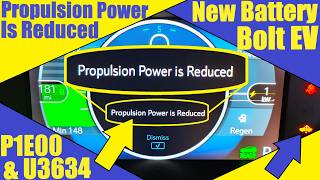
A 2021 Bolt Premier displayed 'Propulsion Reduced' and set codes U3620 and P1E00.
What they tried:
- Owner took the vehicle to the dealership for diagnosis.
Outcome: The dealer diagnosed the issue as TSB #23-NA-157. They reprogrammed the HPCM2, and the fix was completed in one day under warranty.
Lesson: Always check for applicable Technical Service Bulletins (TSBs). The U3620 code is often a known software glitch with a straightforward, no-cost warranty fix.
2020 Chevy Bolt with recurring U362E code
A 2020 Bolt experienced 'Reduced propulsion power'. The dealer reprogrammed the HPCM2 and cleared the codes.
What they tried:
- Initial dealer visit resulted in a software reprogram.
Outcome: The same code returned several months later. The diagnostic report recommended service within 1 day, suggesting a more critical fault.
Lesson: A recurring code after a software fix indicates a genuine hardware problem requiring component replacement.
2022 Chevy Bolt EV with U3620 and A/C failure
A 2022 Bolt EV showed 'Propulsion Power Reduced' with codes U3620 and P1E00. The car only charged to 40%, and the A/C was not blowing cold air.
What they tried:
- Owner scheduled a dealer appointment.
Outcome: The A/C compressor is linked to battery cooling. Its failure triggered a protective power reduction to prevent the battery from overheating.
Lesson: If U3620 appears alongside A/C problems, the root cause is likely in the battery's thermal management system, not just a faulty cell.
How to Prevent This Code From Triggering
- Maintain battery state of charge between 20% and 80% for daily use (Daily habit) — Consistently charging to 100% or deep-discharging below 20% accelerates cyclic wear.
- Minimize the use of DC fast charging (As needed, not for routine charging) — DC fast charging generates significant heat, accelerating battery aging. Relying on it reduces lifespan by 10% over eight years.
- Keep vehicle software updated (When available) — Updates improve diagnostic accuracy and prevent false U3620 codes.
- Avoid parking in extreme temperatures for extended periods (When possible) — Extreme heat accelerates chemical degradation, while extreme cold reduces efficiency. Park in a garage when possible.
- Maintain the 12-volt battery (Check annually after 3 years) — A weak 12V battery causes communication faults misdiagnosed as high-voltage battery problems. Replace every 3-4 years.
Frequently Asked Questions
Is it safe to drive with a U3620 code?
It is safe to drive a short distance, but the vehicle will have limited power and speed. Drive directly to a repair shop or home to avoid getting stranded. Do not attempt highway driving or long trips.
Does a U3620 code mean I need a new battery?
Not necessarily. A frequent cause is a software glitch fixed by reprogramming a control module. Always rule out software updates and 12-volt battery issues before assuming the high-voltage battery is dead.
What is the difference between symptom byte '09' and '17'?
Symptom '09' indicates a known software glitch fixed by a dealer reprogram. Symptom '17' points to a hardware fault in the battery system requiring physical diagnosis. This is the most critical diagnostic detail for GM EVs.
Why does my car limit charging to 30% or 40% with this code?
This is a pre-programmed safety measure. The Battery Management System limits the state of charge to reduce electrical and thermal stress on the battery pack. This prevents further damage until the issue is diagnosed.
What are common misdiagnosis pitfalls with a U3620 code?
The most common mistake is replacing the high-voltage battery when only a software update is needed. Another pitfall is ignoring a faulty 12-volt battery or onboard charging module. Always check for Technical Service Bulletins first.
Why did the code appear right after a software update?
The new software may be more sensitive in detecting pre-existing battery issues. Alternatively, the update failed to install correctly. Return to the dealer immediately if this occurs.
Will my warranty cover the repairs for a U3620 code?
Yes, in most cases. Software updates covered by a TSB or high-voltage battery faults are typically covered under the 8-year/100,000-mile powertrain warranty. GM Service Update N242437530 is performed at no cost.
Can I fix the U3620 code myself?
You can test the 12-volt battery and read codes with an advanced scanner. However, reprogramming control modules or working on the high-voltage battery requires specialized tools and safety training. Leave high-voltage repairs to certified professionals.
Key Takeaways
- Read the two-digit symptom byte with an advanced OBD-II scanner; a '09' byte means a simple software fix, while a '17' byte indicates a hardware failure.
- Check your 12-volt battery with a load tester, as a drop below 12.4V frequently causes communication errors that trigger false U3620 codes.
- Search for GM Technical Service Bulletins like N242437530 before authorizing repairs, as overly sensitive diagnostic software is the most common cause of this code.
- Analyze live data for individual high-voltage battery cells; a voltage deviation of 0.08 volts or more between the highest and lowest cell confirms a failing module.
Helpful Videos
Shop the Parts Behind U3620
Below are the parts most often responsible for code U3620, ranked by how frequently each one is the actual culprit (per the diagnosis above). Tap any to see what we have for your vehicle.


The information in this article is provided for general reference and educational purposes only. Vehicle specifications, procedures, and part compatibility can vary by production date, trim level, and region. Always consult your vehicle's factory service manual and verify part numbers before purchasing or performing repairs. Safety-critical components such as airbags, seat belts, and braking systems should be installed by a qualified professional.
- 🧭 Diagnostic Flowchart
- 🎬 Helpful Videos
- 🛍️ Shop This Part
- What Does U3620 Mean?
- Can I Drive With U3620?
- Common Causes
- Symptoms
- Common Fixes & Costs
- Used vs. New Parts: Buying Guide
- What Happens If You Wait — Timeline
- Cost of Not Fixing It
- Diagnosis Steps
- When This Code Triggers (Freeze-Frame Conditions)
- Related Codes
- Climate & Environmental Factors
- How to Talk to a Mechanic About This Code
- Where to Take It: Dealer vs Independent vs Chain
- When to Walk Away From the Repair
- What Scan Tool You Need for This Code
- How to Clear the Code After You Fix It
- Will This Fail Emissions / State Inspection?
- Most Commonly Affected Vehicles
- Manufacturer-Specific Notes
- Real Owner Stories
- 2022 Chevy Bolt EUV with U3620 after software update
- 2021 Chevy Bolt at 22k miles - Easy Fix
- 2020 Chevy Bolt with recurring U362E code
- 2022 Chevy Bolt EV with U3620 and A/C failure
- How to Prevent This Code From Triggering
- Frequently Asked Questions
- Is it safe to drive with a U3620 code?
- Does a U3620 code mean I need a new battery?
- What is the difference between symptom byte '09' and '17'?
- Why does my car limit charging to 30% or 40% with this code?
- What are common misdiagnosis pitfalls with a U3620 code?
- Why did the code appear right after a software update?
- Will my warranty cover the repairs for a U3620 code?
- Can I fix the U3620 code myself?
- Key Takeaways
- 🎟️ Get 5% Off